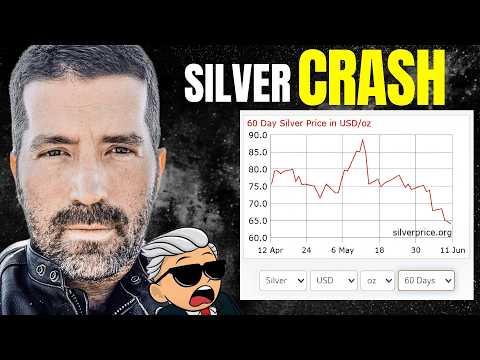
Guest David Woo argues the current market stress is being driven by a dangerous mix of private-credit fragility, AI pressure on software borrowers, and escalating U.S.-Iran conflict risk. He says gold has recently behaved less like a safe haven and more like a retail-driven equity proxy, while silver promotion is mostly promotional rather than analytical.
Watch on YouTube ›Get the market thesis, key claims, assets, contradictions, and follow-up questions from any financial video — then unlock a version personalized to your portfolio, watchlist, and favorite speakers.
This is a host-led interview on Wall Street Bullion with David Woo, introduced as a veteran global macroeconomist and founder of David Woo Unbound. The conversation begins with a promotional silver giveaway and a sponsorship-style vault ad, then moves into macro risk discussion: private credit, bank exposure, the Middle East war, and precious metals. On private credit, Woo argues that post-2008 regulation pushed banks out of riskier lending, creating a large non-bank/direct-lending ecosystem that became opaque and lightly regulated. He says this structure allowed retail capital to be pulled into illiquid credit products offering yield pickup over Treasuries. …
Near term, the setup is risk-off: escalating Middle East headlines and private-credit anxiety can pressure stocks, while any bounce may be fragile if the war narrative worsens. Gold is not being treated as a clean hedge in this tape, so a tactical long here looks less compelling than a volatility-aware posture.
Over the next several weeks, the base case in the interview is continued escalation and intermittent market support from official jawboning, until a clearer shock forces repricing. Confirmation would come from broader market weakness, visible credit stress, or a more serious step-up in the conflict; invalidation would be a rapid de-escalation and stable credit conditions.
Structurally, the transcript argues that the post-2008 shift into private credit has created a more opaque and interconnected system, while retail flows now matter enough to distort traditional hedge relationships. The longer-run regime implication is that both geopolitical shocks and liquidity shocks may transmit faster and less cleanly than in the old bank-centered system.
Post-2008 regulation pushed banks out of riskier small- and medium-sized enterprise lending and helped create the modern private-credit ecosystem.
He links tighter capital requirements to banks retreating from direct lending and non-bank lenders stepping in.
Private-credit portfolios are opaque, so investors do not really know the underlying credit quality.
He argues the universe is hard to see and lightly regulated compared with bank lending.
Current private-credit redemption pressure is mainly sentiment-driven, not necessarily a sign that credit quality has worsened since six months ago.
He says people want out because the assets are illiquid and the mood has changed.
What’s happening right now with private equity, and is it going to blow up the broader markets?
Woo says banks were pushed out after 2008, private credit filled the gap, and current redemption stress is mostly sentiment-driven; the bigger concern is bank exposure and potential credit-line pullbacks.
How is the Iran war going to turn out, and what does it mean for the Strait of Hormuz and global economies?
Woo says the conflict will worsen, Trump’s market-friendly comments are tactical, and his central scenario is continued escalation potentially involving a U.S. assault near Bandar Abbas.
Where are gold and silver headed in the short term and long term?
Woo says gold is not a safe haven right now and is behaving like a stock proxy; he argues retail investors, not central banks, have driven much of the recent move, and lack of dip-buying confirms the change.
Unlock the full claims, asset map, scores, related transcripts, follow-up questions, and AI chat — shaped around your portfolio, watchlist, favorite speakers, and risks.