TranscriptAgent
Try it free
TRANSCRIPTAGENT.AI · transcript analysis

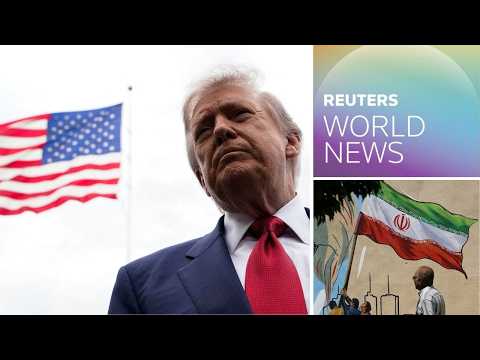
‘TOTALLY UNACCEPTABLE!’ Trump rejects Iran’s peace proposal response | Reuters World News

Channel: Reuters Published: 2026-05-11 05:03
Reuters

Reuters World News reports Trump calling Iran’s response to a U.S. peace proposal “totally unacceptable,” raising the odds of continued tensions or even renewed military action. The episode also briefly covers Netanyahu’s push to reduce U.S. aid, a Congo-related health scare, Russia-Ukraine ceasefire strain, China’s influence in Brazil, and Kansas City’s World Cup preparations.

Watch on YouTube ›

Get the market thesis, key claims, assets, contradictions, and follow-up questions from any financial video — then unlock a version personalized to your portfolio, watchlist, and favorite speakers.

Detailed summary

This Reuters World News episode is a fast-moving daily news roundup anchored by the escalating U.S.-Iran standoff. Host Kim Vanell introduces the segment and says Trump rejected Iran’s counteroffer to end the war. Reuters’ U.S. foreign policy reporter Idris Ali explains that the U.S. proposal was deliberately narrow: it would call time on the conflict first and leave harder issues, especially Iran’s nuclear program, for later negotiation. Ali says Iran’s reported counterproposal sought an immediate end to fighting, including in Lebanon, an end to the U.S. naval blockade, and sanctions relief, while also reportedly offering concessions around enriched uranium. …

🔒 The full detailed summary continues — read all of it free with an account. Read the full summary →

Main takeaways

  1. Trump’s rejection of Iran’s response suggests the ceasefire/peace track remains fragile and could deteriorate further.
  2. The U.S.-Iran dispute is being shaped not just by diplomacy but also by uranium terms, sanctions, blockade demands, and regional war dynamics.
  3. Trump’s China trip is a near-term political constraint that may affect escalation timing, but the report emphasizes his unpredictability.
  4. Netanyahu is signaling a long-run effort to reduce U.S. military dependence, though the current alliance remains intact.
  5. Chinese capital is increasingly flowing into Brazil, especially in autos and consumer-facing brands.
  6. The episode is a multi-story Reuters news roundup, not a single-theme thesis piece.

Market read by horizon

Short term

Near term, the actionable risk is headline-driven escalation in the U.S.-Iran standoff: failed talks or new military rhetoric could hit risk assets quickly. Trump’s China trip may temporarily restrain action, but it also makes surprise escalation a live tail risk.

  • Immediate focus is the Trump-Iran back-and-forth: the ceasefire/peace effort appears alive but highly unstable.
Show more
  • Any renewed military action or strikes would be the key escalation risk in the near term.
  • Trump’s planned China visit this week may discourage him from escalating before the trip, though Reuters stresses he could still surprise markets and diplomacy.
Mid term

Over the next few weeks, expect stop-start diplomacy rather than a clean resolution; a durable move in either direction will depend on whether uranium, sanctions, and blockade demands are narrowed enough to keep talks alive. If talks stall, the market will likely price a higher probability of regional conflict and supply-chain disruption.

  • Over the next several weeks, the base case is continued bargaining punctuated by threats, with no clear durable deal unless both sides narrow gaps on nuclear and sanctions terms.
Show more
  • The Iran issue may evolve into either a temporary pause in fighting or a renewed military cycle; confirmation would come from whether talks continue and whether military posture de-escalates.
  • The Russia-Ukraine ceasefire looks similarly fragile: if violations continue, the truce likely remains more symbolic than binding.
Long term

Structurally, the episode points to a more fragmented global order where security, sanctions, and capital flows are increasingly intertwined. Alliance dependence, Chinese overseas investment, and regional power bargaining all look like durable features rather than one-off headlines.

  • The episode points to a broader regime of geopolitical fragmentation where trade, sanctions, military aid, and investment relationships are all being renegotiated.
Show more
  • Israel’s stated desire to reduce U.S. military aid over a decade suggests a possible structural rebalancing in alliance economics.
  • Chinese outbound investment appears increasingly diversified beyond developed markets, with Brazil as a meaningful long-term foothold.
Unlock the full horizon read See the full short-term, mid-term, and long-term implications with confirmation and invalidation signals. Unlock horizon read

Key claims (9)

BEARISH U.S.-Iran conflict Iran

Trump rejected Iran's response to the U.S. peace proposal as 'totally unacceptable.'

The opening narration directly states Trump is rejecting Iran's response and quotes the phrase.

NEUTRAL diplomacy Iran

The U.S. proposal would postpone harder issues like Iran's nuclear program until after a ceasefire.

This is described as the structure of the one-page memo.

BULLISH U.S.-Iran conflict Iran

Iran's reported counteroffer sought an immediate end to fighting, including in Lebanon, plus an end to the U.S. naval blockade and sanctions relief.

The narration summarizes Iranian state media's reported ask.

Unlock 6 more claims See the full bullish, bearish, and counter-consensus argument map extracted from the transcript. Unlock all claims

Assets discussed (9)

Iran
BEARISH other

Escalation risk and failed peace proposal are presented as negative for stability and potentially for regional risk assets.

Oil
BULLISH commodity

Reporter says pressure is mounting so that oil can 'go through the strait... unfettered,' implying supply-route risk and upside pressure if tensions persist.

Unlock the full asset map (7 more) See all assets mentioned, their directional bias, and the exact reasoning. Unlock asset map

Speakers

HOST Kim Vanell SPEAKER Idris Ali SPEAKER Luciana Magalia SPEAKER Alexandra Sarabia

Where this transcript pushes against consensus

  • The transcript repeats a number of garbled or mistranscribed words, which makes some details hard to verify from the audio alone.
  • Idris Ali suggests renewed military action may follow, but the segment does not provide direct evidence beyond pessimistic rhetoric and deal failure.
  • The link between Trump’s China trip and a likely delay in escalation is presented as an analyst view, not demonstrated fact.
  • The health story mixes several unclear terms and named diseases in a way that reduces confidence in the exact medical specifics.
  • The Russia-Ukraine ceasefire segment gives little concrete evidence of violations beyond mutual accusations, so the status of the truce remains underspecified.

Topics

Trump-Iran standoffIran nuclear negotiationsIsrael-U.S. military aidremote island medical emergencyRussia-Ukraine ceasefireTrump-China visitChinese investment in BrazilKansas City World Cup preparations

Create your free research agent

Unlock the full claims, asset map, scores, related transcripts, follow-up questions, and AI chat — shaped around your portfolio, watchlist, favorite speakers, and risks.

  • Full claims and asset map
  • Personalized relevance to your watchlist
  • Follow-up questions you can track
  • Related transcripts from your workspace
  • AI chat about this video
Create your free research agent
TRANSCRIPTAGENT.AI