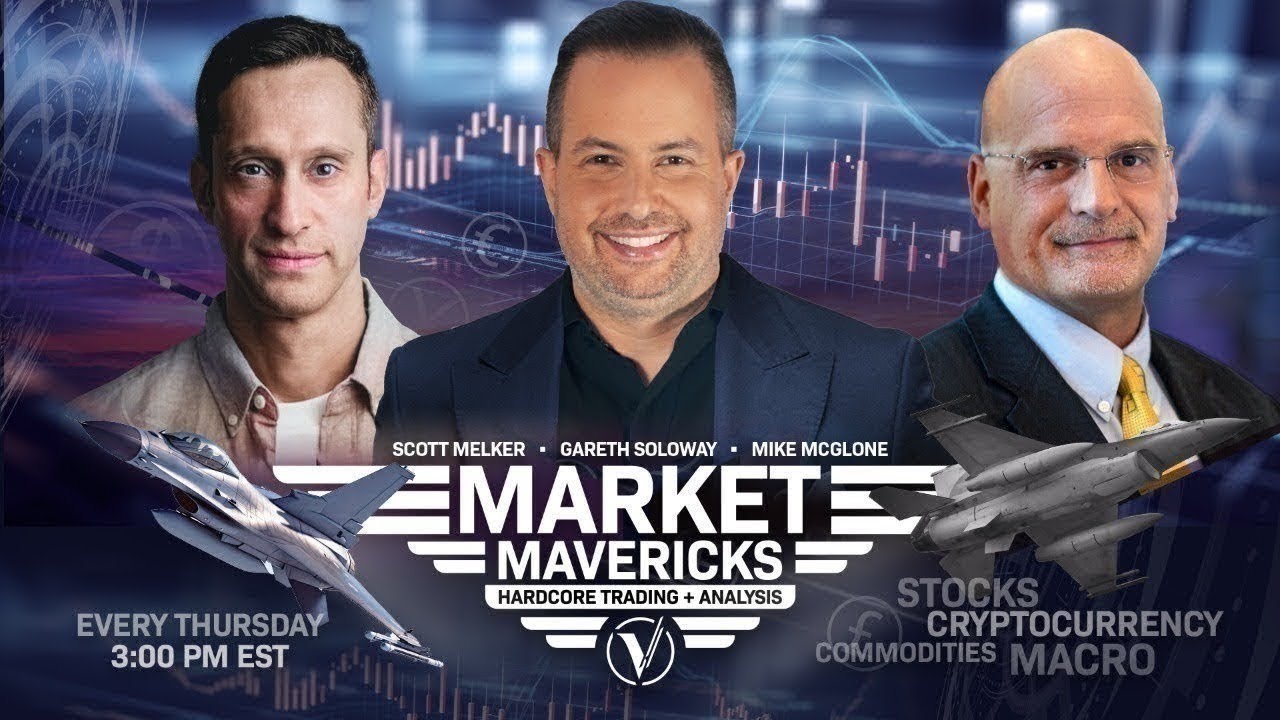
Roundtable discussion on the Iran/Straits of Hormuz shock, the oil spike, and knock-on moves in gold, silver, Bitcoin, and broader risk assets. The speakers debate whether the surge is a short-lived war premium or the start of a larger inflation/volatility regime shift, with mixed views on Bitcoin strength and a bearish medium-term stance on risk given unusually low market volatility.
Watch on YouTube ›Get the market thesis, key claims, assets, contradictions, and follow-up questions from any financial video — then unlock a version personalized to your portfolio, watchlist, and favorite speakers.
This episode of Market Mavericks opened with a focus on the immediate market impact of the Straits of Hormuz closure and the resulting spike in crude oil above $80. Mike McGlone argued that the shock should be viewed in the context of long-term U.S. energy independence and political incentives: because the U.S. is now a net crude exporter, a big oil spike is a tax on consumers and likely politically unsustainable heading into the midterms. Gareth Soloway said he initiated a small short in crude near $80 and planned to add in increments, expecting Trump to push oil lower by the election period. The conversation then broadened into the war itself and its market implications. Scott Melker emphasized that near-term fundamentals support higher oil prices because the Strait closure, LNG disruption, and war-related supply concerns are real. …
The immediate setup is dominated by the oil shock: crude can stay bid on Middle East headlines, but the move is already violent and headline-sensitive. For risk assets, the actionable risk is that another oil leg higher or a fresh war escalation hits sentiment before the market can stabilize.
Over the next several weeks, the key question is whether the oil spike forces a broader inflation scare and then a policy/political response that brings prices back down. If Bitcoin can reclaim and hold the major resistance band, the recent bounce may extend; if not, the rally is likely just another bear-market rebound.
The structural message is that markets may be underestimating how fragile low-volatility regimes are after years of policy support. If volatility normalizes upward, the next drawdown in equities and risk assets could be much deeper and longer than recent pullbacks.
The closure of the Straits of Hormuz is the dominant immediate market catalyst and is pushing crude sharply higher.
The host opens by highlighting oil above $80 and asking whether $100 is possible after the Strait closure.
U.S. energy independence reduces the long-run shock value of oil embargos compared with earlier eras.
McGlone argues the U.S. is now a net importer-turned-exporter reality and says embargos matter less than before.
The crude spike is likely politically unsustainable because Trump wants lower energy prices before the midterms.
McGlone explicitly ties energy prices to election incentives and future policy response.
Do you think oil could reach $100 per barrel, or is this just a short-lived spike?
Mike argues the move could extend higher in the short term, but he expects prices to be driven back down before the midterms. He frames the current spike as part of a broader market and political setup rather than a permanent new level.
What is your view on the oil move and the chance of prices rising further?
Scott says there are strong fundamental reasons for oil to keep rising in the short term, citing disrupted supply, reserve use in Japan and Europe, and the possibility that the war lasts into September. He does not give a precise price target but agrees the risk is to the upside.
Does the current geopolitical situation postpone deflation, or do we see higher inflation reads in the near term?
Mike says inflation is going to accelerate. He shows a chart about volatility in energy and precious metals, arguing that S&P/NASDAQ volatility near a 10-year low is unsustainable, and that rising volatility will shape all investment decisions. He reiterates this is his key base case for the year.
Unlock the full claims, asset map, scores, related transcripts, follow-up questions, and AI chat — shaped around your portfolio, watchlist, favorite speakers, and risks.