gold rises on monetary debasement, deficits, and fading Fed credibility
Preview how this speaker shows up across market transcripts. Unlock the full archive, AI chat, and the version personalized to your watchlist, followed channels, and favorite speakers.
Trey Reik is a precious-metals and macro commentator, associated with Sprott and Wealthion, who speaks from a long-running gold-bull perspective. In the transcript he presents himself as a “gold guy” who has followed precious metals for a quarter century and focuses on a relatively narrow set of variables. He is comfortable making market calls around gold and silver, and he often frames moves in terms of long-cycle fundamentals rather than headlines.
Reik’s recurring economic worldview is that gold is driven less by short-term geopolitical shocks than by structural monetary and fiscal pressures. He repeatedly emphasizes three core supports for precious metals: anti-dollar sentiment, U.S. deficit dynamics, and fading Federal Reserve credibility. He sees central-bank reserve behavior, reserve freezing, and policy mistakes as reinforcing a long-term case for gold. More broadly, he treats precious metals as a response to monetary debasement, institutional credibility loss, and fiscal excess, while viewing geopolitics as a noisy trigger that can attract short-term traders without determining the durable trend.
Every analyzed appearance we have for this speaker, newest first. Open any transcript preview to read the underlying transcript.

Preview:Maggie Lake interviews Trey Reik live from the 2026 Rick Rule Symposium, where attendance has surged 60% YoY to 800. Reik relays Rick Rule's updated message: after a 25% correction in gold/silver from January blow-off highs, the summer weakness (July/August) is a buying opportunity, not a reason to panic. The core thesis: gold miners are "on sale," the Fed is unlikely to tighten despite market fears (structural debt, new Fed governor Borsch's dovish lean), and M&A will cascade down the food chain — seniors buying mid-tiers, mid-tiers buying emerging producers, creating opportunity in exploration/drilling names. Sentiment is washed out (DSI hit 10% bullish), and $4,000 gold is flagged as a logical cycle low.
Preview:Maggie Lake interviews Trey Reik at the 2026 Rick Rule Symposium. Attendance surged 60% YoY to 800, signaling growing investor interest in precious metals. Reik relays Rick Rule's evolved message: after a brutal correction (gold -25%, silver -25%, GDX -35% from January highs), the July-August period may stay bumpy but presents a buying opportunity in gold mining equities across the food chain, particularly exploration/driller names poised for M&A-driven revaluation. Reik argues the Fed is unlikely to tighten despite inflation fears — structural debt loads and new Fed leadership make rate hikes improbable — and that gold has been unduly pressured by flawed "ABC reasoning." He flags the Bernstein BSI sentiment indicator hitting 10% bullish (a rare extreme) and sees gold ~$4,000/oz as a logical cycle floor. The core thesis: a 3-5 year holding horizon is essential; 50% drawdowns are part of the game.
Preview:Rick Rule outlines a bullish long-term case for gold and gold equities, arguing we're entering a "spectacular period" akin to 2000–2010. He advises accumulating gold on summer weakness, favors prospect generators as the highest-probability exploration strategy, highlights Tether's growing role in royalty consolidation, and warns investors against the three cardinal sins: chasing momentum, insufficient research, and mismatched time horizons.
Preview:Rick Rule says AI is powerful when it is used to query constrained, data-heavy problems, but he has no view on AI valuations or broad tech market pricing. The rest of the interview is a strong bullish case for gold and select mining equities, especially high-quality explorers, prospect generators, and politically risky but geologically prospective copper belts, with the caveat that a rough summer could create a buying opportunity.
Preview:Don Durrett argues that the Fed is really focused on market stability and liquidity, not its stated 2% inflation/full-employment mandate, and that this hidden priority is why the bond market matters most. His core thesis is that gold and silver are being held back until the broader “uncertainty trade” arrives—when stocks and bonds are actually perceived as at risk—and that the real trigger for a major gold move is weakness in U.S. bonds and eventually a falling S&P relative to gold.
Preview:Pierre Lassonde argues gold’s next major target is $17,000, which he frames as a floor rather than a ceiling. His case is built on a 1970s-style replay: energy shocks feed inflation, the dollar weakens, deficits stay unaddressed, and gold eventually re-prices against the Dow toward historical extremes.
Preview:Rudi Fronk argues that copper and gold are still underowned and undervalued, with commodities likely to reconnect to equities after a market bubble unwinds. He uses Seabridge Gold as an example of long-duration optionality, emphasizing large in-ground metal per share, rising metal prices, and the disconnect between net asset value and market valuation.
Preview:Wealthion’s Trey Reich interviews Ocean Wall executives Nick Lawson and Ben Finegold about a ‘molecular war’ thesis: conflicts and supply-chain fragility are creating investment opportunities in hard-to-replace inputs like metallurgical coal, tungsten, helium, and uranium.
Preview:Adrian Day argues U.S. stocks are extremely overvalued, with speculative excess and weakening leadership, while foreign markets look more attractive and may continue outperforming. He is meaningfully underweight the U.S., prefers selected overseas value opportunities, and sees some risk in private credit/BDCs but still finds certain public BDCs like Ares Capital acceptable.
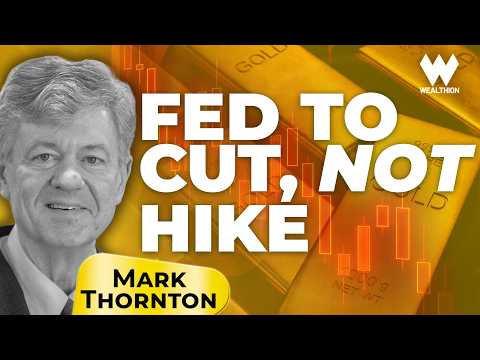
Preview:Mark Thornton argues that gold and silver remain in a long-run bullish regime driven mainly by monetary debasement, not by headline CPI or short-lived geopolitical shocks. He sees the recent pullback as a normal bull-market correction and expects the Fed to cut rates before hiking because of debt, liquidity stress, and malinvestment.
Preview:Pierre Lassonde says gold is in a late-but-still-early multi-year bull market, driven by central-bank buying, debt stress, and dollar devaluation, and he projects gold could reach $17,250 by 2030. He is also constructive on silver and on royalty/optional resource models like Franco-Nevada and Orla.
Preview:Per Jander argues uranium remains structurally bullish because supply is tight, contracting is lagging, and multiple demand sources are extending reactor lifetimes or adding new builds. He says the market is moving slowly, but the term price is already firming and the downside from current levels looks limited.
Preview:Rick Rule argues gold equities are more attractive when they are weak because the market is over-discounting costs and underestimating gold’s upside. He expects gold-stock consolidation and M&A to become a major theme over the next few years, especially among mid-tier producers and adjacent deposits with existing infrastructure.
Preview:Rick Rule argues that gold’s recent weakness is a normal correction, not a broken bull market, and says he added to gold, silver equities, and oil stocks when they were cheaper. His bigger concern is a credit contraction driven by junk-bond and high-yield ETF structures, which he thinks could echo 2008 if liquidity demands force illiquid bond selling.
Preview:Trey Reik argues the gold selloff is being driven less by a broken gold thesis and more by a short-term geopolitical/liquidity reset after a blowoff move in January. He says the long-run bull case for gold remains anchored in dollar distrust, U.S. deficits, and weak Fed credibility, but the market is currently pricing an inflation scare and central-bank tightening that he считает unlikely to persist.
Preview:Panel discussion on the Iran war focused on whether the U.S. can or should escalate to force a settlement, how Gulf states and China factor into the conflict, and what it means for markets. The speakers split between a more cautious geopolitical assessment and a highly forceful thesis that Trump cannot back down, with gold, oil, inflation, and defense spending all discussed as market implications.
Preview:Larry Lepard argues the precious-metals surge is part of a larger multi-year secular bull market driven by fiscal deterioration, money printing, and growing awareness that “something’s really broken.” He says the recent sharp selloff is a normal correction after an overheated, frothy first leg, not the end of the move, and he remains structurally bullish on gold and silver.
Preview:Rick Rule argues copper is a near-certain long-term winner because supply constraints, underinvestment, permitting delays, and rising global electrification make higher nominal prices likely. He is also constructive on uranium because term contracts are improving economics and on rare earths because geopolitics and China’s environmental costs are raising non-China supply incentives, though he treats rare earths as highly speculative.
Preview:Rick Rule remains strongly bullish on precious metals over the next decade, arguing that the main drivers are US dollar purchasing-power erosion and negative real rates, not geopolitics. He frames the 2025–January surge in gold, silver, and miners as partly fundamental and partly a speculative blowoff, and warns that volatility and sharp pullbacks are normal in a bull market.
Preview:Michael Oliver argues that 2026 still favors gold, silver, the miners, and a broader commodity rebound, while US stocks and government bonds are late-cycle areas to avoid. He says the recent pullback in monetary metals is a buying opportunity, expects commodities to enter a second major uptrend, and thinks stocks and bonds are in topping processes with more risk ahead than upside.
Preview:Michael Oliver argues that the recent pullback in silver is a sharp but ultimately insignificant 'midpoint stumble' within a larger breakout in precious metals and commodities. He is strongly bullish on silver, gold, miners, oil, and the broader Bloomberg commodity index, while turning sharply bearish on Bitcoin, which he says has broken long-term momentum structure. He also thinks the S&P 500 is in a topping process, but not yet at a confirmed crash point.
Preview:Alan Hibbard argues that the dollar is structurally weakening, that a new monetary regime is already in motion, and that gold is the most likely asset to play an official role in that system. He rejects silver and Bitcoin as the backbone for that role, while still expressing strong personal support for Bitcoin as an investment.
Preview:A Wealthion interview with Alan Hibbard argues that dollars are currency, not savings, and that real savings means preserving energy in hard money like gold and silver, with Bitcoin as a qualified digital counterpart. The conversation builds a framework around 12 properties of money, entropy, the money/currency split, and why a future monetary reset is likely to involve gold rather than Bitcoin.
Preview:Bob Quartermain argues gold has reached a structural inflection point driven by debt, central-bank buying, and renewed investor demand for hard assets. He also uses his record at Silver Standard, Pretium, Dakota Gold, and Hemlo to support a recurring theme: buy/advance assets others undervalue, especially in stable districts with infrastructure and permitting advantages.
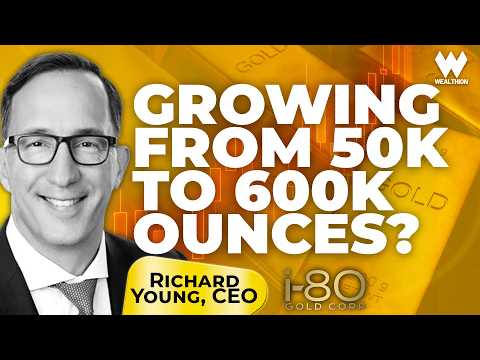
Preview:Wealthion interviews Richard Young, CEO of i-80 Gold, about the company’s Nevada asset base, development plan, and why he thinks the stock trades far below intrinsic value. Young says i-80 could grow from under 50,000 ounces now to more than 600,000 ounces in the early 2030s, with a long-run plan to hold that level through 2050. He frames Nevada as a lower-risk mining jurisdiction because of simpler geology and strong labor/supplier depth, and he argues the company’s multiple high-grade deposits and one operating mine give it unusual upside if execution improves.
Preview:E.B. Tucker argues that winning investors stop forcing their worldview onto markets and instead ask what is actually happening, then position modestly and stay flexible. His core message is that long-run wealth comes from patience, reading, and “marathon” behavior — not from chasing home runs, obsessing over being rich, or trying to solve life with one trade.
Preview:Don Durrett argues that gold and silver are the real signal while the S&P 500 and bond market are "lying" at all-time highs, and he frames mining stocks as a speculative way to gain leveraged exposure to a coming rise in bullion prices. The discussion centers on how he builds a gold-stock portfolio, why he prefers producers and mid-tiers over smaller gold producers, and why developers can deliver big upside but also a lot of dilution and execution risk.
Preview:Lobo Tiggre discusses a K-shaped economy where the bottom rung is struggling (evidenced by rising utility payment delinquencies) while the top rung — propped up by AI mania — is now showing cracks. He and peers (Adrian Day, Brent Johnson) agree we're in an AI bubble, with circular vendor financing reminiscent of past crashes. He flags private credit as an opaque systemic risk and notes that major bank CEOs have called a 10-15% correction "healthy." Tiggre stops short of predicting an imminent crash but argues that owning hard assets (gold, resource stocks) as insurance is now prudent.
Preview:Mike McGlone argues that gold’s extraordinary rally is less a clean bullish signal than a warning that risk assets are stretched. He says gold, silver, Bitcoin, copper, and the U.S. stock market have all moved to extreme valuations at once, and that gold’s surge to around $4,000/oz looks historically overextended versus moving averages and prior cycle peaks. His near-term view is that gold likely stalls or consolidates, stocks are vulnerable to a pullback, and bond prices may firm if volatility rises.
Preview:Paul Hwitt, CEO of Americas Gold & Silver, argues the company is a cash-flowing turnaround with two underinvested mines, especially Galena in Idaho, and that production can scale from roughly 1.2 million ounces to 5 million ounces, with a longer path toward 7–10 million. The near-term extra upside, in his view, is antimony: the U.S. lacks domestic production, China has cut off sales, and Amercas says it can recover antimony from its Galena ore with potentially very high margins. He also frames silver as still early in a major rally, calling $50 “the beginning” and suggesting $100–$150 is possible.
Preview:Manny Alkafagi, VP of Corporate Development at First Majestic Silver, presents the company as the purest large-cap silver miner (55% silver revenue) positioned for what management views as the early innings of a silver supercycle. The interview covers the accretive Gatos Silver acquisition, three cornerstone Mexican assets, a strong $500M+ balance sheet, and their unique vertically integrated minting operation. The core bull case rests on the gold-to-silver mining ratio (7:1) versus the price ratio (~84:1), implying significant upside for silver even if gold stays flat.
Preview:Alberto Morales, CEO and significant shareholder of Andean Precious Metals, discusses the company's unusual cash-flow-focused business model. Born from a turnaround acquisition of a Bolivian silver processing facility with less than one year of mine life remaining, Andean engineered a third-party ore-buying model that generates consistent free cash flow regardless of mine-life constraints. The company has since diversified into North America with the Golden Queen gold mine in California. Morales emphasizes Andean's strong balance sheet (~$87M in liquid assets, negative net debt), record financials, a 7M-ton contract with the Bolivian government, encouraging exploration results, and an active search for a transformational acquisition primarily in North America.
Preview:Wealthion’s Trey Reich interviews Coeur Mining CEO Mitch Krebs at a silver conference about the company’s transformation, operating assets, and why he thinks silver equities are still early in the cycle. Krebs argues Coeur has become a much stronger North American silver/gold producer after years of portfolio cleanup, a major Rochester expansion, and the SilverCrest/Los Chispas acquisition, and he says the current higher silver and gold prices are only now starting to flow through to cash flow.
Preview:CEO Diane Garrett makes the case that Hycroft Mining has completed a remarkable turnaround: the balance sheet is now debt-free with 3-4 years of cash, two high-grade silver discoveries (Brimstone and Vortex) are yielding multi-thousand-gram intercepts, and drilling is underway on a potential deep feeder zone. The company is 80% owned by blue-chip institutional investors led by Eric Sprott, who has deployed $110M since June 2025. Garrett frames this as "Remarco 2.0" — a management-led rehabilitation of a large, misunderstood Nevada asset — with multiple catalysts ahead including a PEA/PFS by year-end, continuous drill results, and a potential near-term heap leach restart.
Preview:Dave Wargo argues that rare earths are entering an early, multi-year reindustrialization cycle driven by Western efforts to reduce dependence on China. He is especially bullish on ionic clay deposits and on companies with real processing capability, naming Meteoric and Energy Fuels as his preferred examples, while viewing MP Materials as the policy-backed industry floor-setter.
Preview:Rick Rule argues the silver bull market is intact and likely early, with the most explosive phase typically coming only after gold has already established the narrative and generalist money starts moving in. He says silver can move “hard” because investment demand matters far more than industrial demand in bull markets, and he thinks the current setup is being driven by negative real rates, weak fiat confidence, and severe supply tightness in tradable inventory and leasing.
Preview:Michael DiRienzo, President & CEO of the Silver Institute, argues silver is in a structural bull market driven by a multi-year supply deficit (~117-122M oz in 2025), surging ETF inflows (132M oz in H1 2025, exceeding all of 2024), and dual demand from investment and industrial uses — particularly solar, EVs, and emerging AI/data center buildout. He notes a potential "silver squeeze" as LBMA/COMEX free-float inventories dwindle to an estimated 200-250M oz, and highlights that institutional investors are now entering the silver space, which he sees as the missing ingredient for sustained higher prices. He is reluctant to give price targets but says direction is "north" with a possible new floor of $35-38. The interview also touches on the lack of new mine supply, silver's byproduct nature (only 27% from primary mines), and the limited universe of silver equities.
Preview:Trey Reik lays out a comprehensive bull case for silver, arguing that the metal is structurally undersupplied, driven by a tiny above-ground investable stock and growing industrial demand from solar/AI. He sees silver playing catch-up to gold's breakout, with $100/oz within reach over the next two years if gold holds near $4,000. Silver equities — particularly the 15 pure-play miners — are positioned for outsized gains, historically outperforming gold equities after Fed easing pivots.
Preview:Pierre Lassonde argues gold is in the early-middle stage of a major secular bull market, comparable to the 1976-1980 advance, because central banks are buying aggressively, the dollar’s reserve role is eroding, and sovereign debt/fiscal pressure are pushing financial repression. He goes further than the title’s claim, saying gold could reach $17,250 by 2030, with silver likely to outperform later in the cycle, while also emphasizing the leveraged optionality of royalty companies like Franco-Nevada and Orla.
Preview:John Waldie of SCP Resource Finance discusses the ongoing precious metals bull market, noting gold at ~$3,800 and silver at ~$46.50. He describes SCP's deal flow as "off the scale" and paints the bull market as only in the "fourth inning," with the generalist retail investor barely participating. He outlines the exploration/developer space, resource confidence metrics, and warrant strategies, and gives 6-month targets of $4,000 gold and $50+ silver. The conversation includes discussion of M&A candidates, jurisdictional risks in Africa vs. Canada, and promotion of an upcoming silver conference.
Preview:A Wealthion roundtable pits gold against Bitcoin as parallel debasement hedges, with both guests arguing that weak fiat, heavy debt, and a softer dollar are the core drivers of the move. Trey Reik leans harder into gold’s institutional role and sees the current environment as supportive of much higher prices, while Alan Hibbard argues Bitcoin and gold share a similar money function but differ sharply on safe-haven maturity, volatility, and likely adoption path.
Preview:Grant Williams argues gold should be treated as a store of wealth, not a trading vehicle: he owns it to preserve purchasing power and is comfortable with a very large allocation. He ties the case for gold to a weakening dollar standard, reserve diversification after the 2022 Russian asset freeze, and the likelihood that U.S. debt will eventually be monetized.
Preview:Trey Reik argues gold’s move is being driven by three long-running forces that have crossed tipping points: unsustainable U.S. fiscal deficits, accelerating anti-dollar reserve diversification, and deteriorating Fed credibility. He thinks short-term pullbacks are possible, but a major reversal is unlikely unless debt dynamics improve dramatically or the broader financial system de-risks in a way he does not see happening soon.
Preview:Larry Lepard argues gold, silver, and Bitcoin are all in a continuing monetary-debasement trade, but silver is the most exciting near term because it just broke out and could move much further. He says gold is smelling future rate cuts, possible QE/YCC, and a larger inflation wave, while gold miners and selected silver miners still look like catch-up trades rather than fully matured ones.
Preview:David Morgan argues silver is setting up for a major breakout, with $50 as the key psychological and technical threshold. He frames silver as both an industrial necessity and monetary asset, and says its tiny market size means even modest capital rotation could drive a sharp squeeze once investment demand accelerates.
Preview:Francis Hunt argues that the world is in an accelerating stagflation/debt-debasement regime he calls “hyper stagnation,” and that gold and especially silver are in the early-to-middle stages of a major revaluation higher. Near term, he thinks silver may still pull back or chop before resuming the move, but over the medium and long term he sees a powerful upside driven by sovereign debt stress, fiat debasement, and tightening physical supply.
Preview:Tavi Costa argues silver is in the early stages of a major bull market and could eventually reach triple digits, driven by a lagging catch-up to gold, a weak dollar backdrop, rising industrial demand, and structural supply constraints. He also broadens the bullish view to copper, zinc, and select mining equities, while warning that inflation and policy surprises could create near-term market volatility.
Preview:Jordan Roy-Byrne argues gold has already broken out in a major secular bull market, with the immediate setup still constructive but not necessarily finished. He is more confident in the next two to three years than in the next few weeks: short term he thinks gold may still need more time to consolidate, while medium term he expects the breakout to extend and eventually pull silver and gold equities higher. His framework is built on intermarket analysis, long-duration bases, and historical analogs such as 1972 and 2006, and he repeatedly emphasizes that his portfolio work is about buying quality juniors with real value rather than gambling on drill holes.
Preview:Wealthion’s highlight reel from the Rick Rule Symposium features several mining executives making a broadly bullish case for gold and silver. The main throughline is that central-bank buying, monetary debasement, scarce new discoveries, and tight physical supply could keep supporting higher gold prices, while silver is presented as both unusually constrained in physical markets and leveraged to any breakout.
Preview:Rick Rule argues that gold’s recent strength is the beginning of a much larger precious-metals cycle, with silver likely to outperform gold later in the move. He ties that view to long-term dollar debasement, negative real rates, and heavy U.S. debt/deficit burdens, while also highlighting uranium and rare earths as selective opportunities and pitching Battle Bank as a multi-currency, bullion-friendly bank.
Preview:This Wealthion symposium compilation argues that the U.S. dollar is entering a long decline in purchasing power, which should lift gold materially and likely give silver a catch-up rally. The speakers tie that view to debt, deficits, sanctions risk, Fed easing/QE, BRICS de-dollarization, and rising demand for hard assets and critical minerals.
Preview:Wealthion’s video is a copper-focused conference roundup centered on Trump’s proposed 50% copper tariff and what it could mean for prices, trade flows, and investable miners. The speakers are broadly constructive on copper over the medium to long term, but they differ on whether the tariff is a durable policy shift, mainly a revenue grab, or just a short-term distortion that could create regional price gaps.
Others tracked across the same asset focus or market thesis.
Unlock every transcript this speaker appears in, compare them with your other followed voices, and ask the agent for the bull, bear, and consensus read in one workspace.
Type a question. Create a free agent to send it and keep the answer linked to this speaker.
Your question is preserved across sign-in.
Free. No card. Takes about a minute.