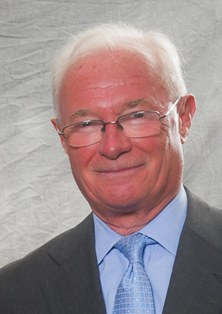
His recurring economic worldview is broadly cyclical, pessimistic in the near term, and inflationary over the longer horizon.
📈 See how Simon Hunt's thesis changed over time →Preview how this speaker shows up across market transcripts. Unlock the full archive, AI chat, and the version personalized to your watchlist, followed channels, and favorite speakers.
Simon Hunt presents as a macro/geopolitical market commentator focused on global power, debt, commodities, and policy cycles. Across the supplied transcripts he repeatedly interprets events through large, interconnected systems: U.S./G7 fragility, China’s strategic use of currency and gold, Iran/Strait of Hormuz risk, and periodic turnings in equities, metals, and inflation. He forecasts major regime shifts rather than incremental moves, and often frames markets as being driven by state strategy, liquidity, and structural debt burdens. He also references long-cycle weather/commodity effects when discussing food and inflation.
His recurring economic worldview is broadly cyclical, pessimistic in the near term, and inflationary over the longer horizon. He expects debt overhangs and geopolitical conflict to trigger recession or sharp corrections in the U.S. and G7, with lower equities, weaker the dollar, and pressure on industrial metals before a later policy-driven rebound. He sees China as actively managing its currency and gold price to ease domestic debt constraints and increase strategic leverage, while the West faces stagflation after stimulus responses. Overall, he argues that today’s instability is part of a larger reset that eventually gives way to renewed inflation, commodity strength, and another long bull phase.
Every analyzed appearance we have for this speaker, newest first. Open any transcript preview to read the underlying transcript.
Preview:Simon Hunt argues the Iran conflict has restarted in earnest and could have global spillovers through the Strait of Hormuz, diesel supplies, sovereign debt stress, and higher food prices. He also pairs that with a broader macro view: recession in the US/G7 next year, weaker oil-sensitive growth, falling yields first, then a later stagflation/reset phase centered on gold, Hong Kong, and a China-led monetary realignment.
Preview:Simon Hunt argues the Iran deal is unstable and likely temporary, because an MOU has no legal force and key parties—especially Israel and, by extension, Washington—may not honor its terms. He frames the Middle East as entering a broader geopolitical realignment centered on Iran, with Saudi Arabia, the Gulf states, and potentially Turkey moving into a new China- and Russia-linked regional architecture. On markets, he says the bond market and oil-price sensitivity helped force concessions, expects recession by year-end, a weak 2027, and then a larger inflation/debt-cycle reset that favors physical gold over equities and paper assets.
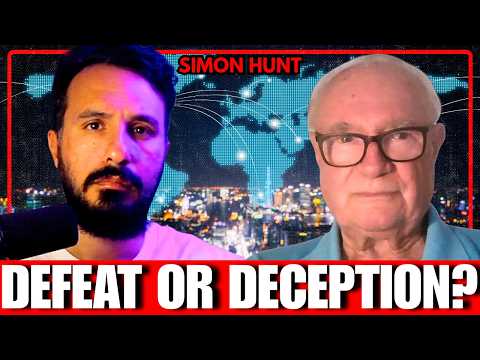
Preview:Simon Hunt argues the reported US-Iran "peace deal" is not a real treaty but a fragile memorandum that largely reflects an Iranian win and an American retreat. He says the deal likely buys only a few weeks of calm, after which Israel may resume bombing Lebanon or the US may try one last strike on Iran if Washington cannot accept the appearance of defeat.
Preview:Simon Hunt argues the Iran-Israel/U.S. conflict is entering a messy transition phase, not a quick settlement. He thinks any near-term understanding with Iran would be only a memorandum, not a binding peace deal, and expects sporadic conflict after a delay past July 4 rather than a sustained campaign. He links that geopolitical shift to a broader move toward a multipolar order, with Russia and China helping reshape Gulf security and with gold regaining monetary importance.
Preview:The speaker argues that Iran, the Houthis, and Israel are moving into a broader regional escalation that could keep the Strait of Hormuz and Red Sea routes disrupted for an extended period. He thinks the market is underpricing the risk, especially the knock-on effects for oil, inflation, and economic activity in Asia, Europe, and eventually the U.S., while also saying China is better prepared than most because it has diversified supplies and overland access via Russia.
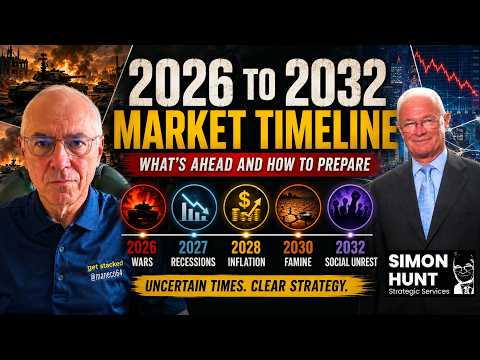
Preview:Simon Hunt argues the current Middle East escalation is not a contained event but part of a broader breakdown in the global order: oil shock risk, recession across the U.S. and G7, pressure on dollar-based trade, and eventually a shift toward a BRICS-linked, gold-backed settlement system. He expects equity markets to wobble near term, then weaken more materially into 2027/28 before a final inflationary rally into 2032 and a larger long-cycle crash.
Preview:Simon Hunt argues that the Iran conflict, Strait of Hormuz risk, and a broader BRICS-led de-dollarization push are part of a multi-year shift away from the current dollar-centered system. He expects continued regional war risk, rising inflation pressures into the late 2020s, weakness in stocks and copper in the near term, and a stronger long-run role for gold and other physical assets.
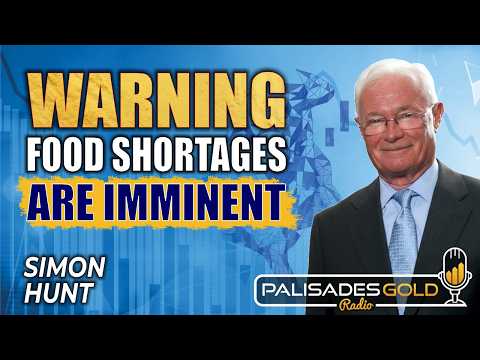
Preview:Simon Hunt argues that a Hormuz-linked oil disruption could quickly ripple into recession, stagflation, and food stress, while also accelerating a move toward a BRICS-centered monetary order that uses gold and local currencies. He is bullish on gold as a hedge against instability, bearish on the near-term commodity super-cycle narrative, and expects recession nearly everywhere by year-end with deeper weakness next year.
Preview:Simon Hunt argues that the China-U.S. summit changed little and that the real market driver is rising geopolitical risk around Iran and the Strait of Hormuz. His core call is that oil supplies outside the Gulf are close to exhausted, physical shortages should show up in June, and the shock then spreads into manufacturing, fertilizer, food prices, and ultimately a broader market correction.
Preview:The video is a geopolitical-and-macro discussion centered on an imminent Iran escalation, China/Russia pushback against U.S. pressure, and the knock-on effects for oil, inflation, bonds, and precious metals. The speakers argue that a short-term attack on Iran could still happen soon, but they disagree slightly on timing; both see the larger consequence as higher energy prices, stagflation, and eventually a severe test of the fiat/debt system.
Preview:Simon Hunt argues the Iran conflict is likely to escalate after the ceasefire expires, with the U.S. pursuing a broader strategy to preserve hegemony, pressure BRICS, and weaken China. He expects this to be inflationary and disruptive across energy, metals, and global supply chains, with gold and silver benefiting over time and copper initially constrained by supply shocks before a later demand fade.
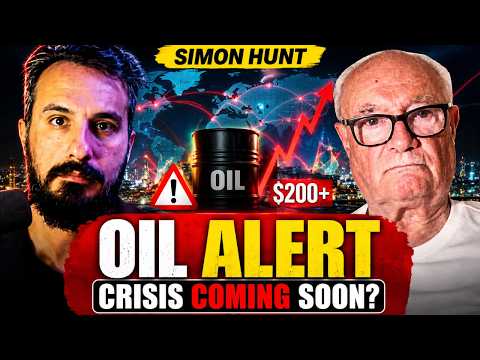
Preview:Simon Hunt argues the US-Iran ceasefire is merely a tactical pause for both sides to reposition forces, with a much bigger escalation coming within weeks to months. He claims Trump wants control of Iran's energy to dismantle BRICS, that the US/Israel will target Bandar Abbas, and that this conflict is a precursor to a larger war (2028-2030) that will decide global order. Hunt is bullish oil ($150+ target), food-related investments, and sees gold reaching $38,000 by 2030-32, reflecting the collapse of the Western fiat monetary system.
Preview:A geopolitical roundtable argues that the Iran war is accelerating de-dollarization, weakening U.S. influence in the Middle East, and pushing more countries toward China/Russia-oriented trade and security arrangements. The speakers also claim Turkey is moving away from NATO/Israel, that Taiwan is more likely to drift toward Beijing than face a direct invasion, and that energy control and commodity pricing outside the dollar system will matter more if the conflict drags on.
Preview:The speakers argue that a major Middle East escalation could shock oil, food, credit, and financial markets all at once. Their core view is that a prolonged disruption to shipping and energy flows would push oil sharply higher, strain bonds and equities, force central banks into emergency easing, and accelerate the decline of fiat currencies.
Preview:Simon Hunt lays out a dire scenario for the Iran conflict: he believes Iran is winning militarily, that the assassination of the Supreme Leader during Ramadan has triggered a jihad, and that Iran is executing a phased battle plan culminating in the physical closure of the Strait of Hormuz (~20M bbl/day). He sees two macro outcomes — a stagflationary recession with massive easing, or outright depression with oil demand destruction — and advises preparing for the worst via gold, silver, food supplies, and home power generation.
Preview:Simon Hunt argues that the US is in terminal imperial decline, following the historical pattern of overextension, debt accumulation, and internal friction that destroyed every empire since 1500. He sees the BRICS bloc — led by China, Russia, and India — as systematically dismantling dollar hegemony via a gold-backed settlement currency (the "Unit") potentially launching in 2026. On Iran, Hunt diverges from consensus: he believes Trump will postpone military action by 1-2 years because losing would cost America the support of all Gulf states. Near-term, he expects a sharp correction in copper, gold, and equities as credit cycles turn and global liquidity slows, followed by a Fed/government-stimulated inflationary boom that could see gold hit $10,000 and copper double from the trough into 2028.
Preview:Simon Hunt argues the world is entering a debt-and-liquidity squeeze that will pressure paper assets over the next few months, while geopolitical distrust between the US, China, Russia, and others stays high. He says the right response is to hold cash near-term and eventually rotate into real assets like precious metals, base metals, land, art, and food.
Preview:Simon Hunt predicts a convergence of 17-year and 25-year longwave cycles that peaked at end-2025, signaling major corrections ahead. He expects gold to fall to ~$4,000, a 20-30% S&P 500 correction, copper/silver declines, and a DXY rally to 106. He questions his own base case of a late-2026 inflation-driven recovery, leaning instead toward a recession extending into 2028. Geopolitically, he sees no genuine US-China or US-Russia rapprochement, expects the Ukraine war to end on Russia's battlefield terms, and believes a strike on Iran will be postponed. Longer-term, he forecasts the DXY halving by 2028-2030 and gold reaching $10,000+, driven by a BRICS gold-backed currency ("the Unit") and China backing the yuan with gold this year.
Preview:Simon Hunt argues the financial system is entering a fragile period driven by excessive debt, weak real-economy data, and geopolitical shocks. He says the recent gold/silver selloff was an orchestrated intervention to protect the system, not the end of the metals bull market, and he expects major volatility across equities, bonds, currencies, and geopolitics through 2026-2028.
Preview:Simon Hunt analyzes Trump's recent speech, arguing its claims of economic success rest on fragile ground. He sees a temporary inflation trough ahead of renewed price pressures, expects 10-year Treasury yields to drop to ~3% by mid-2026 before surging toward 5-12% by year-end and double digits by 2028, forecasting a deep post-2028 recession. He is structurally bullish on gold and silver despite expecting a near-term correction, while bearish on copper due to surplus conditions and fiber-optic substitution in data centers.
Preview:Simon Hunt argues the world is moving toward a sharper geopolitical and financial bloc split: China is allegedly countering the U.S. through financial, energy, and trade moves, while Europe, India, Russia, and Canada are re-aligning in ways that could weaken U.S. leverage. He pairs that with a bearish medium-term macro view: Treasury yields should fall briefly before rising hard, equities should see a sharp correction, and copper and other cyclicals are vulnerable despite near-term strength.
Preview:The video is a geopolitical macro interview centered on Simon Hunt’s view that recent U.S. action in Venezuela is part of a broader push to contain BRICS, control Western Hemisphere influence, and pressure China, Russia, India, and Iran. Hunt argues the Venezuela move is less about drugs or oil than about dismantling foreign entrenchment there, especially Chinese, Russian, and Iranian influence, and he sees similar logic in potential moves against Iran and even Greenland.
Preview:Simon Hunt argues that 2026 is likely to bring more geopolitical escalation, weaker U.S. and European economies, higher bond yields later in the cycle, and continued structural outperformance for China in manufacturing and AI. He is bullish on gold and silver on geopolitical grounds, but expects a near-term correction in metals and warns that bond-market stress and the yen carry trade could destabilize global markets.
Preview:Simon Hunt joins CapitalCosm's Danny for a wide-ranging geopolitical discussion covering Venezuela as a test case for Trump's Latin America doctrine, tensions with Iran/Israel, the frozen Ukraine conflict, and a sharp gold/silver correction call. Hunt argues gold could drop to $3,600 and silver to $50 before the next leg up, driven by a market shakeout around March-Q2 2026. He sees Europe desperate for a false-flag to drag the US into war with Russia as a distraction from debt crises, and warns of bond yields rising sharply in H2 2026 toward 5-5.5% on the 10-year, racing to 8% in 2027.
Preview:Michael Pento and Simon Hunt warn of an incipient global liquidity crisis driven by the exhaustion of the Fed's reverse repo facility and a potential yen carry trade unwind. Pento argues precious metals with industrial exposure — platinum, silver, copper — are most vulnerable and has reduced portfolio net long from 40% to 15%. He expects gold to correct toward $3,500 before rallying on eventual Fed QE and rate cuts. Hunt layers on a geopolitical framework predicting a mini-crisis now, a maxi-crisis by Q2 2026, and a mega-crisis by late 2027-2028, during which gold held inside the banking system could be confiscated. Both agree: own physical gold outside the banking system and buy any dip.
Preview:Simon Hunt delivers a sober geopolitical assessment: US-Saudi deals are photo-ops with no signed details; an Israel-Iran military confrontation is "inevitable" by H1 2026; BRICS is building a gold-secured payment system that bypasses the dollar without seeking to destroy it; the Ukraine war is really NATO vs. Russia and will not end until Washington accepts Russian terms; and Trump's grand strategy is control of global energy assets. Hunt sees a mini correction now, a maxi correction in Q2 2026, and a mega crash around 2028. The conversation with host Steve Yang spans Middle East, China-Taiwan, BRICS currency, Africa resource competition, and NATO's future.
Preview:Simon Hunt argues that gold is signaling geopolitical fragmentation and de-dollarization more than inflation. He expects near-term volatility and even a correction, but remains structurally bullish on gold as BRICS trade, energy geopolitics, and dollar weakness reshape the global system.
Preview:Simon Hunt argues the gold pullback is only a correction inside a larger bull market, not a trend change, and ties that bull market to rising geopolitical stress, BRICS de-dollarization, and mounting banking-sector fragility. His base message is cautious: over the next 3–6 months he expects financial markets to face a serious correction, while gold could temporarily fall toward 3,000 before resuming higher later in the cycle.
Preview:Simon Hunt of Simon Hunt Strategic Services paints a dark geopolitical picture: he argues the recent Pentagon meeting of 800 generals was a decoy, with real planning happening behind the scenes for a joint US-Israel strike on Iran within six months. He also sees an imminent US-backed regime-change attempt in Venezuela (for oil), a potential NATO-Russia escalation in Ukraine, and a fragile global financial system. On markets: gold is in early stages of a secular bull, potentially $8,000 by 2028 driven by BRICS gold-backing for trade settlement; copper is fundamentally in surplus now and overbought, likely heading to ~$7,000 before any inflation-driven bull to $14,000 by H2 2027, followed by a crash.
Preview:Simon Hunt joins Danny (CapitalCosm) to promote his new World Copper Podcast while delivering a deeply bearish macro outlook. He argues equity markets are topping, the US is in recession, Europe faces capital controls and potential breakup of Germany/EU, and a second US-Israeli attack on Iran is likely in H1 2026. China, by contrast, is positioned to stand firm on tariffs, expand BRICS gold-based trade settlement, and grow through investment rather than military conflict. The copper thesis sits within this fractured-world framework: flat consumption today, but secular demand from electrification will eventually drive 4% trend growth — the question is how we get there.
Preview:Simon Hunt presents a deeply bearish macro thesis centered on gold, the dollar, and geopolitical risk. He forecasts a near-term tactical correction in gold to ~$2,800 driven by a vicious dollar rally (DXY 98→103) as Treasury pushes rates lower to refinance debt — creating one last accumulation opportunity before the next bull leg. Longer-term, he sees DXY collapsing toward 50 by 2028, a doubling of gold, and a potential recession/depression with paper asset collapse, accelerated by the risk of European capital controls and war escalation in Ukraine.
Preview:Simon Hunt argues the world is moving into a sharper geopolitical split, with the SCO/BRICS bloc signaling unity against a U.S.-led West and with escalation risks in Ukraine and the Middle East potentially coming to a head before year-end. He also expects a major monetary reset theme: gold-backed settlement, weaker paper assets, and eventually pressure on the dollar and Treasury market, though he controversially says gold could first correct to around 2,800 before its next leg higher.
Preview:Simon Hunt presents a macro thesis centered on a temporary bond yield reprieve through mid-2026, driven by coordinated central bank intervention, followed by a sharp inflationary takeoff into 2027-2028 that pushes long-term yields into double digits. He ties this to a geopolitical framework where the multilateral bloc (Russia, China, India) is preparing for confrontation with the US-led order, with specific flashpoints in Ukraine, Israel-Iran, and European civil unrest. On assets: gold near-term to $2,900+ then a correction to $2,800 as a massive buying opportunity, a 15% equity correction before year-end, and eventually a DXY collapse to 50 by 2027-2028. His bottom line: don't invest for the long term, play short cycles, hold physical gold outside the banking system.
Preview:Simon Hunt paints a deeply bearish macro picture: the US is already in recession, official data is manipulated, and the Fed is politicized. He sees two paths — an imminent global collapse triggered by European escalation in Ukraine, or a breather followed by a 2-year stagflationary boom with double-digit inflation and bond yields reminiscent of the 1970s. His core conviction is that gold and real assets are the only safe harbor, with BRICS nations (China, Russia, India) coalescing into a gold-backed currency bloc that challenges the dollar's hegemony. Tactically, he expects a vicious dollar rally in the next 3-6 months that will correct gold before the longer-term bull resumes.
Preview:Simon Hunt delivers a deeply bearish geopolitical and macroeconomic outlook: the global economy is heading into recession driven by Trump's tariffs, the proposed Trump-Putin meeting will yield nothing of substance, and the world is structurally dividing into a US-led G7 bloc versus a China-Russia-Iran-led multilateral bloc on a path toward eventual conflict. On commodities, he sees copper falling to ~$7,000 by early 2026 before a massive inflationary recovery pushes it to ~$14,000, with 10-year Treasuries first dropping to ~3% then spiking to ~12% as the system breaks.
Preview:Simon Hunt argues the world is moving into a more dangerous phase of geopolitical fragmentation, with a likely second joint U.S.-Israeli attack on Iran, a widening war in Ukraine, and escalating BRICS vs. dollar tensions. He expects a near-term dollar bounce, a broader dollar decline afterward, higher gold, a volatile equity correction, and eventually a major copper and base-metals bull move before a later crash.
Preview:Simon Hunt predicts another joint US-Israel attack on Iran within "weeks if not days," framing it as part of a broader US strategy to break the Russia-China-Iran alliance by targeting Iran as the weak link. He sees the US economy nearing recession, inflation surging toward 1970s-style stagflation, gold heading to $5,000, and copper overvalued at $10,000 due to tariff speculation rather than real demand. He advises households to stockpile food ahead of soaring prices.
Preview:Simon Hunt argues that the market is underpricing imminent geopolitical shock, especially a potential strike on Iran, and that this could send oil sharply higher, unsettle complacent investors, and reinforce a long-running bid in gold. He ties the whole setup to a broader China-Russia-Iran alignment, growing pressure on the U.S.-led system, and a coming inflation/bond-market problem that could become severe by 2027-2028.
Preview:Geopolitical strategist Simon Hunt lays out an intensifying Russia-Ukraine conflict, with the EU's missile-range decision framed as a de facto war declaration. He sees a Russian summer offensive aiming for the Dnieper River and beyond, driven by security concerns over future hypersonic missile threats. On Iran, Hunt expects diplomacy to hold for ~18-24 months before breaking down. He ties these conflicts into a macro outlook: G7 recession into early 2026, followed by a highly inflationary global recovery starting Q2 2026, 10%+ bond yields, crashing equities, and a 4-5 year rolling depression — with gold as the only durable asset.
Preview:Simon Hunt argues the India-Pakistan border clashes are a coordinated false-flag operation by Modi to distract from waning domestic popularity and to weaken US-Pakistan ties. He sees a controlled, non-escalatory conflict. On Iran, he claims the US Navy has been humiliated by Houthi forces, Iran will not bend on nuclear enrichment, and the tripartite Russia-China-Iran alliance is firm. He forecasts oil dropping below $50 near-term, then rising to $75-85 in 2026, spiking to $150 in 2027, and $200 in 2028 — implying a major war around 2027-28. On markets, he expects one more washout, then a 2-year inflationary blowoff doubling equities and metals, followed by double-digit inflation and a bond crash.
Preview:Simon Hunt argues the US-China trade war is structural, not temporary: China’s manufacturing and robotics edge, plus its control over critical minerals, make a prolonged conflict likely. He extends that into a broader geopolitical thesis: if BRICS and a multilateral order mature, the “American empire is dead,” and the risks escalate toward hot war over the next few years, with Taiwan, Iran, and Ukraine all potential flashpoints.
Preview:Simon Hunt lays out a bearish near-term view (dead cat bounce, retest of lows by late April/early May), then a massive 18-24 month rally driven by monetary and fiscal stimulus, followed by an inflationary bust with double-digit bond yields and a depression. He frames everything through a geopolitical lens — US vs BRICS, Iran as a flashpoint, Taiwan as China's countermove, and Europe heading for implosion. Gold corrects to ~$2,500 before running to ~$5,000 by 2028.
Preview:Simon Hunt, in conversation with host Danny of CapitalCosm, argues the Bank of England has effectively defaulted on its gold delivery obligations, masking the failure with extended delivery timelines. He lays out a bearish macro thesis: the US economy is weakening toward recession (Atlanta Fed GDP nowcast swinging from +3.8% to -2.8%), Europe faces a false recovery that will roll over by mid-year, and a broader global financial system reset is coming by 2027-2028. He speculates on a potential US gold revaluation, a China gold-backed currency via Hong Kong, and warns of renewed Middle East conflict.
Others tracked across the same asset focus or market thesis.
Unlock every transcript this speaker appears in, compare them with your other followed voices, and ask the agent for the bull, bear, and consensus read in one workspace.
Type a question. Create a free agent to send it and keep the answer linked to this speaker.
Your question is preserved across sign-in.
Free. No card. Takes about a minute.