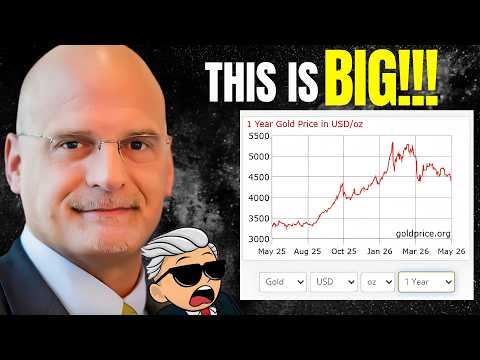
McGlone’s recurring economic worldview is broadly deflationary and mean-reversion oriented.
📈 See how Mike McGlone's thesis changed over time →Preview how this speaker shows up across market transcripts. Unlock the full archive, AI chat, and the version personalized to your watchlist, followed channels, and favorite speakers.
Mike McGlone is Bloomberg Intelligence’s Senior Commodity Strategist and appears in transcripts as a macro/relative-value commentator across commodities, rates, equities, and digital assets. His style is data-heavy and cross-asset, often using long-history correlations, volatility measures, and valuation extremes to frame turning points. He repeatedly argues that markets tend to mean-revert after speculative excess, and he prefers to read prices as signals of future underperformance rather than as confirmation of a new secular bull trend.
McGlone’s recurring economic worldview is broadly deflationary and mean-reversion oriented. He tends to view major rallies in gold, silver, copper, crude oil, and Bitcoin as late-cycle excesses that eventually fade, with stock-market strength and low volatility often acting as the main force propping up commodities. He frequently argues that when assets become highly correlated, over-owned, or unusually volatile versus equities and Treasuries, they are likely near a peak. Across the transcripts, he is skeptical of commodity supercycle narratives, expects commodities to underperform after sharp run-ups, and often favors U.S. Treasuries—especially long duration—as relative-value winners when risk assets cool. He also repeatedly links inflation bursts to later demand destruction and post-inflation deflation, rather than to a lasting inflation regime.
Every analyzed appearance we have for this speaker, newest first. Open any transcript preview to read the underlying transcript.
Preview:Mike McGlone argues the post-pandemic commodity reflation trade is fading and that the clearest signals are bearish for crude oil, mixed-to-bearish for industrial metals, and late-stage for gold/Bitcoin. He frames many commodities as increasingly tied to the stock market, says correlations have spiked to unusual highs, and thinks a modest S&P 500 drawdown could trigger much lower oil and a bigger risk-off move across Bitcoin, gold, silver, and copper.
Preview:This was a Macro Monday interview/debate about Bitcoin, gold, rates, commodities, and Strategy (MSTR). The panel broadly agreed the macro backdrop is still inflationary and debt-heavy, but split sharply on whether that supports hard assets now or whether short-term speculative excess has already peaked. Mike McGlone argued gold and Bitcoin have already seen major tops and sees downside targets like $10K Bitcoin, while Peter Schiff argued the opposite: real rates, deficits, and money creation still favor gold and set up a much larger Bitcoin drawdown. Dave Weissberger mostly backed the inflation/liquidity case but was more skeptical of the immediate oil downside and more nuanced on Bitcoin’s short-term structure.
Preview:Mike McGlone argues that the huge run in gold, silver, and broader commodities earlier in 2026 created a better opportunity to sell than buy. His core view is that commodities are now highly correlated with equities, especially the S&P 500, so if stocks correct, commodities should fall too; he therefore favors U.S. long Treasuries as the cleaner trade.
Preview:Mike McGlone argues the market is entering an endgame where the U.S. stock market is the last remaining “stud” and everything else—crypto, precious metals, industrial metals, and eventually crude oil—rolls over as deflationary pressure reasserts itself. He sees recent strength in gold, silver, Bitcoin, and commodities as classic speculative blow-offs that have already begun to reverse, and he thinks the eventual catalyst for broader deflation will be a decline in the U.S. equity market, which he expects by year-end.
Preview:Mike McGlone argues the market is showing late-cycle excess and mean reversion signals rather than a fresh durable expansion. His main calls are bearish on Bitcoin/crypto, cautious to bearish on gold after a huge run, and relatively constructive on Treasuries versus overheated risk assets.
Preview:Mike McGlone argues the precious-metals rally is mostly a late-cycle move that may have already become crowded. He thinks gold can still overshoot, but his higher-conviction trade is U.S. Treasuries if risk assets and volatility finally roll over, while silver/copper are more tethered to the stock market than many bulls assume.
Preview:Michael McGlone argues that current macro conditions are a setup for a later deflationary bust: inflation is being lifted by oil and asset prices now, but the bigger risk is that an eventual stock-market reversion will unwind the bubble. He says gold and crude have become too extreme tactically, while equities remain the dominant force determining the direction of most commodities.
Preview:A Bloomberg Intelligence commodity strategist argues silver, gold, and much of the metals complex have likely entered a post-blowoff consolidation phase after a huge rally, with silver especially vulnerable to a long period of underperformance despite the possibility of future spikes.
Preview:Mike McGlone argues that gold’s explosive rally has likely entered a late-cycle, overextended phase: still structurally supported, but tactically shortable after a huge move. He pairs that with a broader call that equities, crypto, and commodities are all showing late-bull-cycle behavior, with treasuries and long bonds becoming the cleaner defensive trade.
Preview:Mike McGlone argues that commodity, crypto, and precious-metals rallies are largely exhausted and that the stock market is the key variable driving most cross-asset outcomes. He expects oil and natural gas to fade, sees copper and industrial metals as dependent on equities, and says Bitcoin/crypto and even gold have become overextended, volatile, and vulnerable if stocks roll over.
Preview:Mike McGlone argues the recent Middle East ceasefire and oil spike are setting up a broader reversal in risk assets: he expects crude to roll over, inflation to cool, Treasury bonds to outperform, and U.S. stocks and Bitcoin to weaken further. He frames Bitcoin, crypto, and even some metals as having already peaked, with the main near-term risk being a stock-market drawdown that feeds into lower yields and a reset in speculative assets.
Preview:Mike McGlone argues gold and silver have likely peaked after an exponential blow-off top in early 2026, with gold near $5,600 and silver near $125. He sees gold potentially dropping to $4,000 initially, possibly $3,000, and silver revisiting $50 — calling it a normal bull-market reversion. His core thesis: gold's volatility has surged to over 2x the S&P 500, turning it from a safe haven into a risk amplifier. He contends that structural bullish narratives (central bank buying, de-dollarization, debt) were already priced in during the rally, and that China's deflation, a stretched US stock market entering a potential 50% drawdown, and fading post-2020 liquidity all point to a synchronized unwind across metals and equities. He dismisses de-dollarization as overstated, noting 90% of crypto stablecoins track the USD. The host, Michelle, pushes back with the structural bull case, which McGlone acknowledges he himself used for years — but says exponential price moves ultimately override narratives.
Preview:Mike McGlone argues that gold, silver, copper, Bitcoin, and the broader commodity complex have all entered a major mean-reversion phase after extreme rallies, and that the key macro setup is now a rising risk of recession, weaker equities, and lower crude oil. The host repeatedly pushes back with structural-bull arguments for gold and dollar erosion, but McGlone insists price action and stretched valuations matter more than the long-term narrative.
Preview:A three-person market discussion centered on surging oil, Iran/Straits of Hormuz risk, and whether the shock could trigger broader risk-asset weakness. One speaker argues crude, gold, and crypto are signaling a coming recessionary drawdown, while the other guest is more skeptical on timing and says the market may be holding up on disbelief and policy backstops.
Preview:An interview on Wall Street Bullion with Bloomberg Intelligence’s Mike McGlone argues that silver and gold likely front-ran geopolitical risk, and that the bigger trade now is a broader risk-off move: lower crude oil, weaker equities, and duration/Treasuries as volatility eventually spills into stocks. He frames the current environment as reminiscent of 2008, with a possible near-term rally if Middle East tensions ease, but a medium-term recessionary/deflationary setup.
Preview:Mike McGlone argues that the market is entering a recessionary, risk-off phase driven by oil shock, elevated volatility, and an overextended S&P 500. He expects crude oil to eventually fall sharply, gold and silver to unwind, and Bitcoin to head much lower, while favoring long Treasuries as the cleaner trade.
Preview:Roundtable discussion on the Iran/Straits of Hormuz shock, the oil spike, and knock-on moves in gold, silver, Bitcoin, and broader risk assets. The speakers debate whether the surge is a short-lived war premium or the start of a larger inflation/volatility regime shift, with mixed views on Bitcoin strength and a bearish medium-term stance on risk given unusually low market volatility.
Preview:Three market commentators debate whether the recent crypto bounce marks a durable bottom or just a relief rally inside a larger risk-off setup. Scott Melker is cautiously constructive on Bitcoin short term but expects sideways action; Mike McGlone is broadly bearish on Bitcoin, equities, and commodities, arguing that the asset class regime is broken and deflationary forces are coming; the host frames the discussion around sentiment, macro uncertainty, and whether stocks/crypto are setting up for a bigger downturn.
Preview:A multi-guest market roundtable argues that Bitcoin is near-term oversold but likely still in a broader drawdown, while the stock market, gold, crude, and bonds are all being discussed through a shifting risk/liquidity lens. The panel is split between tactical bounce calls and larger caution about rolling risk downward, with TLT/bonds emerging as one participant’s preferred next trade.
Preview:Mike McGlone argues 2026 will be defined by a postinflation deflation shift, with volatility rising, risky assets rolling over, and Treasury bonds emerging as the next major trade. He sees Bitcoin, gold, silver, copper, crude oil, and even stocks as stretched or weakening, while long-duration Treasuries look cheapest and best positioned.
Preview:This is an interview where Mike McGlone argues that gold, silver, copper, and much of the commodity complex have already put in major peaks for 2026 after a parabolic run. He says the market setup now favors lower precious metals, weaker crypto, and especially long Treasuries, with his core catalyst being a pickup in U.S. equity volatility and a resulting risk-off unwind.
Preview:Mike McGlone argues that markets are in a late-cycle, overextended state and that the biggest risk is a broad reversal led by stocks, crypto, and ultimately volatility normalizing higher. He is especially bearish Bitcoin and other risk assets, while preferring long U.S. Treasuries as the main place to hide or earn yield.
Preview:A roundtable on Verified Investing argues that Bitcoin, silver, and equities are all rolling over together, with Scott Melker focusing on technical capitulation signals in Bitcoin and Mike McGlone framing the move as part of a broader de-risking and eventual recession/asset repricing. Gareth Soloway steers the discussion through BTC support levels, silver’s violent reversal, and a bearish NASDAQ read tied to earnings/AI capex concerns and rising layoff data.
Preview:A three-way market roundtable argues that bond yields, Bitcoin, gold, silver, and equities are all at stretched levels, but they disagree on which asset is the cleanest expression of that view. Mike McGlone is the most defensive, seeing a broad late-cycle top and favoring Treasuries; Scott Melker is more agnostic on Bitcoin and emphasizes regulatory and flow exhaustion; the host frames the current setup as a major cyclical inflection with political and market implications.
Preview:A three-way market discussion focused on silver’s parabolic surge, broad metal/commodity strength, and whether Bitcoin and crypto are entering a tactical bear phase while stocks keep grinding higher through sector rotation. The speakers lean cautious-to-bearish on overheated metals, Bitcoin, and some majors in tech, while remaining structurally bullish on Bitcoin and skeptical that policy can keep risk assets levitated indefinitely.
Preview:A three-way market discussion focused on extreme moves in silver and precious metals, whether equities are rotating rather than topping, and how Bitcoin, copper, crude oil, and rates fit into a late-cycle, policy-driven setup.
Preview:Mike McGlone argues that precious metals and copper are in stretched parabolic moves, with gold potentially seeing 5,000 and silver 100 before eventually retracing hard. He is also bearish near term on Bitcoin and copper, and says the better tactical posture this year is to be responsive, use stops, and avoid simple buy-and-hold exposure at these extremes.
Preview:This Macro Monday episode argues that the current setup is a split-screen market: gold and silver are in a powerful momentum breakout, while Bitcoin is pinned in a sideways range around $90,000 and looks weaker relative to the precious-metals trade. The speakers frame the precious-metals move as a liquidity/momentum phenomenon, not just a fundamentals story, and repeatedly emphasize that retail participation and “hot ball of money” flows can keep extremes going longer than skeptics expect.
Preview:A three-way market roundtable focused on a weaker-than-expected CPI print, Bitcoin’s sharp break, and whether 2026 sets up for reflation or deflation. Mike McGlone argued the bigger picture is still rolling over in risk assets, with gold and some bond signals implying a broad reset; Scott Melker was more tactical, saying Bitcoin looks ugly near-term but he’s still a long-term buyer and sees the cycle as less explosive than prior ones.
Preview:A Market Mavericks roundtable focused on a weak CPI print, Bitcoin’s break lower, and whether the market is entering a broader risk-unwind. Mike Mcloone argued the CPI decline, falling crypto ratios, and stretched stock-market-to-gold / oil / silver relationships point to a larger deflationary reset, while Scott Melker framed Bitcoin as still range-bound but structurally attractive long term. Both agreed the current setup is weak tactically, with Bitcoin likely not back at all-time highs soon, but they disagreed on how deep the downside can extend and how quickly a rebound could come.
Preview:Gareth Soloway and Mike McGlone discuss gold and silver at a technically stretched but structurally supported juncture. Soloway maps silver's next resistance near $70-75 with a likely 20% correction back to ~$54, and gold needing a breakout above $4,400 to target $5,000 — failure risks a pullback to $3,500-3,600. McGlone argues gold is at its most overbought versus moving averages since the late 1970s, warns of deflationary forces and a potential equity crash, and pivots to Treasuries as his preferred risk-off trade. Both see long-term fiat debasement and central bank buying as underpinning precious metals, but near-term caution dominates.
Preview:Mike McGlone argues that 2026 could bring a broad risk-asset correction, with Bitcoin, stocks, and crude oil all rolling over while gold and Treasuries remain the main defensive refuges. He is notably bullish on long Treasuries and still sees gold higher over time, but says gold is already too stretched to add aggressively at current levels.
Preview:Mike McGlone warns that gold is technically stretched to levels that historically preceded sharp corrections (2008, 2011), and he's putting on his "risk manager hat" to suggest taking profits. Andy Schectman pushes back, arguing the physical market is structurally different this time: backwardation in silver, depleted inventories, massive central bank accumulation, and a crisis of trust in the US fiscal system mean any paper-driven smash could trigger a violent physical-squeeze rebound. McGlone also flags the gold/Bitcoin ratio breaking down, VIX 200-day MA in a bull flag, and the TLT/SPX ratio at extreme lows as signs of a broader risk-asset unwind. The conversation centers on whether historical technical patterns still apply when physical supply has never been this tight.
Preview:A panel on Market Mavericks argues that the recent selloff in Bitcoin, crypto, and parts of the equity market is part of a broader de-risking phase, while gold’s strength reflects a deeper loss of trust in fiat, sovereign debt, and the financial plumbing. Mike McGlone says Bitcoin has likely become a leading indicator for the stock market, VIX and volatility are starting to break out, and the next leg could be lower for risk assets. Andy Sheckman pushes back that gold is different this time because central banks, sovereign buyers, and physical tightness are driving it amid debt, sanctions, and repo stress.
Preview:This panel argues that the post-Nvidia selloff, Bitcoin weakness, and rising volatility are all signs of a broader de-risking phase, while Andy Schectman makes the case that gold’s strength reflects a deeper loss of trust in the dollar, Treasuries, and global fiat systems. The conversation also focuses on Japan’s rising yields, the yen carry trade, and whether crypto and other risk assets are being forced to unwind at the same time.
Preview:This is a bearish, volatility-focused interview clip about gold, silver, stocks, Bitcoin, and AI-led risk assets. Mike McGlone argues silver is vulnerable because volatility is too low, the gold/silver ratio is at key support, and several crowded trades—crypto, mega-cap tech, and speculative AI infrastructure—are starting to unwind. Gareth Soloway amplifies the technical case with charts showing stretched conditions in the S&P 500, semiconductors, MicroStrategy, and the VIX, while both speakers frame the current move as potentially the start of a larger reset rather than a normal pullback.
Preview:A three-way Market Mavericks discussion turns sharply bearish on equities, crypto, and parts of the AI trade. Gareth Soloway leads with technical parallels suggesting the S&P 500 and semis may be topping, while Scott Melker and Mike McGlone argue sentiment is deteriorating, the Fed may not cut in December, and crypto is behaving like a quiet bear market.
Preview:A three-way Market Mavericks discussion framed the day’s selloff as more than a one-off dip: Gareth Soloway argued the S&P, semis, and Bitcoin are all showing technical breakdowns that resemble prior topping patterns, while Mike McGlone tied the move to stretched valuations, low volatility, weakening AI/data-center narratives, and what he sees as a broader end-of-cycle unwind. Scott Melker agreed sentiment in crypto is deteriorating, but he emphasized that Bitcoin has effectively been range-bound for a year and that he remains a buyer on weakness.
Preview:Mike McGlone and Dave Weisberger debate gold near $4,000 and Bitcoin's stalled momentum. McGlone warns gold is technically stretched (most extended above long-term moving averages since 2008/2011), sees diverging weakness in crypto vs. precious metals, and argues risk assets are in an "endgame." Weisberger counters that money supply doubling plus non-G7 central bank buying justifies gold toward $5,000, and that Bitcoin is mid-cycle in consolidation, not broken. The core tension: structural revaluation vs. cyclical exhaustion.
Preview:A dual-interview format featuring Mike McGlone (Bloomberg Intelligence) and Gareth Soloway discussing gold's historic parabolic rally amid low equity volatility. McGlone argues gold at ~$4,000 is dangerously overbought by historical standards — the most stretched since the late 1980s — and warns of a potential 30% correction. He flags the extreme disparity between rising gold and falling crude oil as a concerning macro signal. Soloway provides technical analysis showing gold and silver breaking support, the S&P 500 piercing a key weekly trendline, and a troubling spike in Fed emergency repo lending. Both speakers are cautious near-term on gold after an extraordinary run, while acknowledging the long-term structural case remains intact.
Preview:Mike McGlone argues that gold’s extraordinary rally is less a clean bullish signal than a warning that risk assets are stretched. He says gold, silver, Bitcoin, copper, and the U.S. stock market have all moved to extreme valuations at once, and that gold’s surge to around $4,000/oz looks historically overextended versus moving averages and prior cycle peaks. His near-term view is that gold likely stalls or consolidates, stocks are vulnerable to a pullback, and bond prices may firm if volatility rises.
Preview:Mike McGlone argues gold’s explosive run to around $4,000 is a late-cycle, stretched move that likely marks a peak for now rather than a launchpad to $5,000. He extends that same mean-reversion risk to Bitcoin and much of crypto, while saying Treasuries look like the cleaner relative-value trade if stocks finally wobble and deflationary forces reassert themselves.
Preview:Three participants argue the market is being driven by persistent FOMO, easy liquidity expectations, and a broad belief that dips must be bought. Scott Melker is constructive on risk assets tactically but warns that euphoric sentiment, meme-stock behavior, and weakening crypto relative strength are top-ish signals. Mike McGlone is more defensive: he thinks gold has become overextended, Bitcoin already rolled over from its prior milestone, and Treasury bonds may be the next big trade if equities and crude weaken.
Preview:This Macro Monday episode centers on a debated rotation between Bitcoin and gold, with the hosts arguing that gold is in a strong momentum phase while Bitcoin is still rangebound but could benefit later if gold cools and liquidity keeps expanding. The discussion broadens into Fed balance-sheet policy, repo markets, reserve scarcity, inflation, and private-credit stress, with repeated emphasis that the market is being driven more by liquidity and fiscal deficits than by simple valuation.
Preview:Mike McGlone argues gold’s powerful run is a warning sign, not a buy signal: he thinks gold is extremely stretched, crypto is acting as an early recession/deflation indicator, and a risk-off reversal in equities could hit by year-end. He leans bearish on Bitcoin and most cryptos, cautious on gold at current levels, and says the main thing to watch is whether stock-market weakness starts to pull everything else down.
Preview:A live Market Mavericks panel from MoneyShow Orlando focuses on three big themes: gold is stretched and due for a pullback, the recent crypto plunge was a leverage/infrastructure event rather than a Bitcoin failure, and the broader market may be headed for a volatility spike after an unusually calm, richly valued run.
Preview:A live panel at the Money Show in Orlando argued that gold, Bitcoin, and equities are all looking stretched, with Mike McGlone urging caution after saying “sell everything,” Scott Melker distinguishing a crypto infrastructure failure from a true Bitcoin breakdown, and Gareth Soloway framing the whole setup as a broad de-risking/volatility expansion trade. The discussion centered on gold’s parabolic move, Bitcoin’s post-liquidation washout, rising complacency in stocks, and the possibility that policy and positioning are now forcing a larger macro reversion.
Preview:A panel discussion where Mike McGlone argues for selling everything — gold, Bitcoin, and stocks — citing extreme overbought conditions, record-low volatility, and historical parallels. Gareth Soloway adds technical charts showing the S&P 500 at resistance and silver hitting a 44-year trendline. Scott Melker provides the counterweight: he acknowledges the bearish signals but notes the government's ability to print and debase makes him reluctant to fight the tape. All three agree the debasement narrative has gone mainstream as a potential contrarian top signal, while the government shutdown adds an unpredictable catalyst.
Preview:Bloomberg Intelligence’s Mike McGlone argues gold’s rally is a warning signal, not a clean bullish breakout: he thinks gold is near major resistance around $4,000 and could churn between roughly $3,500 and $4,000 unless stock-market volatility rises. His broader thesis is that gold is outperforming because markets are pricing a reversion in equities, commodities, and risk assets, while central banks keep buying gold and industrial metals remain tied to a fragile growth backdrop.
Preview:Mike McGlone argues that gold’s rally is being driven less by inflation and more by geopolitics, Trump-era policy noise, central bank buying, and a growing fear that U.S. equity and macro conditions are overextended. He sees gold as a warning signal for a possible Q4 volatility pickup, while silver and copper are both supported but are lagging because they are more tied to industrial demand and global deflation risks than gold.
Preview:The discussion centers on the Fed’s first 25 bps cut, what it says about growth/inflation, and whether markets are now being propped up by a very strong risk-on/liquidity narrative. Scott Melker and Mike McGlone both think the setup is unusually fragile despite new highs in equities and crypto, while Gareth Soloway focuses on chart structure and possible late-cycle reversals in risk assets versus stronger relative opportunities in gold and some metals.
Preview:A three-way Market Mavericks discussion after the Fed’s first 25 bp cut framed the market as highly risk-on in the near term, but potentially vulnerable if the current liquidity/psychology narrative breaks. Scott Melker emphasized a self-fulfilling “buy the dip” setup in stocks and crypto, while Mike McGlone argued the Fed is cutting into a late-cycle, expensive market and sees gold and selected metals as more attractive than risk assets.
Preview:Three market commentators frame the tape as a late-cycle, Fed-driven melt-up with rising downside risk beneath the surface. They agree a 25 bp cut is essentially locked for next week, debate how much easing is already priced in, and argue that the bigger issue is the market’s growing dependence on Fed support as stocks sit at or near record highs.
Preview:A multi-host Market Mavericks episode argues that markets are in a late-cycle, Fed-cut-driven melt-up: the S&P is at record highs, VIX is subdued, and crypto is chopping while traders wait for next week’s expected 25 bps rate cut. The speakers see a strong chance the market is front-running easing, but they also warn that if labor weakens further and inflation cools, the same setup could eventually flip into a broader risk-asset correction.
Preview:Mike McGlone argues gold is in a strong, durable bull market driven by central-bank buying, ETF inflows, geopolitical stress, and the prospect of U.S. stock-market volatility or a recession. He is bullish gold and silver, cautious on equities, and increasingly constructive on long Treasuries if disinflation/recession plays out, though he notes timing is difficult and much depends on whether stocks finally roll over.
Preview:Bloomberg strategist Mike McGlone argues Bitcoin has reached a late-cycle peak bubble and is more likely to lose a zero than add one. He sees the end of 2025 as the key test: if US equities stay elevated, the crypto complex can remain inflated, but if stocks weaken, volatility should rise, gold should outperform, and Bitcoin/crypto treasury stocks could unwind hard.
Preview:This Macro Monday panel argues that gold and silver are signaling rising macro stress, with central-bank gold buying, anticipated Fed cuts, geopolitical tension, and September seasonality all reinforcing a bullish case for gold and a more cautious stance on Bitcoin and equities. The speakers also debate MicroStrategy’s NAV premium, stablecoins as Treasury buyers, Venezuela/oil risk, China/Japan debt dynamics, and whether the Fed’s structure and timing are becoming politically untenable.
Preview:A Market Mavericks roundtable argues that equities, gold, Bitcoin, and Ethereum are all being driven by a mix of late-cycle liquidity, political pressure on the Fed, and aggressive rotation between assets. Scott Melker is broadly constructive on Bitcoin and Ethereum over a longer horizon, while Mike McGlone is more cautious on crypto and much more bullish on gold, framing gold as the cleaner risk-off winner if volatility rises.
Preview:A Market Mavericks roundtable argued that hot producer-price inflation does not change the bigger market setup: rate-cut expectations remain heavily priced in, risk assets are still bid, and the speaker’s attention is shifting toward gold, Bitcoin’s pause near highs, Ethereum’s relative strength, and signs of deflation in commodities and China-linked assets.
Preview:A three-way market discussion centered on hot PPI, the odds of a Fed cut, and whether the market is ignoring growing inflation/valuation risks. Gareth Soloway, Scott Melker, and Mike McGlone largely agreed the tape is still being driven by momentum and easy consensus, but they differed on how much near-term upside remains in Bitcoin, Ethereum, gold, and equities.
Preview:Mike McGlone argues that gold is warning of a coming deflationary turn and possible market normalization, with the key risk being any stumble in the U.S. stock market. He says stocks are the linchpin for the whole system, while gold, by contrast, is the best current signal of stress and diversification away from overextended risk assets.
Preview:A three-way Market Mavericks discussion centered on the Fed, inflation, crypto rotation, and broad macro regime shifts. Mike McGlone argued Powell was right to hold rates because stocks are at record highs, inflation is still above target, and cutting now would risk re-igniting inflation; Gareth Soloway leaned more toward a late-cycle topping process with gold and certain commodities signaling deflationary stress ahead. Scott Melker framed the crypto setup as Bitcoin consolidating, Ethereum starting to outperform, and a flood of pro-crypto policy and product changes still filtering through the market.
Preview:The panel argues Bitcoin’s surge to new highs is being driven by relentless institutional and treasury-company demand, a short squeeze, and shrinking supply from long-term holders, while the macro backdrop remains highly supportive of hard assets. They also spend much of the episode debating whether Powell/Fed pressure, tariffs, deficits, and stablecoin legislation point to more liquidity, lower rates, and a bigger long-run role for Bitcoin, gold, and tokenized assets.
Preview:A three-way market discussion centered on Bitcoin, megacap equities, gold, copper, tariffs, and whether the current risk-on surge is sustainable. Scott Melker argued Bitcoin is being driven by supply/demand dynamics and institutional demand more than just general risk appetite, while Mike McGlone framed the broader setup as unusually stretched: stocks, crypto, and copper at extremes may be emboldening tariffs and eventually pressuring profits, inflation, and the Fed.
Preview:Macro Monday is a lively roundtable on deficits, tariffs, Treasury plumbing, Bitcoin, and gold. The panel broadly agrees the U.S. is still pro-liquidity and pro-asset-price, but splits on whether Bitcoin is a still-early reserve asset or a crowded late-cycle trade, with gold and long Treasuries framed as the safer macro expression by the more bearish voices.
Preview:A three-way market discussion focused on the S&P 500/Nasdaq at new highs, Bitcoin’s role as a risk indicator, and a new speculative wave in crypto-adjacent stocks. Gareth Soloway argues the market is in a bubble that still needs to be respected technically, while Mike McGlone stresses that strong equities, higher yields, and delayed Fed easing are supportive of gold and cautionary for risk assets. Scott Melker’s main thesis is that the real alt-season has moved from altcoins into crypto-linked equities and treasury vehicles, with Bitcoin itself likely to keep rising before a bigger eventual correction.
Preview:A Market Mavericks panel argues that the strongest immediate signal is still the price trend: U.S. equities, Bitcoin, and several crypto-adjacent names are making or pressing into new highs, and the group largely treats that as a buy-the-breakout environment for now. Underneath that, though, Scott Melker and Mike McGlone debate whether the current mix of strong labor data, sticky inflation, Treasury yields, a weaker dollar, and political pressure on the Fed is setting up a late-cycle bubble that eventually favors gold, long bonds, and eventually a sharper unwind in risk assets.
Preview:Bloomberg Intelligence's Mike McGlone joins ITM Trading to discuss gold's historic outperformance versus crude oil (reaching ~56 barrels WTI per ounce, near all-time extremes) and what 1933-style dislocations signal. He argues gold's rally—up ~30% YTD—is front-running a potential US equity downturn, with $3,000–$3,500 as the critical range: staying above $3,500 signals serious economic trouble. Despite bullish consensus and crowded positioning, structural drivers (central bank buying, ETF inflows flipping positive, US fiscal/debt concerns, China-led deflationary forces, and US equities at 2x GDP) support continued gold outperformance into H2 2025. Silver and platinum are merely "catching up" without organic industrial demand. He flags TLT at its cheapest ever vs. GLD as a potential mean-reversion trade but remains biased toward gold.
Preview:Mike McGlone, Senior Commodity Strategist at Bloomberg Intelligence, lays out a "lose-lose" macro thesis: the US stock market is historically overvalued (market cap/GDP at 2.1x, Dow/gold ratio at ~13), and its continued strength paradoxically prevents the Fed from easing — yet any rollover would trigger a deflationary unwind. Gold's 25% YTD rally vs. the S&P 500's ~5% gain signals the start of a mean-reversion cycle. McGlone sees Bitcoin's stall above $100K as analogous to NASDAQ 5,000 in 2000 — a speculative ceiling. He targets crude oil at $40, gold at $3,500 resistance (a level he considers "disconcerting"), and warns Bitcoin could "drop a zero."
Preview:This Macro Monday episode argues that the market is being driven by a powerful policy/asset-inflation regime: equities are at or near highs, Bitcoin is strong, gold is firm, and the real weakness is in altcoins and parts of the crypto complex. The panel’s core split is tactical vs structural: Mike and Dave see the setup as a late-stage speculative bubble that is likely to unwind, while Larry emphasizes that Bitcoin’s institutional adoption and political support make it fundamentally different from most altcoins and from past cycles.
Preview:Kitco’s Jeremy Saffron interviews Bloomberg Intelligence’s Mike McGlone, who argues the macro backdrop is turning stagflationary/deflationary at the same time: the Fed is constrained, stocks are overextended, the dollar is weakening, and gold is correctly pricing that shift. McGlone stays bullish gold, constructive on silver and platinum, bearish on Bitcoin as a crowded risk trade, and skeptical that oil’s geopolitical spike can change its longer downtrend.
Preview:Mike McGlone argues gold is the cleanest signal in the interview: a powerful bull market that is now so extended that it may be pricing in a softer S&P 500, deflationary forces, and a coming pullback in U.S. equities. He is bullish gold, bearish Bitcoin at current levels, and cautious on copper, all on the same macro frame: U.S. stock-market strength is doing most of the work holding the system together, while tariffs, dollar weakness, and global deflationary pressure raise the odds of a drawdown.
Preview:Mike McGlone argues the rally in U.S. risk assets is fragile and that the bigger setup is still deflationary: gold is leading, crude oil is weak, bond yields are spiking, and U.S. equities look stretched versus the rest of the world. He thinks the key risk is the U.S. stock market rolling over, which would reinforce gold’s strength, pressure commodities tied to growth, and force the Fed toward easier policy.
Preview:A Macro Monday panel argues that Bitcoin’s latest all-time high close may be a local top in the short run, even while all three speakers remain bullish on Bitcoin’s long-term monetary role. The discussion centers on US debt downgrade fears, rising Treasury yields, fiscal deficits, dollar debasement, and whether Bitcoin is acting as a high-beta risk asset or starting to decouple into a distinct reserve-like asset.
Preview:Mike McGlone argues the market is transitioning from inflation concern to a broader deflation/recession setup, led by weakening US equities, softer growth, and a rising unemployment trend. He says gold is front-running that shift, silver is lagging but still supportive, while Bitcoin, US stocks, copper, and crude oil look less attractive from here.
Preview:Mike McGlone (Bloomberg Intelligence) argues the US stock market is entering a severe mean-reversion cycle comparable to 1929 and 1989 Japan. Gold is the primary beneficiary — he sees it heading toward $4,000 with a base near $3,000 — while risk assets (stocks, Bitcoin, crude oil, copper) face a prolonged unwind. He expects US long bonds to eventually catch a bid once the equity breakdown confirms, driving yields toward the 2% handle. Bitcoin could revisit $10,000, and the S&P 500 could fall to ~4,000 in a recession scenario. The tariff regime, sticky inflation, and a Fed unable to ease are the triggers for what he frames as a "global unwind" that has barely begun.
Preview:Mike McGlone argues the tariff shock is a deflationary catalyst that accelerates the unwind of expensive US risk assets, with crude oil, copper, Bitcoin, and broad equities vulnerable, while gold remains the main relative safe haven. He ties the setup to mean reversion, higher US market cap-to-GDP, weakening China demand, and falling bond yields, and says the near-term move is likely more liquidation before a larger deflationary reset plays out.
Others tracked across the same asset focus or market thesis.
Unlock every transcript this speaker appears in, compare them with your other followed voices, and ask the agent for the bull, bear, and consensus read in one workspace.
Type a question. Create a free agent to send it and keep the answer linked to this speaker.
Your question is preserved across sign-in.
Free. No card. Takes about a minute.