Woo’s recurring worldview is broadly stagflationary and supply-shock oriented: he expects war, energy disruptions, and constrained central-bank response to create persistent…
📈 See how David Woo's thesis changed over time →Preview how this speaker shows up across market transcripts. Unlock the full archive, AI chat, and the version personalized to your watchlist, followed channels, and favorite speakers.
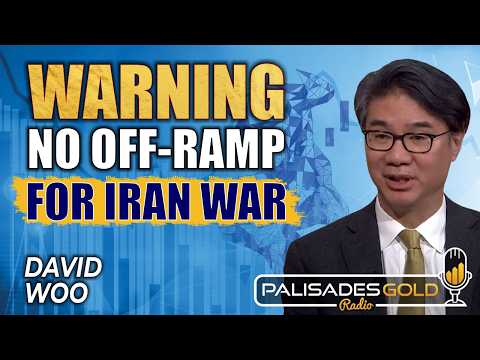
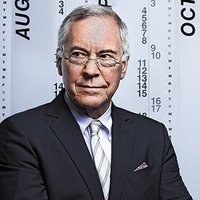
David Woo appears as a macro/geopolitical market commentator focused on linking policy, war risk, energy shocks, and asset prices. Across the supplied transcripts he repeatedly frames markets through cross-asset relationships—especially bonds, oil, gold, stocks, and the Fed—and argues that geopolitics can dominate pricing. He presents himself as an institutional macro advisor with hedge-fund clients and speaks in a high-conviction, scenario-driven style. The external identity links point to his own site and verified X account (@Davidwoounbound), reinforcing that these views are part of an ongoing public research brand rather than a one-off appearance.
Woo’s recurring worldview is broadly stagflationary and supply-shock oriented: he expects war, energy disruptions, and constrained central-bank response to create persistent inflation pressure and market stress. He often argues that the Fed is politically or practically constrained, that oil shocks transmit through the bond market, and that gold performs best when equities fall, bonds hold up, and real rates or policy responses are unfavorable for risk assets. He also tends to see major geopolitical conflict—especially involving the U.S., China, Iran, and the Strait of Hormuz—as the dominant driver of macro outcomes, with China portrayed as strategically resilient relative to Japan, Korea, India, and others. Overall, he favors a macro lens where policy limits, energy, and geopolitics matter more than consensus market optimism.
Every analyzed appearance we have for this speaker, newest first. Open any transcript preview to read the underlying transcript.
Preview:David Woo analyzes the bond market's muted reaction to downside inflation surprises, arguing that tariff pass-through was "the dog that didn't bark" — companies absorbed tariffs rather than raising prices, and instead froze hiring. He sees core goods inflation trending to ~0% YoY by year-end. The real inflation risk is the "super core" (non-housing services), tied to a recovering labor market with wage growth potentially returning above 4%. He expects one Fed hike this year regardless of oil prices. The structural concern is fiscal: ballooning deficits, rising defense spending, and record corporate debt issuance are driving a supply-demand imbalance that pushes long-term yields higher. His trade is a 5s/30s steepener, with gold, yen, EM currencies, and utilities facing headwinds from rising real rates until the AI bubble bursts.
Preview:David Woo argues that the Trump-Iran ceasefire has collapsed because Iran demanded too much and Trump faced political backlash. He maintains his long oil position, expects Brent to reach $90, and believes Iran will escalate by asserting control over the Strait of Hormuz. His core framework: Iran believes it won the war and sees Trump as weak.
Preview:David Woo argues the market faces a binary tension: real yields have risen sharply, driven by upside growth surprises and AI-related capex, and either they continue climbing (crushing risk assets) or the AI bubble bursts first (giving defensive assets like gold a reprieve). He sees resurgent US economic activity — driven by business tax provisions from the "big beautiful bill" and declining policy uncertainty — as supporting further rate hikes and higher real yields. Until the AI bubble shows clear cracks, he is not ready to buy gold or short the dollar. An inflection point may be near.
Preview:David Woo argues gold has been pressured by rising real yields driven by stronger-than-expected US economic data and AI-fueled capex spending. He believes the AI bubble must burst for gold to get a sustainable bid, and pinpoints the last week of July — when hyperscalers (Microsoft, Google, Amazon) report earnings and may guide capex lower — as the first real opportunity for gold bulls. Until then, he wouldn't be long gold. He also expects Iran-US negotiations to break down after July 4th, pushing oil higher, which could drive real yields even further up in the near term. He likes gold structurally but says it might get cheaper first.
Preview:David Woo argues that the AI capex boom is the key force propping up the US economy, real yields, and the dollar, and that once the AI bubble cracks, NASDAQ and the broader US economy could weaken sharply while gold and oil benefit. He is also bearish Bitcoin, skeptical that current geopolitics has been resolved, and sees the Iran situation and the defense-industrial narrative as exposing US weakness rather than strength.
Preview:David Woo argues that the Iran war exposed major limits in U.S. military power and credibility, with consequences that extend beyond the Middle East. He says China is likely the biggest strategic beneficiary, U.S. allies may hedge more, U.S. defense contractors and the dollar could be hurt, and oil remains bullish if the Iran deal fails to hold.
Preview:The speaker argues that the market is underestimating the odds that Trump chooses an Iran off-ramp rather than renewed escalation, and that this creates a bullish setup for oil and a bearish setup for equities. He says Trump’s recent comments suggest limited appetite for major bombing, while Iran is likely to exploit that to demand more concessions on sanctions relief, frozen assets, and security guarantees.
Preview:David Woo argues that the recent bond sell-off is being driven mainly by higher real yields, not inflation expectations, and that the combination of the Iran/oil shock plus the AI rally is repricing rates. He thinks oil likely has more upside, AI enthusiasm is getting crowded and potentially overextended, and that a bond steepener and long-dated gold calls make sense as hedges if the AI trade fades.
Preview:David Woo argues that the US-Iran conflict is the dominant market driver right now because oil has become the transmission mechanism for stocks, bonds, inflation expectations, and growth expectations. His core call is that Trump is more likely to escalate or keep pressure on Iran than to cleanly walk away, which keeps him long oil and short bonds and equities.
Preview:The speaker argues that Anthropic’s Mythos may be a huge technical breakthrough, but that the same capability jump could ultimately hurt the AI trade by making frontier models harder to deploy, monetize, and regulate. He frames the key risk as not AI plateauing, but “assessable capabilities” plateauing because governments and companies restrict access due to cyber and national-security concerns.
Preview:The transcript argues that Mythos is a major AI breakthrough that revived the AI trade, but also may create a new downside for the sector because stronger AI could supercharge cyberattacks. The speaker frames this as a potential tension: the model’s capabilities are bullish for AI progress, but potentially bearish for parts of the AI trade if investors underestimate cybersecurity risk.
Preview:David Woo argues Trump’s China trip produced little leverage on China and left Trump with fewer options on Iran, making further escalation more likely. He then pivots to oil, using the IEA’s inventory and supply data to argue that the global petroleum buffer is being depleted faster than headline crude inventories suggest, which supports his bullish oil view and bearish stance on bonds and stocks.
Preview:David Woo argues markets are underpricing a widening US-Iran conflict that he frames as a US-China proxy war. He says oil is likely to stay high or spike further, which would pressure stocks and bonds, while the AI trade is vulnerable because new frontier models are becoming both powerful and politically harder to release. Gold, in his view, is being held back by high real yields and could only reassert if risk assets roll over, the dollar weakens, or the Fed is forced into cuts.
Preview:David Woo argues Trump’s planned China visit is unlikely to produce a durable breakthrough. He says China is much stronger than in 2017, the bargaining balance has shifted, and the summit will probably end in polite optics rather than a real deal.
Preview:David Woo argues that the Iran war may unintentionally strengthen China economically, especially by boosting Chinese clean-tech exports and widening China’s lead in EVs, batteries, and autonomous driving. He also warns that the conflict raises near-term geopolitical risk for RMB longs because U.S.-China tensions could escalate through sanctions or accidents around Iranian oil.
Preview:A David Woo interview focused on whether Iran’s post-war leadership is fractured or effectively taken over by the IRGC, and what that means for negotiations, escalation, and Trump’s choices. The speakers lean toward a hardline, brinksmanship-driven standoff, with the near-term risk centered on a wider clash, oil disruption, and an attempt by each side to force the other to blink first.
Preview:David Woo argues the market is misreading the Iran ceasefire: he thinks China will not pressure Iran into concessions, Trump will not ‘taco’ on Iran’s nuclear issue, and the ceasefire is more likely a pause before renewed escalation. He expects the market to reprice quickly if the ceasefire breaks, with oil up, stocks under pressure, and gold’s reaction depending on whether the conflict becomes a fast de-escalation or a protracted, inflationary war.
Preview:David Woo argues the market is too complacent about the Iran conflict and is mispricing a near-term escalation risk. He says China is unlikely to pressure Iran into concessions, thinks Trump is under a 60-day clock on war powers, and expects markets to react sharply if diplomacy fails and the Strait of Hormuz remains closed.
Preview:David Woo interviews Dr. Paul Callander about how space-based ISR, satellite navigation, and commercial LEO constellations are reshaping modern warfare in Ukraine and the Iran conflict. The core argument is that US military dominance increasingly depends on space systems, while China’s space ecosystem is narrowing the gap enough to create a practical challenge to US hegemony.
Preview:David Woo argues the Iran ceasefire is more likely a pause than a true pivot, because Trump’s stated red lines on Hormuz and Iran’s nuclear program still appear intact. He thinks both the U.S. and Iran have incentives to buy time, but either way the recent equity rally and oil sell-off may not last if escalation resumes.
Preview:David Woo argues the Israel-Iran conflict is a major US–China proxy struggle centered on control of the Strait of Hormuz, and says the market is underpricing the risk of escalation. He thinks Trump is signaling flexibility to manage equities while preparing for a harder next phase, with oil likely much higher and stocks lower if the market priced the situation correctly.
Preview:The speaker argues the Iran war has become a struggle over the Strait of Hormuz, with huge implications for oil, China, and U.S. power. His base case is that the conflict gets uglier before it ends, pushing oil higher and stocks lower.
Preview:A macro strategist argues the Iran conflict has become a broader U.S.-China proxy struggle centered on the Strait of Hormuz. He thinks Iran has been more resilient than expected, China is now materially supporting Tehran, and the likely endgame involves a risky U.S.-led effort to seize or neutralize the coastline around Bandar Abbas rather than a clean diplomatic exit.
Preview:David Woo argues the recent gold selloff is not mainly about geopolitical complacency; he says gold has stopped behaving like a traditional safe haven and is now trading more like a retail/risk-asset proxy. He remains bullish on gold longer term, but only if the war, defense spending, deficits, and broader market structure keep evolving in the direction he expects.
Preview:Panel discussion on the Iran war focused on whether the U.S. can or should escalate to force a settlement, how Gulf states and China factor into the conflict, and what it means for markets. The speakers split between a more cautious geopolitical assessment and a highly forceful thesis that Trump cannot back down, with gold, oil, inflation, and defense spending all discussed as market implications.
Preview:David Woo argues the Iran war is being misread by markets that expect a quick Trump retreat, but he thinks Trump is now trapped and cannot easily “TACO” without looking defeated, especially because China is becoming more involved. He links that to a harder geopolitical path for the U.S., higher oil risk, rising bond yields, and a market regime where stocks remain expensive while bonds and gold gain support if equities break.
Preview:David Woo argues the market is misreading the Iran conflict by pricing it as a short-lived inflation shock that will resolve quickly via either Trump backing down or Iran capitulating. He contends both outcomes are the LEAST likely. Iran is prepared, has degraded US radar systems, and is targeting the Strait of Hormuz—believing it only needs to survive three weeks to claim victory. Trump, now a lame-duck president after the Supreme Court tariff ruling, has shifted to legacy-building and cannot afford to "taco" (back down) on Iran. Woo is positioned long oil (near-month) / short equities in the short term, with a calendar-spread view: long May crude, short December crude.
Preview:David Woo argues markets are underpricing a broader Iran war escalation, which he frames as a de facto U.S.-China proxy conflict. He thinks Trump is unlikely to back down, sees a risky ground/amphibious phase around Bandar Abbas and the Strait of Hormuz as the key market shock, and remains longer-term bullish on gold amid de-dollarization and great-power rivalry.
Preview:The speaker argues that the Iran war has shifted in Iran’s favor, making Trump less likely to secure a clean exit and more likely to escalate in search of a face-saving way out. He thinks markets are underpricing the chance of a messier conflict that would pressure U.S. equities, and eventually push rates and the dollar lower.
Preview:The speaker argues that the market is misreading the Iran/Trump conflict as a short inflation shock and is underpricing how long and messy it may become. He says that supports higher oil, lower stocks, and eventually a weaker dollar/lower rates setup that could help gold and silver, while also promoting his book and a bullion sponsor.
Preview:David Woo argues the market is underpricing a longer, messier Iran conflict and overpricing a quick Trump ‘taco’ or rapid regime-collapse outcome. He thinks oil is the main transmission mechanism, with the current move still being treated mainly as an inflation shock rather than a growth shock, while the deeper geopolitical story is the US-China contest over Iran and the Strait of Hormuz.
Preview:David Woo argues the Iran war is being misread by markets: investors are treating it as a short-lived inflation shock, but he thinks the conflict could last longer and keep oil supply constrained through the Strait of Hormuz. His bottom line is tactical and bearish on buying the stock dip right now.
Preview:David Woo argues that the Citrini AI doomsday scenario is overstated and rests on shaky assumptions about mass layoffs, winner-take-all economics, and policy inaction. He thinks AI will lower software costs and pressure some developers, but not trigger an economy-wide collapse; his bigger risk case is the opposite: AI fails to deliver fast enough, the bubble bursts, capex rolls over, and the U.S. economy slows into recession.
Preview:A gold-and-silver channel interview centers on David Woo arguing that gold’s recent strength is driven less by rates or inflation and more by geopolitical fear, heavy stock exposure, and a loss of confidence in the U.S.-led order after Trump’s Venezuela move. He is constructive on gold’s structural valuation, but skeptical it will reliably hedge a broad equity selloff because gold and stocks are now positively correlated.
Preview:The video argues that 2025 was defined by Trump’s trade wars but that global trade still proved resilient, with China gaining share across many regions even as its exports to the US fell sharply. David Woo’s core market conclusion is that Europe and China need each other more, and that the RMB should appreciate gradually versus the euro in 2026 as part of a broader adjustment to the China-EU trade imbalance.
Preview:The speaker argues that the AI trade is stalling, not crashing yet, and that the market is starting to question whether massive hyperscaler capex actually translates into future returns. He thinks the recent breakdown in the relationship between capex and AI stocks, weakening internal market breadth, and slow adoption/monetization signals are a warning that the AI bubble could become the market’s biggest 2026 risk.
Preview:David Woo argues that the AI trade is breaking down, higher AI capex is now being punished, and the market is starting to price in slower growth with still-elevated rates. He is bearish on U.S. stocks and Bitcoin, constructive on gold only on much lower levels, and prefers India over U.S. tech for the next couple of months.
Preview:David Woo argues that the biggest inconsistency in markets is that risk assets are pricing solid growth while bond markets still expect Fed cuts. He thinks that gap is hard to reconcile unless inflation falls sharply, which he считает unlikely if U.S. growth stays strong. He frames 2026 as a test of whether Trump can keep driving the economy and whether the Fed under a new chair would become more hawkish than markets expect.
Preview:The speaker argues that gold’s surge is a macro signal, not just a trade: it reflects a breakdown of the post–rule-based global order and a widening buyer base that now sees gold as the only credible safe haven. He ties that to higher bond term premia, weaker confidence in Treasuries, and a more fragile setup for stocks and the global economy in 2026.
Preview:The speaker argues that the era of the rule-based international order is ending and being replaced by a multipolar, power-based system. He thinks this shift need not produce chaos if major powers behave more pragmatically, middle powers coordinate, and economic constraints keep everyone from overreaching. His actionable market conclusion is that he likes the RMB, seeing China as positioned to present itself as a responsible player in the new order.
Preview:The speaker argues that Trump’s Iran posture, combined with Iran’s worsening economic crisis, creates a race between US pressure/intervention and Chinese support. He sees Iran’s protests as more economically driven than past uprisings and thinks China has both the strategic motive and practical ability to keep the regime afloat without military involvement.
Preview:The speaker argues that Maduro’s kidnapping marks a break with the postwar rules-based order and signals a shift from idealism to raw power politics. In that world, he expects gold and defense stocks to benefit, emerging markets to become harder to own passively, and bondholders to suffer.
Preview:David Woo argues that 2026 is defined by Trump’s need to offset weak approval and midterm risk through affordability-driven policy: cheaper oil, possible tariff rebates, and likely easier fiscal/monetary conditions. He ties the Venezuela move to a broader geopolitical reset, saying it signals the U.S. is willing to take resources directly, which he sees as bullish gold, bearish emerging markets, and supportive of defense spending. He also flags the AI capex boom as the biggest market risk if the bubble cracks.
Preview:David Woo argues that 2026 will not repeat gold’s huge 2025 rally because several prior drivers have either broken down or are fading. He thinks the stock market, geopolitics, Tether’s one-off buying, and China-related demand are all less supportive than last year, while Trump’s agenda points more toward lower oil and fiscal support for middle-class consumers than toward a new gold surge.
Preview:David Woo argues that 2025’s biggest surprise was that Trump’s tariff shock did not trigger a U.S. recession, and he credits the AI boom for offsetting it through capex, wealth effects, and stronger consumer spending. He is bearish on the sustainability of that support into 2026, and thinks the main investable issue next year is the U.S. midterm election, with oil, Venezuela, Russia/Ukraine, and affordability likely to matter more than conventional macro indicators.
Preview:The speaker argues that gold’s huge 2025 rally was driven by more than just falling real yields or a weaker dollar, and that those traditional drivers no longer explain most of the move. He thinks 2026 will depend on four factors—Fed policy, stocks, central-bank buying, and stablecoins—but his base case is a weak or flat year for gold rather than a repeat of 2025’s surge.
Preview:David Woo argues that 2026 will be shaped by three big forces: an AI bubble burst, an end to the Ukraine war, and a new round of U.S. fiscal easing tied to Trump’s push for tariff rebate checks. The most important near-term political point is that he thinks a $2,000 tariff rebate for working households could be Trump’s best shot at avoiding a Republican midterm rout, but only if it is packaged through a broader deal that also extends Obamacare subsidies.
Preview:David Woo argues that the AI boom was a major reason the U.S. avoided recession in 2025, but he thinks the market is underestimating how likely it is that the AI capex cycle loses momentum in 2026. His core view is that the market has been treating AI spending as a proxy for future returns, but falling expected returns, intensifying competition, and cheaper frontier models will eventually break the feedback loop that has supported AI-linked stocks, the dollar, and broader risk assets.
Preview:David Woo argues the Ukraine war is at a genuine turning point. He explains that wars end either through decisive military defeat or collapse of political will — and both conditions are now converging: US funding has dried up under Trump, Russia is making rapid territorial gains, and Zelensky has agreed to negotiate. Woo sketches a plausible peace deal by Q1 2026, outlines the market implications (bearish oil/wheat/corn/sunflower oil/US LNG, bullish euro/European markets/Russia), and places ceasefire odds above 50% versus Polymarket's ~30%.
Preview:David Woo argues that Bitcoin's ~30% decline from its $126K October peak is partly driven by the market waking up to the bearish implications of Trump's GENIUS Act. By legitimizing dollar-backed stablecoins for payments, the Act crowds out Bitcoin's medium-of-exchange narrative, while reinforcing USD hegemony. Woo contends Bitcoin is now reduced to a pure store-of-value asset — like gold but without gold's physical/geopolitical utility — and warns against expecting Trump to rescue the price given midterm political constraints.
Preview:David Woo argues Trump is prioritizing the 2026 midterms above all else, so he will lean into inflation relief, tariff rollbacks, stimulus-style checks, and anything else that can visibly help consumer perception. He thinks tariffs have weakened confidence, squeezed margins, and contributed to layoffs, while AI capex has temporarily delayed a recession. His bigger call is that the NASDAQ and the broader AI trade are vulnerable because monetization is weak, capex is huge, and China is catching up fast.
Preview:David Woo analyzes Trump's political strategy heading into the 2026 midterms, arguing that the recent shutdown victory strengthens Trump's grip on the GOP and incentivizes aggressive fiscal stimulus. He expects a second reconciliation bill with tariff rebates in Q1 2026, bearish for the AI bubble but potentially positive for retail stocks, and a steepening yield curve driven by fiscal dominance.
Preview:David Woo argues that the Democratic sweep in off-year elections will prolong the government shutdown because neither party will compromise. He sees this as short-term negative for stocks and bonds, positive for the dollar, and raises the odds that the AI bubble bursts. The transcript presents a bearish macro view centered on collapsing consumer confidence, Fed reluctance to cut, and the risk that "Trump the Warrior" replaces "Trump the Taco."
Preview:David Woo argues that a dangerous divergence has opened between a self-reinforcing stock market rally and a weakening Main Street economy. Layoffs have hit recessionary levels (~940k in 9 months), consumer confidence is sliding, and corporate operating margins are being squeezed by tariffs that firms cannot pass on. Yet equities keep rising because cost-cutting (layoffs) protects earnings, and wealthy households' stock-fueled spending props up demand. He sees this reflexivity dynamic as a bubble — particularly in AI/tech — and is short NASDAQ 100, short consumer discretionary vs. staples, and long 5-year Treasuries, expecting that when the bubble bursts the Fed will be forced to cut aggressively.
Preview:David Woo argues that India is the smartest market bet of 2025-2026, driven by its strategic positioning between the US and China. He sees India as the beneficiary of intensifying US-China AI rivalry, with Modi successfully negotiating tariff relief (from 50% to 15%) while preserving strategic autonomy. Woo is long Nifty50 vs short NASDAQ 100 as a relative value trade, noting India's 7% YTD return makes it the worst-performing major market despite being the fastest-growing economy — a setup he expects to reverse.
Preview:David Woo argues that China is weathering Trump's trade war far better than Wall Street expected — thanks to factory automation, AI-driven productivity, and successful export diversification away from the US. He warns markets are too complacent about the November 1 rare-earth export ban deadline, because the real fight is no longer about trade but technological supremacy, and both sides have reasons not to blink.
Preview:David Woo argues the market is underpricing a coming stagflationary slowdown in the US while overpricing the durability of the AI/Nasdaq rally. His central call is that the US-China conflict has shifted from trade to technology, China is now in a relatively stronger position, and the near-term setup into November 1 is bearish for equities if the rare-earth/export confrontation escalates and mega-cap AI capex guidance disappoints.
Preview:David Woo argues that Trump's recent insults toward Putin signal a strategic U-turn: Trump is preparing political space to back Ukraine more aggressively, potentially including Tomahawk missiles. Woo challenges the narrative of Russian failure, presenting data showing Russian territorial gains are up 66% YoY while casualties have dropped sharply, suggesting Russia is executing a deliberate positioning war. However, Russia's economy is slowing, Putin's approval on war handling is sliding, and he needs to end the war on his terms — setting up a critical escalation phase in the weeks ahead. Woo is short EUR/USD heading into further conflict.
Preview:David Woo argues that AI stocks are in a bubble, driven by optimism bias rather than fundamentals. He points to unsustainable AI chip sales growth, intense competition that prevents monopolies, and a massive gap between capex ($560B since early 2024) and AI-related revenue ($35B). He's short the NASDAQ and expects the eventual bust to bring economic slowdown, aggressive Fed rate cuts, and a lower US dollar.
Preview:David Woo argues that Trump's tariff-driven manufacturing revival is not showing up in the data. Import prices are rising (not falling), suggesting Americans—not foreigners—bear the tariff cost. While manufacturing production ticked up in August, imports rebounded faster, and key industries like autos and furniture are still losing jobs and market share to foreign competitors. Woo contends that the coming inventory restocking cycle will force a moment of truth: either inflation surprises to the upside or growth disappoints, and he is positioned short both the December 2026 SOFR contract and US consumer discretionary.
Preview:David Woo argues that Russia's new gas pipeline deal with China signals a strategic closing of BRICS ranks in response to Trump's containment policy. He expects Russia to make a major military push in Ukraine before winter, and warns that escalating geopolitical risk will spill over into financial markets — with European equities and the euro as the biggest losers, while gold continues to benefit.
Preview:David Woo argues that Trump's 2025 tariffs and demands for India to stop buying Russian oil/arms have backfired, pushing India back toward China after seven years of chilly relations. He traces the 2017 Doklam standoff as the original wedge that drove India into the US orbit, and frames Trump's overreach as an ironic gift to Putin, who had been trying and failing to reconcile China and India. The core thesis: Trump misread India as a vassal state rather than a civilizational power with strategic autonomy, and the geopolitical realignment now underway benefits Russia and China while weakening US influence.
Preview:David Woo argues Trump's bullying tactics are backfiring geopolitically — pushing India back toward China/Russia, fast-tracking the Sino-Russian energy axis, and strengthening Putin's battlefield position. He sees BRICS solidifying as a real bloc, European markets as the biggest losers, and rising geopolitical risk spilling into financial markets. Gold remains the best-performing asset of 2025, and he expects the next two months of Ukraine war escalation to hit stocks broadly, especially European equities and the euro.
Preview:David Woo argues that the seasonal "September effect" is driven by heavy bond issuance pushing up yields, which then drags down stocks. He sees rising political/fiscal risks in France, the UK, and Japan compounding the bond market pressure, while US inflation is poised to reaccelerate as inventory restocking begins. His central scenario for the next 4 weeks: high rates, lower equities, and a higher US dollar, with the Fed unlikely to bail out markets once inflation picks up.
Preview:David Woo argues Trump's firing of Fed Governor Lisa Cook is part of a hostile takeover of the Federal Reserve aimed at forcing aggressive rate cuts. He details the legal hurdles — the Supreme Court's special treatment of the Fed, the weakness of the mortgage fraud accusation against Cook, and the Polymarket odds of only 25% she's out by year-end. Woo believes the Fed's independence will survive and that inflation will re-accelerate as inventory restocking begins, which will shift the political battle in the Fed's favor. He remains short December 2026 SOFR futures, betting against aggressive rate cuts.
Preview:David Woo argues the AI boom looks increasingly like past semiconductor cycles that ended in bust. He highlights an MIT report showing 95% of enterprise AI pilots have zero P&L impact, questions whether hyperscalers can monetize massive CapEx (now consuming 50-70% of operating income at Microsoft, Alphabet, and Meta), and warns the current 21-month semiconductor cycle is already the 4th longest in three decades. He has been bearish US tech since the DeepSeek news and sees another rout as probable before year-end.
Preview:David Woo argues that strong Q2 corporate earnings mask underlying fragility. Profit margins improved not from durable productivity gains but from inventory drawdowns that can't continue. He contends AI productivity isn't spreading broadly enough to offset tariff shocks. His base case: Trump cannot simultaneously achieve higher tariffs, lower rates, and higher stock prices — more likely we get higher rates and lower stocks. He's using his 2022 playbook for the coming months.
Preview:David Woo argues that Trump's trade war is, paradoxically, working — tariffs are narrowing the US trade deficit and boosting fiscal revenues. But the core tension is that deglobalization will structurally raise real interest rates, making current elevated asset prices unsustainable. Woo contends the Fed will not ride to the rescue with rate cuts because inflation is picking up again, and the July jobs data is more consistent with a negative supply shock (immigration/deportation) than weakening demand. His bias: higher rates, higher dollar, lower stocks.
Preview:David Woo argues that Europe's acceptance of Trump's 15% tariff is a quid pro quo for Trump shortening his Ukraine peace ultimatum to Putin from 50 days to 10-12 days. He sees the battlefield situation as dire for Ukraine, with Russia holding its strongest position since the war began. Woo believes Putin has no incentive to accept a ceasefire, Trump lacks the stomach for sanctions that would spike oil prices, and the entire situation is bearish for the euro and European markets regardless of outcome.
Preview:David Woo argues that the US-Japan trade deal represents a major victory for Trump and a capitulation by Japan, shifting the trade-war odds in America's favor. He outlines why winning the trade war should ultimately be dollar-positive (via wider interest rate differentials and improved current account), even as short-term capital-flow dynamics have punished the dollar so far. He warns that a stronger dollar and reduced tariff uncertainty could actually hurt overvalued US tech stocks in the near term.
Preview:David Woo argues markets are dangerously complacent about the August 1 tariff deadline. He believes Trump's "Big Beautiful Bill" locks in fiscal deficits that force him to collect tariff revenue, while foreign counterparts now coordinate against him. Woo is short NASDAQ 100 and long gold (via EUR cross), expecting a market shock reminiscent of early 2022.
Preview:David Woo argues that 2025 is shaping up like 2022, with fiscal stimulus, tariffs, debt ceiling increases, and retail stock mania setting the stage for a stocks-and-bonds selloff. He contends that global trade resilience is a "dead cat bounce" fueled by pre-tariff inventory building and Chinese transshipment, that tariffs are becoming the new normal (~20% average) because Trump needs the revenue, and that the Fed will be forced to tighten once tariff-driven inflation hits — repeating the 2022 playbook.
Preview:David Woo argues that the post-Liberation Day "Taco Trump Trade" — long US equities and short the dollar — is dangerously overstretched. He walks through sentiment, technicals, and valuations to show the S&P 500 is overbought and near dot-com-era overvaluation, while institutional positioning is more defensive. The core thesis: markets are pricing in Trump blinking again, but upcoming tariff deadlines create asymmetric downside risk that isn't priced in.
Preview:David Woo argues Wall Street is dangerously complacent about Trump's July 9 tariff deadline. He contends Trump sees tariffs as both a means and an end — a permanent revenue source and industrial policy tool — not a bargaining chip. With tariff revenue surging ($30B/month), markets rising, and inflation contained, Trump has every incentive to hold firm. Woo warns Japan, India, and the EU all face domestic political constraints making deals unlikely, and the market isn't pricing the risk of unilateral tariff imposition. He recommends shorting S&P Consumer Discretionary as a hedge.
Preview:A panel discussion on whether Trump/Israel’s strikes on Iran are mainly about rolling back the nuclear program or also creating conditions for regime change. The guests argue that Israel’s immediate objective is to cripple Iran’s nuclear and missile capabilities, but they spend much of the conversation debating whether the pressure could trigger collapse, coup dynamics, or a controlled transition.
Preview:Paul Callender argues the proposed U.S. Golden Dome missile shield is technically daunting, strategically destabilizing, and likely far more expensive and slower than advertised. He says the U.S. is vulnerable to advanced Russian and Chinese missiles and to counter-space threats, but also warns that a space-based interceptor layer would be a massive, fragile, and potentially budget-busting program that depends heavily on SpaceX.
Preview:David Woo analyzes Trump as a "maximalist negotiator" whose reputation for bluffing and capitulation has destroyed his credibility in his second term. Using legal negotiation typology, he argues Trump's tactics now fail because counterparties know he won't follow through on extreme threats. Woo sees rare earths as China's key leverage, expects Trump to escalate against Iran by the June 12 deadline, predicts no broad trade deals before the 90-day pause expires, and believes Trump will soon "return to reckless" to rebuild deterrence — ironically requiring more market disruption.
Preview:David Woo argues that the recent stock market rally and bond selloff rest on fragile assumptions: that Trump lacks resolve on tariffs and that US consumers will keep spending by cutting their savings rate further. He sees a reflexive feedback loop propping up stocks but warns that student loan delinquencies and a vulnerable labor market could reverse it. His base case is that the 10% blanket tariff stays, with a >50% chance of something closer to 20%. He favors belly-of-the-curve bonds as cheap insurance against economic or geopolitical hiccups.
Preview:David Woo argues the Moody's downgrade carried no new information — the market already prices US credit risk via CDS trading at similar levels to China and Italy despite rating differences. He dissects why the US doesn't pay a higher default premium (reserve currency status), explains why tariffs rather than a weak dollar are Trump's chosen path, and lays out a global rate divergence thesis: easing by ECB/China vs. tightening pressure from Japan. His personal position is long 5-year Treasuries, betting stocks must give ground before a bond crisis unfolds.
Preview:David Woo argues the market is underpricing a renewed escalation in Trump’s trade war, and that the next six weeks could be materially more volatile for stocks, especially Apple and other tariff-sensitive names. He also folds in Russia/Ukraine and Iran as overlapping geopolitical catalysts that could lift gold, pressure the euro, and keep investors defensive.
Preview:David Woo argues Trump's trade-war pause with China was a capitulation, not a win — China got better terms than any other US trading partner. He links the timing to Putin's rejection of Trump's Ukraine peace plan and the EU's ultimatum deadline, suggesting Trump executed a tactical retreat to avoid fighting China and Russia simultaneously. The implication: trade-war risk has been replaced by escalating geopolitical risk in Europe, which is bearish for European assets and the euro, and bullish for gold. He also flags the Iran nuclear negotiation as another potential dead-end that would further support gold.
Preview:David Woo examines whether Trump's trade war can fix America's twin deficits (budget and current account). He argues the US stock market's post-pandemic outperformance — not demographics or growth differentials — has been the key driver of the current account deterioration, by collapsing the household saving rate and inflating foreign holdings of US equities. He views Trump's tariff and spending-cut policies as a high-risk gamble: a 40% chance the trade war triggers a stock market crash and recession that worsens the fiscal picture before it improves the current account. He remains bearish on US equities.
Preview:David Woo argues the market is misreading Trump's trade war as essentially over. Using a game-theory "war of attrition" framework, he contends both the US and China have extremely high stakes (global economic dominance), implying neither side will back down quickly. He sees the costs as roughly symmetric — direct costs hit China harder (factory closures, PMI collapse), but indirect costs hit the US through inflation, higher rates, and equity wealth destruction. His conclusion: the stock market must go down because either it's too optimistic about a deal, or a deal won't come until economic pain is felt acutely in both economies. He advises selling.
Preview:David Woo examines what Elon Musk's "mostly done" statement about DOGE means by analyzing actual Treasury withdrawal data. His calculations show federal discretionary spending is up 8% year-over-year since inauguration — not down. Most departments show double-digit spending increases. Woo argues Musk's exit has three market implications: it strengthens anti-trade tariff forces, removes the spending-cut excuse for Fed rate cuts, and makes extending Trump's 2017 tax cuts harder amid an approaching debt ceiling. He views Musk's failure as structurally bullish for gold.
Preview:David Woo argues that Trump's foreign policy is being run by the President himself, using longtime friend Steve Witkoff as a trusted messenger rather than relying on qualified diplomats like Marco Rubio. Woo sees two paths ahead — Russia hawks taking control or Trump escalating the China trade war to justify his Russia appeasement — both bullish for gold. He predicts Trump will soon pivot from the stalled Ukraine negotiations to dealing with Iran's nuclear program, with the May 19 ultimatum as the key deadline.
Preview:David Woo argues Trump won Round 1 of the US-China trade war by isolating China, but Round 2 — China's response — poses far greater risks. China has weak economic leverage but strong geopolitical cards: its Iran alliance and, most dangerously, the potential to blockade Taiwan. Woo predicts global recession, RMB weakness, defense outperformance, and gold strength. He sees Beijing embarking on fiscal/monetary expansion including possible QE, but remains pessimistic about a Phase 2 deal.
Preview:David Woo argues that Trump's new trade war is not primarily about reviving American manufacturing — it is economic warfare aimed at containing China. By closing the tariff-circumvention backdoors (Vietnam 46%, Thailand 36%, Indonesia 32%) and stacking a 54% combined tariff on China, Trump is attempting to shut Chinese manufactured goods out of the US market entirely. Woo estimates this could hit up to 5% of Chinese GDP and more than 10% of industrial production, potentially triggering China's biggest economic crisis in 40 years, forcing Beijing into QE and RMB devaluation.
Preview:David Woo argues that Trump's seemingly chaotic foreign policy has a coherent hidden strategy: preparing for a military strike on Iran while pivoting hard toward China. He sees two driving forces — the narrowing Iran nuclear breakout window (now under one week) and the need to peel Russia away from both Iran and China. Woo connects Trump's concessions to Putin, the Yemen strikes, B-2 deployments to Diego Garcia, and the administration's disdain for Europe as pieces of this puzzle. Markets-wise, he's bullish oil on Iran strike risk and increasingly bearish on Chinese stocks and the RMB.
Preview:David Woo argues that Trump's April 2 "Liberation Day" tariffs will hit China and Germany hardest, making their recent stock rallies vulnerable. He contends DeepSeek's AI breakthrough is structurally bearish for US tech monopolies but doesn't fix China's 2025 headwinds: housing weakness, weak consumption, and Trump's more aggressive second-term trade war that closes backdoor evasion routes. On Germany, he calls the DAX rally a "fool's rally" — higher defense spending doesn't solve the Ukraine energy shock or Chinese manufacturing competition. His tactical conclusion: the only safe havens are front-end Treasuries and gold.
Preview:David Woo argues that while Trump theoretically holds an advantage in a trade war (the trade-deficit country fares better in the short run than the trade-surplus country), the current timing is puzzling — the US economy is already strong, trade deficits are not unusually high, and manufacturing has recovered. Woo contends Trump's maximum-pressure strategy is failing, that he's been "out-Trumped" by MAGA zealots, and that he will eventually back down — but not before April 2 reciprocal tariffs. He sees another ~5% S&P downside as inevitable and predicts a 3% rally when Commerce Secretary Lutnick gets fired.
Preview:David Woo argues that bonds will continue to outperform stocks in 2025 as geopolitical uncertainty intensifies. He dissects three market narratives — Germany's fiscal expansion, Trump tariff relief, and OPEC+ production hikes — and finds all three dangerously misleading. His most provocative thesis: the OPEC+ output increase signals an imminent US-backed Israeli strike on Iran's nuclear program. Woo sees Trump's multi-front trade war as strategically reckless and predicts the next 45 days will be more challenging than the first.
Preview:David Woo argues that global inflation has likely bottomed, with January 2025 readings coming in hotter than expected across most major economies. He highlights a striking convergence between developed and emerging market inflation/fiscal positions, making EM fixed income attractive. On the US, he warns that the Fed cannot easily cut further — inflation stopped falling right after they began easing — and Trump's tariff threats are more dangerous this time because businesses learned from COVID that they can pass through price hikes. A trade war would be bearish for stocks (especially German equities) but less bearish for bonds, which benefit from safe-haven flows and negative growth impact. Over the next 3 months, he expects bonds to outperform stocks on a risk-adjusted basis.
Preview:David Woo analyzes Elon Musk's promise to cut $1 trillion from annual federal spending, concluding the realistic near-term figure is closer to $300 billion (about 1% of GDP). He walks through three buckets of savings — federal workforce reduction/DEI cuts/USAID/EPA (~$100B), fraud recovery (~$100B), and defense spending cuts (~$50B/year via Pentagon budget reductions) — and notes defense savings will be slow due to lumpiness and Congressional resistance. Even the $300B figure, he argues, is meaningful: it would slow the economy, ease inflation, and lower rates.
Preview:David Woo argues Trump 2.0 is genuinely focused on reining in spending to avert a fiscal crisis, but the bond market is skeptical. Analyzing daily Treasury data, Woo finds scant evidence of DOGE's claimed spending cuts so far, though he's more willing than the bond market to give Elon Musk the benefit of the doubt. He estimates DOGE might find ~$300B in savings this year (vs. Musk's $1T goal), which would still slow the economy, ease inflation, and lower rates. He expects bonds to outperform stocks in coming months, betting fiscal tightening (Plan A) proves more likely than broad tariffs (Plan B).
Preview:David Woo argues that market optimism about a quick end to the Ukraine war is premature. He sees less than a 20% chance the war ends by April, citing Russian battlefield ambitions in Donetsk, Moscow's resistance to a ceasefire that lets Ukraine rearm, the weather (spring mud season favoring defenders), and an intractable security-guarantee dilemma. He draws market implications: bullish oil (low-70s support, potential Middle East escalation), bearish euro long-term (Europe's fiscal burden from sustaining the war), and bearish US defense contractors (Trump's Pentagon audit push).
Preview:David Woo argues that German asset outperformance in early 2025 is at odds with extreme policy uncertainty and structural economic decline. The Feb 23 election is unlikely to deliver the decisive policy shift Germany needs — Merz's recent failed immigration gambit has strengthened the Greens, making a CDU/CSU-Greens coalition more likely and killing hopes for energy-policy reversal. Woo sees at least a 50% chance of continued political paralysis. German industry has been the primary victim of US foreign policy across both Trump and Biden administrations, and Trump 2.0 poses further trade-war risk. Any euro strength this year would come from dollar weakness, not genuine euro strength.
Others tracked across the same asset focus or market thesis.
Unlock every transcript this speaker appears in, compare them with your other followed voices, and ask the agent for the bull, bear, and consensus read in one workspace.
Type a question. Create a free agent to send it and keep the answer linked to this speaker.
Your question is preserved across sign-in.
Free. No card. Takes about a minute.