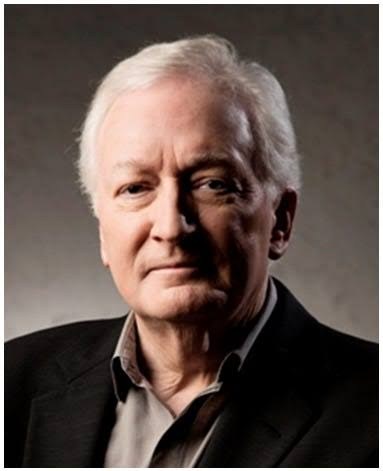
Howell’s recurring worldview is that liquidity is the main marginal driver of asset prices and that the world moves in identifiable cycles: speculation, then turbulence/downswing…
📈 See how Michael Howell's thesis changed over time →Preview how this speaker shows up across market transcripts. Unlock the full archive, AI chat, and the version personalized to your watchlist, followed channels, and favorite speakers.
Michael Howell is a macro/liquidity-focused market strategist and founder/CEO of CrossBorder Capital (now also associated with GL Indexes), with a long research background in market liquidity and cycle analysis. Across the supplied interviews, he consistently frames markets through global liquidity, yield curves, debt/refinancing conditions, and the relative flow of money between financial markets and the real economy. He is recurrently skeptical of headline equity momentum when it is narrow or speculative, and he emphasizes commodities, bonds, the dollar, gold, and Bitcoin as key cycle indicators. He presents himself as an independent cycle researcher and author of Capital Wars, with a strong emphasis on cross-asset regime shifts rather than single-asset calls.
Howell’s recurring worldview is that liquidity is the main marginal driver of asset prices and that the world moves in identifiable cycles: speculation, then turbulence/downswing, with late-cycle signals appearing in commodities, yield-curve flattening, weak bonds, and selective strength in speculative equities. He repeatedly argues that the real economy can be strong even while financial-market liquidity is rolling over, because money is being pulled from financial assets into Main Street activity. In his view, this can support nominal growth while pressuring stocks and bonds. He is generally bullish on real economic strength, commodities, and energy in a late-cycle/inflationary setting, but cautious or bearish on broad equities and banks when the yield curve flattens. He also treats gold as a monetary inflation hedge and often ties gold’s medium-term path to China, the yuan, and global debasement dynamics. Overall, he sees the current regime as one where nominal growth, inflation, debt servicing, and liquidity tightening matter more than simple Fed-funds narratives.
Every analyzed appearance we have for this speaker, newest first. Open any transcript preview to read the underlying transcript.
Preview:Michael Howell presents his liquidity-cycle framework, arguing global liquidity momentum peaked in Q4 2025 and is now declining. He maps where markets sit in the cycle: equities lead early, commodities peak near the top, cash outperforms during the downturn, and bonds rally into the trough. His core structural warning: the debt-to-liquidity ratio is projected to cross 200% within 4-5 years, creating conditions for a GFC-style event by 2030. A COVID-era debt maturity wall compounds the risk, with refinancing needs surging in the late 2020s. Near-term signals to watch: bond volatility (MOVE index), SOFR spreads, term premia, and credit spreads.
Preview:Michael Howell joins tastylive to argue markets are deep in late-cycle territory. He sees liquidity migrating from financial assets into the real economy and commodities, with a flattening yield curve threatening bank earnings. He flags a relative breakout in base metals vs. precious metals as a key signal, warns of pressure on financials, and describes the tech rally as unusual speculative mania for this stage. Bitcoin and gold weakness are, in his view, barometers of liquidity draining from financial assets.
Preview:Michael Howell argues that global liquidity already peaked and is now slowing, which he thinks is the main driver behind weaker gold, weaker Bitcoin, rising yields, and a stronger dollar. He sees the Fed, Treasury, and other central banks as effectively allowing markets to tighten for them, with repo stress, bond volatility, and a flattening curve signaling late-cycle pressure.
Preview:Michael Howell argues that global liquidity has peaked and its growth rate is now slowing rapidly — not because economies are weak, but because they're too strong, crowding out financial markets. He maps the liquidity cycle across four phases (rebound, calm, speculation, turbulence), placing us firmly in the speculation phase with roughly 10-12 months' duration. Key implications: bear flattening of yield curves, rising bond yields toward 5.25-5.5%, a firming US dollar, and cash becoming increasingly attractive on a risk-return basis. He sees a potential debt-liquidity mismatch creating refinancing risks by 2027, which would eventually force central banks to print again — bullish for gold and Bitcoin long-term, but near-term caution is warranted. China's PBOC liquidity dynamics are flagged as the marginal driver of gold, and Howell suggests the Iran deal could restart Chinese liquidity, lifting gold. The Fed under new Chair Walsh is expected to tolerate tighter monetary conditions without hiking rates aggressively.
Preview:An interview at the VRIC featuring an unnamed economic expert who argues that China — not Western monetary policy — is the marginal price-setter for gold. He presents a thesis that PBOC liquidity injections have been the primary driver of the gold rally, and that the recent gold pullback coincides with China hitting the brakes on liquidity in March 2026 (linked to Iran tensions). Near-term, he watches 25,000–30,000 yuan as key support zones. Long-term, he projects gold reaching $15,000/oz by the mid-2030s, driven by relentless global monetary debasement as governments inflate away unaffordable debt and welfare commitments.
Preview:Michael How argues that global liquidity is shifting out of financial markets and into the real economy, which is setting up a period where equities, gold, bonds, the dollar, and commodities all move in different phases. His main tactical call is that gold and bitcoin may have already seen a near-term peak, while bond yields and the U.S. dollar are likely to grind higher as markets do the tightening for the Fed. Long term, he remains structurally bullish on gold because he sees ongoing monetary debasement, especially in China and the West, as the force that will eventually drive much higher nominal prices.
Preview:Michael Howell argues that the dominant investment theme is not temporary price pressure but ongoing monetary and fiscal debasement, which makes gold the best long-term hedge. He thinks rates are biased higher over the next 12 months, but only as a cyclical overlay on a much larger inflation/liquidity trend. He also expects the commodity cycle to broaden from gold into energy, uranium, and eventually food/agricultural assets.
Preview:Michael Howell argues that liquidity is rolling over globally, even if it is still rising in absolute terms, and that this shift is pushing markets into a late-cycle speculative phase. He says AI spending is inflationary in the short run, bond yields should trend higher, gold is being driven mainly by China, and markets are underpricing inflation risk.
Preview:Michael Howell argues that global liquidity is still high in absolute terms but is slowing in rate of change, which he says marks a late-cycle speculation phase. In that regime, he expects narrower market leadership, higher volatility, stronger commodities, and eventually a more turbulent period as liquidity drains faster and financial assets weaken relative to real assets.
Preview:Michael Howell argues the market is being stabilized by active Federal Reserve and Treasury liquidity operations, but that support is also masking deeper fragility in bonds, FX, and the repo system. He remains constructive on gold and silver, sees China as the key medium-term driver of gold via liquidity, and frames U.S. dollar strength as a function of global dollar debt and the rise of stablecoins.
Preview:Michael Howell argues the market is not crashing because global and U.S. liquidity are still supportive, even as the global liquidity cycle is rolling over. He thinks commodities, especially gold and resource stocks, are the key beneficiaries, while U.S. equities may stay rangebound rather than break down.
Preview:Michael Howell argues that global liquidity is rolling over into a late-cycle 'speculation' phase that precedes turbulence, but not yet outright recession. He says the real drag on liquidity is working-capital demand from a still-strong real economy, while Treasury bill issuance and buybacks are effectively a liquidity-supportive duration shift.
Preview:Michael Howell argues that the global liquidity cycle is rolling over from a late-stage 'speculation' phase toward 'turbulence,' but he does not think the economy is in a recessionary collapse. His core view is that debt refinancing needs and Treasury/Fed balance-sheet actions are currently the main forces shaping market liquidity, with bond volatility and reserve management acting as key transmission channels.
Preview:Michael Howell argues that global liquidity is rolling over, even though markets and the real economy still look stronger than the media narrative implies. He expects a late-cycle shift from speculation toward turbulence, favoring more defensive positioning, shorter duration, cash, and select hard assets over riskier cyclicals.
Preview:Michael Howell argues that global liquidity is tightening because debt refinancing needs are outpacing available balance-sheet capacity, and that recent shocks like the Iran conflict, higher oil, Treasury volatility, and a stronger dollar are draining liquidity from financial markets. He says the market is mispricing the current liquidity cycle, with yield curves flattening rather than steepening and gold benefiting from growing monetization.
Preview:Michael How argues the liquidity cycle has peaked and is now slowing, which he thinks points to a sideways-to-lower market in 2026, with leadership rotating away from tech toward energy, commodities, and select defensive assets. He also argues the current gold move is more about China’s efforts to devalue the yuan/debt than a broad Western debasement trade, while the Fed’s footprint is being partly replaced by Treasury-led liquidity management.
Preview:Michael Howell argues global liquidity is still at record levels in absolute terms but is losing momentum, and that this matters more for markets than the headline level. He says China is the main marginal driver of gold because it is injecting liquidity, suppressing crypto, and pushing households and capital toward gold, while the US is mainly doing liquidity support to stabilize repo and the financial system.
Preview:Michael Howell argues that markets are being driven less by fresh money entering everywhere and more by liquidity rotation, with late-cycle behavior already showing up in sector leadership, commodities, and international assets. He thinks the U.S. economy can stay strong while financial markets become more difficult, and that the key 2026 risk is tightening liquidity even if headlines still look constructive.
Preview:Michael Howell argues that global liquidity has likely peaked around Q4 2025/early 2026, which should make 2026 a tougher year for stocks even if the real economy stays decent. His core view is that liquidity is shifting away from financial assets and toward the real economy, which should favor out-of-favor assets like commodities, government bonds, and possibly a firmer US dollar, while leaving equities—especially expensive US tech—more vulnerable to compression or outright decline.
Preview:Michael Howell argues that global liquidity is peaking after a strong cycle since late 2022, making 2026 a tougher year for financial assets while supporting commodities and real assets. He frames markets as a refinancing system rather than a simple rate story, says the Fed is already backstopping repo and bank reserves, and argues the bigger structural battle is a bifurcated dollar/stablecoin system versus China’s gold-collateralized monetary path.
Preview:Michael Howell argues that global liquidity is peaking and may start to roll over into 2026, creating a more fragile setup for risk assets even as the real economy stays relatively firm. His core framework links asset bubbles, debt refinancing needs, and central-bank liquidity; he says the Fed’s latest bill purchases are a near-term support for markets, but the bigger story is rising debt-maturity pressure, fiscal monetization, and a likely inflation pickup.
Preview:Michael Howell of CrossBorder Capital argues global liquidity is approaching a cycle peak, with the Federal Reserve inadvertently draining liquidity — visible in repo market stress, trade fails, and declining excess reserves. He warns this setup risks a significant risk-asset selloff, with the S&P 500 vulnerable. Separately, China is aggressively expanding liquidity and accumulating gold to back its currency, driving the gold price higher. The key tension: US policymakers (Bessent, Miran, Powell) resist new QE, preferring stimulus directed at the real economy over financial markets.
Preview:Michael Howell argues that the world is in a broad monetary-inflation regime where liquidity is rising strongly, driving an “everything bubble” in financial assets and increasingly in real assets like gold, silver, commodities, and potentially property. He says the trend has been in place since 2022, but the cycle may be nearing an inflection over the next 6–12 months as debt refinancing needs rise and liquidity growth rolls over.
Preview:Michael Howell argues that the world is in a debt-driven regime where liquidity, not the real economy, is the main driver of markets. In his view, central-bank and Treasury actions have prolonged an expanding liquidity cycle that is now getting mature, so risk assets can still run for a while, but the next meaningful inflection is likely within the next 12 months. His core portfolio message is to own monetary-inflation hedges—especially gold, with Bitcoin, silver, and select pricing-power equities also favored—while being cautious on bonds and highly levered risk assets.
Preview:Raoul Pal's September 2025 monthly recap: Pal argues the liquidity cycle is late (~34 months) but still rising, with Treasury bill issuance creating ongoing stimulus. He sees Bitcoin's trend exhaustion as a normal mid-cycle transition to a "high-quality alt season" rewarding revenue-generating protocols. An interview with Solana Mobile CEO Emmett Hollyer covers the vision for a cryptonative mobile platform now at 150,000 Seeker devices shipped. Pal also discusses his NYC philanthropic work connecting crypto firms with community initiatives.
Preview:Michael Howell argues the global liquidity cycle is late and near a top, with the next phase likely more difficult for risk assets as repo/bond-market stress, refinancing needs, and a smaller Fed balance sheet start to matter. He says the setup is still broadly following a normal liquidity cycle, but the endgame now matters more than the upside, with gold, Bitcoin, and select commodities as the main beneficiaries of monetary inflation and geopolitically driven de-dollarization.
Preview:Raoul Pal interviews Michael Howell on global liquidity and the US dollar. Howell argues the paper dollar remains structurally robust despite the administration's desire for a weaker dollar — net inflows into the dollar are still strong. He sees the dollar weakening cyclically against real assets (gold, silver, crypto) due to debasement rather than against other fiat currencies. On liquidity, he pushes back against fears of a TGA rebuild shock, arguing the Fed won't let reserves drop below adequate levels. His leading indicators suggest the liquidity cycle peaks around Q1-Q2 2026, not this year.
Preview:Michael Howell presents a global liquidity framework, arguing that Japan's rising long-end bond yields reflect a deliberate rotation from bonds into equities — not a bond crisis — while China is ramping up liquidity stimulus that should lift commodities and risk assets. Raoul Pal facilitates, tying the themes together under the weak-dollar-allows-everyone-to-stimulate umbrella.
Preview:Raoul Pal and Michael Howell discuss the collapse of the traditional business cycle, replaced by a dominant liquidity cycle driven by Treasury bill issuance ("Treasury QE"). Howell argues this structural shift fuels monetary inflation and asset debasement, benefiting long-duration assets like tech stocks, crypto, and gold. He sees the Fed as largely powerless on rates, with the balance sheet mattering far more. The conversation closes with Pal's platform pitch.
Preview:Raoul Pal and Michael Howell argue that the global liquidity cycle is still upward but late, with the main setup favoring liquidity-sensitive assets like tech, crypto, and gold for now. Their core view is that debt refinancing, Treasury bill issuance, bank monetization, and easier policy abroad are extending the cycle into early 2026, even as longer-term debt and inflation pressures keep building.
Preview:Michael Howell argues global liquidity is still supportive for markets in 2025, but the setup becomes much more fragile into 2026 as a large debt-refinancing wave absorbs liquidity. He thinks equities can still do well near term, but commodity exposure, monetary inflation hedges, and eventual defensiveness matter more as the cycle matures.
Preview:Michael Howell argues that the U.S. Treasury bond market is being reshaped by global term-premium increases, short-end funding, and rising debt monetization, not by a uniquely U.S. loss of safe-haven status. His core investment conclusion is that this is a monetary inflation regime: bonds are unattractive, while gold, Bitcoin, and other liquidity-sensitive assets should outperform.
Preview:Michael Howell, founder of CrossBorder Capital, argues global liquidity conditions are currently strong — driven by TGA drawdown from the debt ceiling (technical) and China's policy pivot toward liquidity injections (structural). Near-term he's bullish on risk assets, but warns of a second-half risk: the Fed's stated QT plans could drain reserves. He floats a key insight — the US Treasury may be doing "stealth QE" by issuing short-dated bills that banks eagerly buy, expanding their balance sheets and money supply. This echoes the 1970s where bank balance sheet expansion drove monetary inflation. His core prescription: own dedicated monetary inflation hedges — gold and Bitcoin — not bonds. He sees global yields rising structurally driven by term premia, with the US as a "price taker" not "price maker." China is explicitly devaluing the yuan against gold to escape its debt problem.
Preview:Michael Howell argues the market is in a liquidity-driven stress episode, not just a garden-variety pullback. He says the US may win the trade war, but the more important fight is the capital war: preserving bond-market stability, refinancing a huge debt load, and forcing the Fed to add liquidity sooner rather than later. He is constructive over an 18-month horizon, but tactically cautious because the timing of Fed support and liquidity conditions through the rest of the year remain uncertain.
Preview:Michael Howell argues that the global liquidity cycle is still rising but has developed a meaningful “air pocket” as fading U.S. hidden stimulus and Chinese tightening have started to weigh on growth and asset markets. He thinks the policy focus in Trump 2.0 is less about stocks and more about capping yields, managing the bond market, and potentially revaluing U.S. gold to relieve the debt burden, which would favor gold, commodities, and other real assets over time.
Preview:Michael Howell argues that global liquidity has been the key driver of asset prices, and that the recent pause in liquidity growth has created a temporary air pocket in risk assets. He sees China as the main swing factor now, with U.S. money markets also tight enough that the Fed may need to ease again around midyear. He also thinks the setup increasingly favors gold and real assets over paper assets, with a possible regime shift toward a looser gold-linked monetary order.
Preview:Raoul Pal and Michael Howell argue that global liquidity is still expanding, but the path is being distorted by a U.S. funding shift, a strong dollar, and China’s need for a major liquidity response. Their core view is that the U.S. will eventually have to resume explicit balance-sheet expansion, China will need to monetize aggressively, and that combination supports the long-term case for hard assets like gold and Bitcoin.
Others tracked across the same asset focus or market thesis.
Unlock every transcript this speaker appears in, compare them with your other followed voices, and ask the agent for the bull, bear, and consensus read in one workspace.
Type a question. Create a free agent to send it and keep the answer linked to this speaker.
Your question is preserved across sign-in.
Free. No card. Takes about a minute.