Buitink’s recurring economic worldview is broadly hard-money and monetary-skeptical: he treats gold as a core monetary asset, emphasizes central-bank gold accumulation, and sees…
Preview how this speaker shows up across market transcripts. Unlock the full archive, AI chat, and the version personalized to your watchlist, followed channels, and favorite speakers.
Paul Buitink is a money-and-markets host who frames his work around educating listeners on how the monetary system actually functions, with a strong focus on precious metals, central-bank behavior, and market structure. The transcript shows him repeatedly steering conversations toward gold and silver fundamentals, vaulting and leasing mechanics, reserve storage, and practical investor education. He also positions himself as a guide who wants to cut through misinformation and help viewers think in terms of price-versus-value and monetary power, not just headlines.
Buitink’s recurring economic worldview is broadly hard-money and monetary-skeptical: he treats gold as a core monetary asset, emphasizes central-bank gold accumulation, and sees geopolitical fragmentation as supportive of a more multipolar monetary order. He repeatedly highlights real rates, liquidity, and policy-driven distortions as key drivers of asset prices, and he tends to view gold as benefiting from distrust in fiat systems, reserve-management concerns, and de-dollarization pressures. Across the supplied material, he is also comfortable hosting bullish long-term gold cases, including very high price targets, while stressing education, patience, and structural market analysis over short-term hype.
Every analyzed appearance we have for this speaker, newest first. Open any transcript preview to read the underlying transcript.
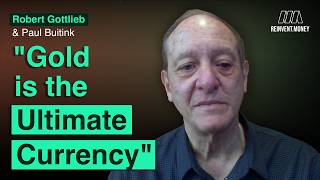
Preview:Former bullion banker Robert Gottlieb discusses his 40+ years in precious metals markets, from the Hunt Brothers silver liquidation through central bank gold dealings to today's tariff-driven dislocations. He explains how CME margin hikes crushed the 1980 and 2011 rallies (momentum/speculation) but the recent rally has genuine fundamental support from central bank buying. He details how gold swaps work, the Bank of England vaulting gridlock during the tariff shock, and why silver's free-float depletion caused extreme lease-rate spikes. Fundamentally bullish on gold/silver but urges patience: the dollar-rate softening is positive, but Middle East geopolitics and the need to reclaim the 200-day moving average (~$4,400) keep him cautious near-term. He promotes his new educational platform watchgold.org.
Preview:Peter Schiff argues that gold has reset after a sharp rally and pullback, with negative sentiment and a higher probability of being bought on dips than breaking down. He is bullish on gold and silver over the coming months, sees inflation as persistent, and thinks AI may add near-term price pressure rather than quickly offset it. The interview also centers on Schiff’s strongly bearish view of Bitcoin and Strategy (MicroStrategy), which he says is entering a ‘death spiral’ as leverage, preferred stock, and forced Bitcoin sales feed on each other.
Preview:Chris Martenson argues that oil, gold, and related commodity prices are being distorted by heavy official or coordinated intervention, while physical inventories are drawing down and geopolitical risks are rising. He sees the Middle East ceasefire/understanding as fragile, Russia-Ukraine as a widening NATO-Russia proxy conflict, and central-bank money printing as the eventual macro response to unsustainable debt and deficits.
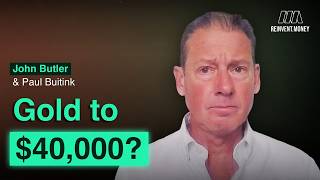
Preview:John Butler argues that gold is still in a secular bull market and that the recent post-conflict pullback was mostly a speculative shakeout, not a thesis break. He sees central-bank buying, persistent deficits, money creation, and a more multipolar world as the main forces that could take gold much higher over time, while he is skeptical that AI will materially solve the productivity slowdown or justify current valuations.
Preview:Danielle DiMartino Booth argues that the US economy is weaker than the headlines suggest: job quality is deteriorating, bankruptcies are rising, housing is under severe pressure, and credit markets remain fragile even if spreads still look tight. She thinks the market can keep rallying on narrative and liquidity, but that would not change the underlying cycle, and she frames Bitcoin, gold, and credit spreads as key real-time gauges of risk appetite and stress.
Preview:Martin Armstrong argues the world is entering a sharper phase of geopolitical escalation, with Iran, Ukraine, Taiwan, and parts of Europe all moving toward conflict-related stress. He says his capital-flow model is flagging a more intense period starting next week, worsening into August, then again into early 2027, with wars feeding into energy, banking, and sovereign debt crises.
Preview:Francis Hunt argues that gold and silver are still in broader bearish continuation patterns in the near term despite the strong longer-term thesis, with a likely further leg down before any sustainable base. He also says oil looks capped near key resistance, Bitcoin has likely already topped, AI valuations are stretched, and a major correction may arrive between May and October, potentially catalyzed by a disruptive SpaceX listing and broader passive-ETF rotation.
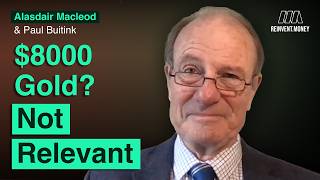
Preview:Alasdair Macleod argues the fiat currency system is unraveling, central banks are shifting toward gold, and the real risk is moving from gold to currencies. He is bearish on stocks, calling equities the biggest credit bubble ever, and says the eventual collapse will force massive money printing and a broader reset.
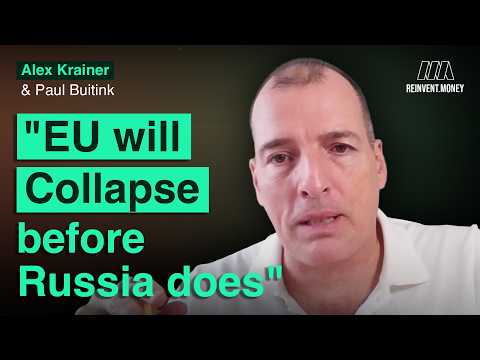
Preview:Alex Krainer argues that Trump is entering talks with China from a weak position and must de-escalate on Iran, while Europe is posturing about peace even as it continues preparing for confrontation with Russia. He sees the real pressure points as US economic fragility, Chinese leverage, and European political weakness rather than military dominance.
Preview:Barry Eichengreen argues the dollar’s reserve-currency status is being slowly eroded by U.S. debt, political polarization, Fed independence risks, and fraying alliance trust, though no near-term replacement is obvious.
Preview:Willem Middelkoop argues that the world is already in a monetary reset: the dollar system is fragmenting, gold is re-entering the institutional conversation, and geopolitical conflict is accelerating the shift. He remains bullish on gold, silver, uranium, and commodity equities, while warning that war, inflation, and sovereign/bond stress are the main risks.
Preview:David Marsh argues Europe can survive only by becoming more pragmatic, economically stronger, and less dependent on rigid EU thinking. He sees Trump as a temporary shock that has pushed Europe toward realism, but warns that France, debt, and ECB intervention remain major fragility points.
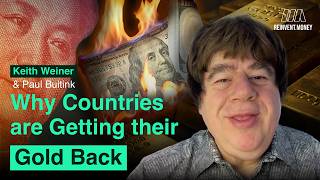
Preview:Keith Weiner argues that the dollar remains the dominant global funding currency and that recent gold moves are better explained by forced liquidity needs than by a clean geopolitical or inflation narrative. He sees BRICS, yuan internationalization, and the idea of a post-dollar paper currency as largely rhetoric, while expecting gold to matter more as a neutral settlement asset and possible remonetized form of money.
Preview:Douglas Macgregor argues Trump is trapped between rhetoric, donors, and Israel, and that any renewed war with Iran would likely fail, accelerate de-dollarization, and destabilize Gulf oil infrastructure. The conversation broadens into NATO, Ukraine, BRICS, regime change, and the view that U.S. power is overextended and increasingly unable to impose outcomes by force.
Preview:Gerald Celente argues the Iran war risk is the dominant macro threat, warning that U.S./Israel escalation could trigger nuclear risk, a global oil spike, and a severe market crash. He frames Trump and other U.S. leaders as part of a corrupt, war-driven political system, but finishes on a defensive note: gold remains a favored safe haven and citizens should prepare physically, emotionally, and spiritually.
Preview:Interview with gold advocate Maneco64 arguing that fiat currency fragility, war risks, and policy responses support higher gold over time, with bigger corrections along the way.
Preview:Francis Hunt argues the current market is in a late-stage fiat/debt unwind: near-term liquidity stress can still hit gold and silver, but the deeper breakdown in credit and rates is ultimately bullish for hard assets.
Preview:An interview focused on Catherine Austin Fitts’s thesis that the US and allied elites are using war, sanctions, food-system pressure, digital ID, and programmable money to build a global control grid. She argues the current Middle East escalation is less about the stated war aims than about financing, food/energy choke points, depopulation incentives, and accelerating surveillance infrastructure, while also insisting the project will ultimately fail and that people should build “Plan B” with cash, physical gold, and analog resilience.
Preview:Alasdair Macleod argues the Middle East conflict is less a contained war than a catalyst for broader economic and political breakdown. He expects the U.S. and Israel to lose strategically, sees Trump’s escalation as a major blunder, and thinks the biggest near-term market effects will be higher inflation, rising bond yields, pressure on the dollar, and a powerful bid for physical gold and silver.
Preview:Mark Thornton argues that the current fiat-money system has produced a distorted economy, an oversized financial sector, and recurring bubbles, and he says the answer is a deep monetary reset back toward sound money rather than tinkering at the margins. He supports this with Austrian-school reasoning about credit expansion, leverage, decapitalization, tariffs, and the historical role of gold and silver as market-chosen money. He also ties today’s gold and silver strength, the S&P/Nasdaq boom, private equity, and skyscraper records to an economy nearing a fragile turning point.
Preview:David Morgan argues that silver’s recent selloff was a liquidity-driven washout, not a thesis break, and that the bigger picture remains bullish for both gold and silver because fiat stress, currency debasement, and demand for physical metal continue to intensify. He expects silver to base for a while after the spike, while physical tightness, paper-vs-physical dislocations, and industrial/defense use keep the long-term case intact.
Preview:Simon Dixon argues that Bitcoin is moving through the same capture-and-centralization cycle that happened to gold: banks and Wall Street first resisted it, and now they are trying to co-opt it through ETFs, treasury companies, custody, and leverage. He ties the Epstein files, Trump, Elon Musk, and various institutions into a broader thesis that transnational financial power is weakening the dollar and pushing the world toward a multipolar, surveillance-heavy system, where self-custody of Bitcoin or gold is the main form of resistance.
Preview:Bill White argues that the global monetary system is moving toward a slow-motion run on fiat currencies, driven by sanctions, weaponized dollar infrastructure, rising debt, and increasingly fragile fiscal dynamics. He says China is not trying to replace the dollar outright, but is building alternatives to reduce vulnerability to U.S. financial coercion, while gold and other hard assets are beginning to reflect that shift.
Preview:Luke Gromen argues that the US, Europe, and Japan are behaving like emerging markets because their debt, industrial base, and supply chains no longer support the current geopolitical order. In his view, the recent pressure on gold and silver, the push toward repatriating gold, and even aggressive US foreign policy signals are all tied to a more precarious critical-minerals and weapons-production bottleneck than most people realize.
Preview:David Rogers Webb argues that the global financial system is being deliberately destabilized and that wars, sanctions, and asset freezes are all part of a larger “breaking and taking” process aimed at control of collateral, custody, and property rights. The conversation centers on his Great Taking thesis: that modern finance relies on rehypothecated government-bond collateral, that Russian asset freezes and Euroclear drama are part of a broader theater of confidence destruction, and that a future banking crisis could be used to concentrate power and seize assets.
Preview:Former bullion banker Robert Gottlieb explains the structural drivers behind the gold and silver rally, emphasizing central bank buying as a policy-driven (not price-driven) phenomenon tied to de-dollarization. He dispels the "banks are short the world's gold" narrative by explaining EFP arbitrage mechanics, walks through the 2025 tariff-driven metal flows between London and the US, and argues silver faces persistent supply-demand deficits from industrial demand. He sees the rally continuing for years, warns corrections will grow more violent at higher prices, and advises investors to hold both physical (insurance) and ETF (trading) exposure.
Preview:Grant Williams argues that the post-Maduro shock underscores a broader market regime of uncertainty: there is no true safe haven, policy and geopolitical surprises dominate, and investors should focus on defense, purchasing-power preservation, and tangible assets rather than predictions. He favors gold as the long-run anchor, sees commodities like oil and copper as cheap, distrusts easy certainty around Venezuela, oil, or the dollar, and urges viewers to avoid guru worship and build their own process.
Preview:Marc Faber argues that geopolitical aggression, heavy money printing, and rising debt are eroding the current system, while making hard assets and select equities more attractive than cash or bonds. He is especially constructive on oil/natural gas stocks, some emerging markets, Thai banks, and precious metals, but he also warns that many assets are already expensive and that future returns may disappoint broadly.
Preview:This interview argues that a Silicon Valley-led technocratic project is using Trump-era politics, digital ID, and programmable money to build a more centralized system of control. The guest’s main warning is that the language of decentralization, liberty, and innovation is being used to sell a model that ultimately reduces human agency.
Preview:Robin Brooks argues that the euro’s design is structurally broken, that debt sustainability is being hidden by ECB policies, and that a controlled breakup or major renegotiation is likely eventually unavoidable. He ties the current rally in gold and other precious metals to a broader “debasement trade” driven by loose fiscal policy, rising long-end bond yields, and expectations that central banks will be pressured not to tighten.
Preview:Alasdair Macleod argues that silver’s surge is being driven by years of supply shortfall, rising industrial demand, and a changing Chinese policy stance that is restricting exports rather than suppressing price. He frames the move not as a normal commodity rally but as part of a broader unwind in 54 years of paper-derivative distortion and, more importantly, the beginning of the end of the fiat currency system, with gold and silver acting as the pressure valve.
Preview:Kathleen Tyson argues the monetary system is shifting toward a multi-currency, gold-backed plumbing model rather than a single new BRICS currency. She says BRICS explicitly favors local-currency trade, China is building alternative payment rails and gold vault networks, and Western sanctions/repo stress are accelerating de-dollarization and optionality.
Preview:Peter Schiff argues that crypto is in a major bubble that could hurt Trump politically, while gold and gold miners remain the better trade. He says central banks, weaker dollar expectations, rising inflation, and politicized Fed policy are driving a durable rotation into gold, and that Bitcoin is a speculative token rather than digital gold.
Preview:Matthew Piepenburg argues that the current market is sitting on multiple interlocking bubbles or stress points: AI, subprime credit, private credit, and a broader monetary system that is losing trust. His core bullish view is that gold is moving from a contrarian trade to a necessary strategic reserve asset as central banks, China, and parts of the West adapt to a changing monetary order. He is skeptical of Bitcoin as a long-term store of value, though he acknowledges it remains a powerful speculative asset and a useful proxy for risk appetite.
Preview:Eric Young argues that a BRICS-centered collateral system is emerging around physical gold, with silver playing a secondary but potentially important role, while Bitcoin/stablecoins mainly reinforce the US treasury-funded dollar system. He says Western gold/silver price suppression has been run through COMEX, LBMA, and ETFs, but tight physical supply and growing Eastern demand are forcing higher prices.
Preview:Independent gold analyst Jan Nieuwenhuijs explains how the People's Bank of China (PBOC) has been secretly accumulating gold at a much larger scale than reported to the IMF. He estimates China holds ~5,300 tonnes (vs. ~2,300 officially reported), making it the second-largest sovereign holder. The key evidence: Chinese gold imports remain ~100 tonnes/month even when the Shanghai Gold Exchange trades at a discount, proving the buyer is not private but the central bank funneling gold directly to Beijing. He argues this buying broke the gold/real-yield correlation and is part of a broader de-dollarization push toward a gold-backed trade-currency system centered on the renminbi.
Preview:Francis Hunt ("The Market Sniper") argues that the recent gold/silver pullback is a minor technical correction within a secular bull market. His core thesis: the West is in "orchestrated planned demolition" via fiat debasement, and gold is the only stable unit of account. He sees gold's move from $1,000 to $4,000 accelerating exponentially, silver's next interim target at ~$91, and the US Treasury market underpinned by a fragile basis trade that will eventually require another bailout. He advises investors to stay calm, accumulate physical metals, and consider jurisdictional diversification away from the West.
Preview:Alasdair Macleod argues that the sharp 5-7% sell-off in precious metals is a coordinated shake-out by bullion-bank market makers trying to square their short positions, not a fundamental reversal. He maintains a deeply bullish long-term view: the fiat currency system is ending, China is building a gold-backed yuan alternative to the dollar, and we are entering the final credit-collapse phase analogous to Weimar Germany's 1921-23 hyperinflation. His core advice: do not trade gold and silver — hoard them, and use dips to buy more.
Preview:Steve Keen argues mainstream economics is built on false assumptions about money, banks, debt, and prices, and that private debt is the real systemic risk. He also says the euro was a mistake, QE inflated assets, and climate change is an existential threat that economists have vastly understated.
Preview:Lyn Alden discusses the "debasement trade" — the structural shift into gold and Bitcoin driven by loss of trust in fiat currencies and unsustainable fiscal deficits. She argues the trend is durable and multi-decade, reversing a post-WWII decline in gold's role, though she cautions about near-term gold euphoria (comparing it to mid-2020). Bitcoin she sees as "muddling along" despite nominal highs, with a potential $150K+ by end of next year. She addresses MicroStrategy risk (minimal for Bitcoin), the Core vs Knots debate (not existential), central bank adoption hurdles, and the global spread of hard-money awareness, including Egypt.
Preview:Francis Hunt argues that the U.S. and broader Western financial system are in a debt-and-fiat collapse, with gold and silver repricing against debased currencies. He frames recent moves in gold, silver, platinum, and select crypto as part of a longer structural reset, while urging retail investors to prioritize physical precious metals, avoid leverage unless trained, and prepare for lower living standards and tighter Western conditions.
Preview:Alex Krainer argues the Ukraine war is in its final stage, with Russia gradually advancing while Western propaganda intensifies to sustain a proxy conflict and justify escalation. He broadens that thesis into a larger warning: European elites, especially in the UK/EU, may seek a bigger war or even a false-flag incident to distract from economic decay, social unrest, and institutional failure; he also thinks Trump has lost some control and may drift toward authoritarianism in response to rising U.S. turbulence.
Preview:William White argues the world is moving into a less cooperative, more fragmented monetary and geopolitical regime, with trust breaking down between the U.S., Europe, China and the broader global system. He sees France as a key stress point inside the euro area, but thinks officials would ultimately intervene to prevent a disorderly crisis, most likely through ECB support and some form of financial repression rather than clean reform.
Preview:Danielle DiMartino Booth argues the U.S. is already in a rolling recession masked by noisy data revisions, with job losses, weakening consumption, rising delinquencies, and tighter credit pointing to broader economic stress. She sees housing, discretionary spending, and eventually risk assets as vulnerable, while expecting the Fed to cut rates further but not enough to fully rescue highly valued stocks without a much more aggressive return to zero rates or QE.
Preview:Henrik Zeberg argues the market is still in the late bubble phase, not the crash phase yet. He expects more upside in stocks and crypto over the next few months, driven by liquidity, FOMO, and still-resilient economic data, before a later deflationary bust, a stronger dollar, and then a possible stagflationary reset.
Preview:Martin Armstrong, interviewed by Paul Botink, argues Europe is financially insolvent, beating war drums against Russia to distract from looming IMF bailouts and pension fund collapses. He claims stablecoins under the GENIUS Act are modern war bonds, the euro was structurally doomed from inception, and his computer model forecasts escalating international war in 2026 with China becoming the financial capital post-2032. The EU will eventually break up because it cannot sustain centralized control over disparate cultures and unreformed debt.
Preview:Keith Weiner argues the current debt-driven fiat system is structurally unstable, but not on the verge of immediate collapse. He says gold is gaining as a savings and settlement asset across the Chinese, Indian, Turkish and parts of the Arab worlds, while the West is only beginning to trickle into gold as trust in the dollar and broader financial system erodes. He is much more skeptical of Bitcoin as money because it is not redeemable and, in his framing, is just a database entry rather than a claim on a physical asset.
Preview:Francis Hunt (The Market Sniper) presents his "hyper-stagflation" thesis — an extreme version of 1970s-style stagflation driven by far worse debt-to-GDP levels, financial repression, and an oppressive statist response. He argues gold is at a macro technical target and due for a pause/consolidation, while the dollar is in a long-term structural decline against the Swiss franc. The conversation blends technical analysis with a deeply bearish socio-political worldview, advising young people to leave Western nations, build independent businesses, and hold gold, Swiss francs, and selected crypto as hedges.
Preview:Alasdair Macleod argues the world is entering the end of the fiat-money system, with today’s debt/credit bubble, tariffs, and rising long-term yields combining into a worse setup than 1929. He expects central banks to try to delay the break by inflating more, but says that only dilutes currencies and eventually leads to a collapse of paper money and a renewed move toward gold-based settlement.
Preview:Catherine Austin Fitts argues that the U.S. financial system has been hollowed out by secret, off-balance-sheet government accounting, black-budget spending, and a broader governance capture she calls a “financial coup.” She says the missing-money problem has likely grown from the $21 trillion identified through 2015 to roughly $36 trillion or more, and she links that opacity to privatized technology, surveillance, AI, and a control-grid trajectory.
Preview:Chris Martenson argues that the global money system is structurally unsustainable because debt-based money depends on endless exponential growth while real resources are finite. He expects the next major crisis to be a sovereign/credit event that forces another large Fed balance-sheet expansion, with losses ultimately pushed onto the public through inflation and financial repression.
Preview:Gerald Celente delivers a blistering, anti-establishment monologue on geopolitics and markets. He characterizes NATO leaders as "gutless clowns," dismisses military spending as wasteful prelude to nuclear annihilation, and accuses the US and Israel of enabling genocide in Gaza. His core market thesis: the US dollar is in structural decline, accelerated by Trump's tax bill adding $3.3T to the debt, which is aggressively bullish for gold. He sees Bitcoin as a gamble worth taking given Trump's crypto pivot, warns of an AI-driven "dot-com bust 2.0" and an office-building default wave that could trigger bank failures. The interview is more polemic than structured market analysis.
Preview:Brent Johnson argues the dollar milkshake framework still applies: the U.S. remains the system’s central liquidity and power hub, so he would still overweight U.S. assets versus Europe or the euro. He is constructive on gold as a long-term beneficiary of monetary stress, but he does not expect an official gold standard or a near-term gold revaluation to be the base case.
Preview:Alex Krainer argues the Iran conflict is primarily a Western regime-change operation, driven less by oil companies than by banking and intelligence interests, with Britain’s security establishment and interlocking financial elites sitting at the center. He says Iran likely does not truly want nuclear weapons, but uses enrichment as leverage for a regional bargain, while Israel, the U.S., and allied Western actors are escalating toward a dangerous point where nuclear use is the main way they could avoid strategic defeat. He also links the war to wider patterns in Syria, Ukraine, Libya, and the Balkans, framing them as recurring British-led destabilization campaigns.
Preview:Yanis Varoufakis sits down with host Paul Buitink to argue that we live under "technofeudalism" — a post-capitalist system where Big Tech's "cloud capital" extracts ~30% of GDP as rent by modifying behavior, crushing democracy and aggregate demand. He explains why the euro was lethally designed, why the EU missed every chance to reform, and why now he may reluctantly favor dismantling it. On Ukraine, he calls Western policy hypocritical: if Putin were truly Hitler, troops would be sent to Moscow. The conversation closes with skepticism that Europe's new rearmament push ("military Keynesianism") can work without a federal state.
Preview:Colonel Douglas Macgregor argues that Trump is a puppet with no real control over US foreign policy, which is actually run by the CIA, the Senate, and the war lobby. He contends Russia will win the Ukraine war on its own terms regardless of Western actions, that Ukraine is effectively finished as a state with catastrophic casualties (~1.5M dead), and that Israel will likely provoke a war with Iran that will drag the US in. He warns of an imminent US sovereign debt crisis when 10-year yields hit 5%, and suggests Europe should break into more natural regional blocs rather than continue its "suicidal" confrontation with Russia.
Preview:Martin Armstrong argues that all central banks are trapped: raising rates to fight inflation is self-defeating because governments are the largest borrowers. He sees the global financial system heading toward sovereign defaults, starting with Japan or Europe, and expects China to emerge as the world's financial capital after 2032. The interview covers weaponization of SWIFT, the existential risk of asset confiscation in the EU, the deep structural flaws in the euro, and why gold rises on geopolitical fear rather than inflation. Armstrong is distinctly anti-war, anti-NATO, and critical of the neocon foreign policy establishment, offering an idiosyncratic mix of historical analogies, personal anecdotes of advising governments, and cyclical model-based forecasts.
Preview:Matthew Piepenburg argues the US is in a debt trap that makes tariffs, rate hikes, and even one presidency incapable of restoring durable hegemonic power. He says the bond market, not political will, forced the tariff de-escalation, and that the broader global system is already shifting away from the dollar toward gold, central-bank coordination, and eventually some form of CBDC/reset architecture.
Preview:Rick Rule argues that Trump’s tariffs are just taxes that will mostly hurt ordinary consumers and worsen bureaucracy, while doing little to rebuild U.S. industry. He sees the tariff fight as political theater that will end in backroom deals, but he believes the bigger issue is the U.S. fiscal path: debt, unfunded liabilities, and dollar debasement. That backdrop, in his view, supports gold first, then broader precious metals strength, with silver likely lagging before eventually outperforming later in a bull market.
Preview:Tom Luongo argues Trump’s opening months are a deliberate shock-and-test campaign, not chaos: by threatening tariffs, compressing narratives, and targeting the financial plumbing behind Europe and allied Treasuries, Trump is forcing adversaries to reveal themselves. He says the immediate market stress was driven more by European selling in the long bond and cross-market hedging than by China or Japan, and that falling oil/gasoline could soon ease CPI and give Powell room to cut.
Preview:Catherine Austin Fitts argues that the U.S. government has long operated with a vast, largely hidden financial system — the “black budget” — and that the current political shift is less about transparency than about consolidating a new “control grid.” She says the Trump/Musk/DOGE effort may trim some visible waste, but she believes it is also being used to strip civil-service protections, move government data into private AI systems, and accelerate privatized control over money, technology, and assets.
Preview:Former Brazilian Central Bank governor Gustavo Franco explains what hyperinflation feels like from the inside, how Brazil's 15-year inflation crisis was finally ended with the 1994 Real Plan, and why each country's hyperinflation is unique. He draws parallels to Argentina's current stabilization under Milei, discusses gold's historical role in Brazil's FX liberalization, and offers a skeptical view of euro-style currency unification. The conversation is historical and institutional rather than a market call.
Preview:Velina Tchakarova, a European geopolitical consultant, analyzes the Trump-Zelensky White House clash, arguing the minerals deal is Ukraine's best near-term option for implicit security guarantees via US business presence. She forecasts a temporary ceasefire in 2025, likely followed by a frozen conflict along a demarcation line. Europe, she contends, is being sidelined and must urgently rearm, accepting the green agenda as a casualty. She assesses the nuclear escalation risk as overstated and advocates a "third way" for Europe: engaging middle powers like India and Latin America rather than choosing between US and China.
Preview:A Warwick Economics Summit panel on the future of money debated cash, CBDCs, stablecoins, and privacy. The Bank of England speaker argued cash still matters and a digital pound is only a possible complement; the crypto and precious-metals speakers pushed harder for monetary choice, privacy, and resistance to state control, while the ATM-network speaker stressed exclusion, resilience, and the politics of keeping cash alive.
Preview:Paul Buitink argues the monetary system is moving toward a multi-currency world in which gold—not the dollar, euro, or any officially gold-backed unit—acts as the reserve benchmark. He is constructive on both gold and Bitcoin, but says gold is the more reliable long-term store of value and the better asset to own through severe disruption.
Preview:Alasdair Macleod argues that the paper gold market is under strain because many market participants, especially foreigners and Asians, increasingly want actual metal rather than paper claims. He frames the surge in COMEX stand-for-delivery requests, London delivery delays, and central-bank repatriation as signs that bullion banks are running out of flexibility, not just a temporary tariff-driven panic.
Preview:Gerald Celente argues the Trump era is more spectacle than substance, warning that U.S. politics, media, and corporate power are intertwined in what he calls a “crime syndicate” and a modern form of fascism. His main market call is that the U.S. is entering “Dot-com bust 2.0” led by AI/tech overvaluation, while commercial real estate, high rates, debt, and deindustrialization add to the risk backdrop.
Preview:John Mearsheimer argues that the world is moving toward more frozen conflicts, not durable peace: Ukraine will likely end in an armistice rather than a settlement, Gaza will likely see only a temporary ceasefire, and the bigger strategic problems remain unresolved. He says NATO’s 2008 decision to bring Ukraine into the alliance was a fatal mistake, that Russia is not capable of conquering all of Europe, and that Trump’s promise to end the war quickly is mostly empty talk unless the West accepts Russia’s core terms.
Others tracked across the same asset focus or market thesis.
Unlock every transcript this speaker appears in, compare them with your other followed voices, and ask the agent for the bull, bear, and consensus read in one workspace.
Type a question. Create a free agent to send it and keep the answer linked to this speaker.
Your question is preserved across sign-in.
Free. No card. Takes about a minute.