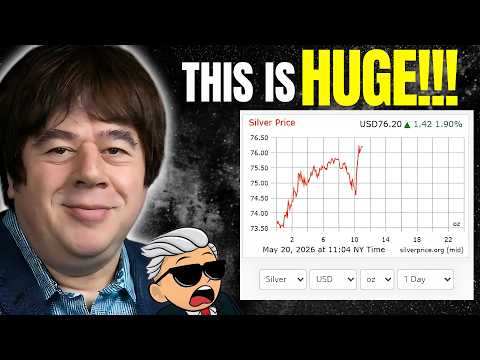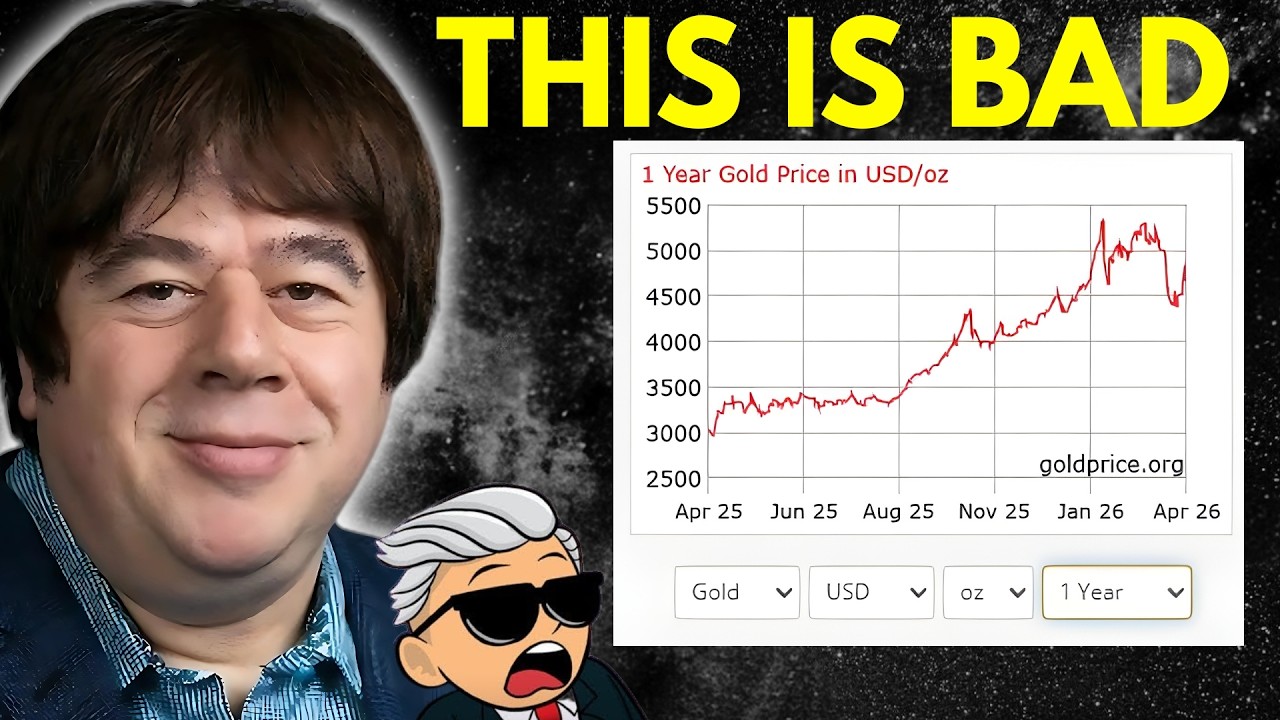
Weiner’s recurring worldview is broadly anti-fiat and pro-monetary metals.
Preview how this speaker shows up across market transcripts. Unlock the full archive, AI chat, and the version personalized to your watchlist, followed channels, and favorite speakers.
Keith Weiner is a monetary economist and founder/CEO of Monetary Metals, with a public-facing research style centered on gold, silver, and the dollar system. Across the supplied transcripts he speaks as a sound-money analyst rather than a market pundit: he repeatedly explains price moves through dollar liquidity, futures/spot dynamics, and the monetary role of metals. He also emphasizes that much of the market is driven by short-term leveraged trading, while physical metal demand and scarcity signals matter more for the long run. His own website and X account are resolved, which supports treating his recurring published framework as his core position.
Weiner’s recurring worldview is broadly anti-fiat and pro-monetary metals. He sees gold and silver as durable monetary assets that outperform paper claims over time because the dollar-based system is structurally unstable, debt-laden, and periodically forced into liquidity crises. He often argues that when stress hits, people sell gold not because they prefer dollars ideologically, but because dollars are needed to meet obligations and margin calls. Long term, he expects continued dollar weakness relative to gold, periodic volatility, and a gradual remonetization of gold and, to a lesser extent, silver. He is skeptical that any paper currency like the yuan or BRICS alternatives can fully replace the dollar, and he favors a world where gold functions as a neutral reserve asset held in trusted jurisdictions. His preferred policy direction is closer to a renewed gold standard or at least a system where metal plays a more direct monetary role.
Every analyzed appearance we have for this speaker, newest first. Open any transcript preview to read the underlying transcript.
Preview:Keith Weiner, founder of Monetary Metals, explains the recent selloff in silver and gold as a dollar liquidity crunch, not a fundamental rejection of precious metals. He argues the dollar's strength is temporary, driven by forced selling from traders wrongfooted by oil price shocks and distressed market participants needing cash. He highlights India's desperate measures (Modi urging citizens not to buy gold, hiking import tariffs to 15-16%) as a signal of rupee devaluation risk. Weiner notes silver's basis indicator is beginning to show scarcity — a potential early signal that silver may lead gold's eventual recovery. He expects the liquidity squeeze to be finite, likely ending once the new Fed chair accommodates and long-bond rates continue declining.
Preview:Keith Weiner argues that the bull case for gold and silver is still intact, but silver’s recent drop was driven by forced liquidation and dollar-liquidity stress rather than a change in underlying fundamentals. He is bullish on both metals, says silver scarcity has returned to levels last seen when silver was much higher, and frames war-driven commodity disruptions and debt-service pressure as the key backdrop.
Preview:Keith Weiner argues that the dollar remains the dominant global funding currency and that recent gold moves are better explained by forced liquidity needs than by a clean geopolitical or inflation narrative. He sees BRICS, yuan internationalization, and the idea of a post-dollar paper currency as largely rhetoric, while expecting gold to matter more as a neutral settlement asset and possible remonetized form of money.
Preview:Keith Weiner argues the recent gold/silver weakness is mainly a liquidity event tied to Middle East escalation, not a broken precious-metals thesis. He says the acute squeeze may have passed for energy traders but warns that downstream liquidity stress could still ripple through refiners and related markets, while keeping a structural bullish view on gold and silver.
Preview:Keith Weiner discusses the paradox of gold and silver markets amid the Iran conflict: forced dollar liquidity scrambles cause temporary gold selloffs, but structural debt, tight precious metals supply, and the dollar's perverse global entrenchment support a long-term bullish outlook. He argues de-dollarization narratives are overstated — real-world transactions still default to dollars — while noting silver demand remains resilient with possible retracement to $60. Nuclear escalation is identified as the extreme catalyst for gold reaching $6,000-$10,000, though he stresses this is not a desirable outcome.
Preview:Keith Weiner argues the Iran war has not mechanically triggered a gold spike because the immediate market response is dollar-liquidity demand and asset liquidation, not a simple “war = gold up” trade. He says gold remains structurally attractive, silver supply is still tight, the dollar system is still powerful but weakening over time, and only extreme escalation such as nuclear use would likely produce a dramatic repricing.
Preview:Keith Weiner argues that the recent metals surge was driven more by physical demand than by a durable speculative bid, and that the sharp pullback looked like leverage-driven futures positioning unwinding. He remains bullish on gold and silver, says Western retail still mostly does not own gold, and believes the bigger structural story is global de-dollarization pressure, cultural demand outside the U.S., and the need for redeemable, gold-linked monetary alternatives rather than mere “gold-backed” branding.
Preview:The video is a weekly market wrap on gold and silver, focused on a sharp midweek pullback, the likely drivers behind it, and why the speaker still thinks the uptrend in precious metals remains intact. It also covers mining-sector M&A, with a survey naming IAMGOLD as a leading takeover candidate.
Preview:Keith Weiner of Monetary Metals outlines a bullish thesis for gold and silver, arguing that 2025's physical-metal buying — evidenced by rare silver backwardation — signals remonetization driven by dollar regime failure. For 2026, he expects continued uptrends with violent corrections, driven by Eastern demand (India switching to silver as gold becomes unaffordable), industrial thrifting at higher silver prices, and a structural shift toward monetary metals as an alternative to irredeemable currency.
Preview:Keith Weiner argues that gold’s move to roughly $5,300 is best understood as a structural bear market in the dollar, not just a one-off gold bull market. He says the key signal is the gold basis: gold’s price is rising, but the basis has not expanded much, which he takes to mean demand for metal is still steady rather than driven purely by speculative futures buying. He also says silver looks more overheated than gold and is more likely to correct sharply.
Preview:Keith Weiner argues that the sharp rise in silver and gold is being driven by tightening market scarcity and rising mistrust, not a normal commodity-style shortage. He says the rise in co-basis/backwardation shows metal is becoming harder to source into the market, and that this can persist even as prices rise, potentially allowing much higher silver and gold prices while creating stress for hedgers, refiners, mints, and bullion dealers.
Preview:Keith Weiner argues silver just experienced an unusual backwardation episode that signals real market tightness and renewed monetary demand, especially from India and other non-Western buyers. He extends that view into a broader thesis: gold and silver are still monetary metals, the West badly misunderstands them, and the current fiat/low-rate system is pushing finance toward speculation and eventual instability.
Preview:Keith Weiner argues that the gold rally reflects a broader deterioration in fiat credibility, not a simple inflation/CPI story. He says gold is rising because credit quality is worsening, the dollar is less trustworthy, and Western retail has largely stayed out even as Eastern and institutional demand has stayed strong.
Preview:Keith Weiner argues that the gold and silver bull market is still structurally intact, with the main drivers unchanged or improving. He says gold's rise is pressuring the jewelry/trade side, silver is benefiting from price-out demand and market dislocations, and institutions are finally moving from exiting metals to re-entering them.
Preview:Keith Weiner (Monetary Metals) joins host Evan to discuss the endgame of exponential global debt, the perverse incentive structure of the 40-year falling-rate regime that converts savers' capital into others' income, and the eventual dollar collapse via gold backwardation becoming permanent. He argues the fix is remonetizing gold so it circulates and earns interest (his firm pays 4% gold yield), and contrasts Western ignorance of gold with Eastern sophistication born of currency crises. He also recounts a debate where Pierre Rochard's Bitcoin-as-savings thesis collapsed under the "buy more" answer to an octogenarian widow who lost 79%.
Preview:Dr. Keith Weiner of Monetary Metals presents his thesis that interest rates are a runaway snowball rolling downhill since 1981, with each attempted rate hike triggering defaults that force central banks to reverse course. He argues the dollar will fail last after other currencies collapse first, that "redollarization" is real and driven by global demand for dollars, and that the 50-year mortgage proposal signals deep systemic rot. His core framework: gold is the true money, the dollar is a credit instrument in decline, and earning yield on gold (via his firm) solves the "you can't profit without selling" dilemma.
Preview:Keith Weiner argues the gold and silver move is still fundamentally intact, with the recent pullback in gold looking like normal correction rather than a trend break. His most distinctive claim is that the silver market briefly entered extreme backwardation, which he interprets as a real scarcity-to-market and trust problem in the wholesale silver system, not merely a retail coin shortage.
Preview:Keith Weiner of Monetary Metals argues silver has entered a structurally different bull phase, evidenced by severe backwardation (~20% annualized in Dec contract), which signals real physical scarcity rather than futures-driven speculation. Gold has not yet reached backwardation but dollar weakness and mainstream institutional adoption (Morgan Stanley now recommends 20% gold in the 60/40 portfolio) support continued upside. He sees potential for silver to reach $60-65 and gold $4,600-4,700, though he cautions price targets are uncertain and higher silver prices may eventually draw metal back into the market. The interview also covers the intractable US debt situation, global currency flight (Turkey, India, China), and how stablecoins could accelerate emerging-market currency devaluation.
Preview:Keith Weiner of Monetary Metals joins CapitalCosm to discuss the extraordinary signal in gold and silver basis/co-basis data: rising prices paired with flat-to-rising scarcity (co-basis), which he argues is highly unlikely to be a top. He frames gold's rise not as gold going up but as the dollar collapsing (now ~8.2mg gold, down from 16mg), warns of the social and systemic dangers of a currency regime breakdown, and predicts the Fed will eventually return rates to zero — possibly lower — driven by Trump's pressure and structural economic forces.
Preview:Keith Weiner, founder of Monetary Metals, discusses the gold and silver bull market with host Arvin. He argues this is a durable bull market driven by a secular decline in the dollar, with falling interest rates removing a key reason to hold paper over gold. He dismisses claims that gold is manipulated by banks at a macro scale, though acknowledges spoofing/front-running exists. He sees silver slightly outperforming gold near-term, both metals with fundamental prices marginally above market. His core advice: get outside your echo chamber, study opposing views, and understand gold's unique role as physical commodity money vs. digital assets.
Preview:Keith Weiner argues the current debt-driven fiat system is structurally unstable, but not on the verge of immediate collapse. He says gold is gaining as a savings and settlement asset across the Chinese, Indian, Turkish and parts of the Arab worlds, while the West is only beginning to trickle into gold as trust in the dollar and broader financial system erodes. He is much more skeptical of Bitcoin as money because it is not redeemable and, in his framing, is just a database entry rather than a claim on a physical asset.
Preview:Keith Weiner of Monetary Metals discusses gold and silver in 2025, framing the gold bull market as a dollar bear market driven by unsustainable debt and monetary debasement. He sees interest rates inevitably falling — possibly violently — which would boost gold, though not in a straight line. Silver, he argues, faces structural headwinds from a softening labor market and industrial demand, though speculative sentiment could drive short-term pops. He expects silver to underperform gold medium-to-long term. He also analyzes the recent Swiss gold bar tariff scare as a market-structure disruption, not a price event.
Preview:Keith Weiner argues that the fiat monetary system is structurally unstable because irredeemable currency forces debt to grow exponentially and suppresses honest price discovery in interest rates. He says gold remains the main protection against this regime, while silver’s paper/physical market is not currently in crisis and is best understood through arbitrage, not manipulation.
Preview:Keith Weiner of Monetary Metals presents a macro thesis centered on irreversible US debt dynamics (doubling every ~8 years) and an unsustainable interest-rate regime. He argues the Fed will be forced to cut rates back toward zero, that gold's bull market is driven by debt-hedging demand, and that silver's current fundamental price is $40/oz based on his basis analysis showing physical scarcity. He frames the endgame as "permanent gold backwardation" leading to eventual dollar collapse, while promoting his platform that aims to avert this by putting gold to productive use.
Preview:Keith Weiner of Monetary Metals discusses silver's breakout to $36 and gold's bullish fundamentals. He explains his firm's "fundamental price" model showing gold at $3,700+ while silver's fundamental just crossed above market. The bulk of the conversation is a macro/structural critique: irredeemable fiat currency forces exponential debt growth, deficit spending consumes accumulated capital, and the endgame is a counterparty trust collapse signaled by persistent gold backwardation. He estimates ~10 years before the system breaks. The interview ends with a pitch for Monetary Metals' gold/silver interest platform.
Preview:Keith Weiner argues that tariffs are the main near-term market risk because they disrupt supply chains, crush margins, and could trigger layoffs and forced selling before the damage shows up in headline data. He also says gold is not “rising” so much as the dollar is weakening as credit, and that gold’s relative strength during the bond and stock volatility after “liberation day” signals stress in the dollar/Treasury system rather than a simple rotation trade.
Preview:Keith Weiner (Monetary Metals) expects gold to continue making new all-time highs (dollar making new all-time lows), but silver to rise only modestly without breaking into new highs. His fundamental model points to $3,500 gold and $34 silver. He is bullish on Treasury bonds (expects lower yields), warning that tariff uncertainty is paralyzing business investment, that Q2 GDP will reveal real damage, and that rising defaults are the key risk. He sees a risk of hyperinflation if the president gains direct control of the money printer.
Preview:Keith Weiner argues gold is in a bull market because fiat currencies — especially the dollar — are losing value, not because gold is simply ‘going up.’ He says the current setup is supported by foreign and institutional demand, banking/capital-control fears, and a broad loss of confidence in dollar-based credit, while still warning that a near-term correction is possible.
Preview:Keith Weiner argues that gold remains a buy-the-dips market and that the recent surge is being driven less by pure price speculation than by tariff risk, basis/spread dynamics, and growing credit fear. He expects gold to trade substantially higher over time, sees silver as directionally supported but weaker than gold, and warns investors to avoid leverage and debt in a potentially shock-prone environment.
Preview:Keith Weiner of Monetary Metals discusses the gold flow into COMEX as a boring spread-trade de-risking against tariff fears, not a conspiracy. He argues the dollar is credit, not money, and that gold's bull market is durable but driven by distrust in credit—not inflation fears this time. Silver lags because the working-class buyer is sidelined, while gold attracts capital-asset allocators. Central bankers don't think about gold, the system has "more kicks left in the can," and Weiner is now outright bullish on gold after years of being bearish on false rallies.
Preview:Keith Weiner, CEO of Monetary Metals, explains the gold/silver bull market through a liquidity and spread lens rather than conspiracy theories. He argues gold's all-time highs are driven by banks covering tariff risk by moving physical from London to New York, not by clandestine government schemes. He lays out a durable bull case for gold with better fundamentals than 2009-2011, but sees silver lagging because wage earners — silver's natural base — remain under financial pressure. He also pitches Monetary Metals' yield-bearing gold/silver deposit platform throughout.
Preview:Keith Weiner, founder of Monetary Metals, discusses the gold and silver rally with host Ian. He argues gold's move is driven by geopolitical factors and non-Western central bank/retail buying, not Western stackers. He downplays the LBMA/COMEX delivery drama as overblown, explains tariff-fear arbitrage flows from London to New York, and warns that tariffs on gold would widen spreads and harm US markets. His core advice: everyone should own some physical gold as the only financial asset that isn't someone else's liability, especially as the credit system degrades.
Others tracked across the same asset focus or market thesis.
Unlock every transcript this speaker appears in, compare them with your other followed voices, and ask the agent for the bull, bear, and consensus read in one workspace.
Type a question. Create a free agent to send it and keep the answer linked to this speaker.
Your question is preserved across sign-in.
Free. No card. Takes about a minute.