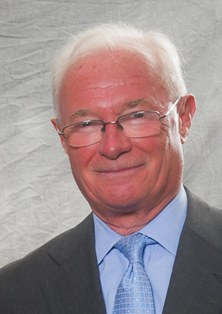
Macgregor’s recurring economic worldview is inseparable from his strategic one: he sees war as economically self-defeating, destabilizing to markets, inflationary, and often…
Preview how this speaker shows up across market transcripts. Unlock the full archive, AI chat, and the version personalized to your watchlist, followed channels, and favorite speakers.
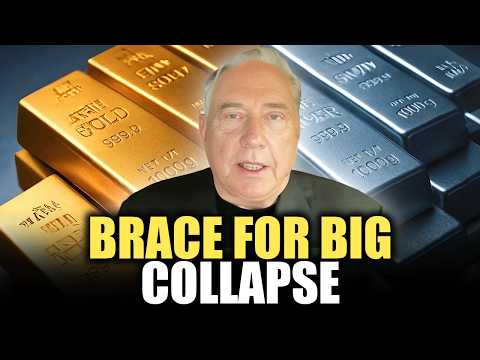
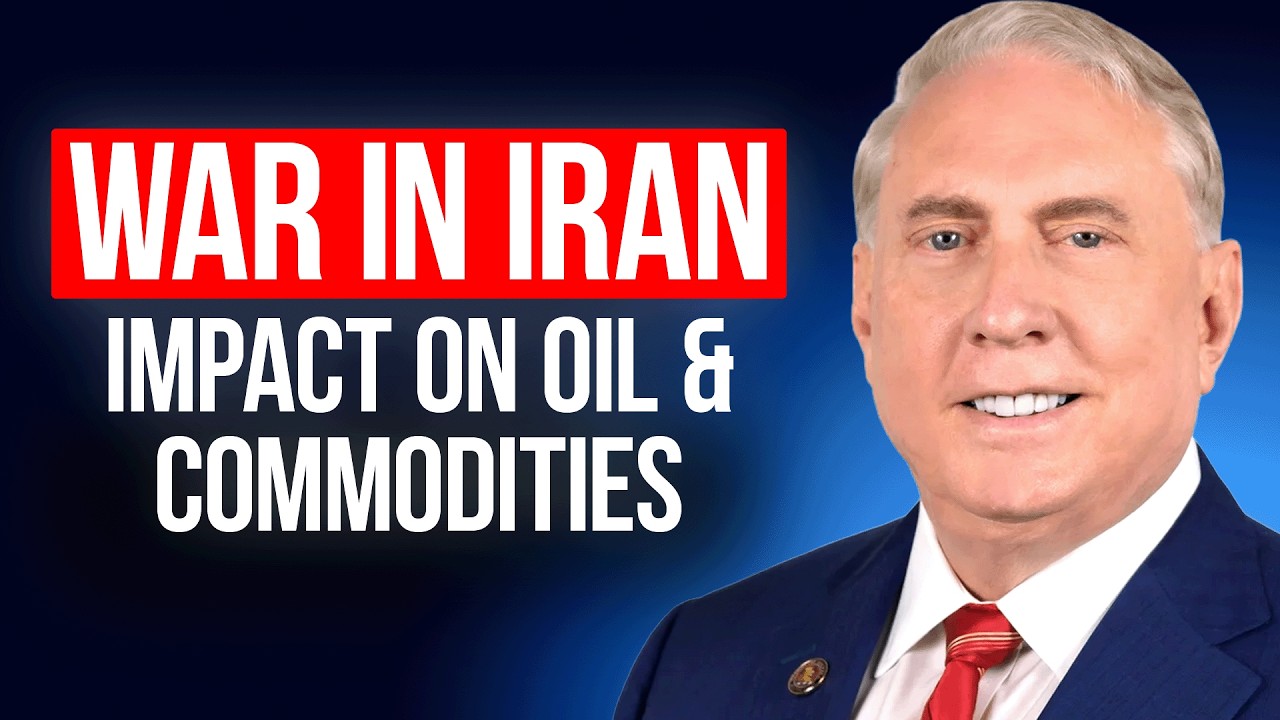
Douglas Macgregor comes across as a retired military officer and geopolitical commentator with a consistently realist, anti-interventionist style. Across the supplied material he argues from strategic geography, force limitations, and national interest rather than ideology. He repeatedly frames Iran and Turkey as major regional powers, dismisses simplistic U.S. military solutions, and treats NATO, long occupations, and regime-change logic as outdated. He also presents himself as having had direct private interactions with Trump and uses those to interpret Trump’s foreign-policy instincts.
Macgregor’s recurring economic worldview is inseparable from his strategic one: he sees war as economically self-defeating, destabilizing to markets, inflationary, and often driven by contractors, elites, and institutional momentum rather than sound national strategy. He emphasizes the costs of prolonged conflict, the vulnerability of bases and logistics, and the need to adapt to a changed world where industrial and military coercion no longer guarantees outcomes. In his telling, leaders should cut losses, negotiate, and align policy with economic reality and state capacity instead of chasing maximalist military goals.
Every analyzed appearance we have for this speaker, newest first. Open any transcript preview to read the underlying transcript.
Preview:Col. Macgregor offers a personal, behind-the-scenes account of Donald Trump's foreign policy instincts and evolution. He argues Trump privately never wanted war with Iran, was pushed into belligerence by Netanyahu and wealthy domestic supporters, and now realizes the Iran campaign is failing and must be ended through a deal. Macgregor sees the ceasefire framework as consistent with Trump's long-held instincts — non-interventionist, anti-nation-building, and focused on bringing troops home — and interprets Trump's recent rhetoric as a tacit admission that bombing won't work.
Preview:Col. Douglas MacGregor argues the war with Iran is not over despite the ceasefire narrative, that Turkey — not Iran — is Israel's most serious existential threat, and that the Trump administration has no coherent Middle East strategy. He warns that Trump is inadvertently pulling Turkey into Lebanon through a proposal to use Syrian Sunni fighters against Hezbollah, and that both Iran and Turkey have emerged stronger and more anti-Israel than before. Mario Nawfal raises concerns about whether Trump is orchestrating an Erdogan deal involving F-35s and jet engines in exchange for Turkish-aligned forces entering Lebanon.
Preview:Colonel Douglas MacGregor argues the US military has been strategically defeated by Iran — not from troop failure but because Iran is a natural fortress that cannot be bombed into submission. He contends that US military/intelligence leadership gave Trump catastrophically bad advice from the start, pushing an unwinnable air campaign to serve Israeli interests. MacGregor believes the war may continue despite no remaining logical case for it, because the "Israel lobby" and its billionaire backers exert coercive financial pressure on Trump and Congress. His core prescription: total US disengagement from the Middle East. He also applies the same missile-era logic to Europe, arguing forward bases in Germany/Poland are now indefensible against Russian missile threats.
Preview:Col. Douglas Macgregor argues the US war with Iran is not over despite appearances, Turkey is Israel's most serious long-term existential threat (not Iran), and Trump is attempting to manipulate Turkey with F-35s and jet engine sales to get Turkish proxies into Lebanon — a plan Macgregor calls incoherent and doomed. He contends the only viable US strategy is unilateral disengagement from the Middle East, warns of an impending financial crisis that could force that outcome, and suggests Trump is operating "under duress" from Zionist billionaires who funded his presidency and demand Iran's destruction.
Preview:The speaker argues that the current Israel-Iran war is a strategic mistake that will accelerate global economic and monetary change. He sees oil moving back above $100, possible refinery and shipping disruptions, more inflation, and a weaker ability for the U.S. to hide the consequences of the conflict. In contrast, he is highly bullish on gold long term and thinks Bitcoin may serve as a transactional bridge, but gold ultimately becomes the reserve/"coin of the realm."
Preview:Col. Douglas Macgregor argues the Iran war marks a historic inflection point: the era of U.S./Western military dominance is ending. Iran and Turkey will emerge as the dominant Middle East powers. He distinguishes Iran (rational, willing to coexist) from Turkey (martial, fight-to-the-finish culture). NATO is "dead on arrival." The U.S. should adopt limits like Rome after Teutoburg — its real empire is the continental United States. Trump's recent criticism of Israel signals he may finally understand this.
Preview:Col. Douglas Macgregor provides an insider's view of Trump's Iran policy evolution, arguing Trump genuinely wanted to end the Iran conflict but was initially overwhelmed by Israeli lobbying and wealthy domestic supporters. Macgregor frames the current moment as a pivotal test: Netanyahu is mobilizing senators and media allies to pressure Trump into attacking Iran, but Trump has now seen the limits of military force and is pursuing a negotiated framework (MOU). Macgregor believes Trump's businessman instinct to "cut a deal or walk away" plus his personal aversion to war gives him the resolve to resist pressure — though he warns the Israeli lobby remains powerful and determined.
Preview:Douglas McGregor argues that the reported U.S.-Iran deal is not a finished treaty but a fragile framework shaped by Israel's rejection, U.S. domestic politics, and the economic shock from conflict in the Gulf. He frames the Iran war as largely driven by Netanyahu/Israeli interests rather than America First, and says Trump is constrained by pro-Israel donors, advisers, and incentives. He extends the same lens to Ukraine and the wider world order, claiming Western elites are corrupt, globalization is weakening nation-states, and power is shifting toward civilizational states like Iran, Russia, China, and India.
Preview:Douglas Macgregor argues the Iran conflict has already been lost militarily by the U.S. and Israel, and that any leaked MOU or temporary pause is unlikely to end the war. He expects renewed fighting, higher oil prices, supply stress across energy and fertilizers, rising inflation, and a larger strategic shift away from U.S. military dominance. He is extremely bullish on gold as the main long-term beneficiary and sees Bitcoin as a secondary transactional alternative.
Preview:A long interview with Col. Douglas Macgregor focused on the Iran–Israel–Trump triangle, the war’s economic spillovers, and his view that the U.S. is being pulled into Israel’s demands at the expense of American interests. Macgregor argues the military campaign has not produced a decisive result, Israel’s ground forces are deteriorating, and Trump is vacillating because of Netanyahu, domestic inflation, and energy constraints rather than coherent strategy.
Preview:Douglas Macgregor argues the U.S. is strategically trapped in Iran, that further strikes would mainly damage global energy and supply chains rather than force Tehran to capitulate, and that a wider geopolitical realignment is accelerating toward multipolarity led by China, with Russia, Turkey, and possibly Pakistan gaining influence. He also expects the Russia-Ukraine war to move toward a Russian endgame and says U.S. overseas military commitments are unsustainable.
Preview:The speaker argues that cheap energy, easy credit, and fiscal restraint are breaking down, making the U.S. and global system fragile. He is strongly bullish gold and other hard assets, while warning of a potential debt, banking, and stock-market crisis.
Preview:Colonel Douglas Macgregor argues the Iran war has already moved into a second phase, with the U.S. and Israel escalating despite weak prospects for a decisive military outcome. His central market view is that disrupted Strait of Hormuz flows, fertilizer and diesel shortages, and wider physical supply shocks will push inflation, strain agriculture and industry, and eventually force a major repricing in energy, commodities, and risk assets, with oil potentially reaching $150 by summer-end and $200 by year-end.
Preview:Douglas Macgregor argues the ceasefire around Iran is about to lapse and that a renewed air-and-missile campaign would be a strategic and humanitarian disaster. He says the shock would hit fertilizer, diesel, shipping, food, and the petrodollar system, leading to rationing, inflation, recession, and possibly depression, while pushing gold and Bitcoin higher and accelerating resource nationalism.
Preview:Douglas Macgregor argues Trump is trapped between rhetoric, donors, and Israel, and that any renewed war with Iran would likely fail, accelerate de-dollarization, and destabilize Gulf oil infrastructure. The conversation broadens into NATO, Ukraine, BRICS, regime change, and the view that U.S. power is overextended and increasingly unable to impose outcomes by force.
Preview:Douglas Macgregor argues the Hormuz crisis is really an industrial, financial, and resource-sovereignty shock: shipping insurance has effectively closed the strait, energy flows are impaired, and the bigger risk is famine, supply-chain disruption, and de-dollarization. He sees the U.S. campaign against Iran as strategically unsound, militarily exposed, and increasingly likely to end in a face-saving off-ramp rather than a decisive victory.
Preview:Col. Douglas Macgregor argues the US war with Iran is a strategic disaster with no exit strategy, driven by Israeli demands. He contends most Persian Gulf oil is already offline for 6-12 months, with Iran threatening total infrastructure destruction if the US strikes Kharg Island. He predicts humiliating terms for any US withdrawal, warns of potential Israeli nuclear escalation, and asserts regime change is a fantasy — US attacks have unified Iranians as nationalists. He places ultimate blame on Israeli influence and wealthy Zionist donors controlling US policy.
Preview:Douglas Macgregor argues the Iran war has already backfired strategically and economically: Iran is absorbing damage, retaining the ability to strike back, and using missile warfare to threaten U.S. and Israeli positions while the Gulf, oil flows, and global markets are destabilized. He says the U.S. lacks adequate missile stockpiles, air defenses, ground-force capacity, and a coherent strategy, and that Washington is effectively acting as Israel’s enforcer in a conflict that could end in a humiliating U.S. exit or worse if escalation reaches nuclear use.
Preview:Colonel Douglas Macgregor delivers a grim geopolitical and macro assessment: the US-Iran war is an unplanned escalation spiraling toward a protracted conflict he believes Iran will survive. He sees oil heading well above $100, a bond market that will pop the equity bubble, and a dollar under existential threat from BRICS. His core thesis: everything that comes out of the ground — precious metals, critical minerals, energy, food — becomes immensely valuable in this environment, while the US position in the Middle East is permanently finished.
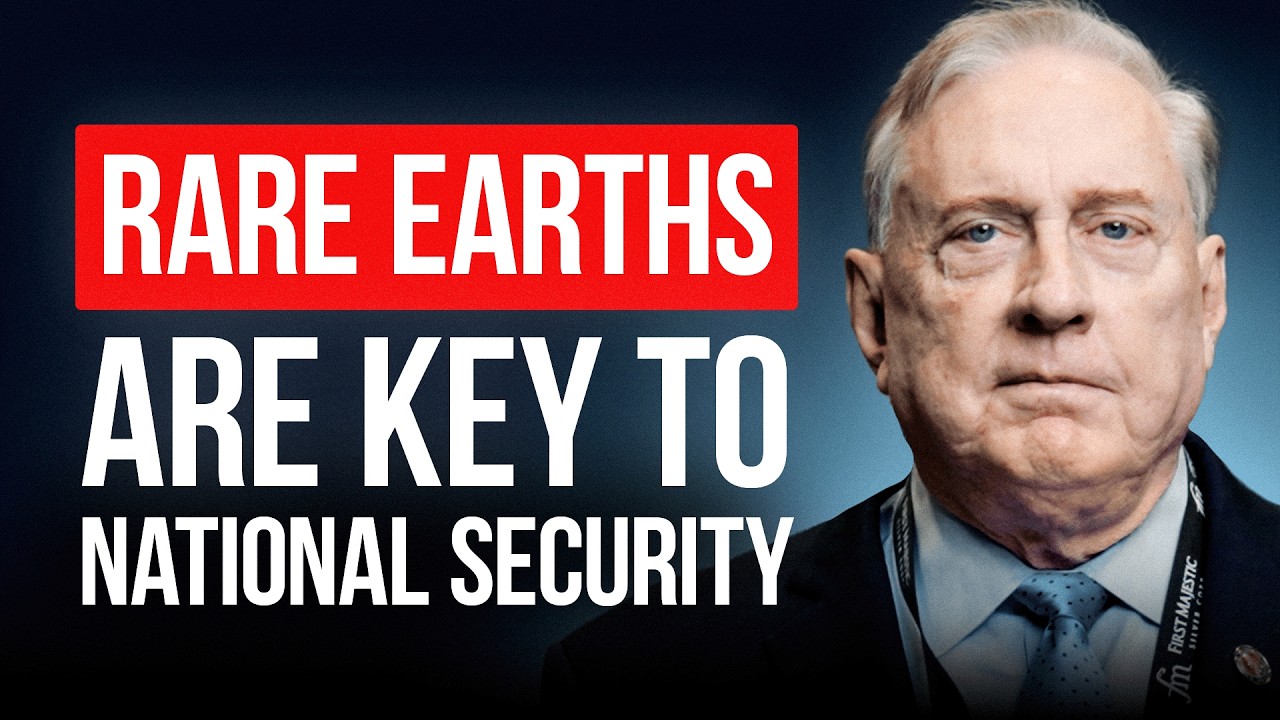
Preview:Retired Army officer Cornell argues that the West's rare earth refining dependency on China is a national security hostage situation, not a supply chain. He proposes building a $1.2B North American refinery (ideally near the US-Canada border on Lake Michigan) and suggests the US cut a deal with Norway to jointly exploit their newly discovered offshore rare earth deposit. He also touches on coal mine rare earth tailings in Kentucky, BRICS expansion, gold backing for future currencies, and the need for price stability in critical minerals policy.
Preview:A panel at VRIC argues that the monetary system is in a multi-year reset driven by fiat debasement, reserve-asset politicization, and de-dollarization. The speakers are broadly bullish gold and silver, skeptical of U.S. Treasury dominance, and focused on commodities, rare earths, and the geopolitical consequences of weaponized finance.
Preview:Douglas McGregor argues a US strike on Iran is highly likely and would essentially be an Israeli-directed war, while warning that the outcome is uncertain, escalation could draw in Russia/China indirectly, and domestic backlash in the US could be severe. He also ties the discussion to Epstein accountability, de-dollarization, gold’s role as reserve asset, rare earth supply-chain vulnerability, and a broader thesis that Trump lacks a coherent strategy and is steering the US into avoidable conflict.
Preview:Colonel Douglas Macgregor argues the U.S. is about to launch an air-and-missile war against Iran within 72–96 hours, primarily to force Iranian submission rather than achieve a clean regime change. He says the buildup is offensive, that Israel is the key beneficiary, and that the likely result is heavy regional escalation, Iranian retaliation, and major market disruption.
Preview:A panel at the Vancouver Resource Investment Conference argues that the postwar international order is breaking down, with Iran the most immediate flashpoint and Greenland/Venezuela treated as examples of a more aggressive U.S. posture. The speakers are broadly bearish on escalation, skeptical that the U.S. can reshape Iran by force, and split on whether Trump’s actions reflect strategy, distraction, or institutional capture.
Preview:Colonel Douglas McGregor argues gold is already the new reserve currency as global faith in the US dollar erodes. He points to record central bank gold buying (2022-2024, the most since 1967), silver's dual role as monetary and critical industrial metal, China's unassailable lead in rare earth refining, and the self-serving corruption behind Western foreign policy. The West, he contends, is a "microwavable society" incapable of long-term strategic planning, while the dollar funeral procession is underway — gold is not an insurance policy but a lifeboat.
Preview:Colonel Douglas Macgregor argues that the world is moving away from the dollar-centered order toward a multi-polar system anchored by civilizational states and rising gold reserves. He is bullish on gold and silver, skeptical of U.S. tariffs and military threats, and says the U.S. should focus on domestic cohesion, border control, and rebuilding productive capacity rather than trying to dominate rivals like China, Russia, India, or Iran.
Preview:Colonel Douglas Macgregor delivers a sweeping geopolitical interview covering the UN General Assembly, the Israel-Palestine conflict, NATO's decline, the Russia-Ukraine war, China's strategic rise, and de-dollarization. He argues the UN is paralyzed by US hypocrisy, Israel and Palestine cannot coexist, NATO is disintegrating, and the West is losing its global dominance. He highlights the Saudi-Pakistan defense pact and Chinese gold vault initiatives as signals of a shifting world order, and urges viewers to watch European bond markets and de-dollarization trends closely.
Preview:Colonel Douglas Macgregor argues that Trump is a puppet with no real control over US foreign policy, which is actually run by the CIA, the Senate, and the war lobby. He contends Russia will win the Ukraine war on its own terms regardless of Western actions, that Ukraine is effectively finished as a state with catastrophic casualties (~1.5M dead), and that Israel will likely provoke a war with Iran that will drag the US in. He warns of an imminent US sovereign debt crisis when 10-year yields hit 5%, and suggests Europe should break into more natural regional blocs rather than continue its "suicidal" confrontation with Russia.
Preview:Col. Douglas Macgregor delivers a wide-ranging geopolitical critique: Trump's tariff "machine gun" approach will fail to change Chinese behavior, the US has lost its post-WWII dominance as China returns to its historical role as the world's richest nation, the US is seen globally as a destabilizing force, and America's existential threat is not abroad but at home — cartels and illegal immigration will "destroy us" within a decade if not addressed. He warns attacking Iran would be catastrophic, predicts EU collapse within years starting with France, and argues China is not a military threat but a peaceful competitor the US must learn to cooperate with.
Preview:Retired Colonel Douglas Macgregor paints a dire geopolitical picture: the US and Israel are the primary destabilizing forces globally, and the Middle East is a tinderbox that could ignite a regional war as early as March 2025. He argues that Trump's Gaza takeover rhetoric has unified the Muslim world against Israel/US, that Russia has decisively won in Ukraine, that NATO is heading toward extinction, and that war with China over Taiwan would be "the dumbest idea in the history of mankind." On markets, he sees an oil and coal supply squeeze coming as years of anti-carbon policy meet renewed demand, and warns of a US sovereign debt crisis.
Preview:Former Army Colonel Douglas Macgregor argues that America's gravest threats are the drug cartels and domestic decline, not Russia, China, or Iran. He contends Russia seeks a comprehensive security settlement in Ukraine — not conquest of Europe — and that the US/NATO provoked the conflict. He calls for immediately halting Ukraine aid, securing the southern border with military force, and retrenching from unsustainable global power projection. NATO is described as a hollowed-out anachronism, and US military-industrial capacity as dangerously depleted relative to Russia and China.
Others tracked across the same asset focus or market thesis.
Unlock every transcript this speaker appears in, compare them with your other followed voices, and ask the agent for the bull, bear, and consensus read in one workspace.
Type a question. Create a free agent to send it and keep the answer linked to this speaker.
Your question is preserved across sign-in.
Free. No card. Takes about a minute.