crisis investing through gold, hard assets, and geopolitical insulation
📈 See how Doug Casey's thesis changed over time →Preview how this speaker shows up across market transcripts. Unlock the full archive, AI chat, and the version personalized to your watchlist, followed channels, and favorite speakers.
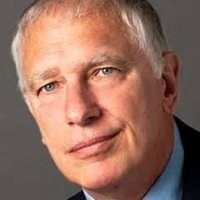
Doug Casey presents as a long-time market contrarian, author, and self-described crisis investor who favors personal and geographic insulation from instability. In the supplied material, he speaks from Uruguay for much of the year and frames his lifestyle as a deliberate move toward safety, food production, and distance from military targets. He regularly ties his public identity to Crisis Investing, precious metals, and a skepticism toward mainstream political and financial institutions.
Casey’s recurring worldview is strongly anti-statist, anti-fiat, and crisis-oriented. He argues that empires decay, that the U.S. is overreaching through military power, and that geopolitical shocks make gold and other hard assets more attractive than paper currencies. He tends to see governments as unreliable, markets as vulnerable to political violence and conflict, and commodity-producing regions, especially food- and resource-rich places, as relatively better positioned in a disorderly world. He also expresses sympathy for anarcho-capitalist ideas and admires leaders who challenge state power, though he is not presented as endorsing any one government uncritically.
Every analyzed appearance we have for this speaker, newest first. Open any transcript preview to read the underlying transcript.
Preview:Doug Casey argues the AI trade is in a late-stage bubble and that investors should rotate toward cheaper “raw materials of civilization”: energy, mining, and agricultural commodities. He says AI itself will persist, but the public market exposure—especially unprofitable AI/data-center names and even many picks-and-shovels plays—looks dangerous from a valuation and crowding standpoint.
Preview:Doug Casey argues the near-term setup favors oil, oil equities, natural gas, grain-related commodities, and selective fertilizer names because the Iran/Israel/Hormuz disruption and depleted inventories have tightened supply, while the broader market still underprices commodity producers. He also says gold remains a long-term savings asset and that mining stocks are more attractive than bullion itself at current prices.
Preview:Doug Casey argues that the world is entering a dangerous multi-year period of financial, political, and social instability, with the U.S. stock market in a “super bubble,” inflation likely to rise, and the Fed unable to stop the underlying monetary expansion. Despite that bleak macro view, he is constructive on commodities, commodity producers, and some overseas diversification — especially places like Argentina, Uruguay, and China — while warning that political risk remains high everywhere.
Preview:Doug Casey argues that the Iran conflict, U.S. fiscal stress, and long-running currency debasement are all part of a broader instability regime that favors hard assets. He is bullish on gold, silver, copper, uranium, oil, and especially miners—while warning that mining is a terrible business operationally and that government intervention, debt, and inflation are the real macro drivers.
Preview:Doug Casey argues commodities remain cheap relative to stocks and bonds, with gold, silver, uranium, and energy still offering the best risk/reward. He sees central-bank buying, supply deficits, nuclear power expansion, and geopolitical shocks—especially the Iran/Hormuz conflict—as the key drivers, while also warning that equities and broader financial assets may be in an everything bubble.
Preview:Doug Casey argues the world is in a long-running civilizational decline even if the long-term arc of history has been upward, and he thinks the near-term path is worse because of the rise of the state, debt, and geopolitical stress. He and Matt Smith also make a strong case for gold and silver as monetary hedges, with Casey especially bullish on gold miners because he says they are still cheaply priced relative to gold.
Preview:Doug Casey argues that the U.S.-Iran conflict is likely to escalate rather than resolve cleanly, with war pressure weakening fiat currencies and favoring gold, silver, oil, and select commodity stocks. He is broadly bearish on U.S. stocks, bonds, real estate, and the U.S. state’s growing reliance on militarized spending.
Preview:Doug Casey argues the world has entered a period of mass psychosis, political polarization, and war risk, with the U.S. and Europe moving away from normalcy. He says the best response is personal insulation: leave cities if possible, avoid stocks and bonds, favor gold/silver, mining stocks, and energy—especially oil, gas, coal, and nuclear—while expecting a broader depression and weaker currencies.
Preview:Doug Casey argues that the real trade has shifted away from gold itself and toward select commodity and resource equities: smaller oil and gas producers, coal, uranium, food commodities, and some mining stocks, while he reduces exposure to the parts of the resource complex that have already run hard. He is also sharply bearish on Trump, U.S. political stability, and the AI/data-center boom, which he views as a bubble that could pressure the whole market.
Preview:Doug Casey argues the biggest risk is political, not financial: the Iran war could escalate into a long, asymmetric conflict that drives oil higher, pressures inflation, hurts bonds, and worsens a broader debt-driven slowdown. He remains constructive on gold, gold miners, select commodities, and distressed/special-situation speculation, while warning that the U.S. economy and financial system are becoming more fragile.
Preview:Doug Casey argues the Fed, fiat currency, and much of the postwar global order are unstable and heading toward a chaotic unwind. He is bullish gold and resource/mining stocks, sees political and geopolitical fragmentation as likely, and thinks investors should prepare by owning real assets and building personal resilience.
Preview:Doug Casey argues that silver, gold, and other hard assets are in a broad secular bull market because governments are bankrupt, fiat money is being debased, and geopolitical instability is worse than in 1980. He says silver’s nominal highs are not the right comparison; in real terms, both silver and gold still have room to run, and he prefers mining stocks, oil, natural gas, uranium, coal, and even grains as ways to express the theme.
Preview:Doug Casey argues that gold and silver are in a new bull market driven less by retail frenzy than by central-bank demand, fiat-currency distrust, and an unstable global monetary system. He thinks precious-metals miners still offer the best upside because they are tiny, volatile, and mostly ignored, while he remains skeptical of overowned AI stocks, bonds, and most of the broad market.
Preview:Doug Casey argues that silver and gold are being driven by dollar debasement and that a broader economic slump or depression is becoming increasingly likely. He is constructive on precious metals, energy, uranium, coal, platinum, and small mining stocks, while warning that real estate, bonds, and much of the broader market look vulnerable.
Preview:Doug Casey argues the surge in gold and silver is not a simple Fed trade but a sign of deeper monetary stress: bankrupt governments, eventual currency debasement, and a coming reset in which gold and silver regain monetary roles. He says gold is still worth owning even after the rally, and he is even more bullish on silver because of its smaller market and structural deficit. He also broadens the discussion into his ‘greater depression’ framework, warning of political instability, rising inflation, and possible fragmentation in the U.S., Europe, and Canada.
Preview:Doug Casey argues the U.S. and broader Western financial system are built on debt, monetary distortion, and declining confidence in fiat money. He says gold is signaling that stress, and that the biggest opportunity is not gold itself but undervalued gold miners, which he expects could produce extreme multi-bag returns if the current monetary regime keeps weakening.
Preview:Doug Casey argues we are entering a historic monetary crisis that will drive a panic into gold, with Bitcoin as a secondary monetary technology. He is bullish on gold, silver, miners, and energy commodities, but his emphasis is less on bullion as a pure price trade and more on owning real assets and businesses that could reprice in a monetary reset.
Preview:Doug Casey argues Western governments are driving their countries toward bankruptcy through debt and money printing, with Canada's new $2B critical-minerals sovereign wealth fund as a prime example of "criminally insane" policy. He sees gold's rise to ~$4,000 as driven by central bank buying — not retail or institutional demand — and believes a speculative mania in gold stocks will eventually follow, potentially delivering 100x–1,000x returns in nano-cap names. He positions in smaller producers and explorers run by entrepreneurs rather than "suits" at majors. The conversation also devotes significant time to Casey's thesis that college is a "cesspool of bad ideas" and his book The Preparation.
Preview:Doug Casey argues that the world is moving from long-term decline into a sharper, more dangerous phase marked by debt, fiat-currency debasement, great-power conflict, and possible civil breakdown in the U.S. He stays structurally bullish on gold and, even more aggressively, on silver and gold-mining stocks as monetary and political insurance, while warning that governments, wars, and social fragmentation could overwhelm markets and institutions.
Preview:Doug Casey sees gold as now "reasonably priced" at ~$3,500 — no longer a speculative bargain, but still a core savings vehicle. He is far more bullish on junior gold mining stocks, which he calls the cheapest in history and predicts could go 10x to 100x. His macro view is deeply bearish: the US is in the early stages of a "Greater Depression," interest rates could return to 10-20%, and stocks, bonds, and real estate are all in bubble territory floating on a sea of debt. He also discusses his new book The Preparation, which lays out a non-college path for young men to become Renaissance men.
Preview:Doug Casey argues the West is entering a broad, prolonged crisis driven by debt, state growth, tariffs, Fed-created distortions, and overfinancialized markets. He is bearish on the U.S. policy mix, skeptical that tariffs will restore manufacturing, and bullish on gold/miners and other resource stocks as the cheapest part of the market.
Preview:Doug Casey delivers a wide-ranging, polemical interview. He argues the Fed's existence is the root of economic harm, that a September rate cut would be "catastrophic" because it requires money creation, and that short rates would fall while long rates rise — a setup he says is worth trading. He sees gold being re-institutionalized as international money as BRICS nations lose trust in the dollar, is cautiously pro-Bitcoin but favors gold, calls Trump an unstable megalomaniac whose trade threats and foreign policy brinkmanship (especially with Iran) could trigger a global crisis, and dismisses Western leadership as uniformly degraded. The interview closes with a pitch for his new book The Preparation, a college-alternative program for young men.
Preview:Doug Casey paints a deeply bearish macro picture: the US government is trapped in an inescapable debt spiral, inflation will accelerate, and interest rates will eventually spike much higher. His preferred play is deeply undervalued mining stocks — primarily gold, uranium, and copper — as a way to profit from the coming crisis. He is disappointed with Trump, believes the "big beautiful bill" is tax-and-spend, and sees a 2028 Democratic win and potential civil unrest ahead. The interview ends with a pitch for international diversification and his newsletter/products.
Preview:Doug Casey argues the U.S. should stay out of the Israel-Iran conflict because intervention would likely worsen the war, accelerate escalation, and could even trigger a wider global conflict. He also says Western governments are fiscally broken, civil conflict and secession pressures are rising in multiple countries, and gold/silver/mining stocks remain attractive as protection against debt, fiat currency debasement, and geopolitical chaos.
Preview:Doug Casey argues that the world is entering a deeper, longer depression while commodity prices and selected resource equities are beginning a major bull market. He is bullish on gold, silver, uranium, and especially small mining stocks, while warning that central banks, government debt, inflation, and state power are the core forces driving deterioration.
Preview:Doug Casey sits down with The Deep Dive's host to argue that gold is now the "endgame" for smart money. He sees the $2T+ US deficit as structurally irreversible, expects deficits to balloon to $3-5T as the economy weakens, and believes the Fed will be forced to monetize the debt — all bullish for gold. He thinks gold above $3,000 is the new baseline, with a speculative case for $30,000-$40,000 if the dollar is ever re-pegged. Gold miners are historically cheap and could "10-to-1" from here. He's also bullish on uranium. On macro, he's pessimistic on both the US and China, calling Trump's tariff/chaos approach counterproductive and Canada (outside Alberta) a basket case.
Preview:Doug Casey delivers a deeply bearish macro sermon, arguing the US government is effectively bankrupt and its $2T+ deficits are being monetized by the Fed, creating a "fool's paradise" in asset markets. He advocates defaulting on the national debt rather than inflating it away, sees gold heading to $30,000-$40,000/oz if governments are forced to re-monetize it, and dismisses bonds as a "triple threat" to capital. Geopolitically, he frames Russia as provoked by NATO expansion, calls Western European leaders "criminally insane," and argues the US should withdraw from all foreign conflicts. He praises Argentina under Milei as a rare bright spot. The interview ends with a preview of his upcoming book *The Preparation* — a four-year alternative to college for young men.
Others tracked across the same asset focus or market thesis.
Unlock every transcript this speaker appears in, compare them with your other followed voices, and ask the agent for the bull, bear, and consensus read in one workspace.
Type a question. Create a free agent to send it and keep the answer linked to this speaker.
Your question is preserved across sign-in.
Free. No card. Takes about a minute.