hosts crypto market discussions and interviews industry voices
📈 See how Guy Turner's thesis changed over time →Preview how this speaker shows up across market transcripts. Unlock the full archive, AI chat, and the version personalized to your watchlist, followed channels, and favorite speakers.
Guy Turner is the public face and narrator of Coin Bureau’s crypto analysis content, with a style built around market structure, risk, and explanatory breakdowns. In the supplied material he consistently speaks as a crypto educator/commentator rather than a trader-hype host: he emphasizes data, protocol mechanics, custody/security, ETF flows, tokenomics, and macro linkages. His framing is generally skeptical, cautionary, and systems-focused, often highlighting how market incentives, leverage, and structural changes affect investors.
Turner’s recurring economic worldview is broadly cautious and anti-naive about crypto markets. He repeatedly argues that price action is driven by structural forces such as liquidity rotation, institutional flows, interest rates, ETF mechanics, protocol fee capture, and leverage unwind cycles—not just narratives or retail enthusiasm. He tends to favor self-custody, risk management, and attention to on-chain data and market internals. Across the transcripts, he is especially skeptical of simple ‘altseason’ or perpetual bull-market assumptions, and he often depicts crypto as increasingly institutionalized, fee-driven, and vulnerable to centralization, even when adoption or usage is rising.
Every analyzed appearance we have for this speaker, newest first. Open any transcript preview to read the underlying transcript.
Preview:A Coin Bureau retrospective on the five biggest losses in crypto history: James Hows's 8,000 BTC landfill disaster (2013), the BitConnect Ponzi ($2.4B, 2018), the Terra/Luna collapse ($40B, 2022), the FTX fraud ($8B missing, 2022), and the October 2025 $19B leverage liquidation cascade triggered by Trump's 100% China tariff tweet. The speaker, Guy, frames each as a cautionary tale with practical defenses — self-custody, yield skepticism, avoiding leverage excess — and concludes that human nature, not technology, remains crypto's biggest risk.
Preview:Coin Bureau's Guy walks through seven crypto mistakes that will wreck portfolios in 2026: address poisoning, self-custody theater, leverage cascades, memecoin lotteries, the new IRS tax regime, AI scams, and recovery scams. The core message is that the threat landscape has fundamentally upgraded while average investor awareness has not — and every mistake is avoidable with the right habits.
Preview:Guy from Coin Bureau argues the old "everything pumps with Bitcoin" alt season model is dead. Bitcoin dominance hasn't cracked 55% all cycle, the ETH/BTC ratio collapsed to ~0.0268, Layer 2s cannibalized Ethereum's fee base, and institutional ETF flows create a one-way funnel into BTC that never rotates. The recovery will be selective — only alts with real users, revenue, or utility survive. He flags BTC dominance below 55%, Fed rate direction, regulatory clarity, and ETH/BTC ratio as the key scoreboard metrics to watch.
Preview:Guy from Coin Bureau examines how BlackRock has built a multi-layered crypto empire: dominating Bitcoin ETFs (IBIT holds 61% of sector assets), launching yield-harvesting products (ETHB staking ETF, BIT A covered-call ETF), and tokenizing Treasuries (BUIDL) that now serve as DeFi collateral. He frames this as an institutional takeover where Wall Street is using crypto's rails for its own purposes — offering convenience in exchange for centralized control, permissioned access, and override keys. The DTCC's $4 trillion tokenization pilot, set for commercial launch by October 2026, signals the endgame: the old system co-opting the technology it was designed to replace.
Preview:Bitcoin has broken below $59K, a 53% drawdown from its $126K ATH, driven by a hawkish Fed pivot (rates at 3.5-3.75%, PCE at 4.1%, 77% chance of a rate hike by December), seven straight weeks of ETF outflows ($6B total, IBIT losing $1.3B in one week), Strategy (MSTR) underwater at a ~$75,640 cost basis with its buying flywheel seized, miners selling at a loss (hash ribbon triggered), and long-term holders capitulating. Guy Walker walks through on-chain bottom signals: realized price at $53.4K, 200W MA at $62.2K, MVRV at 1.1 (needs to break below 1.0), and analyst targets ranging from $30K-$38K (bear fractal) to $54K-$57K (10x Research), with Q4 2026 as the consensus timing window. The three signals for a durable bottom: MVRV below 1.0, sustained positive ETF flows, and a Fed pivot toward cuts.
Preview:A three-host roundtable (Rob, Ben Cowen, Guy from Coin Bureau) scans for "where the next bull run is hiding." Guy identifies the memory/chip trade — Micron and SanDisk are ripping on hyperscaler AI spend flowing downstream. Ben expects a shallow equities dip in June then rally into Aug/Sept before a larger Q4 drop, at which point the bull market could rotate back into Bitcoin. Both affirm the four-year Bitcoin cycle as still intact and advise against sitting 100% in cash: own assets long-term, buy Bitcoin around end-of-midterm-year. Macro risks flagged include a possible Fed rate-hike split in July, US-Iran tensions, negative real disposable income, and record cash on the sidelines (Buffett, stablecoins).
Preview:Guy argues Solana is trying to move from meme-driven ‘casino’ status toward a genuine value-capturing chain, but only if pending governance changes pass. The immediate signal he highlights is SOL/ETH reclaiming its 200-day moving average, while the core fundamental issue is that Solana’s usage is strong but too little of the economic value accrues to SOL holders.
Preview:The video argues that corporate Bitcoin treasury companies have turned from a powerful source of demand into a leverage-driven source of forced selling. Coin Bureau says Strategy/MicroStrategy’s broken premium model, fixed obligations, and falling MNAV create a potential doom loop if Bitcoin stays weak.
Preview:This is a sponsored BitGet walkthrough arguing that crypto traders benefit from a single all-in-one account for crypto, spot onchain trading, CFDs, stock perpetuals, and tokenized stocks. The core pitch is convenience plus speed: one USDT balance, one interface, 24/7 access, and AI tools to research, trade, and hedge across asset classes without moving funds between platforms.
Preview:Guy argues XRP is technically broken and deeply out of favor, but that the market may be underpricing a major regulatory and adoption asymmetry. His core thesis is that whales are accumulating into fear because Ripple’s bank charter, RLUSD growth, ledger upgrades, and especially the Clarity Act could re-rate XRP sharply higher if legislation lands; without that, supply pressure and RLUSD cannibalization could make the drawdown continue.
Preview:Coin Bureau’s Guy lays out a seven-step framework for researching crypto: start with narratives, then narrow to promising projects using data, adoption metrics, team quality, tokenomics, competitor comparison, and finally stress-test the thesis. The core message is that crypto success comes from disciplined due diligence, not chasing price action or low sticker prices.
Preview:Coin Bureau argues that Zcash (ZEC) suffered a major privacy-protocol scare: a four-year underconstrained bug in the Orchard shielded pool could theoretically have allowed unlimited counterfeit ZEC, and because the system is private, nobody can prove whether it was ever exploited. The video frames the incident as both a technical failure and a market shock, with ZEC collapsing roughly 50%+ and sparking a split between holders who saw the patch as evidence of maturity and sellers who viewed unverifiable supply as fatal to the sound-money thesis.
Preview:Guy argues that the 2021 crypto playbook is dead: broad altcoin rotation no longer works, ETF-driven BTC concentration and a harsher supply environment have changed the game, and investors now need a barbell approach anchored in Bitcoin plus a few fundamental winners. He highlights Hyperliquid and Zcash as the clearest examples of assets still attracting capital because they have real revenue, supply sinks, or regulatory clarity.
Preview:Guy on Coin Bureau argues that Michael Saylor’s tiny 32-BTC sale was not the real story; the real driver of Bitcoin’s drop is a worsening institutional bid, led by 12 straight days of spot ETF outflows, heavy leverage flushes, and a broader market rotation into AI stocks. He frames BTC as technically weak near $67k but also notes oversold conditions and strong hands accumulating, making the near-term setup fragile but potentially close to a washout.
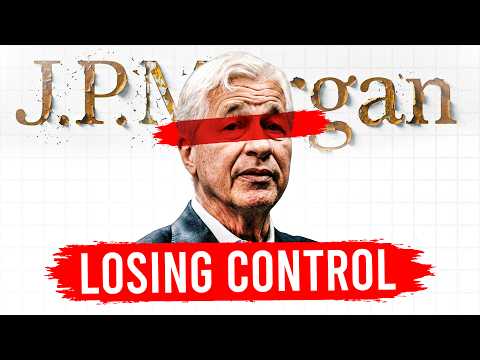
Preview:Guy argues that JPMorgan’s public attack on yield-bearing stablecoins and the Clarity Act is less about protecting consumers than about protecting banks’ deposit franchise. He says JPMorgan is simultaneously lobbying against crypto yield products while building its own tokenized deposit and tokenized yield infrastructure, which he frames as evidence that the future of money is moving on-chain.
Preview:Guy argues Bitcoin’s current drawdown is less about panic and more about a breakdown in the institutional and macro support that powered the prior move. He says spot Bitcoin ETF outflows, Strategy’s willingness to sell BTC, and a still-tight rate backdrop have neutralized bullish catalysts, even though long-term holders and on-chain supply dynamics remain constructive.
Preview:Guy argues that Ethereum in 2026 is best understood as a layered settlement network, not just a monolithic L1. His core thesis is that ETH remains structurally important because Ethereum dominates DeFi, stablecoins, and tokenized real-world assets, while recent upgrades have improved UX and scaling. The main risk he highlights is that liquidity fragmentation, L2 centralization, and competition from alternative venues could prevent ETH value capture even if Ethereum stays the industry standard.
Preview:Guy argues that crypto is increasingly taking over the financial plumbing behind traditional markets via tokenized real-world assets, stablecoins, and acquisitions of legacy infrastructure. The video frames RWAs as the fastest-growing crypto segment and uses examples like tokenized stocks, treasuries, commodities, pre-IPO exposure, and 24/7 derivatives to argue that TradFi is being absorbed into crypto rails rather than the other way around.
Preview:Guy argues Bitcoin’s inability to hold $80K is being driven by real institutional selling, not a failure of the long-term adoption thesis. He points to heavy spot ETF outflows, bearish order-flow and options signals, rising exchange reserves, and a hostile macro backdrop of higher yields, sticky inflation, and risk-asset weakness.
Preview:Guy argues the Clarity Act is the biggest U.S. crypto-regulation moment yet, but the real fight has only started. He says the bill cleared Senate Banking on a 15–9 vote, yet still faces a 60-vote filibuster hurdle, ethics-language objections tied to Trump family crypto exposure, and an August recess deadline that could derail everything. He frames the bill as broadly positive for crypto market structure, but with important caveats around stablecoin yield, wallet/DeFi protections, and new surveillance powers.
Preview:Guy argues the Senate Banking Committee markup of the Clarity Act is a near-term binary event for US crypto regulation, with three main failure points: ethics language, stablecoin yield rules, and reconciliation with the Agriculture Committee bill. He says the bill’s fate could determine whether comprehensive crypto market-structure legislation advances in 2026 or slips into 2027 and beyond.
Preview:Guy argues that “sell in May” is not the real story; May 2026 matters because seven crypto/macro catalysts are converging at once, creating a potentially volatile 30-day window for Bitcoin and the broader market. He thinks the biggest near-term risks are failing crypto legislation, Fed-chair-related rate repricing, weakening labor/tech conditions, treasury-vehicle unwind risk, and geopolitical energy shocks.
Preview:The video argues that a new Bitcoin fork called eCash is technically a sidechain-enabled copy of Bitcoin, but socially and operationally controversial because it proposes reallocating some coins believed to belong to Satoshi to early builders and investors. The speaker emphasizes that original BTC is not changed, yet holders should still care because the fork could create replay, exchange, and tax issues, and because the proposal revives a decade-long fight over Bitcoin governance and sidechain design.
Preview:Coin Bureau’s Guy argues that the U.S. CLARITY Act has rapidly shifted from near-certain passage to a fragile, last-minute legislative fight. The main pressure point is stablecoin yield/interest: banks want it restricted, crypto wants flexibility, and that dispute is helping stall the bill as the Senate calendar tightens ahead of Memorial Day.
Preview:A roundtable on Benjamin Cowen’s NFA Live argues that Bitcoin’s current bounce fits normal bear-market seasonality, with likely weakness returning later in the summer rather than immediately. The discussion also pivots into crypto market structure, ETF narrative strength, Bitcoin dominance, and surprise macro/geopolitical developments.
Preview:Guy argues that a single weak LayerZero DVN setup let an attacker mint unbacked rsETH from Kelp DAO and then use that collateral to drain liquidity from lending protocols, turning one bridge failure into a broader DeFi bank run. He frames the incident as an architectural failure in liquid restaking and cross-chain composability, not a simple smart-contract bug.
Preview:Coin Bureau’s Guy argues that crypto leverage got a severe stress test in Q4 2025, but the system held up better than many feared. He highlights falling DeFi borrowing, lower perpetual futures open interest, and resilient centralized lenders as evidence that leverage is becoming more structured rather than dangerously fragile.
Preview:The video argues that crypto’s original decentralization thesis has been weakened by concentration in Bitcoin mining, the centralization tradeoffs inside DeFi, and the rise of centralized stablecoins and emergency controls. The speaker’s bottom line is not that decentralization is dead, but that the industry is drifting toward a pragmatic hybrid model: decentralized rails with centralized safeguards when users, liquidity, or regulators demand it.
Preview:The video argues that the $285M Drift Protocol exploit was not a smart-contract hack but a human-in-the-loop, state-linked intrusion that targeted contributors, devices, and governance processes. The speaker says the attack changed Solana/DeFi’s threat model because code audits did not fail; trust, signer workflows, and time-lock design did.
Preview:Tether has finally hired a Big Four accounting firm (KPMG, with PwC preparing internal systems) for its first full independent audit of USDT reserves. The video provides historical context on Tether's transparency issues, regulatory settlements, and the evolution from opaque attestations to today's near-audit disclosures. The core argument: a successful audit would legitimize USDT, pressure Circle/USDC, and potentially benefit Tether-linked blockchains like Plasma (XPL) and tokens on Tron and Ethereum. However, if the audit uncovers problems, the inverse could happen — institutional capital rotating out of USDT into USDC.
Preview:A Coin Bureau deep dive on Bitcoin's quantum computing threat, focusing on BIP 360 — a newly drafted Bitcoin Improvement Proposal that marks Bitcoin's first official step toward quantum resistance. The video explains how quantum computers could crack wallet encryption via Shor's algorithm, with Taproot addresses being unexpectedly more vulnerable. Estimates of at-risk BTC range from 10,000 to 7 million coins (~$470B). BIP 360 introduces P2MR addresses (BC1Z) that eliminate key-path spending exposure, but full implementation could take up to 7 years including ecosystem migration. The video also covers Hourglass as a damage-control proposal and warns that freezing or burning vulnerable BTC would set a dangerous precedent.
Preview:Guy argues that the Strait of Hormuz is not fully closed but turned into a selective Iranian toll booth: some ships still pass, favored countries get access, and fees are allegedly paid in yuan. He frames this as a two-tier energy shock that boosts inflation, strains central banks, and accelerates de-dollarization while the West faces higher fuel costs and potential recession risk.
Preview:The video argues that Strategy’s aggressive Bitcoin accumulation is still mechanically possible despite a bad crypto tape, because the company has shifted toward smaller ATM raises and more preferred-stock funding, especially STRC. The speaker says that makes a 1M BTC target by end-2026 plausible, but only if BTC and investor appetite hold up; the main risks are dilution, rising capital costs, and a worsening MNAV discount.
Preview:Guy argues the U.S. Senate’s 89-10 CBDC prohibition is not a permanent victory for privacy but a 2030-delayed trap: the ban expires at the end of 2030, giving policymakers time to build private stablecoin and wholesale digital-money rails that could be co-opted later into a CBDC-like system. He says the real action is in stablecoins, wholesale Fed/BIS infrastructure, and the political logjam that could stall broader crypto market-structure legislation.
Preview:Coin Bureau host Guy presents a summary of an ARK Invest / Unchained report concluding that quantum computing is not an immediate threat to Bitcoin. The report outlines five stages of quantum development, estimates CRQCs (cryptographically relevant quantum computers) could emerge in the mid-2030s, and notes that cracking all vulnerable BTC would take years even at stage 4 due to the one-wallet-at-a-time constraint. Post-quantum cryptography (PQC) is already being developed and deployed, but Bitcoin consensus-level PQC adoption faces friction. Guy's editorial stance: let vulnerable coins be stolen rather than freeze/burn them, as protocol intervention would damage Bitcoin's integrity narrative more than the theft itself.
Preview:Guy argues Bitcoin has recently validated the “digital gold” thesis during a Middle East shock: BTC outperformed gold, silver, and equities while ETFs and whale wallets added exposure. But he says that same oil-and-tariff shock will likely keep inflation elevated, force the Fed to stay hawkish, strengthen the dollar, and eventually pressure Bitcoin.
Preview:Guy argues the SEC/CFTC’s new 68-page crypto taxonomy is a real win for major blue-chip crypto assets, but a bigger win for Wall Street tokenization than for DeFi. He says Bitcoin’s reaction was muted while ETH and Coinbase rallied, and he frames the hidden cost as a compliance regime that could squeeze governance tokens and permissionless DeFi while accelerating KYC-gated, institution-led tokenized securities.
Preview:A livestream discussion focused on Powell/Fed policy under inflation and oil-shock pressure, Bitcoin whale selling and diversification, and the collapse of the metaverse narrative. The speakers argued the Fed is boxed in by inflation and weak jobs, Bitcoin is still a long-term asset but not something to go all-in on late cycle, and many metaverse/crypto hype arcs were premature or structurally weak.
Preview:Guy from Coin Bureau breaks down the FATF's report on stablecoins and illicit finance. The report reveals that 84% of crypto-related illicit activity involves stablecoins (mostly USDT), that North Korea's Lazarus Group, Iranian entities, ISIS, and scam compounds use stablecoins for laundering and terrorist financing, and that P2P unhosted wallets create major regulatory blind spots. The FATF proposes sweeping KYC obligations, transaction limits, asset freezing via smart contracts, and international supervisory colleges. Guy frames this as a double-edged sword: necessary for institutional adoption but potentially creating a dystopian CBDC-like surveillance system. He speculates this could push users toward decentralized stablecoins (USDS/DAI) and privacy solutions.
Preview:Guy argues that Morgan Stanley’s amended spot Bitcoin ETF filing and push for a national trust charter amount to a direct challenge to BlackRock’s dominance in Bitcoin ETFs and custody. He frames this as bullish for Bitcoin’s price because it could accelerate institutional inflows and tighten already scarce liquid supply, but also worrying because it centralizes more of Bitcoin inside regulated Wall Street vaults.
Preview:Guy argues that a wartime weekend proved the value of 24/7 crypto price discovery, because decentralized venues kept pricing oil, gold, and other risks while traditional markets were closed. He also warns that the same always-on system can amplify liquidation cascades when weekend liquidity is thin and leverage is high.
Preview:The video argues that Ethereum’s recent Fusaka upgrade may have unintentionally made ETH’s economics worse, not better, by enabling large-scale address-poisoning spam, crushing fees, reducing burn, and weakening validator yields. It contrasts this bearish interpretation with bullish takes from Tom Lee and others, then ends with a nuanced view: short-term problems look real, but Ethereum still dominates key use cases and could benefit over the long run if developers fix the issue.
Preview:Coin Bureau’s weekly live market recap centered on Bitcoin’s whipsaw around the Iran-Israel-US conflict, a still-unresolved Clarity Act fight for crypto legislation, and a broader fear that AI is accelerating white-collar job losses. The hosts argued that last week’s Bitcoin strength was less about “digital gold” conviction and more about Michael Saylor’s persistent bid, while macro data and oil shocks dominated the tape.
Preview:The video argues that Trump-era tax refund season could act as a short-lived liquidity event for crypto, but that the size and market impact are likely to be overstated. The speaker says refunds may total $100 billion to $150 billion in Q1, yet most households will use the money for debt, bills, or savings rather than speculation; even so, a small marginal slice flowing into BTC, ETH, ETFs, or altcoins could still move prices because crypto is relatively illiquid and reflexive.
Preview:Guy from Coin Bureau argues that Wall Street's $7 trillion tokenization wave — led by BlackRock's BUIDL fund and institutional adoption of permissioned smart contract standards like ERC-3643 — is not genuine DeFi adoption but a "Trojan horse" designed to bring crypto under traditional finance's surveillance and control architecture. The bullish case is narrow: only tokens with real revenue-sharing mechanics (like MKR/Sky) benefit, while most RWA governance tokens are value traps. The real fight is whether permissionless infrastructure can survive the compliance layer being built around it.
Preview:Guy argues that crypto’s growing political war chest could materially shape the 2026 US midterms, but the bullish setup is no longer as clean as it was in 2024 because crypto has become more partisan and more tied to Trump’s broader political baggage.
Preview:The video argues that Vitalik Buterin’s ETH sales were not a secret dump, but they still created bad optics because they happened into extreme fear, heavy liquidations, and weak ETH sentiment. The deeper bearish case, according to the speaker, is not the founder selling itself but Ethereum’s structural revenue problem after Dencun/EIP-4844: L2 fees to the base layer have collapsed, ETH burns are low, and ETH has badly underperformed BTC.
Preview:The video argues that Terraform Labs’ estate is trying to recast the 2022 Terra/Luna collapse as more than a self-inflicted failure by alleging Jane Street traded on non-public information and worsened the depeg. The speaker explains Terraform’s stablecoin mechanics, the alleged timing around Curve liquidity withdrawals, and why the case may matter more for discovery and narrative than for immediate market impact.
Preview:Guy argues that “paper Bitcoin” — indirect BTC exposure via exchanges, ETFs, treasury companies, governments, and wrapped BTC — has become a major part of Bitcoin’s market structure. He says it has generally been bullish for BTC by improving access, legitimacy, and liquidity, but it also creates opacity and counterparty risk if custody ever fails.
Preview:Coin Bureau’s weekly live stream was broadly bearish on crypto in the near term, with Bitcoin breaking under key weekly supports, ETF outflows continuing, and macro uncertainty rising from tariffs, Iran risk, and mixed U.S. data. The main constructive thread was “agentic finance” / x402: the hosts argued stablecoin-based machine-to-machine payments could become a real crypto use case, especially on Ethereum, Base, and Solana.
Preview:Guy argues that WLFI, the Trump-family-linked DeFi token, may have been an early warning signal for the October 10 crypto liquidation cascade because its insider-heavy ownership, extreme funding rates, and sudden volume/price dislocation preceded the broader market crash by hours. He uses Amber Data metrics to claim the token’s behavior reflected concentrated leverage, liquidity withdrawal, and politically linked information flow rather than ordinary retail trading.
Preview:Guy argues that Coinbase’s X42 protocol is becoming a real crypto payments standard because major tech and fintech companies—especially Stripe, Google, AWS, Visa, and Cloudflare—are adopting or aligning with it. He says the recent transaction spike was mostly meme-driven and has faded, but the deeper adoption trend is still intact, with USDC, ETH/Base, and several L1/L2 ecosystems positioned to benefit if AI-agent payments keep scaling.
Preview:Coin Bureau’s live news show framed the week as a worsening risk-off stretch for Bitcoin: BTC lost key weekly trend levels, crypto fear hit an all-time low, and macro data reduced hopes for another Fed cut. The hosts also highlighted a major BitHumb mistake that accidentally credited users with Bitcoin instead of Korean won, then pivoted to a broader debate about whether crypto’s political and cultural standing is now worse under Trump than it might have been under Kamala.
Preview:The video argues that Bitcoin’s recent drop into the mid-$60,000s is pressuring miners into break-even or loss-making territory, forcing some to shut down or sell BTC, which in turn is dragging on hash rate and near-term price stability. The speaker frames the current miner stress as painful in the short run but potentially healthy longer term, especially if weaker miners are flushed out and the industry reallocates toward cheaper energy and AI/HPC infrastructure.
Preview:The video argues that altcoin underperformance is largely explained by tokenomics, especially emissions, unlocks, buybacks, and burn design. Using Tokconomist's 2025 report, Guy says the strongest projects are those that align supply changes with real revenue and ecosystem maturity, while aggressive valuation multiples and poor unlock profiles often preceded steep drawdowns.
Preview:Coin Bureau frames the week as a brutal crypto flush: Bitcoin broke below the prior cycle high, briefly wicked near 60K, and failed to reclaim key moving averages, while the team argues the next major cues are delayed US labor data and CPI. They also challenge the popular ‘ISM as the new M2’ narrative, suggesting liquidity and broader regime shifts matter more than one manufacturing print.
Preview:Guy argues the Epstein files reveal uncomfortable but mostly indirect Bitcoin/crypto links: Epstein knew about Bitcoin early, funneled money through MIT Media Lab structures that supported Bitcoin Core salaries, and invested in several crypto companies. He says none of this proves Epstein controlled Bitcoin, shaped its code, or was Satoshi, and he treats the more viral claims as fake or unsupported.
Preview:Guy argues that Bitcoin’s institutional adoption is a double-edged sword: it strengthens legitimacy, liquidity, and long-term demand, but also concentrates supply, increases custodial/systemic risk, and ties BTC more tightly to TradFi and regulation. The video’s headline claim is that institutions already control over 20% of Bitcoin supply, with ETFs, public companies, governments, and private firms now holding more than 4 million BTC.
Preview:Guy argues that most cryptos do die, and the practical question is how to tell the difference between a truly dead token, a rug, and a hidden accumulation setup. His framework centers on activity, liquidity, exchange status, and market structure rather than price alone.
Preview:The Coin Bureau lays out a thesis: Trump's proposed 10% credit card interest rate cap and a bipartisan bill to lower interchange fees could gut traditional credit card rewards, while crypto cards — powered by stablecoin yields and DeFi lending — will become more attractive. The speaker argues millions of Americans would switch to crypto cards, driving mass adoption and enormous rallies for affiliated tokens. The primary beneficiaries would be stablecoin blockchains (Solana, Base, ARK, Plasma) and DeFi protocols (Aave, Morpho, Maker/Sky, Pendle). The thesis is long-term and conditional on regulatory outcomes, with the speaker acknowledging near-term crypto price risks.
Preview:Guy summarizes an Italian Central Bank report arguing that if ETH ever lost confidence and went toward zero, Ethereum’s validator security, DeFi, stablecoins, and tokenized assets could all be at risk. He then pushes back hard on the report, saying the scenario is theoretically interesting but practically very unlikely because Ethereum is highly decentralized, validator confidence remains strong, and institutional demand for RWAs keeps reinforcing the chain.
Preview:Guy argues the Clarity Act failed because Coinbase publicly withdrew support after late amendments allegedly inserted poison pills: a ban on tokenized equities, a ban on stablecoin yield passthrough, and broad DeFi/OFAC compliance requirements. He frames the episode as a crypto industry civil war between firms willing to accept a flawed bill and firms preferring no bill to a bad one, with the immediate result being postponed markup, renewed regulatory uncertainty, and a likely delay in market-structure reform.
Preview:Guy argues that 2026 is less likely to be a broad crypto bull year and more likely a year to focus on stablecoins, tokenized assets, and Ethereum as a structural beneficiary of those themes. His core backdrop is a global liquidity rotation away from the U.S. into international stocks and commodities in 2025, with crypto lagging; he thinks that capital may eventually bleed into crypto, but not immediately and not necessarily first into BTC or small altcoins.
Preview:The video argues that the apparent Bitcoin-to-gold 'rotation' is mostly a reflection of changing risk appetite and liquidity conditions, not a simple one-for-one lag between the two assets. The speaker’s base case is that gold’s recent move was driven first by fundamentals and then by speculation, and that a liquidity peak in late 2025/early 2026 could pressure both gold and crypto before a later policy-driven rebound.
Preview:Coin Bureau’s New Year live show framed crypto as starting 2026 with a cautiously bullish tone: Bitcoin reclaimed $90K and is testing $94K resistance, while the hosts argued the bigger Q1 catalysts are macro (Fed cuts, NFP, a new Fed chair) plus U.S. crypto policy (Clarity Act, SEC innovation exemption). They also highlighted Ethereum, Solana, and XRP as beneficiaries of 2026 upgrade, ETF, and adoption narratives, while warning not to FOMO into overextended meme coins.
Others tracked across the same asset focus or market thesis.
Unlock every transcript this speaker appears in, compare them with your other followed voices, and ask the agent for the bull, bear, and consensus read in one workspace.
Type a question. Create a free agent to send it and keep the answer linked to this speaker.
Your question is preserved across sign-in.
Free. No card. Takes about a minute.