His recurring economic worldview is not a conventional economics program so much as a civilizational and strategic lens.
Preview how this speaker shows up across market transcripts. Unlock the full archive, AI chat, and the version personalized to your watchlist, followed channels, and favorite speakers.
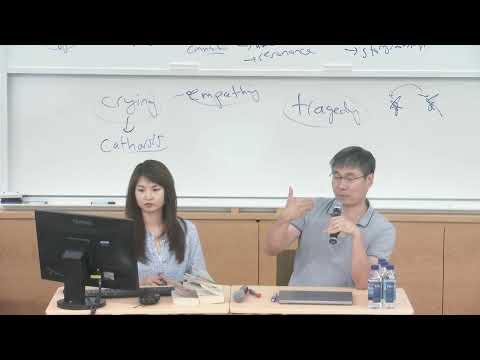
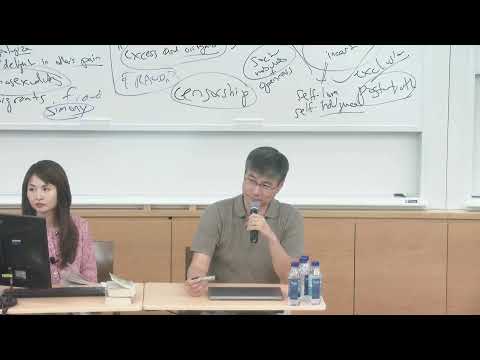
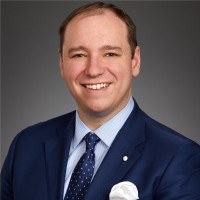
Jiang Xueqin comes across as a teacher-commentator who blends geopolitics, literature, religion, and symbolic interpretation into a unified explanatory style. In the supplied material, he is highly interactive and pedagogical: he invites questions, references dreams, and frames discussion as a communal learning process. He also presents himself as in transition professionally, having left a teaching job and shifting toward building a stronger online community through Substack, travel, meetups, and recurring livestreams. The resolved identity links to predictivehistory.com and @Pred_History support that this is his own project and public-facing platform.
His recurring economic worldview is not a conventional economics program so much as a civilizational and strategic lens. He treats geopolitics, war, trade leverage, and stability as deeply intertwined with national survival, especially for states like Iran that he portrays as constrained by external powers and by the need to preserve domestic economic order. He repeatedly emphasizes that material power, diplomatic pressure, and resource dependence shape outcomes: for example, he stresses China’s leverage because it buys most Iranian oil, and he often frames global events in terms of elite strategy, state capacity, and long historical cycles. More broadly, he seems to view politics, culture, and economics as mutually conditioning systems rather than separate domains.
Every analyzed appearance we have for this speaker, newest first. Open any transcript preview to read the underlying transcript.
Preview:The speaker argues that the World Cup result and the Iran war both reflect a larger framework of transnational capital, geopolitical manipulation, and declining empire. He treats Spain’s win as consistent with a mix of competitive strength and possible rigging dynamics, then spends most of the stream on Iran, warning that a U.S. escalation or ground invasion would become a disastrous “dumpster fire” and could broaden into a wider regional war.
Preview:A live Q&A stream from Beijing analyzing the Argentina-Spain World Cup final as a geopolitical event, framing Messi as a potential future Israeli-aligned president of Argentina. The speaker also covers Trump's election interference claims and Safe America Act, the expanding US-Iran war (now in "phase two" targeting civilian infrastructure), US imperial moves in Latin America, AI surveillance state ambitions, and the growing India-Israel alliance. Heavy on conspiratorial grand narrative — World Cup rigging, Zionist/transnational capital control, and staged US-China conflict — with the speaker hedging his own thesis about the match outcome.
Preview:A wide-ranging geopolitical talk by a Chinese speaker (unidentified by name in the transcript) giving his first impressions of Japan and laying out a grand thesis: Japan faces an existential demographic crisis that could force mass euthanasia of the elderly, but Japan alone among industrial nations has the cultural cohesion to survive the coming global collapse. He argues the US will retreat from East Asia, turning Japan into its primary proxy, while China pursues peaceful reunification with Taiwan through economic means. He introduces an alliance theory between Zionism and Hindutva, the "rat utopia" model of societal collapse, and a Trump-as-transactional-broker view of Taiwan. The talk is heavy on historical analogy and civilizational speculation, light on data or near-term market implications.
Preview:This is a long Zoom Q&A in which the speaker lays out a highly geopolitical, conspiratorial reading of current events while also discussing education reform, the occult, religion, and personal development. The core market-like framing is that the Iran/Israel/US conflict is a staged escalation that will keep boiling for months, oil and trade routes remain the key pressure points, Europe is drifting toward war with Russia, and the US empire is maintaining influence by keeping conflicts active rather than resolving them.
Preview:A 12-day seminar concludes with Purgatorio Cantos 26-33. The speaker leads students through Dante's meeting with Beatrice at Mount Purgatory's summit, where — against all expectations of a romantic reunion — Beatrice scolds Dante harshly for chasing fame after her death. Virgil disappears without farewell. A grand allegorical procession unfolds, including Dante's rewriting of Revelation. The speaker argues that "just indignation" born from love is creative and proper, and that Dante's ultimate message is: love redeems, but anger channeled toward justice fuels the poetry that changes the world. The session closes with participant reflections and the speaker's vision to build a global network of great-books schools.
Preview:This is the final session of a 12-day Dante seminar (not a market/finance transcript). The speaker ("John" / Predictive History) leads students through the last four cantos of Purgatory, focusing on Dante's reunion with Beatrice, Virgil's disappearance, and the apocalyptic vision in the Garden of Eden. The session includes a guest Italian reader (Renee Newman), extensive group discussion, and a closing reflection circle. There is no financial market content whatsoever — this is a literary/philosophical seminar on Dante's Divine Comedy.
Preview:This is not a market video. It is a literature seminar — a live classroom discussion of Dante's *Purgatorio* (Cantos 15–25), led by an instructor identified as "Professor Dang." The transcript captures an extended Socratic dialogue with students exploring purgatory's structure, the nature of love and free will, Dante's relationship with Virgil, theories of universal consciousness, and how poetic inspiration works. There is zero financial or market content. No assets are discussed, no trades recommended, and no macro views offered.
Preview:This is not a market video — it's a literature seminar on Dante's *Divine Comedy*, specifically Purgatory (Cantos 15–25). The speaker (the channel host) leads a small group discussion analyzing the structure, theology, and philosophy of Purgatory: free will, the nature of love, the distinction between Dante and Virgil, the theory of the universal consciousness (Indra's net / morphic fields), and how souls are purified. There is zero financial or market content.
Preview:This is NOT a market/finance video. It is a humanities seminar — a deep comparative literary discussion of Dante's *Divine Comedy* (Purgatory Cantos 5–14) and Shakespeare's *Macbeth*, featuring Yale Sterling Professor of English David Bromwich as guest. The conversation explores free will, fame, ambition, art and moral redemption through close reading of both texts. There is zero market or investment content.
Preview:This is not a market or financial transcript. It is a live academic seminar—"The Dante Workshop"—in which Professor David Bromwich (Sterling Professor of English at Yale) delivers a guest lecture on Shakespeare's *Macbeth*, followed by an extended group close-reading of Dante's *Purgatorio*, led by the host (referred to as "Joe," "Professor J," or "Jang"). The conversation centers entirely on literary interpretation: Shakespeare's treatment of ambition, fate, and nihilism versus Dante's Christian optimism, free will, and co-creation. There are no market claims, no asset mentions, and no financial content whatsoever.
Preview:This is a Dante class discussion, not a market video. The speaker and students work through Inferno Cantos 32–34 and the opening of Purgatory Cantos 1–4, focusing on betrayal, frozen hell, the inverted moral hierarchy of treachery, Lucifer’s anti-climactic depiction, and the shift into purgatory as a realm of motion, hope, and imagination.
Preview:A long classroom-style lecture on Dante’s Inferno and Purgatorio, with heavy back-and-forth from students about betrayal, imagination, free will, possession, and how the poem reshapes consciousness. The speaker’s core argument is that Dante’s work is not just literature but a map of reality: betrayal freezes the soul, faith and love restore motion, and Virgil functions as a paradoxical guide whose own poetic legacy may be a kind of corruption or “betrayal” of divine truth.
Preview:This is a recorded Dante seminar rather than a market video. The speaker walks students through Inferno Cantos 20–32, focusing on fraud, pride, factionalism, hypocrisy, treachery, false counsel, and the symbolic logic of punishments. A major theme is that Dante’s sins are not random: they mirror how people damage trust, society, and the imagination itself.
Preview:This is not really a market video at all; it is a long Yale lecture on Dante’s Inferno and Paradiso, especially how the poem maps sins, social decline, and divine judgment onto Florence and broader society. The speaker argues that Dante is a prophet and social critic, not just a literary figure, and spends most of the session explaining why lust, fraud, violence, homosexuality, simony, and fortune-telling fit into Dante’s moral architecture.
Preview:This is a recorded classroom lecture on Dante’s Inferno, not a market video. The speaker walks through the difference between ego and pride in Dante, then spends most of the session unpacking the circles of fraud in Inferno with heavy student interaction, including graft, hypocrisy, thievery, false counsel, schism, and falsifiers. The lecture is also notable for repeated, explicit claims about homosexuality, factionalism, social corruption, and modern parallels to AI, media, and political polarization.
Preview:This is not a market video at all, but a long Yale lecture on Dante’s Divine Comedy. The speaker argues that Inferno is a social critique of Dante’s world—especially Florence—and that its punishments encode a moral theory about ego, will, trust, fraud, and civic decay.
Preview:A long Dante class lecture arguing that the Divine Comedy is a prophetic social critique of Florence and, by extension, modern society. The speaker frames hell as a moral map of social decay: factionalism, meritocracy, fraud, censorship, elite incest/homosexuality-as-narcissism, greed, and loss of faith/hope/love.
Preview:This is a long classroom lecture on Dante’s Divine Comedy, especially how Inferno, Purgatorio, and Paradiso fit together as a moral and pedagogical system. The speaker argues that Dante builds a coherent cosmology in which heaven is ordered by love and free will, while hell is organized by ego, obedience, control, and disordered desire.
Preview:This is a long classroom lecture on Dante’s Divine Comedy, centered especially on Paradiso and the final ascent to God. The speaker argues that Dante’s poem is a revolutionary work of imagination: it expands human freedom, rejects passive religiosity, and shows that love and imaginative vision—not fear or institutional authority—are the engines of salvation and artistic creation.
Preview:This is a long lecture on Dante’s Divine Comedy, mainly Paradiso with a transition into Inferno. The speaker argues that Dante’s poem is a subtle, paradox-driven system that trains readers to use love, memory, and imagination to approach God, while also critiquing fear-based religion and hierarchy.
Preview:This is a classroom-style live reading of Dante’s Divine Comedy, mainly Paradiso, where the speaker argues that the poem is a radical theology of faith, hope, and love. He frames Dante as an exile, a prophet-like figure, and a revolutionary who redefines faith as imagination, hope as courageous/arrogant world-changing belief, and love as action and connection to others.
Preview:This is a highly performative lecture on Dante’s Divine Comedy, focused on Paradise and the virtues of faith, hope, and love. The speaker argues that Dante radically redefines those virtues: faith as imagination, hope as a kind of righteous arrogance, and love as action and connection to others. The class centers on close reading of Paradiso cantos 24–29, with repeated emphasis on Dante’s exile, his criticism of the Catholic Church, the symbolic role of Beatrice, and the idea that Dante’s poetry is a revolutionary, even heretical, vision of human participation in the divine.
Preview:This is a recorded classroom lecture on Dante’s Divine Comedy, not a market video. The speaker argues that Dante reimagines faith, hope, and love as active, imaginative forces that can transform both the reader and European history. Much of the session is a close, interpretive reading of Paradiso, especially Francis, Dominic, and Dante’s prophecy of exile, with recurring emphasis on art as a vehicle for truth, beauty, and spiritual change.
Preview:This is a philosophy/literature class on Dante’s Divine Comedy, focused on Paradise Cantos 4–6 and the theology of vows, love, and free will. The speaker argues that Dante is subverting Catholic authority by emphasizing direct intuition, imagination, and a personal relationship to God over church hierarchy, while also presenting the poem as a divinely inspired, mathematically perfect work.
Preview:A seminar-style livestream on Dante’s Divine Comedy that argues poetry can rewire how people see faith, hope, love, and human agency. The speaker uses close readings of Paradise to claim Dante turns suffering, exile, and imagination into a universal framework for resisting fear, ego, and social corruption.
Preview:This is not a market video in any normal sense; it’s a live classroom discussion of Dante’s Paradise, Cantos 1–5, led by John in Beijing with Carol Raerty introducing the Yale Center Beijing. The speaker treats Dante as a framework for free will, divine order, imagination, and vows, arguing that heaven is structured by will and love rather than by mechanical rules or pure logic.
Preview:This is a lecture-style livestream on Dante’s Divine Comedy, especially Paradise, with a long detour into why Dante’s poem is treated as spiritually and intellectually revolutionary. The speaker argues that the poem’s structure, symbolism, and treatment of vows, free will, love, and sacrifice reveal a divine logic, and he uses Beatrice’s explanations to connect Dante to broader Catholic history and to critique church power.
Preview:This is a long classroom livestream on Dante’s Paradise, Canto 1-4, centered on a reading of the Divine Comedy as a metaphysical and moral system built around free will, imagination, paradox, and the relation between God and the soul. The speaker argues that heaven in Dante is not static reward but an ordered cosmos where souls occupy spheres according to will, fear, and alignment with God, and that human logic is limited in grasping this realm.
Preview:A long, freewheeling live stream from Predictive History that mixes personal updates, audience Q&A, and geopolitical commentary. The speaker says he is leaving China, traveling to North America, and planning future teaching courses, while also offering strong views on Iran, Japan, China, Russia, AI valuation mania, and perceived elite control.
Preview:A solo livestream where the speaker walks through a handful of news stories and explains how he decides what matters. The core pattern is that he reads events through a game-theory / factional-struggle lens: protests are treated as likely NGO-funded color-revolution activity, the Pentagon’s concern about Israeli spying is framed as evidence of an internal US-Israel split, AI headlines are interpreted as a looming public bailout / nationalization setup, and Candace Owens’ Russia trip is cast as part of a Catholic-Orthodox spiritual realignment.
Preview:This is a literary lecture, not a market video. The speaker argues that Gay Talese’s Thy Neighbor’s Wife is a controversial but profound exploration of sex, shame, religion, and human liberation, and uses Kabbalah and the “sparks of light” idea to frame Talese’s journalism as a search for truth and transcendence.
Preview:This is a long, highly interpretive lecture framed as a “final examination” for a class. The speaker uses the questions to restate his core worldview: history is cyclical, empires rise and fall, game theory explains geopolitics, AI and tech tend to become tools of control, and nations like the US, China, Russia, Iran, Israel, and Japan should be understood as competing civilizational actors. He also spends substantial time on spiritual themes such as the Monad, beauty, love, imagination, and the importance of books over credentials or technical optimism.
Preview:This is a literary lecture on the ending of Dante’s Divine Comedy, not a market video. The speaker argues that the poem’s real endpoint is an imaginative, theological vision in which love is the force that unifies the universe and makes God knowable through human consciousness. The talk centers on Beatrice’s explanations of the cosmos, Dante’s ascent to Paradise, and the final paradox that humans are somehow inside God.
Preview:A classroom-style monologue arguing that the war on Iran, Middle East eschatology, and imperial decline are different lenses on the same historical dynamic. The speaker claims history is driven by occult ideas, secret societies, and elite power struggles, and that money is now being challenged by AI as the next organizing system.
Preview:A lecture on Dante’s Purgatory that contrasts Virgil’s allegedly hierarchical, obedience-based view of human nature with Dante’s more optimistic view of intuition, love, and free will.
Preview:A lecture-style geopolitical and macro framework argues that Putin is trying to weaken the US dollar-centered order by deepening ties with sanctioned states and by exploiting fault lines in Europe, Asia, and the Global South. The speaker frames Russia-China cooperation as real but uneven, and presents the US dollar system as structurally addictive and ultimately vulnerable to forced withdrawal.
Preview:A classroom lecture frames secret societies, Freemasonry, and AI as a metaphor for how elites pursue power, order, and control. The speaker argues that this “conspiracy theory” is not literally true, but is paradoxically useful as a predictive lens for understanding technocracy, mass media, and an emerging AI-driven control state.
Preview:The speaker argues that Trump’s visit to China is the setup for an imminent U.S.-China grand bargain. He frames the public friction over sanctions, chips, Taiwan, and Iran as theater around a deeper deal on finance, AI, trade, and dollar-system stability.
Preview:A lecture-style transcript arguing that AI is not just technology but an occult, power-seeking project that could become a surveillance and control system. The speaker ties OpenAI, data centers, and government support to a broader thesis that AGI is being pursued like a religion or apocalypse machine, while repeatedly warning that his framing is speculative and simplified.
Preview:A highly geopolitical, conspiratorial interview in which Professor Jiang argues the world is already in an unfolding great-power war centered on Iran, Russia, China, and the U.S., with chokepoints, energy, and empire maintenance as the core drivers. He predicts Trump seeks a third term, the U.S. moves toward a draft and AI-controlled civil state, and that the American empire is entering terminal decline.
Preview:A lecture-style geopolitical framework argues that World War III is already underway as a multi-front civilizational संघर्ष between the U.S., Russia, Iran, and Israel, with internal political fractures inside each country seen as the real engine of escalation.
Preview:A lecture-style overview of Dante's Inferno, explaining hell as a moral and spiritual structure rooted in love, free will, and self-forgiveness, with analogies to the Odyssey and Iliad.
Preview:A long-form geopolitical and historical argument that frames the Iran–US conflict as the first 21st-century war, moving from battlefield destruction to population-level pressure, economic strangulation, and infrastructure sabotage.
Preview:A long interview about Iran, empire, and elite conflict argues that the war is not really about winning on the battlefield but about using conflict to restructure global finance, chokepoints, and power. The two guests differ on details but agree the conflict likely shifts into a lower-intensity, longer war tied to sanctions, blockades, regime-change pressure, and a broader struggle between nationalist and globalist factions.
Preview:A polemical geopolitical monologue arguing that the Iran conflict is part of a broader U.S. strategy to preserve empire by controlling global choke points, pressuring China, and forcing dependence on American energy, finance, and military power.
Preview:A highly speculative midterm Q&A video centered on the U.S.-Iran war, a recent ceasefire announcement, and a broader theory of history driven by occultists, secret societies, and elite agents. The speaker argues the ceasefire is performative, the war will reshape the global economy and political order, and that individuals should focus on family, community, and personal transformation.
Preview:A lecture-style discussion frames Dante’s Divine Comedy as a democratic, anti-elite poem about love, free will, and the struggle to reach God by first confronting hell and rejecting Virgilian/Catholic authority.
Preview:This is a literary lecture on Dante’s Divine Comedy, arguing that the poem is a democratic, anti-elite work that uses structure and paradox to lead readers toward God while critiquing Virgil, the Aeneid, and the Catholic Church.
Preview:A long, highly speculative talk argues that the U.S.-Iran war has reached a tipping point, that recent U.S. operations were really a failed ground invasion disguised as a rescue mission, and that American strategy is being warped by Hollywood-style optics rather than military economics, organization, and logistics.
Preview:The speaker argues that Trump’s Middle East escalation is not random incompetence but a deliberate strategy to hasten global collapse and force a reordering toward North American self-sufficiency. He frames the conflict through a game-theory/geopolitics lens, claiming it would shift oil, fertilizer, and resource dependence away from the Middle East and toward the U.S./Canada/Russia, while also echoing a Russian ‘fortress state’ model and a U.S. ‘technate’ response.
Preview:A speculative lecture arguing that financial collapses are engineered by transnational finance rather than natural market cycles, with a long historical narrative from the Bank of England to the Federal Reserve, the 2008 crisis, China’s rise, and a claimed future shift of capital toward Israel amid a U.S.-Iran conflict.
Preview:A highly speculative geopolitical monologue arguing that the war’s outcome will reshape the Middle East order, with Israel emerging as the likely replacement for U.S. power. The speaker frames the conflict through a game-theory lens, claiming the U.S. is overextended and institutionally corrupt, while Israel is more determined, resilient, and therefore better positioned to serve as the new regional empire.
Preview:A "Game Theory" lecture arguing the US-Iran war is fundamentally a contest between a corrupt American empire and an ascendant Israel, which is "auditioning" to replace America as the muscle for global finance. The speaker frames Iran as strategically superior — using military action to shape economics, politics, and narrative — while America's hubris-ridden, MIC-corrupted military cannot adapt. The predicted endgame: America is forced out of the Middle East, Israel and Iran emerge as two regional powers controlling rival trade networks, and the Gulf states are absorbed into one sphere or the other. Heavy emphasis on Israel-as-successor-empire, presented as speculative intellectual exercise.
Preview:A lecture-style monologue arguing that the US-Iran war marks the definitive end of the "unipolar moment" — the post-Cold War era defined by Pax Americana, scientific orthodoxy, and dollar supremacy. The speaker, Professor Jiang, contends these three pillars have decayed and the world is shifting from efficiency to resilience, requiring nations to move from materialism to spirituality, from individuality to community, and from gerontocracy to youth leadership. He forecasts de-industrialization, resource wars, famine, mass migration, and regional trading blocs, and frames adaptation as an existential choice.
Preview:A lecture-style analysis of the Iran-Israel war through a "law of proximity" framework: nations' foreign policy is driven not by geopolitics but by internal civil conflicts. The speaker argues that the US, Israel, and Iran each have deep internal divisions — Democrats vs. Republicans (and finance vs. AI bubbles), Tel Aviv vs. Jerusalem (secular vs. theocratic), and secular nationalists vs. Shi'a theocracy in Iran. These factions, he claims, are providing intelligence to their external enemies to eliminate internal rivals, and the assassination of pragmatic Iranian leader Ali Larijani ensures there is no off-ramp to the war. The speaker forecasts a 5-10 year global trend toward theocracy and economic depression.
Preview:A literary analysis lecture arguing that Virgil's Aeneid — commissioned by Augustus Caesar — was deliberately crafted as the "anti-Homer," systematically inverting the values of the Iliad and Odyssey to serve Roman imperial propaganda. The speaker contends this poisoned Western civilization for a thousand years until Dante's Divine Comedy provided an antidote.
Preview:The speaker presents a grand conspiratorial framework claiming reality is a "hallucination" controlled by hidden elites using the US dollar to extract wealth. He argues the US-Iran war is an inevitable consequence of America needing to project invincible empire to sustain this system, and that the war only ends when the global economy collapses. The transcript uses the Epstein files as alleged evidence of a transnational parasite network linking intelligence, crime, and science, with Epstein and Jared Kushner named as operatives.
Preview:A university lecturer lays out a grand eschatological framework he calls the "Law of Eschatological Convergence," arguing that the US-Iran war can only be understood through the extreme religious end-times narratives (Jewish, Christian Zionist, Islamic, Zoroastrian, Catholic, Orthodox) that are converging. His third prediction: the Al-Aqsa Mosque will be destroyed to make way for the Third Temple. He presents this as a predictive model — if the mosque survives, his entire framework fails.
Preview:A literature lecture on Homer's Odyssey analyzing the reunion of Odysseus, Penelope, and Telemachus through a framework of consciousness, love, and intimacy. The speaker presents love as a force of cosmic unity, dissecting coded conversations between Odysseus and Penelope — the golden brooch memory and the immovable olive-tree bed — as evidence of intimate language that resurrects identity. The lecture closes with Achilles' underworld regret, arguing that family love, not fame or empire, is the purpose of life and the foundation of Greek civilization. This is not a market or financial transcript.
Preview:A solo macro-geopolitical analysis framed as a "game theory" lecture on the US-Iran war. The speaker outlines three binary predictions: (1) the US will be forced into a ground invasion, (2) nuclear weapons will not be used, and (3) the Al-Aqsa Mosque will be destroyed. He introduces his "Law of Escalation" — that strategic control and calibration matter more than escalation dominance — and argues Iran has greater strategic flexibility than the US and Israel. He further claims that Israel and Saudi Arabia both have incentives to trap the US in a long ground war to weaken American power and emerge as regional hegemons.
Preview:A lecture applying a "law of asymmetry" framework to the US-Iran war, arguing that empires inevitably collapse because their advantages (mass, organization, depth) become disadvantages over time, and that underdogs who develop energy, openness, and cohesion will defeat them. The speaker claims that US strategy — decapitation strikes, carpet bombing, and arming ethnic insurgents — will backfire by galvanizing Persian nationalism and making Iran more cohesive. The lecture ends with the suggestion that the war's real purpose may be religious (Christian Zionist eschatology) and that the ultimate "currency" is human consciousness, not money.
Preview:This is a literary analysis lecture on Homer's *Odyssey*, not a market or finance video. The speaker presents a psychological reading of the epic: Odysseus, Penelope, and Telemachus are all traumatized individuals whose souls have been "splintered" by war, separation, and identity crises. The lecture traces how Odysseus's worldview — that the Trojan War was about justice, family, and legacy — collapses when he witnesses the true destruction he has caused, leading to PTSD and depression. The central thesis is that the *Odyssey* is fundamentally about repairing a broken soul through family love. The session includes verbatim readings from the text and discussion of Greek mythology's treatment of the human condition.
Preview:A geopolitical analysis framed as a "game theory" lecture arguing that the US-Iran war (depicted as already underway) will destroy the GCC, collapse the petrodollar system, crash US equity markets, and potentially escalate into a broader world war. The speaker presents Iran as a mountain fortress using cheap drones to cripple vulnerable Gulf desalination, oil, and military infrastructure, while the US/Israel aim to fracture Iran along ethnic lines and destroy its water supply. The core thesis: the GCC is the linchpin of American empire, and its destruction means the end of US financial hegemony.
Preview:The speaker argues that communism and capitalism are not true opposites but collaborators — communism was created or co-opted by capitalist and aristocratic elites to discredit socialism/social democracy by making it appear extreme, fanatical, and threatening. He walks through Marx's strange biography, the 1848 revolutions, the Bolshevik revolution, and Wall Street's alleged financing of the Bolsheviks as evidence that capitalists and communists worked together. China's seamless transition from communism to capitalism is presented as the clearest proof of this thesis. The talk is explicitly speculative, framed as game-theory analysis of ideological history.
Preview:This is a university lecture on Homer's Iliad, not a market analysis video. The speaker uses the Iliad to develop a metaphysical-psychological framework about human consciousness, arguing that individuals operate simultaneously at emotional, calculative, and strategic levels. Through a close reading of Achilles, Patroclus, and Priam, he advances a Kantian-inspired model of consciousness as an interconnected universe where memories persist beyond death, love is the unifying force, and great literature accelerates wisdom by forcing perspective shifts. The lecture culminates in the reconciliation scene between Priam and Achilles as the "greatest ending in literature." Zero market content, zero financial assets discussed.
Preview:A lecture-format macro-history thesis arguing that America succeeded Britain as global hegemon by solving three limitations — ethnicity (via the "melting pot" and meritocracy), currency (via the fiat US dollar replacing gold), and resources (via continental scale). The speaker frames America as a "nation-game" built on openness, fairness, and clarity, which then scaled globally through Bretton Woods institutions, the petrodollar, and China's integration. He argues the system is now under existential stress from the US-China trade war, Russia's resource challenge, and a coming "game reset."
Preview:A university lecture arguing that Chinese students' behavior — learning English, chasing US dollars, seeking immigration to the West — is a "weird game" constructed by the British Empire and inherited by the American Empire. The speaker traces the British model through Spanish decline, the Glorious Revolution, the Bank of England, and a triad of control mechanisms (offshore finance/money laundering, English-language schooling/indoctrination, and naval power). The core thesis: this game forces global elites to cooperate in extracting wealth from their own countries, but over-financialization has now corrupted the West itself, making the system unsustainable and approaching a "game reset."
Preview:A university-style lecture arguing that poetry — specifically Homer's Iliad — literally creates civilization itself. The speaker builds a chain: Greek concepts of aretē (excellence) and eudaimonia (flourishing) → speechmaking as war-by-other-means → Kant's phenomena/noumena distinction → poets as divinely-connected prophets who access the universe's memory and create shared reality through language. Shelley's "Defence of Poetry" is cited to reinforce that poets are "the unacknowledged legislators of the world." Contains zero market content.
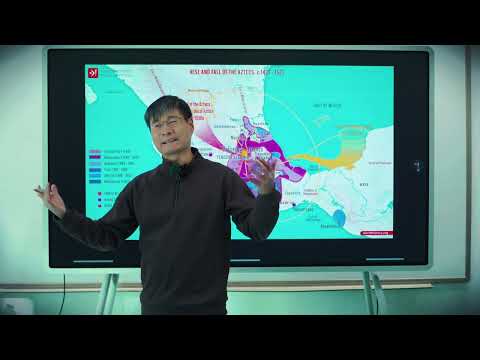
Preview:A classroom-style lecture presenting a game-theoretic theory of why empires rise and fall, centered on three metrics — energy, openness, and cohesion. The speaker (an unnamed teacher) argues that marginalized, poor tribal groups consistently conquer wealthy, corrupt empires because poverty forces creativity and solidarity. He applies this to predict that Germany, Japan, and Israel will become the next great empires, while America and China are "done." The argument draws on historical examples (Qin dynasty, Macedonians, Romans, Aztecs, Spanish conquistadors) and a classroom simulation called "The World Game." The core theoretical framework is attributed to Ibn Khaldun's concept of asabiyyah (group solidarity), extended with a model of secret societies, factional struggle, and mercenary takeover.
Preview:A lecture-style analysis arguing that immigration is a rigged game where rule-following East Asian immigrants lose status long-term while non-conforming groups win through demographics and cohesion. The speaker uses PISA scores, dating/marriage statistics, CEO demographics, and historical population replacements to claim that Muslims in Europe and Hispanics in America will dominate by 2050 through higher birth rates and group solidarity. He concludes that working hard and playing by the rules is a losing strategy; the winning strategy is to refuse assimilation, stick together, and have many children — but warns this trajectory leads to violent conflict.
Preview:This is not a market video — it is a literary discussion between a teacher (speaker) and a student about Homer's *Iliad*. The speaker uses the conflict between Agamemnon and Achilles to explore how great books create consciousness, self-awareness, and empathy. He then proposes a speculative metaphysical theory: consciousness is stored in a universal field (not the brain), individual brains are "antennas," Homer accessed eternal archetypes from this universal consciousness, and that is how he created characters so vivid they still speak across 2,500 years. The speaker ties this to prophecy/poetry/teaching as three expressions of the same function — speaking eternal truth that builds civilization. There are zero market claims, assets, or financial topics.
Preview:A lecture examining why some people succeed while others don't, challenging the conventional psychological explanations (self-control, growth mindset, deliberate practice) by arguing that wealth and social class, not individual traits, drive outcomes. The speaker contends that rich and poor parents operate in fundamentally different "games" — obedience vs. negotiation — and that social mobility is rare, requiring luck or high-risk strategies like leaving one's community. The lecture culminates in a game-theory model of revolution: elite overproduction leads factions of the "have-some" to ally with the poor, promising debt cancellation, land, and freedom from slavery.
Preview:A Yale-educated educator uses game theory to explain why most schools fail at their mission. He argues schools suck not because of bad intentions but because stakeholders (parents, teachers, administrators, students) converge on a game where the dominant strategy is doing minimal work, protecting face, and maintaining control — not fostering learning. He illustrates this through his own experience building a successful international program in Shenzhen, China, only to be fired and ostracized for violating the unwritten rules of the game. The talk is framed as a lecture teaching students to see the world through game-theory lenses, with school as the accessible case study.
Preview:This is not a market analysis video. It is a philosophy/mysticism lecture by Professor Jiang titled "Great Books #1: Secrets of the Universe." The speaker presents an idealist metaphysical worldview: reality is consciousness, the material world is a deception used to enslave human attention/energy, and the path to freedom lies through meditation, great books, and connecting with the divine. There is zero market content, zero financial analysis, and zero mentions of investable assets. The transcript captures a university-style lecture including student Q&A about Plato's allegory of the cave, sacred geometry, Christ consciousness, and escaping the "false" material reality.
Preview:A lecture-style presentation introducing "game theory" as a framework for understanding human behavior, societal dynamics, and civilizational collapse. The speaker uses a simplified "dating game" model — five ranked men and five ranked women pairing off — to illustrate how incentives (status vs. procreation) and "superstructure" (population, wealth, technology, competition) determine outcomes. He argues that wealthy, high-tech societies inevitably enter a fertility collapse because status becomes a zero-sum game and women rationally delay or avoid childbearing. Israel is presented as the sole exception — a wealthy Western society with above-replacement fertility — and therefore positioned for long-term dominance. South Korea is the worst-case endgame. The framing is an introductory university lecture, dense with provocative claims but light on verifiable data or testable predictions.
Preview:This is a geopolitical macro discussion centered on Europe’s frozen Russian assets, the Ukraine war, U.S.-China rivalry, and a possible U.S. move against Venezuela. Professor Jiang argues that Europe is trapped: if it confiscates the €210 billion in Russian assets, it would damage its legal credibility and could accelerate capital flight from the euro zone. He also frames the Ukraine war as already lost for Europe and says the likely outcome is battlefield resolution, with Odessa as the key strategic point. On Venezuela, he thinks Trump is using pressure there as part of a Monroe Doctrine-style push against Chinese and Russian influence, but he expects mostly managed escalation rather than a full war.
Preview:This is a geopolitical interview centered on a highly conspiratorial thesis: the guest argues that Washington, Israel, Iran, Russia, China, and various U.S. power blocs are converging toward wider war, with Iran/Israel seen as the most imminent flashpoint. He also claims the U.S. is overcommitted globally, Venezuela is a distraction or pressure point in an internal American faction fight, and Ukraine is already a strategic defeat for NATO.
Preview:Professor Jiang of the Predictive History channel lays out a sweeping geopolitical thesis: two major wars will escalate within months — NATO ground troops entering Ukraine in a losing effort, and a US-backed Israeli assault on Iran that triggers an Iranian retaliation capable of destroying Tel Aviv. He frames US empire as in terminal decline, cannibalizing its allies, and argues the real surprise will be a US-China rapprochement. The conversation is heavy on historical analogy, religious eschatology, and elite-conspiracy framing, with limited verifiable evidence for the most dramatic predictions.
Others tracked across the same asset focus or market thesis.
Unlock every transcript this speaker appears in, compare them with your other followed voices, and ask the agent for the bull, bear, and consensus read in one workspace.
Type a question. Create a free agent to send it and keep the answer linked to this speaker.
Your question is preserved across sign-in.
Free. No card. Takes about a minute.