Boockvar’s recurring worldview is that markets are being reshaped by structural inflation, higher real rates, large fiscal deficits, and constrained commodity supply.
📈 See how Peter Boockvar's thesis changed over time →Preview how this speaker shows up across market transcripts. Unlock the full archive, AI chat, and the version personalized to your watchlist, followed channels, and favorite speakers.
Peter Boockvar is a macro-oriented market commentator and CIO at OnePoint BFG Wealth Partners, with a recurring public role as editor of The Boock Report and CNBC contributor. Across the supplied interviews he consistently focuses on cross-asset inflection points, especially where policy, rates, commodities, credit, and large-cap tech are interacting. His style is data-heavy, skeptical of consensus narratives, and centered on regime shifts rather than short-term trading calls.
Boockvar’s recurring worldview is that markets are being reshaped by structural inflation, higher real rates, large fiscal deficits, and constrained commodity supply. He repeatedly argues that debts and deficits now matter, that the bond market is in a secular bear phase, and that long-term yields are being driven more by real-rate pressures and supply than by traditional Fed signaling. He sees AI as a powerful technology but believes the bubble risk is in the capex and infrastructure spend around it, not the software itself. He is also broadly constructive on gold as a long-term hedge against dollar weakness, geopolitical stress, and persistent inflation, and he thinks commodity/resource security is becoming a defining feature of the global economy.
Every analyzed appearance we have for this speaker, newest first. Open any transcript preview to read the underlying transcript.
Preview:Peter Boockvar argues the AI tech trade is at a major inflection point as Chinese competitors (CXMT, Yangtze Memory) commoditize models and memory chips at a fraction of US costs. He sees this as potentially bullish for gold via a repatriation trade: if global investors flee US tech, the dollar weakens and gold benefits. He also identifies stabilizing real rates and a dollar top as necessary for a gold bottom, noting $4,000 as a technical support level. On the Fed, he's skeptical that hawkish rhetoric translates to actual hikes given fiscal realities and housing market weakness.
Preview:Peter Boockvar argues the AI trade’s bubble is not in the technology itself but in the capex spend behind it, with hyperscalers, Oracle, Meta, and semiconductor suppliers increasingly exposed to a cycle that he thinks is getting stretched. He also says rising real rates, deficits, and Japan’s policy shift are important cross-asset forces, while gold looks like a buy on weakness and banks/consumer staples are becoming more attractive as investors diversify away from crowded growth names.
Preview:Peter Boockvar argues the market is transitioning away from the AI/MAG7 leadership that has dominated for years, while long-term interest rates continue to rise for structural reasons tied to debt, deficits, and global bond supply rather than a simple inflation scare. He thinks the Fed is likely on hold, oil and Middle East risks could keep inflation sticky, and commodities—especially energy—still look attractive, even as gold and silver digest earlier gains.
Preview:Peter Boockvar argues the recent pullback in gold and silver is a consolidation, not a broken thesis, driven mainly by higher real rates, a firmer dollar, and temporary liquidity needs from energy-importing countries. His bigger point is structural: gold is increasingly functioning as a neutral reserve and settlement asset in a more fragmented monetary system, while the bond market, not the Fed, is doing the real tightening.
Preview:Peter Boockvar argues the stock rally is being powered by a narrow AI buildout trade, FOMO, and the belief that war-related commodity pressure will fade soon. He says the market’s resilience masks weak breadth, rising long-end yields, and a looming reckoning if AI capex, data-center buildout, and future mega-IPOs absorb too much capital and eventually slow.
Preview:Peter Boockvar argued that the oil shock matters most through the back end of the crude curve, gasoline prices, and delayed cost pass-through into the broader economy. He also said commodities, long rates, and the AI capital-spending complex are all being pulled by the same mix of geopolitics, inflation risk, and supply insecurity.
Preview:Peter Boockvar argues the market is underestimating how much the Middle East conflict, energy shortages, and re-shoring of strategic supply chains keep inflation and rates elevated. He expects a relief rally if the situation de-escalates, but not a durable return to prior equity highs, and remains constructive on commodities—especially natural gas—while cautious on tech and long-duration bonds.
Preview:Peter Boockvar argues the market has become fragile because the AI/hyperscaler trade is weakening, war-driven oil spikes are raising inflation, and private credit adds another layer of vulnerability. He thinks equities are not priced for sustained commodity inflation, the Fed is unlikely to cut soon, and the White House will face a tougher policy mix where oil, not the Fed chair, effectively sets the monetary backdrop.
Preview:A market interview focused on the Iran-driven oil shock and its spillovers into inflation, gold, silver, credit, and equity leadership. The guest argues the key variable is duration: a quick reopening of the Strait would ease the damage, but a prolonged disruption would reinforce a broader commodity bull market and keep rates/inflation elevated.
Preview:Peter Boockvar argues the Fed is likely to stay on hold unless inflation falls further or unemployment rises more, and he thinks the real policy issue is still inflation and business cost pressure rather than a weak-enough labor market to justify cuts. He also sees a market rotation away from the crowded GenAI trade toward international equities, small/mid caps, commodities, and selected boring defensives, while warning that a weaker dollar, rising foreign yields, and tariff pass-through could become destabilizing if they intensify.
Preview:Peter Bkwar argues the market is entering a more selective phase: AI capex and the mega-cap tech trade are no longer a one-way bet, while international equities, emerging markets, oil/energy, and precious metals look comparatively better. He is broadly bullish gold, silver, and select miners, but says some of the move has already become vertical, so he has trimmed a bit into strength.
Preview:Peter Boockvar argues that 2026 is likely to be defined by a broadening market rotation away from the crowded AI mega-cap trade and toward underowned real assets and value sectors. He is constructive on energy, agriculture, consumer staples, gold, and certain non-US markets, while remaining bearish on long-duration sovereign bonds and cautious on the durability of AI-related capital spending.
Preview:Peter Boockvar argues that the real bubble is concentrated in AI capex and financing, not in everything else. He is bearish on long-duration bonds, expects sticky inflation and a weaker dollar, and favors selective risk: international stocks, small caps, commodities, EM local-currency bonds, and especially oil.
Preview:A short interview with CIO Peter Bookfar of 1 Point BFG Wealth Partners discussing the silver price rally, gold-silver ratio catch-up trade, risks from rising long-term rates, the AI capex debate, and US fiscal sustainability. Silver could hit $200/oz inflation-adjusted but remains cyclical; commodities broadly attractive in 2026. The host also runs a silver giveaway promotion.
Preview:Peter Boockvar (CIO of Onepoint BFG Wealth Partners) discusses the AI infrastructure bubble debate, bifurcation in the Mag 7, gold/silver's needed consolidation after a vertical move, and emerging risks in private credit. He argues the real AI bubble question is physical data center overbuild, not software, and that the stock market has already priced in Nvidia's success. He remains bullish on precious metals but trimmed gold after the vertical run; silver was untouched. Key macro concerns include long rates not falling despite Fed cuts, the AI capex sustainability, and private credit excess.
Preview:Peter Boockvar argues the market is moving from a clean AI-led risk-on trade into a more fragile, capital-intensive phase where valuations, depreciation assumptions, and financing costs matter more. He is constructive on selective defensives and turnaround names, but wary that tech disappointment, private credit stress, and sticky long rates could spill into broader markets.
Preview:Peter Boockvar (CIO, OnePoint BFG Wealth Partners) sees the gold/silver pullback as a normal bull-market correction after a vertical run, expects China to keep buying gold, and warns that a hawkish Powell removing a December cut could deepen the correction. He views inflation as structural (3-4% range), believes the bond bear market in duration persists, and flags the US economy's circular dependency on AI/data-center buildout, upper-income spending, and stock market wealth — a setup that "will work until it doesn't."
Preview:Peter Boockvar argues the market is shrugging off the government shutdown because the real drivers are the AI/data-center buildout, a split consumer, sticky policy uncertainty, and rising long rates. He says the economy is mixed and uneven: AI capex and upper-income spending are strong, while lower/middle-income stress, weak manufacturing, tariff pain, and private-credit deterioration point to broader fragility.
Preview:CIO Peter Bookfar (Onepoint BFG Wealth Partners) sits down with host Ivan/Adam of Wall Street Bullion to discuss a sluggish global growth outlook (~1.25% US H1), the persistent rise in long-term bond yields despite central bank cutting, and his bullish commodity positioning across gold, silver, platinum, uranium, oil/gas stocks, and agricultural inputs. He warns that more than one or two Fed cuts risks reigniting inflation and crushing the dollar, and argues that gold/silver/platinum remain attractive while oil at $63-64 is "dirt cheap."
Preview:This Wealthion episode is a broad market and sector discussion centered on inflation, Fed cuts, valuations, international equities, labor data quality, and healthcare stocks. The hosts argue that the market is still expensive overall, but not every stock is overpriced, and they see selective opportunity in cheaper non-U.S. equities and in beaten-down healthcare names if policy uncertainty eases.
Preview:Peter Boockvar discusses Japan's inflation problem as a potential trigger for a global bond market crisis, arguing that rising JGB yields will directly impact US and European sovereign bonds. He also covers the awkward Trump-Powell dynamic at the Fed, why Fed rate cuts won't rescue mortgage rates or the US budget, and presents a structural bullish case for gold driven by central bank diversification and de-dollarization of trade.
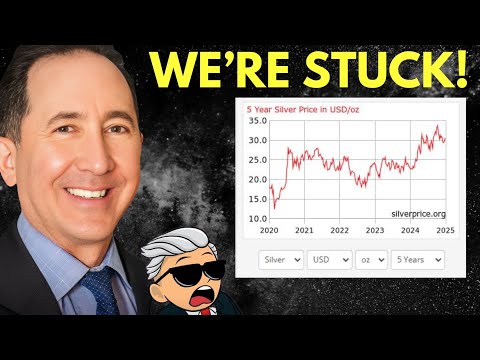
Preview:Peter Bookvar argues that gold’s recent surge is still healthy because it has paused and consolidated, while silver is playing catch-up toward prior highs. He is constructive on precious metals, commodities, and international assets, but bearish on tariffs, worried about weaker growth, and skeptical that Fed rate cuts will meaningfully lower long-end yields or mortgage rates.
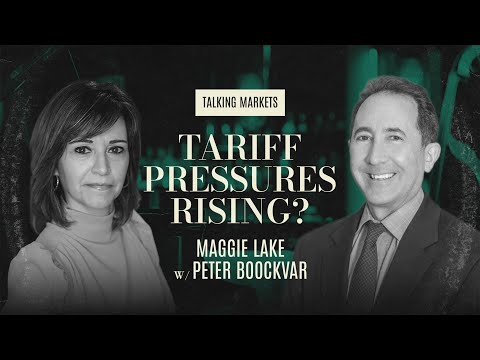
Preview:Maggie Lake interviews Peter Boockvar about the summer equity rally, arguing that AI/mega-cap tech strength and expanding multiples are driving markets more than a decisive improvement in fundamentals. Boockvar is bullish on select non-U.S. equities but warns that tariff-related costs, rising long rates, and froth in parts of the market could eventually slow the rally.
Preview:Peter Boockvar argues the market is underpricing the inflation, growth, and funding consequences of the new tariff wave. He says tariffs function like a corporate tax hike, likely land on U.S. consumers and businesses, and will muddle supply chains even if some price impact shows up with a lag in CPI/PPI/import prices. He also sees long-term rates as a bigger risk than equity valuations, thinks the Fed is likely to cut in September but not enough to rescue housing or the curve, and remains constructive on gold, silver, platinum, uranium, oil, and international stocks.
Preview:The guest is constructive on gold, silver, and platinum, but his near-term macro focus is actually on oil/geopolitics, a fragile sovereign-bond backdrop, and a Fed that looks constrained rather than eager to cut. He thinks a sustained oil spike only matters if there is a real disruption to flows, and he does not think an Iran closure of the Strait of Hormuz is likely.
Preview:Maggie Lake interviews Peter Boockvar about the post-tariff market setup, Fed policy, bond yields, the dollar, and what sectors still look attractive. Boockvar argues Powell is “flying with a cloudy windshield,” that tariff uncertainty is making businesses pause hiring, and that the market is underpricing how disruptive the China tariff fight could be for supply chains, inflation, and capital flows.
Preview:Peter Boockvar argues tariffs, fading MAG 7 leadership, and slower government/AI-driven growth are creating a fragile macro backdrop. He expects near-term inflation pressure from tariffs, rising recession odds if equities keep weakening, and thinks the market is underestimating how much long-term yields can stay elevated even if the Fed cuts.
Preview:This is a live, headline-driven market discussion built around Trump’s “Liberation Day” tariff announcement. Maggie Lake and two guests frame the event as a major volatility catalyst: Dave Floyd focuses on S&P futures, VIX, and key price levels, while Peter Boockvar argues the tariff plan is a broad tax on imports that could worsen uncertainty and raise recession risks.
Preview:Peter Bookfar (CIO, Bleekley Financial Group) discusses with host Ivan his bullish outlook on gold and silver, his view that the Mag7/AI trade is losing leadership, his concerns about recession risks from stock market weakness and reduced government spending, and his portfolio positioning overweight international markets, commodities, and precious metals. He supports reciprocal tariffs but opposes broad tariff use for reshoring, expects Fed rate cuts possibly starting in May, and advises investors to abandon the last five years' playbook.
Preview:Peter Boockvar argues the post-2022 market playbook is breaking down: the mega-cap AI trade is losing its ability to carry indices, government spending is likely slowing, and the Fed is less capable of rescuing growth than in the pre-COVID era. He sees recession risk rising if those three supports weaken together, while favoring international markets, commodities, select value/small caps, and non-U.S. equities over concentrated U.S. mega-cap leadership.
Preview:Peter Boockvar (Bleakley Financial Group) argues the US economy has been a "three-legged stool" — upper-income spending, AI capex, and government spending — and all three legs are now weakening simultaneously. Tariff escalation is the near-term catalyst, but vulnerabilities were already forming (DeepSeek, Mag-7 concentration). He sees the highest recession risk in years, though not yet in aggregate. The gold/Atlanta Fed GDP distortion is clarified: official GDP excludes gold trade, so the -2.4% GDPNow print overstates weakness. Boockvar advocates rotation into value, international equities, gold/silver, and short-duration Treasuries — the things that haven't worked for years.
Preview:Peter Boockvar, CIO of Bleakley Financial Group, discusses gold's all-time highs, the unwinding AI/tech trade, tariff policy risks, and a potential multi-year shift toward international and value equities. He sees gold driven by foreign central bank demand and de-dollarization at the margin, warns that tariffs are a scattershot policy mistake echoing 2018-2019, and advises playing defense while rotating away from big-cap tech.
Preview:Peter Boockvar argues the market is at a possible inflection point away from the Magnificent 7 toward other regions and sectors, with commodities, Europe, parts of Asia, and some financials benefitting from rotation. He is also constructive on gold/industrial commodities and cautious on rates, inflation, and long bonds, seeing sticky inflation risks, less Fed urgency to cut, and a possible retest of 5% in the 10-year yield.
Preview:Peter Boockvar argues the market is entering a broader regime change: the era of extreme US mega-cap, especially Mag 7, dominance may be tiring out as money rotates into cheaper global markets, other US segments, and value. He links that to valuation risk, concentration risk, possible AI capex overbuild, and a potential knock-on effect on the dollar, tariffs, and even the consumer.
Others tracked across the same asset focus or market thesis.
Unlock every transcript this speaker appears in, compare them with your other followed voices, and ask the agent for the bull, bear, and consensus read in one workspace.
Type a question. Create a free agent to send it and keep the answer linked to this speaker.
Your question is preserved across sign-in.
Free. No card. Takes about a minute.