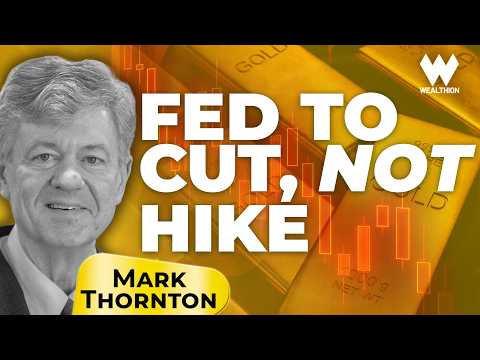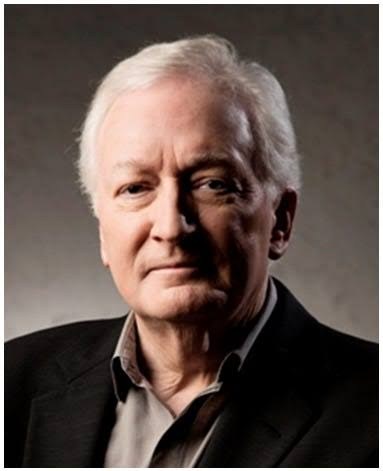
Thornton’s recurring economic worldview is that easy money, artificially low interest rates, and Fed-driven credit expansion create boom-bust cycles that first inflate asset…
📈 See how Mark Thornton's thesis changed over time →Preview how this speaker shows up across market transcripts. Unlock the full archive, AI chat, and the version personalized to your watchlist, followed channels, and favorite speakers.
Dr. Mark Thornton is an Austrian economist and Senior Fellow at the Mises Institute who consistently frames macroeconomic events through Austrian business cycle theory. In the supplied transcript and linked items, he presents himself as a recurring critic of Federal Reserve-led credit expansion and a commentator on asset markets, inflation, gold/silver, and systemic risk. His public identity is strongly tied to the Mises Institute and to his X account @DrMarkThornton.
Thornton’s recurring economic worldview is that easy money, artificially low interest rates, and Fed-driven credit expansion create boom-bust cycles that first inflate asset prices and enrich existing asset holders, then leave households without assets facing higher prices and weaker real wages. He emphasizes distributional effects, often describing a K-shaped economy in which the top wealth holders benefit most from monetary stimulus while lower-income households absorb the costs. He also expects these imbalances to culminate in crisis, with inflation and commodity strength treated as warning signs rather than isolated market moves. Gold and silver are recurring signals in his framing, both as safe-haven assets and as indicators of broader monetary stress. Overall, his worldview is pessimistic about centralized monetary management but optimistic about bottom-up, Austrian-style explanations and solutions.
Every analyzed appearance we have for this speaker, newest first. Open any transcript preview to read the underlying transcript.
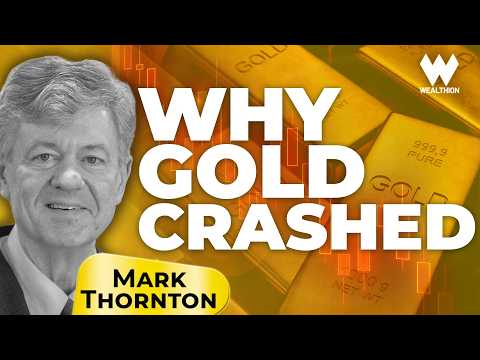
Preview:Mark Thornton, interviewed by Maggie Lake, argues the US stock market is more overvalued than at any point in 150 years except 1927. He sees the recent selloff near a bottom and expects a severe outcome. He frames Trump's nomination of Kevin Warsh as a deliberate "hit job" on precious metals, timed to trigger a correction. Thornton believes gold/silver prices are bottoming, with smart money (China, central banks) accumulating. He expects the dollar's long-term downtrend, a reversal in interest-rate expectations, and ballooning government deficits to drive a flow of funds from overvalued stocks into precious metals. The core thesis: government debt/deficit expansion and central bank money printing structurally support higher gold and silver prices.
Preview:The video argues that silver and gold are in a correction/bottoming phase, but the bigger bullish setup remains intact because debt, spending, monetary inflation, and geopolitical conflict are all worsening. Mark Thornton says the recent weakness is partly a war/news-cycle effect that pushes speculators into energy and out of precious metals, but he expects precious metals to benefit once broader financial stress becomes the dominant theme.
Preview:An interview on Liberty and Finance with Michael Rectenwald and Mark Thornton argues that CBDCs and related “digital money reset” efforts are less about financial inclusion than about expanding state control, surveillance, and inflationary funding of wars and AI buildout. Both guests say the public should resist digital ID, CBDC adoption, and further monetary centralization by shifting toward cash, hard assets, and parallel private currencies.
Preview:Austrian economist Dr. Mark Thornton identifies three classical bust signals all flashing red: (1) hyper-elevated stock/asset markets driven by AI and data-center mania, (2) persistent inflation from excessive money creation, and (3) an extreme K-shaped economy where the rich get richer while real wages for the working class collapse. He ties a potential market tipping point to rising real interest rates and the skyscraper curse — with a new record-setting tower expected around late 2027 marking the economy's descent. Thornton remains structurally bullish on gold, silver, and natural resources, arguing the fundamental thesis (government debt, central bank monetization, geopolitical destruction of productive capacity) is stronger than ever despite engineered selloffs. He is pessimistic about near-term policy but optimistic long-term about growing public awareness of sound money and real economics.
Preview:Ilya Spivak interviews Austrian economist Mark Thornton about the late-stage U.S. business cycle, inflation, Fed policy, and tariffs/trade war risk. Thornton argues the economy is near the end of an unusually long cycle, with a K-shaped split between asset owners and wage earners, and he says monetary inflation is showing up first in stocks, especially tech, and then in consumer prices.
Preview:The video argues that the sharp selloff in silver and gold is mainly a rates-driven move, triggered by a stronger-than-expected U.S. jobs report that reduced expectations for Fed cuts. Guest Mark Thornton frames the drop as a temporary washout inside a larger bull case for precious metals, because debt, deficits, low rates, and monetary expansion are still the core backdrop.
Preview:Dr. Mark Thornton argues that the U.S. and other major economies are trapped in a politically protected inflation regime: deficits, central-bank balance-sheet expansion, and elite incentives are keeping money and credit easy, which he says benefits asset owners while squeezing workers through higher prices. He recommends owning gold, silver, precious-metals stocks, and broader commodities rather than bonds, because he thinks the old stock-to-bond rotation no longer works in a world where governments will keep inflating to finance spending.
Preview:Mark Thornton argues the economy is split between asset owners and wage earners because credit expansion and war-driven inflation inflate stocks, corporate profits, and hard assets while crushing household purchasing power.
Preview:An interviewer on tastylive talks with Austrian economist Mark Thornton about why options markets fit Austrian ideas of price discovery, why inflation is fundamentally monetary, and why speculators and derivatives help reveal future risk. The conversation also covers crude oil, gold, the dollar, BRICS, and the possibility of a future return to some form of gold standard.
Preview:Dr. Mark Thornton argues that the Iran-related disruption in the Persian Gulf is a major supply shock that will ripple through energy, fertilizers, chemicals, shipping, mining, and food production, even if U.S. equities remain elevated for now. He sees the stronger inflation impulse, higher rate expectations, and stress on the petro-dollar system as reinforcing a broader commodity supercycle, with gold, silver, and resource producers still favored over time.
Preview:Dr. Mark Thornton argues that the Persian Gulf war and tariff-driven policy mistakes are creating a delayed but serious economic shock: oil, gas, fertilizer, plastics, and other byproducts are being disrupted now, while broader inflationary effects will show up later. He says the Fed is trapped between higher CPI pressure and pressure to cut rates, which he thinks should eventually support gold and silver once war risks ease and the dollar weakens.
Preview:Panel interview on gold, inflation, debt, and commodities featuring Rick Rule and Dr. Mark Thornton. Both argue the Strait of Hormuz disruption is an immediate cost shock that can hurt growth and precious metals in the very near term, but it strengthens their longer-run view that fiat currencies will keep losing purchasing power and that gold and commodities remain in a multi-year uptrend.
Preview:Mark Thornton argues that gold and silver remain in a long-run bullish regime driven mainly by monetary debasement, not by headline CPI or short-lived geopolitical shocks. He sees the recent pullback as a normal bull-market correction and expects the Fed to cut rates before hiking because of debt, liquidity stress, and malinvestment.
Preview:Dr. Mark Thornton argues the economy remains in a long Fed-distorted boom, with asset owners benefiting while wage earners lose purchasing power. He expects gold, silver, and the broader commodity complex to make new highs, though he sees near-term volatility from oil, war, and shifting Fed rhetoric.
Preview:Mark Thornton argues that war-driven supply shocks and weakening confidence in the dollar are pushing precious metals higher, despite a sharp correction in silver and near-term headwinds from higher rates and oil. He remains bullish on silver making new highs in 2026 and sees the U.S. moving closer to a hyperinflationary dollar regime as fiat credibility erodes.
Preview:Charlotte Mloud interviews Dr. Mark Thornton about gold, silver, the dollar, inflation, and the Fed. Thornton argues the recent gold pullback is mainly a liquidity-driven correction, amplified by war-related selling in the Middle East and by risk-off flows into the dollar, and he expects those forces to fade.
Preview:Mark Thornton argues that the war in the Persian Gulf could become a major economic shock because energy, fertilizers, chemicals, and shipping are global inputs, so higher oil and gas prices would ripple through everything from food to household budgets. He ties the conflict to a broader Austrian-school critique: decades of interventionism and money creation have produced a K-shaped economy, liquidity stress, and fragility in private credit and private equity, while gold, silver, miners, and other real assets remain long-term beneficiaries of inflation and rising commodity prices.
Preview:Mark Thornton argues that gold and silver are warning signals for a broader U.S. monetary and fiscal deterioration, with central-bank gold buying, debt growth, and rising long-term rates supporting a hyperinflation-risk thesis. He is notably even more bullish on silver than gold, citing inelastic supply/demand and heightened volatility.
Preview:Mark Thornton argues that rising gold and silver are warning signals of broader economic stress, not just bullish commodity moves. He sees a slowing U.S. and global economy, rising debt, K-shaped inequality, tariff uncertainty, and private-credit/private-equity fragility as signs that 2026 could bring a major downturn.
Preview:Mark Thornton argues that the current fiat-money system has produced a distorted economy, an oversized financial sector, and recurring bubbles, and he says the answer is a deep monetary reset back toward sound money rather than tinkering at the margins. He supports this with Austrian-school reasoning about credit expansion, leverage, decapitalization, tariffs, and the historical role of gold and silver as market-chosen money. He also ties today’s gold and silver strength, the S&P/Nasdaq boom, private equity, and skyscraper records to an economy nearing a fragile turning point.
Preview:Daryl Thomas interviews Dr. Mark Thornton of the Mises Institute about the US economy, tariffs, Fed policy, and gold/silver as inflation hedges. Thornton argues that government spending, debt, and monetary expansion are distorting the economy, hurting small businesses and households, and that the recent strength in precious metals is a warning sign of deeper macro weakness.
Preview:Dr. Mark Thornton argues the sharp drop in gold and silver after Trump’s Fed-chair nomination is mostly a sentiment shock, not a change in the underlying bullish case for hard assets. He sees Kevin Warsh as the most hawkish and most Wall Street-friendly of the candidate set, which reassured financial elites even as it briefly pressured metals. Thornton still expects the broader backdrop—easy policy, heavy liquidity, weak confidence in politics, and looming recession risk—to support gold and silver after the immediate volatility passes.
Preview:Andy Schectman interviews Mark Thornton of the Mises Institute about fiat money, dollar decline, gold and silver, BRICS, central bank fragility, and crypto/stablecoin regulation. Thornton argues that Washington’s fiscal excess, central-bank repression, and geopolitical weaponization of the dollar are accelerating a shift toward gold, non-dollar trade, and a more fractured monetary system.
Preview:Dr. Mark Thornton of the Mises Institute warns that the Federal Reserve's activist policy has created conditions ripe for contagion. Multiple potential black swans are circling: the Japanese bond market, the yen carry trade unwind, commercial real estate, and opaque private equity/hedge fund leverage. While the MAG7/stock market appears to be in a topping "holding pattern," retail investors remain largely unresponsive — margin debt is high, cash balances low, and defensive positioning absent. On precious metals, he sees silver's recent surge to ~$59 and heightened volatility as a structural shift driven by institutional and sovereign buying, low wholesale inventories, and backwardation. The silver market is undergoing growing pains that will persist, though the fundamental stacking thesis remains intact.
Preview:Dr. Mark Thornton argues that the Fed, central banks, and years of low rates have created a broad, elongated asset bubble that now spans stocks, housing, private equity, AI/data centers, and precious metals. He sees the current setup as the next phase of an artificial boom-bust cycle, with rate cuts, debt rollover, and political pressure likely to extend the imbalance before it eventually breaks.
Preview:Mark Thornton argues silver’s recent surge is being driven by a mix of stable industrial demand, tighter byproduct supply, and a wave of investor interest, with U.S. critical-mineral status adding a bullish policy tailwind. He is similarly constructive on gold, saying central bank buying and fiat-currency instability are the core drivers, and he extends that view into a broader Austrian critique of fiat money, debt, war, and social decay.
Preview:Dr. Mark Thornton of the Mises Institute argues that the US is approaching a potential hyperinflationary crack-up boom, with runaway government debt, deficits, and Fed policy undermining civilization itself. He sees all preconditions for a dollar crisis in place, with gold and silver serving as essential insurance. Thornton is optimistic about bottom-up awakening via alternative media but warns the trigger could be a stock market collapse. The conversation is a sustained Austrian economics critique of fiat money, central banking, and government overreach.
Preview:Charlotte Mloud interviews Dr. Mark Thornton of the Mises Institute about gold, silver, inflation, and Fed policy. Thornton argues gold’s surge is a warning sign about government overspending, monetary debasement, and rising geopolitical conflict, while silver may have even more upside because of tight supply and industrial demand. He also says the U.S. is at risk of deeper inflation, possibly hyperinflation under war-like spending and continued money printing, and he sees commodities—especially precious metals and energy—as the main safety trades.
Preview:Mark Thornton, Senior Fellow at the Mises Institute, explains Austrian economics and applies it to the current macro environment. He argues that runaway government spending, debt ($38T+), and money printing are structurally weakening the economy and will continue to drive gold and silver higher long-term despite the pullback below $4,000. He criticizes the Fed, calls Trump's industrial policy crony capitalism, and sees China's BRICS currency push as a secular trend eroding dollar dominance. The metals correction is framed as normal profit-taking in an overextended market within an intact bull trend.
Preview:Economist Mark Thornton frames the recent sharp gold and silver pullback — including gold's largest nominal one-day drop ever — as "growing pains" from a market experiencing a rapid expansion in participation, not a sign of a top. He argues that widespread supply shortages across retailers, wholesalers, refiners, and mints, combined with spot prices above futures, point to intense demand. Thornton advocates a long-term stacking philosophy: buy consistently on dips, ignore dollar-price noise, and treat precious metals as market-based insurance against government-caused instability.
Preview:Dr. Mark Thornton discusses silver breaking above $50/oz, framing it as a psychological barrier rather than a fundamental ceiling. He argues silver is cheap relative to gold and inflation-adjusted 1980 levels, expects the gold-silver ratio to fall from ~79 to potentially 50 (or below 20 in a hyperinflation scenario), and identifies private equity and AI-related malinvestment as potential black swans. Geopolitical escalation and Fed money printing are cited as structural drivers for precious metals.
Preview:Mark Thornton argues the U.S. is already on the early “on-ramp” to hyperinflation because of massive federal debt, persistent deficit spending, and ongoing money creation by the Fed. He says the public, foreign central banks, and even major investors are responding by moving toward hard assets like gold, silver, and some crypto, while the dollar and U.S. Treasuries lose trust.
Preview:Dr. Mark Thornton of the Mises Institute discusses the US-Iran military escalation, framing it as a dangerous, unnecessary entanglement that risks drawing in Russia and China. He argues the narrative that Iran is close to a nuclear weapon is false, citing multi-level inspections. The conversation pivots to economics: Thornton sees the conflict as part of a broader mercantilist battle over monetary control, with the dollar weakening and gold/silver serving as both a danger gauge and a return to real money. He is bullish on silver outperformance, expecting the gold-silver ratio to continue falling due to supply dynamics, retail demand, and dollar weakness.
Preview:Mark Thornton argues that the gold/silver ratio near 100 is historically extreme and likely signaling recessionary slowdown rather than a new permanent norm. He expects recession, weaker equities, Fed rate cuts, and eventually a sharp reversal in the ratio as silver catches up, while also warning that the bigger U.S. debt/dollar problem points toward continuing inflation pressure and long-run monetary instability.
Others tracked across the same asset focus or market thesis.
Unlock every transcript this speaker appears in, compare them with your other followed voices, and ask the agent for the bull, bear, and consensus read in one workspace.
Type a question. Create a free agent to send it and keep the answer linked to this speaker.
Your question is preserved across sign-in.
Free. No card. Takes about a minute.