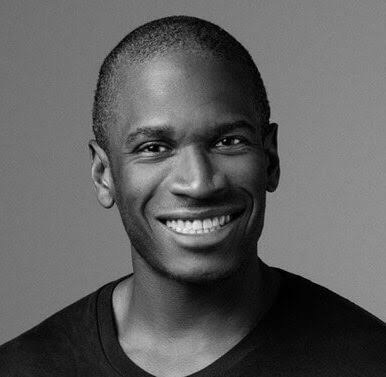
Melker’s recurring economic worldview is strongly pro-crypto and pro-tokenization, with a consistent belief that financial activity will increasingly move onto blockchain rails.
📈 See how Scott Melker's thesis changed over time →Preview how this speaker shows up across market transcripts. Unlock the full archive, AI chat, and the version personalized to your watchlist, followed channels, and favorite speakers.
Scott Melker is a crypto and markets commentator best known for his "Wolf of All Streets" brand, including his own site and X account. In the supplied transcripts, he appears as a fast-moving host and analyst focused on crypto, tokenization, market structure, regulation, and the interaction between digital assets and traditional finance. He often frames developments as evidence that Wall Street and institutions are gradually adopting blockchain rails, and he frequently translates technical or policy stories into a broader narrative about where financial infrastructure is headed.
Melker’s recurring economic worldview is strongly pro-crypto and pro-tokenization, with a consistent belief that financial activity will increasingly move onto blockchain rails. He repeatedly emphasizes institutional adoption, the modernization of settlement and collateral systems, and the idea that crypto is not just about price but about the underlying plumbing of finance. He also seems to believe regulatory perimeter and institutional acceptance are key to scaling, and he treats examples like ETFs, stablecoins, privacy tools, and tokenized real-world assets as signs that the traditional system is converging with crypto rather than resisting it indefinitely. Overall, his view is optimistic, market-structure-driven, and centered on crypto as a better, faster, more global financial layer.
Every analyzed appearance we have for this speaker, newest first. Open any transcript preview to read the underlying transcript.
Preview:Scott Melker (The Wolf of All Streets) interviews Josh Frank, founder of The Tie, live from the Out East Summit. They discuss Bitcoin clearing a major hurdle as DAT (Digital Asset Treasury) companies unwind without hurting BTC price, marking the end of the Michael Saylor overhang narrative. Frank details why DATs are structurally broken due to predatory asset management agreements, and lays out a thesis for token-to-equity conversions for DeFi/revenue-generating projects. They cover conference themes: CLARITY Act optimism, institutional crypto adoption, RWA tokenization, and the shift of crypto VCs toward generalist investing. Frank reveals three acquisitions by The Tie (Sten, Liquidity Land, StakingRewards.com) and makes the case that traditional asset managers at the conference are more bullish than crypto-native fund managers.
Preview:Jeff Park argues the market is being driven by the Clarity Act, crypto-legislation optionality, and a broader shift in capital flows. He sees bitcoin and crypto equities as the near-term beneficiaries, but his bigger point is that fiscal dominance, dispersion in U.S. stocks, and tokenization are the deeper regime changes.
Preview:A wide-ranging Monday panel with Scott Melker hosting Peter, Dave, and David covering: China's cheap AI compute threatening US tech valuations, the Iran conflict's potential to spike diesel and delay Fed rate cuts, the bullish Bitcoin case near $64K with MSTR no longer the sole driver, outrage over Trump's Truth Social proposal to sell early access to posts to HFT firms, and the dimming prospects for the Clarity Act. All three guests see Bitcoin bottoming and heading higher, with rate cuts still likely by September barring an energy shock.
Preview:CJ Konstantinos argues that Bitcoin should be treated as pristine collateral and used to re-engineer mortgages, refinancing, credit lines, and fixed-income products through People’s Reserve. The core pitch is that borrowers can avoid liquidation risk, lower borrowing costs, and even let Bitcoin appreciation reduce rates or pay down debt faster, while lenders and investors get structured, principal-protected exposure to Bitcoin upside.
Preview:Interview with Ran Hindi, co-founder of Zama, about building an "HTTPS layer" for public blockchains using fully homomorphic encryption (FHE). Hindi argues that trillions of dollars will never move onchain until confidentiality is solved — institutions require privacy that public blockchains do not offer. Zama's protocol encrypts transactions so users can hold, send, swap, and earn yield on shielded assets using standard wallets, while token issuers and compliance officers retain visibility. He frames this as a winner-takes-all market, aiming for 95% of onchain transactions to be encrypted via Zama within four years.
Preview:Scott Melker (The Wolf of All Streets) runs through three major crypto-market stories: (1) the DTCC's first live test of tokenized securities using real assets, with participation from JP Morgan, BlackRock, Goldman Sachs, and others, targeting mainstream adoption by October 2026; (2) the US Treasury sanctioning and Tether freezing $131M in Iranian Central Bank stablecoin wallets, bringing total frozen USDT to ~$475M; and (3) a Senate meeting on the Clarity Act ethics clause, plus a unanimous Senate resolution opposing any pardon for Sam Bankman-Fried. Melker frames the DTCC test as the most important infrastructure story — the plumbing being laid for the next bull run — and draws a sharp contrast between censorable stablecoins and truly decentralized assets like Bitcoin.
Preview:Scott Melker (The Wolf Of All Streets) hosts Nico Luga to discuss two main topics: (1) the Clarity Act's uncertain future with ~20 days before the August recess, heightened by Trump meeting senators to discuss the bill's ethics clause; (2) a deep-dive interview on Orange Juice, a new permanent-capital private equity vehicle that acquires cash-flowing businesses ($3-7M EBITDA) and uses free cash flow to buy Bitcoin — positioning it as a differentiated, lower-risk alternative to the leveraged Bitcoin treasury company model that topped the market.
Preview:Scott Melker covers Hyperliquid's synthetic CXMT pre-IPO contract pricing the Chinese chipmaker at $535B (6x above its $85.5B official valuation), framing it as crypto rails enabling price discovery before traditional markets. He walks through Bitcoin's technical setup (weekly 200 MA reclaim, potential 50 MA target mid-80s), ETH/BTC outperformance, the Ethereum Foundation's institutional privacy spinout, PayPal's reported Stripe/Advent takeover, and global crypto regulatory shifts in Japan, UK, and South Korea — all delivered as a solo monologue with characteristic tangents and sponsor read for Securitize.
Preview:Bitcoin bounced to $64K on a softer-than-expected CPI print, but host Scott Melker and guests Ryan Rasmussen (Bitwise) and Tillman Holloway (Arch Public) agree inflation data is too noisy right now to confidently call a Fed rate-cut path. The bulk of the show is a deep-dive on "vaults" — on-chain fund structures that Bitwise argues are the next evolution after ETFs — and a product announcement about Arch Public launching free-tier equities/ETF tools. The macro segment is brief and inconclusive; the real content is the tokenization/vaults thesis and the contrast between crypto-native innovation and slow Wall Street adoption.
Preview:Scott Melker and co-host Dave (The Wolf Of All Streets) discuss Bitcoin's slide to ~$62K, Michael Saylor's Strategy raising $450M in cash via ATM without buying Bitcoin, and the macro backdrop. Dave delivers an extended thesis that the only thing that matters is relentless currency debasement — more dollars, yen, euros being printed — making hard monetary assets (Bitcoin, gold, silver) the long-term winners. He argues the BIP 110 debate is really about whether Bitcoin can prove governance rationality, parallels Saylor proving he can access capital markets without selling Bitcoin, and frames the Fed (Worsh/Bessent) as trapped stewards of an addicted system that cannot cut liquidity cold turkey. A busy Fed/data week ahead but no policy surprises expected.
Preview:Cam Harvey (Duke finance professor) lays out a nuanced view: he's bullish on AI-driven productivity and tokenized real-world assets, but deeply skeptical of Bitcoin as digital gold or a safe haven. He argues Bitcoin's extreme volatility (still ~3-4x equities), unbacked nature, and fundamental valuation disagreements make the store-of-value rebranding unconvincing. His standout claim: Bitcoin can now be killed for ~$8 billion via a 51% attack, because liquid offshore derivatives markets finally allow the attacker to short Bitcoin simultaneously — turning a previously irrational attack into a profitable trade. He sees Ethereum as far more secure post-Merge. The biggest opportunity, he argues, is crypto as the payment layer for AI agents transacting 24/7.
Preview:Interview with Neil Steinhardt of Nexo about the platform's return to the US market, the revival of crypto lending post-2022, and how collateralized Bitcoin/Ethereum loans let holders access liquidity without selling. Steinhardt covers Nexo's conservative LTV approach (~50% on BTC), institutional-grade custody, regulatory tailwinds, the Open USD stablecoin consortium, and why the US remains the biggest growth opportunity despite state-by-state complexity.
Preview:Scott Melker (Wolf of All Streets) runs through a week of crypto regulatory whiplash: Circle gets a federal trust bank charter, New Hampshire rejects a Bitcoin bond, the Clarity Act stalls at ~37% passage odds with an ethics poison pill, Paradigm raises $1.2B pivoting toward AI, and Robinhood's new chain sees DEX volume explode — but mostly from lending via Morpho, not just meme coins.
Preview:Scott "The Wolf of All Streets" presents a casual Friday market wrap where Bitcoin recovers to $64K on day 307 of its third-longest range ever. He argues the technical setup looks "bottomy" — the 200-week MA has been recaptured, RSI shows bullish divergence on the weekly, and the monthly chart is testing its 50 MA. Whale accumulation data shows new whales still buying while old whales have flattened. He's skeptical that the Crypto Clarity Act passes (Kalshi odds dropping to 37%), citing the ethics fight around politicians and Trump family crypto profits as the real obstacle. The biggest news is Circle receiving final OCC approval for a National Trust Bank, which he views as meaningful for USDC infrastructure. He also notes Hyperliquid and Phantom urging the CFTC to create DeFi-specific rules separate from broker-dealer regulation.
Preview:Scott Melker and James Butterfill argue Bitcoin is holding up well despite macro headwinds, ETF outflows, and recent strategy-related selling. Their bigger framing is that crypto capital is rotating toward tokenized equities, stablecoins, real-world assets, and a small set of infrastructure tokens with clearer value accrual like Hyperliquid.
Preview:Bitwise CIO Matt Hougan joins Scott Melker to discuss Bitcoin's drop to $62K on Iran ceasefire-collapse headlines, MicroStrategy's historic $200M+ Bitcoin sale (and the market's surprising rally on the news), ETF flow capitulation in Q2, a DeFi renaissance led by Hyperliquid, the significance of Robinhood Chain, Japanese corporate treasury diversification into Bitcoin/XRP, Strike's volatility-proof Bitcoin loan product, and the macro setup for a choppy summer ahead of a potential Q4 breakout. Hougan frames current price resilience amid bad news as a long-term positive and sees institutional adoption as the "end boss" buyer for the next Bitcoin cycle.
Preview:A freewheeling market discussion covering Bitcoin's rip to $64K amidst AI infrastructure spending, the Saylor/MSTR selling situation, the dying stablecoin clarity act, and the pivot of crypto exchanges toward stocks. The core macro thesis: a coming $7 trillion AI debt cycle will force massive liquidity printing, which will lift all assets including Bitcoin. The conversation is heavy on banter, light on rigorous analysis.
Preview:This Macro Monday episode centers on two linked debates: whether Michael Saylor/Strategy’s Bitcoin sale changes the crypto setup, and whether the broader market is nearing a rotation or top as AI, rates, and commodities shift. The speakers mostly argue that the sale is more important for Strategy stock and market narrative than for Bitcoin itself, while they split on whether Bitcoin can hold up if equities weaken. Outside crypto, they discuss Fed timing, labor data, inflation, gold, oil, the dollar, AI infrastructure, and market structure. The tone is argumentative and opinionated, with several recurring bearish calls from Mike on crypto and commodities and counterarguments from Dave and Peter that emphasize liquidity, fiat debasement, and the uneven but still intact equity uptrend.
Preview:Matthew Sigel of VanEck argues Bitcoin is likely to be materially higher a year from now, but he is not chasing every dip because the four-year cycle, derivatives positioning, and seller exhaustion still matter. The discussion also covers stablecoin competition from OpenUSD, Circle/Coinbase economics, and why he prefers miners and crypto-adjacent equities—especially those with AI optionality—over many altcoins.
Preview:Scott Melker interviews Adrian (CIO strategist) and Ellie (Head of Research) from 21Shares. They discuss how institutional adoption is real but still in "early innings" — discretionary allocations remain near zero. The old broad-based altcoin seasons are dead, replaced by selective, fundamentals-driven rallies. 21Shares sees the next wave in invisible blockchains, consumer-facing apps, AI agents on-chain, and privacy tech. The conversation covers their research edge (helping the SEC approve ETFs, exposing FTX), their 60+ product lineup philosophy, and the FalconX acquisition.
Preview:Scott Melker hosts Josh Frank (The TIE) for a wide-ranging discussion. Main topics: Trump's $2.3B family crypto/stock gains and suspiciously timed trades (~22,000 in a year); Bitcoin reclaiming ~$61K with bearish sentiment/prediction-market data suggesting contrarian upside; Saylor's narrative impact on Bitcoin; Robinhood's new Arbitrum-based Layer 2 chain and DYDX rebranding to Arcus; and the Venice AI equity raise re-igniting the token-vs-equity debate. Frank argues many projects should convert tokens to equity due to misaligned incentives, while Melker adds that Ripple/XRP is the best case study of equity outperforming token value.
Preview:Scott Melker (The Wolf Of All Streets) hosts a solo-then-guest episode covering: Trump's $1.44B 2025 crypto earnings disclosure, Circle's stock dumping 17% on news of a 140-company OpenUSD consortium threatening the stablecoin float model, Bitcoin's 21-month low and multiple bottoming signals, Strategy/MSTR's derisking announcement, and Galaxy's Alex Thorn discussing institutional flows, OG distribution, and why BTC capitulation may be near a floor.
Preview:Scott Melker hosts Andrew and Tilman along with guest Austin Campbell to break down Strategy (MSTR)'s new management framework, the implications of its capital stack and duration risk, and the broader competitive landscape for banks and crypto as the Clarity Act and X Money reshape the terrain.
Preview:This was a Macro Monday interview/debate about Bitcoin, gold, rates, commodities, and Strategy (MSTR). The panel broadly agreed the macro backdrop is still inflationary and debt-heavy, but split sharply on whether that supports hard assets now or whether short-term speculative excess has already peaked. Mike McGlone argued gold and Bitcoin have already seen major tops and sees downside targets like $10K Bitcoin, while Peter Schiff argued the opposite: real rates, deficits, and money creation still favor gold and set up a much larger Bitcoin drawdown. Dave Weissberger mostly backed the inflation/liquidity case but was more skeptical of the immediate oil downside and more nuanced on Bitcoin’s short-term structure.
Preview:Yat Siu (Animoca Brands / Hello Minds) argues that AI agents — not retail humans — will be the catalyst that finally brings billions on-chain. He contends that agents need wallets, will transact via stablecoins and altcoins (which become "commodities" of the AI economy with real burn mechanisms), and that NFTs will return as status symbols for both wealthy crypto natives and AI agents seeking identity. He also sees national stablecoin proliferation as a sovereignty response to dollar colonization, and believes the industry desperately needs to bring back "fun" (gaming, NFTs, metaverse) to rebuild trust after a bruising political cycle.
Preview:Scott Melker (The Wolf Of All Streets) delivers a Friday monologue riffing on Bitcoin's crash below $58K, the bearish sentiment across prediction markets, Michael Saylor's Strategy (MSTR/STRC) facing pressure, a law firm "probe" that's actually just soliciting class-action plaintiffs, Binance scrambling for an EU MiCA license ahead of July 1, and Apple's 25% price hike as a potential "AI inflation" signal. He acknowledges the bearish case while defending Saylor against what he sees as irrational/factually incorrect attacks, and announces Peter Schiff will join Macro Monday.
Preview:Scott Melker interviews Ryan from Bitwise about Bitcoin's recent drop below $60K and a major on-chain bottom signal (record 10.83M BTC supply in loss). Ryan argues the panic is overblown: Strategy's 32 BTC sale is negligible, ETF outflows are normal rotation, and long-term catalysts (stablecoins, tokenization, AI-crypto convergence) remain intact. He expects Bitcoin recovery in H2 2026, sees index funds as the next ETF frontier, and views the fear as a contrarian accumulation opportunity.
Preview:A market-focused interview between Scott Melker and Dan Gunsberg centers on Bitcoin’s sharp drawdown, the record $6B+ ETF outflows, and the looming $10.68B Friday options expiry. The speakers argue the expiry is being overstated as a catalyst, with the bigger message being weak spot demand and a market still under pressure despite large notional positioning.
Preview:This is an interview centered on Caitlin Long’s explanation of Hazel Network, a tokenized-deposit / stablecoin bridge built with Vantage Bank. The speakers frame it as a bank-friendly, compliance-heavy alternative to traditional stablecoins that could improve settlement, preserve deposit relationships for community banks, and eventually make tokenization a standard layer in finance. The conversation also widens into Fed politics, the structure of the U.S. banking system, and how regulation may slow or redirect adoption rather than stop it.
Preview:Brent Johnson argues that the dollar remains the key control variable for global liquidity and that Bitcoin is best understood as a liquidity-sensitive asset, not a true dollar replacement. The panel mostly agrees that the Fed/Treasury are moving toward tighter coordination, more transactional dollar management, and greater use of tools like swap lines and stablecoins to preserve U.S. advantage while avoiding a system break.
Preview:Carolyn Pham argues that crypto is entering a regulated institutional adoption phase, with MoonPay positioned as the compliant infrastructure layer connecting TradFi and DeFi. Her core message is that stablecoins, tokenization, and broker-level Bitcoin access are no longer fringe ideas but the modernization path for banks, asset managers, and payments firms.
Preview:Grant Cardone argues that combining real estate with Bitcoin creates a superior structure to traditional REITs because it adds liquidity and upside to illiquid, capex-heavy properties. The discussion centers on his Bitcoin-real-estate hybrid fund, his criticism of REIT rules that force cash distributions, and his belief that Bitcoin is still meaningfully undervalued.
Preview:The video argues that Bitcoin’s brief move below its 200-week moving average is a historically strong buy signal and that the current pullback looks like a normal mean-reversion setup rather than a structural breakdown. The speaker also says the recent STRC/STRK-related selloff and Michael Saylor headlines are being overread, while broader fear around Bitcoin, MicroStrategy, and related products is likely creating opportunity rather than signaling an existential problem.
Preview:The episode is a conversational market update centered on Bitcoin’s sharp drop after a hawkish Fed meeting, with a secondary focus on a new Illinois digital-asset tax and the state of crypto market structure. The guest argues the near-term setup remains fragile, but he does not think the cycle is over or that Bitcoin is headed to extreme lows like $5,000.
Preview:This is a casual interview about Bitcoin, Fed policy, and where crypto capital is flowing right now. The speakers mostly downplay the immediate Fed event for BTC, argue that the bigger story is capital shifting into AI/compute and tokenized or equity-linked trading products, and remain long-term constructive on Bitcoin and select crypto infrastructure names.
Preview:This episode is a crypto-macro roundtable built around Michael Saylor’s eye-catching “$70,000 to $7 million” Bitcoin prediction, but the speakers spend most of the time arguing that near-term crypto performance is being crowded out by macro conditions and hotter risk assets like AI stocks, SpaceX, and select semis. The guests are generally constructive on Bitcoin over multi-year horizons, yet they think the next meaningful bid will come from utility, tokenized assets, AI/crypto integration, and eventual retail rotation rather than from the Clarity Act or other over-discussed policy headlines.
Preview:The panel framed Bitcoin’s move above $66K as a liquidity-driven risk-on reaction to Trump’s Iran ceasefire/peace-deal headline, while also arguing that the bigger market story is still Fed policy, deficits, and broad asset-market liquidity. The speakers disagreed on the Fed: one side said rate cuts are likely and are needed for affordability, while another argued the Fed will resist easing because inflation and financial conditions are still too loose. A second major thread was Bitcoin and crypto structure: the group largely agreed BTC looks like a hated, grind-higher trade, but they debated whether Strategy/MSTR and new treasury-style vehicles add real value or just leverage and volatility.
Preview:Carlos Domingo argues that tokenization is moving from proof-of-concept into real market infrastructure, with Securitize positioned as a key regulated bridge between traditional finance and public blockchains. His core thesis is that native tokenized securities, especially stocks and ETFs, can unlock far larger market participation through 24/7 trading, instant settlement, and eventual AI-agent-driven portfolio management.
Preview:The speaker demonstrates and endorses a newly CFTC-regulated U.S. venue for Bitcoin perpetual swaps, focusing on how easy the product is to use and how much safer it is than offshore, no-KYC alternatives. The message is mostly a product walkthrough: open account, fund it, set leverage, add take-profit/stop-loss, watch liquidation risk, then close the trade live.
Preview:The host frames the day around two noisy market events: the SpaceX IPO and a fresh wave of Bitcoin bearishness. His core view is that SpaceX could create very short-term volatility and maybe a first-day pop, but he’s skeptical about what happens afterward, while Bitcoin looks like it may be in a bottoming process despite widespread fear and bearish positioning.
Preview:Scott Melker opens with a Bitcoin bottom-signal discussion—more than half of BTC supply is underwater around $62K—but quickly pivots to a broader interview with Sandy Kaul of Franklin Templeton. Kaul argues the selloff is constructive for institutions: it creates better entry points, helps Franklin Templeton hire talent, and accelerates education around crypto and tokenization. The core thesis is that blockchain, wallets, and tokenized assets are becoming the future financial infrastructure, with AI agents and tokenized money markets as near-term bridges to that world.
Preview:The episode frames Bitcoin’s worst week since FTX as a market that feels less apocalyptic than past drawdowns, then pivots into a bullish long-term argument for infrastructure, trading venues, and DeFi rails. The guest, Austin Fadera, spends most of the conversation explaining Double Zero’s fiber/network thesis, why low-latency data transport matters for new financial markets, and why AI may make on-chain, self-custodial systems more attractive over time.
Preview:This is not actually a crypto-market segment; it is a brief ad read about Adobe’s Firefly AI for creative professionals. The speaker says generative AI can help designers, photographers, and filmmakers quickly turn text into artwork or modify images with simple commands.
Preview:Dan Tapiero argues that crypto is still early and is entering an “integration moment” where stablecoins, tokenized assets, and agentic finance connect the old financial system to an onchain one. He is especially bullish on infrastructure, Coinbase as a category leader, and prediction markets as a way to turn market prices into more direct expressions of truth.
Preview:This is a sponsored walkthrough of Brun, a crypto wallet pitched as bringing institutional-grade security to retail users. The core claim is that most crypto loss and kidnapping risk comes from seed phrases and weak recovery/security practices, and Brun replaces that with MPC, biometrics/passkeys, guardians, spending rules, decoy wallets, inheritance, and privacy features.
Preview:The host says Bitcoin is weakening below $62K but argues the tape may be near a bottom, while Zcash is the bigger shock after an alleged orchard-protocol exploit and Arthur Hayes dumping his bag. He also argues Michael Saylor’s Bitcoin-buying machine may be constrained if preferreds trade below par and if MSTR loses financing flexibility.
Preview:The discussion is a bearish-to-cautious macro panel centered on Bitcoin’s collapse relative to other risk assets, the rotation into U.S. equities, and what that means for liquidity, commodities, and policy. Scott Melker argues Bitcoin is in a capitulation phase, while Mike McGlone argues crypto remains the obvious source of funds to rotate out of as stocks keep absorbing liquidity and broad speculation narrows to the U.S. equity market.
Preview:The transcript is extremely short and reads like a generic composure comment rather than a market thesis. The speaker says staying calm comes from remembering their mission, focusing on doing the job properly, and keeping perspective in high-pressure situations.
Preview:This is a crypto-market commentary segment built around a bearish near-term read on Bitcoin: the speakers argue BTC has fallen to around $65K because Wall Street liquidity is rotating into AI-related names and because Bitcoin’s supply is increasingly concentrated in a few large holders. The conversation centers on Michael Saylor/Strategy, Tom Lee, and the idea that a headline about Strategy selling a small amount of Bitcoin can hurt sentiment far more than the dollar amount itself.
Preview:Scott Melker argues the current Bitcoin selloff is being driven by ETF outflows, forced liquidations, psychological levels, and some spillover fear from major holders and dormant coins moving. At the same time, he emphasizes that crypto is not monolithic: stablecoins and select altcoins with real usage or strong narratives are still performing, especially AI-linked tokens and Hyperliquid.
Preview:The video argues that Bitcoin’s drop below $70K is being driven primarily by ETF outflows and forced selling, not by a change in the long-term Bitcoin thesis. The speakers frame the move as a liquidity/rotation event inside a broader market where AI, tech, and speculative equities are absorbing attention and capital.
Preview:The transcript is not actually about Bitcoin or markets; it is a brief test clip where the speaker says they are checking transcription accuracy, timing, and word count.
Preview:Matt Cole argues that Bitcoin treasury businesses are morphing into a larger category he calls digital credit: yield-bearing, Bitcoin-backed products designed for different risk appetites. His core claim is that this market can scale far beyond today’s Bitcoin treasury trade, potentially to trillions of dollars, because it solves real investor needs for income, lower volatility, and balance-sheet utility.
Preview:A long-form Bitcoin origin story arguing that Bitcoin was created as a direct response to the 2008 financial crisis and bank bailouts, with Satoshi Nakamoto embedding an anti-bailout headline into the genesis block. The speaker frames Satoshi’s disappearance and refusal to spend his estimated million-plus BTC as proof that Bitcoin was meant to be leaderless, anti-capture money rather than a speculative asset.
Preview:A solo episode focused on Bitcoin/Strategy, ETF outflows, and a broader rant about crypto narratives. The speaker argues that Strategy may sell a small amount of Bitcoin to support its STRC structure and says that would be reasonable, while also downplaying the significance of recent Bitcoin ETF outflows and criticizing the way crypto traders overreact to market headlines.
Preview:The video is a crypto-market wrap framed around a sharp risk-off move: Bitcoin fell to about $73K as Iran-related war headlines hit sentiment, ETFs saw heavy outflows, and liquidations surged. The speakers remain long-term bullish on crypto adoption, emphasizing bank and institutional buildout, but they are cautious that near-term price action is being driven by geopolitics, thin conviction, and a market that still lacks enough retail/speculative inflows to sustain a broad rally.
Preview:The video centers on Bitcoin shrugging off a reported $1.29B BlackRock ETF dark-pool sale, with the hosts arguing that the bigger signal is market depth rather than panic. The discussion broadens into a bearish read on crypto breadth: summer is slow, outside a handful of names the asset class feels apathetic, and only a few narratives—especially Hyperliquid and Zcash—are drawing real allocator attention. A major portion of the interview is also devoted to Ethereum’s identity crisis, where the guest remains constructive on ETH long term but says the network must ship useful product improvements, especially privacy, on a roughly 12-month clock. The rest of the conversation focuses on where crypto capital is actually flowing now: stablecoins, privacy, collectibles, remittances, and some prediction-market activity, with a strong caution that many of these markets are heavily concentrated in a small set of sharp users.
Preview:This is a conversational crypto-macro interview centered on Bitcoin’s unusually low volatility and what it may signal next. Jeff Park argues the muted tape reflects low trading volume, little institutional hedging in crypto, and competing macro risks drawing attention elsewhere, while the hosts broaden the discussion to ETF flows, tokenization, corporate treasury moves, and the idea that market structure is shifting toward more automation and more assets competing for attention.
Preview:Scott Melker argues that the Federal Reserve was designed in secret by major bankers and now operates as a structurally biased institution that rescues connected financial players, pays them heavily on reserves, and keeps the public from meaningful oversight. He frames Bitcoin as the only credible exit because it is fixed-supply money outside the Fed’s control.
Preview:Adam Back argues Bitcoin’s institutional adoption is still early, with the biggest allocation wave likely still ahead as ETFs, advisers, pensions, and model portfolios expand access. He is constructive on Bitcoin as hard money and infrastructure, while dismissive of most DeFi/staking yield models and cautious but not alarmist about quantum risk, favoring conservative upgrade paths and self-custody/custodians over complexity.
Preview:Ran Neuner argues Bitcoin’s chart and funding mechanics look fragile: he sees a bear-flag structure that could send BTC back into the high-$30Ks/40Ks if it breaks, and he thinks Saylor/MicroStrategy’s STRC financing is a key hidden support that may be losing effectiveness. The other big macro concern is rising Treasury yields alongside tight liquidity, while the bullish offsets are a potential stock-market blowoff, regulatory clarity, or a surprise strategic Bitcoin reserve announcement.
Preview:The host says Mark Cuban has turned bearish on Bitcoin, but then pushes back on Cuban’s hedge critique and remains broadly bullish on BTC. The rest of the video covers crypto regulation, SpaceX’s Bitcoin holdings, DeFi fragility, and a short-term caution on overheated charts.
Preview:Conversation focused on institutional crypto adoption, especially Morgan Stanley’s expanding crypto ETF push, Hyperliquid’s rapid rise and ETF inflows, and a highly speculative SpaceX IPO rumor/valuation discussion. The tone was bullish on crypto market infrastructure and skeptical of crowded, commoditized ETF launches, while acknowledging a lot of the excitement is driven by branding, liquidity, and reflexivity.
Preview:Mike Alfred argues Trump’s executive order could accelerate crypto’s integration with the Fed and strongly favors Bitcoin, stablecoins, and select public companies tied to AI/data center infrastructure. The conversation centers on his bullish positioning in Bakkt, Iron, and Strive, plus his view that market pullbacks are buying opportunities rather than trend breaks.
Preview:The video is a macro-and-crypto market discussion centered on rising long-end yields, Bitcoin ETF outflows, and a bullish thesis on tokenization, automation, and AI-driven market structure changes.
Preview:This Macro Monday episode argues that the recent Bitcoin selloff, rising geopolitical risk, and a global bond-market stress event are all part of the same macro setup: persistent inflation, weak long-duration bonds, and a Fed that may be forced to choose between fighting inflation and preserving financial stability. The panel is broadly bearish on sovereign bonds and skeptical of near-term Fed cuts, while Mike is also cautious on Bitcoin and sees precious metals as increasingly crowded after their run.
Preview:A White House crypto adviser says a Strategic Bitcoin Reserve announcement is imminent and that the administration is working through legal and safeguarding details. The broader pitch is that U.S. legislation should codify crypto rules, clarify bank and market permissions, and use this moment to keep the U.S. ahead in the next financial architecture.
Preview:The speaker makes a strongly pro-Bitcoin, anti-inflation argument: fiat money is being silently debased by money printing, so Bitcoin matters because its supply is fixed at 21 million and it lets holders opt out of the system. He emphasizes self-custody, censorship resistance, and the idea that Bitcoin is less a speculative trade than an escape hatch from a monetary regime that confiscates purchasing power over time.
Preview:NLW argues that Bitcoin’s move back above $81K on the Clarity Act headline is only a modest tactical bump, not a full regime change. He says the bill is far from becoming law, public enthusiasm for crypto remains weak, and the bigger market driver is still Bitcoin’s own accumulation dynamics and the broader risk backdrop, especially the Fed and Michael Saylor’s buying machine.
Preview:A multi-guest market roundtable argues that the current market is in an extreme melt-up: equities, semis, and select crypto names keep rising despite hot inflation, higher yields, oil/geopolitical risks, and weak breadth. The guests repeatedly compare the setup to prior late-cycle blowoffs like 1929, 1999, and the post-COVID V-bottom era, while also debating whether the new crypto regulation bill is actually meaningful or just a partial step forward.
Preview:Mark Yusko argues the Bitcoin ETF outflow headline is mostly noise, while the bigger setup is regulatory and macro: the CLARITY Act, stablecoin rules, bank capture, money-supply growth, and the risk that leverage unwinds in broader markets. He thinks Bitcoin is likely already past the recent low unless a geopolitical or credit shock forces forced selling, and he continues to accumulate on the view that global liquidity and debasement remain supportive.
Preview:Scott Melker argues Bitcoin is the clearest long-term store-of-value trade in a world where stocks, debt, and even traditional hedges look expensive or volatile. He sees the next crypto cycle as narrower and more institutional, with clarity/regulatory changes helping Bitcoin and selected large-cap rails more than broad altcoins.
Preview:Arthur Hayes argues Bitcoin is in the early stages of a new bull market and reiterates a very bullish near-term target, with the core driver being global credit creation rather than traditional rate-cut narratives. He links crypto upside to AI capex, wartime supply-chain re-shoring, bank lending, and broader monetary expansion in the U.S. and China, while also preferring assets with real token value accrual like Hyperliquid and Zcash.
Preview:The video argues that Bitcoin’s inability to clear $82K is less important than the coming policy and infrastructure changes around crypto, especially the Clarity Act markup and the broader push by banks and TradFi firms to compete in digital assets. The hosts are bullish on crypto’s long-term integration into banking, payments, custody, and collateral markets, while also noting that the bill itself still faces ethics and reconciliation fights.
Preview:A Macro Monday panel argues that the immediate market backdrop is a split screen: Bitcoin is breaking out above $80K on strong inflows while equities, earnings, and risk assets remain strong despite worsening consumer sentiment and affordability stress. The discussion spends most of its time on macro regime issues—Fed policy, deficit politics, deregulation, China deflation, and the link between stock prices, wealth effects, and election outcomes—before pivoting to the Circle ARC token and broader tokenization theme as a possible inflection point for crypto infrastructure.
Preview:Michael Saylor argues that Strategy’s Bitcoin-backed preferred stock, STRC, is not a retreat from the “never sell Bitcoin” thesis but a way to monetize Bitcoin volatility through digital credit. He says the instrument pays a variable ~11.5% yield, is overcollateralized, and is designed to appeal to yield-seeking retail, treasurers, and arbitrageurs while helping Strategy accumulate more Bitcoin.
Preview:The speaker argues that Consensus 2026 reflected a clear crypto shift toward traditional finance, with stablecoins, tokenization, regulation, and institutional participation dominating the conversation. The headline point is that JPMorgan’s view implies Strategy could buy up to $30B of Bitcoin this year, and the speaker frames Michael Saylor’s changing posture—potentially selling Bitcoin or using it to support STRC—as a pragmatic evolution rather than a betrayal of the thesis.
Preview:A conversation at Consensus centers on Bitwise CEO Hunter Horsley arguing that crypto is entering a new institutional phase: tokenization, RWAs, stablecoins, and tokenized yield products are accelerating even if the broader market hasn’t fully noticed. The interview also highlights Bitwise’s new tokenized crypto carry fund, the spread of institutional access through banks/brokerages, and the idea that the next adoption wave will come from mainstream financial plumbing rather than just speculative token launches.
Preview:A live Consensus interview frames Bitcoin’s move above $82K as less important than the strategic shift underway: Michael Saylor’s Strategy is now openly discussing yield, retail-facing products, and even the possibility of selling a little Bitcoin if needed to support those products. Bill Barhydt argues the real change is not that Saylor suddenly likes selling, but that he is now marketing to a different audience and must legally think about how retail yield products are funded and disclosed.
Preview:This is a fast-moving interview from Consensus between the host and Sid Pal focused on Bitcoin above $81k, crypto lending, miners pivoting to AI, tokenization, and DeFi’s post-hack recovery. The core view is bullish on on-chain finance: the guests think cheaper, more institutional credit, clearer regulation, and tokenized rails will accelerate adoption across Bitcoin-backed lending, RWAs, and vaults.
Preview:This is a Macro Monday panel arguing that Bitcoin’s recent strength is part of a bigger macro and geopolitical regime shift, not just a crypto trade. The guests tie BTC to U.S. strategic competition with China, sanctions enforcement, stablecoin-dollar dominance, and a broader world of higher defense spending, supply-chain reshoring, and persistent money creation.
Preview:Dennis Porter argues that Bitcoin is increasingly being treated in Washington as infrastructure for national security, not just as an asset. He says the biggest near-term drivers are military and legislative: a four-star admiral discussing Bitcoin/proof-of-work in Congress, efforts to onshore mining hardware, and attempts to attach a strategic Bitcoin reserve to must-pass legislation.
Preview:The speaker argues Bitcoin and the broader crypto industry are in a sentiment trough even as prices and some institutional adoption trends improve. He is bullish on Bitcoin long term, but skeptical that the Clarity Act will be the near-term catalyst people are hoping for.
Preview:This is a multi-speaker market discussion arguing that the recent melt-up in risk assets looks historically stretched and increasingly self-reinforcing. One speaker stays structurally bearish on stocks, crypto, and metals on a relative basis, while the other is more constructive on Bitcoin as a tradable but still volatile asset. The panel broadly agrees that the Fed is not the main immediate driver; liquidity, mega-cap spending, oil/inflation, and wealth effects matter more.
Preview:Scott Melker and Austin Campbell focus on three linked crypto stories: Jerome Powell staying on as Fed chair, the Tether/21 Capital/Electron merger proposal, and the Kelp/DeFi hack fallout. Their core view is that stablecoins are becoming more compliant and more central to crypto infrastructure, while DeFi’s current design still leaves it vulnerable to adversarial attacks and forced rescues.
Preview:The video is an interview about Bitcoin’s quantum-risk problem. Scott Melker and Chris Tam argue that the core threat is not Bitcoin mining but signature/private-key vulnerability, and that the bigger issue is Bitcoin’s decentralized governance making a migration to post-quantum cryptography slow and messy. Tam says the likely timeline is around 2030, but emphasizes that the right response is to begin migration work now through standards, wallets, and test networks.
Preview:The episode argues that the next 10 weeks are critical for Bitcoin because US crypto legislation likely won’t clear before the August recess, making this cycle more dependent on flows, products, and narrative than on policy clarity. The guests are broadly bullish on Bitcoin’s resilience and on crypto-adjacent equities, while being skeptical that a clean legislative breakthrough arrives this year.
Preview:This episode is a Macro Monday panel arguing that Bitcoin’s strength is being driven by a broader macro regime of rising geopolitical stress, policy uncertainty, and liquidity/credit shifts rather than by pure crypto fundamentals. The speakers repeatedly connect Iran, oil, Fed succession, Treasury/Fed coordination, and global reindustrialization themes to the outlook for Bitcoin, gold, equities, and rates.
Preview:This is a long-form interview centered on CZ’s memoir, his prison experience, Binance’s rise, and his view that crypto will fade into the background and simply become money. CZ presents Binance as a user-protection-driven company that grew rapidly in a regulatory gray zone, says he accepted responsibility for the legal case, and argues that the US is now more open to crypto under the current administration.
Preview:The speaker argues that Bitcoin is being aggressively accumulated by ETFs and institutions while prediction markets are increasingly gamed and ethically messy. He frames Bitcoin’s price action as supported by strong inflows, weak supply, and persistent short positioning, and he treats stablecoins, tokenization, and government/Wall Street adoption as signs of Bitcoin and crypto moving deeper into mainstream finance and national-security discussions.
Preview:A panel interview with Ben Cowen argues that markets are still discounting geopolitical and commodity shocks because the economy has not yet rolled over decisively. Cowen’s core view is that the current Bitcoin rally can continue a bit further, but the broader setup is still late-cycle and likely vulnerable to a summer weakness / later-year drawdown before any more durable bottom forms.
Preview:A live interview on The Wolf Of All Streets about crypto treasury companies, with Brian Rudik of Upexi arguing that Wall Street is only beginning to understand Bitcoin flows and may be underestimating Solana as a higher-upside treasury asset. The discussion centers on Strategy’s capital-raising machine, Morgan Stanley’s Bitcoin ETF participation, Solana’s network activity and staking economics, and whether tokenization/DeFi adoption survives recent hack headlines.
Preview:Scott Melker and Noel Smith argue that Bitcoin’s move back above $78K looks more like a selective, spot-led bid than a frothy risk-on blowoff. They frame the rally against a bizarre macro backdrop—war headlines, firmer oil, stubbornly high yields, and a Treasury market that may become the real pressure point—while noting that crypto’s own derivatives, DeFi sentiment, and ETF flow data are not showing classic euphoria.
Preview:The discussion centered on a DeFi contagion event from the Kelp DAO hack, with the panel arguing that the episode exposed fragility in on-chain lending but does not change the longer-term institutional trajectory of Bitcoin. The speakers also argued Bitcoin continues to behave like a crisis hedge / flight-to-quality asset, while DeFi remains too risky for many institutions until better guardrails, custody, and risk controls mature.
Preview:The panel argues Bitcoin’s resilience near $75,000 is notable, but not necessarily a clean bullish signal. The hosts frame the move as part of a broader market regime driven by headline whiplash, forced positioning, and policy expectations, while Mike McGlone remains structurally bearish on Bitcoin versus stocks/commodities and James Lavish/Peter Cheer are more constructive but cautious.
Preview:John D’Agostino argues that Bitcoin’s price drawdown does not reflect worsening fundamentals; in his view, Bitcoin is in a better structural position than at prior all-time highs because regulation, liquidity, infrastructure, and institutional participation have all improved. He also frames crypto’s next phase as a market-structure upgrade: ETFs, options, custody, lending, tokenization, and eventually 24/7/365 markets and AI agents could make crypto a core part of the financial system.
Preview:Yahoo Finance’s live wrap focused on markets rallying hard as Iran said the Strait of Hormuz was "completely open," with stocks, small caps, software, and crypto surging while oil and energy slumped. The show also covered Fed nomination politics, mortgage-rate implications, Tesla’s rebound, SpaceX IPO speculation, and a separate segment on retirement stress and AI security concerns.
Preview:The speaker argues Bitcoin may be forming a bottom, pointing to on-chain and supply indicators while also warning that these signals can reverse quickly. He pairs that with a broader thesis that traditional finance and institutions are increasingly moving into crypto, even as he stays skeptical of some regulatory headlines and highlights new risks from AI and quantum-related proposals.
Preview:A panel on Market Mavericks argues that the biggest story is the market’s refusal to react to bad macro news: equities have ripped to new highs, and Bitcoin is trying to base near the mid-$70Ks. Scott Melker leans constructive on Bitcoin if it can clear roughly $74K-$76K, while Mike McGlone is broadly bearish on crypto, metals, and oil, framing them as assets that have run too far and are now vulnerable to mean reversion.
Preview:The video is a Bitcoin-focused interview framed around record whale accumulation, Bitcoin ETF adoption, and what those flows mean for market structure. The guest argues that the biggest story is not short-term price noise but the growing acceptance of Bitcoin by conservative Wall Street channels, which is pulling in long-term holders rather than weak hands.
Preview:The video argues that Bitcoin is entering a supply-shock setup, driven mainly by Michael Saylor/Strategy’s aggressive buying and a wave of institutional product launches. The host pairs that crypto bullishness with a broader macro view that markets are risk-on but fragile, geopolitics remains a major wildcard, and the investable theme is re-industrialization, energy, chips, and defense-adjacent names.
Preview:The discussion centers on Bitcoin ripping toward $75K amid what the speakers call a confusing, highly narrative-driven market, with Ethereum outperforming Bitcoin and a strong focus on ETF flows, institutional adoption, and tokenization. The panel mostly argues that price action is being driven by a mix of geopolitics, macro hopes, forced flows, leverage, and a structural shift in who holds and trades crypto rather than by any single cause.
Preview:This Macro Monday panel argues that Bitcoin’s near-term weakness is mostly a function of macro pressure, geopolitical anxiety, and narrative confusion rather than a broken long-term adoption story. Dave and James stay structurally bullish on Bitcoin as scarce institutional collateral and a potential digital-gold asset, while Mike argues the opposite tactically: that the trade is already crowded, risk assets are stretched, and the stock market still has to confirm any lasting move. A separate extended segment on World Liberty Financial turns into a critique of crypto token design, leverage, and disclosure, with the panel largely agreeing that most non-Bitcoin crypto remains structurally weak or extractive.
Preview:Ben Cowen argues Bitcoin is still more likely in a bear-market phase than having already bottomed, with only about a 25% chance the low is in. He thinks Bitcoin can bounce or even revisit 80K without confirming a lasting bottom, and he expects a potentially short-lived break below 60K later this year if the cycle continues to play out.
Preview:This interview is a structured pitch for Coin Depot’s risk-first crypto credit and lending model. CEO David McDaniel argues that most failed crypto lenders didn’t fail because of crypto itself, but because they confused liquidity risk with credit risk, relied on rehypothecation, and lacked real-time controls. He says Coin Depot is built with overcollateralization, automated liquidation, pre-funded liquidity reserves, continuous monitoring, and regulatory/audit infrastructure to make it function more like banking rails than speculative crypto finance.
Preview:The speaker argues that markets are flashing warning signs: GDP has slowed sharply, energy inflation is being hit by geopolitical shocks, and the Fed is unlikely to deliver the easy liquidity the market was hoping for. He is constructive on the long-term crypto adoption story, but sharply concerned that recent stablecoin legislation and World Liberty Financial’s leverage structure may introduce serious control, liquidity, and reputational risks.
Preview:A multi-speaker market discussion arguing over whether the recent risk-asset rebound is a durable recovery or a bear-market rally. One speaker is broadly bearish on stocks, oil, and crypto because he thinks the shock to consumer confidence, capital spending, and inflation will feed through to lower growth and eventually lower asset prices; the other is more cautious on the downside but sees Bitcoin and equities as still fragile and not convincingly bullish.
Preview:Mark Yusko argues Bitcoin and crypto are likely past the worst of the drawdown, with 63k framed as the probable bottom and any deeper dip into the high-50s still compatible with a bottoming process. He sees institutional accumulation, improving ETF flows, and a structural shift toward stablecoins and tokenized settlement as the bigger story, while acknowledging a few bearish signals like weak mempool activity and the possibility of a longer sideways grind.
Preview:The video centers on Bitcoin’s sharp move above $72K, the relief rally after ceasefire headlines, and a long interview with Algorand Foundation CEO Stacy Warden about quantum risk, institutional adoption, and tokenization. The host argues that Wall Street’s ETF rollout and broader client demand are accelerating crypto’s mainstreaming, while Warden says Algorand is positioned around quantum security, payments, and tokenized finance.
Preview:This is an interview-style crypto market discussion centered on Bitcoin ETF inflows, institutional adoption, tokenization, and the regulatory path for crypto fundraising. Matt Hougan argues the market is seeing a meaningful institutional rotation into Bitcoin and adjacent crypto themes, while retail and early whales are more mixed, and the panel broadly frames that as a healthy transfer of ownership rather than a bearish signal.
Preview:A macro roundtable argues over whether Bitcoin’s weekend rebound, rising oil, and mounting geopolitical stress are setting up a larger risk-off move or just another short-term shakeout. Mike is broadly bearish on risk assets and sees crude oil, gold, and macro instability as signs of a coming deflationary or recessionary break; Dave and James push back, arguing Bitcoin’s main issue is perception and narrative, not a clean path to $10k, and that policymakers will ultimately print/liquidity-backstop any serious collapse.
Preview:Bill Barhydt argues that Bitcoin’s current weakness may be a pre-capitulation range rather than a final bottom, and that the deeper story is the migration of crypto into regulated financial infrastructure. He is broadly bullish on tokenization, decentralized financial services, and AI-driven wallet/payment rails, while stressing that crypto still needs clearer laws and more trust before the regime fully stabilizes.
Preview:The speaker argues that Bitcoin is currently weak and likely rangebound in the near term, but the more important story is structural: tokenization, institutional crypto adoption, and balance-sheet stress across private markets are accelerating under the surface. He connects a strong March jobs report, persistent tariff/war uncertainty, oil/inflation risk, and liquidity strains in private credit/real estate to a macro backdrop that could keep pressure on risk assets and delay Fed cuts.
Preview:A three-person market discussion centered on surging oil, Iran/Straits of Hormuz risk, and whether the shock could trigger broader risk-asset weakness. One speaker argues crude, gold, and crypto are signaling a coming recessionary drawdown, while the other guest is more skeptical on timing and says the market may be holding up on disbelief and policy backstops.
Preview:A host-led market roundtable argues that the Iran conflict and surging crude are the dominant macro shock, with one guest seeing oil as a recession signal that could unwind sharply by the midterms. The panel also extends that bearish read into equities, gold, and crypto, while a second guest is more cautious on timing and thinks the real break, if it comes, is more likely after the election period.
Preview:Scott Melker and Dave Weissberger argue that the latest Bitcoin selloff is being driven less by crypto-specific fundamentals than by macro uncertainty from Trump’s Iran/war comments, soaring oil, and a broader risk-off mood. They also spend a large portion of the show pushing back on two popular crypto narratives: that quantum risk is an imminent Bitcoin breaker, and that paper Bitcoin / futures / ETF rehypothecation is structurally suppressing price.
Preview:The episode is a focused interview about whether quantum computing could become an existential threat to Bitcoin’s cryptography. The guest, Alex Pruden of Project 11, argues the risk is real enough to force preparation now, even if today’s machines cannot yet break Bitcoin, because recent research appears to have lowered the resource bar and the migration to post-quantum schemes will take time.
Preview:A panel on The Wolf Of All Streets centered on Google’s quantum-computing paper and its implications for Bitcoin. The speakers agreed the headline was dramatic, but the discussion split between treating quantum as a real long-dated risk that Bitcoin can upgrade around versus dismissing it as overhyped fear-mongering compared with the much bigger institutional adoption story, ETF flows, and tokenization trend.
Preview:A Macro Monday panel argues that the Israel-Iran conflict, oil volatility, and a historic uncertainty backdrop are reshaping macro markets. The group agrees uncertainty is extreme, but splits on whether the current shocks will keep pushing gold and Bitcoin higher, or instead trigger demand destruction, higher yields, and eventually a broad risk-off rotation.
Preview:Alex Thorn argues that crypto is in an unusual transition: institutions and banks are building real crypto infrastructure while their lobbyists try to slow regulation, retail sentiment is depressed, and the market’s next leg may be driven more by AI/agents than by politics. His core view is bullish on Bitcoin as a long-duration, macro, self-sovereign asset, but he thinks many alt/narrative trades have been damaged by hype, gambling behavior, and failed cycles.
Preview:A highly opinionated Friday freestyle arguing that Bitcoin’s slide to the mid-$60Ks is being driven by war-related macro stress, policy uncertainty, and a regulatory fight over the Clarity Act, stablecoin yield, and U.S. crypto leadership. The host is bullish on Bitcoin over the long run but frustrated in the short run, saying the market cannot fully re-rate while geopolitics, oil, inflation fears, and Washington’s crypto politics remain unresolved.
Preview:Scott Melker and guest David Young argue that Bitcoin’s pullback to around $69K is less a sign of fundamental weakness than a reflection of broader risk-off pressure, war-driven macro uncertainty, and crypto-specific sentiment damage. They see Bitcoin as relatively resilient versus equities and metals, while key regulatory and adoption catalysts — the Clarity Act, SEC/CFTC coordination, crypto in 401(k)s, and crypto-backed mortgages — could matter more than the day-to-day price action.
Preview:Scott Melker and Mark Yusko argue that crypto’s biggest near-term issue is not market structure but regulatory capture: they see the Clarity Act and related stablecoin rules as likely to entrench banks and intermediaries rather than improve permissionless crypto adoption. Yusko is bullish on the underlying technology—especially Bitcoin, stablecoins, tokenization, and DeFi—but skeptical that the current legislative path preserves those benefits.
Preview:The discussion centers on Bitcoin consolidating near $71k while a major option expiry pins price and reduces near-term volatility. The guests argue that downside is limited because forced sellers are largely gone, but they also think a break higher or lower may require a catalyst after Friday’s expiry.
Preview:A fast-moving Macro Monday panel argues that war headlines, energy shocks, and shifting liquidity are driving violent swings across Bitcoin, gold, silver, crude, and the S&P. The speakers disagree on whether the move is mostly a temporary panic flush or the start of a deeper regime shift, but they all agree markets are reacting to uncertainty, headline whiplash, and the possibility that policymakers will eventually have to respond with more liquidity.
Preview:Anthony Scaramucci argues Bitcoin’s current drawdown is a normal four-year-cycle reset, not a broken bull market. He says the selloff was amplified by Chinese mining crackdowns and by OG whales selling around the psychologically important $100K level, but that institutional ETF buying has muted the downside and is likely to support a bottom before a stronger Q4 move.
Preview:The video argues that U.S. crypto regulation is moving in a strongly pro-crypto direction, even though the CLARITY Act itself has not yet become law. The speakers focus on new SEC/CFTC interpretive guidance, a CFTC no-action letter for Phantom, and Mastercard’s $1.8B acquisition of BVNK as evidence that regulatory and commercial infrastructure for crypto—especially stablecoins—is maturing quickly.
Preview:The panel’s core view was cautiously bullish on Bitcoin’s recent 8-day green streak, but not in a straight-line way. The speakers repeatedly framed the move as potentially a short squeeze or short flush rather than a clean trend breakout, while also arguing the bottom may already be in and that price could chop sideways for months as whale selling and a lack of near-term policy support offset institutional inflows. A second major theme was that crypto rails are becoming more embedded in tradfi and real-world-asset trading, which they see as a structural tailwind even if it doesn’t show up immediately in price.
Preview:A macro-focused panel argues that the Iran war, oil spikes, and uncertainty are reshuffling asset leadership. The hosts debate whether Bitcoin’s move toward $74K marks a genuine capital rotation into crypto or just a speculative bounce inside a broader risk-asset drawdown, with one speaker insisting Bitcoin is nearing a breakout and others framing the move as part of a wider purge, with treasuries, gold, and equities all still vulnerable to macro stress.
Preview:Haider Rafique argues that tokenization and agentic AI are moving much faster than most people expect, and that crypto, TradFi, and exchanges are converging into a single always-on market structure. He frames OKX’s partnership with ICE/NYSE parent as a strategic bridge into U.S. and regulated markets, while still insisting Bitcoin remains the resilient foundational asset in a more tokenized world.
Preview:The speaker argues Bitcoin’s lack of collapse is explained less by price action and more by accelerating adoption and institutional plumbing. He frames current crypto weakness as a sentiment problem, not a thesis failure, while also tying near-term market stress to war/oil fears, private credit stress, and broad risk aversion in stocks.
Preview:Mike Alfred argues Bitcoin’s current stagnation around $70k is constructive rather than bearish: in a world of volatile geopolitics, private-credit stress, and noisy macro headlines, he thinks good assets with long time horizons tend to rise after fear peaks. He says the real edge is to keep accumulating quality assets, stay long, and use cash flow from businesses and yield products to avoid forced Bitcoin sales.
Preview:This episode argues that Bitcoin’s short-term moves around $70K are mostly sentiment- and headline-driven, while the bigger story is capital rotating back into crypto through VC, hedge funds, institutions, and tokenization-related partnerships. Scott Melker and Josh Frank push a more structural thesis: markets should increasingly value revenue-generating protocols like equity businesses, with consolidation, buybacks, acquisitions, and token-holder rights becoming the next major crypto catalyst.
Preview:A crypto-market chat focused on Bitcoin’s supply milestone, the idea that BTC’s remaining issuance is tiny and long-dated, and the claim that banks and regulators are increasingly hostile to crypto. The speakers also argue that current price action reflects a broader market where investors are mechanically buying dips, volatility is compressed, and ETF flows are now a dominant force in Bitcoin.
Preview:A Macro Monday panel argues that the oil spike and Middle East disruption matter tactically for inflation, rates, and volatility, but may not change Bitcoin’s medium-term path because markets are already pricing a short-lived shock. The speakers are mixed on risk: they see the macro backdrop as messy and inflationary, yet repeatedly emphasize that Bitcoin’s fixed supply, lingering liquidity creation, and apparent lack of correlation could keep it relatively resilient versus other assets.
Preview:Chris Giancarlo argues the U.S. is entering a policy-led crypto/innovation boom, with stablecoins, prediction markets, perpetuals, and cleaner SEC/CFTC coordination forming part of a broader push to raise growth and modernize finance. He is bullish on crypto’s mainstreaming and on legislative clarity, but warns that privacy is being sacrificed and that the Clarity Act still faces serious political crosscurrents.
Preview:This interview argues that the biggest risk to Bitcoin holders is not price volatility but custody risk: exchange hacks, phishing, KYC-linked privacy loss, and future threats like AI-assisted scams and quantum computing. Matej Zak, representing Treasure, makes the case that self-custody with a hardware wallet remains the strongest option for security and privacy, while acknowledging usability tradeoffs and the need for better tools.
Preview:The video argues that Bitcoin’s sharp drop from the mid-$70Ks to around $69K is a classic bull-market correction and may be a generational buying opportunity, especially because crypto sentiment is extremely weak while major structural developments continue in the background. The speaker is much more bearish on most altcoins, very skeptical of the Clarity Act getting through Congress, and strongly anti-war, framing the Iran conflict as inflationary, market-distorting, and ultimately another fiat-era transfer of costs to taxpayers.
Preview:A Thursday market roundtable argued that the closure of the Strait of Hormuz and the Iran conflict are the immediate drivers of a crude-oil shock, but the panel’s bigger message was that the market is too complacent. One speaker saw the oil spike as a short-term inflation problem and a political problem for Trump ahead of the midterms, while another argued the broader setup still favors lower oil later because the U.S. will eventually respond and force prices down. On Bitcoin, the group split between calling the move a short-covering bounce and seeing signs of renewed institutional buying, with $74K treated as the key line that decides whether the rebound has legs.
Preview:Roundtable discussion on the Iran/Straits of Hormuz shock, the oil spike, and knock-on moves in gold, silver, Bitcoin, and broader risk assets. The speakers debate whether the surge is a short-lived war premium or the start of a larger inflation/volatility regime shift, with mixed views on Bitcoin strength and a bearish medium-term stance on risk given unusually low market volatility.
Preview:The video argues Bitcoin’s move back into the $70Ks is being driven more by ETF inflows and narrative reversal than by any change in fundamentals, with a potentially fast run to $80K if momentum continues through the thin supply zone above $72K. The host and Bloomberg’s James Seyffart also frame the current drawdown/rebound as normal volatility inside a broader bull market, while criticizing the market’s tendency to overreact to price moves and crypto Twitter sentiment.
Preview:The video is a live market discussion focused on Bitcoin holding above $71K while global stocks, especially outside the U.S., sell off on Middle East conflict headlines. The speakers argue Bitcoin is showing signs of acting like an uncorrelated or partial safe-haven asset, while also stressing that crypto remains volatile and heavily driven by flows, regulation, and institutional adoption.
Preview:The episode argues that Bitcoin is in the middle of a major macro test: geopolitical stress, spiking oil, and broad risk-off selling are weighing on price in the near term, while ETF inflows and institutional adoption remain the main support. The first half is a detailed discussion of the US crypto legislative process around the Clarity Act, including the stablecoin yield/rewards fight, DeFi language, ethics provisions, and a separate CBDC ban being attached to other bills. The second half shifts to tokenization, BlackRock, Coinbase, 24/7 markets, and the view that finance is being re-architected around blockchain rails and automation, with Bitcoin weakness treated as a buying opportunity rather than a thesis break.
Preview:A Macro Monday panel argues that the Iran-Israel war and oil spike are dominating macro tape, but they disagree sharply on implications. One side sees a short-lived energy shock with crude and bonds pricing in temporary inflation risk, while another sees a broader geopolitical regime shift, a potential peace dividend if Iran’s command structure collapses, and a meaningful bearish call on Bitcoin due to weak retail participation and still-low market volatility.
Preview:Matt Hougan argues that Bitcoin’s institutional adoption is still early, and the current dip is likely an accumulation opportunity rather than a structural problem. He says many institutions that skipped 2024–2025 are only now getting ready to allocate, and that ETF adoption, advisor onboarding, and tokenization/stablecoin enthusiasm all point to a multi-year demand wave.
Preview:Lyn Alden argues Bitcoin’s cycle was weaker than expected because retail never really came back, while institutions and ETFs improved access but did not create enough fresh demand. She says the classic four-year halving-driven pattern is less important now, OG selling is overstated, and the next bear market may be shorter and more sideways than prior 85–90% drawdowns.
Preview:The speaker argues Bitcoin’s recent weakness looks more like a late-stage retracement than a broken trend, citing extreme fear, ETF inflow reversal, heavy options expiry, and oversold technicals as possible bottom signals. The rest of the episode broadens into a market-and-news rant about AI disruption, regulatory and military use of AI, market manipulation narratives, fraud, and geopolitics, with a strongly bullish long-term stance on Bitcoin but a highly skeptical, alarmed view of the broader world.
Preview:The panel argues Bitcoin is likely in a post-washout bounce or sideways consolidation rather than a clean new bull leg. Scott is more constructive tactically, pointing to oversold sentiment, failed breakdowns near $60k, and a potential move back toward the $80k area, while Mike is broadly bearish on Bitcoin and risk assets, framing crypto as a broken asset class and a leading indicator for a broader equity/commodity reversal.
Preview:Three market commentators debate whether the recent crypto bounce marks a durable bottom or just a relief rally inside a larger risk-off setup. Scott Melker is cautiously constructive on Bitcoin short term but expects sideways action; Mike McGlone is broadly bearish on Bitcoin, equities, and commodities, arguing that the asset class regime is broken and deflationary forces are coming; the host frames the discussion around sentiment, macro uncertainty, and whether stocks/crypto are setting up for a bigger downturn.
Preview:The episode argues that Bitcoin and crypto may be near a tradable bottom, but the guest is not fully convinced the low is already in. The host and JP Richardson of Exodus frame Jane Street as a potential boogeyman for recent weakness, while also stressing that broader institutional adoption, ETF infrastructure, bank integration, and pro-crypto policy are still building underneath the price action.
Preview:The video argues that Bitcoin may be nearing a bottom while altcoins continue to suffer a structural decline in interest and liquidity. The guest, CoinRoutes CEO Ian Weissberger, says the bigger story is not a simple Bitcoin accumulation headline but a broader rotation of speculative demand into silver, prediction markets, tokenized stocks, and other products that are siphoning attention away from crypto.
Preview:A lively, mostly unscripted market conversation about the selloff in Bitcoin, the wipeout in global stocks tied to AI fears, and a broader thesis that volatility is creating long-term opportunity. The speakers argue that fear is at extreme levels, leverage is being washed out, and both Bitcoin and AI remain powerful secular themes despite near-term pain.
Preview:The video is a Macro Monday roundtable arguing that Trump’s tariffs, escalating Iran tensions, and weakening macro data are creating a highly uncertain backdrop for risk assets. The speakers agree that uncertainty hurts markets in the run-up to major events, while the actual event outcome matters more than the headline fear. Across the conversation they lean bullish on bonds, cautious on oil and most crypto, and split on Bitcoin’s near-term path versus its longer-term structure.
Preview:Grant Cardone argues that his real estate business is being transformed by Bitcoin: he wants 10,000 BTC, uses cheaper Bitcoin prices to accumulate more, and pairs BTC with real estate to create a moat that REITs and other syndicators can’t copy. The conversation also turns into a critique of U.S. investing rules, especially the accredited-investor framework, with Cardone arguing it blocks ordinary people from accessing quality private deals.
Preview:Jordi Visser argues that Bitcoin is currently being treated as a growth asset and is under pressure because AI is disrupting software and other growth sectors, pulling capital away from crypto. He thinks the bigger story is a deflationary, AI-driven rotation toward scarcity and hard assets, with stablecoins, tokenization, and AI agents eventually boosting crypto utility.
Preview:The video is a crypto-heavy solo market rant that argues Bitcoin sentiment is near a bottom, not a collapse, even as Washington rhetoric turns more hostile. The speaker frames extreme fear, shrinking USDT supply, anti-crypto political messaging, and weak macro prints as signs of capitulation, while also saying the broader policy fight over the Clarity Act and stablecoin yield remains unresolved.
Preview:A roundtable on Bitcoin’s break below $65K and whether the broader risk complex is rolling over. Ben Cowen argues Bitcoin is still behaving like a midterm-year asset that often bounces into March before making a lower high, while Mike McGlone argues the bigger message is a liquidation regime across crypto and eventually stocks, with TLT/bonds the cleaner trade. Scott Melker frames crypto sentiment as deeply washed out but still thinks Bitcoin has more room to the downside and that altcoins are structurally impaired.
Preview:Four market commentators debate Bitcoin, crypto sentiment, gold, stocks, rates, and AI. The panel is split: Benjamin Cowen leans toward a near-term Bitcoin bounce within a broader midyear downtrend, while Mike McGlone argues risk assets are broadly rolling over and favors bonds/TLT; Scott Melker emphasizes extreme crypto pessimism and the idea that Trump-era memecoin dynamics capped altcoins.
Preview:A multi-guest market roundtable argues that Bitcoin is near-term oversold but likely still in a broader drawdown, while the stock market, gold, crude, and bonds are all being discussed through a shifting risk/liquidity lens. The panel is split between tactical bounce calls and larger caution about rolling risk downward, with TLT/bonds emerging as one participant’s preferred next trade.
Preview:Jeff Park argues that Bitcoin’s weak price action is happening inside a low-liquidity, options-driven setup, not a clean fundamental breakdown. The main theme is that quiet accumulation by large entities — possibly Hong Kong-linked, possibly Chinese offshore wealth, and also sovereign-like buyers such as Abu Dhabi — may be building a longer-term Bitcoin bid even while the market feels heavy now.
Preview:A crypto-market interview framed Bitcoin’s recent weakness less as a collapse in the asset itself and more as a shift in ownership and sentiment amid extreme global uncertainty. The speakers argued that Bitcoin’s long-term role as a bearer of digital scarcity remains intact, but the market is working through a post-euphoria phase with weaker retail participation, fewer levered longs, and a new mix of holders such as ETFs and corporations.
Preview:A Crypto/Bitcoin talk that centers on two themes: the aftermath of a heated Macro Monday debate and a bullish, institution-led Bitcoin accumulation thesis. The speakers argue that the market is in a bear phase or late-cycle drawdown, but that retail is emotionally depleted while institutions still have dry powder and are quietly buying. They also highlight privacy as a narrative for adoption, and later pivot into quantum-risk skepticism, automated accumulation tools, and a longer-run view that Bitcoin remains the preferred settlement and reserve asset for a more digital, AI-driven economy.
Preview:The panel’s core debate was whether a softening economy, weaker labor data, and AI-driven job destruction will force a major policy response that supports risk assets—or whether markets have already peaked and are rolling over. The host tied the discussion to a Bitcoin sentiment indicator flipping bearish for the first time, but the broader conversation quickly expanded into liquidity, metals, Treasuries, AI deflation, crypto fatigue, and a sharp argument about whether Bitcoin should be lumped together with the rest of crypto.
Preview:Dan Tapiero argues the Bitcoin and broader crypto selloff reflects a fracture in speculative capital, not the death of the space. He says institutional adoption in Bitcoin and ETH is real, but venture-style tokens are collapsing because too many projects have weak economics, unclear token value accrual, and fragile ownership structures.
Preview:The speaker argues that crypto sentiment is near extreme fear, but that this is more a price-driven emotional washout than a fundamental break. He frames Coinbase’s ugly headline earnings as misleading, saying the more important story is business expansion, institutional adoption, and the long runway for crypto infrastructure, stablecoins, and tokenization. He also sees a broader regime shift: regulators are becoming more crypto-friendly, AI is accelerating, and both trends point toward future demand for digital assets even if prices can still fall further first.
Preview:Live at Bitcoin Investor Week, the speakers argue that institutions are not bearish despite Bitcoin’s drawdown; instead, they see the dip as a buying opportunity. The conversation widens into a bigger thesis: tokenization, BlackRock’s involvement, AI agents, and new crypto-native financial rails are converging into a major re-architecture of finance.
Preview:Scott Melker (Wolf of All Streets) and Peter Cheer dissect a confusing January jobs report (130K vs. ~65K expected), flagging systemic flaws in seasonal adjustments and the birth-death model that overstate employment. Bitcoin sits around $67,500 after failing to sustain a bounce off $60K. Both express frustration that relentless pro-crypto policy tailwinds have not translated to price, and they see BTC potentially chopping between $55K-$75K for months. Cheer argues the market is underpricing the Trump administration's determination to force rate cuts (targeting 2.875% Fed funds by September), which would ultimately benefit risk assets. Other topics: Goldman's $2.4B crypto holdings, the stalled Clarity Act, the anti-Trump midterm trade, and a surprising geopolitical call on Cuba and Mexican cartel action.
Preview:This is a lively three-way market chat centered on Bitcoin’s current drawdown and the hosts’ view that the selloff is largely a paper/liquidation event rather than a broken long-term thesis. The speakers argue that weekly RSI is oversold, that Bitcoin is entering a historically attractive accumulation window, and that Wall Street products like ETFs and options have become the main price-control mechanism.
Preview:A Macro Monday roundtable used Bitcoin’s sharp drop below $69K as a springboard into broader macro debate. The speakers argued that the selloff looked like leveraged, systematic liquidation rather than a clean fundamental break, while also disagreeing on whether the move marked a tradable bottom or the start of a longer crypto bear phase.
Preview:This interview argues that stablecoins are moving from crypto niche to core financial infrastructure, with Tether positioning USAT as a U.S.-compliant on-ramp while USDT and Tether’s broader ecosystem continue to scale globally. Paolo Ardoino frames Tether as a “stable company,” not just a stablecoin issuer, and Bo Hines emphasizes liquidity, distribution, and banking integration as the real battleground.
Preview:Mike Belshe argues BitGo’s IPO marks a broader shift toward institutional-grade digital-asset infrastructure, but the bigger story is market structure: he says crypto should separate custody, exchange, and leverage risks the way traditional markets do. He also makes a strong case that stablecoin yield should be allowed and normalized, framing stablecoins as better, fully reserved bank deposits and comparing them to money market funds and Bitcoin ETF fees.
Preview:The speaker argues Bitcoin’s sharp drop below $60K was driven by forced selling, liquidations, ETF outflows, OG wallet distribution, and possible leverage blowups—not by one clean fundamental catalyst. He treats the move as potentially capitulatory and says it could mark a bottom or at least a meaningful retracement within a larger bull market.
Preview:A roundtable on Verified Investing argues that Bitcoin, silver, and equities are all rolling over together, with Scott Melker focusing on technical capitulation signals in Bitcoin and Mike McGlone framing the move as part of a broader de-risking and eventual recession/asset repricing. Gareth Soloway steers the discussion through BTC support levels, silver’s violent reversal, and a bearish NASDAQ read tied to earnings/AI capex concerns and rising layoff data.
Preview:A multi-speaker market roundtable argues that Bitcoin’s break below key support, the sharp selloff in silver, and weakness in stocks are all part of a broader de-risking / liquidity unwind. Scott Melker frames Bitcoin’s move as historically oversold and potentially capitulation-like, while Mike Maloney argues the market is entering a much larger drawdown that could eventually force a stock-market washout, a Fed response, and lower prices across risky assets and commodities. The group is split between tactical dip-buying for short bounces and a much more bearish macro view.
Preview:The host and Coinbase guest argue that Bitcoin’s break to the low $69K area is more a broad risk-asset washout than a Bitcoin-specific collapse. They lean cautious on the very short term, saying they do not yet see a clean bottom, but both think the sentiment and the scale of bearish consensus could be near a tradable low.
Preview:Matt Hougan argues Bitcoin and much of crypto are already deep into a ‘winter’ that began in January 2025, not only after the 2025 highs, and that the market may be closer to the end of that winter than the start. He thinks institutional demand remains strong, but retail/OG selling and weak sentiment are still suppressing prices; the larger bullish setup depends on regulation, tokenization, and slow-but-large capital flows from traditional finance.
Preview:The video argues Bitcoin is setting up for a rebound because a key macro/liquidity indicator has turned positive, but the panel treats it as only one piece of a broader mosaic. The guests emphasize that leverage, liquidation cascades, policy uncertainty, and exchange/market-structure shifts matter more than any single signal, while also arguing that adoption, institutional demand, and DeFi integration continue to strengthen the long-term case for crypto.
Preview:This Macro Monday episode is a bearish, highly tactical discussion of Bitcoin’s break back to the April lows near $74K, but the panel spends most of its time on the violent reversal in silver, gold, crude, copper, and bond yields. The speakers argue that the precious-metals move was driven by market mechanics, margin changes, forced selling, and price-discovery dislocation more than by a clean fundamental shift. They also frame the broader backdrop as a mix of crypto winter, elevated volatility risk, AI-driven deflationary pressure, debt-refunding constraints, and a policy regime that increasingly depends on easier money, deregulation, and a weaker dollar.
Preview:Zac Prince argues that crypto’s market structure and regulatory backdrop have changed dramatically since 2022: ETFs, options, and futures now dominate Bitcoin trading, yield is back in favor, and institutions are rebuilding crypto infrastructure in a more compliant way. He contrasts the old C5 yield era and BlockFi’s experience with Galaxy One’s regulated checking, brokerage, and yield products, and he is skeptical of Bitcoin treasury companies that claim to create yield without taking on hidden risk.
Preview:The speaker argues that the recent collapse in Bitcoin, gold, and especially silver is a sign of speculative excess, not a healthy market signal. He frames the move as leverage-driven and unsustainable, while also noting that the new U.S. policy/regulatory backdrop is still broadly crypto-friendly even if near-term price action is ugly.
Preview:A multi-way market discussion centered on Bitcoin’s weakness, the latest move in metals, and what liquidity, rates, and the dollar mean for risk assets. Ben Cowen argues Bitcoin is already in a bear market and that the current cycle looks more like a 2019-style top: apathy rather than euphoria, no real altcoin rotation, and a likely decline toward the 200-week moving average area before a reassessment. Scott Melker broadly agrees that the 4-year cycle may still rhyme but is less cleanly aligned, while Mike makes a more tactical macro case that bonds, the dollar, and commodities are setting up for bigger reversals and that many recent moves are being masked by extreme gold/silver strength.
Preview:A long-form interview on The Wolf of All Streets centered on the clash between Bitcoin’s “digital gold” narrative and the rise of tokenized gold, plus a separate announcement about MoonPay’s new X Games partnership. Scott Melker argues that tokenized gold does not replace Bitcoin’s core value proposition, while Keith Grossman says Bitcoin remains the thesis even as real-world assets and stablecoins become easier to access on-chain. The tone is upbeat, promotional, and strategy-heavy, with a lot of time spent on mainstream adoption, branding, and market structure rather than price action.
Preview:Scott Melker and Noel Aserson argue that crypto has entered a critical regulatory and macro moment: the Clarity Act may fail, but that would not kill the industry if adoption of stablecoins, tokenized assets, and institutional use cases keeps accelerating. They frame Bitcoin’s current weakness as a macro-relative laggard despite favorable dollar weakness, while also debating Fed policy, AI-related layoffs, vaults/DeFi yields, treasury-company hype, and the increasingly macro nature of Bitcoin.
Preview:The discussion centered on three themes: the recent violent move in silver/gold, why Bitcoin has been relatively ignored despite broader risk appetite, and a long argument over crypto token design and whether token holders should share in protocol economics. The speakers largely agreed that retail and capital have been burned by repeated crypto structures, but they differed on whether the answer is regulation, securities-like protections, or simply better market discipline and better business models.
Preview:The panel argues that Bitcoin’s weakness below $88K fits a broader risk-off / rotation backdrop rather than a clean crypto-specific catalyst. The main debate centers on Japan’s rising long-end yields, possible Treasury/Fed currency intervention, the government shutdown’s market impact, and whether silver/gold are peaking or merely reflecting fiat debasement. The guests are split on timing, but generally agree crypto is still in a fragile, range-bound phase and that long-duration Treasuries may be the next important trade.
Preview:Gary Cardone argues Bitcoin is the cleanest long-duration store of value and the best business he’s ever seen: something you can keep accumulating without employees, legal complexity, or human error. He frames today’s market as a transfer from “young crypto money” to “old money” via ETFs, treasury products, and institutional allocations, while warning that options trading and leverage are what really wreck people. He also revives the idea of “dirty” vs “clean” Bitcoin, suggesting older coins, sanctioned or non-compliant coins, and coins from questionable origins may trade at a discount or be harder to monetize.
Preview:George Tung argues that Bitcoin is no longer being driven mainly by the classic 4-year halving cycle, but by geopolitics, macro policy, leverage, and Trump-driven headlines. He thinks the old altcoin-heavy speculation regime has been replaced by Bitcoin-and-large-cap concentration, with gold, silver, and prediction markets siphoning off liquidity.
Preview:The video is a highly opinionated crypto/politics recap centered on Bitcoin regulation, Washington lobbying, bank hostility to crypto, and the growing pipeline of crypto IPOs. The host argues that regulatory outcomes matter more than price chatter right now, but he is also skeptical that any of the current policy narratives will quickly translate into broad altcoin upside.
Preview:A three-way market discussion centered on bonds, Bitcoin, and precious metals. Mike McGlone argued that the long end of Treasuries is the best relative-value opportunity, that Bitcoin is in a bear-market setup below $100,000, and that gold/silver are already in euphoric territory. Scott Melker was more mixed on yields and crypto, saying Bitcoin is frozen, the Clarity Act is likely dead, and silver looks like hysteria rather than a clean fundamental trade. The group repeatedly returned to the idea that the market is late-cycle, crowded, and vulnerable to a bigger reset.
Preview:A three-way market roundtable argues that bond yields, Bitcoin, gold, silver, and equities are all at stretched levels, but they disagree on which asset is the cleanest expression of that view. Mike McGlone is the most defensive, seeing a broad late-cycle top and favoring Treasuries; Scott Melker is more agnostic on Bitcoin and emphasizes regulatory and flow exhaustion; the host frames the current setup as a major cyclical inflection with political and market implications.
Preview:The video is a long-form interview between Wolf of All Streets and John Woo of Ava Labs. The core message is that crypto price action is weak because of post-10/10 deleveraging, competing capital destinations, and regulatory uncertainty, but the underlying industry is still building through enterprise adoption, institutional tokenization, gaming, loyalty, and real-world asset use cases. Woo argues that 2025 was held back by “buy the news, sell the rumor,” trapped capital, and delayed regulatory clarity, while 2026 should look better as those overhangs clear.
Preview:Scott Melker and Chris Perkins frame Bitcoin’s latest drop as a product of extreme macro uncertainty, liquidations, and a market structure transition still in progress. They argue the near-term tape is fragile, but remain constructive on crypto over the medium and long term because of institutional adoption, tokenization, stablecoins, and clearer U.S. regulation.
Preview:A long, highly conversational crypto-market discussion centered on Bitcoin’s recent weakness, the Peter Brandt-style 58K downside scenario, and a broader argument that Bitcoin’s market structure has changed because of ETFs, options, futures, and institutional custody. The speakers also digress into tariffs/Greenland, crypto regulation, tokenized securities, 24/7 markets, and a sponsor segment on Gemini credit card rewards. The main bullish counterpoint is that Bitcoin’s structural adoption and institutional accumulation should limit downside and eventually favor higher prices, even if near-term volatility remains.
Preview:A Macro Monday panel with Larry Leard and Mike debates whether the recent surge in precious metals and Bitcoin inflows reflects a durable monetary-debasement regime or an overheated move that is due for a correction. Larry is extremely bullish on gold and silver, arguing the silver market is physically tight, structurally underinvested, and potentially headed much higher, while Bitcoin is still in a long-term breakout regime despite near-term volatility. Mike is more tactical and bearish near term: he sees stock-market volatility rising, risk assets rolling over, and Bitcoin/crypto likely needing a deeper reset before any sustainable advance.
Preview:Ben Cowen argues Bitcoin has already topped in Q4 2025, but this cycle feels different because it peaked on apathy rather than euphoric retail blowoff. His base case is a slower, more muted bear market similar to 2019, with possible countertrend rallies, while liquidity conditions and Fed policy remain the main macro gatekeepers.
Preview:Andrej Majcen of Bitcoin Suisse argues that Bitcoin’s price behavior has shifted from a simple four-year-cycle story to one driven more by institutional adoption, macro conditions, and geopolitics. He says the market is absorbing huge positive headlines without much price reaction because uncertainty, prior liquidations, and cautious positioning are dominating the tape, while Bitcoin increasingly looks like a long-term wealth-preservation asset that may recover faster than other risk assets in a crisis.
Preview:Solo Friday Five episode arguing that the Clarity Act is unlikely to pass in its current form and may be a disguised attack on crypto, while noting BTC/crypto price action has improved on strong ETF inflows, broad alt strength, and some renewed institutional demand.
Preview:A three-way market discussion focused on silver’s parabolic surge, broad metal/commodity strength, and whether Bitcoin and crypto are entering a tactical bear phase while stocks keep grinding higher through sector rotation. The speakers lean cautious-to-bearish on overheated metals, Bitcoin, and some majors in tech, while remaining structurally bullish on Bitcoin and skeptical that policy can keep risk assets levitated indefinitely.
Preview:A three-way market discussion focused on extreme moves in silver and precious metals, whether equities are rotating rather than topping, and how Bitcoin, copper, crude oil, and rates fit into a late-cycle, policy-driven setup.
Preview:Scott Melker hosts Jake Travinsky, the chief legal officer of Variant, to unpack why the Senate delayed the Clarity Act markup and what the crypto industry thinks is broken in the latest draft. The conversation centers on stablecoin yield restrictions, tokenized securities, DeFi/KYC/privacy provisions, SEC/CFTC turf, and the political math required to pass any market-structure bill at all.
Preview:An interview-style crypto market discussion centered on Mike Alfred’s view that Bitcoin is just starting a major move higher, with the Senate delay on the CLARITY Act treated as secondary noise. Alfred argues the real drivers are liquidity, a still-early business cycle, and a broad risk-on rotation that he thinks will eventually pull capital back into crypto.
Preview:The video argues that Bitcoin’s next all-time high is being held back mainly by the U.S. Clarity Act / stablecoin and self-custody fight, with the host and guests treating politics and banking lobbying as the real bottleneck rather than market structure. It also spends substantial time on the Fed independence debate, privacy coins like Monero, the weakness of crypto treasury-company models, and a sponsor segment about Arch Public and Gemini.
Preview:A Macro Monday panel argues that Trump’s increasingly aggressive policy rhetoric is rattling markets, but that the market is still mostly pricing it as theater. The discussion centers on Fed independence, higher inflation/rates risk, the surge in gold and silver, and Bitcoin’s unusually low volatility and sideways trading around $90,000.
Preview:Charles Hoskinson argues crypto is in a post-bubble reset, not a normal bull market. He says Bitcoin has become institutional, altcoins were left behind, retail got burned, and the next leg depends on a new crypto generation built around privacy, chain abstraction, intents, and compliance rather than speculation alone.
Preview:Ran Neuner and the host argue that crypto’s brutal selloff after October 10th may be more of a post-liquidation recovery phase than a confirmed new bear market. Their shared base case is that the market is apathetic, retail has been wiped out, and only a strong green candle plus a fresh liquidity catalyst could bring people back.
Preview:The episode frames Bitcoin’s current stall around $90K as a pause before a potential catalyst-heavy period, with the Clarity Act markup in January as the main near-term trigger. The host and guest lean constructive on crypto broadly, arguing that institutions, banks, and asset managers are increasingly forced to adopt crypto and tokenization strategies rather than ignore the space.
Preview:Gareth Soloway and Scott Melker argue that Bitcoin’s latest dump is not yet a clean breakdown, with Scott seeing some constructive short-term chart signals but remaining skeptical that the old four-year cycle still explains this market. A large part of the discussion focuses on why altcoins remain weak, why speculative money may be rotating into silver, gold, and predictive markets, and why Bitcoin now behaves more like a legitimized institutional asset than the rest of crypto.
Preview:The video is a long-form interview about institutional tokenization and crypto adoption, centered on Canton Network and its push to move financial markets onto blockchain rails. The guest argues that the real opportunity is not “billions” but “quadrillions” of annual value flows, because institutions like DTCC, JPMorgan, Broadridge, and others already handle enormous collateral, repo, and settlement volumes that can be migrated to more efficient on-chain systems.
Preview:Scott Melker and Coinbase’s David Young argue that Bitcoin and parts of crypto may have already bottomed, helped by ETF inflows returning, tax-loss selling fading, and improving regulatory visibility. They are constructive on the first half of 2026, but both are cautious that the second half could become murkier because of macro, elections, tariffs, and unresolved implementation details around crypto legislation.
Preview:The video argues that Bitcoin’s recent strength is being driven less by one headline and more by a broader institutional adoption wave: ETF inflows are returning, Morgan Stanley is moving deeper into crypto distribution, and traditional finance is increasingly forced to offer crypto exposure. The speakers also speculate that a Venezuela/Maduro-related Bitcoin stash or seizure could be adding to the story, but they repeatedly frame that part as conjecture rather than confirmed fact. A big secondary theme is volatility management: the hosts spend substantial time promoting Arch Public’s automated strategies and a new Bitcoin-focused real estate/treasury fund concept.
Preview:A macro discussion framed around Venezuela, oil, gold/silver, Bitcoin, and rates. The panel’s core split was between a bullish long-term case for hard assets and Bitcoin versus a more tactical view that gold/silver may be crowded and TLT could outperform if growth and risk assets wobble.
Preview:Raoul Pal argues that 2025’s weak crypto price action was mainly a liquidity problem, not a failure of adoption or narrative. He says policy makers are effectively forcing liquidity into the system through bank-regulatory changes, fiscal stimulus, and balance-sheet mechanics, and thinks 2026 could be a major up year for Bitcoin and the broader crypto stack if that liquidity arrives.
Preview:This is an interview centered on the rise of stablecoins as the dominant real-world crypto use case and the regulatory shift that made them mainstream in 2025. Dante Disparte argues that the U.S. Genius Act, plus parallel moves by regulators and institutions, turned stablecoins from a crypto niche into core payment infrastructure, while also creating new debates around bank competition, yield, interoperability, and global dollar adoption.
Preview:A long, chatty market discussion argues that Bitcoin and crypto are in a sentiment washout while gold and silver are outperforming, but the speakers think the bearish crypto mood is mostly emotional rather than fundamental. They see recession fears as overdone given strong GDP, expect rate cuts for political reasons, and believe Bitcoin’s current chop is being dampened by options and institutional maturation rather than signaling a major breakdown.
Preview:This Macro Monday episode argues that the current setup is a split-screen market: gold and silver are in a powerful momentum breakout, while Bitcoin is pinned in a sideways range around $90,000 and looks weaker relative to the precious-metals trade. The speakers frame the precious-metals move as a liquidity/momentum phenomenon, not just a fundamentals story, and repeatedly emphasize that retail participation and “hot ball of money” flows can keep extremes going longer than skeptics expect.
Preview:Austin Arnold argues that 2025 was a frustrating sideways year for crypto price, but not a bad year fundamentally. His core view is that Bitcoin has become a macro asset, crypto’s next major catalyst is regulatory clarity, and 2026 may be the real turning point if the Clarity Act advances and global liquidity improves. He is bullish Bitcoin first, then Ethereum, and thinks most altcoins have been damaged by ETF flows, memecoin mania, and fading retail attention.

Preview:A fast, opinionated Friday Five episode arguing that crypto’s biggest story is institutional adoption: U.S. regulatory progress, a pro-crypto CFTC chair, DTCC tokenization, and JPMorgan’s increasingly open posture toward Bitcoin. The host’s core tension is that these announcements are huge on paper, yet crypto prices barely react, suggesting the market may now be dominated by macro/liquidity rather than single catalysts.
Preview:A three-way market roundtable focused on a weaker-than-expected CPI print, Bitcoin’s sharp break, and whether 2026 sets up for reflation or deflation. Mike McGlone argued the bigger picture is still rolling over in risk assets, with gold and some bond signals implying a broad reset; Scott Melker was more tactical, saying Bitcoin looks ugly near-term but he’s still a long-term buyer and sees the cycle as less explosive than prior ones.
Preview:A Market Mavericks roundtable focused on a weak CPI print, Bitcoin’s break lower, and whether the market is entering a broader risk-unwind. Mike Mcloone argued the CPI decline, falling crypto ratios, and stretched stock-market-to-gold / oil / silver relationships point to a larger deflationary reset, while Scott Melker framed Bitcoin as still range-bound but structurally attractive long term. Both agreed the current setup is weak tactically, with Bitcoin likely not back at all-time highs soon, but they disagreed on how deep the downside can extend and how quickly a rebound could come.
Preview:This interview argues that “crypto is dead” only in the sense that the standalone crypto industry is fading into broader finance and payments. Scott Melker and Cindy Pal frame the real story as institutional adoption, tokenization, stablecoin growth, and a shift from narrative-driven speculation toward revenue-generating products and protocols.
Preview:The video argues that Bitcoin’s near-term price is dominated by macro liquidity, especially the Bank of Japan, Treasury bond buying, and the broader refinancing cycle, with a second-order geopolitical risk from Venezuela. The guest and host agree that short-term charts look weak, but they frame the bigger setup as a potential 2026 liquidity rebound rather than a lasting top.
Preview:The video argues that Bitcoin’s recent weakness below $87K is mostly a sentiment and positioning problem, not a collapse in the broader crypto thesis. The hosts lean bullish on 2026, citing institutional adoption, improving crypto plumbing, and a potential wave of TradFi productization, while acknowledging that near-term price action is still ugly and fragile.
Preview:A Macro Monday panel debated whether Bitcoin’s drop below $90K confirms a cycle top or whether it mainly reflects a broader liquidity/deleveraging setup. Mike argued the Fed’s T-bill purchases, Japan’s policy shift, and China’s deflation all point to changing global liquidity, while James and Dave pushed back on the idea that Bitcoin is structurally broken, framing the selloff as a mix of cycle exhaustion, ETF-driven flows, and short-term correlation to risk assets. The episode also spent substantial time on Fed “reserve management,” Treasury issuance, Japan’s carry trade, gold/silver, and whether Bitcoin’s recent weakness versus gold invalidates the four-year-cycle thesis.
Preview:Johann Kerbrat argues Robinhood is building toward a blockchain-based financial system where 24/7 trading, instant settlement, tokenized stocks, and stablecoin rails gradually replace fragmented legacy market plumbing. He says Robinhood is not waiting for perfect regulation; it is already shipping tokenized assets, staking, and prediction markets while pushing for clearer U.S. rules and broader crypto adoption across retail and institutions.
Preview:The host argues that crypto adoption is accelerating inside banks, regulators, payment platforms, and market infrastructure, with tokenization and stablecoins becoming embedded in the financial system. He is constructive on the industry’s direction but skeptical that institutional adoption will necessarily accrue value to public blockchains or crypto holders.
Preview:The video is a market discussion about Bitcoin’s post-Fed selloff and whether the crypto rally is losing steam. The host is cautiously bullish-to-neutral, while Marcus is more bearish near term, arguing that the Fed, slowing inflows, and weakening momentum favor a rangebound or consolidating Bitcoin rather than an immediate resumption of the uptrend.
Preview:Scott Melker interviews Peter Cheer about Bitcoin's recent pump above $94K, driven by US banks receiving regulatory approval to custody and trade crypto, Argentina allowing bank-to-bank crypto transfers, and PNC Bank launching spot Bitcoin trading. They discuss the Fed's expected 25bp rate cut, the coming Fed chair transition under Trump (likely Kevin Hassett), and how aggressive rate-cutting policy could fuel markets. Peter remains structurally bullish, citing relentless positive catalysts, while acknowledging the frustration that Bitcoin is flat year-over-year despite them. Both dismiss the four-year cycle as broken and view the recent DAT unwind as largely digested.
Preview:The episode focuses on U.S. crypto market-structure legislation, the CFTC’s expanding use of crypto as collateral, and a broader thesis that blockchain/tokenization is becoming embedded in mainstream finance. Eleanor Terret gives the clearest news rundown, while Andrew and Tilman add a strongly pro-crypto, pro-Bitcoin-accumulation framework and use the rest of the show to argue that banks, regulators, and Wall Street are being forced to adapt.
Preview:A panel-style Macro Monday episode debates whether the Fed’s expected cut and likely liquidity support will keep risk assets elevated, or whether weak crypto sentiment and a fragile equity market are setting up a larger drawdown. The main split is over valuation framing: one side thinks gold/Bitcoin are stretched and should be risk-managed, while the other argues nominal charts are misleading because money supply keeps expanding.
Preview:David Bailey argues the Bitcoin treasury-company model is not a fad, but the first phase of a broader corporate Bitcoin adoption cycle. He thinks the recent collapse was driven by a glut of low-quality copycats, toxic financing, and market mechanics around PIPE unlocks, not by the death of the model itself. Near term, he sees consolidation, a shift toward income-producing acquisitions, and continued volatility in Bitcoin and treasury stocks.
Preview:Dave Weissberger (subbing for Scott) interviews Alex Miller of the Stacks project about Bitcoin's current price consolidation around $92,500, the state of the four-year cycle debate, MicroStrategy's path-dependent risk and potential Bitcoin-bank pivot, hash rate as a bullish signal, and the underappreciated role of Bitcoin mining in enabling grid expansion for AI energy demand. Miller demos the Stacks dual-stacking yield mechanism. The tone is cautiously bullish with emphasis on structural adoption over short-term price action.
Preview:A crypto-focused interview argues Bitcoin’s latest move back above $93K is more about rates/liquidity expectations and broad macro flows than any single crypto-native catalyst. The guest and host also spend substantial time on stablecoins, tokenization, regulation, and why new money, not just narrative, may matter most into 2026. A sponsor read for Rain Protocol closes the video.
Preview:A panel discussion covering Bitcoin's macro setup, institutional adoption (Vanguard offering ETFs, JP Morgan's shadow war), Micro Strategy's role as a leveraged Bitcoin play, Tether FUD as a contrarian bottom signal, the Monad/Coinbase ICO as a democratization milestone, and the structural bid underpinning Bitcoin versus the altcoin carnage. The panel is broadly bullish on Bitcoin at current levels (~$88-90K), views extreme negative sentiment as a bottom signal, and sees the end of Fed QT and persistent ETF inflows as supportive. The altcoin market is seen as starved of new capital with retail already deployed.
Preview:A Macro Monday panel argues that Bitcoin’s weekend crash was mainly a leverage/liquidity flush, not proof of a full macro breakdown. The discussion broadens into Japan’s rising yields, the Fed ending tightening, gold’s strength, and whether Bitcoin or equities are the more fragile part of the risk complex.
Preview:James Lavish argues Bitcoin’s old four-year halving cycle is no longer the right framework; the dominant driver now is global liquidity. He says current weakness reflects a temporary liquidity squeeze from bank reserves, the Treasury’s TGA buildup, and tighter overnight funding, and he expects liquidity to be added again next year, which should help Bitcoin resume higher.
Preview:Scott Melker and producer Ryan Routolo discuss Texas becoming the first U.S. state to purchase Bitcoin ($10M via IBIT ETF) for a strategic reserve, JPMorgan's contradictory crypto moves, Cathie Wood's recent purchases of crypto-adjacent stocks, prediction market expansion, and SEC tokenization meetings. The tone is conversational and news-roundup style with light commentary.
Preview:Scott Melker, Andrew, and Tilman discuss the brewing conflict between JP Morgan and MicroStrategy/Bitcoin, including Jack Mallers' debanking and an MSCI delisting rumor that may have been manufactured. The hosts frame this as old-guard trad-fi protecting turf against crypto-native competitors. They also explore Coinbase's successful Monad ICO launch as a paradigm shift from IPOs, debate the tokenization-of-real-world-assets narrative skeptically, and close with a promo for Arch Public's automated trading product.
Preview:A macro roundtable where Scott Melker hosts Dave, Mike, and James to debate whether Bitcoin's drop signals a broader liquidity crisis or a buying opportunity. Mike argues Bitcoin leads risk assets lower, targeting $50K initially; Dave contends the four-year cycle is dead, gold's rally is structural, and Bitcoin/hash-rate divergence is historically bullish; James focuses on liquidity cycles and fiscal dominance. The group also dissects MicroStrategy FUD, JP Morgan conspiracy theories, and Fed rate-cut odds.
Preview:Anthony Scaramucci argues the current crypto selloff is a leverage-and-OG-distribution flush, not the end of Bitcoin’s bull case. He says Bitcoin’s institutional adoption, tokenization trend, fixed supply, and growing ETF demand make the drawdown healthier long term, while most altcoins still face a brutal, selective recovery.
Preview:Bitcoin has dropped to ~$80K amid a brutal sell-off, with fear and greed at extreme lows and $1.5B in levered positions wiped. Scott Melker and NLW discuss whether this is a standard bull-market correction or the first "baby winter" of the post-ETF institutional era. They note no clear fundamental catalyst — unlike past drawdowns — but point to macro uncertainty, AI narrative fatigue, and MicroStrategy FUD. Both remain bullish long-term and are buying the dip.
Preview:A panel on Market Mavericks argues that the recent selloff in Bitcoin, crypto, and parts of the equity market is part of a broader de-risking phase, while gold’s strength reflects a deeper loss of trust in fiat, sovereign debt, and the financial plumbing. Mike McGlone says Bitcoin has likely become a leading indicator for the stock market, VIX and volatility are starting to break out, and the next leg could be lower for risk assets. Andy Sheckman pushes back that gold is different this time because central banks, sovereign buyers, and physical tightness are driving it amid debt, sanctions, and repo stress.
Preview:This panel argues that the post-Nvidia selloff, Bitcoin weakness, and rising volatility are all signs of a broader de-risking phase, while Andy Schectman makes the case that gold’s strength reflects a deeper loss of trust in the dollar, Treasuries, and global fiat systems. The conversation also focuses on Japan’s rising yields, the yen carry trade, and whether crypto and other risk assets are being forced to unwind at the same time.
Preview:Scott Melker and Coinbase’s David Duong frame the recent crypto selloff as a liquidity-and-Fed-driven retracement rather than proof the cycle is over. They argue Bitcoin remains comparatively stronger than alts, that institutional demand still exists, and that December Fed policy, crypto market structure legislation, and ETF/staking adoption are the main near-term catalysts.
Preview:Scott Melker interviews Jeff Garzik (Hemi, Block) on Bitcoin at $90K amid global macro turmoil. Garzik sees crypto now correlated to global macro rather than its own four-year cycle, frames Bitcoin as "hyperinflation insurance," and discusses the yen carry trade unwind as a major headwind. He highlights bright spots: Bitcoin DeFi yield (Hemi's Layer 2, CurveUSD/Yield Basis), stablecoin growth absorbing Treasury demand, and pro-crypto US regulatory shifts. His outlook is cautiously optimistic — "chaos not doom" — with tailwinds from institutional adoption and regulatory clarity offsetting macro drag.
Preview:The panel argues Bitcoin’s drop below $90k is a volatility-driven shakeout, not a thesis break. Their core stance is that the selloff is part of a broader market correction, and that long-term buyers should be using the weakness to accumulate rather than panic-selling.
Preview:A Macro Monday panel argues Bitcoin has entered a bear market, with the debate centered on whether this is a temporary fakeout or the start of deeper downside driven by macro tightening, OG selling, and late-cycle positioning. The conversation expands into Fed policy, funding stress, Japan/carry trade risk, and AI-stock insider selling, framing the tape as increasingly defensive into year-end.
Preview:Matt Hougan argues that Bitcoin is not failing fundamentally in 2025; it is working through a major supply overhang, especially from long-term holders and covered-call selling around the psychologically important $100,000 level. He thinks the next real bull phase needs a regulatory catalyst—most importantly the Clarity Act—plus continued ETF and institutional adoption, with crypto equity, stablecoin, tokenization, and ETF flows increasingly shaping which assets lead.
Preview:Bitcoin drops below $95K (levels not seen since May 2025), triggering debate on whether the cycle top is in. NLW joins Scott Melker for the Friday Five to discuss: the relentless selling by old wallets, 1.1B in crypto liquidations, SEC Chair Atkins' new token taxonomy proposal, a bipartisan Senate bill pushing oversight to the CFTC, Coinbase's pre-sale launchpad with Monad as first listing, JPMorgan deploying JPMCoin on Base, China's accusation of a US-orchestrated $13B Bitcoin hack, and the government reopening after the longest shutdown in history. Despite bearish price action and extreme fear (Crypto Fear & Greed at 16), both hosts see substantial regulatory and infrastructure tailwinds building — but these are long-term structural developments that do nothing for short-term sentiment. The core tension: Bitcoin is flat/down on the year, retail never came back, and old-whale selling has been relentless, yet institutional plumbing is being laid at a historic pace.
Preview:A three-way Market Mavericks discussion turns sharply bearish on equities, crypto, and parts of the AI trade. Gareth Soloway leads with technical parallels suggesting the S&P 500 and semis may be topping, while Scott Melker and Mike McGlone argue sentiment is deteriorating, the Fed may not cut in December, and crypto is behaving like a quiet bear market.
Preview:A three-way Market Mavericks discussion framed the day’s selloff as more than a one-off dip: Gareth Soloway argued the S&P, semis, and Bitcoin are all showing technical breakdowns that resemble prior topping patterns, while Mike McGlone tied the move to stretched valuations, low volatility, weakening AI/data-center narratives, and what he sees as a broader end-of-cycle unwind. Scott Melker agreed sentiment in crypto is deteriorating, but he emphasized that Bitcoin has effectively been range-bound for a year and that he remains a buyer on weakness.
Preview:Scott Melker and Yago discuss Bitcoin's potential supercycle versus the traditional four-year cycle, weighing institutional accumulation and favorable US crypto regulation (SEC taxonomy shift to CFTC, Trump stimulus proposal) against cycle-timing concerns. They cover Zcash's speculative pump, privacy tech developments, and the Czech National Bank becoming the first central bank to directly buy Bitcoin. The core tension: is the four-year cycle dead, or are we already in the next cycle's early bear phase?
Preview:A wide-ranging daily market discussion between host Scott Melker ("Wolf of All Streets") and guest Dave Weisberger covering Bitcoin's trading range dynamics, record ETF inflows, bank adoption of crypto, the EOS ICO as a cautionary tale, Coinbase's new token launch platform, and the dismantling of the four-year cycle thesis. Weisberger argues Bitcoin is in a structural institutional accumulation phase, not a cyclical top, and that traditional finance is inexorably moving toward tokenized assets and stablecoin payment rails.
Preview:Scott Melker and Andrew (co-founder of Arch Public) discuss the day's crypto news: SoFi becoming the first national bank to offer crypto trading, the CFTC likely becoming crypto's primary regulator, ETF staking approvals, the US government reopening, and a report showing 50% crypto adoption growth in the US in 2025. The tone is casual and banter-heavy, with significant product promotion for Arch Public's trading tools throughout.
Preview:The panel argues that the shutdown ending and easier liquidity conditions are likely helping a Bitcoin bottom and broader asset support, but Mike remains cautious and thinks Bitcoin is still weak versus stocks and gold. The discussion centers on liquidity, Fed policy, gold, and politically motivated stimulus ideas like $2,000 checks and 50-year mortgages.
Preview:Mark Moss argues that Bitcoin treasury companies represent the birth of an entirely new financial system — not just a cycle. He explains how Strategy's (MSTR) "Stretch" product offers fixed income divorced from future cash flows, backed instead by over-collateralized Bitcoin holdings, with yields effectively tax-free. Moss sees thousands of such companies emerging globally across jurisdictions, durations, and sectors (bonds, insurance). He ties the macro tailwind to rate cuts, Trump's re-industrialization push, and the debasement trade now endorsed by Wall Street giants. His core thesis: Bitcoin becomes the global unit of account post-2050, offering infinite upside.
Preview:Ran Neuner argues there’s only about a 30% chance Bitcoin’s cycle top is already in, and says the more likely outcome is a post-liquidation bounce that shakes out weak hands before a larger move higher. His key thesis is that the October 10 liquidation event was a structural damage event, but not necessarily the end of the bull market: the market is still showing classic bottoming signals, institutions dominate flows, and several indicators suggest the selloff is closer to exhaustion than finality.
Preview:Scott Melker (The Wolf Of All Streets) hosts a solo Friday Five during a dead news week. Bitcoin just slipped below $100K again, but he's not bearish — he sees a tradable bottom forming with bullish RSI divergences across multiple timeframes. He argues 2025 has NOT been a bull market: Bitcoin is flat year-to-date, altcoins are crushed 40–80%. The core debate: is the real bull run still ahead, or did we miss it? He leans toward the former. Institutional tailwinds continue (Schwab launching BTC trading H1 2026, Powell says banks can serve crypto, Fink pushes tokenization), but the government shutdown is stalling regulatory progress. He also leaked legal letters showing CZ's attorney demanding Elizabeth Warren retract defamation. Overall tone: sentiment is horrendous, OGs are dumping, but that's when bottoms form.
Preview:Scott Melker and Yago discuss Bitcoin's sideways price action at ~$103K, bearish market signals from CryptoQuant (365-day MA breakdown risk), and Wintermute's warning about no new money inflows. Yago argues the four-year cycle narrative is psychologically suppressing risk appetite, and that confirmation of its death in Jan/Feb 2025 could trigger a super-cycle narrative. Both view current conditions as a sideways/corrective phase rather than a new bear market, with bullish catalysts in Strategy's potential S&P 500 inclusion, the end of OG-to-institutional rotation, and the four-year cycle narrative death.
Preview:The episode mixes sarcastic market commentary with a technical update on Bitcoin, Ethereum, and a few altcoins. The main message is that despite whale selling and scary headlines, the speakers think the broader crypto uptrend is still intact as long as key support/pivot levels hold and price confirms with follow-through.
Preview:Scott Melker ("The Wolf of All Streets"), alongside recurring guests Tilman and Andrew (Arch Public), discusses Bitcoin's drop toward $100K in a market dominated by extreme fear. The core thesis is that the sell-off is a healthy consolidation driven by excessive short positioning (~$20-25B in shorts) and sentiment manipulation, not the start of a bear market. The speakers frame the dip as a buying opportunity, arguing that record short interest on offshore exchanges creates a massive squeeze setup. Significant airtime (~40% of the episode) is devoted to promoting Arch Public's automated volatility-harvesting trading tools, with Melker sharing his personal portfolio performance as a live demo.
Preview:A macro roundtable covering Bitcoin's correction amid stock market strength, the death of the four-year cycle, a mysterious $50B repo facility tap signaling liquidity stress, institutional adoption of Bitcoin as pristine collateral, AI infrastructure buildout, and growing conviction that risk assets face a dangerous setup with gold/copper divergence and diminishing returns from Fed easing.
Preview:Michael Saylor argues Bitcoin is becoming the reserve asset layer of a new financial stack, with institutions, banks, and regulators increasingly accepting it. He pitches Strategy’s preferred instruments as a way to turn Bitcoin-backed credit into higher-yield, more tax-efficient fixed income than traditional cash, bonds, or bank deposits.
Preview:NLW (Scott Melker) and guest host Ron discuss a wave of institutional crypto adoption — ICE/NYSE using Polymarket tech for 24/7 tokenized collateral, Mastercard's near-$2B Zero Hash acquisition, Western Union launching a Solana stablecoin — against a backdrop of Fed uncertainty after a surprisingly hawkish meeting. They also cover Solana ETF outperformance, Ethzilla and Squan selling crypto to buy back stock, and a subdued Bitcoin market around $110K. The overarching thesis: crypto's institutional integration is accelerating from announcements to actual deployment, even as macro confusion keeps prices rangebound.
Preview:Scott Melker and Yago (BitcoinOS) discuss the Boss token launch, the Fed's 25bp rate cut that markets shrugged off, Bitcoin ranging around $108K, the Trump-Xi trade truce, stablecoin adoption by major payment networks, and why Bitcoin has lagged other assets despite an easing cycle. Yago argues Bitcoin's disconnect from crypto innovation has held it back and frames Boss as the operating system that brings programmability to Bitcoin.
Preview:Scott Melker ("The Wolf of All Streets") sits down with host Chris Perkins (CoinFund) for a wide-ranging interview. Melker argues the 4-year Bitcoin cycle is largely dead — the halving is now a rounding error in supply/demand — and that Bitcoin is structurally headed to $250K, $500K, and ultimately $1M. He highlights a wall of institutional adoption (JP Morgan, BNY Mellon, Citi, Goldman, the Fed's pro-crypto pivot), the importance of stablecoins as a hyperdollarization tool, why Bitcoin treasury companies struggle to beat spot BTC but altcoin treasury firms (Solana/Ethereum) can generate real yield, and his view that CZ's pardon closes a lawfare chapter. Near-term, he expects Bitcoin to make a new all-time high before any meaningful altcoin season.
Preview:The video argues Bitcoin is set up for a breakout because of multiple tailwinds: an expected Fed cut, expanding crypto ETF activity, strong stablecoin adoption, and improving market structure after recent liquidation stress. The host also spends a meaningful portion of the video on a technical discussion with Chris around Bitcoin’s weekly support/resistance, plus select altcoin setups.
Preview:Scott Melker ("The Wolf of All Streets") hosts a live discussion with two guests (Andrew and Tilman) covering Bitcoin's technical setup around $114K, the record $31B options expiry, institutional adoption milestones like JP Morgan accepting BTC/ETH as collateral, MicroStrategy/Saylor's Bitcoin bank thesis, and an extended demo of Arch Public's algorithmic trading product. The conversation is split between market analysis and a promotional segment for automated trading software. The core macro thesis: Bitcoin's structural bid is shifting, massive liquidations barely moved price, and Q4 seasonal inflows should support price — but near-term action is "sapped" and listless.
Preview:This Macro Monday episode debates whether Bitcoin’s recent rally is the start of a move toward new highs or a late-cycle distribution top. The hosts largely agree that a big structural shift is underway as banks move toward accepting Bitcoin and Ethereum as collateral, but they disagree sharply on whether that changes the tactical setup or just happens after most of the easy upside is gone.
Preview:Gary Cardone argues that Bitcoin should be understood less as a speculative trade and more as a superior business model: no employees, no overhead, no HR/legal friction, and compounding that can outperform running real-world businesses. Scott Melker largely probes and stress-tests that framing, while Gary extends it into a broader thesis about asset debasement, institutional adoption, borrowing against Bitcoin, and the decline of legacy businesses and high-friction forms of wealth storage.
Preview:Scott Melker and NLW (Nathaniel Whittemore) host the Friday Five, covering five major crypto stories: Trump's pardon of CZ, the Fed exploring stablecoin access to settlement rails, Democrats meeting with crypto CEOs (including a heated exchange with Senator Gallego), BlackRock enabling $3B in whale Bitcoin-to-ETF conversions, and the short-lived gold-to-Bitcoin capital rotation narrative. NLW argues the CZ pardon is "bad for crypto" politically despite being personally indifferent; both hosts are cautiously optimistic on Fed/crypto integration and market structure legislation.
Preview:Three participants argue the market is being driven by persistent FOMO, easy liquidity expectations, and a broad belief that dips must be bought. Scott Melker is constructive on risk assets tactically but warns that euphoric sentiment, meme-stock behavior, and weakening crypto relative strength are top-ish signals. Mike McGlone is more defensive: he thinks gold has become overextended, Bitcoin already rolled over from its prior milestone, and Treasury bonds may be the next big trade if equities and crude weaken.
Preview:Scott Melker and Yago discuss the $7.5T in money market funds as a potential long-term catalyst for Bitcoin, mock the oversimplified "all goes into Bitcoin" narrative, and analyze Novogratz's year-end BTC price call ($100K-$125K range-bound). They react to Tucker Carlson's "CIA created Bitcoin" take as evidence crypto is still early. The centerpiece is a deep dive on the Clarity Act and Coinbase's $375M Echo acquisition, framing it as a potential sea change enabling tokenized equity offerings that could replace traditional IPOs, with Bitcoin positioned as the only settlement layer trustworthy enough for decades-long corporate ownership.
Preview:A macro/market show covering the Fed's surprising embrace of blockchain payment rails, gold's historic one-day plunge, and Bitcoin's choppy range-bound action around $108K. Host Scott Melker reacts to Fed Governor Christopher Waller's "skinny account" proposal and the broader institutional adoption wave, then brings on technical analyst Christopher Inks for chart deep-dives on Bitcoin, gold, and altcoins. The tone oscillates between cautious optimism about structural tailwinds and frustration at short-term price noise.
Preview:A rambling, joke-heavy episode featuring Matt Sorenson (CEO of Directed IRA) discussing Bitcoin's institutional adoption, retirement account integration, and price predictions. TD Cowen's $141K Bitcoin target is framed as just another firm needing to have a Bitcoin opinion. The conversation covers self-directed IRAs for crypto, Trump's executive order on alternative assets in 401(k)s, the Fed's crypto conference, and political momentum for crypto legislation. The second half is dominated by an extended promotion of Arch Public's algorithmic trading tools with live trade-log walkthroughs. Light on rigorous analysis; heavy on banter and product pitch.
Preview:This Macro Monday episode centers on a debated rotation between Bitcoin and gold, with the hosts arguing that gold is in a strong momentum phase while Bitcoin is still rangebound but could benefit later if gold cools and liquidity keeps expanding. The discussion broadens into Fed balance-sheet policy, repo markets, reserve scarcity, inflation, and private-credit stress, with repeated emphasis that the market is being driven more by liquidity and fiscal deficits than by simple valuation.
Preview:Benjamin Cowen argues this cycle most closely resembles 2017, not 2021 — meaning altcoins bleed against Bitcoin until a parabolic BTC rally forces capitulation, after which a brief (1-2 month) alt season may occur. He remains cautiously bullish into year-end, pinning the bull case on Bitcoin making new all-time highs by mid-December, with the 50-week MA (~$102K) as the invalidation line. He sees Ethereum as having already bottomed vs. Bitcoin in April, but the broader altcoin market still needs more pain. If Bitcoin fails to rally by year-end, he expects a 2026 bear market — though the shallowest yet (~70% drawdown).
Preview:Scott Melker (The Wolf Of All Streets) interviews Tandem CEO Andre Kurennykh about the state of crypto self-custody. Kurennykh argues seed phrases are the #1 barrier and vulnerability — 80% of Tandem users opt for seedless mode. He explains Tandem's screenless, buttonless hardware (cards and rings) that pair with mobile apps, relying on secure mobile environments and third-party transaction validation (Blockaid) instead of on-device verification. He discusses the $1.5B Bybit hack as proof that screens and multisig don't guarantee safety, and previews a future where wallets evolve into "DeFi banks" balancing privacy with KYC compliance as regulation approaches.
Preview:A live Market Mavericks panel from MoneyShow Orlando focuses on three big themes: gold is stretched and due for a pullback, the recent crypto plunge was a leverage/infrastructure event rather than a Bitcoin failure, and the broader market may be headed for a volatility spike after an unusually calm, richly valued run.
Preview:A live panel at the Money Show in Orlando argued that gold, Bitcoin, and equities are all looking stretched, with Mike McGlone urging caution after saying “sell everything,” Scott Melker distinguishing a crypto infrastructure failure from a true Bitcoin breakdown, and Gareth Soloway framing the whole setup as a broad de-risking/volatility expansion trade. The discussion centered on gold’s parabolic move, Bitcoin’s post-liquidation washout, rising complacency in stocks, and the possibility that policy and positioning are now forcing a larger macro reversion.
Preview:Scott Melker and NLW discuss Bitcoin's crash below $104K (now ~$105K) following a $19B liquidation wipeout triggered by Trump's on-again/off-again 100% tariff threats on China. They cover key technical levels (200-day MA broken, 50-week MA at ~$101.7K as line-in-the-sand), the Paxos $300T PYUSD minting error, BlackRock's tokenization push, a DOJ seizure of $15B in Bitcoin from a Cambodian scam ring feeding SBR narratives, Tom Lee calling the crypto treasury bubble "burst," and Binance listing/liquidation drama. Both are cautiously short-term bearish but see sub-$100K Bitcoin as a potential buying opportunity. The core tension: macro uncertainty from tariff whipsaw vs. structural bullish narratives (SBR, tokenization, ETF flows).
Preview:Scott Melker (The Wolf Of All Streets) and Yago from Bitcoin OS discuss Bitcoin's sideways consolidation around $111K in October, the aftermath of a massive leverage flush that wiped ~$19B in liquidations, and why the market has largely shrugged it off. They explore exchange counterparty risk, the DOJ seizure of $35B in Bitcoin from a Cambodian pig-butchering operation, tokenization of real-world assets (RWAs), and Yago's thesis that Bitcoin is the ultimate AI trade — the only scarce digital asset in a world of commoditized intelligence.
Preview:A long, combative interview about gold, Bitcoin, debasement, and whether tokenization/blockchain is the real next trade. Peter Schiff argues gold is the true hedge, Bitcoin is a speculative “tech stock” with no earnings or value, and the current rally in gold is a warning of coming dollar/bond stress. James Heckman pushes a more hybrid view: gold is a foundational asset, but Bitcoin and especially blockchain-based equities, treasury vehicles, and tokenized real-world assets are where the speculative and infrastructure money is flowing right now.
Preview:Scott Melker and guests Andrew and Tilman from Arch Public discuss the recent crypto leverage washout ($19B+ in liquidations), frame it as a buying opportunity rather than a structural breakdown, and promote Arch Public's algorithmic trading product using Scott's live Robinhood account as a demo. Key themes: Bitcoin holding above $100K for 159 days, BlackRock advising clients to buy the dip, Morgan Stanley and Citi expanding crypto access, and the dangers of leverage in volatile markets.
Preview:This is a macro roundtable centered on the weekend’s $19B crypto liquidation, with the speakers arguing over whether it is a one-off flush or the start of a broader unwind. The panel links the crash to leverage, cross-collateralization, and exchange mechanics, while also debating gold, silver, bonds, Bitcoin, and the broader debasement trade.
Preview:Arthur Hayes and Allan Marshall argue that the current wave of digital asset treasury (DAT) companies is already saturated and likely to shake out badly, especially the weaker structures that rely on leverage, derivatives, or dilution. They think the bigger crypto trade is still alive because of ongoing fiat debasement and liquidity creation, but they disagree with the idea that the classic 4-year Bitcoin cycle cleanly explains the next move.
Preview:Scott Melker and NLW (Nathaniel Whittemore) discuss Bitcoin's recent failed breakout above all-time highs near $126K, the emerging "debasement trade" narrative now embraced by major TradFi institutions, Galaxy's new retail platform, Polymarket's $2B ICE investment, and a Democratic proposal threatening DeFi. The core thesis: Bitcoin is not at cycle end — the stock cycle isn't over, and Bitcoin is increasingly being recognized as a debasement hedge alongside gold, not merely a high-beta risk asset.
Preview:A panel discussion where Mike McGlone argues for selling everything — gold, Bitcoin, and stocks — citing extreme overbought conditions, record-low volatility, and historical parallels. Gareth Soloway adds technical charts showing the S&P 500 at resistance and silver hitting a 44-year trendline. Scott Melker provides the counterweight: he acknowledges the bearish signals but notes the government's ability to print and debase makes him reluctant to fight the tape. All three agree the debasement narrative has gone mainstream as a potential contrarian top signal, while the government shutdown adds an unpredictable catalyst.
Preview:This Market Mavericks episode is a lively, mostly technical and macro discussion arguing that multiple markets may be stretched at the same time. Mike argues the bell has rung for risk assets: gold is very overextended, volatility is unusually low, and the S&P 500 is pressing into a tight wedge near resistance. Scott is less outright bearish on timing, but thinks Bitcoin is likely to chop and sweep highs before choosing direction, while also acknowledging that policy, liquidity, and debasement narratives could keep assets levitating longer than expected.
Preview:The discussion centers on a broad Bitcoin “debasement trade”: record ETF inflows, rising whale wallet counts, government reserve interest, and institutional adoption are all framed as reinforcing demand. The speakers argue Bitcoin is increasingly behaving like a reserve asset and a core portfolio hedge, while Ethereum and silver are discussed as secondary beneficiaries of the same macro regime.
Preview:Solo-host crypto market wrap with later guest Chris Inks. The main thesis is that Wall Street/ETF flows, tokenization, and a broad “debasement trade” are driving Bitcoin, gold, and some crypto-linked assets higher, while Chris’s chart read is that Bitcoin and Ethereum still look constructive and likely have more upside before a meaningful pullback.
Preview:Scott Melker hosts Andrew and Tilman (of Arch Public) for a bullish roundtable after Bitcoin hits $126K. The trio discusses historic ETF inflows ($6B in a single week), institutional adoption (Morgan Stanley recommending 2-4% allocations, BlackRock's IBIT approaching $100B AUM), the death of the four-year cycle, and the tokenization-of-everything thesis. Tilman unveils Scott's new Arch Public automated trading setup with a $100K Robinhood portfolio, emphasizing accumulation over dollar value. The conversation is high-energy, conviction-heavy, and light on counterarguments.
Preview:A Macro Monday panel argues the market is being driven by a broad “debasement trade”: gold, Bitcoin, silver, equities, and even some long-end yields are all rising while the U.S. government shutdown removes key data and keeps the Fed biased toward cuts. The speakers split between tactical caution—gold and Bitcoin are extended and could be due for profit-taking—and a longer thesis that fiat debasement, global liquidity, and policy incentives still favor scarce assets over cash.
Preview:Caitlin Long argues Bitcoin has entered a new regime where volatility, not price, has been the real thing compressed by treasury-company financial engineering. She says early holders are distributing, the Fed still blocks full crypto integration, and stablecoins/tokenized deposits are the bridge that will eventually pull Bitcoin deeper into banking and market plumbing.
Preview:Jeremy Ng, co-founder of Open Eden and former Goldman Sachs/Morgan Stanley executive, lays out his thesis that tokenization of real-world assets (RWAs) is the inevitable future of finance. He details Open Eden's regulated platform — described as "the Shopify of RWA tokenization" — its partnership with BNY Mellon as custodian and investment manager, and USDO, a yield-bearing stablecoin backed by onchain T-bills with real-time proof of reserve via Chainlink. Ng also explains a groundbreaking off-exchange collateral arrangement with Binance that lets institutions earn yield on collateral held outside the exchange. The conversation is a pure company pitch structured as an interview, with the host providing promotional setups rather than critical questioning.
Preview:Bitcoin has surged back above $120K, just shy of all-time highs, after briefly dipping below $110K. Scott Melker and NLW discuss October seasonality, ETF momentum, a government shutdown that could delay crypto ETF approvals, Citi's $181K BTC target, JP Morgan calling Bitcoin undervalued vs gold, Kraken's private-market funding strategy, and Stripe/Bridge launching a platform for anyone to issue their own stablecoin.
Preview:Scott Melker ("The Wolf Of All Streets") hosts a solo, unscripted market recap as Bitcoin breaks above $119K in early October ("Uptober"). He runs through bullish headlines: Citi's $181K 12-month BTC target, JPMorgan's ~$163K target, Goldman's bullish gold call, IRS guidance exempting crypto firms from the 15% corporate minimum tax on unrealized gains, Swift building blockchain rails, and SEC Chair Paul Atkins pushing to tokenize stocks. Melker celebrates the Goldilocks regulatory moment but warns it won't last. He cautions that the government shutdown could delay ETF approvals and economic data. Frequent detours into South Park clips, family anecdotes, and promotions for his newsletter/Telegram/Afani mobile security fill the runtime. The core message: "be bullarded and stupid" because betting against this market has been wrong, but don't confuse a friendly regulatory window with permanent government benevolence.
Preview:Scott Melker ("The Wolf Of All Streets") hosts Bitcoin historian Pete Rizzo and chart analyst Christopher Inks for an October 1st market check. Bitcoin breaks above $116K as Uptober begins amid a US government shutdown. Rizzo argues institutions are "counter-trading" retail expectations and warns Q4 may be quiet rather than explosive, while emphasizing Bitcoin treasury companies as the cycle's defining demand driver. Inks provides technical analysis across BTC, ETH, ASTER, TRUMP, and BAND, seeing a bullish structure with new all-time highs ahead barring breakdown below key support. The episode blends macro narrative with detailed chart work and a deep dive into bitcoin treasuries.
Preview:A casual, banter-heavy Tuesday market wrap where Scott Melker and guests discuss Bitcoin hovering around $113K-$115K, dismiss the government shutdown as a non-event, explore silver/gold ratios, debate the future of blockchain rails (Swift/Visa/Chainlink), and spend substantial time promoting Arch Public's automated volatility-harvesting tools. The core thesis: Bitcoin and altcoins are in a structurally different cycle where persistent inflows and ETF-driven institutional adoption create a floor, making altcoin-to-Bitcoin harvesting strategies uniquely attractive.
Preview:This Macro Monday episode debates Bitcoin’s Sunday bounce back toward $112K and whether it can turn into a breakout or fade into another trap. The panel ties that question to a broader macro setup: gold at record highs, weak crude, dollar softness, possible shutdown-related data gaps, and the idea that liquidity and institutional adoption are still the key drivers.
Preview:Mike Alfred joins Scott Melker to discuss the remarkable 47-48x return on Iron (now ~$47, from $2.80 in Nov 2023), the Cipher/Google data center deal validating miners as AI infrastructure, and his new board role at Backed. Alfred argues we're early-cycle macro with AI capex extending through 2027-28, pushing Bitcoin's cycle top into 2026-27 rather than 2025. He's buying beaten-down staples (Constellation Brands) and pharma as contrarian plays, while remaining cautious on Bitcoin treasury companies whose "Bitcoin per share" metric he calls smoke and mirrors.
Preview:Scott Melker and NLW (Nathaniel Whittemore) discuss the week's crypto market carnage — $2.8B in liquidations, Bitcoin falling to ~$109K — alongside five major stories: Tether seeking $20B at a $500B valuation, the liquidation cascade dynamics, SEC innovation exemptions for crypto, bipartisan market structure bill progress, and Tom Lee's $12K–$15K Ethereum call. Breaking news drops mid-show: Vanguard will finally allow crypto ETF access on its brokerage platform, closing one of the last major TradFi holdout narratives.
Preview:Scott Melker and Yago (BitcoinOS) discuss Bitcoin testing $111K support, the AI-driven miners rally and its risks, institutional Bitcoin demand for counterparty-free collateral/lending, and the "disappointing" real-terms BTC performance when priced against the falling dollar. Yago argues Bitcoin hasn't truly rallied — it's the dollar that's collapsed. The conversation also covers China's energy/tech lead, US stagflation risks, and the race to make Bitcoin programmable for institutional DeFi.
Preview:Scott Melker opens with a discussion of Tether’s reported $500B valuation target and then spends most of the video on crypto treasury companies, especially how they are structured, why dilution matters, and why Solana-based treasuries may be more efficient than Bitcoin-only ones. Allan and Brian from Upexi argue that clean capital structure, staking yield, and buying assets at a discount can make a treasury company accretive, while Scott presses them on whether the early hype phase has already passed and whether bearer-market conditions would break the model.
Preview:A wide-ranging crypto market discussion featuring Bloomberg's James Seyffart alongside hosts Scott (The Wolf Of All Streets), Andrew, and Tilman. The panel reacts to Bitcoin's Sunday selloff (~$113K), covers the SEC's new generic listing standards for crypto ETFs that will unleash hundreds of products in 12-18 months, discusses Dogecoin/SHIB ETF filings, debates whether institutional flows are creating a permanent floor under crypto, and examines the rise of digital asset treasury companies. Significant airtime goes to promoting Arch Public's algorithmic trading platform and Future Fund One, a Bitcoin-accumulating real estate fund. Seyffart provides the most substantive regulatory detail while the hosts blend market commentary with product promotion.
Preview:This is a Macro Monday panel on a sharp crypto dump, with the group debating whether it was just a leverage flush or the start of a bigger regime shift. Mike treats the move as a coordinated liquidation event and keeps the focus on Bitcoin’s structural case, while Dave leans more bearish on the speculative crypto complex and sees gold’s breakout as the cleaner macro signal.
Preview:Kyle Samani argues that Solana is becoming the preferred rail for onchain capital markets, and that Forward Industries can use its Solana treasury strategy to help accelerate that shift. The interview centers on tokenized equities, Project Crypto, staking ETFs, and why he thinks Solana is better positioned than Ethereum for regulated securities and payments.
Preview:An interview excerpt where a Solana treasury company executive explains why he went all-cash to buy $1.5B in SOL immediately, argues regulatory clarity and SEC's Project Crypto will push securities on-chain, predicts Solana staking ETFs by ~October 1st, and contends SOL offers real utility beyond Bitcoin treasury companies' "financial engineering."
Preview:Scott Melker and NLW (Newsletter Writer) discuss Bitcoin's best September on record (+8% as of Sept 19), though they caution against premature celebration. They unpack the Fed's anticlimactic rate cut, new SEC rules fast-tracking crypto ETFs, Grayscale's first multi-token ETF, Google/Coinbase agent payment protocol, Base and MetaMask exploring tokens, Tether's USAT stablecoin launch, and UK/US crypto cooperation. The tone is cautiously optimistic but grounded: structural tailwinds are real but work on longer timeframes than the market expects, and near-term macro confusion persists.
Preview:The discussion centers on the Fed’s first 25 bps cut, what it says about growth/inflation, and whether markets are now being propped up by a very strong risk-on/liquidity narrative. Scott Melker and Mike McGlone both think the setup is unusually fragile despite new highs in equities and crypto, while Gareth Soloway focuses on chart structure and possible late-cycle reversals in risk assets versus stronger relative opportunities in gold and some metals.
Preview:A three-way Market Mavericks discussion after the Fed’s first 25 bp cut framed the market as highly risk-on in the near term, but potentially vulnerable if the current liquidity/psychology narrative breaks. Scott Melker emphasized a self-fulfilling “buy the dip” setup in stocks and crypto, while Mike McGlone argued the Fed is cutting into a late-cycle, expensive market and sees gold and selected metals as more attractive than risk assets.
Preview:The video frames the Fed cut as a near-term nothing burger for Bitcoin, while arguing the bigger story is the SEC’s approval of generic listing standards that could speed many crypto ETF launches. The hosts also pivot into a bullish, highly promotional discussion of Bitcoin OS, programmable BTC, and broader tokenization on Bitcoin, with a long ad read at the end for Afani.
Preview:Scott Melker hosts Santi Santos (CEO of Inversion, host of Empire) and analyst Chris on Fed rate-cut day. Bitcoin has tapped $117K ahead of the widely-expected 25bp cut. The trio discuss whether the cut is a buy-the-rumor/sell-the-news event, skepticism around Bitcoin treasury companies (DATs), Santi's Inversion thesis of using crypto rails to improve traditional businesses, and Chris's technical levels for BTC and altcoins including NAKA, GIGA, AERO, and FLR.
Preview:The episode centers on Tom Lee’s bullish crypto call—$200K BTC and $15K ETH on Fed cuts—and uses that setup to argue that the real crypto winners may be utility and infrastructure names, stablecoins, tokenization, and real-world adoption. The hosts are broadly bullish on Bitcoin and Ethereum but spend most of the episode on adoption narratives and a long critique of Bitcoin treasury companies, especially Nakamoto/related structures, before pivoting to Arch Public’s new private real-estate/Bitcoin fund and a Robinhood integration tease.
Preview:A Macro Monday panel argues the Fed is almost certain to cut 25 bps this week, but the bigger market question is whether Powell sounds hawkish or signals a broader easing cycle. The conversation is less about the cut itself than about liquidity, weak jobs, wealthy-effect support, high valuations, gold strength, and whether Bitcoin can keep up with the broader debasement trade.
Preview:Willy Woo joins Scott Melker to discuss Bitcoin's late-cycle positioning. Woo sees onchain capital flows weakening — investor inflows failed to confirm the $120K level, mimicking a pattern that preceded prior cycle tops. He notes whales have sold ~120K BTC in recent months and warns a macro downturn could drag Bitcoin lower. He remains constructive long-term, viewing Bitcoin as the most liquidity-sensitive global asset, and is building institutional credit/lending products for the next bear market. The conversation also covers stablecoins as Treasury buyers, gold's rise as a fear signal, and the irony of the US government becoming dependent on Bitcoin growth via Tether's T-bill demand.
Preview:A sponsored deep-dive into Democratized Prime, a Figure Markets–built blockchain credit platform offering ~9% APY from real-world HELOC loans on the Provenance blockchain. The video contrasts DP's "real cash-backed returns" with speculative DeFi yields and positions it as a post–Genius Act, compliance-ready credit marketplace open to both retail and institutional lenders.
Preview:Scott Melker hosts Yago and Josh Frank for a wide-ranging conversation covering the Avalanche Foundation's $1B treasury-company raise, the mechanics of discounted token OTC deals and in-kind contributions, the proliferation of digital asset treasury companies, global Bitcoin adoption news, and a brief macro read on Bitcoin holding ~$112K despite heavy selling. The host closes with a somber personal reflection on political violence in the US, explicitly separating the show's market focus from political debate.
Preview:This episode is a two-part market discussion: first, an interview with David Namar about crypto treasury companies, especially his BNB treasury vehicle and the broader surge in public-market crypto wrappers; second, a chart segment with Christopher Inks on Bitcoin and major alts. The core message is that treasury-company hype is overheated in places, but the model is still viable when the underlying asset is differentiated, liquid, and underappreciated. In the near term, the show leans constructive on Bitcoin, BNB, Ethereum, XRP, and LINK, but repeatedly stresses confirmation and warns against chasing announcements.
Preview:NLW (Nathaniel Whittemore) and Scott Melker discuss a big week in crypto markets: Bitcoin reaching $116K, SEC Chair Paul Atkins' forward-looking speech on crypto/AI, Senate Democrats proposing a market structure bill, NASDAQ and BlackRock pursuing tokenization, the Gemini IPO, and Fed rate cut expectations. The tone is broadly bullish on institutional adoption and regulatory progress, with nuanced caution around IPO mania and the Fed's difficult stagflationary signals.
Preview:Three market commentators frame the tape as a late-cycle, Fed-driven melt-up with rising downside risk beneath the surface. They agree a 25 bp cut is essentially locked for next week, debate how much easing is already priced in, and argue that the bigger issue is the market’s growing dependence on Fed support as stocks sit at or near record highs.
Preview:A multi-host Market Mavericks episode argues that markets are in a late-cycle, Fed-cut-driven melt-up: the S&P is at record highs, VIX is subdued, and crypto is chopping while traders wait for next week’s expected 25 bps rate cut. The speakers see a strong chance the market is front-running easing, but they also warn that if labor weakens further and inflation cools, the same setup could eventually flip into a broader risk-asset correction.
Preview:The episode argues that institutional blockchain adoption is accelerating fast, driven by tokenization, stablecoins, and new financial plumbing rather than pure crypto speculation. The speakers are broadly bullish on Bitcoin and parts of crypto over time, but they disagree on what actually matters most: one side emphasizes money printing/liquidity, while Austin Campbell stresses that the real action is in infrastructure, distribution, custody, and the limits of permissionless public chains for real-world assets.
Preview:A Macro Monday panel argues Bitcoin remains resilient despite heavy whale selling because new buyers—Wall Street treasury vehicles, ETFs, and spot demand—are absorbing supply. The discussion widens into a broader macro read: inflation is sticky, labor is softening, the Fed is likely to cut next week, gold is making new highs, and the market is increasingly driven by the interaction of liquidity, rates, and wealth effects.
Preview:Scott Melker interviews Charlie Lee about Litecoin’s role in a Bitcoin-led crypto market, why Litecoin still matters, and how Charlie thinks about adoption, privacy, treasury companies, and cycle timing. Charlie is broadly bullish on Bitcoin and Litecoin, argues that money needs opt-out and self-custody, and says Litecoin’s main edge remains fast, cheap payments plus better fungibility via Mimblewimble-style privacy.
Preview:The video is a sponsor-led interview about Plank Network’s decentralized AI compute stack. The guest argues that GPU scarcity is real, enterprise cloud compute is too expensive, and Plank’s mix of enterprise data centers, token incentives, staking, and interoperability can make AI infrastructure far cheaper and more accessible.
Preview:Scott Melker and NLW (Noelle Acheson) run through the week's top crypto stories: the Fed announcing a digital-assets conference signaling a friendlier stance, a joint SEC-CFTC statement opening the door for spot crypto trading on US platforms, Trump family crypto ventures (World Liberty Financial token launch and Trump American Bitcoin mining stock), Poly Market getting CFTC approval to operate in the US, and NASDAQ tightening scrutiny on companies raising cash for Bitcoin treasuries. The tone is cautiously optimistic on regulatory progress but skeptical on Trump crypto entanglements.
Preview:Scott Melker interviews Isan Badani from Scribe on a low-news September morning. Bitcoin just rejected at $112K, but both are structurally bullish. They discuss: the persistent bid from Bitcoin and Ethereum treasury companies (DATs), why BTC whale distribution is actually healthy, the Hyperliquid thesis as the future on-chain liquidity hub, World Liberty Financial's prospects given Trump-family backing, and the Fed rate-cut catalyst. Badani argues September seasonality is obsolete, ETH treasury companies are more interesting than BTC ones due to native yield, and rate cuts will shift sentiment into "banana zone" territory. The tone is cautiously optimistic with consolidation seen as constructive.
Preview:The episode centers on two linked market themes: growing institutional and political adoption of Bitcoin, and a renewed macro bid for gold after Ray Dalio’s debt-warning comments. Scott and Gareth argue that Dalio’s warnings are not new but are still bullish for hard assets, especially gold, while Bitcoin’s long-run adoption is being accelerated by ETFs, treasury companies, and regulatory clarity.
Preview:Bitcoin briefly reclaimed $110K before slipping back under $109K in a choppy, low-volume post-Labor Day session. The panel — Scott (host), Andrew, and Tilman — discusses Bitcoin's narrowing volatility, the explosion of Ethereum ETF inflows, World Liberty Financial's governance token launch, and the growing financialization of crypto through options and algorithmic tools. The core message: don't get bored with Bitcoin; use volatility to your advantage via intelligent DCA and automated tools. Heavy promotional segment for Arch Public runs throughout.
Preview:This Macro Monday panel argues that gold and silver are signaling rising macro stress, with central-bank gold buying, anticipated Fed cuts, geopolitical tension, and September seasonality all reinforcing a bullish case for gold and a more cautious stance on Bitcoin and equities. The speakers also debate MicroStrategy’s NAV premium, stablecoins as Treasury buyers, Venezuela/oil risk, China/Japan debt dynamics, and whether the Fed’s structure and timing are becoming politically untenable.
Preview:Alex Gladstein argues that Bitcoin has not been “co-opted” at the protocol level: mainstream adoption, government endorsement, and Wall Street participation may distort narratives, but the core property that matters is still intact—permissionless, confiscation-resistant transfer of Bitcoin anywhere in the world. He frames Bitcoin as both savings technology and cash, especially for people living under authoritarian regimes or weak currencies, and says the real adoption story is happening in human-rights use cases and in emerging payment rails built around Lightning, eCash, and related tools.
Preview:Scott Melker (Wolf of All Streets) and NLW discuss five major stories: the US government putting GDP data on-chain via Chainlink and multiple blockchains; the Trump administration taking a ~10% equity stake in Intel; Trump Media raising $6.4B to buy Crypto.com's Cronos token; the Fed independence battle as Trump fires Fed Governor Lisa Cook; and US banks lobbying to block stablecoin yields. The tone is skeptical but nuanced — they see the blockchain adoption as symbolically meaningful, the Intel stake as defensible on national-security grounds but alarming on precedent, the Cronos deal as naked cronyism, and the stablecoin fight as banks whining about competition they refuse to meet.
Preview:A Market Mavericks roundtable argues that equities, gold, Bitcoin, and Ethereum are all being driven by a mix of late-cycle liquidity, political pressure on the Fed, and aggressive rotation between assets. Scott Melker is broadly constructive on Bitcoin and Ethereum over a longer horizon, while Mike McGlone is more cautious on crypto and much more bullish on gold, framing gold as the cleaner risk-off winner if volatility rises.
Preview:The video argues that Ethereum is in the middle of a major institutional rerating, driven by ETF inflows, tokenization/stablecoin use cases, and a broader Wall Street-friendly narrative. Matt Hogan of Bitwise says ETH has been massively outperforming Bitcoin on both price and flows, and he expects that trend to continue into year-end, while also seeing spillover into Solana, Chainlink, and crypto equities.
Preview:Scott Melker interviews market maker Gorav Dubie (often confused for Ran Neuner) to demystify crypto market making and manipulation. Dubie argues that true manipulation at Bitcoin's scale is economically irrational — mega-buyers like Strategy and Metaplanet would simply absorb any attempt to push prices down. He acknowledges manipulation happened with FTX/Alameda (who controlled both exchange data and custody) and still occurs with smaller tokens where ignorant or unethical market makers exploit projects. He advocates transparency and cautions projects against listing on dubiously regulated exchanges. Christopher Inks then provides technical analysis: Bitcoin holding ~$112K support with a pattern target of ~$134.6K if $117,440 breaks; bullish alt setups (TIA, DOGE, MOG) with five-wave structures; Nvidia earnings and Labor Day liquidity as near-term catalysts.
Preview:A casual group discussion among three crypto-native hosts reviewing Bitcoin's recent pullback from ~$124K to ~$110K. They dismiss bearish sentiment, argue every on-chain indicator suggests the rally has more room, and emphasize institutional adoption (BlackRock, ETF investment advisors) as a structural floor. The conversation covers Solana treasury company announcements, the Trump Media/Crypto.com deal, and an extended pitch for their Arch Public automated trading product. The tone is dismissive of short-term top-calling and heavily bullish on the multi-year crypto thesis.
Preview:A Macro Monday panel focuses on two things: the apparent dump of 24,000 BTC in a thin Sunday market, and Jerome Powell’s Jackson Hole remarks, which the speakers mostly read as still-dovish enough to keep September cuts in play. The panel splits on whether Bitcoin’s wobble is just weekend noise and an unwind/liquidation event, or a warning that crowded risk assets—especially MicroStrategy, crypto, and parts of the equity complex—are vulnerable to a deeper correction before any policy rescue.
Preview:Scott Melker interviews Zac Townsend, co-founder and CEO of Meanwhile, the first fully Bitcoin-denominated life insurance company. Townsend explains their flagship 10-pay whole life policy (pay 1 BTC/year for 10 years, beneficiaries get 15 BTC upon death), the tax advantages of borrowing against the policy tax-free, and their company's unique operation on a full Bitcoin standard with audited financials in BTC. He frames Meanwhile as building infrastructure for the Bitcoin economy — offering long-term savings products to people globally who can't trust fiat currencies, and ultimately aiming to serve a billion people. The conversation also covers their institutional lending, the vision for Bitcoin debt capital markets, and the maturing demographic of Bitcoiners now needing estate planning.
Preview:Scott Melker reviews the Tangem hardware wallet (card and ring), highlighting its tap-to-phone NFC functionality, EAL6+ secure chip, factory-locked firmware, and seed-phrase-free setup. The review is a product endorsement with a promo-code pitch, not a market analysis.
Preview:A Friday Five segment on The Wolf of All Streets centered on Jackson Hole, Powell, and crypto policy. The hosts argued that Bitcoin’s $112,000 area could be a strong support, that a lot of the market is overpricing a September cut, and that this week’s crypto/regulatory news was more important than the typical summer noise. They also covered Wyoming’s blockchain push, the DOJ’s statement that writing code without bad intent is not a crime, China’s reported interest in yuan-backed stablecoins, and the market-specific selloff in MicroStrategy/Strategy.
Preview:Scott Melker hosts Bitcoin builders Yago and CJ for a wide-ranging discussion covering Bitcoin at $113K, the Fed's Jackson Hole meeting, and why rate cuts may no longer matter in a fiscally-driven regime. CJ details People's Reserve's Bitcoin-collateralized mortgage product with rates as low as 3.5%, the expansion of Bitcoin treasury companies to nearly 300, and the banking lobby's panic over stablecoins. The trio argue Bitcoin is in a strong position regardless of Fed action, with structural forces — government interest payments and money market funds — driving capital into hard assets.
Preview:Mike Cagney, CEO of Figure Markets, lays out a sweeping vision for blockchain-based finance: yield-bearing stablecoins that could pull trillions from bank deposits, a DeFi platform (Democratized Prime) that connects lenders and borrowers directly without intermediaries, and a future where equities, loans, and payments all settle on-chain. He argues legislation like the Genius Act and Clarity Act will accelerate this shift, and that Wall Street will be forced to adapt as blockchain delivers better rates, faster settlement, and true asset custody. Figure has already done $50B+ in RWA lending on Provenance and is bringing loans into DeFi, financed at rates better than traditional warehouse providers like Goldman Sachs.
Preview:Scott Melker, Andrew, and Tilman discuss whether Bitcoin and crypto are poised for a bullish reversal into September. The group points to a 4-hour RSI bullish divergence, seasonal capital inflows as Wall Street returns, and a raft of catalysts: Wyoming's stablecoin on seven blockchains, Ripple's IPO-financing stablecoin play, Coinbase's "altcoin season cometh" outlook, Bo Hines joining Tether, and MicroStrategy easing share-sale limits. The tone is broadly bullish but the conversation meanders through sponsor pitches and banter, with most macro claims lacking rigorous supporting data.
Preview:A four-person macro roundtable argues that Jackson Hole is likely to be more of a signal-event than a shock, with the base case being a guarded Powell, a September cut still likely, and markets left to interpret the nuance. The panel is broadly constructive on gold and cautious on crowded risk assets, while splitting on how much froth is actually present in Bitcoin and crypto more broadly.
Preview:Grant Cardone explains his model of merging Bitcoin with trophy multifamily real estate into single-LLC funds, framing his $22B "mistake" (not converting $143M in self-distributions to BTC) as the catalyst. He details his scaling allocation from 85/15 to 33/33/33 debt/equity/BTC across five deals, critiques Bitcoin treasury companies as a gold rush that will wash out, and argues real estate plus Bitcoin is the superior vehicle for onboarding normies. Interview with Scott Melker.
Preview:Scott Melker (The Wolf of All Streets) interviews Hugo Philion (CEO/co-founder of Flare Network) and Jesus Rodriguez (CTO/CPO of Centura, formerly Into the Block) about bringing institutional-grade DeFi yield to XRP. Flare is building an EVM-based layer-1 with baked-in decentralized oracles to unlock ~$150B of XRP capital. Firelight (built by Centura on Flare) aims to generate 4-7% yield on XRP via DeFi strategies (borrowing stables, looping, restaking) and novel products like DeFi insurance. The speakers argue XRP's zero cost of capital makes it uniquely attractive for yield generation, with a goal of shifting XRP's narrative from sentiment-driven to yield-friendly.
Preview:Scott Melker and NLW discuss a packed crypto news week: Treasury Secretary Bessent's confusing remarks about no new Bitcoin buys (later "corrected"), Circle launching its own Layer-1 blockchain for stablecoins, Stripe building with Paradigm, Coinbase closing the Deribit acquisition, Bullish's frothy IPO pop, BlackRock crossing $100B in crypto holdings, and macro wobbles from a hot PPI print. The tone is cautiously optimistic on crypto broadly but skeptical of IPO froth and government Bitcoin clarity.
Preview:A Market Mavericks roundtable argued that hot producer-price inflation does not change the bigger market setup: rate-cut expectations remain heavily priced in, risk assets are still bid, and the speaker’s attention is shifting toward gold, Bitcoin’s pause near highs, Ethereum’s relative strength, and signs of deflation in commodities and China-linked assets.
Preview:A three-way market discussion centered on hot PPI, the odds of a Fed cut, and whether the market is ignoring growing inflation/valuation risks. Gareth Soloway, Scott Melker, and Mike McGlone largely agreed the tape is still being driven by momentum and easy consensus, but they differed on how much near-term upside remains in Bitcoin, Ethereum, gold, and equities.
Preview:Scott Melker and Sid from Maple Finance discuss Bitcoin’s new all-time high, the post-PPI pullback, the boom in crypto IPOs, and the rise of Bitcoin treasury companies. Their core view is that BTC’s cycle is still higher from here, but the upside is likely more muted than past cycles because institutional adoption is smoothing the path and likely shallowing future drawdowns. The conversation also pushes a second theme: yield-bearing crypto collateral and treasury structures are becoming increasingly important as capital seeks ways to earn on stables, BTC, and other on-chain assets.
Preview:The video argues that Ethereum is near an all-time-high breakout and that the move could spill into a broader altcoin season. The main guest, David Young of Coinbase, says the setup is supported by ETF demand, digital-asset treasury buying, improving macro liquidity, and friendlier regulation, while also warning that stablecoin activity, layer-1 competition, and institutional adoption timelines could complicate the ETH narrative.
Preview:A roundtable discussion covering Bitcoin's $135K options target, Ethereum's resurgence with $1B daily ETF inflows, and the proliferation of crypto treasury companies. The hosts and guest Josh Frank from The Tie debate whether Bitcoin's institutional adoption has permanently changed market structure, the sustainability of altcoin treasury strategies, and the significance of stablecoin L1 launches from Stripe and Circle. The conversation oscillates between genuine market analysis and promotional segments for Arch Public's arbitrage platform.
Preview:The panel argues Bitcoin is near a short-term resistance zone but remains structurally in a stronger multi-year uptrend, while gold is still the cleaner macro hedge. The immediate debate is whether Sunday’s crypto pop was legitimate demand or thin-liquidity noise, and whether this week’s CPI/PPI and Fed-cut repricing can keep risk assets supported.
Preview:Lyn Alden joins Scott Melker (The Wolf Of All Streets) for a deep-dive interview on US fiscal dominance, the "nothing stops this train" thesis on deficits, tariffs as a stealth tax increase, Fed irrelevance under fiscal dominance, Bitcoin's role as portable capital, the inevitability of institutional adoption, Bitcoin treasury company dynamics, and why the current cycle likely still has legs absent extreme euphoria.
Preview:Scott Melker interviews Dominic Ryder, co-founder of Alvara, about the ERC-7621 token standard — a new Ethereum protocol for creating tokenized baskets of assets. Ryder explains how these baskets (BSKTs) hold actual tokens (not just price tracking), enable anyone to create and manage funds permissionlessly, and could disrupt traditional fund management by building a meritocracy where performance trumps credentials. The ALVA token powers the ecosystem through a 5% allocation mechanic and a Curve-style veALVA gauge voting system. Mainnet launch is August 14, 2025.
Preview:Scott Melker (Wolf of All Streets) and NLW discuss a massive week of crypto-positive news: SEC declares liquid staking outside securities law, Tornado Cash co-founder gets mixed verdict with one guilty count on a lesser charge, Trump signs executive orders easing crypto/private assets into 401(k)s and targeting bank political discrimination, and Trump nominates crypto-friendly economist Steven Moran to the Fed Board. Bitcoin sits at ~$116K in what they call a "bullish cooldown" while Ethereum looks poised to break $4,000. The overwhelming theme: the US government is now in "actions not words" mode on crypto.
Preview:Sergey Nazarov announces the Chainlink Reserve, a mechanism that converts both on-chain and off-chain revenue into LINK tokens held in reserve. The launch coincides with payment abstraction reaching maturity and Chainlink crossing hundreds of millions in total revenue. Nazarov also details Chainlink's extensive Washington engagement — meeting senators, Treasury, White House, and SEC — positioning the project as infrastructure for the coming tokenization of equities, commodities, and funds. He describes a multi-trillion-dollar stablecoin market, cross-chain tokenized assets, and a race between TradFi incumbents and on-chain-native finance where tokenized assets will be viewed as strictly superior.
Preview:Scott Melker (The Wolf Of All Streets) interviews Peter Cheer of Academy Securities. The conversation covers Bitcoin's bearish tilt in options markets, with Polymarket showing a 53% chance of BTC dipping below $100K before 2026. Cheer sees the pullback as natural after a wave of good crypto news and interprets the bearish sentiment as contrarian-bullish for building a base. They discuss Ethereum's rotation against Bitcoin (up ~80% off lows), SEC clarity on liquid staking, and the future of Bitcoin treasury companies — with both agreeing that generic me-too treasury plays have peaked while innovative structures still have room. The most distinctive segment covers Cheer's paper proposing the US license "privateers" (letters of marque) to combat state-sponsored crypto theft by groups like North Korea's Lazarus Group. A planned second segment with technical analyst Christopher Inks was abandoned due to technical issues.
Preview:A panel discussion featuring host Scott Melker ("Wolf of All Streets"), James Butterfill of CoinShares, Tilman Holloway, and Andrew Parish of Arch Public, addressing whether the Bitcoin bull run is dead amid recent ETF outflows and weak macro data. Butterfill frames the $1.9B in outflows as healthy profit-taking after record $30B YTD inflows, sees rate cuts as a tailwind, and presents a Bitcoin valuation model suggesting $250K based on capturing 25% of gold's market share. The group discusses Bitcoin treasury companies, MicroStrategy's extreme leverage risk, the return of Barry Silbert to Grayscale for an IPO push, and the institutional embrace of crypto as a long-term structural trend. Arch Public's automated trading platform is heavily promoted throughout.
Preview:A Macro Monday panel focuses on the ugly July jobs revisions, the firing of the BLS chief, and what that means for Fed cuts, yields, and risk assets. The speakers broadly agree the labor data weakened sharply, but they split on whether the BLS issue is incompetence, politics, or both, and on whether easier policy will help equities/Bitcoin or simply reflect a bigger slowdown.
Preview:Jim Bianco argues the Fed is increasingly a sideshow to fiscal dominance, Treasury supply, and the bond market. He says Trump’s pressure on Powell is less about immediate rate cuts than about creating a “shadow Fed,” while the real constraint on policy will eventually be punishing bond yields. He also says the market is overestimating how much lower rates, Bitcoin maximalism, and “number go up” crypto narratives can solve structural problems.
Preview:NLW joins Scott Melker (The Wolf Of All Streets) to parse a heavy week of crypto regulatory and market news. The headline: SEC Commissioner Paul Atkins unveiled "Project Crypto," a sweeping pro-crypto regulatory vision that includes safe harbors for ICOs, token taxonomy, and protection for self-custody and DeFi. Other topics include the White House crypto report (light on Bitcoin holdings detail), Trump's renewed attacks on Powell, Ray Dalio's 15% hard-asset portfolio recommendation, the CTX crypto treasury buyback after its stock collapsed from $135 to ~$30, Galaxy's sale of 80,000 BTC without moving the market, and JP Morgan's partnership with Coinbase allowing bank-linked crypto trading and Chase points redemption. The tone is bullish on US regulatory direction, cautious on treasury companies, and impressed by Bitcoin's market depth.
Preview:A Market Mavericks roundtable focused on whether the Fed should hold or cut, how Powell’s posture interacts with Trump pressure, and what that means for stocks, gold, Bitcoin, Ethereum, copper, and the dollar. The guests argued that strong equities, firm growth, and sticky inflation leave little reason to cut now, while the bigger setup into August and the rest of the year is rising volatility, a potential equity pullback, and continued leadership by gold and eventually Bitcoin/crypto if liquidity conditions shift.
Preview:A three-way Market Mavericks discussion centered on the Fed, inflation, crypto rotation, and broad macro regime shifts. Mike McGlone argued Powell was right to hold rates because stocks are at record highs, inflation is still above target, and cutting now would risk re-igniting inflation; Gareth Soloway leaned more toward a late-cycle topping process with gold and certain commodities signaling deflationary stress ahead. Scott Melker framed the crypto setup as Bitcoin consolidating, Ethereum starting to outperform, and a flood of pro-crypto policy and product changes still filtering through the market.
Preview:This episode centers on crypto market structure and narrative shifts: the White House’s crypto report omitted a hard number for U.S. Bitcoin holdings but kept the idea of a Strategic Bitcoin Reserve alive; Ethereum ETFs are in a strong inflow streak; and the SEC appears to be opening the door to many more crypto ETFs. The conversation then turns into a more philosophical debate about Bitcoin’s mainstreaming, government adoption, and whether that weakens or strengthens the original cypherpunk ethos. The second half shifts to charting, where Bitcoin is described as consolidating, ETH is holding up well, treasury-company names are fading in the short term, and psychedelic stocks are still seeing dip-buying.
Preview:Scott Melker hosts a two-guest episode covering the JPMorgan-Chase/Coinbase partnership as a monumental crypto adoption catalyst, juxtaposed with the Tornado Cash trial and Samurai Wallet guilty pleas signaling a regulatory crackdown on DeFi. Mauricio from Ledn argues the US is paving the way for regulated crypto while squeezing unregulated protocols. Christopher Inks provides technical analysis on Bitcoin (bullish, targeting ~$127K), Solana, Chainlink, and BGB. The White House crypto policy report drops mid-show, notably omitting Bitcoin reserve details.
Preview:This episode is a crypto-market roundtable anchored on Ray Dalio’s comment that investors could allocate 15% to Bitcoin/gold/similar assets. The speakers largely treat that as another step in a broader institutional normalization of crypto, then pivot to stablecoins, crypto treasury companies, ETF/market structure changes, and Arch Public’s trading product for harvesting volatility in coins like SUI.
Preview:A Macro Monday panel debates whether Bitcoin is still a risk asset, with the guests split between framing BTC as a high-beta trade and framing it as a maturing, long-duration store-of-value network. The discussion is anchored by a busy macro week: tariff revenue, PCE, payrolls, Fed guidance, megacap earnings, and the possibility that inflation, fiscal policy, and consumer weakness keep market dispersion high.
Preview:Ric Edelman argues crypto, especially Bitcoin, should now be treated as a meaningful portfolio allocation rather than a fringe bet. His headline view is that conservative investors can hold 10% and aggressive investors 40%, based on lower policy risk, broader institutional adoption, and crypto’s diversification value.
Preview:Scott Melker interviews Tom Kopera, CEO and founder of Elympics, a multi-chain Web3 gaming infrastructure platform built around "play to win" — competitive gaming with real-money entry fees, on-chain prize distribution, and a sustainable revenue model. Kopera details the token launch (TGE July 24, 2025), existing traction (5.5M+ game plays, 50K DAU, 500+ developers), major brand partnerships including Pudgy Penguins and Doodles, the DePIN node network for decentralized game hosting, upcoming AI agent integration, and plans for multi-chain expansion. The platform abstracts blockchain complexity via SDK, integrates fiat on-ramps like Apple Pay, and aims to bridge 2M Web2 game developers into Web3. This is a sponsored interview.
Preview:Scott Melker argues the current crypto move is more than a short-lived rotation: Ethereum ETF flows, treasury-company demand, and broader tokenization adoption are creating a durable bid. He is bullish on ETH versus Bitcoin for the rest of the year, thinks $10,000 ETH is possible, and sees Bitcoin, Ethereum, and tokenized assets becoming core collateral inside traditional finance.
Preview:Scott "The Wolf of All Streets" Melker and NLW (Nathaniel Whittemore) host their Friday 5 roundup covering: Dan Tapiro's $50T crypto market cap target and new 500M fund rebranding from 10T to 50T; the Senate's initial 20-30 page response to the GENIUS Act on market structure, which differs from the House version on securities/commodities classification; $6.9M in Q2 crypto lobbying spend; the ambiguous state of alt season and whether the four-year cycle paradigm still holds; Ethereum's catch-up rally driven by corporate treasury adoption, stablecoin tailwinds, and Tom Lee's endorsement; concerns around treasury company ownership concentration as a potential systemic risk; JP Morgan, Goldman Sachs, and BNY Mellon deepening crypto integration; Coinbase launching 10x perpetual futures for US users; and Christie's launching a crypto-payable luxury real estate division.
Preview:The video argues that Bitcoin and Ethereum are in a supply-demand shock driven by ETF flows, treasury-company accumulation, and expanding access through retirement accounts. Matt Hogan is especially bullish, saying Bitcoin can reach $200K by end-2025 and ETH can benefit from a similar demand squeeze, while the chart discussion says BTC is mostly sideways and ETH is consolidating after a sharp run.
Preview:Mike Alfred joins Scott Melker to argue Bitcoin is building power for a breakout from ~$118k to $146k within 60 days, with year-end potential of $175k–$250k. The bull market's frustrating "two steps forward, one step back" path has kept retail out — but Alfred believes a regime shift toward parabolic price action is coming. He is structurally bullish on Bitcoin miners (Iris Energy, Cipher) due to the scarcity of their power infrastructure, which hyperscalers like Meta and Google increasingly need. He owns Ethereum as a VC-style speculation, sees its outperformance as a mid-cycle signal, and remains skeptical of most Bitcoin treasury companies except as short-term sector-wide longs.
Preview:A conversational episode about the rise of Bitcoin treasury companies and the broader wave of crypto balance-sheet adoption. Scott Melker, Andrew, and Todd Shapiro argue that Bitcoin belongs on corporate balance sheets, while warning that not all “treasury” plays are equal and that pure financial-engineering versions may become crowded or bubble-like.
Preview:A Macro Monday panel argues that Bitcoin’s setup is exceptionally bullish because of ETF access, treasury-company buying, institutional adoption, and a wave of pro-crypto policy and market-structure developments. Mike remains more cautious and prefers gold on a performance basis, while Dave and James argue the crypto market is in a genuine alt-season / institutionalization phase and that the current move looks more like early-cycle euphoria than a top.
Preview:Scott Melker interviews Nico Lechuga, co-founder of Ego Death Capital, about their $100M second fund focused on Series A Bitcoin ecosystem companies. Nico explains their thesis: investing in cash-flow-positive businesses that denominate in Bitcoin, avoiding token-based models entirely. He critiques Bitcoin treasury companies as mostly financial engineering plays that will hurt retail shareholders while acknowledging they drive short-term adoption. The conversation covers why Bitcoin payments haven't materialized yet, the emerging Bitcoin lending market, and why the traditional four-year cycle may be diminishing as institutional and sovereign buyers change market structure.
Preview:Scott Melker and NLW (Nathaniel Whittemore) recap a massive crypto week: Bitcoin hit a new all-time high above $120K, the House passed the GENIUS Act and CLARITY Act with overwhelming bipartisan support, Trump floated unlocking $9T in retirement accounts for crypto, a dormant 2011 whale moved $4.7B in BTC to Galaxy, a FOIA report suggests US Marshals hold only ~29K Bitcoin, and macro tension builds around Trump threatening to fire Fed Chair Powell. Altcoins are showing early signs of life with Ethereum ETF inflows surging and total crypto market cap topping $4T.
Preview:A crypto-heavy market panel with Gareth Soloway, Scott Melker, and a briefly unavailable Mike McGlone focused on Bitcoin’s move, rising altcoins, crypto legislation, and whether the latest rally is sustainable or a sell-the-news setup. Melker argued the market is being driven more by real demand, institutional flows, treasury companies, and narrative strength than by the Capitol Hill bill itself, while Soloway kept a trader’s eye on short-term topping risk, especially Bitcoin’s wick/candle structure and the possibility of a near-term pullback before another leg higher.
Preview:A Market Mavericks panel centered on crypto’s breakout, with Scott Melker arguing the move is being driven less by headlines than by strong spot demand, ETF inflows, treasury-company buying, and a broad risk-on environment. The conversation also covered stablecoin regulation, Bitcoin dominance rolling over, Ethereum and XRP strength, Solana’s resistance zone, the role of Bitcoin treasury firms, and whether Bitcoin can reach $150,000 this year.
Preview:A crypto-focused interview/video centered on the recent altcoin rotation, with Ethereum and XRP ripping while Bitcoin consolidates near all-time highs. The speakers argue that a mix of Capitol Hill crypto legislation, stablecoin narratives, ETF inflows, and treasury-company buying is helping drive ETH and other altcoins, while Bitcoin remains the structurally strongest asset.
Preview:The video is a two-part crypto-market discussion: first, Ellie Terrett and Scott Melker unpack the House standoff over ‘Crypto Week’ legislation, especially the GENIUS stablecoin bill, CBDC language, and the broader market-structure agenda; second, Chris Inks gives a bullish technical read on Bitcoin, Ethereum, and several altcoins. The tone is constructive on crypto overall, but the immediate legislative path is messy and subject to procedural brinkmanship.
Preview:Scott Melker hosts Andrew Parish and Tilman (Arch Public) alongside Bill Barhydt (Abra) for a wide-ranging macro and crypto discussion. Barhydt makes a striking call: the US is in a late-stage debt bubble resembling 1927, and rate cuts will inflate a "mother of all asset bubbles" that ends badly. Melker and Parish push back on depression talk, arguing the system has repeatedly avoided collapse and innovation (AI, crypto) could outstrip inflation. The group discusses Crypto Week legislation, Bitcoin treasury companies (skepticism on the current wave, optimism on balance-sheet DCA models), and the structural shift toward crypto as collateral. Arch Public's algorithmic trading tool is demoed. Overall mood: bullish crypto near-term, with deep disagreement on how the macro endgame plays out.
Preview:The panel argues Bitcoin’s surge to new highs is being driven by relentless institutional and treasury-company demand, a short squeeze, and shrinking supply from long-term holders, while the macro backdrop remains highly supportive of hard assets. They also spend much of the episode debating whether Powell/Fed pressure, tariffs, deficits, and stablecoin legislation point to more liquidity, lower rates, and a bigger long-run role for Bitcoin, gold, and tokenized assets.
Preview:Scott Melker (The Wolf Of All Streets) and Gary Cardone have a freewheeling conversation as Bitcoin breaks to a new all-time high above $113K. Gary argues Bitcoin could reach $1M within two years, driven by a wall of institutional and billionaire money that is just beginning to enter. Scott is slightly more measured but agrees the risk-adjusted entry is better now than at $10K, with $200K possible by year-end. They discuss Bitcoin treasury companies (warning retail about NAV premium traps), miners, the futility of trying to time entries, and why simply buying and holding Bitcoin is "the easiest trade in the world." The conversation is bullish, informal, and framed as two friends marveling at how obvious the Bitcoin thesis has become.
Preview:Scott Melker and NLW discuss Bitcoin's new all-time high near $119K and Ethereum reclaiming $3K, attributing the move to broad risk-on sentiment and structural demand rather than a crypto-specific catalyst. They cover Bitcoin treasury companies (including an Ethereum treasury stock that surged 3,800%), Fed minutes revealing consensus for cuts absent tariffs, Elon Musk's America Party and its pro-Bitcoin stance, a mysterious 14-year-old Bitcoin whale moving $8B, the upcoming crypto week on Capitol Hill, and the Treasury dropping the Tornado Cash case.
Preview:A three-way market discussion centered on Bitcoin, megacap equities, gold, copper, tariffs, and whether the current risk-on surge is sustainable. Scott Melker argued Bitcoin is being driven by supply/demand dynamics and institutional demand more than just general risk appetite, while Mike McGlone framed the broader setup as unusually stretched: stocks, crypto, and copper at extremes may be emboldening tariffs and eventually pressuring profits, inflation, and the Fed.
Preview:Three participants on Market Mavericks argue that Bitcoin, stocks, and several risk assets are in a late-cycle, liquidity-driven melt-up, but they disagree on how much further it can run. Scott is constructive on Bitcoin near term and thinks the move is still driven by supply/demand, ETFs, and treasury demand, while Mike is more focused on the broader market as a potential mania that could eventually flip into a gold/treasury outperformance phase.
Preview:The video is a crypto market roundtable around Bitcoin’s new all-time high, with Marcus Elen from 10X Research joining the host and Yago from Chart Guys. The main thesis is that BTC is grinding higher under the surface because ETF/corporate buying is being offset by long-term whale distribution, while low leverage and muted spot/futures froth keep the move orderly rather than explosive. The second half shifts to ETH rotation, Bitcoin treasury companies, and Pump.fun’s token plans, with the chart discussion emphasizing that BTC is still constructive unless it loses nearby support and fails to get follow-through.
Preview:Andrew Parish interviews Jeff Park about the rise of Bitcoin and Ethereum treasury companies, the growing role of staking and yield in ETH, and the broader crypto-to-Wall-Street convergence. The discussion argues that crypto equities, ETFs, tokenization, and IPOs are all moving crypto from a niche trade into a mainstream distribution and capital-markets business.
Preview:Ran Neuner argues this crypto cycle is being reshaped by listed crypto-exposure stocks and treasury vehicles, not by direct altcoin speculation. His core warning is that most bitcoin/eth treasury companies are effectively leverage wrappers trading at big premiums to NAV, and that when the premium compresses the resulting unwind could damage both stock valuations and crypto prices.
Preview:Scott Melker runs through the Friday Five: the US tax/budget bill passing (meaning more money printing = bullish Bitcoin), a wave of crypto firms applying for bank charters (Ripple, Circle, BitGo), Solana's first staking ETF outperforming expectations, Robinhood's tokenized stock controversy with OpenAI, and the explosion of crypto treasury companies — which he sees as the new alt-season bubble, with BMNR doing ~3,800% in six days. He's bullish near-term but warns the treasury-company mania will end badly for bagholders, just like ICOs in 2017.
Preview:A three-way market discussion focused on the S&P 500/Nasdaq at new highs, Bitcoin’s role as a risk indicator, and a new speculative wave in crypto-adjacent stocks. Gareth Soloway argues the market is in a bubble that still needs to be respected technically, while Mike McGlone stresses that strong equities, higher yields, and delayed Fed easing are supportive of gold and cautionary for risk assets. Scott Melker’s main thesis is that the real alt-season has moved from altcoins into crypto-linked equities and treasury vehicles, with Bitcoin itself likely to keep rising before a bigger eventual correction.
Preview:A Market Mavericks panel argues that the strongest immediate signal is still the price trend: U.S. equities, Bitcoin, and several crypto-adjacent names are making or pressing into new highs, and the group largely treats that as a buy-the-breakout environment for now. Underneath that, though, Scott Melker and Mike McGlone debate whether the current mix of strong labor data, sticky inflation, Treasury yields, a weaker dollar, and political pressure on the Fed is setting up a late-cycle bubble that eventually favors gold, long bonds, and eventually a sharper unwind in risk assets.
Preview:The video is a bullish crypto-market discussion centered on Bitcoin, rate-cut expectations, tokenization, Bitcoin treasury companies, and crypto-related equities. The speakers argue that the strong jobs report may delay a July cut but does not change the broader easing path, while Bitcoin’s muted dip after the report is taken as a sign of strength. The back half shifts to chart-based commentary: Bitcoin holding a key breakout zone, broad equity rotation staying healthy, and crypto-linked names like BMNR, miners, and HYPE attracting momentum.
Preview:The video is a crypto-market interview and wrap focused on Bitcoin’s cycle outlook, ETF flows, Solana staking products, and the growing role of crypto treasury/ETF structures. Hadley Stern argues Bitcoin can reasonably reach $160,000 by year-end, while Chris Inks gives a technical case that the broader crypto tape is turning up and several alts are setting up for breakouts. The back half shifts into promo-heavy commentary on newsletters, a Telegram group, and branded products, which materially reduces the signal density.
Preview:Scott Melker ("Wolf of All Streets") hosts Tilman and Andrew from Arch Public for a wide-ranging crypto news discussion. The trio covers Bitcoin's historic 15-day ETF inflow streak (~$5B), Rick Edelman's call for 10-40% crypto allocations, Robinhood's avalanche of announcements (ETH/SOL staking, perpetual futures, tokenized stocks, 2% deposit bonus), MicroStrategy's $531M BTC purchase, a Solana ETF with staking launching, Circle's bank charter application, and Trump-backed American Bitcoin raising $220M for mining. Heavy promotional segment for Arch Public's algorithmic trading tools now available on Kraken with IRA compatibility. Overall tone: relentlessly bullish on Bitcoin/crypto institutional adoption, though with some skepticism on ETH and mining timing.
Preview:This Macro Monday episode argues that the market is being driven by a powerful policy/asset-inflation regime: equities are at or near highs, Bitcoin is strong, gold is firm, and the real weakness is in altcoins and parts of the crypto complex. The panel’s core split is tactical vs structural: Mike and Dave see the setup as a late-stage speculative bubble that is likely to unwind, while Larry emphasizes that Bitcoin’s institutional adoption and political support make it fundamentally different from most altcoins and from past cycles.
Preview:Vlad Tenev lays out Robinhood's multi-decade master plan: win active traders, become customers' full financial home, and expand globally. He anchors the bull case on the $100T generational wealth transfer, tokenization of securities (which he believes will hit real products this year), and crypto rails enabling 24/7/365 markets with self-custody. The interview covers the WonderFi and Bitstamp acquisitions, new products (Strategies, Cortex AI, Banking), and a vision of Robinhood surpassing legacy brokers combined.
Preview:Caitlin Long, CEO of Custodia Bank, discusses her partnership with Vantage Bank to issue tokenized bank deposits (Avits) that settle cross-border payments in seconds at near-zero cost. She argues this is a multi-billion-dollar greenfield opportunity in traditional payment flows — distinct from stablecoins — and that Operation Chokepoint 2.0 is not dead, as the Fed's anti-crypto stance and the career staff who enforced it remain in place. She also previews Custodia's ongoing lawsuit against the Fed and the importance of the pending stablecoin bill.
Preview:Scott Melker and NLW (Nathaniel Whittemore) run through the week's crypto news: Bitcoin holding $105K and eyeing a test of $110-112K all-time highs; Fanny Mae/Freddie Mac ordered to count crypto on US exchanges toward mortgage assets; BIS attacking stablecoins while pushing CBDCs; Bitcoin dominance hitting new cycle highs as altcoin season hopes fade; Texas signing the first state bill that actively plans to buy Bitcoin; and tokenized SpaceX shares arriving via Republic. The overarching thesis: crypto is being fully integrated into the traditional financial system, with Bitcoin, stablecoins, and tokenization forming the three legs of this cycle.
Preview:The episode argues that Bitcoin remains unusually strong despite macro and political noise, and that the recent dip under $100,000 looked like a brief liquidity sweep rather than a failed trend. The hosts also emphasize growing real-world adoption via ETFs, mortgage-collateral rule changes, stablecoin rails, and expanding Bitcoin DeFi / layer-2 activity.
Preview:Adam Back argues Bitcoin has progressed faster than even early adopters expected: from a hobbyist, anti-establishment project to a globally recognized monetary asset with growing institutional, corporate, and government participation. He says the network’s incentives have held together so far, self-custody remains essential but difficult, and Bitcoin is increasingly competing for the monetary premium across cash, stocks, bonds, and real estate.
Preview:The video is a crypto-positive market wrap centered on Bitcoin’s reaction to the brief Israel-Iran escalation and on the mainstreaming of crypto into Wall Street and politics. The speakers argue that Bitcoin’s quick recovery after the weekend dip shows it behaving like a “flight to quality” asset rather than a simple risk asset, while also using the appearance of Mayor Eric Adams to argue that crypto has moved from the fringe into the policy and institutional mainstream.
Preview:This Macro Monday episode argues that the Iran strikes were a geopolitical shock but not a lasting market regime change. The panel’s core market read is that Bitcoin’s brief dip under $100K was mostly a weekend liquidity flush, while the bigger story is broad crypto weakness outside BTC, rising skepticism toward crypto treasury-company premiums, and a macro backdrop that may still favor gold and Treasuries if growth and liquidity deteriorate.
Preview:Senator Bill Hagerty argues that the Senate’s passage of the GENIUS stablecoin bill is a major bipartisan step toward giving U.S. crypto businesses clear rules, keeping innovation onshore, and countering the idea of a U.S. central bank digital currency. He frames stablecoins as a practical, pro-freedom digital dollar that could improve payments, reduce friction, increase demand for Treasuries, and support dollar dominance.
Preview:This is a long-form interview centered on CJ Constantino's pitch for People's Reserve: Bitcoin should be treated as pristine collateral, enabling a new stack of Bitcoin-backed mortgages, bonds, and tokenized financial products. The core thesis is that Bitcoin's next phase is not just monetization as digital gold, but financialization—using it as the base layer for lending, cash flow, and a free-market yield curve without forced liquidation or rehypothecation.
Preview:A Friday wrap-up between Scott Melker (host) and NLW (guest) covering Bitcoin's stubborn $100K-$106K range, the Senate's bipartisan passage of the GENIUS stablecoin bill, Circle's post-IPO surge, Elon Musk's X Money trading/payments ambitions, questionable TRX treasury-company structures, and a divided Fed still penciling in two 2024 cuts. The tone is conversational and mildly bullish on crypto infrastructure, skeptical on X/Tron hype.
Preview:Scott Melker hosts a two-part discussion: first with Mauricio (CEO of Ledn) on what US-Iran escalation means for Bitcoin, why BTC isn't rallying despite massive ETF inflows, and the value proposition of Bitcoin-backed loans. Then Dan from Chart Guys provides a technical read on Bitcoin's tightening range ($100K–$112K) and notes that crypto-stock names like Circle and Coinbase are absorbing altcoin capital. The geopolitical angle is a framing device — the real meat is the stablecoin/traditional-finance convergence thesis and the explanation of why corporate Bitcoin buyers are suppressing volatility.
Preview:This video argues that the real crypto inflection point is stablecoin legislation and tokenized financial infrastructure, not just Bitcoin ETF inflows. Sandy Call of Franklin Templeton lays out a wallet-based future for money, while Chris follows with a constructive but still patient technical read on Bitcoin and several altcoins.
Preview:Scott Melker (The Wolf Of All Streets) roams the Bitcoin 2025 conference in Las Vegas, capturing the chaotic energy of ~35,000-50,000 attendees. The dominant narrative is the emergence of Bitcoin treasury companies — a space that's gone from essentially one (Strategy) to at least six in a matter of months. Melker flags this as a potential future bubble but thinks it has room to run. Brief interviews with Joe Consorti (home-equity-to-Bitcoin product), a mining history collector, and K (a TradFi-to-Bitcoin educator) punctuate the vlog-style floor walk.
Preview:Scott Melker (The Wolf Of All Streets) hosts Bitwise CIO Matt Hougan and co-host Andrew (AB_Abacus) for a wide-ranging discussion centered on Bitcoin ETF flows, the upcoming GENIUS Stablecoin Act Senate vote, and the accelerating crypto IPO pipeline. Hougan reports Bitwise's Bitcoin ETF took in $83M last week amid growing national-account platform access, framing the inflows as sticky long-term investor capital. The group sees stablecoin legislation as a landmark bipartisan win that will onboard millions into crypto wallets and DeFi. The episode also covers Solana ETF prospects, Bitcoin treasury companies, and closes with a lengthy pitch for Arch Public's algorithmic trading products.
Preview:This episode is a Macro Monday roundtable on rates, geopolitics, the dollar, Bitcoin, gold, oil, and stablecoins. The speakers mostly agree that the near-term macro backdrop is dominated by Fed policy, weak labor data under the surface, and Middle East risk, while splitting more sharply on Bitcoin’s valuation and whether corporate treasury demand can keep overpowering old valuation arguments.
Preview:Jack Mallers (CEO of Strike and co-founder of 21/Capital) sits down with Scott Melker at Bitcoin Las Vegas for a wide-ranging conversation on Bitcoin's inevitability as a global reserve asset. Mallers argues the current dollar-centric system is breaking under Triffin's dilemma, that the 60/40 portfolio is "dead," and that capital flows are rotating toward hard assets. He frames Bitcoin as the hardest money ever conceived — apolitical, unstoppable, and ultimately beneficial for individuals, companies, and nations alike. He offers updates on El Salvador's success, explains 21/Capital's thesis as a Bitcoin-native treasury company built with Tether to absorb institutional demand, and previews the next frontier: building lending and credit markets atop Bitcoin so holders can access liquidity without selling.
Preview:Scott Melker ("The Wolf Of All Streets") hosts a Friday Five solo episode covering Bitcoin's dip-and-recovery during Israel-Iran tensions, Mike Novogratz's $1M Bitcoin call (BTC reaching gold's market cap via adoption trends), stablecoin bill progress in the Senate, the Saylor-Chanos feud over MicroStrategy's premium-to-NAV valuation, record-breaking Bitcoin ETF milestones, and Ethereum ETF inflows overtaking Bitcoin ETFs. He also promotes his new AI company and DeFi Spirits bourbon brand. The tone is casual and bullish crypto, with Melker dismissing the geopolitical dip as a "nothing burger" for Bitcoin.
Preview:The episode is a glitchy crypto market interview built around the headline idea that Bitcoin could hit $200,000 by end-2025, but the actual discussion is more conditional than the title suggests. Alice Lou argues that BTC is supported by macro sensitivity, ETF flows, treasury adoption, and limited supply, while Dan’s chart view is more tactical: Bitcoin needs to hold 106k to keep the breakout alive, ETH must clear major resistance to prove strength, and most alts are still only in a tentative recovery.
Preview:John Deaton, the lawyer who famously fought the SEC on behalf of XRP holders, reveals in this live interview at Bitcoin Las Vegas that 80% of his net worth has been in Bitcoin since 2016. The conversation covers his personal Bitcoin origin story (rooted in seeing his mother exploited by predatory banking fees), his views on crypto regulation (stablecoin legislation, market structure, bankruptcy protection), his political battle with Senator Elizabeth Warren, and his belief that institutional Bitcoin FOMO makes the asset safer today than ever. He also discusses his use of automated trading algos through Arch Public for passive income on Bitcoin, XRP, and Solana.
Preview:This episode is a panel discussion on Bitcoin’s sharp rally, whether it’s sustainable, and what the next phase of crypto adoption looks like. The speakers argue that the move is being driven less by retail hype and more by institutional adoption, corporate treasury buying, ETF flows, and policy/regulatory progress around stablecoins, self-custody, and market structure.
Preview:This Macro Monday episode argues that the market is being pulled in two directions: near-term disinflationary signals and low realized volatility, but a broader structural backdrop of excessive debt, policy fragility, and fiat debasement that remains supportive for gold and, more selectively, Bitcoin. The panel spends most of the show debating whether Bitcoin’s pause near $100,000 is a topping process or just a low-volatility consolidation within a larger adoption cycle, while repeatedly pointing to gold’s stronger performance as the cleaner expression of the current macro regime.
Preview:Bo Hines, Executive Director of the President's Council of Advisers on Digital Assets, lays out the Trump administration's three-phase plan for crypto: demolition of old regulatory regime (80-90% done), construction of a clear legislative framework (GENIUS stablecoin bill, market structure), and implementation. He expresses high confidence GENIUS passes the Senate soon and that market structure legislation reaches the president's desk before August recess. On the Strategic Bitcoin Reserve, Hines says they want "as much Bitcoin as we can possibly get" via budget-neutral methods, but declines to specify which mechanisms will be used first.
Preview:Scott Melker (The Wolf Of All Streets) and NLW (The Breakdown) run through a packed week of crypto news: Circle's explosive IPO closing at $83 and trading to $96 pre-market, the Trump-Musk public feud tanking then bouncing Bitcoin, Democratic objections to the crypto market structure bill, Senator Lummis claiming military backing for a Bitcoin strategic reserve (which Jamie Dimon dismisses), and JP Morgan planning to offer loans against crypto ETFs. The conversation frames Circle's success as a stablecoin category bet analogous to the BlackRock Bitcoin ETF, and the JP Morgan lending move as the endgame for Bitcoin becoming a fully integrated financial asset.
Preview:Scott Melker hosts Gareth Soloway and a third panelist (Mike) for a wide-ranging Market Mavericks episode centered on the Trump-Musk feud, the upcoming non-farm payrolls report, and Bitcoin's precarious technical position. The panel sees tomorrow's jobs data as a potential catalyst that could either validate a broader risk-asset rollover or temporarily rescue the rally. Bitcoin is described as the leading indicator of a looming deflationary unwind, with the Bitcoin-gold ratio, dollar breakdown, and S&P 500 double-top all flashing warning signs. The conversation also covers Circle's explosive IPO, the maturation of the Bitcoin conference crowd, and skepticism about Bitcoin treasury companies as this cycle's bubble vector.
Preview:Scott Melker hosts two segments: first, a discussion with James Butterfill (CoinShares) and Yago (Bitcoin infrastructure builder) on JPMorgan's plan to lend against crypto ETFs, shifting ETF holder composition from hedge funds to stickier advisor-held money, Ethereum's sentiment turnaround, Bitcoin treasury companies as the new altcoin proxy, and stablecoins potentially coming to Bitcoin. Second, a technical analysis segment with Dan from Chart Guys covering Bitcoin's sideways consolidation, Ethereum's pivotal-point structure, potential miner rotation, and silver breaking 13-year highs.
Preview:David Marcus (Lightspark CEO, ex-PayPal, ex-Facebook Libra) sits down with Scott Melker at Bitcoin Vegas to explain why he abandoned building on Lightning after three years and launched Spark, a new Bitcoin L2 purpose-built for stable coins and self-custody. Marcus argues Bitcoin is the only sufficiently neutral and decentralized base layer for the internet of money, and that stable coins on centralized chains recreate the existing financial system's flaws. He predicts a meaningful competitive stable coin on Bitcoin within months, and sees Spark as the way to bring all stable coin activity — and developer energy — back to Bitcoin.
Preview:The episode argues that Trump-linked crypto activity, Bitcoin treasury companies, and new institutional credit rails are all supportive for crypto—especially Bitcoin—while warning that leverage and treasury structures can break badly if used carelessly. The guest, Sid from Maple Finance, explains how a $2 billion Cantor Fitzgerald Bitcoin-backed lending facility works, why institutional borrowers differ from retail, and why disciplined LTV and repayment matter. The host also spends a substantial second half on Trump-family crypto projects, memecoin mania, Pump.fun’s planned token sale, and the idea that Bitcoin DeFi and yield products are the next institutional step.
Preview:Scott "The Wolf of All Streets" Melker hosts Andrew and Tilman from Arch Public in a post-Bitcoin Vegas conference debrief. The conversation centers on the accelerating corporate Bitcoin treasury trend — now expanding to Ethereum, Solana, and XRP treasuries — and why private companies adopting Bitcoin as pristine collateral may matter far more than the MicroStrategy-style debt-loop model. Andrew argues the next wave is companies replacing real estate on balance sheets with Bitcoin, while Tilman lays out the math: ~11% BTC exposure can offset inflation across a firm's entire cash position. The hosts also discuss the Circle IPO, the maturation of conference culture toward substance over hype, and Arch Public's free algorithmic BTC accumulation tool.
Preview:A multi-host Macro Monday episode argues that Bitcoin is holding up better than traditional risk assets while bonds, the dollar, gold, tariffs, deficits, and geopolitics are all sending mixed but important signals. The panel’s core split is whether the next big move is a deflationary/bond rally setup that hurts risk assets or a continued monetary-debasement regime that keeps gold and Bitcoin structurally supported.
Preview:Jeff Booth argues that Bitcoin is not just a superior asset but the first global free-market monetary protocol, and that its purchasing power is already enormous even at today’s prices. The interview centers on why debt, inflation, and centralization are structural features of the legacy system, why Bitcoin cannot be understood properly from inside that system, and why self-custody, node-running, and spending Bitcoin matter for keeping the network decentralized and useful.
Preview:Avery Ching, co-founder and CEO of Aptos, lays out the vision for Aptos as the "global trading engine" — a blockchain infrastructure layer fast and cheap enough (sub-1¢ fees, 600ms finality, 250K TPS with new Raptor consensus) to replace traditional financial rails. He argues the tech is finally ready after years of broken promises, that tokenization of real-world assets will happen in phases, that major institutions (BlackRock, Franklin Templeton, Apollo) are already issuing tokenized money market funds on Aptos, and that the coming wave of AI-driven robot-to-robot transactions will demand blockchain scale that only networks like Aptos can provide. The conversation also covers the Libra/Diem backstory, stablecoin proliferation, regulatory tailwinds, and the eventual consolidation of global markets into one or a few on-chain liquidity hubs.
Preview:NLW and Scott Melker recap the Bitcoin 2025 conference in Las Vegas, headlined by JD Vance's speech and the more mature, suit-heavy crowd. The core discussion centers on the emerging bubble in Bitcoin treasury companies — a replay of past crypto cycles where yield-chasing and worsening terms will inevitably lead to a liquidation cascade, even if MicroStrategy itself survives. Other topics: Trump Media's $2.5B Bitcoin raise, Saylor's controversial rejection of on-chain proof of reserves, Circle's IPO and the coming stablecoin wars, and the conference's "buy the rumor, sell the news" price pattern. Bitcoin at $105K is still seen as fine; altcoins are not where the action is this cycle.
Preview:Three speakers — host Scott Melker (The Wolf Of All Streets), hedge fund manager James, and investor/analyst Dave — record a live "Macro Monday" at a Las Vegas Bitcoin conference. They discuss the conference energy, the death of the 60/40 portfolio, looming liquidity catalysts (SLR removal, refinancing needs), the boom in Bitcoin treasury companies, and why Bitcoin's correlation to risk assets is a short-term illusion. The core thesis: fiscal deficits force relentless money printing, which is structurally bullish for Bitcoin; the SLR change is the near-term liquidity flood that could send Bitcoin parabolic.
Preview:Scott Melker (The Wolf Of All Streets) reviews the BitKey hardware wallet from Block (Jack Dorsey's company). He walks through the unboxing, fingerprint setup, phone pairing, and — most critically — the seed-phrase-free recovery process, including the 7-day security waiting period. The entire video is a hands-on demonstration and endorsement, with Melker concluding it's the easiest Bitcoin self-custody wallet available.
Preview:A macro roundtable discusses Bitcoin's corporate treasury adoption trend, Trump's tariff-driven market manipulation, deflationary forces from China, bond market stress, and a core disagreement between gold-favoring Mike and Bitcoin-bullish Dave/James/Scott. The panel debates whether Bitcoin is a hard asset like gold or a speculative beta that will suffer in a recession. Key tension: Bitcoin at ~$110K with low funding rates and institutional buying vs. gold outperforming YTD and warning signs of an overvalued equity market overdue for a correction.
Preview:Interview with David Carvalho, founder of Naoris Protocol, discussing the quantum computing threat to all cryptography — including Bitcoin, Ethereum, Solana, banking, and defense systems. Carvalho explains Naoris as a "sub-zero layer" post-quantum infrastructure with a live testnet showing 62M+ transactions, 822K nodes, and 336M+ threats mitigated. He argues blockchains can be retrofitted with post-quantum cryptography without hard forks, and that the harvest-now-decrypt-later threat means migration must begin now. The conversation covers nation-state quantum races, the Naoris token public sale, and the existential risk Q-day poses to digital trust.
Preview:Scott Melker ("The Wolf of All Streets") recaps a week where Bitcoin continued hitting all-time highs near $112K amid stock wobbles, oil crashes, and a falling dollar. He covers five stories: Bitcoin's blue-sky breakout with ETF inflows, imminent stablecoin legislation passing the Senate, a $223M exploit on Sui-based Cedus Protocol, Trump's controversial $148M memecoin dinner, and Jamie Dimon's capitulation as JP Morgan opens Bitcoin trading to all 90M customers. Scott admits he was wrong calling for a retracement and now warns against shorting or selling.
Preview:A three-way market roundtable argues that Bitcoin’s breakout to new highs is being driven less by policy headlines and more by sustained buying from institutions, sovereigns, and corporate treasuries. Scott Melker is constructive on Bitcoin and selective altcoins, while Mike McGlone is much more cautious, warning that surging bond yields, weak auctions, and leverage in crypto look like late-cycle excess that could precede a broader risk-asset reversal.
Preview:The panel argues Bitcoin’s record highs are being driven less by one catalyst and more by persistent buying from corporations, sovereigns, and institutions, while bond yields and fiscal worries are the main macro risk. Scott Melker is constructive on Bitcoin’s near-term momentum but warns about overheating, leverage, and a crowded treasury-company trade; Mike McLoughlin is more cautious, framing the broader setup as fragile if stocks or yields roll over.
Preview:Mark Yusko and "Yago" join Scott Melker (The Wolf Of All Streets) to discuss Bitcoin's new all-time high at $111K. Yusko argues Bitcoin is a non-correlated asset, not merely a hedge like gold, and sees $500K as "a cakewalk" with a path toward capturing gold's monetary premium. All three speakers agree the US government's only way out of its debt trap is inflation/devaluation, which structurally benefits Bitcoin. Yago pushes back gently on hyperinflation fears, framing inflation as more of a slow, baked-in erosion. The episode includes a chart segment with Dan, who notes Bitcoin is at a "blue sky breakout" with no overhead resistance, though crypto stocks aren't yet confirming with the same enthusiasm.
Preview:The video is a bullish Bitcoin-plus-altcoins market conversation centered on Mike Alfred’s call that Bitcoin is headed to $200K-$315K, with June expected to be volatile and potentially “explosive.” Alfred argues the current cycle is institutionally driven, still lacks retail FOMO, and therefore has more room to run than prior cycles; Chris Inks then adds a technical read that supports further upside while warning near-term resistance and possible pullback. The second half shifts into a broad altcoin chart review, with several setups framed as early-stage breakouts rather than chased tops.
Preview:Scott Melker (Wolf of All Streets) hosts Andrew Parish (Arch Public) and Padet Stano (Gemini) for a wide-ranging conversation covering JP Morgan opening Bitcoin access to 90M retail clients, Jim Cramer's late-to-the-party Bitcoin endorsement, Bitcoin's decoupling from equities since "Liberation Day," the upcoming Bitcoin Conference in Vegas, ETF basis trade yields surging to 9%, the GENIUS Act stablecoin legislation advancing, and M&A speculation in crypto (Ripple/Coinbase eyeing Circle). The tone is conversational and bullish, with Parish heavily promoting Arch Public's algorithmic Bitcoin yield product throughout. Price outlook: cautious near-term (possible pullback to mid-90s during the conference), but structurally bullish.
Preview:A Macro Monday panel argues that Bitcoin’s latest all-time high close may be a local top in the short run, even while all three speakers remain bullish on Bitcoin’s long-term monetary role. The discussion centers on US debt downgrade fears, rising Treasury yields, fiscal deficits, dollar debasement, and whether Bitcoin is acting as a high-beta risk asset or starting to decouple into a distinct reserve-like asset.
Preview:Scott Melker interviews Michael Sonnenshein, COO of Securitize, about the firm's role tokenizing securities with major institutions like BlackRock and Apollo. Sonnenshein explains how tokenized treasuries (BUIDL) offer daily dividends and 24/7 liquidity, why private credit products are gaining traction, and how Securitize is building an institutional DeFi ecosystem including a new blockchain (Converge) with Ethena. He also reflects on the regulatory shift under the new administration and his career pivot from Grayscale to Securitize.
Preview:Scott Melker argues crypto is entering a more mainstream, institutionally accepted phase, with Coinbase’s S&P 500 inclusion, Galaxy’s listing, and strong ETF / tokenization flows signaling broader adoption. He remains most constructive on Bitcoin as the core holding, sees Ethereum and select layer-1s as tradable beneficiaries of renewed risk appetite, and thinks stablecoins and tokenized real-world assets are the clearest long-run use cases.
Preview:Scott Melker (Wolf of All Streets) and NLW discuss a bullish week in crypto markets: Coinbase joining the S&P 500 (top 150), eToro's successful IPO, Galaxy Digital going public on NASDAQ, Meta's renewed stablecoin plans, and the explosion of Bitcoin treasury companies. They also cover the softer-than-expected April CPI print and its limited implications for Fed rate policy, positive SEC regulatory signals under Paul Atkins, and stablecoin legislation prospects. NLW flags structural risk from the proliferation of leveraged Bitcoin treasury companies, warning that forced sellers could amplify future drawdowns.
Preview:A Market Mavericks panel argues that the post–Liberation Day rally is being driven by liquidity and could still roll over, with Scott leaning bullish on Bitcoin/crypto near term while Mike remains wary of a broader deflationary unwind, high yields, and weak risk-asset breadth. Gold is the clearest shared winner; Bitcoin is treated as both a higher-beta liquidity proxy and, for Scott, a longer-term monetary debasement hedge.
Preview:Scott Melker hosts Bill Barhydt and Yago in a roundtable discussing Bitcoin's setup for a "bull run on steroids," driven by a government liquidity super-cycle, M2 expansion, and refinancing needs of ~$7.5T in US debt. Barhydt argues diminishing volatility and a trillion-dollar base make this cycle unique in absolute terms. The panel covers Coinbase's data breach and ransom response, eToro's successful IPO as a green flag for crypto public listings, Jim Chanos's long-BTC/short-MSTR trade, and Yago's BitcoinOS token pre-sale. The tone is bullish on Bitcoin with an eye toward altcoin action in H2 2025.
Preview:A solo technical analysis video where "Wick" from Trading Alpha walks through Bitcoin's weekly and monthly chart setup, projecting a cycle top of $170K–$200K with a possible extension to $240K. He covers stage analysis (Stan Weinstein-style) across BTC, ETH, meme coins (PEPE, WIF), SUI, and the SOL/ETH pair, plus a brief look at ISM manufacturing and the dollar as liquidity proxies. The core message: wait for weekly/monthly closes above prior all-time high closes ($104.4K weekly, $102.4K monthly) for bullish confirmation; altcoins are showing stage 2 breakouts.
Preview:The episode argues that crypto may be back in a broad altcoin phase, led by Ethereum’s sharp rebound, while also using the moment to introduce two new VanEck products: an actively managed onchain economy ETF and a tokenized Treasury fund. Scott Melker and Matt Sigel frame the current move as a likely year-long altcoin bull market, but with a near-term pause or pullback possible after a big, fast run. The second half shifts into Chris from Texas West Capital, who adds a technical read: Bitcoin looks constructive, ETH is improving versus BTC, and many alts are showing similar breakout structures, though he still favors buying dips over chasing strength.
Preview:A crypto-focused panel argues that Coinbase’s S&P 500 inclusion, rising institutional adoption, and a risk-on macro backdrop are all bullish for Bitcoin and adjacent equities. They also warn that the fastest-growing risk is leverage in Bitcoin treasury companies, where copycat balance-sheet strategies could create forced selling in a future downturn.
Preview:A Macro Monday panel argues that Bitcoin and risk assets are reacting less to the latest China/tariff headlines than to a broader liquidity shift. The speakers split slightly on whether Bitcoin is still a leading indicator or is now just one risk asset among many, but they agree the market is repricing away from catastrophic tariff risk and toward easier financial conditions.
Preview:Joe McCann argues that crypto’s old four-year cycle is effectively dead and that the market is now being driven by ETF-enabled Bitcoin inflows, Trump policy headlines, liquidity conditions, and a weakening dollar. He is bullish Bitcoin on a flows basis, skeptical of Ethereum, constructive on Solana, and sees memecoins and AI/crypto apps as evidence that retail attention and consumer adoption have shifted to new channels rather than traditional altcoins.
Others tracked across the same asset focus or market thesis.
Unlock every transcript this speaker appears in, compare them with your other followed voices, and ask the agent for the bull, bear, and consensus read in one workspace.
Type a question. Create a free agent to send it and keep the answer linked to this speaker.
Your question is preserved across sign-in.
Free. No card. Takes about a minute.