liquidity-driven macro calls and bullish metals/speculative cycles
📈 See how Clem Chambers's thesis changed over time →Preview how this speaker shows up across market transcripts. Unlock the full archive, AI chat, and the version personalized to your watchlist, followed channels, and favorite speakers.
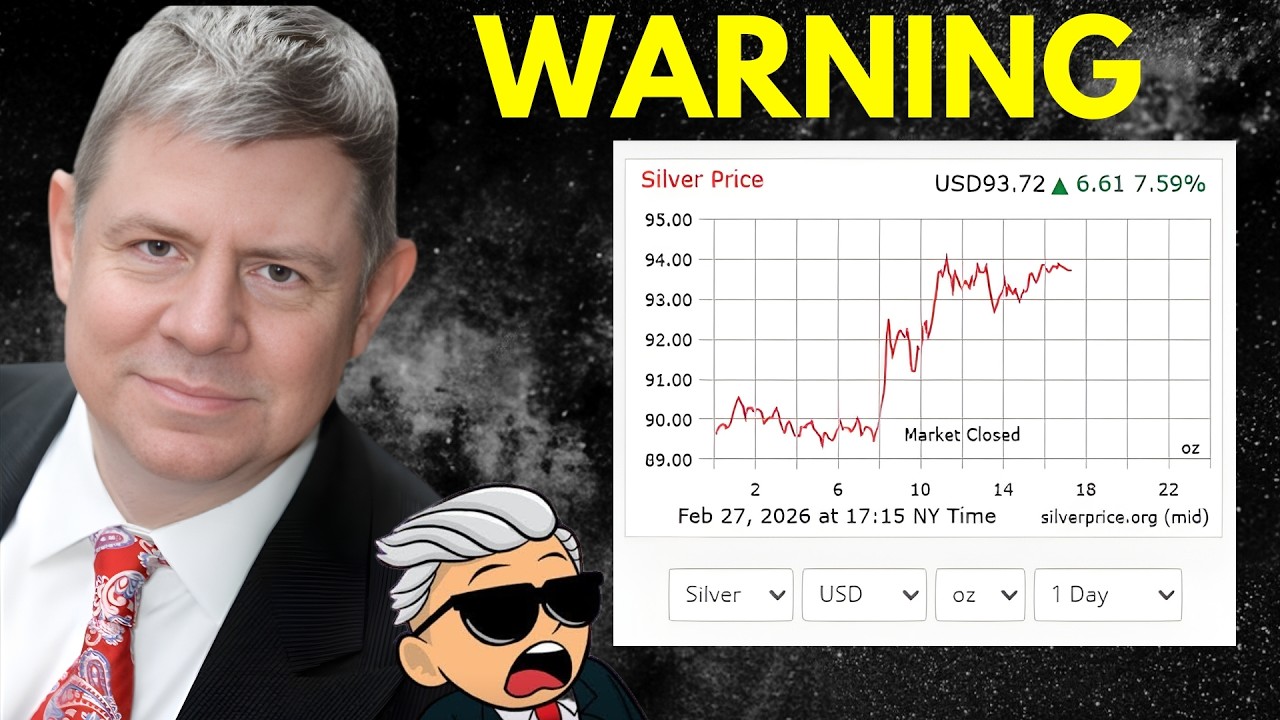
Clem Chambers presents as a market commentator and public-facing investor-analyst who focuses on macro markets, metals, crypto, and broad asset flows. Across the supplied material, he speaks in a fast, high-conviction style and emphasizes liquidity, regime shifts, and how official policy can overwhelm normal price discovery. He is also active through his own website/Substack and X account, which reinforces that his views are part of an ongoing public market commentary platform rather than a one-off interview.
His recurring economic worldview is that markets are heavily shaped, and sometimes effectively stabilized, by U.S. policy makers—especially the Fed and Treasury—through liquidity creation and balance-sheet expansion. He tends to see large market moves as a function of money flows, carry, and institutional intervention more than pure fundamentals. That leads him to expect managed or buffered drawdowns, V-shaped recoveries, and asset prices that can stay elevated even amid geopolitical or macro stress. He also appears constructive on metals and periodic boom cycles in speculative assets, but with the bigger theme that policy-driven liquidity is the dominant force behind market behavior.
Every analyzed appearance we have for this speaker, newest first. Open any transcript preview to read the underlying transcript.
Preview:Clem Chambers argues gold and silver are still in a post-bubble correction and likely have more downside before a tradable bottom forms. He frames the move as driven less by ordinary market noise and more by a fading war/Taiwan risk premium, with China and the White House as the key swing factors.
Preview:Clem Chambers argues the market is misreading both AI and geopolitics. His core view is that AI is really a hardware, power, and infrastructure boom—not just LLMs—and that investors should focus on the value chain beneath the models. He also says gold and silver are near a bottom, oil’s move around Iran looks more like an inconvenience than a true shock, and crypto has largely been absorbed into the system and is less compelling as an outsider asset.
Preview:Clem Chambers tells host Ivan that silver and gold's recent rally and subsequent crash are driven primarily by geopolitical war-risk repricing — specifically, the China/Taiwan conflict being "called off" or delayed. Chambers sees silver pausing around $50 (with $40 possible as a deeper floor) and gold around $3,500, at which point he'd consider dollar-cost-averaging back in. He dismisses real-yield/inflation explanations as "rubbish," frames central-bank gold buying as a war-hedge signal, and argues gold's primary use case is as the "currency of last resort" for nations under sanctions (Russia, Iran). The episode is heavy on geopolitical narrative and portfolio-discipline advice, lighter on data or technicals beyond a single psychological-level chart argument.
Preview:Clem Chambers argues the U.S. is at a fork between strategic decline and a forced push for AI, energy, industrial onshoring, and military-industrial competition with China. He frames that choice as inflationary, bullish for hard assets and much of the AI/industrial complex, while warning that passive investors or those buying the ‘give up’ narrative may be left behind.
Preview:Clem Chambers argues the Fed under Trump will be forced into loose money and a "printathon" to fund industrial reshoring, AI buildout, and runaway deficits — regardless of who chairs the Fed. He sees structurally higher inflation (5-9%) for a decade, a strong-but-debasing dollar, and gold near a DCA entry zone (~$3,500/oz bottom). He also flags imminent Iran strike risk as a near-term geopolitical catalyst for gold and oil.
Preview:Clem Chambers argues that the biggest market story is not gold or oil alone but the coming AI/energy/geopolitical race between the U.S. and China. He is bearish near term on gold, bullish on oil and energy, and especially constructive on the parts of the AI supply chain tied to electricity, infrastructure, and reindustrialization.
Preview:Clem Chambers argues that Bitcoin, crypto, and even parts of the broader speculative complex are in a major reset after a retail-to-institutional regime shift. He thinks Bitcoin has likely topped and may fall toward 40,000, possibly lower, while gold could settle around 3,500 after a bubble-like run. He ties the bearish crypto view to Wall Street control, scam/illicit-use crackdowns, and a possible weakening of the original Bitcoin narrative, but he is more constructive on equities and long-term AI-led growth if the U.S. can keep up with China.
Preview:The interview centers on Clem Chambers arguing that precious metals are likely to dip first before a much larger long-run move higher, while also warning that the NASDAQ/AI trade is in the early stages of a bubble. He says silver and gold are still long-term bullish, but near-term price action could be painful and require patience and risk management.
Preview:Clem Chambers, founder of ADVFN.com, argues the obvious AI winners (chips, hyperscalers) are crowded, but overlooked legacy hardware/networking companies like Cisco, Nokia, HP, Dell, and IBM are the next wave of the AI value chain. He believes we're in an AI bubble — possibly early-stage or mid-way — and that the Fed will tolerate 5-7% inflation for years to finance the AI race against China. His strategy: find "dead duck" companies that big enterprises and governments trust to deploy AI infrastructure, and ride the speculative wave while knowing when to exit.
Preview:The video is a bullish-long-term, bearish-short-term discussion of precious metals, especially silver and gold. Clem Chambers argues the explosive silver move is over for now, that stacking on dips makes more sense than expecting an immediate breakout, and that the next big macro force is reindustrialization, higher inflation, and heavy government financing rather than a quick deflationary reset. He also says oil is more of a hedge against Middle East chaos and energy shortages than a pure directional trade.
Preview:Clem Chambers argues the U.S. is in an early bubble phase driven by AI and onshoring capex, with bond yields rising because capital needs are huge and the Fed may tolerate tighter conditions. He prefers cheap, neglected markets and assets tied to the buildout rather than chasing crowded U.S. momentum, while saying gold has mostly peaked and copper is the next major commodity he wants to own.
Preview:Clem Chambers argues that gold is the best real-time signal for how serious the US-China relationship is after private meetings and summit optics. His core view is that gold rises if the closed-door outcome is bad or more dangerous, falls if the talks meaningfully improve stability, and goes sideways if nothing material changed. He links that signal to rare earths, China’s control of refining, and the broader strategic dependence of the West on Chinese supply chains.
Preview:Jeremy Saffern interviews Clem Chambers about U.S.-China tensions, Taiwan, rare earths, gold as a geopolitical signal, and the AI buildout as an inflationary industrial-capex boom. Chambers argues the market is entering a roughly two-year bubble phase driven by reindustrialization, money printing, and shortages in power, copper, and infrastructure.
Preview:Clem Chambers argues that gold and oil are being driven less by the immediate Middle East war than by the bigger U.S.-China strategic conflict, while the current conflict is creating a prolonged “siege” rather than a quick shock. He is cautious on gold and silver after their vertical move, risk-off on exposed oil, and looking for cheaper parts of the AI and industrial supply chain, plus selective non-Middle-East energy and processing bottlenecks.
Preview:Clem Chambers argues that a powerful inflationary boom is building from three forces: government intervention to prevent market stress, a US re-industrialization push, and the AI buildout. He says this is already showing up in semiconductors, energy, copper, nuclear/uranium, and industrial names, while gold remains a strategic war hedge rather than a one-way moonshot. He is bullish on hard assets and skeptical that passive savers will keep up if they are not economically active.
Preview:Clem Chambers argues that the current macro backdrop is too uncertain for active trading, so he prefers a heavily cash-rich posture with selective exposure to assets he thinks are insulated from Middle East risk or tied to special situations. He is skeptical of the idea of a dramatic monetary “reset,” sees money as an evolving accounting system rather than something that will revert to gold, and remains constructive on gold and silver because he expects more inflation from reindustrialization and AI-driven energy demand.
Preview:Clem Chambers argues the world is entering a prolonged high-inflation regime driven by deficit monetization, industrial onshoring, and AI-related capex, which should favor hard assets and some equities while punishing passive holders of cash and long-duration bonds. He also links gold’s behavior to geopolitical war risk, sees oil as supported by supply disruptions and possible OPEC fragmentation, and likes select infrastructure/nuclear beneficiaries such as Nokia and Fluor.
Preview:Clem Chambers argues the market is being artificially supported by liquidity injections and that the resulting move will likely show up first in a few under-owned, tightly held sectors rather than in the broad index. He is constructive on assets that benefit from inflation, re-industrialization, and geopolitical stress, especially gold, silver, rare earths, and some industrial metals, while he is much more cautious on Bitcoin and highly speculative crypto.
Preview:Clem Chambers argues that the market is being supported by US policy-driven liquidity, with the Fed balance sheet turning up again and money flowing into equities through a carry-trade-style plumbing system. He thinks inflation is likely to stay higher than many expect because of energy, supply-chain, and rebuilding/industrial-capacity pressures, and he prefers value, gold, silver, and selective cheap equities over crowded megacaps.
Preview:Clem Chambers argues the recent V-shaped market rebound looks unnatural and may be being supported by money creation, which could feed a fresh inflation wave. He says geopolitical chaos, supply-chain reshoring, higher energy taxes in Europe, and food/commodity pressures all point to higher real prices over time, while he remains cautious on the market and selectively re-entering rather than going all-in.
Preview:Clem Chambers argues the Iran conflict has turned markets into a trading environment, not an investing one, and says he sold out because the situation is too volatile and likely to remain messy for months. He thinks gold/Bitcoin/oil are signaling stress, favors caution, and sees AI/agentic software as the next durable opportunity once volatility settles.
Preview:Clem Chambers argues the market has already shifted into a bear phase and that the Iran/US geopolitical situation is too unpredictable to keep taking risk, so he has gone to 99.5% cash. He says gold, silver, and other military/precious-metals proxies are being sold in a broad risk-off move, but thinks re-entry opportunities may emerge once the situation clarifies.
Preview:Clem Chambers argues the precious-metals trade has already moved too far in gold and silver, and says he is rotating toward platinum, palladium, copper, and select equities. He expects a slow dollar devaluation, more volatility under Trump, and a broader period of “mass disruption” that will favor hard assets and asset-heavy businesses.
Preview:Clem Chambers argues the market is pricing in a longer horizon than the headlines: oil and Bitcoin are the best real-time tellers for the Iran/Hormuz situation, while gold and silver are likely in a slower, sustainable uptrend rather than a near-term spike. He is also downplaying private-credit/PE blowups as smaller, post-COVID liquidity hangovers rather than a 2008-style systemic break.
Preview:Clem Chambers argues the current surge in oil, gold, and related volatility is mostly a short-term liquidity and geopolitical shock, not yet a durable structural regime change. He is bullish on gold as a war hedge, cautious on Bitcoin in this environment, constructive on copper and platinum, and says the AI thesis remains intact despite higher energy costs and market turbulence.
Preview:The video is a silver giveaway plus an interview with Clem Chambers arguing that gold and silver should keep grinding higher because geopolitical risk, especially U.S.-China/Taiwan tensions, is being pushed out rather than eliminated.
Preview:Clem Chambers argues the current market setup is being driven less by a simple AI-deflation story and more by an inflationary AI buildout, rising geopolitical risk, and a coming re-rating of infrastructure, commodities, defense, and energy. He is skeptical of shorting software outright, bullish on selective AI-enablers and hard assets, and thinks Iran-related risk can be monitored through Bitcoin, gold, and oil.
Preview:Clem Chambers argues that silver’s prior surge to around $100 was a classic parabolic move that was meant to be sold into, not chased. He says he has moved much of his precious-metals exposure into other ideas, especially copper, platinum/palladium, uranium, and select stocks that benefit from AI-driven capex and re-industrialization.
Preview:Clem Chambers says he has aggressively sold gold and silver after capturing large gains, arguing that the easy part of the precious-metals move is over and the right move now is to rotate into the next scarcity trade: copper first, then oil. He also thinks AI and electrification will create a huge demand pull for energy, cables, data-center buildouts, nuclear, and related industrial names, while warning that these themes may still need time before the market fully reprices them.
Preview:Clem Chambers argues the silver selloff was a classic bubble bust driven by frothy positioning, not a fundamental change in the broader precious-metals thesis. His core macro view is that gold remains the key signal for a rising China-vs.-America geopolitical conflict, and that any lasting move in silver will ultimately re-sync with gold after the current repricing phase.
Preview:Daryl Thomas interviews Clem Chambers about the violent silver selloff and why he views it as a classic blow-off top rather than a clean fundamental reset. Chambers argues the move was driven by retail FOMO, system stress, and end-of-month positioning, then broadens the thesis to gold as a geopolitical war signal, platinum/palladium as scarce industrial metals tied to combustion engines and remediation, copper as a long-duration shortage trade, and Bitcoin as a flight asset during acute geopolitical stress.
Preview:Clem Chambers argues that the big move in precious metals has been a crowded, near-parabolic trade led by silver, and that silver is now overextended while gold, platinum, palladium, and especially copper still have room to run. He also thinks Bitcoin is entering a multi-year winter, with institutions likely to pressure it lower, while the NASDAQ is in an early bubble phase that could go vertical before eventually crashing.
Preview:Clem Chambers says he sold all his silver because the move has become a classic parabolic blowoff, with FOMO and retail speculation driving prices more than fundamentals. He is rotating into gold, some platinum/palladium, and other perceived under-owned areas like nuclear-power-related stocks.
Preview:Clem Chambers presents a bearish Bitcoin / bullish precious metals thesis framed around geopolitics. He argues that gold and silver are in a structural bull market driven by US-China tensions, sovereign stockpiling, and a "Fortress America" policy stance. Bitcoin, by contrast, has lost its narrative fuel — the flight-capital catalysts (Venezuela, Iran) have faded and no new chaos is driving emergency crypto demand. Chambers sees silver as already in a speculative bubble, gold as grinding higher on central bank buying, and mega-cap tech stocks as dangerously exposed to deglobalization. His personal positioning: heavy precious metals (rotated from silver into gold), platinum/palladium, mining equities, and defense stocks. He is effectively out of crypto and cautious on mainstream equities.
Preview:This interview frames Trump’s Greenland push, Davos, and Western Hemisphere realignment as part of a broader shift toward great-power confrontation, especially with China. The guests argue that gold and silver are signaling geopolitical stress, while the U.S. is trying to reassert control over strategic assets, shipping lanes, and supply chains closer to home.
Preview:Clem Chambers argues silver has much more upside, potentially to 100, 120, or even 200, because gold is the primary strategic asset in an intensifying US-China conflict and silver is the “fast horse” that should amplify gold’s move. He is explicit that this is a probability-based view, not certainty, and repeatedly says people should not buy silver unless they personally understand the downside and can hold through big drawdowns.
Preview:Clem Chambers argues silver still has upside after hitting his prior $80 area, but he is more interested in staying with the trade than timing an exact top. He links the move in silver and gold to central-bank buying, rising geopolitical tension, and an inflationary wave from AI spending and re-industrialization. He also says AI is not a bubble in the meaningful sense because it should drive a step-change in productivity, capital spending, and market leadership.
Preview:Clem Chambers argues that 2026 is the start of a major, inflationary AI-driven economic boom rather than an imminent collapse. He is bullish on copper as the clearest way to play the build-out, remains constructive on precious metals into a possible bubble phase, and is skeptical of crypto, bonds, and the biggest AI stocks at current valuations.
Preview:Clem Chambers argues that the dominant market forces are the U.S.-China AI rivalry and the resulting scramble for energy and commodities, with gold as a barometer for geopolitical tension and silver/platinum/palladium as leveraged beneficiaries. He also makes a broad liquidity-and-money-printing case for why asset prices, especially stocks and hard assets, should stay supported into 2026.
Preview:Clem Chambers, CEO of Online Blockchain PLC and founder of ADVFN.com, joins Wall Street Bullion to discuss the precious metals bull run. He argues gold is "for war" and its breakout signals rising global tensions. Silver follows gold as the "retail version," currently at $72, but he sees $80 as a key repricing level with potential to reach $100. Platinum and palladium have doubled and remain attractive on pollution remediation demand as ICE bans get pushed back. His biggest call: commodities are transitioning from commodities to luxuries, driven by AI's insatiable energy appetite, re-industrialization, and onshoring. Copper is his next target. He warns silver has a history of spike-and-crash patterns but thinks this run has further to go because "gold isn't stopping."
Preview:Clem Chambers argues that the Fed’s return to Treasury buying is effectively renewed money printing, which he thinks will weaken the dollar, fuel inflation, and support gold, silver, and hard commodities. He is extremely bullish on gold and especially silver, and he ties the entire setup to a broader geopolitical split centered on China, Taiwan, and a possible 2027 conflict scenario.
Preview:Clem Chambers (CEO of Online Blockchain plc, founder of ADVFN.com) argues that the US strategic retreat document (framed as a modern Monroe Doctrine) shifts global geopolitical risk onto Europe and allies, forcing nations to self-insure with gold. He sees re-industrialization, AI-driven growth, and inevitable money printing/QE as structural drivers for precious metals, commodities, and hard assets. His practical advice to new investors: dollar-cost-average slowly into precious metals, avoid FOMO leverage, and note that platinum and palladium may offer more runway than silver at current levels.
Preview:Charlotte Mloud interviews Clem Chambers about silver’s breakout, gold’s geopolitical bid, and the broader case for commodities, defense, and onshoring. Chambers argues that government and central-bank buying are the real force behind gold, silver is the retail “fast horse,” and AI/geopolitics will keep pressure on commodities, energy, and domestic chip manufacturing, with Intel as his standout equity idea.
Preview:Clem Chambers argues that the recent liquidity squeeze has resolved as the US government resumed pumping money into the system, setting up a strong year-end rally across assets. His core focus is silver, which has broken above $56 to new all-time highs — he sees the breakout as a high-probability signal for a move to ~$80. He's broadly bullish on gold, commodities (copper, oil, aluminium, nickel), and selected equities, framing them within an AI-driven commodity supercycle. He cautions that the real exit signal will come when bullish media goes silent or when everyone predicts silver at $200–$1,000, not now when caution still dominates.
Preview:Clen Chambers of A New FN discusses Japan's bond yield spike and its implications for global liquidity. He argues the real driver is not Japan but a US liquidity squeeze (depleted reverse repo, banks tapping standing repo facility), and expects the Fed to step in more aggressively. He is structurally bullish on gold (>20% upside, potential $8-10K in worst case) and platinum (supply scarcity at 200 tons/year, AI-driven energy demand), while bearish on Bitcoin (expects crash to $40-60K absent Fed intervention). The interview covers liquidity mechanics, geopolitical risk, Tether's gold strategy, and why precious metals are decoupling from liquidity-driven selloffs.
Preview:Clem Chambers argues gold rises not from inflation or dollar collapse but because it is "the currency of international conflict." He expects geopolitical tension — particularly US-China — to intensify through at least 2027, driving gold higher. He dismisses US default fears (only 30% of US debt is foreign-held), predicts financial repression rather than default, and warns commodities may become "luxuries" as demand multiples outstrip supply percentages. He urges active rather than defensive positioning in sticky times.
Preview:Clem Chambers argues that Bitcoin has lost its edge this cycle, while gold and hard commodities have more upside because governments are buying strategic reserves and global conflict, especially U.S.-China tension, is rising. He is strongly bearish on leverage, skeptical of crypto as a safe anti-system asset, and sees AI-driven capex, nuclear power, copper, aluminum, and rare earths as the next big trade.
Preview:Clem Chambers argues the broad equity market, especially the NASDAQ, is in the early stages of a bubble driven by policy intervention, money creation, and the concentration of gains in big tech. He is bullish on gold as a war asset and says a hot U.S.-China conflict, especially around Taiwan, is the main catalyst that could send gold toward $8,000–$10,000 an ounce. He also says AI is a real, epoch-changing technology, with the U.S. advantaged because English is cheaper to model than Chinese, while Europe is strategically behind and being pulled into rearmament and information war dynamics.
Preview:Clem Chambers argues that gold’s surge is being driven less by consumer inflation fear than by rising geopolitical tension and rearmament. He frames gold as a strategic asset for states in wartime, expects silver to follow as retail money chases gold, and sees platinum/palladium and defense stocks as additional beneficiaries of a world shifting toward cold war, re-industrialization, and AI-led energy demand.
Preview:Clem Chambers argues that the precious metals rally is driven by the escalating US-China conflict and governments globally stockpiling gold as "the currency of international conflict." He frames gold's vertical move as a war signal, not an inflation trade. On silver, he cites the mining ratio: 3,200 tons of gold vs. 25,000 tons of silver — only 8x more — versus an 80:1 price ratio, calling the supply imbalance obvious. He advocates platinum/palladium as the next rotation trade at a fraction of gold's price with only 200 tons annual supply each, and ties the macro picture to America's desperate need to re-industrialize via robotics and AI to compete with China.
Preview:Clem Chambers argues that gold’s move to $4,000, silver’s surge, and even some defense stocks are signaling a world moving toward geopolitical conflict, especially U.S.-China tension. He says the pace is what worries him most: the move feels vertical, like a bubble or a pre-apocalyptic repricing, even though he still thinks the structural backdrop is weaker dollar, reindustrialization, and elevated volatility.
Preview:Clem Chambers argues that the market is moving from a gold-and-Bitcoin phase into a broader hard-assets and industrial-minerals regime driven by geopolitics, AI, and supply-chain security. He is bullish on gold, even more upbeat on silver and platinum group metals, and especially constructive on copper and Intel as expressions of re-industrialization and strategic autonomy; he is also skeptical of Bitcoin/crypto treasury vehicles and thinks a crypto winter is still likely.
Preview:Clem Chambers joins Daniela Cambone and argues that gold's primary use case is as a currency in war — and that central banks are buying it precisely because they're bracing for escalating global conflict. He also outlines an AI-driven economic boom scenario as the optimistic fork in the road, warns that political pressure on the Fed is extremely dangerous, and frames Bitcoin as a "flight capital" asset that spikes ahead of crises while gold follows for the war itself. Silver and platinum/palladium get brief mention as lagging beneficiaries.
Preview:A bullish metals-and-macro interview: Clem Chambers argues gold and silver are rising because the dollar is too strong, the U.S. is trying to reindustrialize, and global conflict plus central-bank behavior are driving demand for hard assets. He is especially constructive on gold, silver, and copper, and frames AI/automation as the deeper structural force that will reshape labor, manufacturing, and commodity demand.
Preview:Clem Chambers argues that the precious-metals rally is being driven by rising geopolitical stress, with gold acting as the “war” asset and Bitcoin as a flight asset. He thinks retail is now joining the move, silver is starting to catch up to gold, and copper is the next major metal to watch because AI and electrification could create a large supply squeeze.
Preview:Clem Chambers argues that gold is being driven mainly by rising geopolitical stress and official-sector buying, not just inflation. He thinks central banks will cut rates, restart QE, and push harder into hard assets, which should support gold, silver, platinum, palladium, copper, and selected ETFs/physical holdings.
Preview:Clem Chambers argues gold's rally is driven by government buying for war preparation — gold is "the currency of war" — not by inflation fears. Silver's recent surge to $41 is a retail catch-up trade as consumers balk at $3,000 gold and buy silver instead. He frames China-US tensions as a structural rearmament cycle, warns of fractured supply chains, and adds a secondary thesis: AI-driven economic growth will create explosive demand for strategic commodities (copper, PGMs, etc.), putting commodity investors at a powerful intersection of conflict disruption and tech demand.
Preview:Clem Chambers argues the market is being propped up by liquidity and policy intervention, while tariffs, geopolitics, and a weakening dollar create a more volatile, inflationary setup. He stays broadly bullish on hard assets—especially gold, silver, platinum, and palladium—and says AI-driven energy demand will explode rather than merely rise, making energy and related commodities strategically important.
Preview:Clem Chambers challenges the sacred cow that US dollar reserve currency status is an unmitigated blessing. He argues it has become an "exorbitant curse" — enabling runaway government spending, hollowing out industry, and forcing massive trade deficits that hemorrhage national wealth. He notes China deliberately avoids reserve status, and that strong economies like Germany and Japan thrive without it. On precious metals, he is extremely bullish on platinum and palladium (only 200 tons mined annually each, critical for AI-driven energy demand and pollution remediation, no substitutes). On gold, he sees the current consolidation as a pause before a move to $4,500, driven by rising global tensions.
Preview:Danny interviews Clem Chambers about geopolitics, gold, silver, platinum group metals, the dollar, and what markets may be signaling about Trump-era policy. Chambers argues gold is acting like a geopolitical warning light, silver and platinum group metals are still underappreciated catch-up trades, and the next big market shock is likely to come from further White House-instigated escalation, especially around China/Taiwan and industrial reshoring.
Preview:Clem Chambers argues the market is being driven by geopolitics, tariffs, and reserve-currency dynamics more than by traditional fundamentals. He thinks gold is in an equilibrium range around 3,500 for now, but could jump to 5,000 if global tension escalates; Bitcoin is a flight asset and platinum/palladium are his favorite year-end opportunities because supply is tiny versus potential demand.
Preview:Clem Chambers argues gold's rally is driven by governments stockpiling for potential war, not inflation fears. He frames gold as geopolitical insurance: more global tension → more sovereign buying → higher prices. Silver follows gold but has a tighter supply/demand ratio (~50,000 tons mined vs. gold's 3,200, far less than a 100:1 ratio would imply). Chambers is most bullish on platinum and palladium — only ~200 tons mined annually, huge industrial uses, and with the internal combustion engine no longer going extinct. He sees tariffs as a deglobalization/conflict signal that reinforces the precious metals thesis, and expects the dollar to weaken ~2-3 years out. The interview was hosted by "Bob" (Ivan) on Wall Street Bullion.
Preview:Clem Chambers argues Bitcoin is near a cycle inflection but he is still net bearish in the near term, while gold remains the war hedge and platinum/palladium look more interesting on a supply-scarcity basis. He also says the stock market is being artificially supported, the dollar likely weakens as rates fall, and that elevated inflation may persist.
Preview:Clen Chambers, CEO of Online Blockchain and founder of aNewFN.com, joins ITM Trading's Daniela Koni to discuss his thesis that a $2 trillion private credit bubble is forming, zombie companies are at risk of collapse, and the Fed deserves more credit than critics give it. He is bullish gold, commodities (especially copper), and defense stocks; bearish on the dollar long-term but dismissive of doom-mongering; and sees a potential end-of-bull-market bubble in tech/AI stocks like NVIDIA that could rocket higher before crashing.
Preview:Clem Chambers argues that the current market backdrop is being driven by liquidity, geopolitical conflict, and a lack of supply in certain metals. He thinks Bitcoin has already had its main run and is now more of a geopolitical flight asset than a pure momentum trade, while gold remains a war hedge and platinum/palladium/copper are his preferred ways to express the AI-and-energy demand theme.
Preview:Clem Chambers argues the market is being driven by a durable rise in geopolitical tension, which he thinks favors gold, defense stocks, and especially platinum. He also says private credit looks like a late-cycle, opaque credit bubble with strong echoes of 2007–08, and that zombie companies are being kept alive by easy money and could become a problem if funding costs stay high or rise further.
Preview:Clem Chambers argues the world is moving toward higher geopolitical risk, which makes gold, defense stocks, and some non-U.S. assets the most relevant hedges. He is bearish on the U.S. economy and institutions, skeptical that BRICS can fully replace the dollar, and recommends a diversified wealth-preservation mix rather than all-in gold.
Preview:Clem Chambers, CEO of Online Blockchain PLC, discusses precious metals in an interview format. His core thesis: gold, silver, platinum, and palladium are all undervalued relative to each other based on production volumes — platinum should be $60,000/oz by that logic. He's physically positioned across all four metals. He argues the dollar is structurally too strong and must come down, that massive capital flows from China and Japan out of Treasuries are driving gold and equities higher, and that China already has 1.8x more money than the US. A provocative but loosely-supported conversation mixing metal ratios, currency flows, and geopolitical tension.
Preview:Clem Chambers argues markets are in a state of unprecedented chaos driven by Trump's unpredictability, with the bond market acting as the "senior market" signaling stress. He's positioned defensively in precious metals and UK defense stocks, has largely stayed out of equities since the tariff-driven crash, and believes the dollar is overvalued and set to realign lower. He sees the midterms as the key waypoint and warns that passive buy-and-hold may not work in this environment. His core framework: high volatility creates both high risk and high opportunity for those who can decode the chaos.
Preview:Clem Chambers argues that US stock markets are now manipulated by government intervention — specifically Treasury liquidity injections — rather than functioning as free markets. He points to the unprecedented V-shaped recovery from tariff-induced crash as evidence of a "Treasury put," and positions himself defensively in precious metals with minimal equity exposure. He sees a 60/40 probability favoring a long-term bear market but acknowledges the uncertainty created by deliberate policy unpredictability.
Preview:Clem Chambers argues the market is heading into a serious bear phase driven by White House tariff policy, global trade disruption, and rising geopolitical conflict. He sees gold as a strategic government asset for war/conflict rather than a normal retail hedge, thinks silver is more of a consumer/retail monetary metal, and believes energy, uranium, copper, platinum, and palladium could benefit from an AI-and-rearmament era that will require far more power and industrial inputs.
Preview:Clem Chambers argues the biggest market risk is not just tariffs or inflation but a quiet supply-chain break that could hit U.S. retail within roughly 50-90 days if Chinese imports stop flowing. He thinks that shock could trigger a broader selloff, keep gold strong, and eventually expose how fragile the current “buy the dip” mindset is. He remains constructive on gold, cautious on Bitcoin and crypto, and broadly bearish on equities if the trade war escalates further.
Preview:Clem Chambers argues the market has entered a major crash phase driven by the Trump/Vance policy mix: rapid tariff escalation, aggressive cuts to government spending, and hostile geopolitics that he says amount to a “trifecta of insanity.” He says he has moved heavily to cash, sold most equities, and sees the S&P and other markets as likely much lower from here, with Europe eventually benefiting structurally while gold becomes the key war/instability asset.
Preview:Clem Chambers argues the post–“Liberation Day” tariff shock, combined with DOGE-style fiscal cuts and a more confrontational foreign-policy stance, has created an unusually unstable setup that could drive a very large equity drawdown. He says the market is only partway through repricing and that major U.S. growth names, especially Tesla, could fall far more before a bottom is in.
Preview:Clem Chambers, CEO of Online Blockchain plc, joins Wall Street Bullion to argue that the US stock market crash is driven by the simultaneous intersection of three recessionary forces: Trump's tariffs (a 2-3% consumer tax), DOGE-driven austerity (removing ~$1T from the economy), and deliberate geopolitical destabilization. He sees gold's rally as structurally supported by central bank buying for strategic/war purposes, not speculation. He expects a prolonged bear market lasting at least 18 months to the midterms, with a strong possibility of a 30%+ drawdown, and is positioned all-cash.
Preview:Clem Chambers sees a generational bear market unfolding, driven by a "trifecta of chaos": global tariffs, dismantling of the post-WWII alliance system, and overt territorial threats. He argues the S&P is in the early innings of a crash that could rival 1929 or 2000 in severity. Gold is the only asset he's fully committed to — "gold is for war." He's also bullish on platinum/palladium as war-metal plays, and expects energy, defense, steel, and agriculture stocks to outperform. His core advice: sell down until you can sleep at night.
Preview:Clem Chambers argues that the current move in gold is the start of the last leg of a bigger repricing, with gold likely headed much higher — he repeatedly says $5,000 is possible and frames the move as a warning sign of rising uncertainty, not just a normal rally. He is broadly constructive on gold, cautious to bearish on Bitcoin after its prior parabolic move, and still constructive on parts of the UK equity market as a contrarian value opportunity.
Others tracked across the same asset focus or market thesis.
Unlock every transcript this speaker appears in, compare them with your other followed voices, and ask the agent for the bull, bear, and consensus read in one workspace.
Type a question. Create a free agent to send it and keep the answer linked to this speaker.
Your question is preserved across sign-in.
Free. No card. Takes about a minute.