Her recurring on-show economic worldview is not directly stated in the supplied material, but the episodes she hosts center on a broadly market-aware, macro-oriented lens…
Preview how this speaker shows up across market transcripts. Unlock the full archive, AI chat, and the version personalized to your watchlist, followed channels, and favorite speakers.
Julia La Roche is a finance-media host and interviewer focused on markets, macro, and investing. The transcript context shows her as the moderator of recurring market conversations with investors and strategists, framing episodes around equities, macro risk, Fed policy, and asset allocation. She appears comfortable steering technical discussions and translating them for a broad audience.
Her recurring on-show economic worldview is not directly stated in the supplied material, but the episodes she hosts center on a broadly market-aware, macro-oriented lens: concentration risk in equities, volatility from speculation, inflation/Fed questions, debt and fiscal strain, and geopolitical shocks. The format suggests she is interested in how institutional positioning, policy, and market structure affect everyday investing. Evidence is thin on her own personal economic views, so this should be treated as a host/editorial framing rather than a fully resolved ideology.
Every analyzed appearance we have for this speaker, newest first. Open any transcript preview to read the underlying transcript.
Preview:George Noble argues the global liquidity cycle has turned against risk assets: fiscal deficits, sticky inflation, rising global bond yields, and stronger competition for capital are shrinking excess liquidity. He expects stock performance to become far more dispersed, with energy, gold, copper, healthcare, and select miners outperforming while crowded tech, semis, hyperscalers, and speculative names face growing downside risk.
Preview:Chris Whalen discusses bank earnings divergence (strong trading/IB vs. falling asset yields), warns of ~$4 trillion in bank exposure to private credit/non-bank financial institutions, reiterates his double-digit inflation call driven by refined product shortages, flags housing market parallels to 2005, and explains why the Fed under Kevin Warsh faces an impossible task with a 7% fiscal deficit. He's adding to gold/silver positions on the dip.
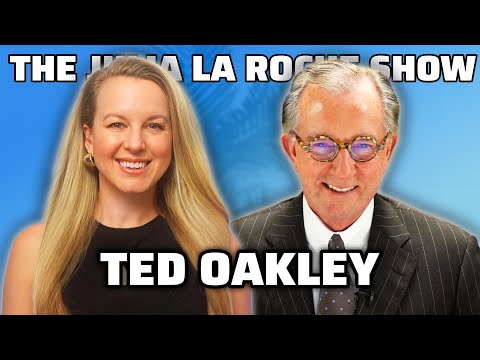
Preview:Ted Oakley argues the market is unusually speculative and vulnerable, with a handful of semiconductor and mega-cap names dominating index performance while leveraged ETFs and single-stock speculation amplify volatility. He thinks a major bear market is likely eventually and could be deep enough to reset valuations by 40% or more, but he also sees pockets of value in energy, gold miners, royalties, and short-duration treasuries.
Preview:Larry McDonald argues the market is rotating out of narrow mega-cap growth and into value, banks, healthcare, energy, and hard assets as deficits, sticky inflation, and geopolitics keep the economy in a stagflationary setup. His most forceful calls were gold to $6,500 over the next couple of years, higher volatility into August/September, and a coming credit crisis driven by data-center leverage, private credit, and commercial real estate.
Preview:Chris Whalen argues the US economy is running hot with 7% deficit-driven GDP, making at least one Fed rate hike before Labor Day likely — and that the White House has already greenlit it. He sees the Iran conflict as intractable, driving oil/product shortages and pushing inflation toward double digits by fall. Diesel is already up 30% YoY. He expects Democrats to take the House in midterms, potentially impeaching Trump, and warns credit spreads are widening as long rates rise even without Fed action.
Preview:DiMartino Booth analyzes the June FOMC minutes under new Fed Chair Kevin Warsh, noting a deliberate shift toward less forward guidance and consensus-building. She flags alarming labor market deterioration — labor force participation at a 50-year low, 720K Americans dropping out in one month — that contradicts the official "stable" narrative. She warns of a "too big to fail" stock market thesis gaining traction, arguing it would mean the end of genuine capitalism. On rates: no hike or cut expected soon; the real story is labor weakness and an increasingly K-shaped economy.
Preview:Michael Every, global strategist at Rabobank, argues the old market playbook is dead — everything from GDP to CPI to central banking is now a subset of "economic statecraft," where national power and security drive outcomes. He contends that one-size-fits-all interest rate policy is incompatible with national security needs, rates will trend structurally higher, and the Strait of Hormuz situation remains unresolved with conflict likely to return after the US midterms. He sees opportunities in sectors tied to national security restructuring but warns that government intervention will cap profit margins in strategic industries.
Preview:Chris Whalen discusses private credit distress (BDCs turning unprofitable, "PICK" signaling insolvency), the gold and silver structural-shortage thesis (endorsing Goldman's $4,900 gold target, noting Chinese silver buying), mixed June payrolls data, housing market regional divergence, Trump's crypto ventures, and answers viewer questions on PennyMac, regional banks (KRE), housing systemic risk, and silver's long-term tech-driven demand case.
Preview:Henrik Zeberg argues the U.S. economy is already rolling over beneath the surface and that a recession call is now structurally in place, even though the market has not yet priced it in. He expects a late-cycle melt-up and sector rotation to continue for a while, but thinks the eventual trigger will be weakening liquidity and declining short-term yields, after which stocks should roll over and bonds should outperform.
Preview:Andrew Pancholi argues that cycle analysis is warning of a more serious turn in US equities than a routine pullback. He says smart money is leaving stocks, he is more bearish than last week, and he is watching the third week of July as a key turning point, while also flagging elevated geopolitical risk, especially around Iran and oil.
Preview:Chris Whalen argues that private credit and housing are both showing late-cycle stress, with rising rates and inflation making the setup worse. He thinks DSCR/business-purpose loans, institutional buying of risky real-estate credit, and higher-for-longer rates are early signs of a housing reset that could show up around 2028. He also says AI stock volatility is being amplified by ETFs and autonomous trading, gold and silver are still long-term bulls but can wobble when rates rise, and Bitcoin/crypto have lost momentum as Wall Street backs away.
Preview:Peter Grandich argues the U.S. market backdrop is far less favorable than the prevailing consensus: he prefers capital preservation over appreciation, is cautious on both equities and bonds, likes gold as a partial hedge, and thinks politics, debt, taxes, and AI-driven labor disruption are all converging into a weaker long-term setup. He favors some exposure to Asia over U.S. stocks, believes the market has become dangerously complacent, and frames the current environment as one where losing less matters more than chasing upside.
Preview:Peter Schiff argues the market is in the late stage of a debt/inflation bubble: crypto and other risk assets are weakening, the bond market is vulnerable, and the Fed will ultimately choose inflation over the painful adjustments needed to stop it. He says higher long rates, rising interest expense, Japan’s debt stress, and a weaker dollar all point toward a repricing of U.S. assets and a much stronger gold/commodity complex.
Preview:Chris Whalen argues the Fed is already behind the curve because long rates and credit conditions have effectively tightened on their own, while the bigger inflation risk is coming from war-related supply shocks and energy/refined-product shortages. He is bullish on Kevin Warsh’s less-chatty Fed style, bearish on AI/speculative equities, and constructive on income assets, precious metals, and select REITs like Annaly and PennyMac.
Preview:Danielle DiMartino Booth reacts very positively to Kevin Warsh’s first Fed appearance, saying he came in with a plan to fix a “broken institution,” cut forward guidance, reduce opaque Fed communication, and rethink data and inflation measurement. Her main caveat is that the Fed still lacks a credible response to liquidity stress and market fragility, and she thinks a stock selloff, widening credit spreads, or credit-market deterioration could force a policy pivot.
Preview:Ted Oakley argues the market is in a late-stage, crowded phase: IPO activity, broad participation, and enthusiasm for a narrow set of winners are all signs of excess. His response is to stay selective, avoid IPOs, and favor fundamentally cheap assets—especially gold, miners, energy, copper, natural gas, and other commodities—because he thinks a commodity-heavy regime is emerging over the next decade.
Preview:Chris Whalen argues the market is already pricing in a serious supply shock from the Persian Gulf, while Washington is not. He says higher rates, a slowing housing market, rising diesel and transport costs, and de facto rationing of key industrial inputs are feeding a broader inflationary wave, even as AI stocks remain the main momentum trade and Bitcoin weakens sharply.
Preview:Michael Howell argues that global liquidity is still high in absolute terms but is slowing in rate of change, which he says marks a late-cycle speculation phase. In that regime, he expects narrower market leadership, higher volatility, stronger commodities, and eventually a more turbulent period as liquidity drains faster and financial assets weaken relative to real assets.
Preview:Chris Whalen argues that banks are benefiting unevenly from a stronger trading business and wide demand for assets, but that the real pressure point is rising rates, private-credit losses, and a more fragile credit cycle. He is bearish on the Fed’s ability to control inflation through rate cuts or hikes alone, expects policy to lose efficacy, and thinks balance-sheet policy matters more than the fed funds rate. He remains constructive on precious metals, cautious on banks with legacy low-coupon securities and private-credit exposure, and worried that housing, lending, and broader growth are being squeezed by higher long-term yields and war-related inflation.
Preview:Chris Whalen argues that war-driven energy disruptions could push U.S. inflation sharply higher, even into double digits, forcing the Fed to shift toward hikes rather than cuts. He also says the regime change in rates, housing, and liquidity will favor asset holders in some areas, but increase volatility and pressure politics, banks, and consumer affordability.
Preview:Ted Oakley argues that Wall Street is being carried by momentum and speculative behavior even as the underlying consumer weakens, with delinquencies and stress showing up well beyond sentiment surveys. His preferred response is to stay liquid, avoid long-duration bonds, and lean into commodity exposure—especially energy—because he thinks energy is under-owned and could see a gold/silver-like scramble higher.
Preview:George Noble argues the macro backdrop has shifted against bonds, broad index exposure, and passive investing, while favoring energy, gold miners, resources, and selective shorts. His core view is that rising oil, rising yields, and fiscal stress are weakening the old ‘buy the dip’ regime and forcing a stock-picker’s market.
Preview:Chris Whalen argues that war-driven energy shocks could push inflation materially higher this year, keep the Fed from cutting, and sustain higher long-end rates. He also sees the Worsh Fed as a regime shift toward tighter reserves, more balance-sheet discipline, and less support for asset inflation, while remaining constructive on silver and cautious on mortgage lenders in a higher-for-longer world.
Preview:Melody Wright argues the U.S. housing market is frozen, not short, with rising delinquencies, investor stress, and stubborn sellers pointing to a drawn-out correction. She expects a first 10%–12% down-leg and ultimately a 35%–50% reset in many markets if prices are to realign with incomes.
Preview:Michael Pinto argues that the U.S. is in a long-running asset bubble regime driven by Federal Reserve balance-sheet expansion and interest-rate suppression, and that the first break will likely come in credit before stocks and real estate. He says the current setup points to stagflation, higher long rates, and eventual large drawdowns in equities and housing if the Fed keeps monetizing deficits.
Preview:Chris Whalen argues that Fed policy is headed for a personnel and regime shake-up under Kevin Warsh, with no near-term rate cuts and a likely move toward scarcer reserves. He is also constructive on gold/silver, skeptical of banks and private credit, and sees Iran-related supply disruptions keeping inflation elevated for the rest of the year.
Preview:Mike Green argues that passive and systematic investing have made markets increasingly inelastic, creating conditions where sharp discontinuous crashes become more likely as passive share rises. He ties the rise of passive flows to retirement-system design, argues today’s market valuations are heavily flow- and margin-supported, and says the larger social effect is asset hoarding that hurts younger generations.
Preview:Rick Rule argues the Gulf conflict is an immediate oil shock that has not fully hit yet, with much of the market move still anticipatory. He sees near-term pressure on the economy, a temporarily stronger dollar, gold potentially sideways-to-lower in the very short run, but remains structurally bullish on gold, uranium, and commodity shortages over the next decade.
Preview:Chris Whalen argues Powell’s decision to remain on the Fed board is politically significant because it blocks Trump from a second appointment and preserves the current Fed structure. The interview then broadens into a bearish view on inflation, a bullish stance on precious metals, and a call that distressed real estate is becoming more attractive as delinquencies rise.
Preview:Danielle DiMartino Booth argues Powell’s decision to stay on as governor protects Fed independence and improves his legacy, while still criticizing the Fed for not cutting rates enough given labor weakness, credit stress, and rising recession/liquidity risks.
Preview:Chris Whalen argues the DOJ dropping the Powell probe clears the way for Kevin Warsh, whom he sees as the hawkish, structurally more conservative Fed choice. He remains bearish on the policy backdrop: energy-driven inflation, limited room for rate cuts, and rising credit stress, with private credit, AI capex, and weaker airlines as symptoms of a broader credit-cycle problem.
Preview:Dr. Mark Thornton argues the economy remains in a long Fed-distorted boom, with asset owners benefiting while wage earners lose purchasing power. He expects gold, silver, and the broader commodity complex to make new highs, though he sees near-term volatility from oil, war, and shifting Fed rhetoric.
Preview:Chris Whalen argued that the market’s rebound on Iran/Strait of Hormuz headlines is real but does not erase the inflation shock already embedded in supply chains, energy, and Treasury pricing. He was constructive on equities and precious metals as inflation hedges, but warned that higher-for-longer rates, commercial real estate stress, and private credit losses remain important risks.
Preview:Michael Howell argues that global liquidity is rolling over, even though markets and the real economy still look stronger than the media narrative implies. He expects a late-cycle shift from speculation toward turbulence, favoring more defensive positioning, shorter duration, cash, and select hard assets over riskier cyclicals.
Preview:Chris Whalen argues the Iran conflict lacks a clear U.S. endgame, which makes the U.S. the likely loser strategically even if it can still pressure Tehran. He remains constructive on gold and silver, skeptical on banks and oil at current levels, and thinks U.S. housing has likely peaked for this cycle with flat-to-down prices and weaker mortgage volumes ahead.
Preview:Danielle DiMartino Booth argues the Fed is ignoring clear signs of labor-market weakness, bad data quality, and household strain. She thinks the committee is more divided, a rate cut should be easier under better leadership, and private credit/liquidity risks are compounding the slowdown.
Preview:Henrik Zeberg argues the economy is deteriorating beneath the surface, but not enough yet to justify a major market top. He thinks the Nasdaq can still rally sharply—potentially 30%+—before a more serious downturn, and he sees private credit as the next major credit-system fault line.
Preview:Chris Whalen argues the Fed should stay on hold because it cannot fix war-driven inflation, while the bigger risk is energy-driven dislocation feeding into rates, credit, and Treasury-market stress.
Preview:Brent Johnson argues that the market is no longer driven primarily by economics, but by power, security, and geopolitical alignment. He frames the current environment as a fourth-turning style transition, says uncertainty is high, and favors capital preservation, gold, cash/T-bills, and a large US-equity tilt while avoiding overly certain bearish or bullish narratives.
Preview:Larry McDonald argues the market is shifting into a stagflationary, hard-asset regime, with private credit functioning as this cycle’s subprime, energy shocks worsening growth, and money rotating out of Mag 7/growth into financials, commodities, and gold-related assets.
Preview:Chris Whalen argues the Iran war is creating a broader inflation-and-growth shock that will force the Fed to cut rates sooner than the market expects, even if headline inflation is temporarily hotter. He thinks the bigger issue is not just oil, but disrupted Gulf inputs, weaker Treasury demand, a rising term premium, and a shifting market regime that favors cash, cash flow, gold, and selected energy over long-duration risk assets.
Preview:Jeffrey Gundlach argues the macro regime has changed: U.S. debt and deficits are forcing higher long-term rates even into weakness, making capital preservation the right posture. He is strongly bearish on private credit, skeptical of long-duration Treasuries, constructive on foreign assets and gold, and expects the next stress to show up through credit, liquidity, and fiscal pressure rather than a clean recession playbook.
Preview:Chris Whalen argues that private credit has become a low-quality, fee-driven business model now inflicting reputational and potential financial damage on banks, sponsors, and retail-facing funds. He also says Trump mishandled the Fed politically, worsening the odds of getting a successor for Powell, while the Iran conflict, high oil, and sticky inflation complicate the macro backdrop.
Preview:Peter Schiff argues the U.S. is heading into a worse-than-1970s stagflationary inflation shock, with recession, rising debt, and war-driven energy costs trapping the Fed. His preferred defenses are gold, silver, energy stocks, foreign stocks, and avoiding overexposed U.S. assets and home purchases at current rates.
Preview:Chris Whalen argues that private credit is the start of a long, painful unwind rather than an immediate systemic crisis, with banks, BDCs, and off-balance-sheet structures likely to absorb losses over time. He also thinks credit stress, housing weakness, and higher oil prices are building into a broader financial slowdown, even if markets have not fully reacted yet.
Preview:Louis Gave argues that the biggest market risk is an energy shock, not an immediate US recession: he sees oil as more likely to move toward $120-$150 than collapse, with spillovers that hurt allies more than the US. He is bearish US dollars and Treasuries, prefers energy and precious metals as portfolio hedges, and sees China as undervalued, increasingly self-sufficient, and likely to benefit from a stronger renminbi over time.
Preview:David Woo argues the market is underpricing a longer, messier Iran conflict and overpricing a quick Trump ‘taco’ or rapid regime-collapse outcome. He thinks oil is the main transmission mechanism, with the current move still being treated mainly as an inflation shock rather than a growth shock, while the deeper geopolitical story is the US-China contest over Iran and the Strait of Hormuz.
Preview:Chris Whalen argues the current environment is a classic risk-off setup that could culminate in a broader financial crisis, driven less by traditional bank lending than by private credit, private equity, and related opaque non-bank exposures. He is bearish on financials, cautious on housing, constructive on gold and silver, and skeptical that regulators or the Trump administration are prepared for the scale of the coming contagion.
Preview:Chris Whalen argues that private credit is unraveling, liquidity is becoming the dominant market theme, consumer credit is starting to crack, and precious metals—especially silver—are in a long-term secular uptrend as pricing power shifts away from Western exchanges.
Preview:Bill Fleckenstein argues the post-2008 market is structurally different because QE plus passive index flows distort price discovery, mute drawdowns, and make shorts harder. He is bullish on gold as a monetary and confidence hedge, cautious on silver at current levels, and still sitting on significant cash while selectively considering energy and some value/old-economy names.
Preview:Chris Whalen argues that private credit and private equity are structurally riskier, less transparent, and increasingly being sold to retail investors in ways that will likely end badly, with Blue Owl’s reported redemption issues treated as an early warning sign. He also sees a meaningful policy shift in mortgage regulation, is constructive on silver/gold, and thinks the midterm/presidential politics narrative is being oversimplified by the media.
Preview:Danielle DiMartino Booth argues that the U.S. is already in a labor-market recession that the Fed and officials are understating. She says unemployment perception, layoff headlines, delinquencies, and alternative data all point weaker than the official narrative, while AI and fragile household finances may deepen the damage.
Preview:Ted Oakley argues the market is in a late-cycle, highly leveraged regime where headline indexes can still make new highs, but drawdowns can also get sharp and fast. He favors liquidity, short-duration Treasuries, and hard assets—especially gold, miners, energy, and other commodity-linked names—while warning that many expensive growth and private-market assets are vulnerable if the market turns.
Preview:Chris Whalen argues that the market has shifted from last year’s exuberant, AI-and-crypto-led momentum into a risk-off rotation toward safer, income-producing assets. He sees the selloff in large-cap tech, crypto, fintech, and even some banks as part of a broader unwind of overextended narratives rather than a simple healthy correction.
Preview:Warren Pies argues the market backdrop is still bullish: a Goldilocks first half, with deficits, earnings, and growth reaccelerating while inflation stays contained and rates drift lower. He thinks AI is creating both a capex boom and a software disruption scare, but sees the equity bull market as intact because buybacks, margins, and market rotation are not yet deteriorating enough to break the trend.
Preview:Chris Whalen argues that the market’s speculative phase has largely ended and the setup has shifted toward preservation, cash flow, and defensive positioning. He sees recent pullbacks in crypto, metals, banks, and AI as evidence that last year’s “aspiration” trade ran out of runway, and he warns that policy attempts to force lower mortgage rates or shrink the Fed balance sheet could break funding markets rather than fix affordability.
Preview:George Noble argues that a broad “debasement trade” is underway: fiscal deficits, sticky inflation, weaker fiat currencies, and policy excess are pushing investors toward gold, miners, energy, and foreign markets while pressuring long-duration bonds and the biggest U.S. tech stocks. He sees 2026 as a rotation year rather than a passive-index year, with gold and precious-metals miners still early in a bigger secular move.
Preview:Alex Gurevich argues the market is underpricing a return to very low U.S. rates, possibly even zero, because the key risk is a slow and not-yet-obvious labor market deterioration. He sees the current setup as mixed on growth and inflation, but increasingly deflationary under the surface, with AI and productivity potentially weakening jobs before policymakers react.
Preview:Chris Whalen argues that Kevin Warsh as Fed chair would be a hawkish, deficit-focused choice: supportive of limited rate cuts, more hostile to balance-sheet expansion, and more willing than Powell to pressure Congress over fiscal deficits and inflation. He also says gold and silver are in a strong secular bull market but due for a tactical pullback, banks are becoming less attractive as credit and private-market losses surface, and private credit/private equity look like a growing source of hidden risk.
Preview:Danielle DiMartino Booth argues Powell acted politically by refusing to cut rates and is making policy errors that favor the administration narrative over the labor-market evidence. The interview centers on the FOMC decision, Powell’s future, and Booth’s view that the Fed is behind the curve on employment, while she also discusses hidden weakness in consumer stress, buy-now-pay-later usage, and a rotation toward defensive assets like utilities and precious metals.
Preview:Chris Whalen argues that housing is already weakening in the hottest markets and that the Trump administration will try to support demand rather than meaningfully improve affordability. He expects one or two rate cuts, a temporary boost in refinancings and volumes, but not a real fix unless home prices fall substantially—something he thinks is likely over time despite political resistance. He is similarly constructive on gold and cautious on the dollar, while skeptical of stablecoins and upbeat about industrial loan company approvals as competition for big banks.
Preview:Jim Rickards argues that Trump’s economic program is a deliberate, highly structured ‘playbook’ rather than chaos, centered on fiscal discipline, growth, and energy expansion. He says the key market debate is not a broad ‘debasement trade’ in Treasuries and the dollar, but a deeper monetary plumbing problem: global dollar scarcity, shrinking bank balance sheets, tighter collateral conditions, and increasing demand for safe assets like Treasury bills and gold.
Preview:Rick Rule argues the macro backdrop remains supportive for gold and silver because fiat purchasing power is still being eroded, government debts and unfunded liabilities are unsustainable, and real rates are still too low versus inflation. He says gold likely has more room to run, but 2025 already captured much of the “coiled spring” move, so future upside should be more volatile and less explosive. The most notable portfolio action he disclosed was selling 80% of his physical silver after the move, then rotating part of that capital into silver miners and part into physical gold.
Preview:Chris Whalen argues that housing, banks, private credit, and Fed policy are all being distorted by politics and balance-sheet constraints. His core warning is that private credit and private-equity lending are a hidden banking-system risk, while housing affordability will not truly improve until prices are allowed to fall. He also thinks the Fed is likely to remain politicized, gold is the cleaner monetary hedge than silver, and banks look okay on the surface but may face losses later in 2026.
Preview:Peter Boockvar argues that 2026 is likely to be defined by a broadening market rotation away from the crowded AI mega-cap trade and toward underowned real assets and value sectors. He is constructive on energy, agriculture, consumer staples, gold, and certain non-US markets, while remaining bearish on long-duration sovereign bonds and cautious on the durability of AI-related capital spending.
Preview:Jim Rogers argues the U.S. economy and stock market have run unusually long, making him cautious and fully out of U.S. equities, but he says the market is not yet a full bubble. He remains constructive on gold, silver, and some non-U.S. exposures, especially China and Uzbekistan, mainly as protection against debt, money printing, and eventual policy stress.
Preview:Chris Whalen argues that Trump’s housing rhetoric is mostly populist politics and that government intervention in mortgage bonds is not the solution to affordability. He is more constructive on cheap financials and some metals, while warning that long-term rates, deficits, and policy confusion are the real market risks.
Preview:David Woo argues that 2026 is defined by Trump’s need to offset weak approval and midterm risk through affordability-driven policy: cheaper oil, possible tariff rebates, and likely easier fiscal/monetary conditions. He ties the Venezuela move to a broader geopolitical reset, saying it signals the U.S. is willing to take resources directly, which he sees as bullish gold, bearish emerging markets, and supportive of defense spending. He also flags the AI capex boom as the biggest market risk if the bubble cracks.
Preview:Henrik Zeberg argues the U.S. economy is already deteriorating beneath a still-rising stock market, and he sees the current rally as a late-stage blowoff top rather than proof of health. He expects the next phase to feature recession risk, a stronger dollar, lower inflation, and eventually a damaging policy response from the Fed that could worsen the downturn and push the system toward stagflation.
Preview:Chris Whalen argues that 2026 could be a rough year for credit, housing, private equity, and parts of leveraged finance after a long period of Fed-driven asset inflation. He is constructive on gold, silver, and select financials, but sees rising defaults, fraud, and valuation resets as the dominant risks.
Preview:Peter Grandich argues the U.S. is entering a dangerous, structurally weaker period marked by debt overload, political division, social strain, and a deteriorating middle class, which makes him more focused on capital preservation than chasing upside. He remains bullish on gold, silver, and select mining stocks, sees oil as still undervalued, and warns that passive funds, dark pools, AI/automation, and a fragile social fabric could amplify market and societal instability.
Preview:Carol Roth joins Julia La Roche to discuss America's broken fiscal foundation (debt/GDP >120%, deficits ~6% in non-recession), the K-shaped economy, and why inflation is the likely release valve. She argues the Fed has lost control of the long end of the curve, fiscal dominance now drives markets, and gold/precious metals remain the essential hedge. Roth is bearish on political will to fix the debt, sees Europe becoming irrelevant, and expects a chaotic 2026 with an unconventional Fed chair pick and possible gold revaluation.
Preview:Chris Whalen argues for a much smaller, more decentralized Federal Reserve whose only mandate should be the soundness of the dollar. He says the current Fed has drifted into economic management, political mission creep, and housing-market distortion, while Trump-era talk about rates is itself pushing bond yields up.
Preview:Peter Schiff argues the real crash ahead is not equities but the dollar itself: a coming inflationary depression driven by persistent deficits, QE, and weak confidence in U.S. fiscal policy. He says gold and silver are signaling that loss of confidence already, while the U.S. stock market can remain inflated in nominal terms even as it loses value against hard assets.
Preview:Mike Green argues that the U.S. has a large, underrecognized “valley of death” between official poverty and actual family self-sufficiency, driven by benefit cliffs, child care costs, housing, taxes, and a tax code that he says is less progressive than people think. He says this is fueling resentment, declining fertility, political backlash, and a broader affordability crisis, while passive investing is simultaneously pushing markets higher in a way he thinks is structurally unsound.
Preview:Chris Whalen argues the Fed is fragmented and will likely stay cautious, with only modest further cuts and a balance sheet policy aimed more at liquidity management than renewed QE. His bigger concern is not CPI alone but the knock-on effects of cheap credit: falling home prices, pressure in commercial real estate, and a hidden 2026 risk in private equity/private credit and bank lending to non-depository financial institutions.
Preview:Melody Wright argues the U.S. housing market is not suffering from a true unit shortage but from a long-distorted affordability crisis that is now unwinding. She says housing has been frozen for years, the middle class has been priced out, institutions are already net sellers, and the correction could be large enough to bring median home prices back in line with median household income — roughly a 38% decline overall, with some markets worse.
Preview:Julia La Roche interviews Danielle DiMartino Booth about the December 2025 FOMC meeting, Fed liquidity operations, and Booth’s open letter arguing the Fed should reclaim independence from political pressure. Booth says markets are misreading the Fed’s balance-sheet actions as renewed QE, and argues the central bank is really trying to manage reserves and plumbing. She also makes a larger case that Fed policy has widened inequality, inflated assets for the top 10%, and contributed to wage pressure, weak labor conditions, and broader social strain.
Preview:Chris Whalen argues the Fed is political, not truly independent, and expects Kevin Hassett to become chair and deliver gradual rate cuts that help lower mortgage rates ahead of the midterms. He is broadly constructive on the economy and financials, but sees continued stress in commercial real estate and private credit as the main pockets of risk.
Preview:Hugh Hendry argues for a four-quadrant portfolio framework and uses it to justify being long Japanese equities, long long-duration US Treasuries, and long Bitcoin, while holding cash and some FX views. His core macro view is that the biggest risk/opportunity is not just rates or central bank reserves, but a coming social and labor-market shock from AI, robotics, and already-fragile sentiment that could ultimately force policy responses and reshape asset prices.
Preview:Dr. Mark Thornton argues that the Fed, central banks, and years of low rates have created a broad, elongated asset bubble that now spans stocks, housing, private equity, AI/data centers, and precious metals. He sees the current setup as the next phase of an artificial boom-bust cycle, with rate cuts, debt rollover, and political pressure likely to extend the imbalance before it eventually breaks.
Preview:Professor Steve Hanke warns that money supply growth is accelerating (~4.5% YoY), and with the Fed ending quantitative tightening in December plus the removal of the supplementary leverage ratio (unlocking ~$2.6T in bank lending capacity), there is a "yellow light flashing" risk of reigniting asset bubbles and inflation. He notes his bubble detector is at an all-time high, sees gold in a secular bull market with a $6,000/oz target, and is "on the fence" about recession odds — labor weakening argues for slowdown, but money supply acceleration could keep the economy humming. He is deeply critical of the Fed's data-dependent, neo-Keynesian approach that ignores the money supply entirely.
Preview:Larry McDonald argues a credit crisis has already started under the surface, with multiple seemingly “idiosyncratic” blowups in private credit, REITs, data-center finance, and software lending now looking systemic rather than isolated. He is also bearish on Nvidia and other mega-cap growth leaders because of extreme concentration, valuation, passive flows, and looming tax-loss selling, while preferring value, hard assets, silver, copper, coal, and natural gas as capital rotates away from crowded growth trades.
Preview:Chris Whalen argues the biggest near-term market risk is still a year-end liquidity squeeze driven by Treasury cash issuance draining the banking system, not the Fed funds rate itself. He thinks the Fed is posturing around cuts, but the real pressure point is repo and money markets, with banks likely to pull back after Thanksgiving and year-end risk-taking to shrink.
Preview:Danielle DiMartino Booth argues the Fed is deeply divided and willfully ignoring abundant real-time labor market data to avoid cutting rates in December, driven by politics rather than economics. She warns that refusing to cut opens the door to an intra-meeting emergency cut if liquidity dries up, and frames the broader backdrop as a K-shaped economy where AI-driven job destruction, rampant speculation in Bitcoin and tech, and income inequality risk a historic reckoning.
Preview:Brian Hirschmann argues that the U.S. is entering a debt-and-inflation crisis that will hit stocks, housing, and bonds together, while gold and select gold miners should benefit. He says policy bailouts are running out of room, Treasury bonds are poor, and gold is the best hedge against the coming regime.
Preview:Chris Whalen argues the market is shifting from simple profit-taking into a more fragile liquidity regime, with Treasury cash flows, repo markets, and the Fed’s balance sheet now more important than the fed funds target. He sees a real risk of 2018-style money-market stress, is skeptical of Bitcoin and private credit, constructive on gold and select miners, and expects mortgage rates to stay above 6% for now.
Preview:James Lavish argues that the key macro issue right now is not just Fed policy, but the interaction between persistent inflation, weak-ish labor data, Treasury issuance, and the Treasury General Account (TGA), which is temporarily draining liquidity. He says the shutdown has left nearly $1 trillion trapped in the TGA, tightening financial conditions, and warns that when it is spent back out, liquidity could rise materially without that meaning prosperity—just dollar debasement.
Preview:Ed Dowd argues the U.S. is already in a technical recession, the AI-led stock market is a narrow bubble, and the next major moves are lower yields, a stronger dollar, falling oil, and eventually a deflation scare that forces Fed easing and possibly QE. He also sees China as a major deflation export story and thinks housing, credit, and employment weakness are broadening beneath the surface even as headline indices remain near highs.
Preview:Chris Whalen argues that markets are running out of buyers after a long run-up, with stocks, gold, and crypto all showing fading momentum. He ties the macro picture to inflation, housing affordability, Fed policy, and a growing stress cycle in older assets, private credit, and parts of commercial real estate. His favored expression of the theme is gold, plus selective junior miners, while he is skeptical of crypto and stablecoins and worries about New York City’s business future under Mamdani.
Preview:Whitney Tilson argues New York City is still fundamentally strong despite Zohran Mamdani’s win, and he expects a moderate outcome rather than an extreme one. He is bullish on NYC’s long-term resilience, cautious but constructive on stocks overall, and names Berkshire, Amazon, Joby, and Global Payments as favorites while warning against Palantir, AppLovin, several China frauds, Signet, and Hims.
Preview:Dr. Gary Shilling estimates a ~60% probability the US is already in or near a recession, citing weakening labor markets, stagnant hiring, and cautious businesses. He argues financial markets have not yet priced in this weakness and expects a rude awakening. He remains long dollar and Treasuries (risk-off), sees no major economy-wide bubble, is agnostic on gold, and worries about the "debt bomb" of unchecked government borrowing — though he praises the US economy's adaptability to shocks like tariffs.
Preview:Danielle DiMartino Booth argues the Fed’s post-FOMC tone was unusually hawkish given weakening labor-market data, and she reads the December rate-cut outlook as genuinely in doubt. Her core view is that the Fed cannot credibly claim to be data dependent while ignoring layoffs, softer inflation, weaker housing, and rising signs of recession.
Preview:Michael Pento argues that the U.S. is living inside three concurrent bubbles—equities, credit, and real estate—and that the Fed’s rate cuts and end to QT are prolonging the distortion rather than fixing it. He remains net long for now because his process is designed to ride the bubble while watching for signs of credit stress, but he says the eventual unwind could be longer and uglier than 2008 if higher long-bond yields and stagflation collide.
Preview:Jim Bianco argues the Fed is likely making a policy mistake by cutting rates into an economy where markets are already at all-time highs and labor demand may be broadly in balance once you account for much lower population growth. He thinks tariffs and remote work are keeping inflation sticky, while aggressive easing risks repeating a 2024-style rise in long-term yields. He is bullish on the market’s momentum near term, but warns that the combination of passive inflows, retail buying, and AI-style crowding can create mispricing and bubbles.
Preview:David Woo argues the market is underpricing a coming stagflationary slowdown in the US while overpricing the durability of the AI/Nasdaq rally. His central call is that the US-China conflict has shifted from trade to technology, China is now in a relatively stronger position, and the near-term setup into November 1 is bearish for equities if the rare-earth/export confrontation escalates and mega-cap AI capex guidance disappoints.
Preview:Lawrence Lepard (author of "The Big Print") argues the monetary debasement trade has gone mainstream. Gold broke from $3,400 to $4,200 and silver hit $52 — new all-time highs. He sees imminent fiscal dominance: Powell's departure in May 2026, Trump's pressure for lower rates, and $1.2T annualized interest forcing a "big print." Bitcoin is lagging but will "crush it" based on historical lag-then-surge patterns. Lepard views this decade as "the 1970s on steroids" — stagflation with structurally higher inflation. He advises owning unprintable assets (gold, silver, Bitcoin, mining stocks). Bonds are "death in a currency event." His long-term vision: Michael Saylor as president in 2032 restoring a sound-money standard.
Preview:Tommy Thornton argues the market is in a blow-off top marked by extreme leverage, crowded positioning, and retail/speculative complacency. He says short sellers have largely been squeezed out, passive and options activity have distorted market mechanics, and a correction could be more dangerous because there may be less natural selling support when things turn.
Preview:Danielle DiMartino Booth discusses the Fed's hawkish September minutes (some members opposed any rate cut), the government shutdown's impact on labor data and the October FOMC meeting, and the Fed's quiet reclassification of ~$300B in loans into non-depository financial institution (NDFI) lending — a move she and her Bloomberg chat community see as potentially systemic. She connects this to the First Brands/Enron parallel raised by Jim Chanos, warns gold has become a momentum play, and highlights youth unemployment at 1988 levels — but now due to lack of demand, not excess supply.
Preview:Chris Whalen argues gold is in the early innings of a structural bull market driven by massive underallocation among US investors (below 1% of AUM), central bank diversification away from dollars, and constrained supply. He gives a gold price target of over $5,000 by end of 2026, sees the economy as "roaring" for the top two-thirds but brutal for lower-income households, and criticizes the Fed for over-easing and distorting housing. The conversation covers gold vs. dollar dynamics, Fed policy errors, New York City politics, and the government shutdown's potential to enable Trump's workforce reduction agenda.
Preview:Henrik Zeberg argues the economy has already rolled over beneath a still-rising market and that the NASDAQ/crypto rally is a late-cycle blow-off, not confirmation of health. He sees a recessionary breakdown ahead, followed by a deflationary bust and then a later inflationary/stagflationary response from central banks, with gold likely volatile and the dollar eventually stronger in the bust phase.
Preview:Axel Merk, CIO of Merc Investments, discusses the macro case for gold and gold miners, arguing that persistent fiscal irresponsibility and Fed micromanagement are eroding faith in the dollar. He sees the shift of these concerns from fringe to mainstream as a durable driver of gold demand. On gold miners, he explains the sector's structure—majors vs. juniors vs. developers—and highlights that junior miners haven't yet had the explosive rally history suggests could follow. He emphasizes discipline in the sector (ounce-in-the-ground valued conservatively), the importance of management quality, and why active management matters given extreme dispersion of returns. He also touches silver's dual industrial/monetary nature, warns of correction risk after gold's run, and stresses having an investment process.
Preview:Michael Howell argues the global liquidity cycle is late and near a top, with the next phase likely more difficult for risk assets as repo/bond-market stress, refinancing needs, and a smaller Fed balance sheet start to matter. He says the setup is still broadly following a normal liquidity cycle, but the endgame now matters more than the upside, with gold, Bitcoin, and select commodities as the main beneficiaries of monetary inflation and geopolitically driven de-dollarization.
Preview:Chris Whalen argues the Fed is late, but that further cuts will only partly help: mortgage rates may ease and lenders may get a short-term volume boost, yet the core housing problem is a supply/affordability crisis caused by years of low rates and overbuilding in some regions. He also thinks the market should expect more pressure on the dollar and Treasuries, while his preferred long position remains gold, with silver and select miners as added plays.
Preview:Danielle DiMartino Booth argues the Fed chose institutional independence over the economy with its 25bp cut — effectively a compromise that produced zero dissents at the cost of meaningful action. She contends the US is already in a double-dip recession (Q2 2024 and again now), evidenced by net job losses since April, a typo-masked rise in continuing claims, and CEO surveys showing hiring freezes with AI-driven cost-cutting. The Fed put is dead, she argues, because going to zero bound would strip $70B per 50bp from retiree interest income, triggering a sell-off by the over-70 cohort that owns 40% of equities — stress-testing passive flows for the first time in history.
Preview:Chris Whalen, chairman of Whalen Global Advisors, makes a clear risk-off call: he's taken profits after a 30%+ YTD run, sees the April rebound as exhausted, and warns of multiple converging risks — a potential Treasury market crisis, a messy Trump administration with competing personalities, uncertainty around the Supreme Court tariff ruling, and structural dollar decline. He sees gold's rally as a secular shift where gold is displacing the dollar as the primary reserve asset. On the Fed, he thinks a single quarter-point cut is neutral-to-positive but warns that a half-point cut would signal recession. He flags hidden commercial real estate stress, distortions in consumer credit data, and the risk of a housing price blowoff. His core advice: be cautious, take profits when handed double-digit gains quickly, and wait for the next sell-off as a buying opportunity.
Preview:Ted Oakley argues that U.S. markets and the economy are expensive and fragile, while inflation is likely to stay structurally higher than the Fed’s 2% target. He favors owning hard assets—especially gold and commodities—alongside bonds, and he is skeptical that long-duration bonds offer enough compensation for the risks ahead.
Preview:Melody Wright (M3 Melody Substack) argues the US housing market is in a speculative bubble worse than 2008, driven by investor speculation, short-term rentals, and aggressive intervention that has frozen the market since 2023. The spring/summer 2025 selling season was abysmal — sales at 30-year lows despite 21% population growth. A critical catalyst looms: FHA loan modification programs expire October 1, which she expects will push distressed borrowers over the edge, with meaningful foreclosure impacts by Q1-Q2 2026. New home prices have inverted below existing home prices for the first time since 2012, and builders are slashing prices via incentives. She sees a multi-year correction ahead and advises first-time buyers to stay patient.
Preview:Warren Pies argues the U.S. has shifted from a post-GFC deflation mindset to a post-pandemic debasement regime, driven mainly by fiscal policy rather than the Fed. He expects a near-term rate-cut cycle, thinks core CPI will likely stay above 3% because tariff inflation prevents a clean return to pre-pandemic disinflation, and remains structurally bullish on equities, gold, and Bitcoin, though tactically more cautious on stocks after a strong rally.
Preview:Jim Bianco argues the Fed is making a policy mistake by cutting rates in September while core inflation remains above 3%, mirroring the failed cuts of 2023. He contends the labor market slowdown is a supply problem driven by collapsing immigration and population growth, not weak demand — meaning rate cuts will only reignite inflation and push long-term yields higher. He sees bonds as a viable alternative to stocks and warns that an aging investor base rotating into fixed income could sap the equity rally.
Preview:Peter Grandich argues the U.S. stock market is in a late-stage meltup and is unusually vulnerable to a sharp crash. He says the setup is worse than 1987, 1999, or 2007 because of weak social/political conditions, heavy passive/algorithmic/black-pool trading, debt overload, and a K-shaped economy that leaves many households under pressure while asset owners keep benefiting.
Preview:Chris Whalen argues that a September Fed cut is possible but far from certain, and he places the odds at roughly one in three. He sees abundant liquidity, persistent inflation, and fiscal dominance as the real market backdrop, while remaining constructive on gold, select financials, and some housing-related trades, and skeptical of crypto.
Preview:Marc Faber argues that decades of money printing have created a broad asset-price illusion that will eventually unwind. He is bearish on all paper currencies, expects further weakness in the dollar, thinks rates should not be cut now, and sees precious metals, some resource equities, and select real assets as relatively better shelters if the system deteriorates.
Preview:Anna Wong argues the latest payroll revisions may be signaling a much weaker labor market than Wall Street initially thought, with the possibility that the U.S. is already in a recession that people have not yet recognized. She pairs that caution with a near-term view that inflation may reheat over the next couple of months—more from services than a simple tariff pass-through story—so she does not see a September Fed cut as a sure thing and instead leans to a December cut.
Preview:Danielle DiMartino Booth reacts to a July 2025 FOMC decision where rates were held unchanged but two governors (Bowman and Waller) dissented in favor of cutting. She argues a third dissent was likely avoided only by softening the statement language, and that Powell disrespected the dissenters at the podium. She warns Trump's 300bp rate-cut pressure campaign could backfire catastrophically by driving retirees out of money-market funds and into selling stocks. She contends the US economy is already in recession — citing job-loss revisions, consumer perception data, and falling rents — and that the Fed is misleading the public by calling the labor market "solid."
Preview:Bill Fleckenstein argues the market is being propped up by passive flows and policy games rather than underlying economic strength, while the real macro risk is a coming inflation/debt problem and a potentially weaker dollar. He says the best investor response is to carry more cash, keep precious metals exposure, and be cautious about shorting because passive buying can overwhelm fundamental negatives for long stretches.
Preview:Nick Maggiulli, COO of Ritholtz Wealth Management, presents his six-rung "Wealth Ladder" framework based on net worth ($0–$10K, $10K–$100K, $100K–$1M, $1M–$10M, $10M–$100M, $100M+). He introduces the "0.01% rule" — a marginal spending decision should be less than 0.01% of net worth to be trivial — and maps each wealth level to a spending freedom (grocery → restaurant → travel → house → impact). His core argument: macro forecasting is a distraction; individuals should focus on what they control, namely consistent investing ("just keep buying"), rising income as the primary wealth lever, and recognizing that moving from level four ($1M–$10M) to level five requires entrepreneurship, not just saving. He holds ~95% in income-producing assets with a small Bitcoin/gold allocation, and emphasizes that above level three, unhappiness is rarely solved by more money.
Preview:Henrik Zeberg argues the market is in the late stage of an “everything bubble” and that a blow-off top can still extend higher before a major crash. His core thesis is that liquidity is not solving the real problem because the system is facing a solvency issue, with debt, housing weakness, and a deteriorating labor market eventually forcing a recession and asset repricing.
Preview:Larry McDonald argues the market is moving from complacency into a bond-stress regime: after a sharp rally in high-beta equities and commodities, he is reducing exposure, expects a possible counter-trend dollar bounce, and sees hard assets as the right long-term posture. His core macro call is that heavy post-debt-ceiling Treasury issuance, rising long-end yields abroad, and Washington’s need for financial repression will pressure bonds and support commodities, selected miners, and eventually rate cuts.
Preview:Chris Whalen argues the Fed is late, commercial credit is already under stress, and the combination of the Big Beautiful Bill plus heavy Treasury borrowing will keep inflation and long-end rates elevated. He is bearish on commercial real estate, skeptical of short-term rate cuts, constructive on gold, and thinks New York City rent politics could further damage rent-regulated housing values.
Preview:Meredith Whitney argues the U.S. economy is deeply bifurcated: 52% of households (earning under $70K) are heading into their second self-contained "recession" since COVID stimulus ended, driven by cumulative inflation and impending job losses in hospitality/leisure. Meanwhile, the high-end consumer and stock market hold up. She sees a frozen housing market — seniors aging in place block supply, first-time buyers face high rates and high prices. She warns the long end of the Treasury curve is vulnerable with fewer natural buyers, the Fed is in a stagflationary bind, and she highlights a massively underappreciated $26 trillion cushion in tapable home equity that could keep consumers afloat longer than expected.
Preview:David Rosenberg argues the market has priced away many immediate tail risks, but that this is masking a recession he thinks is already underway. He sees policy uncertainty, weak housing, tight Fed policy, a softening labor market, and a falling dollar as warnings that the economy is weaker than the S&P 500 suggests.
Preview:Luke Gromen argues the fiscal and monetary setup is increasingly untenable: the U.S. and Japan are both cornered in their funding currencies, government bonds are becoming unattractive relative to private liabilities and hard assets, and the likely policy response is some mix of dollar weakness, financial repression, and renewed balance-sheet expansion. He favors gold, Bitcoin, T-bills, and select high-quality corporate bonds over long-duration government debt, and he sees the current complacency in equities and bonds as masking a deeper regime shift.
Preview:Michael Pento, president of Pento Portfolio Strategies, lays out his thesis that the US is heading toward a "grand reconciliation" where credit, stock, and real estate bubbles all pop, triggered by the bond market. He's currently net-long equities but only cautiously — he sees mid-single-digit upside at most, thinks short-term Treasuries are a better risk/reward, and expects the catalyst to be the next recession (likely 2026), when a Fed chair replacement will slash rates to zero and cause long-term yields to spike. His favored hedges are gold, platinum, and eventually silver, framed as beneficiaries of a dollar exodus.
Preview:This FOMC-day interview argues the Fed is too slow and too dismissive of weakening labor and housing data, with Danielle DiMartino Booth saying recession is already here and George Goncalves saying rates are too restrictive and should be cut materially. They see households, small businesses, and the lower-to-middle income consumer as under pressure, while official Fed messaging remains too optimistic about jobs and too vague on the inflation path.
Preview:Rick Rule argues the U.S. is entering a long period of inflationary adjustment driven by unsustainable debt, entitlement promises, and political unwillingness to cut benefits. He says the likely response is not honest default but gradual devaluation of the dollar, which should support gold, later silver, and selective natural-resource equities while making leveraged assets and housing harder to afford.
Preview:Steve Hanke argues the U.S. is entering a high recession-risk period because monetary growth has been too weak since 2022 and Trump-era tariff/regime uncertainty is adding another drag. He says stocks are still in bubble territory, the Fed is looking at the wrong lever if it focuses only on rates, and investors should watch gold, the 10-year yield, the dollar/euro rate, and money supply growth.
Preview:Chris Whalen argues the Fed is unlikely to cut rates this year, that growth will stay weak but not recessionary, and that stocks can still grind higher because there are few alternatives. He sees the real stress in commercial real estate, multifamily, student loans, and post-COVID forbearance roll-offs, which he thinks could produce a quieter subprime-style defaults wave by year-end. His long-run answer remains the same: own real assets, especially gold, as protection against an inflationary dollar and debt-heavy policy regime.
Preview:Lawrence Lepard, author of "The Big Print," lays out a thesis that the US monetary system is terminally broken due to escalating debt (debt-to-GDP at 120%), persistent deficits, and a Federal Reserve that will inevitably be forced into another massive money-printing event. He argues the only rational investor response is to own assets the government cannot print — primarily Bitcoin and gold. He frames this moment as a "fourth turning" crisis that will culminate in currency failure or a forced monetary reset by roughly 2030, after which sound money (gold, silver, Bitcoin) would form the basis of a fairer economic system.
Preview:George Noble argues that the market regime has shifted away from U.S. exceptionalism toward a global rotation favoring foreign assets, gold, and other scarce stores of value. His core macro view is that U.S. deficits, rising bond yields, weakening dollar dynamics, and policy uncertainty make U.S. financial assets less attractive, while Europe, China, Latin America, and gold look relatively better.
Preview:Mel Madison argues the US is entering a fiscal-dominance regime where deficits, debt issuance, and policy easing will keep the boom going rather than trigger an immediate collapse. He is bullish on equities, gold, and Bitcoin, expects the dollar to weaken, and thinks the real constraint is inflation management via low energy prices and a lower Fed funds rate, not the 10-year yield.
Preview:David Woo argues the market is underpricing a renewed escalation in Trump’s trade war, and that the next six weeks could be materially more volatile for stocks, especially Apple and other tariff-sensitive names. He also folds in Russia/Ukraine and Iran as overlapping geopolitical catalysts that could lift gold, pressure the euro, and keep investors defensive.
Preview:Tommy Thornton argues the main market risk is a bond-market destabilization driven by high rates, heavy Treasury refinancing, deficits, and fiscal indiscipline. He says the equity selloff and rebound were largely sentiment/positioning-driven, but he still sees rates as the key macro variable, with tariffs, inflation pass-through, and possible recession or stagflation as the next major fault lines.
Preview:Chris Whalen argues there is no recession coming in 2025, tariffs were a distraction that markets have moved past, and stocks will continue rising because inflation is structurally embedded in the US economy. He is long gold and sees it as a durable trade given Washington's refusal to embrace fiscal sobriety. The Fed's real priority is keeping the Treasury market functioning — not employment or inflation. Whalen warns of a silent commercial real estate crisis (multifamily, private equity) and sees the fiscal/debt situation as manageable but requiring political will that is currently absent.
Preview:Dr. Edward Altman argues the credit cycle was already deteriorating before tariffs, and that today’s mix of high debt, rising defaults, and shrinking credit access puts the economy in a stressed phase that could worsen if recession, inflation, or another shock hits. He emphasizes that credit markets often lead the broader business cycle, with leverage loans and distressed exchanges flashing more weakness than high yield bonds.
Preview:Danielle DiMartino Booth argues the Fed is too restrictive and needs to cut rates immediately toward a 2% floor. She contends the labor market is far weaker than Powell admits, citing collapsing intern hiring, record self-employment, surging permanently unemployed, credit stress, accelerating large bankruptcies, and the absence of a consumer safety net post-stimulus. She sees tariffs as deflationary because constrained consumers cannot absorb price hikes, and warns the economy is entering a stressed credit cycle with no policy backstop.
Preview:Grant Williams argues we are living through a generational, 100-year pivot — a structural regime change bigger than markets, comparable to 1971 (Nixon closing the gold window) or 1945 (Bretton Woods). He sees a 40-year tailwind turning into a headwind, driven by deglobalization, eroding faith in US dollar sanctity, central bank gold buying, and institutional decay. His core message: the primary task now is capital preservation, not chasing gains. He warns tariff uncertainty hasn't yet hit company earnings, expects that to manifest in coming weeks, and flags unprecedented diplomatic signals from China and Japan as proof the world order is shifting.
Preview:Dr. Lacy Hunt argues the U.S. is entering a recessionary interregnum driven by tariffs, restrictive monetary policy, fiscal drag, excessive debt, and weak demographics. He thinks recent data are noisy and flattered by front-loading ahead of tariffs, but the underlying economy is fragile and the Fed is too focused on distorted short-run indicators.
Preview:Ted Oakley argues markets are masking broad underlying deterioration and that investors remain complacent because they are still holding risk rather than raising liquidity. He favors a defensive, valuation-driven posture: hold meaningful cash/Treasuries, scale into cheap names, and avoid chasing recent dips, especially with tariffs, margin pressure, and high retail speculation in the background.
Preview:Melody Wright argues the U.S. housing market is in a massive bubble driven by speculation, financialization, and distorted inventory data—not just mortgage rates. She says existing-home sales are worse than 2008 on a nonseasonally adjusted basis, affordability is at lifetime extremes, and the market is beginning to price in declines as foreclosure-related interventions fade.
Preview:Darius Dale argues the market is in a regime shift driven by politics, fiscal deficits, and bond-market stress, not by day-to-day equity headlines. His core view is that the Trump administration has largely been forced back toward a Wall Street-friendly posture because the bond market “broke Trump,” but the bigger structural risk is an erosion of U.S. exorbitant privilege that could trigger capital outflows, weaker growth, and eventually force harsher policy responses.
Preview:Danielle DiMartino Booth argues the U.S. economy has moved from a slow deterioration into a sharper collapse in confidence, with recessionary signals showing up in layoffs, bankruptcies, capital spending, and household stress. She says Trump’s public pressure on Powell is politically counterproductive, while the Fed is likely to miss a timely cut even as data weaken and markets fall.
Preview:Legendary economist Gary Shilling lays out his macro thesis: the post-WWII global order where the US supported the free world at its own expense is ending under Trump's tariff shock. The economy was already vulnerable (softening labor, consumer debt, inverted yield curve) and the tariff disruption is enough to tip it into an average recession. He remains long Treasuries and the US dollar — arguing there are no credible alternatives — and is agnostic on gold. He favors Indian stocks over China on structural demographic and governance grounds. Near term: caution and fortress balance sheets.
Preview:Larry McDonald argues the market is in the early stages of a major global capital rotation away from crowded U.S. financial assets and toward hard assets, especially gold, copper, uranium, and energy. He ties that shift to tariffs, deficits, geopolitics, and a weakening trust in U.S. policy execution, and he thinks the result could be a volatile but ultimately more value-oriented market regime.
Preview:Chris Whalen argues the market’s tariff panic is mostly a distraction from a larger reset in America’s role as the global currency and growth engine. He thinks the selloff is partly an overreaction, but he is more focused on weakening consumer credit, pressure in financials and private credit, and a likely consolidation in mortgage lending as rates and credit costs normalize.
Preview:Jim Rickards argues the Trump administration is trying to run a three-part macro reset: tariffs to rebuild U.S. manufacturing, deficit control plus growth to stabilize debt ratios, and a weaker dollar / longer-duration funding structure to reshape global trade. He is bullish on gold because of central-bank buying, frozen-reserve risk, and flat mining supply, while warning that markets are underpricing near-term tariff disruption and recession risk.
Preview:Axel Merk argues that Trump's tariff policies risk disrupting global financial flows and the "plumbing" of the financial system, potentially eroding the US dollar's exorbitant privilege. He sees gold's rally and its broken correlation with real rates as warning signals. He warns stagflationary risks remain, that there are "no safe assets left," and that politically convenient responses to economic stress tend to be economically wrong. His positioning is heavy gold and gold miners, and he suggests investors focus on having a process rather than chasing narratives.
Preview:Peter Boockvar argues the post-2022 market playbook is breaking down: the mega-cap AI trade is losing its ability to carry indices, government spending is likely slowing, and the Fed is less capable of rescuing growth than in the pre-COVID era. He sees recession risk rising if those three supports weaken together, while favoring international markets, commodities, select value/small caps, and non-U.S. equities over concentrated U.S. mega-cap leadership.
Preview:Jim Bianco argues the U.S. is in a forced macro realignment: the old mix of giant deficits, asset-price-driven consumption, and global security underwriting cannot continue. He says Trump’s tariffs, pressure on allies, and willingness to use debt/security negotiations are attempts to shift costs abroad, revive domestic manufacturing, and lower borrowing pressure, even if the approach is controversial and may not work cleanly.
Preview:Lynette Zang, a 70-year-old economist and former Wall Street professional, argues the US dollar is at the terminal stage of its currency life cycle with only 3% of its original purchasing power remaining. She contends the system "died in 2008" and a hyperinflationary depression is inevitable, with noticeable inflation accelerating by June 2025. Her core thesis: physical gold and silver are the only reliable stores of value. She calculates gold's "fundamental value" at $40,000+/oz by dividing global debt by above-ground gold. She advocates heavy allocation to physical precious metals, local food/water/community preparedness, and describes Bitcoin/crypto as a "trojan horse" for CBDCs. The interview covers currency life cycles, central bank gold buying, negative rates, and practical survival preparation.
Preview:Chris Whalen says the market has moved from post-election optimism to caution as policy volatility, high rates, and credit stress weigh on banks, housing, and commercial real estate. He does not expect a recession this year, but he also does not expect a near-term Fed cut, which keeps pressure on financials and favors defensive/yield-oriented positioning over the old AI trade.
Preview:Michael Howell argues that the global liquidity cycle is still rising but has developed a meaningful “air pocket” as fading U.S. hidden stimulus and Chinese tightening have started to weigh on growth and asset markets. He thinks the policy focus in Trump 2.0 is less about stocks and more about capping yields, managing the bond market, and potentially revaluing U.S. gold to relieve the debt burden, which would favor gold, commodities, and other real assets over time.
Preview:Jeff Snider, host of Eurodollar University, argues that the U.S. economy never recovered from the 2020 recession — nor from 2008 before it. The apparent "recovery" was artificial, driven by Fed rate cuts, post-election optimism, and front-loaded activity ahead of tariffs. The recent growth scare is markets waking up to this reality. Payrolls are ~5M short of where they need to be, GDP needs ~8% not 2-3% for a real recovery, and the global economy faces a painful adjustment to actual volumes after the price illusion of the supply shock. The base case: continued underperformance, confusion, political instability, and periodic financial volatility. The tail risk: a non-linear blowup — possibly from China's banking system — that triggers something worse than a typical recession. Long-run, Snider is optimistic IF the distortions clear, but getting there will be painful.
Preview:Larry McDonald argues the post-COVID fiscal binge left the U.S. with sticky inflation, high rates, and a debt problem so large that policymakers now need either a recession or some form of financial repression to force rates lower. He says the market is rotating away from growth/tech and toward hard assets, gold, commodities, Industrials, and other value-oriented exposure as investors reprice a stagflationary regime.
Preview:Dr. Judy Shelton delivers a sweeping critique of the Federal Reserve's current operating model — comparing it to Soviet-style diktat — and argues for a return to sound money principles. She contends the Fed's practice of paying banks high interest on reserves to keep money idle distorts markets, subsidizes large banks, strengthens the dollar artificially, and gives foreign trade partners an unfair advantage. Her policy prescriptions include auditing the Fed's operations, issuing gold-linked Treasury bonds backed by US gold reserves, and establishing a monetary commission to explore alternative regimes. The conversation frames monetary reform as both an economic necessity and a moral imperative rooted in individual liberty.
Preview:Bob Elliott, CIO/CEO of Unlimited, lays out his "Curb Your Enthusiasm" macro thesis: post-election euphoria has been fully priced into equities, and the combination of a less-dovish Fed plus fiscal tightening (tariffs, immigration restriction, deficit reduction) sets up a negative growth surprise in 2025. He expects a reversal of the stocks-over-bonds dynamic, with bonds likely to rally and stocks to sell off as growth disappoints high expectations. He also discusses gold's structural tailwinds from Eastern demand, central bank buying, and eventual Western portfolio reallocation.
Preview:Danielle DiMartino Booth argues that disinflation is reasserting itself, especially through shelter and housing, while labor-market weakness is building in both the private and public sectors. Her broader call is that the Fed will eventually need more rate cuts than markets currently expect, even if March is too soon for action.
Preview:Bill Fleckenstein argues markets are in a fragile but still-carrying-on state: the economy may soften at the margin, bonds are still in a long bear market, gold’s strength is surprising, and the biggest market distortion is the passive bid in equities. He thinks the Trump administration’s focus on deficits, DOGE, and possible layoffs could create a short honeymoon period, but the longer-run debt math still only works with some mix of growth, inflation, and patience from the bond market.
Preview:Michael Pento argues that U.S. equities, credit, and real estate are all in a large, synchronized bubble that is likely to break from record levels, potentially with a 50% drawdown or worse. His core framing is that post-COVID liquidity and ultra-easy money inflated asset prices, but that liquidity is now draining, which could expose the system to recession, deflation, and forced policy responses.
Unlock every transcript this speaker appears in, compare them with your other followed voices, and ask the agent for the bull, bear, and consensus read in one workspace.
Type a question. Create a free agent to send it and keep the answer linked to this speaker.
Your question is preserved across sign-in.
Free. No card. Takes about a minute.