Snider’s recurring economic worldview is that the global economy is constrained less by simple demand-and-supply stories than by dollar funding scarcity, leverage, and shifting…
📈 See how Jeff Snider's thesis changed over time →Preview how this speaker shows up across market transcripts. Unlock the full archive, AI chat, and the version personalized to your watchlist, followed channels, and favorite speakers.
Jeff Snider presents as a macro-financial commentator focused on money-market plumbing, foreign-currency funding strains, central-bank interventions, and credit conditions. Across the supplied material, he repeatedly interprets market moves through balance-sheet and dollar-liquidity mechanics rather than through conventional textbook stories. He emphasizes the eurodollar system, reserve depletion, FX pressure, yield-curve signals, private credit stress, and consumer weakness as linked parts of one macro regime. His style is strongly explanatory and system-oriented, with frequent claims that official narratives miss the underlying plumbing.
Snider’s recurring economic worldview is that the global economy is constrained less by simple demand-and-supply stories than by dollar funding scarcity, leverage, and shifting monetary regimes. He consistently argues that interventions usually only smooth symptoms, not causes: central banks can stabilize currencies or markets briefly, but they cannot create reliable funding or restore lost private dollar supply. He also frames inflation episodes as often coinciding with demand destruction or fragile growth, rather than broad-based overheating, and he gives substantial weight to market signals such as FX stress, TIPS breakevens, oil curves, reserve movements, and credit spreads. Overall, his outlook is skeptical of mainstream inflation and resilience narratives and more concerned with structural weakness, illiquidity, and regime change.
Every analyzed appearance we have for this speaker, newest first. Open any transcript preview to read the underlying transcript.
Preview:European banks are loading up on government bonds and tightening credit standards even after the ECB cut rates toward 2%. This defensive behavior contradicts the textbook "lower rates = stimulus" story and signals persistent economic weakness. The speaker uses the viral reaction of European World Cup visitors shocked by American material abundance as a lens to frame nearly 20 years of depression-level underperformance in Europe — a cumulative divergence rooted in Europe's over-reliance on bank credit and the damage from 2008 that was never repaired.
Preview:Amazon's underwhelming $25B bond sale in July 2026 — where demand fell well below the investment-grade average and required higher concessions — serves as an early warning that credit tightening is now reaching even elite corporate borrowers. The speaker links this to a broader private credit slowdown (issuance down ~40% QoQ), PIMCO's declaration that the "credit loss cycle is upon us," regulatory subpoenas of insurers over hidden leverage, and persistently negative swap spreads that price in eventual economic weakness. The core thesis: credit stress transmits through price and availability before defaults, and the separation between private and public credit markets is far thinner than most believe.
Preview:Jeff Snider and Steve discuss a potential breakdown in the correlation between oil prices and bond yields. They argue the bond market is shifting from pricing Fed rate hikes in response to oil to pricing demand destruction: consumers and businesses can't absorb higher energy costs, inflation expectations are collapsing (TIPS confirm no second-round effects), and the economy is weakening. They expect a "one and done" rate hike from new Fed Chair Kevin Warsh, followed by a yield curve inversion and eventual rate cuts as the credit cycle breaks.
Preview:The speaker argues that the Federal Reserve hasn't seriously discussed money supply in its policy framework since the 1980s, but new Fed Chair Kevin Worsh's inclusion of M2 in a key policy report signals a small but significant shift. The core thesis: the Fed abandoned money as a policy input because the Eurodollar system — a vast offshore dollar-based banking network — evolved beyond its ability to measure or understand it. Worsh's "mosaic" approach is a partial validation that interest-rate-only policy is blind, but M2 alone is grossly inadequate for capturing the modern global monetary system.
Preview:Oil and gasoline markets have decoupled to a historic degree. The 3-2-1 crack spread has surged above $60/barrel — a record — as crude prices fall (cheap returning Hormuz supply + collapsed Chinese demand) while gasoline and diesel inventories remain severely depleted and refineries can't rebuild them fast enough. The result: consumers pay elevated fuel prices even though oil is well below wartime highs. The speaker argues this split-market dynamic will persist until either refinery output catches up, inventories rebuild, or demand destruction resolves it the hard way.
Preview:Tom Bilyeu interviews Geoffrey about why the labor market and asset prices can send very different signals. Geoffrey argues the economy has been in a depression-like, low-upside state for years, that the 2021-22 inflation burst was mainly a supply shock from lockdown-era distortions, and that low yields and strong demand for Treasuries reflect fear and liquidity preference rather than confidence or easy money. He also explains why stock-market highs do not necessarily mean the real economy is healthy, and why gold, Treasuries, and possibly future digital-ledger money are being used as safety or transition assets.
Preview:India's RBI is aggressively subsidizing banks to attract foreign dollar deposits at rates as high as 7.5%, effectively begging for dollars after repeated FX interventions have failed. The rupee is already giving back gains as renewed Iran tensions push oil higher, exposing the recurring pattern: temporary intervention relief followed by resurgent dollar demand. The speaker argues this is not just an India problem — it's evidence of a systemic global eurodollar shortage, confirmed by massive foreign official Treasury reserve drawdowns at the NY Fed ($203.7B since mid-February).
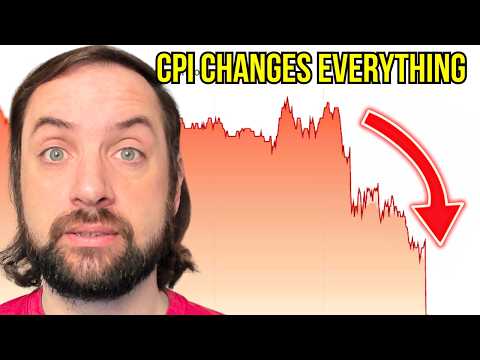
Preview:The June CPI came in shockingly weak — headline down nearly 0.5% month-over-month (biggest decline since April 2020), core CPI fractionally negative for the first time since May 2020. The speaker argues this is not good news but a "marching band of red flags" signaling demand destruction, not disinflation. The TIPS market had already priced this: breakeven rates plunged since late May. Oil futures show a twist — near-term contracts up on Iran supply fears, back-month contracts down on demand concerns. The Fed, with Kevin Warsh testifying on Capitol Hill about inflation vigilance, is likely to hike rates anyway (a "Trichet" move, referencing the ECB's 2008 rate hike). The speaker sees broad parallels to 2008: central banks chasing inflation ghosts while the market screams weakness.
Preview:The speaker argues that recessions and depressions are fundamentally different: a recession is a temporary drop below trend (like pulling an elastic string that snaps back), while a depression is when the trend itself permanently breaks and the economy never returns to its prior growth path. The post-WWII era of V-shaped recoveries was enabled by a functioning Eurodollar system — not by central bank skill. When that system broke in August 2007, the world entered a "silent depression" characterized not by dramatic collapse but by permanently missing growth, damaged labor markets, persistently low rates, and political upheaval. The speaker contends economists and policymakers have misdiagnosed the post-2008 era by looking for negative GDP numbers rather than asking why growth was never positive enough.
Preview:Eurodollar University hosts Jeff Snider and Steve break down what they call the "real yen carry trade" — not hedge funds borrowing cheap yen, but Japanese pension funds, insurers, and institutional money fleeing Japan's uninvestable economy. They argue that BOJ rate hikes paradoxically weaken the yen by destabilizing the JGB market and making Japan even less attractive to domestic capital. Recent reporting suggests Japanese officials have finally identified this capital outflow as the core problem, but the hosts are deeply skeptical that authorities can fix it, since the real issue — a structurally uninvestable Japanese economy — is beyond the reach of monetary policy.
Preview:PepsiCo's CEO stated the American consumer is "worse than anticipated," driven by gas prices. North American beverage volumes dropped 4%, credit card balances fell by the most in two years, and home sales missed expectations. The speaker argues these signals collectively point to demand destruction, not an inflationary boom — directly contradicting the Fed's resilience narrative.
Preview:HSBC is pulling back from private credit — declining to renew credit facilities and withdrawing back leverage from risky private credit funds — because returns no longer justify the risk. The speaker argues this is a critical insider signal: banks with direct visibility into private credit loan books and collateral are quietly de-risking, while public high-yield spreads remain historically tight, propped up by passive flows rather than fundamental strength. The split between insider caution and public-market complacency is framed as the classic early pattern of a credit-cycle downswing.
Preview:Walmart is cutting prices on thousands of items across groceries, household goods, and seasonal products — not because demand is strong, but because consumers are broke. The speaker argues this is a major macro signal: tax refund money has run out, jobs are weakening (household survey shows 833K jobs lost since January), gasoline remains painfully expensive, and consumers are pushing back hard. The TIPS market never bought the inflation narrative and break-evens are crashing. SOFR futures show a frowning curve — markets price near-term Fed stubbornness followed by rate cuts ("Pringles"). The core thesis: the economy is shifting from price shock to demand destruction, pricing power is gone, and the Fed is behind the curve.
Preview:Saudi Arabia slashed its flagship crude price for Asian buyers by $11/barrel—the largest monthly cut since at least 2000—pushing Arab Light to a discount for the first time since 2020. The speaker argues this is not a supply-normalization story but a demand-crisis signal centered on China, where households are retrenching at lockdown-era rates, property investment is collapsing, and bank lending is in crisis. WTI flipped into contango, physical crude grades tied to China are trading at historic discounts, and TIPS breakevens are crashing—all consistent with prior global downturn episodes. The core thesis: the global oil market's marginal buyer (China) has gone missing, and the constellation of signals points to a serious global macro warning.
Preview:The WTI oil futures curve has gone from steep backwardation (historic supply deficit) to near-flat/contango in a matter of weeks — signaling the market perceives an imminent oversupply despite supply not having fully normalized. The only coherent explanation is demand destruction: the global economy is weakening so fast that even constrained supply is becoming more than enough. This aligns with collapsing household employment data, labor force participation plunges, and falling real incomes. The speakers argue this is a major recessionary red flag that the labor market data will soon confirm.
Preview:Private credit funds face escalating redemption requests, with Blue Owl's funds hit for 18.8% and 38.1% of shares in Q2 alone, forcing caps and liquidity traps. This stress is spilling into AI data center financing — the sector private credit heavily funded. Blackstone is selling data center stakes and QTS abandoned a massive Virginia project. The thesis: the AI infrastructure bubble doesn't need AI to fail; it only needs the financing assumptions to change, and they are.
Preview:The June 2026 employment report confirms a sharp labor market deterioration, not just a soft patch. Headline payrolls rose only 57K (miss), May was revised down from 172K to 129K, and the household survey showed employment plunging 507K in a single month. The labor force collapsed by 720K, masking true weakness behind a deceptively stable 4.2% unemployment rate. The speaker's adjusted rate hit 6.1%. He argues that recent apparent strength was temporary "front-loading" activity now reversing into "payback," mirroring the 2024-2025 pattern. The energy shock, collapsing small business hiring intentions, falling CEO confidence, and plunging TIPS breakevens all point to demand destruction. At best, summer 2026 repeats summer 2025's deterioration — and could be worse.
Preview:The speaker argues that ongoing tech layoffs (including Microsoft's latest) are being misattributed to AI replacement when the real driver is a macro-driven hiring freeze. Companies aren't firing en masse — they're simply not hiring, while using "AI efficiency" as convenient PR packaging for cost cuts demanded by weak demand and margin pressure. Evidence includes Ford rehiring veteran engineers after AI tools failed, Klarna restoring human support, IBM rehiring for HR functions AI couldn't handle, and surveys showing 55% of execs regret AI-driven layoffs. The labor market is a "no-hire, some-fire" economy, not a 2008-style collapse.
Preview:European banks have loaded up on over €220 billion in government bonds in the first five months of 2026 — even as the ECB hikes rates and threatens more. The speaker argues this is a defensive macro signal: banks are not buying the ECB's inflation story but instead positioning for credit risk, economic weakness, and eventual rate reversal. The Uriber futures curve confirms this via a "frown" shape (near-term hike risk, then downward slope), and recent data — German inflation easing to 2.4%, weak employment expectations, fading oil — aligns with the banks' caution, not the ECB's hawkishness.
Preview:The Japanese yen has hit a 40-year low (~162 vs USD) despite BOJ rate hikes to 1% and record $72.5B in government intervention. The speaker argues this isn't just a Japan problem — the yen's collapse and simultaneous bull-steepening in Chinese bonds are two sides of the same "Eurodollar coin," both signaling that underlying dollar conditions remain tight and the world is not entering a reflationary recovery even as the energy shock fades. Falling oil hasn't helped the yen because it may reflect demand destruction rather than supply normalization. The core thesis: the global Eurodollar system remains strained, and Japan's toolkit (rate hikes, intervention, tough talk) cannot override deeper monetary conditions.
Preview:Jeff Snider argues that you should structure a portfolio around market-based monetary signals, not Fed rhetoric or macro models, and he uses TIPS breakevens, the Treasury yield curve, and other market curves to argue inflation risk has repeatedly been misread. The talk is part methodology lesson, part sales pitch for Eurodollar University 2.0, with a long Q&A on how the framework helps with portfolio construction, macro interpretation, and learning the Eurodollar system.
Preview:Jeff Snider (Eurodollar University) and co-host Steve argue that Bitcoin's drop below $60K is not an isolated crypto story — BlackRock stock and the Hang Seng Index are showing the same pattern. The common thread: offshore institutional investors are pulling money from private credit funds (Apollo's fund is now cash-flow negative), signaling a broader global liquidity squeeze and credit-cycle turn. Rather than one asset crashing, all three are reacting to the same late-cycle dynamic — risk aversion, dollar shortage, and growing recession signals that have been building since October.
Preview:Mario Nawfal interviews Jeffrey Snider on the market fallout from the U.S. strike on Iran. Snider argues the oil selloff reflects an unexpectedly favorable market interpretation plus Chinese demand restraint and possible reserve usage, but he stresses the conflict is not over and that oil could rebound if tensions re-escalate or Hormuz is threatened. He also argues the dollar is driven by offshore eurodollar mechanics rather than deliberate U.S. policy, says gold is a safe-haven asset rather than a pure inflation hedge, and dismisses the idea that the U.S. can simply weaken the dollar to bring manufacturing back.
Preview:A solo lecture arguing that financial markets (Wall Street) are not capitalism — real capitalism is productive commercial enterprise driven by competition. The speaker distinguishes capital (productive capacity) from money, explains why competition is the central mechanism, critiques bailouts and cronyism, and argues that true free-market defenders must support trust-busting when concentrated power threatens competition.
Preview:The speaker argues that gold, silver, and copper are being hit by liquidations tied to a broader dollar funding squeeze, not just by Fed rate expectations. He says the dollar is rising because of eurodollar/liquidity stress, and he points to crashing TIPS breakevens and a flattening 2s/10s curve as confirmation that the market is pricing disinflation or even deflation, not renewed inflation.
Preview:The speaker argues that Apollo Debt Solutions’ jump to 16.8% repurchase requests is a sign of escalating distrust in private credit, not a one-off. He frames the rise in redemptions, negative net flows, BDC discounts, and Moody’s negative outlook as evidence that the industry’s confidence-based structure is starting to break down and could spread into insurance and broader credit markets.
Preview:The speaker argues that Keir Starmer’s rapid سقوط is a warning to incumbents everywhere: voters do not reward leaders for rising stock prices or mildly positive GDP when everyday life still feels worse. He frames Britain’s political turnover as evidence that the post-2020 economy never truly recovered for ordinary households, and says the same dynamic could hit U.S. Republicans and Trump if they rely on Wall Street rhetoric instead of addressing affordability, jobs, and incomes.
Preview:The video argues that Swiss and Chinese bond markets are flashing a global slowdown/recession warning that central bankers are missing. The speaker says ultra-low or negative Swiss yields, very low Chinese yields, and a flattening U.S. Treasury curve all point to falling growth and inflation expectations rather than persistent inflation.
Preview:The speaker argues that a major warning signal is emerging from Hong Kong and China: Hong Kong’s Hang Seng is weakening while US and global tech risk assets surge, and in China bond financing has overtaken bank loans for new credit. He interprets that shift not as healthy financial modernization but as a sign that bank lending is retreating, private-sector demand is weak, and government bond issuance is increasingly acting as a backstop in a broader credit slowdown.
Preview:The speaker argues that the recent drop in oil is not just a simple post–Iran peace supply normalization story, but a broader market signal of weakening demand, falling inflation compensation, and growing recession/policy-mistake risk. He ties together the oil futures curve, TIPS breakevens, and the Treasury curve to argue the Fed is misreading the shock as inflationary.
Preview:The speaker argues that private credit is moving from a redemption problem into a broader demand problem: investors still want out, but increasingly new investors no longer want in. He says that shift, combined with falling issuance, rising withdrawals, weak BDC prices, and pressured software loans/defaults, means the private credit boom is reversing and spilling into private equity and leveraged loans.
Preview:The speaker argues that China’s latest data confirms a deepening domestic downturn: household borrowing hit a record decline, retail sales contracted, property remains weak, and fixed-asset investment is deteriorating. He says stimulus, rate cuts, and property rescues are no longer fixing the problem because the issue is now a broken household balance sheet, weak confidence, and a supply-heavy economy that is pushing excess output into exports and trade conflict.
Preview:The video argues that the dollar’s exchange rate is mainly a symptom of global Eurodollar funding conditions, not a simple vote on U.S. strength or Fed policy. A rising dollar is framed as a warning sign of tighter liquidity, dealer balance-sheet stress, and foreign reserve drawdowns, while a falling dollar is framed as easing pressure rather than debasement or collapse.
Preview:The speakers argue that the Iran-driven oil shock is entering a second, more important phase: after an initial selloff on ceasefire/peace hopes, the market may face a rebound because inventories are deeply depleted and restocking will take time. They emphasize India’s diesel rationing, low U.S. and global inventories, Chinese reserve drawdowns, and the risk that higher prices persist or re-accelerate before any normalization.
Preview:Jeffrey Snider argues the Iran deal is more of a fragile framework than a finished agreement, with the biggest fault lines around Hormuz, Lebanon, asset unfreezing, and nuclear follow-through. He thinks both sides are already spinning the text differently because the deal’s wording is vague and leaves too much unresolved.
Preview:The speaker argues the ECB made a major policy mistake by hiking rates into a weakening eurozone economy, echoing 2008 and 2011. He uses the 2008 U.S. Treasury reaction as the key template: markets may initially price hawkish central-bank rhetoric, but if the economy keeps deteriorating, yields and policy expectations ultimately reverse.
Preview:The speaker argues that the sharp selloff in gold and silver is not mainly about central-bank rate hikes or reflation, but about an acute dollar shortage/liquidity squeeze. Gold’s drop is framed as a combination of overextended prior gains and reserve-asset liquidation/swaps to raise dollars; silver is seen as even more vulnerable because the prior rally overstated industrial-demand strength. Copper is used as a cross-check and, in the speaker’s view, does not confirm a real reflationary boom.
Preview:The video argues that Asia is in the middle of an escalating dollar-driven currency crisis, with South Korea, Japan, Indonesia, and India all showing signs of defensive, increasingly desperate policy responses. The speaker’s core point is that rate hikes, intervention, reserve use, and bank controls may slow currency declines briefly, but they do not solve the underlying dollar shortage and can’t stop spillovers into equities, credit, and the real economy.
Preview:The speaker argues that the credit cycle is already in its downswing, with private credit as the current center of gravity. The core warning is that redemptions, asset sales, PIK financing, amend-and-extend deals, and weaker valuations are early signs of stress long before defaults spike.
Preview:The speaker argues that the recent jump in bond yields is not the market pricing a return of sustained inflation, but the market hedging a possible Fed policy mistake driven by oil prices. He says inflation expectations in TIPS, the Fed’s own consumer survey, and the front end of the curve all point to a weaker economy, tighter credit, and job-market stress rather than a durable inflation regime.
Preview:The video argues that the May payroll report is misleadingly strong and conflicts with multiple softer indicators, pointing instead to an economy under pressure from an energy shock, weakening disposable income, and consumer pullback. The speaker says Dollar Tree, Five Below, Walmart, household employment, small-business hiring plans, and CEO sentiment all fit a recessionary narrative better than the headline payroll gain.
Preview:The speaker argues that Europe is preparing for a more explicit trade war with China because China must keep exporting surplus industrial output while Europe’s weak economy can no longer absorb it. The video frames this as a structural collision between Chinese overcapacity and European industrial fragility, with EVs, batteries, solar, chemicals, and other strategic sectors at the center.
Preview:The speaker argues that Blackstone’s BCRED gating redemptions for the first time is a psychologically important warning sign for private credit, even if it is not a default or collapse. He frames the event as evidence that investors are increasingly trying to exit illiquid funds while managers insist the situation is manageable and the underlying loans are mostly fine.
Preview:The video argues that stress in private credit is no longer contained: redemption pressure is spreading into private equity, which the speaker frames as a contagion signal and the start of a broader private-markets repricing. The core concern is that persistent outflows, liquidity gates, and potential ratings downgrades could force asset sales, weaken NAVs, and create a nonlinear feedback loop across private credit, private equity, and related financing channels.
Preview:The speaker argues that European banks are buying large amounts of government bonds even as the ECB is expected to stay hawkish or hike, and interprets that as a sign banks are prioritizing liquidity and safety over inflation risk. He connects that behavior to a weak European economy, a worsening forward-rate “frown,” and mounting stress in European private credit and shadow banking.
Preview:The speaker argues that the recent rebound in oil is not just an inflation story but a potentially late-stage macro and monetary shock. Their core view is that WTI remains trapped in a conflict range, and the longer it stays elevated, the greater the risk that a fragile global economy slips from an energy shock into a broader dollar and growth shock.
Preview:The video argues that a U.S. recession likely began around October 2025, well before the March/April 2026 energy shock. The speaker leans heavily on BEA income data, falling savings, and weakening labor-market evidence to argue that the economy was already fragile and that the energy shock only exposed the downturn. The discussion also frames this as a K-shaped economy where lower-income consumers are already in recession while the weakness is starting to spread upward.
Preview:The speaker argues that Canada’s technical recession is not an isolated event but part of a broader global weakening already visible in France, the UK, Germany, Sweden, and Mexico. His core claim is that the current energy shock is not creating durable inflation; instead, it is acting like a tax that destroys demand, weakens labor markets, and forces central banks to soften their hawkish stance.
Preview:Jeff Snider argues the Iran war is less about immediate inflation than about a broader energy shock that can morph into recessionary pressure, dollar stress, and weaker global growth. He says markets are temporarily upbeat on ceasefire/diplomacy headlines, but the bond market and falling yields are signaling fragility underneath.
Preview:The video argues that private credit stress has moved beyond retail redemptions into institutional withdrawals, with a Swiss pension fund forcing a fund to limit redemptions. The speaker also says software loans are becoming the sector’s stigma, as lenders and asset managers increasingly market products with less software exposure, which he frames as an early sign of a broader repricing and potential contagion in private credit.
Preview:The speaker argues that JPMorgan abandoning the “Goldilocks” soft-landing scenario is not a new warning but a late acknowledgment of a deterioration that began in 2024. The core claim is that the labor market was already weakening through falling job openings, quits, hiring, and participation, and that the SAM rule’s recession signal was dismissed because people overfocused on the official unemployment rate and stock market strength.
Preview:The speaker argues that U.S. housing is no longer being supported by lower rates because the real problem is weakening demand, deteriorating consumers, and rising all-in ownership costs. He says both Case-Shiller and FHFA now show slowing or declining home-price momentum, with Texas and Florida leading the weakness after being the biggest pandemic-era boom markets.
Preview:The video argues that private credit has moved into a more dangerous second stage: outflows are now exceeding inflows, forcing funds to manage liquidity rather than just collect yield. The speaker says that once redemption pressure, discounted secondary sales, rising defaults, and tighter bank support all show up together, the private credit model stops looking like stable buy-and-hold finance and starts looking like a credit market under stress.
Preview:The speakers argue that Europe’s May PMI collapse is an early sign the region has already slipped into recession, driven by an energy shock that is hitting services, employment, and consumer spending. Their core criticism is that the ECB is still fixated on inflation and may hike rates into a downturn, repeating a familiar policy mistake.
Preview:The speaker argues that the dollar’s rise against Asian currencies is not mainly a story of higher U.S. rates, but of a global dollar shortage tied to an energy shock. He says front-end U.S. rate markets are actually signaling weaker growth and lower policy rates ahead, which he reads as the market pricing the fallout from that same squeeze.
Preview:The video argues that Lowe’s, Walmart, Kroger, and S&P Global PMI data all point to a worsening squeeze on the American consumer: discretionary spending is weakening, value-trading-down is intensifying, and hiring is softening. The speaker frames this as a gradual but broad consumer deterioration rather than an outright crash.
Preview:The speaker argues that the recent jump in Treasury yields is not the bond market pricing a broad inflation breakout, but rather a classic energy-shock setup driven by higher oil and gasoline prices. In their view, TIPS, break evens, bills, and term SOFR curves all point to near-term CPI pressure and a possible central-bank overreaction, not sustained inflation.
Preview:The video argues that China’s April data confirms a deeper economic deterioration across consumption, investment, housing, credit, and banking. The speaker says retail sales, fixed asset investment, industrial output, and home prices all weakened again, implying prior statistical revisions may have been politically motivated and that stimulus is failing to restore growth.
Preview:The speaker argues that a DOJ probe into valuations at a BlackRock private credit fund is a major escalation in a broader private credit downturn. They frame the core issue as trust in marks, not just isolated bad loans, and connect it to BlackRock, Apollo, KKR, Carlyle, and Blue Owl as signs the industry is moving from fundraising to cleanup.
Preview:The video argues that Europe is heading into an energy-shock-style recession, with weak labor data and collapsing energy-demand forecasts outweighing the inflation story. The speakers expect the ECB to likely hike rates near term, but then quickly reverse as demand destruction and employment weakness become impossible to ignore.
Preview:The speaker argues India’s moves to restrict gold and silver imports are really a dollar-conservation response to rupee weakness, a widening trade deficit, and rising oil costs. He frames the policy as a form of capital control that may slow official imports but could also create smuggling, premiums, and renewed gold demand.
Preview:The speaker argues that the Trump-Xi summit is mostly political theater and that China’s latest lending data reveals a deeper domestic credit breakdown: weak household borrowing, contracting new RMB loans, and a collapsing private credit engine. The message is that Beijing needs external relief because the internal economy—especially banks, households, and property—remains stuck in a credit trap.
Preview:The video argues that the UK’s political system is being upended by worsening labor-market weakness that mainstream politicians and central bankers are obscuring. The speaker says Reform UK’s surge and the collapse of Labour and the Conservatives are a direct voter reaction to falling real incomes, rising unemployment, and failed promises to ‘fix the economy.’
Preview:The speaker argues the current oil shock could be worse than 1973 because it is tied to a broader geopolitical realignment, especially a U.S.-China cold war dynamic running through Iran and the Strait of Hormuz. He says the market is underpricing the risk because futures are being managed, but the cash market, gasoline, and the forward curve already point toward severe inflation-then-recession damage if the disruption persists.
Preview:Jeff Snider argues the Eurodollar system is a broken but still-necessary short-run patch that has outlived its usefulness, and that the real search is for a bottom-up replacement—likely involving gold, crypto, stablecoins, and other competing payment rails.
Preview:The video argues that the latest U.S. payroll headline was a distraction from broader labor-market weakness: household employment fell, labor-force participation softened, consumer confidence hit record lows, and Canada showed similar deterioration. The speakers say the stock market can keep rising in the near term, but the real economy is weakening under the weight of higher gasoline prices and fading support.
Preview:The speaker argues that private credit is moving deeper into a bust, with BlackRock marking down NAV again, JP Morgan facing a hung-deal markdown, Blue Owl facing potentially serious valuation-related lawsuit risk, Apollo shifting toward transparency and lower-risk positioning, and another large fund seeing withdrawals from institutional investors.
Preview:The speaker argues that McDonald's and Whirlpool are both seeing signs of consumer stress that point to a broader downturn in U.S. household spending, especially among lower-income and younger consumers. He ties weak demand to a deteriorating labor market, rising gas prices, and a widening gap between narrow stock-market strength and real-economy weakness.
Preview:The video argues that HSBC’s $400 million loan loss is less important as a dollar figure than as a signal of sloppy underwriting and the growing fragility of private credit, insurance-linked leverage, and shadow banking. The speaker links HSBC’s disclosure and Mark Rowan’s comments at Apollo to broader worries about hidden leverage, offshore repo, and potential contagion across the credit system.
Preview:The speaker argues that U.S. gasoline prices are about to jump from roughly $4.26 to around $5 nationwide because wholesale gasoline and inventories are signaling a sharp pass-through to retail prices. He says that a $5 pump price would likely trigger demand destruction, weaken consumer confidence, pressure hiring and spending, and expose the market’s narrow leadership underneath the headline stock-index highs.
Preview:The video argues that the oil shock is making central bankers more hawkish in the short run, but market curves are pricing that hawkishness as a temporary policy mistake rather than the start of durable inflation. The speaker says forward-rate futures and swap markets show a ‘frown’: some near-term hikes, followed by cuts once the policy error becomes obvious.
Preview:The video argues that recent GDP data across Europe, Canada, Mexico, and the U.S. show a weakening global economy that rate cuts have failed to fix, and that the next energy shock will likely force central banks into policy mistakes and eventually deeper cuts. The speakers frame the situation as early global stagflation, with Europe and Mexico used as leading indicators and U.S. consumer weakness and AI-driven GDP masking deeper softness.
Preview:The speaker argues that Japan’s recent FX intervention was an expensive but ineffective attempt to defend the yen, and says Tokyo is now considering similar jawboning in oil markets because the real problem is an energy shock that creates dollar demand. He extends the same critique to India’s RBI, claiming both countries are fighting a Eurodollar-driven dollar shortage with tools that cannot change the underlying market.
Preview:The speaker argues that a rise in pawn-shop activity is an important distress signal for U.S. consumers, reinforcing the idea that households are under pressure from weak real incomes, a low savings rate, and higher gasoline/energy costs. He uses Walmart and Dollar General trading-down behavior, BEA income data, and a recent pawn-shop segment to argue that the economy is fragile despite official claims of resilience.
Preview:The video argues that Europe is entering an energy-shock-driven slowdown, not an inflation spiral. The speaker says ECB bank lending data, sentiment surveys, and bank bond buying all point to risk aversion, tighter credit, weaker demand, and eventual policy reversal despite near-term hawkish rhetoric.
Preview:The speaker argues that the UAE’s reported exit from OPEC is not mainly about oil politics, but about mounting dollar stress tied to the Middle East conflict and a broader Eurodollar squeeze. He says multiple Gulf and Asian countries are reportedly seeking Fed dollar swap lines as a backstop, which he reads as confirmation that energy disruption is spilling into dollar funding strains and political realignment.
Preview:The speaker argues that today’s market rhymes with 1999: AI enthusiasm, FOMO, and selective index strength are masking weaker underlying conditions, while companies are ‘AI washing’ layoffs to sound proactive rather than recessionary. He frames rising asset prices as driven by narrative distortion, not genuine economic health, and warns that private credit and shadow banking are likely the next major vulnerability.
Preview:The video argues that the oil market is severely mispricing a major supply shock: futures prices near $95–$96/bbl understate the physical market, where cash barrels and gasoline are already much more expensive. The speakers say the Dallas Fed survey of Texas oil veterans shows supply disruption could remain sticky until at least late summer, with risks of higher pump prices, weaker consumers, slower services activity, and eventually recession or stagflation.
Preview:The video argues that India’s delayed-payment junk bond is a warning sign of a broader private credit downturn, not a Lehman-style bank failure. The speaker says the real risk is a credit crunch, rising mistrust, and reduced money flow that could damage the real economy, with repo and Treasury-bill pricing suggesting stress is already building.
Preview:The speaker argues that April PMI strength is misleading and actually signals a tougher summer ahead: manufacturing is being boosted by front-loaded buying and supply-stocking, while services are weakening across the US, Europe, and Japan. He frames the broader setup as an energy-shock-driven slowdown that will hit consumers, jobs, and business activity over the coming months, with Europe the weakest region.
Preview:The speaker argues that the Iran-related energy shock is already damaging Europe and may be close to a broader tipping point. He points to collapsing consumer and business sentiment, rising unemployment in parts of Europe, weaker UK payrolls, and official downgrades to German growth forecasts as evidence that the shock is turning into real economic damage rather than just higher fuel prices.
Preview:Mark Moss and the host argue that the real economy and financial system have been damaged by years of government expansion, post-2008 stimulus, and now a growing private-credit bust. They frame the worst case not as an abrupt crash but as a long, grinding stagnation where bad credit, fraud, and weak growth persist.
Preview:The speaker argues that the UAE’s reported request for a dollar swap line is not a bailout or a sign of dollarization, but an attempt to prepare for a possible dollar funding squeeze if Strait of Hormuz disruption persists. He frames Dubai as a major Eurodollar redistribution hub whose oil, tourism, and financial flows could be impaired, potentially creating a broader offshore dollar shortage with spillovers beyond the Gulf.
Preview:The video argues that China’s bond market, especially the front end of the curve, is sending a bearish macro signal: growth, consumer demand, and bank lending are weakening, and external shocks such as the Iran-linked energy disruption and trade backlash may worsen the slowdown. The speaker says equities are ignoring these signals because of ceasefire optimism and re-risking, but Chinese bonds are implying the global setup is still fragile.
Preview:The video argues that private credit is moving deeper into a stress phase: banks are tightening collateral terms and revaluing pledged assets, while insurers are starting to get pushed out of the market by rising skepticism from bond investors and regulators. The speaker frames both developments as signs of a broader “stage two” deterioration that could force asset sales and push the system toward a more systemic “stage three.”
Preview:The video argues that recent IRS tax refunds are rising, but households are mostly saving the money or paying down debt instead of spending it. The speaker frames this as evidence of a weak labor market, stressed consumers, and a broader downturn that tax cuts cannot meaningfully reverse.
Preview:The speaker argues that the IMF is belatedly recognizing a global economy already in fragile condition, and that the Middle East oil shock is now pushing it toward recession. He insists oil shocks are contractionary rather than inflationary, cites airline cutbacks and weak consumer/small-business sentiment as early evidence, and frames 2026 as a race against time toward an IMF adverse scenario.
Preview:The video argues that the next private credit systemic risk is concentrated in life insurance companies, not big banks. It claims insurers have chased yield into private credit, hidden leverage via repo and complex structures, and may transmit stress into annuities and retirement products as the cycle turns.
Preview:The video argues that Chinese banks are trapped in a low-rate, low-profitability environment and are increasingly using loan modifications, payment holidays, and court slowdowns to avoid recognizing losses on underwater mortgages. The speaker frames this as full-blown “extend and pretend,” saying the data show weak lending, worsening loan growth, and a recapitalization effort that has not restored real credit creation.
Preview:The video argues that the Strait of Hormuz disruption is not just an oil shock but also a delayed global food shock, because fertilizer inputs, especially nitrogen, ammonia, and sulfur, move through the same corridor and could hit planting cycles over the next few months.
Preview:The video argues that a spike in repo fails above $415 billion, rising Treasury bill demand, and heavy use of foreign reserve Treasury holdings all point to a worsening eurodollar collateral shortage rather than just a simple Treasury short squeeze. The speaker ties the pressure to the earlier oil shock, Nigeria's reserve drawdown, and broader global stress including China and private credit.
Preview:The speaker argues Target’s price cuts reflect a weakening consumer, not merely tariff or inflation pressure. They connect the retailer’s pivot to softer real incomes, weak spending, rising gas prices, and a labor market they believe has been deteriorating for some time.
Preview:The video argues that the Iran-linked oil shock created a broader dollar funding squeeze across Asia, with Taiwan, Indonesia, and India all forced into heavy FX intervention as their currencies weakened. The speaker says the ceasefire offers near-term relief, but the underlying Eurodollar shortage and energy-import pressure are still unresolved.
Preview:The speaker argues that a shutdown or severe disruption of the Strait of Hormuz is already causing a global jet fuel shortage, with airlines in Asia, Europe, and the U.S. responding through route cuts, fuel restrictions, and fee hikes. He frames this as a historic supply shock that will reduce flight volume, hurt growth, and likely create demand destruction rather than sustained inflation.
Preview:The speaker argues that Jamie Dimon’s shareholder letter matters mainly for one hedge-word: private credit is 'probably' not a systemic risk. He reads that as cautious confirmation that the credit bust is already underway, with the true driver being the weakening U.S. labor market rather than any single headline like tariffs or the latest payroll print.
Preview:The video argues that the March jobs report and related labor data are masking a weakening U.S. labor market: hours worked are soft, labor force participation fell, hiring is collapsing, and headline payroll gains are being over-read by markets. The speakers say an energy-price shock is already hitting services and consumer demand, while any short-term boost from tax refunds or stimulus is likely temporary.
Preview:The video argues that oil is experiencing a historic, bifurcated futures-curve break: near-term crude prices are surging on supply shock fears, while deferred contracts are falling as markets increasingly price demand destruction rather than lasting supply loss. The speaker says this aligns with Treasury, TIPS, and swap markets, which are also signaling weaker growth and eventual rate cuts, not inflation.
Preview:The speaker argues that Blue Owl’s reported mass redemptions in private credit are a sign of an escalating shadow-banking run, not just a fund-specific issue. He says the important signal is that concentrated, likely institutional investors are pulling back while banks like JPMorgan tighten collateral rules, which could force sales and move the situation from a contained correction toward a broader credit crisis.
Preview:The video argues that Oracle’s layoffs, rising payment-in-kind defaults, a gated UBS real estate fund, and Stone Ridge redemption limits all point to a broad private-credit bust that is spreading beyond AI/software lending into consumer and real estate finance.
Preview:The speaker argues oil is being materially underpriced relative to the scale of the Hormuz disruption and the downstream product squeeze, with WTI, Brent, and especially futures spreads signaling acute physical tightness. He says near-term downside fear from a possible conflict resolution is holding prices back, but the physical balance is moving from glut to shortage, making much higher prices plausible if the disruption persists.
Preview:The speaker argues that the bond market is signaling a recessionary slowdown, not an inflation spiral, despite the oil shock and geopolitical stress. In his view, nominal yields, TIPS breakevens, repo fails, and dollar strength are all pointing to tightening financial conditions and a closing window for central banks to keep hiking.
Preview:Jeff Snider and Steve discuss the early economic fallout from the Iran conflict, framing it as a genuine oil shock that is already hitting consumer/business sentiment, compressing margins, and accelerating job losses — all on top of an already-weakening global economy. They argue central bankers are misreading it as inflationary when the real outcome will be stagflation and rising unemployment, citing PMIs, retail sales, and the Bank of Mexico's surprise rate cut as evidence. The core thesis: we may have already passed the point of no return into a prolonged downturn.
Preview:The speaker argues that Europe’s banking system is sending a much more serious signal than officials admit: private credit stress is spreading, European banks are quietly de-risking by buying government bonds, and the ECB will likely end up cutting rates after any near-term hiking panic. He thinks the oil shock from Iran is distracting markets from the larger problem, which is a broader credit/balance-sheet bust.
Preview:Jeffrey Snider argues that the private credit problem is not primarily about realized losses but about a shift in market behavior and system state, similar to the progression of the 2007–2008 crisis. He says the recent pullbacks, downgrades, collateral revaluation, and funding strains show the system moving from recognizing errors into a more dangerous phase where forced selling and liquidity stress become more likely.
Preview:The speaker argues that the Iran conflict and Hormuz blockade have moved beyond a price shock into a physical oil supply crisis. Asian nations are already rationing fuel, hoarding, and declaring emergencies — and Europe is next. Oil prices have pulled back on ceasefire rumors but remain elevated (WTI ~$90, Brent ~$100). The speaker contends oil shocks are not inflationary but deflationary/demand-destructive, paid for in lost employment, and already showing up in US and European PMIs. The dollar is strengthening amid risk aversion, with CNY's rise halted as markets price global demand destruction. A webinar pitch and sponsor read occupy notable airtime.
Preview:The speaker argues that private credit is moving from early stress into a broader crisis, with Apollo and Ares seeing large redemption requests and Moody’s downgrading the KKR/FS private credit fund as a key escalation. He frames the central issue as a collapse in trust and reputation, not just credit losses, and says institutions are now joining retail investors in backing away from the space.
Preview:The speaker argues that Blackstone’s flagship private credit fund posting its first monthly loss is less important as a direct credit event than as a sign of eroding trust. He frames the issue as a shift from isolated losses to reputation damage, forced selling, and eventually a liquidity spiral if investors stop believing the “low risk, high return” story.
Preview:The speakers argue that the market is shifting from an inflation narrative to a funding-stress / recession narrative, with Europe’s central bankers still reacting to oil prices in a way they view as dangerously outdated. They say stocks, commodities, the dollar, and bond-market behavior are all pointing to stress, not a sustained inflation boom.
Preview:The speaker argues that the sharp selloff in gold, silver, copper, and aluminum is not normal risk-off selling but forced liquidation tied to tightening eurodollar conditions and rising dollar funding stress. He links the commodity drops to an oil shock, private-credit strain, and a stronger dollar/cross-currency basis signal that, in his view, point to deflationary pressure rather than inflation or debasement.
Preview:The speaker argues that the January collapse in new home sales is another sign of an already fragile consumer and housing backdrop, not just a weather-driven anomaly. He ties housing weakness to soft labor/income data, then warns that the bigger near-term risk is a lingering oil shock and the market/central-bank reaction to it, especially in Europe and the UK.
Preview:The speaker argues that McDonald’s, Pepsi, and Dollar Tree are all flashing the same warning: consumers are under strain, so companies are cutting prices or shifting toward lower-price/value offerings. He says this is evidence that the labor market and household incomes have already weakened, and that the recent surge in gasoline and diesel prices could push an already fragile economy further over the edge.
Preview:The speaker argues that the oil shock is quickly turning into a dollar-funding shock, especially across Asia, where import-heavy economies are already responding with capital controls, FX intervention threats, and tighter policy. He frames this as evidence that oil is not primarily inflationary in the medium term; instead, it strains dollar liquidity, hurts growth, and eventually pushes disinflation/deflation pressures higher.
Preview:The speaker argues that Meta’s rumored layoffs are not primarily about replacing workers with AI, but about conserving cash amid a weakening credit environment. He uses Meta’s off-balance-sheet AI financing and a new BIS warning to claim the AI buildout is showing the first signs of a broader credit-cycle crack, similar in spirit to 2008-style structured finance stress.
Preview:The video argues that the private credit bust is spilling beyond private credit vehicles and into bigger, more visible names like Deutsche Bank and Wells Fargo. The speakers frame the rise in the U.S. dollar, fund gating, and bank stock weakness as signs of tightening liquidity, forced price discovery, and a growing credit unwind.
Preview:The speaker analyzes the brutal Canadian February employment report (-83,900 jobs, the worst since January 2022) as confirmation of a global "flat beverage" labor market deteriorating before the Iran oil shock. He argues that central banks (BoC, Fed, BoE, BoJ) will irrationally fixate on oil-driven inflation while ignoring mounting unemployment, just as they did in 2008. Bond markets are already pricing rate hikes in Canada despite the weakness. The core thesis: the global economy entered 2026 already sour, the oil spike adds deflationary pressure not inflationary, and central bank hawkishness will eventually be forced out by bad payroll data.
Preview:The speaker argues that recent private-credit fund redemption requests, collateral revaluation at JPMorgan, and rising oil prices are combining into an increasingly familiar 2007–2008-style stress pattern. He says the real risk is not inflation but a credit/liquidity downturn amplified by energy shocks, and he thinks central bankers and markets may again misread the situation until it is too late.
Preview:The speaker argues that private credit is moving from a stage-one pullback into a more dangerous stage-two liquidity event, and that JP Morgan’s decision to mark down pledged collateral is the clearest systemic warning so far. Cliffwater redemptions, pre-arranged asset sales, and broader pressure on private credit vehicles are presented as evidence that the market is no longer dealing only with sentiment but with bad underwriting and real balance-sheet weakness.
Preview:The speaker argues the US housing market is in a macro bust that lower mortgage rates cannot fix. Despite rates falling to 3.5-year lows, sales volumes remain stuck at depression levels (~4M annualized) and home price growth has stalled to near zero. The core problem is not affordability but a massive employment deficit — the economy is ~8.7 million payrolls short of where it should be. Mortgage delinquencies are now rising fast in regional hotspots like Texas (Laredo at ~24%) and Florida, concentrated in lower-income areas with rising unemployment. The speaker warns this is transitioning from a macro housing story into a growing credit problem.
Preview:The speaker argues that a sharp oil shock tied to disrupted Middle East flows is already breaking global markets, with Asia, Europe, emerging markets, and risk assets taking the first hit. The core view is that oil can still fall back hard once flows normalize, but every extra day of disruption raises the odds of recession, liquidity stress, and a broader market selloff.
Preview:The speakers argue that the labor market has clearly weakened, with five of the last nine months of payrolls negative after revisions, and that the pattern matters more than any one print. They connect the jobs deterioration to weak retail sales, falling labor participation, lower average hourly earnings, and a worsening private credit backdrop, while warning that the new oil shock could push an already fragile economy into something worse. Their broader point is that the market and many investors have normalized repeated negative data as "just noise," even though the trend is still drifting lower.
Preview:The speaker argues that oil’s recent surge is not just a price spike but a historically unusual display of market intensity and backwardation, suggesting panic buying and a likely multi-month oil shock unless the Strait of Hormuz situation is quickly resolved. He frames this as macro-bearish: higher oil should pressure margins, credit, hiring, and already-weak employment data, with the bigger lesson being recession risk rather than inflation.
Preview:The speaker argues that BlackRock’s decision to gate redemptions in a $26B private credit fund is a major escalation in a broader private credit unwind. He links the move to earlier warning signs—dividend cuts, NAV write-downs, and loans marked from 100 to zero—and says the pattern confirms investors are starting to rush for the exits as confidence in private credit deteriorates.
Preview:The speaker argues that the current oil spike is a real economic warning, not an inflation story. He says WTI and gasoline have surged sharply, Asia is scrambling for replacement barrels, China is conserving fuel exports, and the more likely macro effect is weaker growth, tighter credit, and eventual disinflation rather than a lasting inflation breakout.
Preview:The Swiss National Bank issued a rare unsolicited verbal intervention warning over CHF strength amid the Iran conflict. The speaker argues this is part of a multi-year pattern: the SNB has consistently overestimated inflation, been forced to downgrade CPI projections repeatedly, and cut rates to zero — exactly as Swiss bond markets anticipated. Another oil spike won't create inflation; it will cause demand destruction, push the CHF and USD higher as safe havens, and likely force the SNB into negative rates (NERP). This serves as a global signal: lower rates and lower inflation are the real trajectory, mirroring 2023-2025.
Preview:The speaker argues that the market is in a liquidity/liquidation phase driven by an oil shock and tightening dollar conditions, with private credit now showing broader spillovers. He sees the dollar rising, gold/silver/copper being sold as liquidity sources, and credit stress spreading from private credit into leverage loans and high-yield spreads.
Preview:The speaker analyzes market reactions to renewed Iran conflict: oil spiked to ~$73 then pulled back, gasoline surged 17% in two days, and Treasury yields rose — but crucially, TIPS breakeven rates fell, showing the bond market is repricing Fed hawkishness, not inflation expectations. The core thesis: oil spikes from geopolitical supply shocks are transitory and ultimately disinflationary (they destroy demand), but the Fed's "irredeemable inflationists" will use any CPI bump to extend the pause. The bigger picture frames this within a multi-decade deglobalization cycle post-2008, where declining economic growth drives rising political instability.
Preview:The speakers argue that the current wave of layoff headlines is being misread as an AI shock, when the real driver is weaker demand, overhiring during the post-pandemic rebound, and tightening credit. They use Block/Jack Dorsey as the example, but their core view is that companies are shrinking headcount because the economy never delivered the boom they planned for.
Preview:The speaker argues that the latest UK mortgage/funding blowup at Market Financial Solutions is another sign of a global private-credit / shadow-banking deterioration, not an isolated incident. He pairs that with KKR’s dividend cut, widening credit stress, falling Treasury yields, and aggressive dealer buying of Treasuries as evidence that markets are moving into a defensive, escalation-prone phase rather than a stable recovery.
Preview:European private credit is showing serious stress signals as two major insurers — AXA and Allianz — publicly distance themselves from the asset class, with Allianz's CFO explicitly saying they are "separating themselves from some trends." European banks reported "a high degree of risk aversion" to the ECB and loaded up on €94.8 billion in government bonds in January 2026, the second-largest monthly purchase on record. The speaker argues this is part of a global private credit bust moving from stage one (cockroaches appearing) toward stage two and potentially stage three, where the entire asset class gets tarred as "toxic waste" and indiscriminate selling follows — paralleling the subprime mortgage crisis dynamic.
Preview:The speaker argues that private credit is moving from initial distress toward a possible stage-two unwind, with UBS raising its loss assumptions, another fund selling assets at a weaker price, and public BDCs still under pressure. He says the market is also signaling disinflation/deflation risk, not inflation, through TIPS and forward-rate moves, which should eventually force the Fed to abandon hawkish waffle and cut rates more aggressively.
Preview:The video argues that Jamie Dimon’s latest warning is less about one-off headlines and more about a global credit-cycle deterioration already being reflected across bonds, currencies, and risk assets. The speaker links Dimon’s 2006/2007 comparison to a broader “flight to safety” in Treasuries, Japanese bonds, Swiss francs, Europe, Canada, and the UK, and says the market is increasingly pricing recession-like stress rather than the optimistic 2026 reflation story.
Preview:The speaker argues that Blue Owl’s fund gating and asset sales are the first clear signs of a broader private-credit unwind that feels like early-2007 rather than a full 2008-style crisis. He says the key pattern is escalation: stage-one problems were dismissed last fall, but now stage-two behavior is appearing in private credit and spilling into CLOs, leveraged loans, alternative managers’ stocks, and Treasury positioning.
Preview:A discussion of Walmart's Q4 2025 earnings call where CFO John David Rainey explicitly warned of a "hiring recession" — stark language that the hosts argue signals the US consumer is approaching a breaking point. They connect Walmart's warning to falling real incomes, a savings rate dropping to 3.6% (lowest since October 2022), General Mills cutting guidance, and rising delinquencies, framing it as evidence of a multi-year downturn ("forgot how to grow") that keeps worsening incrementally.
Preview:The speaker argues that repo stress is back in a more serious form than the market is appreciating, and that the latest Blue Owl episode is not isolated but part of a broader monetary-tightness / collateral-scarcity pattern. He uses the surge in Fed repo borrowing, record primary-dealer Treasury inventories, and renewed repo-fail volatility to argue that money dealers are positioning defensively ahead of more trouble.
Preview:The video argues that Blue Owl’s halted redemptions and forced asset sales are evidence that private credit is moving from a first-stage outflow phase into early stage-two stress. The speaker says this is not yet a full crisis, but it is the first concrete example of forced selling, and he treats it as an escalation signal for the wider shadow-banking and leveraged-loan ecosystem.
Preview:Switzerland is in recession, and that matters globally. The speaker argues Switzerland serves as a bellwether — a test case for the mainstream 2026 reflation narrative. The Swiss franc is surging on safe-haven flows, Swiss bond yields are negative across much of the curve, CPI is back in deflation five of the last six months, unemployment is rising, and GDP contracted through the second half of 2025. None of this supports the "global turnaround" story. The markets never bought the narrative, and the data is now validating their skepticism. The message: the downturn never stopped, and it's still getting worse.
Preview:The video argues that China’s largest banks are trapped in a Japanification-style credit crisis: they are being pressured to support growth, but low rates and bad-loan overhangs have left them too unprofitable to lend aggressively. The speaker says recent PBOC rate moves, stricter bank supervision, weak January lending, and an imminent lower GDP target all point to a system that is increasingly frozen rather than stimulated.
Preview:The speakers argue that the Treasury market is sending a clear warning: yields have broken lower across the curve, the 2-year has made a more-than-one-year low, and the move looks like bull steepening driven by weakening growth and softer inflation expectations rather than any “tariff inflation” scare. They frame the recent payroll revisions, weak retail sales, and benign CPI as validation that the labor market and consumer are weaker than equity prices suggest, with the key risk shifting from recession-denial to tighter credit and broader job losses.
Preview:Existing home sales crashed 8.4% in January to a 3.9M SAAR — the biggest single-month drop since 2022 and back to early-2010s trough levels. The speaker argues this isn't about weather: the real driver is a deep, grinding labor-market recession revealed by BLS benchmark revisions showing the US economy fell 2.4 million jobs behind trend in 2025 alone (and 1.1M in 2024). Mortgage rates fell but housing didn't respond, because consumers lack income stability. Mortgage delinquencies are creeping up, concentrated in lower-income areas and regions with declining home prices. The bond market sees the real picture — yields keep falling — while the stock market and crypto remain in denial. The core thesis: minus 2.4 million explains housing, treasuries, consumer pessimism, and the coming macro deterioration.
Preview:The speaker argues the BLS payroll data has been systematically overstating job growth for years, and that the new benchmark revision confirms a much weaker labor market than the media, Fed, and stock-market narrative implied. He connects that weaker jobs picture to soft consumer spending, especially a weak December retail-sales print and a bust holiday season, and says the bond market was right to discount the supposedly strong January payroll figure.
Preview:The speaker argues the UK Labour government's collapse — less than two years after a landslide win — is a global warning: political instability will keep accelerating because the economy hasn't genuinely improved for ordinary voters. He contends that GDP and stock markets are misleading indicators, that politicians on both sides make empty promises they cannot keep, and that the only honest path is admitting prices will never return to pre-pandemic levels and governments cannot fix what they broke.
Preview:The speaker argues that recent reports of China advising banks to reduce US Treasury holdings are political noise, not market-moving events. He demonstrates that Treasury yields have remained remarkably stable despite a year of "dollar doom" headlines, because bond prices are driven by fundamental perceptions of growth/inflation — not government buying patterns. Historical parallels (China's 2013 "diversification" announcement, the PBOC's 2024 warning on Chinese government bonds) both failed to move markets in the direction predicted. Data shows foreign Treasury holdings hit record highs, the dollar's share of FX transactions rose to 50.5%, and gold's rally reflects deflation hedging — not dollar debasement. The core thesis: government policies rarely matter; fundamentals do.
Preview:The video argues that a cluster of January labor-market reports—Challenger layoffs, ADP revisions, and JOLTS/claims data—shows the U.S. labor market weakening far more than markets and policymakers expected. The hosts say this helps explain the sharp selloff in speculative assets, private credit, and riskier parts of the stock market, and they warn that the downside could continue if labor softness feeds into spending, lending, and layoffs.
Preview:The speaker argues that European banks’ lending behavior shows a much weaker and more defensive credit regime than the ECB and mainstream commentary admit. Despite lower policy rates and repeated claims that Europe is in a “good place,” banks reportedly tightened corporate credit standards, piled into government bonds, and effectively bailed out stressed shadow-bank/private-credit borrowers rather than expanding lending into the real economy.
Preview:The speaker argues silver’s latest collapse is a classic overextended squeeze unwinding, not the start of a sustainable new leg higher. He says the move was driven by supply stress, speculation, and emotion rather than healthy end-demand, and that the same pattern has already started to appear in copper; gold is firmer because it is being bought more as a safe haven than an inflation hedge.
Preview:The speaker argues that a broad, cross-asset risk-off move is underway: private credit/BDCs, Bitcoin, silver, and some other momentum trades are all falling together because the economy is weakening rather than rebounding. He says the market is increasingly pricing labor-market deterioration, not inflation or dollar debasement, and that Treasury and TIPS signals continue to point to deflationary/safe-haven demand rather than a new inflation regime.
Preview:The speaker argues that Pepsi’s decision to cut prices on core brands is a warning sign, not just a marketing move: it reflects weak consumer demand, lost volume from prior price hikes, and a broader economy that is not recovering as Fed optimism once implied. He ties Pepsi’s reversal to soft labor data, delayed official releases, and Treasury/TIPS pricing that he says has long been signaling short-lived inflation pressures rather than durable inflation.
Preview:The speaker argues that cracks in private credit are broadening from isolated default stories into a wider risk-off repricing across the risky credit complex. He uses Blue Owl, BlackRock fund writedowns, Oracle’s huge refinancing plan, leverage loans, and Bitcoin weakness as evidence that investors are increasingly worried about credit quality, liquidity, and exposure to an increasingly fragile economy.
Preview:The video argues that leverage loan prices, private credit conditions, and related credit-market indicators are turning down again in January 2026, signaling rising economic stress rather than a renewed boom. The speakers frame this as corroborated by PIK financing, buyer strikes, higher SRT spreads, more fallen angels, and weak AI/large-cap tech cash-flow dynamics.
Preview:The speaker argues that post-pandemic consumer prices cannot return to pre-2020 levels because the economy experienced a supply shock, not a temporary pricing error. In his view, disinflation means the rate of price increases slows, not that the price level falls, so the real adjustment has come through weaker labor markets, lower hiring, and persistent affordability pressure rather than lower sticker prices.
Preview:Mike Green argues the AI trade looks like a bubble, but his larger point is that passive flows and indexing have turned the U.S. equity market into an inelastic system where small marginal inflows can create huge price moves and distorted signals. He says this is misallocating capital toward mega-cap winners like Meta, Apple, and Google while starving smaller businesses and labor-intensive parts of the economy, with downstream effects on entrepreneurship and youth employment.
Preview:Mike Green argues the silver/gold surge is mostly a flow-driven, speculative move rather than a clean signal that the dollar is collapsing. He says gold is a small market, precious metals are being bid by reallocations and options speculation, and silver’s violent move looks like a meme-like squeeze rather than a fundamentals story.
Preview:Mike Green argues that the explosive moves in gold and silver are better explained by flows, positioning, and distrust of the existing financial order than by a simple “dollar collapse” story. He extends that framework to the stock market, saying passive investing turns prices into flow-driven signals and helps create a broad asset bubble while masking weak underlying fundamentals, youth unemployment, and institutional malaise.
Preview:Amazon confirmed 16,000 additional layoffs (bringing the total to 30,000 when combined with October's 14,000), validating a Reuters leak the company initially denied. The speaker argues this illustrates the "forgot how to grow" recession — a slow, sideways economic contraction that consumers have been correctly perceiving for years while the Fed, economists, and stock markets dismissed their pessimism. Consumer confidence (Conference Board) just plunged to its worst level in over a dozen years, with the expectations index falling well below the 80 recession threshold. The yield curve, precious metals, and the copper/gold ratio all side with consumers, signaling deflationary conditions and more job losses ahead, while the S&P 500 continues hitting all-time highs in a disconnected bubble.
Preview:The speaker argues that BlackRock’s publicly traded TCP private credit fund is another warning sign that private credit is deteriorating beneath the surface. He focuses on a disclosed 19% NAV write-down, rising non-accruals, heavy PIK income, and concentration in troubled names as evidence that the industry’s “low risk, high return” pitch is unraveling, with broader implications for shadow banking, liquidity, and the credit cycle.
Preview:The speaker argues that China’s latest military purge is not just an internal corruption cleanup but evidence of a broader Cold War 2.0 and deglobalization regime shift. He connects the purge to China’s slowing growth model, tighter political control under Xi, and escalating U.S.-China confrontation across military, trade, and asymmetric-security domains.
Preview:The video argues that Ray Dalio is wrong to frame the dollar/treasury system as being undermined by ‘capital wars.’ The speaker’s core position is that the dollar’s role is driven by global payment plumbing and Eurodollar functionality, not by political sentiment, so foreigners still need dollars and treasuries even if they dislike U.S. policy.
Preview:The speaker argues that a massive winter storm ("Ice-mageddon") hitting two-thirds of the eastern US is a potential "final straw" for an already fragile American consumer. Natural gas prices have exploded 75% in five days, with Henry Hub spot hitting $18.80/MMBtu. Government income data shows real disposable personal income has been contracting since summer 2024 — the six-month change in DPI slid to 0.6% by October — while the savings rate fell to just 3.5%, the lowest since 2022. Corporate CEOs from Delta, United, P&G, McCormick, 3M, and others are warning about consumer fragility. The thesis: the economy didn't crash in 2025 but entered a grinding downshift — a "flat Beveridge curve" labor market with persistent job losses — and consumers have no buffer left for shocks like surging heating bills.
Preview:Brent Johnson and a host (Eurodollar University) discuss why Chinese institutions and citizens are buying gold. Their core argument: Chinese gold buying is NOT driven by a desire to dethrone the dollar or hedge against US collapse, but rather by internal Chinese deflation, a collapsing real estate market, a historically weak stock market, and fear of yuan devaluation. Gold is the only "riskless asset" left in a Chinese economy where every other option is "exploding with risk." They frame the August acceleration in gold as coinciding with deteriorating Chinese economic data. The conversation ends with a pitch for an upcoming live conference.
Preview:The speaker argues that deglobalization is the defining backdrop for the next era, and that the transition away from a highly integrated world will bring volatility, structural imbalances, and anxiety. He urges investors to reduce certainty, avoid dogmatic single-asset conclusions, and think in probabilities and contingency plans rather than absolutes.
Preview:The speaker argues the AI boom looks like a much bigger bubble than the dot-com era because the technology can be genuinely transformative while valuations, capex, and financing are still likely unsustainable. The key twist in the argument is that governments may prop up AI winners for strategic reasons, so the bubble may persist longer than fundamentals would justify, even as the long-run distortions become harmful.
Preview:This is a macro-heavy interview about Japan’s bond-market stress, China’s deflation/gold demand, AI spending and state support, and the broader move from globalization toward a more fragmented, geopolitical world. The speaker’s core view is that the Japan JGB selloff is not just a rates story: it reflects years of BoJ intervention, thin liquidity, and a forced tradeoff between defending bonds and defending the yen. That same interconnection then spills into China, where deflation, weak real estate, and capital allocation problems make gold attractive as a risk hedge. The conversation closes by extending that logic to AI and Western industrial policy, arguing that governments are increasingly willing to “weaponize capital” and intervene for strategic reasons, even if that distorts markets.
Preview:The video argues that U.S. housing is still broken despite lower mortgage rates, and that the biggest issues are weak jobs/incomes and a banking system that favors institutional borrowers over individual homebuyers. The speaker says Trump’s new executive order targeting large institutional investors in single-family homes is a symbolic but incomplete attempt to address a deeper structural problem created after 2008.
Preview:The video argues that Macy’s layoffs, warehouse closures, and store shutdowns are not a company-specific story but evidence of a worsening consumer economy. The speaker links Macy’s to Delta’s premium-heavy demand comments and to BLS retail payroll declines, using them to argue that lower- and middle-income households are under pressure while only upper-income consumers are still spending.
Preview:The speaker argues that China’s economy has moved from a managed slowdown into a broad, genuine recession: retail sales are stagnating or contracting, fixed-asset investment has crashed, home prices are falling again, and the only meaningful offset is an export surge that is increasingly dependent on foreign markets tolerating Chinese dumping. He frames this as a demand problem, not a supply problem, and says Europe now sits at the center of China’s near-term fate because it can either keep absorbing cheap Chinese goods or start restricting them.
Preview:The video argues that Freddie Mac’s sharp stock drop is less about politics and more about a worsening cash-and-jobs backdrop. The host and guest say the market is starting to price in labor-market weakness, rising delinquencies, and the possibility that Freddie/Fannie could be forced to use cash for mortgage purchases, leaving too little buffer if the economy slows further.
Preview:The speaker argues that financial collapses usually unfold in three stages: stage one is when the bubble is widely visible but still rationalized, stage two is when banks and other backstops start pulling away and forced selling begins, and stage three is when those sales become systemic and produce deflationary crisis. He says current conditions most closely resemble stage one, with private credit and shadow banking showing enough warning signs to merit close watching for stage-two escalation.
Preview:China's banking system is in a deepening credit crisis, with new bank lending at its lowest since 2018 and household loans virtually collapsing from 8 trillion yuan in 2021 to near zero in 2025. The PBOC's vaunted "bazooka" stimulus failed because the real problem isn't a lack of stimulus — it's a banking rot that authorities are trying to contain, not fix. Rate cuts have been minimal because Chinese banks, already impaired by hidden bad loans, can't afford lower lending margins. The only thing holding the system together is China's $1.2 trillion trade surplus, which keeps the yuan afloat despite precarious fundamentals. China Vanke's recent near-default illustrates how this rot is still spreading through the system.
Preview:The speaker argues that the yen’s plunge, the weakness in the won, and rising Japanese rates are not primarily driven by domestic policy decisions or textbook interest-rate mechanics, but by broader Eurodollar conditions and global dollar/liquidity stress. He dismisses the Fed-independence drama around Jerome Powell as largely irrelevant to markets, and says the real story is exchange-rate pressure feeding back into central-bank actions.
Preview:The speaker argues that JP Morgan’s weaker-than-expected bond underwriting and related credit-market indicators are early evidence that the credit cycle is turning, even if the broader economy still looks “Goldilocks” on the surface. He ties the earnings miss, delayed issuance, lower corporate-bond supply, and softer CLO/ABS issuance to repo-market stress, fallen-angel risk, and a yield curve that is still steepening but under pressure from weakening credit conditions.
Preview:The speaker argues that the freeze on Canadian real estate fund withdrawals is another sign that a broader credit-cycle downturn is moving from “stage one” toward more dangerous stress. He frames the issue as a trust problem: investors who were sold high returns and low risk are now questioning funds, banks, and regulators as housing weakness, job losses, and private-credit illiquidity collide.
Preview:The video argues that the Trump administration’s proposed $200B mortgage-security purchase program—framed by the hosts as “GSEQE” or “Trump QE”—will not meaningfully lower mortgage rates or revive housing because the core problem is a weakening labor market and tighter bank lending, not mortgage pricing alone.
Preview:The speaker argues that US consumers have started pulling back on credit-card use because the labor market is weakening, not because of interest rates. He ties falling revolving credit, worsening consumer sentiment, and payroll data together as evidence that the economy is moving into a more clearly negative phase, with lenders also becoming more cautious on consumer installment lending.
Preview:The speaker argues that private credit has clearly entered the first stage of a credit-cycle downturn, evidenced by rising investor redemptions, fund shutdowns, and emergency liquidity support, but has not yet reached the more dangerous stage of distressed selling. The core message is that withdrawals are being met by bank backstops and remaining inflows for now, but that balance is fragile and could tip if job losses worsen, withdrawals accelerate, or banks pull back.
Preview:The speaker argues the US economy never recovered from the pandemic supply shock — it "shrunk." While prices surged, incomes and the number of jobs didn't catch up, creating what looks like an "affordability crisis" but is really a structurally smaller economy. The auto industry is the clearest illustration: new car sales among households earning ≤$75K have plunged 30% since 2019. Now job losses are compounding the problem, with the November JOLTS hiring rate matching December 2008 levels and net turnover negative for the fourth time in six months. Fed Governor Mirren is calling for 100+ bps of cuts in 2026, but the speaker suggests the recession is already here.
Preview:The speaker argues that the current commodity surge is mostly a set of short-term supply squeezes layered on top of a broader deflationary, risk-off macro backdrop—not evidence of dollar debasement or a new inflation cycle. He says gold is the key signal: it is rising on safe-haven demand tied to economic stress, while silver and copper have become increasingly speculative and parabolic, making them vulnerable to sharp reversals once supply pressure eases. Oil is presented as the other major confirmation, with weak demand, contango, and Middle East spreads signaling softness rather than inflation.
Preview:The speaker argues that global macro momentum is rolling over into year-end 2025, with the US, Canada, Mexico, Germany, Italy, and Switzerland all showing synchronized weakness in manufacturing, orders, and employment. He says Treasury breakevens never validated a tariff-inflation story, and instead point to softer goods demand, while Eurodollar tightening, repo stress, and credit-market cracks are adding further downside pressure heading into 2026.
Preview:The video argues that the AI boom is increasingly a credit story, not just an equity story. The speakers say the real risk is the massive debt and private credit funding behind data centers and AI buildout, which could damage both lenders and the mega-cap companies if the cycle turns before AI produces enough cash flow.
Preview:The speaker argues that the U.S. economy is losing momentum entering 2026 and that markets are already confirming it, despite headline GDP near 4%. He points to weak gasoline and diesel demand, flat-to-lower oil/wholesale gasoline prices, a flattening/contango-prone WTI curve, and manufacturing/services PMI data showing a widening gap between production and orders. His core view is that the recent GDP strength was distorted by tariffs and timing effects, while job losses and weak demand are the more reliable signals.
Preview:The speaker argues that October-November 2025 bank lending data from Europe shows a record emergency-style surge in lending from regulated banks to shadow banks, which he interprets as confirmation of a global credit-cycle problem rather than a U.S.-only issue. He says European banks are simultaneously taking in more government bonds, implying a defensive shift toward liquidity and safety as private credit and repo funding tighten.
Preview:The speaker argues that year-end strain in Treasury funding and repo markets shows real collateral scarcity, not a simple reserves/QT problem. He says repo fails exploded in mid-December, the Fed’s repo facility usage surged into year-end, and front-end bill yields—especially the four-week bill—fell in a way that fits collateral tightness and a broader bull-steepening/uninversion process.
Preview:The speaker argues the global economy is in its most dangerous phase — a prolonged "silent depression" (2010s) followed by "mass impoverishment" (2020s) — and that this is now triggering accelerating political upheaval worldwide. Using examples from Iran protests, UK elections, German political instability, Japan's revolving-door prime ministers, US voting patterns, and youth-led demonstrations globally, he contends voters are cycling through parties that all fail to deliver real growth. The core risk is that frustrated populations, especially younger generations who have never known a booming economy, will turn to extreme political options including socialism. The video doubles as a promotion for the channel's February 2026 live event.
Preview:Repo fails exploded to $573 billion in mid-December 2025 — the highest weekly total since September/October 2022 and exceeding the worst week of March 2020. The speaker argues this is not a Fed/QT story but a collateral crisis driven by the "flat beverage" (weak) economy exposing garbage lending, fraud, and systemic lack of due diligence across credit markets. The Tricolor auto-lender fraud case is cited as emblematic: major banks funded shadow lenders based on unverified Excel spreadsheets for years. Dealers are hoarding Treasuries, cash is tightening, and the Fed's repo window is seeing surging activity going into year-end — all symptoms of eroding trust and restricted collateral flow, not central bank policy.
Preview:CarMax's latest quarterly report reveals a 10% sales crash in Q4 2025, exposing the "summertime turnaround" narrative as an illusion. The hosts argue this is a microcosm of a broader consumer economy in decline: Americans are so stretched they're taking near-decade-long car loans, auto delinquencies hit 5%, and incomes haven't kept pace with vehicle prices that surged from $38k to $50k+. CarMax's 30% customer-service layoffs and admission it "can't raise prices" signal a labor-market-led downturn heading into 2026, backed by falling services PMIs and collapsing auto production.
Preview:The speaker argues that major Asian currencies (JPY, INR, CNY) are moving in ways that defy textbook explanations — interest rate differentials and trade balances fail to explain yen weakness, India's relatively sound economy can't prevent rupee plunges, and China's collapsing economy coexists with a strengthening yuan. The unifying explanation is the "Eurodollar premium": global dollar funding conditions and credit-market stress that central banks can't control but try to obscure with theatrical interventions. Currency moves are actually signals about deteriorating global monetary conditions.
Preview:The speaker argues that repo fails surging to $304B (highest non-quarter-end since June 2023), alongside dealers stockpiling Treasuries and rising borrowing at the Fed's repo facility, signals mounting systemic collateral stress. He links this to the private credit/BDC sector where stock prices are falling sharply (KKR's BDC down 33%) despite management assurances, suggesting the credit cycle is cracking. The core driver is "flat beverage" — a weakening labor market and real economy that private credit lenders didn't price for, now manifesting in rising non-performing loans, PIK income, and liquidity strains that the stock market and dealer community are already reacting to.
Preview:The speaker argues that despite Q3 2024 GDP coming in at a booming 4.3% annualized rate (following Q2's 3.8%), no one — not consumers, voters, bond markets, or gold — is buying the narrative of a strong economy. The GDP numbers are riddled with distortions: healthcare spending, tariff-related trade swings, and government contributions. Consumers feel recessionary, the Treasury curve continues bull-steepening (a bearish signal), gold hits record highs on safe-haven demand, and businesses outside AI aren't investing. The speaker frames this as the "flat beverage" economy — stagnant, losing jobs and income — and warns politicians against falling into the "GDP trap" of claiming credit for misleading headline growth.
Preview:The speaker argues that the massive $61.2B foreign sale of long-term US Treasuries in October 2024 was driven by eurodollar deflationary tightening — not politics, inflation fears, or Fed balance sheet policy. He contends bank reserves are irrelevant; the real monetary mechanics involve risk-averse eurodollar banks and dealers freezing up, forcing both foreign official institutions and private holders to sell their reserve assets (Treasuries). The October episode mirrors past crises like the Asian Financial Crisis of 1997-98 and the deflationary April 2024 selloff. The Fed's QT tapering and "not QE" restart are reactive, not curative — the credit cycle is turning under the weight of a "flat beverage" (flat-to-recessionary) economy, and more trouble is ahead.
Preview:The speakers argue that Blue Owl Capital's refusal to partner with Oracle on an AI data-center deal is a pivotal signal that the AI credit bubble is cracking. They contend the entire AI infrastructure buildout has depended on an assumption of unlimited debt funding, and that the credit cycle is now turning — lenders are asking harder questions about cash flows, profitability, and payback. Oracle's deteriorating financials (negative free cash flow, collapsing stock, CDS blowing out) make it the "black sheep" of AI, and Blue Owl — already under pressure from redemptions and its own credit-quality questions — cannot afford the association. The thesis extends beyond AI: tightening credit will hit marginal borrowers first, with implications for the broader economy, private credit funds, and even Bitcoin as a leveraged risk-on play.
Preview:The speaker argues that soaring home delistings — especially in Miami/Florida — prove the housing market is not recovering despite lower mortgage rates. The core thesis: lower interest rates are not stimulus but a reflection of economic weakness. Falling rates failed to bring buyers back because jobs, incomes, and ownership costs (insurance, taxes, maintenance) have deteriorated. The housing bust is a canary for broader macroeconomic trouble, and the mainstream narrative that Fed rate cuts will revive real estate is backward.
Preview:The speaker argues that global central banks (Fed, ECB, BOE) are clinging to a false "tariff inflation" narrative despite CPI data on both sides of the Atlantic showing sharp disinflation. November US CPI fell to 2.7% (core to 2.6%), while UK CPI dropped to 3.2% — both well below expectations. Meanwhile, unemployment is rising everywhere (UK hit 5.1%, payrolls crashing), yet central bankers like Fed Governor Casey Jeff and BOE's Andrew Bailey keep warning about resurgent inflation and limited room for further cuts. The speaker contends this "inflation bias" is a perennial delusion; the real risk is "flat beverage" — stagnant/disappearing incomes and job losses crushing demand. Rate cuts will continue irregularly (the "Pringles" analogy: once you pop, you can't stop) because the economy is not in a "good place" despite what officials claim.
Preview:The speaker analyzes the latest BLS payroll and household survey data, arguing it provides broad confirmation that the US labor market is on the "flat part of the Beveridge curve" — where falling labor demand translates into rising unemployment and job shedding. He contends payroll revisions show consistent overstatement, the U6 underemployment rate soared to 8.7%, full-time jobs are plunging, and consumer spending data (retail sales payback, gaming console sales crashing 27%) reinforces a deflationary, not inflationary, environment. The Treasury yield curve bull-steepening is read as confirmation the Fed is reacting to weakness with rate cuts, not providing stimulus. A webinar pitch for credit cycle analysis occupies a significant portion of the transcript.
Preview:China's fixed asset investment crashed for a second straight month in November, and this time consumer spending joined the decline — retail sales fell 0.42% month-over-month, the largest drop since October 2022. The speaker argues China is sliding toward "flat beverage" (recession/flatlining), driven by Beijing's anti-involution policy of restraining production to fight deflation, which consumers and businesses correctly anticipate will mean job losses. Oil prices have fallen to near 5-year lows (~$55 WTI) with the futures curve back in contango, reflecting demand destruction across both China and the US, not a supply glut. The speaker ties this to his broader "forgot how to grow" thesis of globally synchronized economic deterioration.
Preview:The speaker argues the US yield curve is entering its final normalization phase, with the 3-month/10-year spread steepening to nearly +60 bps. This is driven by the Fed gradually admitting labor market weakness — Powell now acknowledges ~20,000 jobs lost per month. The speaker frames this as the culmination of a multi-year bull-steepening process, not "Treasury rejection" or inflation fears. Historically, this kind of steepening coincides with the opening months of NBER-style recessions. The final stage requires bills (shortest maturities) to join the decline, which is now happening as the FOMC "gets out of the way." The speaker ties this to a recurring thesis: central banks are not "central" but sources of interference, and yield curve normalization mirrors real-economy deterioration.
Preview:The speakers argue that the AI bubble is the last pillar holding up the US economy, and it's starting to crack. They cite Oracle's negative free cash flow, Broadcom's disappointing results, and the IBM CEO's admission that AI spending may never pay off. The core risk is that AI-fueled stock market gains have propped up wealthy consumer spending; if the bubble deflates, the economy loses its final support. They tie this to a weakening labor market (even Jay Powell acknowledges tens of thousands of jobs lost per month) and tightening credit conditions that could cut off the debt funding AI companies depend on.
Preview:China's economic deterioration has accelerated since mid-2025, forcing aggressive export dumping — especially into Europe — as household lending collapses to zero net new loans, bank credit stalls, and the real estate bust deepens. The speaker argues this isn't geopolitical strategy but desperation: China is running factories hot and exporting anything it can because its domestic economy is entering a deflationary depression ("flat beverage"). European leaders now frame the trade imbalance as "life or death" for their industry, while Mexico joins the resistance with new tariffs. The speaker ties it all to a "forgot how to grow" global economy where shrinking pies drive political instability and trade wars.
Preview:Falling gasoline prices — now at $1.75/gal wholesale, the lowest since February 2021 — are not a blessing but a warning signal of demand destruction. The speaker argues that a years-long shortfall in real incomes, combined with deteriorating hiring and rising layoffs, has hollowed out consumer demand. Even the Fed is pivoting toward unemployment risk. Lower energy prices reflect a globally synchronized economic weakening, not a supply glut — the opposite of a recovery signal.
Preview:The Fed delivered a 25bp rate cut (as expected), but the real surprise was a "not-QE" announcement: the Fed will resume buying Treasury bills to raise bank reserve levels, acknowledging repo market stress has become serious enough to force a policy U-turn only two meetings after ending QT. The speaker argues this is a significant admission that funding markets are tightening, and dismisses the hawkish dissenters (Schmid, Goolsbee) as inflation-paranoid "chickens" whose tariff-inflation fears have zero basis in data or market pricing.
Preview:The speaker argues that Switzerland's fourth consecutive monthly CPI decline and near-zero policy rate expose a global economic reality: rate cuts don't work, inflation fears are fabricated, and the real threat is deteriorating labor markets. He contends the Swiss National Bank is trapped between negative rates and negative consumer prices, and that this pattern — visible first in Switzerland as a "global bellwether" — will eventually force other central banks, including the Fed, back into cutting despite hawkish rhetoric.
Preview:A deep-dive analysis of growing warning signs in the $1T+ private credit/shadow banking sector. The speaker catalogs recent red flags — cockroach frauds, garbage lending, questionable ratings practices, opaque valuations (dubbed "mark-to-myth"), and asset-shuffling between funds — and argues these are early-cycle signals rather than an imminent crash. The core concern is information asymmetry: private credit providers aren't required to disclose holdings or valuations, and their reassurances are increasingly mistrusted. Banks' lending to non-depository institutions continues to grow but is slowing, which the speaker reads as an early-cycle caution signal. The real danger, he argues, comes when flat economic conditions ("flat beverage") give way to actual softening — at which point credit losses, valuation doubts, and opacity could combine into a self-reinforcing crisis.
Preview:Two speakers analyze deeply concerning consumer data: a 9% drop in auto insurance claims despite more miles driven, record holiday spending pullback per Gallup (exceeding 2008's mid-season decline), and ADP showing net job losses driven by small business layoffs. They argue the "affordability crisis" is really a jobs-and-income crisis that's now bleeding from low-income Americans into the middle class, with no Fed rate cut able to fix it. The stock market is the only place not yet reflecting this distress.
Preview:The speaker argues the yen's persistent weakness is not a mystery explainable by "speculators" — it is exactly what the fundamentals dictate. Japan's household spending has crashed, real incomes are falling behind, and post-tariff-distortion payback is compounding the damage. The BOJ's hawkish rate rhetoric is a charade aimed at talking the yen higher, but interest-rate differentials have never reliably driven JPY. The real driver is the Eurodollar system: a globally synchronized deterioration of household fundamentals pushes the dollar higher and the yen lower regardless of what central banks do.
Preview:The speaker argues the Fed's December rate cut is a done deal, proven by a 27-basis-point crash in short-term Treasury bill yields. Beyond December, "waffling" FOMC members like Hammack and Schmid aren't actually hawkish — they're merely delaying the inevitable path of rate cuts. The core thesis: massive downward benchmark revisions across payrolls (QCW), industrial production, and retail sales mean the economy is significantly worse than currently reported, and it only goes in one direction — down. Consumer goods production revisions are especially damning, confirming what bond markets and flat consumer sentiment have been signaling since 2022.
Preview:The speaker argues that mounting job losses (ADP negative 3 of last 4 months, six-month average now negative) are confirming a "flat beverage" economic environment that is driving a serious housing downturn. Home price annual change has fallen to levels last seen at the bottom of the 2012 housing bust, and a historic anomaly — new homes selling at a discount to existing homes for the first time in 50 years — signals deeper weakness. The Fed's own Beige Book confirms rising layoffs, and the speaker contends the housing weakness plus labor deterioration create a vicious cycle that rate cuts cannot easily fix.
Preview:Procter & Gamble's CFO disclosed significant US sales declines in both volume and value for October, continuing through November. The speaker interprets this as evidence of a K-shaped consumer economy where Americans are paying more to buy less, sacrificing everyday necessities to afford holiday spending. He ties this to collapsing consumer confidence (Conference Board expectations index crashed to 63.2, Michigan sentiment at record lows for current conditions, near-record expectations for rising unemployment), argues real retail sales are already falling, and sees the setup as inherently disinflationary — forcing the Fed toward rate cuts whether it wants to or not. The bill market is already pricing higher odds of a December cut.
Preview:A risk-off December open driven by deteriorating US and North American goods-economy data. Bitcoin fell ~6% as crypto liquidations accelerated. The speaker argues the real problem is not tariff uncertainty but a structural "forgot how to grow" economy, with ISM Chicago showing new orders plunging, backlogs at 2009 lows, and zero firms reporting employment gains. Unplanned inventory accumulation at unprecedented levels, much of it short-term financed, creates a toxic mix as credit conditions tighten. The "second-half rebound" narrative has failed, and payback effects are spreading across the US, Canada, and Mexico.
Preview:Two speakers (Jeeoff and Steve) argue the Federal Reserve's public hawkish inflation rhetoric masks deep internal concern about labor market deterioration. They contend layoff announcements from HP and others, combined with the Fed's own Beige Book, reveal a shift from "no hire, no fire" to "no hire and some fire." They expect the Fed to likely pause in December but see a January rate cut as "a lock," while warning that rate cuts cannot fix structural job losses—particularly white-collar roles being attributed to AI. Consumer weakness, evidenced by disappointing Black Friday traffic and retailers' inability to raise prices, reinforces their bearish macro view.
Preview:China sold a record ~$70B in US Treasuries in Q3 2025, not due to geopolitical Treasury rejection but because of Eurodollar monetary mechanics — tightening dollar conditions force reserve-asset sales to provide liquid dollars to stressed local banks. On the flip side, private foreign buyers are purchasing huge amounts of Treasuries as safe havens. The speaker argues both sides reflect a globally synchronized economic slowdown, with repo/resale data showing collateral stress and rising last-resort funding, all pointing to mounting deflationary risk heading into 2026.
Preview:The speaker argues that repo market stress has returned heading into Thanksgiving, with SOFR breaching the Fed funds upper bound again and borrowing at the Fed's repo facility picking up sharply. He ties this to broader dollar-system tightening signaled since summer by bull steepening, record-low copper/gold ratios, and massive foreign reserve asset sales (~$168B since July). The macro backdrop — "flat beverage" economy, job losses, private credit "cockroaches," hedge fund redemptions, and a ratings-agency controversy in private credit — is now vindicating those earlier signals as the mainstream narrative catches up.
Preview:The speaker argues that the bond market is aggressively bullish despite Fed officials threatening to skip a December cut — yields have been falling since February. Tariff inflation is a myth; companies cannot pass costs to consumers, so they cut labor instead. Recent data (crashing consumer confidence, missed retail sales, soft PPI, ADP job losses) confirms the "flat beverage" economy. Treasury supply fears were never real — demand for 2-year notes is rising even as yields fall. The Fed's stance is immaterial; the market knows rate cuts ("Pringles") are inevitable because the economy is weakening into depression dynamics.
Preview:The speaker argues that the Indian rupee's plunge to a new all-time low (~89.60/USD) is not driven by speculators but is a reliable Eurodollar system risk signal. The RBI's sudden absence from currency markets on Friday — after weeks of heavy intervention — suggests it hit the limit of how much rupee liquidity it could drain from the domestic banking system. The speaker frames weakening EM currencies (INR, KRW, NZD, CAD) as globally synchronized risk-aversion canaries signaling tightening Eurodollar conditions, not dollar "strength." He dismisses DXY as a misleading dollar index and warns that India's record-low CPI, potential deflation, political risks, and reliance on US demand create fundamental vulnerability that the Eurodollar system is now repricing.
Preview:Jeff Snider and Steve Van Metre discuss Zillow data showing 53% of US homes lost value over the past year, with an average 9.7% decline from peak. They argue lower interest rates have failed to revive the housing market because the real problem is a weakening labor market and insufficient real incomes. The housing downturn is both a symptom of and contributor to broader economic deterioration, with parallels to the 2010-2012 bust. They see an inflection point over summer 2025 where both housing and employment deteriorated together, with builders sitting on the largest inventory overhang since 2009, rising delinquencies, and consumer spending under pressure heading into the holiday season.
Preview:The speaker argues that markets are not declining because of Fed rate-cut uncertainty or Nvidia disappointment, but because of mounting stress in private credit markets — "cockroaches and garbage lending." The Blue Owl hedge fund redemption crisis, rising junk bond spreads, and a weakening labor market (the "flat Beveridge curve") are the real forces driving risk aversion. Bitcoin's decline is correlated with triple-C credit spread widening, signaling a broader liquidity and risk-tolerance contraction. The speaker contends mainstream media blames the Fed because it cannot explain what is actually happening in shadow banking.
Preview:The speaker uses Walmart's strong earnings (winning upper-income shoppers trading down) and newly released September BLS payroll data (second negative establishment-survey revision, unemployment at 4.4%) to reinforce his "flat beverage" thesis — an economy that is neither crashing nor growing, but steadily deteriorating. He argues the bond market already prices this via persistently low yields and zero tariff-inflation expectations, dismissing the Fed's tariff-inflation hawks as irrelevant. The core question isn't whether the Fed cuts in December; it's that the real-economy trend continues to worsen regardless.
Preview:The speaker dissects Q3 retail earnings (Target, Home Depot, TJ Maxx) as confirming a weakening US consumer driven by labor market deterioration — not interest rates. Target's volume fell faster than prices rose, debunking tariff-inflation fears. Home Depot cut its outlook despite lower mortgage rates, proving housing weakness is about jobs, not rates. Even discount retailer TJ Maxx's holiday guidance disappointed. The speaker ties this to a "flat Beveridge curve" dynamic, Fed minutes showing a divided FOMC resistant to cutting, Bitcoin's ~30% drawdown as a risk-asset canary, and a Treasury market that ignores hawkish Fed rhetoric because it already knows rates are heading lower. The core thesis: the consumer economy is stumbling, the Fed's hawkish faction is wrong about inflation, and the bond market has already priced the outcome.
Preview:The speaker argues that Wall Street is finally waking up to a growing credit problem in private credit, shadow lending, and repo funding. He ties together Jamie Dimon’s “cockroaches” remark, Jeff Gundlach’s “garbage lending” comments, hedge-fund redemptions, and elevated repo rates as signs that a credit issue could spill into a broader liquidity/monetary problem, while rejecting the idea that bank reserves or QT are the core cause.
Preview:Europe's labor market is approaching a "flat beverage" moment — the point where employment flattens before rolling over into recession. Eurozone GDP grew just 0.2% in Q3 and employment only 0.1%, both "positive but nowhere near positive enough." Switzerland just reported a -0.5% GDP contraction (5x expectations), while the German Council of Economic Experts downgraded 2026 growth to 0.9% and criticized Berlin's policies. The speaker argues the ECB and SNB are using "in a good place" rhetoric as psychological cover to avoid cutting rates further, but bond markets and macro data disagree.
Preview:China is experiencing an investment crash — not a slump — driven by a government shift from stimulating demand (which failed) to deliberately restraining supply to fight deflation. Fixed asset investment fell to -1.7% YoY accumulated, private FAI to -4.5%, and retail sales growth collapsed from 6.4% in May to 2.9% in October. The PBOC is now gaslighting markets by claiming the credit slowdown was intentional all along. The speaker frames this as predictable: stimulus never stimulates, global demand never recovered post-reopening, and the only path left is shrinking supply — which means less production, fewer jobs, and a deflationary spiral that consumers and businesses are already bracing for.
Preview:Jeff Snider and Steve Van Metre discuss a volatile market week where repo market stress (SOFR rates above Fed funds), Bitcoin selling off, WTI contango, rising delinquencies, and Fed officials hinting at QE all point to a deteriorating credit cycle. Their core thesis: the repo stress is not about insufficient bank reserves but about lenders unwilling to lend because they're discovering how much "stupid" credit was extended. Rate cuts and QE won't fix the underlying problem — only taking losses and purging the excesses will. The Fed's tools only manage sentiment temporarily, not the real plumbing issue. The speakers see the credit downswing as unavoidable, with unemployment and delinquencies still ahead of the worst.
Preview:The speaker argues that Verizon's plan to cut 10-15% of its workforce (~10,000-15,000 jobs) just before Thanksgiving is the latest confirmation that the US labor market has deteriorated to the "flat part of the Beveridge curve" — where falling labor demand now translates directly into rising unemployment. He ties this to ISM services backlogs hitting 2009 lows, collapsing consumer confidence, the QCEW's record downward payroll revision, and emerging stress in repo markets that will force the Fed into "not-QE QE." The core thesis: the economy is getting less uncertain, not more, and rates are going down by a lot and staying there.
Preview:The speaker argues that private credit/shadow banking is experiencing a rolling trust crisis, using the recent Renovo Home Partners bankruptcy as a fresh example. BlackRock marked its Renovo debt at 100¢ on the dollar a month ago — then wrote it to zero. Combined with the First Brands fraud fallout, UBS fund closures, and rising "shadow default rates" (S&P, Lincoln International, and JPM data all pointing to ~5-6% real distress), the speaker contends that information asymmetry and eroding trust will eventually trigger broader redemptions and liquidity contagion. The macro driver: a weakening economy ("flat beverage curve") that Powell misdiagnosed, with subprime auto delinquencies hitting a 30-year high as corroborating evidence.
Preview:Fast food chain Wendy's is closing hundreds more US stores because consumers can't afford to eat there — fitting a pattern of "under demand" the speaker argues mirrors China's problems. McDonald's talks about "fighting for contracting traffic," ADP data shows net job losses in October, revolving credit is stalling at recession levels, and small business optimism is diverging from stock market highs. The speaker frames all this as confirmation of "flat beverage" — an economy that has already shifted from stagnation to doing worse, regardless of what the AI-bloated NASDAQ suggests.
Preview:A monologue arguing that the Trump administration's floating of a "tariff dividend" idea is a tacit admission that the US economy is deteriorating badly. The speaker contends that consumer surveys (Michigan, NY Fed) show unemployment expectations at historic extremes, that the stock market is disconnected from Main Street reality, and that political classes globally keep misreading voter anger as "affordability" when the real issue is jobs and incomes. The Fed is being forced toward rate cuts not by tariff inflation (which doesn't exist) but by genuine labor market weakness. The speaker advises Trump to fire his economists and warns that ignoring the real economy risks pushing more Americans toward socialism.
Preview:CarMax's warning — unit sales down 8-12% after claiming things were improving — is framed as a canary for a broader consumer credit unraveling. Jeff Snider and Steve (no last name given) argue that the real problem is jobs and incomes: consumer sentiment is at its second-lowest on record, layoffs are spreading from low-income to white-collar workers, and credit providers are hitting pause across the supply chain. The thesis: a credit crunch is developing visibly in autos, but it's not contained — it's spreading through private credit and factoring, and the economy is on a one-way street toward recession.
Preview:UBS is shutting down two hedge funds — one with exposure to the First Brands bankruptcy, and a second "high-grade strategy" fund with NO First Brands exposure. The speaker argues the second closure is the real alarm: it signals that institutional investors are submitting redemption requests across private credit broadly, not just funds tied to known blow-ups. He draws parallels to the Bear Stearns hedge fund redemptions in mid-2007 that preceded August 2007's liquidity crisis, emphasizing this is about process and escalation — not a prediction of a 2008 rerun. The transmission mechanism is redemptions → forced asset monetization/fire sales → liquidity pressure → repo strain. Labor market deterioration is flagged as the key macro catalyst that could accelerate the dynamic.
Preview:The speaker analyzes October 2025 US labor market data, arguing that the US has transitioned to the "flat part of the beverage curve" — an economy where employers have stopped hiring and are beginning to fire. Challenger Gray reported 153,074 announced job cuts in October (worst since 2003, worse than October 2008). Revelio's job estimates show a straight-line trend toward negatives, ADP remains barely positive at +42K, and ISM services backlog dropped to its lowest since 2009. Rising credit delinquencies on autos, credit cards, and student loans are already at recessionary levels even before the speaker's predicted "no hiring and a lot of firing" phase arrives. Household names like Target, UPS, and IBM have now joined the job-shedding trend.
Preview:The speaker argues that the recent dollar surge is not evidence of dollar debasement but of worsening deflationary conditions and rising global risk aversion. He uses the euro, yen, rupee, Canadian dollar, and New Zealand dollar to argue that the Eurodollar system is tightening again, while crypto’s selloff is framed as a symptom of that shift rather than proof of fiat collapse.
Preview:Target's corporate layoffs (2,000 positions) plus silence on seasonal hiring signal a weak holiday spending outlook — and the speaker argues this is not a one-off. UPS has cut 48,000 workers, cardboard box shipments hit a decade low, and consumer sentiment keeps diverging from stock-market optimism. The thesis: the economy has reached the "flat beverage curve" — no hiring, some firing — driven by a labor-market slowdown consumers warned about all year, not by tariffs. The speaker contends that "forgot how to grow" is finally catching up, and the next stop is "zero hiring, a lot of firing."
Preview:The speaker argues that a significant escalation in money market disorder—specifically a 22-basis-point spike in SOFR above the Fed funds upper limit and $50B+ in Fed repo facility borrowing—signals that dealer risk aversion is constraining money and collateral flow. He contends this is not about QT or bank reserve levels (since there were $50B in spare reverse repo funds that weren't lent out), but about growing concerns over fraudulent collateral in private credit/shadow banking. He draws parallels to 2007, 2011, and 2019 episodes where money market disorder preceded broader crises, and urges watching for contagion into Treasuries, credit spreads, and equities.
Preview:A discussion between Jeff (host) and Steve (guest) arguing that the ECB's 2% rate pause and "economy is in a good place" messaging are contradicted by weak European GDP data, collapsing consumer purchasing power, and global economic deterioration. They contend central banks are trapped: they know the economy is unhealthy but cannot admit it without triggering panic, creating irregular rate-cutting cycles that will eventually force rates below the psychologically significant 2% threshold.
Preview:China's new home sales collapsed 42% year-over-year in October, shattering the brief optimism from September's flat reading. The speaker argues this proves stimulus has failed, China is entering "flat Beveridge curve" territory, and deflationary depression economics are now inescapable — with falling bond yields confirming the grim outlook.
Preview:The speaker argues that a massive spike in Fed repo facility usage — surging to ~$50 billion on Friday October 31, 2025 — signals escalating money-market stress that the Fed is downplaying as benign QT/reserves transition. He contends the real driver is risk aversion tied to shadow-bank "cockroaches" (fraud/collateral concerns in private credit), drawing strong parallels to the 2019 repo crisis. The Fed may be forced to accelerate or prematurely end its balance-sheet runoff.
Preview:The speaker argues that a consumer recession is already underway in the US, evidenced by dismal earnings and warnings from Chipotle and Kraft Heinz, collapsing consumer sentiment, vanishing seasonal hiring, and record-low job-finding expectations. He criticizes FOMC inflation hawks for dismissing the weakness and contends that rate cuts are inevitable regardless of Fed reluctance — "Pringles rule interest rates, not Powell." The broader thesis: the real economy has decoupled from stock market exuberance, and dismissing struggling younger generations' economic pain is fueling political extremism.
Preview:Jeff Snider analyzes the Fed's October 2025 rate cut (25bp to 3.75-4.00%) and the surprise announcement that QT will end December 1st. He argues the Fed was forced into this timeline by escalating repo-market tightness — the Standing Repo Facility saw its heaviest non-quarter-end usage yet (~$10B morning, plus the first afternoon repo borrowing). Snider contends it's not about bank reserves but about "cockroaches" in private credit (citing Jamie Dimon), where risk aversion from bankruptcies is spilling into money markets. Powell walked a political tightrope, saying December is "not a foregone conclusion" to placate hawks, while quietly admitting repo stress accelerated QT's end.
Preview:Amazon announced 14,000 corporate job cuts (leaked reports suggest ~30,000), which the speaker frames as confirmation that the US labor market has shifted from "no hiring, no firing" to "no hiring, some firing" — the flat part of the Beveridge curve. He argues this isn't about AI streamlining but the delayed correction from pandemic-era overhiring, consistent with his "forgot how to grow" recession thesis. Consumer confidence data from the Conference Board and University of Michigan reinforce the grim outlook: expectations indices are near recessionary lows, holiday spending plans are down sharply, and more Americans believe the economy is already in recession. The Fed is expected to cut rates again tomorrow amid bull steepening, while official unemployment understates real labor market weakness because of labor-force dropouts. The global picture is similar — UK and Australian unemployment are rising without mass layoffs, driven by frozen hiring.
Preview:The speaker argues that persistent usage of the Fed's standing repo facility (including $8.4B drawn today, the most in any non-quarter-end day since 2020) and rising SOFR rates signal a cash squeeze in money markets. He contends the real cause is NOT the Fed's balance sheet runoff (QT) reducing bank reserves, which he calls irrelevant and unscientific, but rather global bank risk aversion: banks are pulling back lending to shadow banks while stockpiling government bonds, a trend visible in both US and European banking data. He expects the Fed to discuss or even vote to end QT at the upcoming FOMC meeting, and if the squeeze persists, eventually launch a "not-QE" program — but this will miss the real problem, which is deteriorating credit conditions and shadow-bank fragility.
Preview:Jeff Snider and Steve Van Meter discuss the mounting cash squeeze in money markets, arguing the Fed will likely be forced to end QT soon — potentially as early as this week's FOMC meeting — as repo usage and SOFR rates signal growing stress. They disagree on timing (Steve thinks the Fed waits; Jeff thinks they act now) but agree QT-ending is merely a first step toward eventual QE, driven by risk-averse money dealers slowing circulation, not a reserves-shortage problem. Credit market cracks (subprime auto lender bankruptcies, shadow bank failures), weakening consumer sentiment, and a tame CPI that gives cover for rate cuts all point toward a system under genuine strain, with the wealthy consumer as the last pillar holding the economy up.
Preview:The speaker argues that a global currency crisis is unfolding — not because of speculation, but because of the "Eurodollar" system's tightening. Central banks across South Korea, Japan, India, Argentina, and Switzerland are all intervening in FX markets to fight the strengthening dollar (or, in Switzerland's case, the strengthening franc), and none of it is working. The core driver is not tariffs or policy rates, but a structural "forgot how to grow" dynamic, exemplified by China's weakness rippling through Asia. Governments are powerless against Eurodollar conditions; their interventions are merely theater to maintain an illusion of stability. The speaker ties this to a broader thesis: pandemic-era price shocks created an "illusion" of inflation when the real problem was an income shortfall that impoverished consumers globally.
Preview:The speaker catalogs recent shadow-bank (now rebranded "non-depository financial institution") failures — notably subprime auto factor Primal Lend Capital Partners and a telecom invoice-factoring entity with ~$500M in fabricated collateral — arguing these are not isolated but part of a spreading credit deterioration. The core thesis: a weaker-than-advertised economy (contrary to Jay Powell's narrative) is now producing stress that will feed back into tighter credit conditions, ultimately driving interest rates lower as money flees to safety. The speaker ties collapsing collateral values, fraudulent invoices, slowing invoice payments, and rising auto delinquencies into a single procyclical credit crunch story reminiscent of pre-GFC dynamics.
Preview:Gold and silver are in a sharp correction after parabolic runs. Silver's supply squeeze is unwinding now that Indian festive-season demand has faded and high leasing rates have dislodged inventory. The speaker expects more silver downside (drawing parallels to three copper supply-squeeze reversals that round-tripped) and some spillover pressure on gold, but argues the fundamentals — global bond-market bull steepening, private-credit cracks, central-banker alarm (Bank of England investigating shadow banking), and a softening US labor market — remain structurally bullish for precious metals beyond the short-term pain.
Preview:The speaker argues that recent usage of the Fed's standing repo facility — occurring four times in the last five trading sessions — is a warning sign of escalating monetary tightness in the Eurodollar system, not a technical quirk of low bank reserves. He draws a direct parallel to September 2019, when repo market stress forced the Fed to end QT early and launch a "not-QE" Treasury bill buying program. The real driver, he contends, is dealer risk aversion amid growing global economic weakness and rate cuts, not reserve scarcity. He expects the Fed will soon end QT and then restart asset purchases — branded as something other than QE — which would confirm the seriousness of underlying monetary conditions.
Preview:China's banking sector is in serious trouble — loan growth has hit a record low of 6.6% YoY, new RMB loans in September were the weakest since 2013, and last year's "bazooka" stimulus has completely failed to revive credit creation. The speaker ties this to a sharp economic deterioration starting summer 2025: retail sales fell in three of the last four months, fixed asset investment is contracting, and nominal GDP is running at just 3.7% with a negative deflator for the 10th straight quarter. China's economy is being held together only by flooding the world with exports. Political instability is rising in tandem — two top military officials were purged days before the Fourth Plenum. The speaker frames this as a global deflationary signal, explaining why gold is soaring and the copper-to-gold ratio is hitting record lows.
Preview:The WTI futures curve flipped from backwardation to super-contango in just days — a signal the speakers argue is a terrifying warning of global economic deterioration, not just an oil glut. They connect it to rising SOFR rates, bank stress (Zions, Western Alliance, First Brands), shadow-bank collateral fraud allegations, and US job shedding. The core argument: this is a demand-driven collapse that will force the Fed into bond-buying QE it doesn't want to do, echoing 2019's repo crisis dynamics.
Preview:The speaker argues that recent disclosures from Zions Bancorp and Western Alliance about collateral misappropriation — along with similar issues at First Brands and Tricolor — are not isolated fraud cases but symptoms of a deeper systemic problem: eroding trust in collateral across the credit system. He ties this to a deteriorating macro backdrop, repo facility usage at the Fed for the first time since 2020 (outside quarter-ends), massive foreign official reserve asset sales (~$160B since July), and Jay Powell's acknowledgment of the economy transitioning to the "flat part of the Beveridge curve." The core thesis: years of sloppy lending during easy conditions are now being exposed as monetary tightening and rising unemployment force lenders to scrutinize collateral — and they don't like what they're finding.
Preview:Silver is surging to ~$54/oz driven by gold's haven demand amid deflationary eurodollar conditions, not inflation/debasement myths. A supply squeeze — LBMA inventories down ~75% in free float since pre-pandemic, leasing rates hitting 30%+ — has turbocharged silver beyond gold, pushing the gold/silver ratio below 80. The speaker warns of a near-term correction risk from seasonal Indian demand fading and parabolic supply-squeeze dynamics, but argues the structural deflationary thesis remains intact for precious metals longer term.
Preview:The speaker argues that multiple market signals — gold surging, copper/gold ratio at record lows, WTI in contango, global 2-year yields falling, and BDC stocks sinking — are converging to warn of a deflationary downturn. He frames Jamie Dimon's "cockroach" comment about private credit as stating what everyone already suspects: hidden losses in shadow banking will surface as the economy shifts to the "flat Beveridge curve" where further declines in job openings translate to rising unemployment. The speaker dismisses inflation narratives entirely, contending that gold's rally, collapsing rates, and contango are unmistakably deflationary signals consistent with a major contraction.
Preview:A lengthy webinar presentation arguing that mainstream narratives about interest rates — that Fed rate cuts are inherently stimulative and rate hikes are restrictive — are fundamentally wrong. The speaker uses the 2008 crisis, the 2010-11 period, and post-2023 banking crisis signals to demonstrate that money market rates reveal the true state of the monetary system. The core thesis: we are still living in the shadow of the 2023 banking crisis, multiple global bond curves confirm something changed permanently in March 2023, and deflationary risk — not inflation — is the real threat. The last third of the transcript is an extended pitch for the speaker's subscription service.
Preview:The WTI crude oil futures curve flipped from backwardation into contango for the first time in several years, concentrated in the 2026 contracts. The speaker argues this is a demand-driven global downturn signal — not a supply glut — consistent with deflationary monetary conditions, trade war fears, and the payback from earlier artificial demand distortions. He draws parallels to 2008, 2016, and 2020 contango episodes that preceded or coincided with global recessions, and warns the signal may wobble before locking in as the economy deteriorates further.
Preview:The speaker argues that the First Brands Group bankruptcy — where $2.3 billion in factored receivables allegedly "vanished" — is not an isolated event but a classic late-cycle signal. He contends the episode exposes fragilities in the shadow banking / private credit system, where factoring firms funded by regulated banks via wholesale markets have lent aggressively under the assumption of a strong economy. With the economy actually weakening (negative payrolls, slowing top lines), those assumptions are unraveling. He warns that where there's one blow-up, more are likely, and highlights emerging-market credit stress as further evidence. The core worry: collateral irregularities + economic slowdown could trigger a funding pullback from banks → shadow banks → struggling firms, producing contagion.
Preview:Two speakers (Jeff/Geoff and Steve Van Meter) analyze the convergence of Trade War 2.0, a weakening US labor market, credit market stress (including the First Brands collateral scandal), and massively crowded "sell dollar, buy everything" trades. They argue Friday's violent liquidation was not a one-off but the start of something larger — the macroeconomic backdrop in October is "materially worse than April in every single way," and the banking sector is hitting pause on credit just as the labor market cracks. They expect continued volatility, dollar strength, and disorderly unwinds, emphasizing that even if the US-China tariff escalation is mere posturing, the underlying fragility remains.
Preview:The speaker argues that the Fed's latest FOMC minutes confirm a US housing bust is underway, driven primarily by labor market deterioration rather than a credit bubble. Falling home prices, declining mortgage rates failing to stimulate demand, and a cratering jobs picture are mutually reinforcing negatives. Even inflation-hawk FOMC members voted for a September rate cut, and the minutes signal more cuts ahead as the Fed rejoins a "global race to the bottom." The core thesis: housing weakness is both a symptom and amplifier of a serious labor market downturn that the Fed is only now beginning to acknowledge.
Preview:German auto production collapsed nearly 20% in August 2025, with Mercedes, BMW, Porsche, and Ferrari all reporting weak sales or cutting guidance. The speaker argues this is not a temporary blip but evidence the global economy never recovered from 2020 — volumes never returned, only prices rose (the "price illusion"), and the tariff-driven front-loading of 2024-25 is now producing a painful payback. Lower rates and fiscal "bazookas" have failed to stimulate, and the auto industry is the bellwether for a broader global downturn now intensifying.
Preview:The speaker argues that central banks globally are trapped in a "Pringles can" cycle — once rate cuts start, they cannot stop. New Zealand's RBNZ just delivered an unexpected 50bps cut to 2.5%, already below its own terminal-rate projection from two months ago, after GDP crashed and unemployment hit 5.2%. The speaker claims front-loading ahead of US tariffs created an artificial economic high that is now unwinding into "payback," visible in Germany (industrial production -4.3% in August, auto production -19%) and elsewhere. Rate cuts don't work because they operate through psychology, not money. Globally synchronized weakness means more capitulation cuts are coming, including from the ECB and eventually the Fed.
Preview:Jeff Snider argues the economy is still working through a slow-motion credit and labor-market deterioration, not a clean “everything is fine” recovery. He says the real signal is in fixed income, private credit, and the dollar—not in upbeat GDP or stock indexes—and that the market is increasingly pricing lower rates for much longer because conditions are tightening beneath the surface.
Preview:Repo fails have surged past $320 billion, their highest since January, alongside a multi-signal convergence pointing to renewed Eurodollar tightening. The speaker argues this is not about inflation or the government shutdown — it's deflationary money conditions. Gold's rally to ~$4,000 is safe-haven demand driven by bad economic news, not inflation. Foreign reserve managers have sold $161.9 billion in Treasuries since early August, coinciding with the July payroll report. Fed securities lending has surged, and the dollar is strengthening against key EM and commodity currencies. The unifying thesis: the US labor market is weakening, credit conditions are tightening, and collateral flow is disrupted — all pointing to a deflationary impulse the mainstream is misreading.
Preview:The speaker argues the oil market is approaching a critical contango signal that has only appeared three times this century — 2008, 2015, and 2020 — each coinciding with a major global downturn. OPEC's modest production increase into a falling market, unsold Middle Eastern cargoes signaling an emerging physical glut, and multiple Eurodollar tightening indicators (repo fails, disappearing foreign-held Treasuries, rising dollar) all point toward demand destruction rather than a supply story. The speaker contends the mainstream narrative wrongly blames supply/price wars while ignoring the real driver: faltering global demand combined with tightening financing conditions. Contango hasn't fully materialized yet, but the pieces are aligning.
Preview:Jeff Snider and Steve Van Metre discuss mounting credit stress in the US economy, arguing that the Triricolor bankruptcy and stock declines in private credit lenders (Ally Financial, Bread Financial, Capital One) are not isolated incidents but symptoms of a labor-market-driven credit deterioration. They contend that a slowing/reversing jobs market — not fraud — is the root cause, that Fed rate cuts will not help, and that businesses are increasingly resorting to shadow financing in classic late-cycle behavior. The speakers warn that the broader credit system may face a deflationary disorder as these cracks spread beyond subprime.
Preview:The speaker argues that Walmart, Target, and Amazon's dramatically reduced seasonal hiring plans — running at just 25% of last year's levels — signal deep trouble in the consumer economy. This isn't just retail caution; it reflects a broader services-sector contraction confirmed by ISM PMI at 50 and regional Fed surveys turning negative. The speaker frames this as a "flat Beveridge curve" dynamic: hiring has collapsed while layoffs remain modest, creating a self-feeding contraction where cautious employers reduce consumer spending power, which worsens the outlook, which further suppresses hiring. The key thesis is that the economy is not in a binary boom/recession state but is transitioning from modest job growth to modest job contraction, with rising input costs that retailers cannot pass to consumers.
Preview:Money is pouring into Swiss bonds, driving yields negative — not because of Switzerland itself, but because global capital is fleeing to safety. The speaker argues this is a powerful leading indicator: negative Swiss yields signal deepening global deflationary fears, and the Swiss National Bank will eventually be forced to cut rates below zero, following the bond market. The Swiss curve's behavior since the 2023 banking crisis shows the world has permanently repriced toward lower rates, and this pattern implies US Treasury yields will go lower than most expect, with a flatter bull-steepening outcome than historical norms would suggest.
Preview:The speaker argues that flattening WTI futures curves nearing contango, combined with a wave of layoff announcements from major oil companies (ExxonMobil, Phillips 66, Imperial, TotalEnergies), signals a genuine demand collapse — not a supply glut. He ties this to deteriorating US labor market data (JOLTS, ADP) showing net job losses over the summer, and warns that this toxic mix of falling oil demand, job shedding, and overvalued equities points toward an NBER-style recession and eventual stock market reckoning.
Preview:A deep-dive analysis arguing the US labor market has crossed into net job-loss territory. The speaker uses the August JOLTS hiring rate (lowest since April 2020), three months of net-negative turnover, plunging consumer confidence, and slowing nominal/real incomes as converging evidence that the economy is on the "flat part of the Beveridge curve." The thesis: the Fed will be forced to cut rates deeper and longer than consensus expects, mirroring what bond markets have been pricing all along.
Preview:The speaker argues that the auto industry's sharp deterioration — collapsing sales, rising inventories, supplier bankruptcies (First Brands), and job cuts (Bosch) — is the "canary in the coal mine" for a broader macro downturn. He contends there never was tariff inflation; instead, a weak labor market and front-loaded demand created an artificial Q2 uptick now giving way to payback. The thesis: rate cuts won't rescue the economy, deflationary pressures are building, and credit markets may face contagion as off-balance-sheet financing structures get tested for the first time in a real downturn.
Preview:A two-host discussion of hedge fund manager David Einhorn's recent warning that the AI investment bubble will "destroy vast amounts of capital" at potentially the worst time in the economic cycle. The hosts argue that AI spending has become unmoored from any clear path to ROI, that companies are sacrificing core businesses and laying off workers to defend margins while plowing funds into AI, and that this is colliding with an economy already sliding into recession — signaled by a weakening labor market, falling consumer confidence, inventory overhangs, and collapsing new orders. The episode frames the coming downturn as a necessary "reset" akin to the dot-com bust, where price discovery forces a reckoning over what was productive investment versus speculative excess.
Preview:The speaker argues that the Tricolor subprime auto lender bankruptcy could expose hidden risks in how the financial system prices correlation — the most important but unobservable variable in securitized credit markets. He explains that ABS/MBS senior tranche pricing depends on assumptions of low default correlation, but if the Tricolor liquidation reveals higher-than-modeled correlation among subprime borrowers, it could trigger a step-function repricing of trillions in securitized bonds. This echoes the April 2025 deflationary event and 2007-08 dynamics, though he does not predict the same scale. The core thesis: a "forgot how to grow" fragile economy + rising correlation discovery = risk of disorderly credit repricing.
Preview:The speaker argues the "sell America" narrative was a misinterpretation of a temporary dollar pullback between two stages of a global downturn cycle. Since July 1st, the dollar has been rising in synchronized fashion against nearly all major currencies (yen, rupee, won, loonie, kiwi, euro, pound), breaching key thresholds. This is not about Fed hawkishness but about eurodollar tightening — fewer dollars circulating globally, signaling risk aversion and deflationary pressure. The next stage involves actual tariffs, margin compression, weak labor markets, and a shift from "forgot how to hire" to "remember how to fire." China may be entering its own flat portion of the Beveridge curve alongside the US.
Preview:The speaker argues that a hidden credit problem is brewing in shadow banks (private credit funds), with effective default rates potentially hitting 5-6% when including selective defaults and PIK modifications — far above the reported 2-3%. The April 2024 repo-market stress was not just about tariffs; it was the financial system suddenly scrutinizing shadow bank credit quality. With the US labor market deteriorating toward the "flat part of the Beveridge curve," the risk is that a credit problem becomes a liquidity/money problem, amplified by information asymmetry and regulated banks' heavy exposure to shadow vehicles.
Preview:The speaker argues that the Fed will cut rates far lower than consensus expects — likely to 1% or even zero — driven by labor market weakness and phantom shelter inflation. Using swap spreads, yield curve shape, and copper/gold ratios, he estimates the 10-year Treasury yield could eventually fall to a 1.5–3% range, with a central tendency around 2–2.5%. The market is increasingly confident in this path, while Fed officials remain divided and clueless.
Preview:The speaker argues that Argentina under Javier Milei is becoming the first major casualty of the current Eurodollar tightening cycle. Despite Milei's radical fiscal and deregulatory reforms showing initial success (budget cuts, inflation reduction, growth returning), a crushing electoral defeat in Buenos Aires province exposed insufficient political capital. The market reaction was swift — peso, bonds, and stocks all plunged. The speaker frames this within a historical parallel to 2018-2019, when Eurodollar tightening similarly destroyed Argentina despite the IMF's record $57 billion bailout. The core thesis: when global dollar conditions tighten, the weakest links break first, and Argentina is the canary in the coal mine signaling broader trouble ahead. The Eurodollar system's tightening "chainsaw" will overpower Milei's reform chainsaw, and more casualties will follow as conditions worsen.
Preview:The hosts argue that contrary to pervasive "de-dollarization" and "sell America" narratives, July 2025 TIC data shows foreign net purchases of US Treasuries at ~$40 billion for the month, bringing the trailing total to nearly $400 billion. They frame this not as a vote of confidence in the US but as global pessimism: foreign entities — banks, funds, wealthy investors — are stockpiling safe, liquid dollar-denominated assets because they see the global economy (and the US labor market) weakening and are increasingly certain a downturn is coming. The bond market, they contend, is the honest signal; the stock market is a lagging mirage driven by rate-cut euphoria and buybacks that will eventually fail.
Preview:The Bank of Japan's headline-grabbing announcement that it will sell its massive ETF stockpile is dismissed as "inflation theater" — a political performance designed to placate angry Japanese voters struggling with high consumer prices. The BOJ kept rates unchanged at 0.50% (where they've been since January) and plans to sell ETFs at a pace so glacial (¥620bn/year vs a ¥75tn stockpile) it would take over a century to unload. The speaker argues Japan has a supply-driven rice/food price problem, not actual inflation, and that the weak, non-inflationary economy can't withstand real tightening — hence the puppet show instead of genuine policy action.
Preview:The speaker argues that the growing US housing bust is driven by deteriorating macroeconomic conditions — specifically job shedding and income insecurity — not by high mortgage rates. Permits for new home construction have crashed to May 2020 lows, despite mortgage rates falling over 60 bps since May. Builders are offering record post-pandemic discounts. Lower rates are stimulating refinancing, not purchasing, consistent with a fearful labor market. The Conference Board's LEI declined 0.5% in August, triggering a recession signal. The speaker contends lower rates reflect weakness and demand for safety in Treasuries, not stimulus — and that the Fed's rate tools are largely irrelevant to mortgage pricing.
Preview:The Federal Reserve cut rates by 25 bps (not 50), with one dissent (Moran) favoring a larger cut. The speaker analyzes this as the Fed returning to the "Pringles can" — a series of rate cuts just beginning — driven by a weakening labor market, not tariff inflation which never materialized. The Bank of Canada also cut 25 bps earlier the same day, ending a six-month pause. The speaker argues both central banks are acting on labor weakness while remaining confused about inflation, and that the 25 bp cut actually raises odds of further near-term cuts. Market reaction was muted, with modest buying in the front end of SOFR futures.
Preview:The speaker argues that China's bond yield curve steepening is not a distressed "bond rout" driven by supply — it's a globally synchronized steepening consistent with depression economics. Long-term yields have barely risen 20 bps off record lows while short-term rates continue falling. The PBOC's repeated bond-bubble warnings have been disproven as the market easily absorbed ¥17.5 trillion in government issuance. China's economy deteriorated further over summer 2025: household loans collapsed, industrial production cooled, retail sales stagnated, and fixed asset investment crashed. The 2024 bazooka stimulus completely failed. Recovery cannot be engineered by Beijing — China's fate is tied to the global economy's inability to grow.
Preview:French bond spreads have overtaken Italian spreads for the first time in history, signaling a profound deterioration in France's fiscal and economic position relative to its southern neighbor. The speaker argues this is driven by France's chronic "forgot how to grow" economic stagnation, which makes fiscal consolidation impossible. The ECB's rate-cut pause is complicated by this turmoil. Beyond France, the shift creates collateral-market ripple effects that can spill into eurodollar and US dollar funding markets — with a possible link to rising US repo fails. Italy, once Europe's fiscal problem child, now looks relatively stable thanks to better economic growth and political cohesion under Meloni.
Preview:Two speakers (Jeff and Steve Van Meter) argue that a spike in Texas initial jobless claims — driven by energy firms like Chevron and ConocoPhillips "throwing in the towel" — is an early-warning signal for broader US layoffs. They tie this to falling consumer sentiment, deteriorating expectations, and a labor market they believe is already in trouble. The Fed-meeting debate lands on a 25bp vs 50bp cut, with both agreeing cuts are coming but disagreeing on size; the larger point is that employers' patience has run out.
Preview:The speaker analyzes Fed data showing foreign central banks and reserve managers have sold ~$103.5 billion in US Treasuries from FRBNY custody since late July 2025 — one of the largest short-run declines on record. This, combined with triparty repo data showing collateral narrowing, signals a major Eurodollar tightening event. The speaker argues this has nothing to do with Fed policy or interest rates, but reflects genuine dollar funding shortages abroad as global banks scramble for reserve currency amid a deteriorating US economy.
Preview:The speaker argues that the mainstream narrative of "Treasury rejection" and bond vigilantism is a myth. Using yesterday's 10-year note auction — where primary dealers were nearly shut out with only 4.2% of the $39B offering — he contends that overwhelming demand for Treasuries is driven by "depression economics": a weak global economy creates insatiable demand for safe, liquid assets regardless of government deficit spending. The ongoing bull steepening of the yield curve (2yr and 10yr yields falling faster than the 30yr) is a classic recessionary pattern, not a sign of market revolt. The same dynamics are playing out in Canadian bonds after July/August job market collapses. Remarkably, this is all happening in September, a month when long-term yields historically rise — making the current move even more significant.
Preview:The speaker argues that the latest QCEW data confirms the US labor market likely entered recession around April 2024, with job losses now stacking up. The PPI declined in August, debunking tariff inflation fears, while trade margins crashed at the worst pace since 2009. Even mainstream economists (Bloomberg's Anna Wong) and hardcore inflationists (Jamie Dimon) are conceding economic weakness. The speaker expects a 50bp Fed cut next week but argues rate cuts won't matter — the "Pringles can" dynamic (once you pop, you can't stop) means repeated cuts that fail to fix the real problem.
Preview:The BLS preliminary benchmark revision erased 911,000 jobs — the largest downward revision in US history — revealing that March 2024–March 2025 payroll gains were less than half of the already-weak 1.76M reported. The speaker argues this confirms the labor market was in serious trouble well before summer 2025, that a 50bp Fed cut next week is nearly certain, and that deteriorating employment risks triggering cascading failures in commercial real estate (extend-and-pretend ending) and shadow banking (repo/collateral runs), both of which would accelerate the path toward persistently low interest rates.
Preview:The copper-to-gold ratio has hit a new all-time record low, driven by gold breaking out above $3,640/oz while copper remains stuck around $4.50/lb. The speaker argues this is not an inflation signal but rather reflects a global economy transitioning toward "depression economics" — a world with no upside and only varying degrees of downside. The ratio's decline is corroborated by swap spreads, bull steepening, and now deteriorating US labor market data including record-low job-finding expectations. The speaker contends the Beveridge curve is shifting to its flat part, confirming that markets have been correctly pricing a growth breakdown rather than tariff inflation or Treasury rejection.
Preview:Jeff Snider and Steven Van Metre discuss the ISM services backlog index falling to its lowest since May 2009, arguing the US labor market has reached a critical tipping point. They cite recent layoff announcements (KICo Phillips 25% cuts, Chevron 20% cuts, Paramount's back-to-office as stealth layoffs), falling copper/gold ratio, plunging Treasury yields, and weakening consumer confidence as evidence that a vicious cycle of spending cuts and job losses is already underway. They contend Fed rate cuts are too late to matter and that the cutting cycle is still in its early stages.
Preview:The speaker presents August 2025 payroll data as a four-alarm warning for North American labor markets. US payrolls came in well below expectations (~22K), June was revised to negative, and all four months since May are likely net-negative after benchmark revisions. Canada's payrolls crashed with back-to-back declines worse than expected. Both countries' unemployment rates hit new post-SVB highs. The speaker argues this confirms the shift to the "flat part of the Beveridge curve" — the catalyst that will finally force the Fed and BoC into aggressive rate cuts they don't want to make. The Treasury curve is bull-steepening, the 2-year hit multi-year lows, and SOFR futures show the market pricing a long-run return to 2010s-era low rates. The speaker reiterates his "forgot how to grow" thesis: there was never a real recovery, inflation was never a risk, and central banks will be dragged kicking and screaming into a cutting cycle they cannot stop.
Preview:The speaker argues that major US and global banks are positioning aggressively for much lower interest rates, contrary to the public narratives pushed by figures like Jamie Dimon and the financial media. Evidence includes surging commercial paper issuance (biggest since 2006), US banks adding $451B in Treasuries/agencies since November 2023, European banks piling into government bonds, and record foreign buying of US agency bonds. Even NY Fed's John Williams is now suggesting neutral rates may not have risen after all. The speaker contends the entire financial system is bracing for a deflationary, low-rate regime reminiscent of the 2010s — and that narratives about inflation, bond rejection, and "higher for longer" are demonstrably false.
Preview:The speaker argues that the US labor market is transitioning to the "flat part of the beverage curve" — where hiring has dried up and job losses have begun. He cites Dollar Tree earnings (unable to raise prices on struggling consumers), negative net JOLTS turnover in June/July, falling consumer spending trends, weak ISM manufacturing employment, and dovish comments from Fed Governor Christopher Waller as converging evidence. The thesis: the economy is not solid, incomes are under pressure, and all roads lead to lower interest rates — making gold and deflationary signals (copper/gold ratio) the beneficiaries.
Preview:Gold's rally to $3,500+ is not about dollar weakness or inflation — it's a deflation/depression hedge signal. The speaker argues falling yields, a rising dollar, and the copper-to-gold ratio at 40-year lows all confirm the real danger is labor market deterioration and economic contraction, not tariff inflation. Construction spending declines and a potential shift to the "flat part of the Beveridge curve" reinforce the thesis. The mainstream narrative (Bloomberg) is demonstrably wrong: gold and the dollar have risen together for nearly 20 years.
Preview:China's stock market is surging in a liquidity-driven, margin-fueled bubble detached from economic fundamentals — and the speaker argues this is a dangerous signal that the Chinese (and by extension global) economy is in deep trouble. Drawing explicit parallels to the 2015 and 2007 Shanghai bubbles, the thesis is that Chinese households, battered by the property bust, are piling into equities as a casino-like Hail Mary, betting that worsening conditions will force Beijing into ever-bigger stimulus. The rally is momentum-driven, unsustainable, and likely to end as badly as prior cycles.
Preview:Jeff Snider and Steve Van Metre analyze Fed Governor Christopher Waller's speech hinting at labor market contraction and potential for a 50bps September cut. They discuss the deteriorating jobs picture, consumer confidence collapse, tariff-driven distortions in spending, and the inventory build-up that created artificial economic support. Snider leans toward a 50bps cut; Van Metre argues Powell prefers 25bps to avoid panic signals. Both agree the labor market is far weaker than headline data suggests and that the "second half rebound" narrative has failed to materialize.
Preview:The speaker argues that Canada’s economy has rolled over hard: GDP contracted much more than expected, labor-market weakness is persistent, and there is still no convincing evidence of tariff-driven inflation. He frames this as part of a broader global pattern in which central banks, including the Bank of Canada and eventually the Fed, will be pushed back into rate cuts after briefly pausing.
Preview:The speaker argues that falling 2-year Treasury yields (hitting lows not seen since September 2024) are not about Jackson Hole or Fed capitulation — they reflect a bull steepening process that the market has been pricing for years. He dismantles two dominant narratives: that tariff inflation will keep rates elevated, and that the world is rejecting Treasuries. Both, he contends, are demonstrably false. The real story is that the yield curve is reshaping toward a future of substantially lower rates, consistent with historical cutting cycles, and that the 2020s are starting to look like a repeat of the 2010s.
Preview:The speaker argues that France's looming government collapse is a symptom of a "forgot how to grow" economy, not a cause of economic distress. French GDP has been positive in 16 of 18 quarters yet is running 4% below trend — a shortfall equal to the peak-to-trough loss of the 2008 crisis. Political instability across Europe (France, Germany, Japan) stems from voters realizing they were lied to about robust recoveries. The thesis: there is no "nascent recovery" to disrupt; the economy drives politics, not the reverse. Gold is pitched as a hedge, with a sponsored segment for Glint Pay.
Preview:Consumer confidence fell again in August, with expectations remaining below recession-signaling thresholds. The speaker argues this is not an overreaction to tariffs but a rational response to a genuinely deteriorating labor market. Housing prices are declining across multiple indexes (FHFA, Case-Shiller) in a broadening bust. The copper/gold ratio is at 40-year lows, signaling deflationary pressure and pointing to lower interest rates. The Fed, including Powell at Jackson Hole, is slowly acknowledging labor market weakness but still downplaying risks. The speaker contends the real employment picture — including shrinking labor force and upcoming QCEW revisions — is worse than acknowledged, and all roads lead to lower rates.
Preview:The speaker argues the US housing market is at a tipping point — not from high mortgage rates, but from a macro-led collapse in demand driven by weak jobs, stagnant incomes, and the realization that the post-pandemic "recovery" never materialized. New home sales are falling, builder incentives are at post-pandemic highs, cancellations hit record levels, and prices are stalling or declining. This is framed as a structural macro bust — not a 2008-style credit crash — with negative feedback loops into bank lending, consumer spending, and eventual Fed rate cuts.
Preview:China's economic deterioration has accelerated sharply since June/July 2025, with bank lending contracting at a 20+ year worst rate, household loans crashing by half a trillion yuan, retail sales declining for two consecutive months, and fixed asset investment plunging. The speaker argues this goes beyond the usual "forgot how to grow" mode and that Beijing's massive fiscal stimulus (the September 2024 "bazooka") has stunningly failed. Ironically, Chinese stocks are soaring in what he calls an artificial rally reminiscent of 2015 pre-crash, driven by domestic savings with nowhere else to go. The implications are deflationary and will ripple globally.
Preview:Jeff Snider and Steve Van Metre analyze Jay Powell's Jackson Hole 2025 speech, arguing that while equity markets interpreted it as bullish (new all-time highs), Powell's real message was a significant dovish pivot driven by labor market deterioration. Powell effectively abandoned his long-standing tariff-inflation narrative, acknowledging instead that downside employment risks could materialize quickly — a direct reference to the Beveridge curve's flat/dangerous section. The bond market, via a deepening SOFR curve inversion extending into 2027, confirms this is not a liquidity pump but a signal of serious economic weakness. The speakers argue rate cuts won't fix the underlying problem: consumers and businesses are already strained, with falling demand, rising delinquencies, and companies absorbing tariff costs they cannot pass on.
Preview:The speaker argues that McDonald's price cuts are a powerful disinflationary signal proving the consumer economy is broken — not because of oversupply but because the labor market is far weaker than the Fed acknowledges. He contends that "current demand conditions" (a phrase from the July FOMC minutes) are limiting firms' ability to pass on costs, that the "hawkish majority" worried about inflation is already a thin and crumbling one, and that rate cuts — likely starting with 50 bps in September — are now inevitable as employment risks overtake phantom tariff-inflation fears.
Preview:Jeff Snider analyzes Target and Home Depot earnings as macroeconomic signals, arguing both retailers confirm a deteriorating US consumer driven by income weakness, not inflation fears. He contends the evidence supports a 50 bps Fed rate cut in September, paralleling 2024 but with materially worse economic conditions. Jackson Hole is dismissed as ritual; the real story is a "forgot how to grow" economy where real incomes never recovered post-pandemic and are now falling further behind.
Preview:Investment-grade corporate credit spreads (especially BBB) have fallen to multi-decade lows not seen since the late 1990s, driven by investors reaching for yield ahead of expected Fed rate cuts. The speaker frames this as a "contradiction": the same macro risks that will compel the Fed to cut — a weakening labor market, rising commercial real estate delinquencies, and unresolved credit fragility — are being ignored by investors piling into corporate bonds. The April 2025 tariff shock was interpreted as a one-off overreaction rather than a warning, reinforced by recency bias and extend-and-pretend policies that have masked CRE losses. Riskier CCC spreads have compressed less, revealing lingering doubt beneath the surface complacency.
Preview:The speaker argues that the pervasive narrative about foreigners ditching US Treasuries is demonstrably false. New TIC data for June shows foreign holdings at record highs. He explains that periodic Treasury selling by foreigners is driven entirely by eurodollar funding conditions (dollar shortages), not by loss of faith in US credit or politics. The real concern from the data is contracting bank balance sheets in the eurodollar system, which sets up a potentially rocky Q3. The debt crisis is real, but it manifests in the real economy — not in Treasury market dysfunction.
Preview:Two hosts at Eurodollar University argue the European economy is far weaker than ECB messaging suggests. They contend that early-2025 strength was an artificial tariff front-running distortion now being paid back via collapsing industrial production, flatlining employment, and decelerating GDP. The ECB's "done at 2%" stance is a psychological ploy to preserve perceived ammunition; history shows central banks resume cutting when data deteriorates. The global payback—visible in Europe and China—points to oversupply, overcapacity, and eventual return to the zero lower bound, where neither rate cuts nor QE will work because they never did.
Preview:The speaker argues that Amazon's muted Prime Day fallout, collapsing cardboard-box shipments (lowest Q2 since 2015), falling consumer sentiment, and contracting consumer-goods production all point to a deeply fragile US consumer. Retail sales gains are largely tariff front-running (especially autos), real volumes are negative year-to-date, and the labor market has deteriorated. The thesis: the consumer economy has not recovered; "payback" from distortions is still coming, and the structural story is one of paying for the pandemic and its credit bubbles.
Preview:The speaker argues that HSBC's disclosure that 73% of its Hong Kong commercial real estate loans are now at risk reveals a deepening credit crisis in Hong Kong and mainland China. He traces this to a "fatal flaw" — the pandemic-era illusion of a global recovery that inflated asset bubbles worldwide. In Hong Kong, ultra-low money rates and a plunging HKD signal capital flight rather than a healthy carry trade, while in mainland China, bank lending has cratered despite massive government bond issuance. The speaker contends that central bank stimulus and bazookas have failed because impaired banks refuse to lend, and that the credit crisis will keep rates low for a long time.
Preview:The speaker argues that oil's slide toward multi-year lows (~$62 WTI) and growing bets on a 50bp Fed rate cut are two sides of the same coin: both reflect a global economy that "forgot how to grow." The IEA's latest report confirms a massive supply glut, with demand repeatedly downgraded across major and emerging economies alike. On the macro side, July CPI (the sixth straight month showing no tariff inflation) removes the Fed's last excuse to stay restrictive — the speaker contends the FOMC is heading back into the "Pringles can," where once rate cuts start, they cannot stop. The core thesis: inflation risk is dead, the real threat is economic decay, and rates will go down by a lot and stay there for a long time.
Preview:The speaker (Eurodollar University) argues that JP Morgan's call for Fed rate cuts starting September 2025 — alongside similar Wall Street shifts and the RBA's resumption of cuts — confirms what the data has been showing all along: the economy is weak, tariff inflation is a ghost, and rates have much further to fall. He highlights the T-bill market's rapid repricing, dissects July CPI to show zero pass-through tariff inflation, and frames Jamie Dimon's public inflation warnings as a smokescreen for JP Morgan the bank's opposite bond-buying bets.
Preview:The speaker argues that Japan's "real" carry trade — where major Japanese financial institutions use yen as collateral to swap into dollars and invest globally — remains a systemic risk despite de-risking over the past year. While the July 2025 jobs report didn't trigger a repeat of last summer's meltdown (because Japanese firms learned not to trust Powell's economic assessments), the sideways behavior of JPY and JGB yields signals persistent risk aversion. The speaker contends that Japanese carry traders are hedging against further US macroeconomic deterioration, and if conditions worsen, Japan could again be a key contributor to global financial volatility.
Preview:The speaker argues that declining fast-food breakfast sales (McDonald's, Wendy's) and falling revolving consumer credit signal a serious downturn in the US economy, driven by weakening jobs and incomes — not inflation. He contends the Fed remains "delusional," though even hawkish members like Musalem are softening, setting up a September rate-cut series. The thesis: lower rates are coming not because inflation is beaten, but because the economy is deteriorating.
Preview:Two speakers analyze a Goldman Sachs yield-curve butterfly analysis that suggests the market is pricing in aggressive Fed rate cuts, potentially to zero. They argue this aligns with what the bond market has been signaling all along: deteriorating labor market conditions, weakening consumer demand, and falling unit labor costs point to a deflationary slowdown, not inflation. They predict a 50bps Fed cut in September and note the irony that mainstream narratives about Treasury-market dysfunction and inflation risk are contradicted by actual market pricing. The core thesis: rates are going down by a lot, and they'll stay low for a long time.
Preview:The speaker argues that central banks — particularly the Bank of England, ECB, and Fed — are institutionally biased against cutting rates, yet are being forced to do so by mounting economic weakness. The BoE just delivered an unprecedented second-try vote to cut 25bp after failing to reach a majority on the first ballot. The core thesis is the "Pringles can" analogy: once central banks start cutting, they cannot stop, because the underlying economic deterioration (disappearing payrolls, rising unemployment across the UK, France, and Germany) demands it. The speaker contends there was never a real post-pandemic recovery — only a price illusion that impoverished workers — and now the lack of hiring is closing the pathway out of that impoverishment.
Preview:The speaker argues that the Fed is on track for a 50 basis point rate cut in September 2025, mirroring the pattern from September 2024. He cites dovish public statements from Mary Daly and Neel Kashkari, worsening labor market data, zero evidence of tariff-driven inflation, and alignment across swaps, forward rates, gold, and Treasury positioning. The thesis: rates will go down by a lot and stay there, consistent with a weakening economy; gold benefits from lower opportunity cost and confirms the pessimistic macro outlook.
Preview:Rising consumer debt delinquencies — especially a surge in student loans — alongside collapsing ISM services and manufacturing employment indices point to an economy "forgetting how to grow." The speaker argues all data confirms the swap market's long-standing pricing: rates going down by a lot and staying there for a long time. The July payroll report was effectively three negative months after revisions, and a 50bp September cut is on the table. Delinquencies aren't yet a banking crisis but are confirmation that jobs and incomes have already rolled over, contra Powell's "solid" labor market narrative.
Preview:The front-end of the US interest rate curve is experiencing crisis-level repricing. Following a weak July payrolls report that left zero ambiguity about economic deterioration, term SOFR futures saw 27-31.5 basis point daily swings on Friday — moves comparable to the March 2023 banking crisis. Combined with a surprise resignation by Fed Governor Adriana Kugler and a six-month real PCE decline (the first since August 2020), the speaker argues the Fed is being cornered into a large, imminent rate-cutting cycle. The market is pricing aggressive easing, and the only question is when Powell and the FOMC will stop denying the evidence.
Preview:The copper-to-gold ratio has plunged to its lowest level in over 40 years following the removal of copper tariff exemptions, confirming what it — along with swap spreads and yield curve steepening — has been warning: the US economy is deteriorating. The July payroll report, ISM manufacturing employment (43.4), flat consumer spending, and rising long-term unemployment all now validate these previously "esoteric" signals. The speakers argue the economy is entering a self-reinforcing spiral where business cost-cutting leads to layoffs, which reduces consumer spending, triggering more layoffs. They see the risks as heavily skewed to the downside and dismiss the idea that Fed rate cuts would help.
Preview:The July 2025 jobs report massively disappointed with only 74K new jobs vs expectations, while May and June were revised down catastrophically — to just 19K and 14K respectively. Jeff Snider and Steve argue this is a carbon copy of last summer's pattern, but worse: the labor market is deteriorating faster than in 2024, the Fed (especially Powell) is caught off-guard again claiming the labor market was "solid," and a 50bp September rate cut now looks probable. The bond market is leading the way with front-end yields plunging, while the stock market lags in recognizing economic reality.
Preview:The speaker argues that the "Sell America" narrative driving the dollar lower and the euro higher was overdone. The dollar is now surging back toward its pre-April fundamentals as global economic weakness reasserts itself. The Q2 GDP bounce to 3% is a tariff-distortion artifact — when averaged with Q1's contraction, underlying growth is barely 1.2%. Consumer spending, especially on services, is weakening meaningfully. Two FOMC dissents (first in 30+ years) signal the labor market is deteriorating despite Powell's public stance. The Indian rupee is flashing warning signals again, confirming that global "forgot how to grow" dynamics are returning. The euro, which had overshot to ~$1.18 on sell-America speculation, has crashed back toward $1.13-$1.14. The speaker maintains the eurodollar system is dysfunctional but irreplaceable, and that reserve currency status depends on usefulness, not politics.
Preview:The Fed held rates at 4.25-4.50% with dissents from Waller and Bowman who wanted a cut. The speaker argues the inflation case is purely theoretical (expectations-based) while employment weakness is real and documented. The market read is a "dovish pause" — rate cuts are a matter of when, not if. The speaker critiques Powell as legacy-driven, trying to be the 21st-century Volcker, while leaning on bad inflation theory.
Preview:US home prices fell for the third straight month in May, with FHFA and Case-Shiller both showing declines. The speaker argues the root cause is not mortgage rates but a cracking labor market: the JOLTS hiring rate plunged to 1.9% in June 2025, matching September 2008 levels. Credit card delinquencies are rising fastest among high-income earners. Consumer confidence inched higher but job-availability assessments hit their lowest since March 2021. The macro data consistently points to lower interest rates ahead, regardless of whether the Fed cuts at the upcoming FOMC meeting.
Preview:The speaker argues that global oil markets face a demand problem masquerading as a supply glut. Weak economic data from Ireland (GDP contraction), India (sliding industrial output, disinflation), and China (deflation, fleeing foreign investment) confirm that demand is structurally absent. US gasoline demand is tepid despite lower prices. OPEC+ is adding supply, and forecasters see a 2 million bpd surplus next year. The core thesis: rate cuts don't stimulate because the world has "forgot how to grow" — a structural demand deficiency that lower rates cannot fix.
Preview:Two speakers argue that rising JGB yields aren't about Japan's fiscal recklessness or inflation fears — they're about uncertainty created by the Bank of Japan itself. Major JGB holders (Mizuho, Japan Post) publicly state they sold not because they fear inflation but because the BOJ's rate-hiking creates untenable short-end volatility and paper losses. The same central-bank-uncertainty problem plagues US markets: SOFR futures remain stubbornly inverted, signaling rate cuts are inevitable, but the timing is impossible to predict because the Fed (Powell) keeps moving goalposts on inflation. The core thesis: central banks are the greatest source of financial uncertainty, not stability.
Preview:The speaker argues that the 2008 crisis revealed how deflationary outbreaks create lasting economic damage through two main channels: employer behavior (permanent cash hoarding, suppressed hiring) and bank intermediation breakdown (risk aversion, credit contraction). Current swap markets are pricing a similar future — rates falling sharply and staying low. The key insight: you don't need another 2008-scale crisis; even smaller deflationary events (like April 2025's turbulence) can trigger the same self-reinforcing mechanisms that produce "depression economics" and permanently impaired growth.
Preview:The speaker argues that the weakening US housing market — with Florida as the leading indicator — is not primarily about high mortgage rates, but about a fundamentally weak labor market that has failed to produce enough income. He presents June 2025 data showing falling new home sales, declining construction permits, and existing home sales at their lowest since September 2024, all while mortgage rates have been stable for two years. He contrasts this with the 1990s boom when 7-9% mortgage rates didn't stop a flourishing housing market because jobs and incomes were strong. The deeper structural problem, he argues, is the lingering destruction of mortgage credit capacity from 2008 that QE never repaired.
Preview:European banks are increasingly risk-averse, piling into government bonds while tightening consumer lending standards. The ECB's Q2 2025 Bank Lending Survey reveals banks are worried about the deteriorating economic outlook and labor market — not tariffs or trade wars. This defensive posture is driving bull steepening in European bond curves, with markets pricing further rate cuts. The speaker frames this within his "forgot how to grow" thesis: years of absent real growth have produced a silent depression that may soon transition to "remember how to do worse."
Preview:Hong Kong's banking system is flashing serious distress signals: top bankers are informally discussing a "bad bank" to absorb soured loans, and the HKMA is recirculating its 1998 crisis letter. The speaker argues this is not just a Hong Kong story — it's the global "extend and pretend" paradigm finally cracking as the hoped-for Goldilocks soft landing never materialized. The Hong Kong dollar's historic plunge from upper to lower bound and near-zero HIBOR rates signal capital flight, not just carry trade. The core thesis: the world bought a "price illusion" mistaking supply-shock inflation for an overheating economy, and now the cleanup is beginning.
Preview:The speaker argues that US container import volumes are set to drop as much as 25%, translating into a potential $510 billion reduction in annual commerce, as the artificial distortions from tariff front-loading give way to a painful payback period. He contends that excess inventory — much of it financed off-balance-sheet via vendor-managed inventory programs — is colliding with already-weakening consumer spending, creating deflationary risk. This real-economy weakness, not stock-market hype, explains why Treasury yields and swap spreads continue to signal trouble, consistent with a "forgot how to grow" economy tipping into something worse.
Preview:A discussion of Moody's latest report showing distressed companies hitting an 11-month high, framed around the pervasive "extend and pretend" dynamic in corporate debt, private equity, and commercial real estate. Jeff Snider and Steve Van Meter argue that market participants systematically avoid price discovery because it would trigger cascading revaluations. They tie this to Fed official Christopher Waller's surprising call for a July rate cut, which they interpret as confirmation that economic fundamentals are deteriorating faster than the consensus acknowledges.
Preview:The S&P 500 is at record highs while interest rate swap spreads are near record negative lows — a dramatic divergence. The speaker argues the swap market is betting heavily against both the stock market's "Goldilocks" narrative and the Fed's inflation view. April's brief deflationary episode was, for swaps, confirmation of deep monetary fragility in the repo/shadow-banking system — not a one-off scare. Swap spreads never retraced and are now retesting April lows, signaling the market expects rates to go much lower for much longer. The stock market, by contrast, has completely forgotten April. The speaker frames this as a fundamental disagreement between two markets, and sees the swap market as the more credible signal.
Preview:Central bank "pauses" in rate-cutting cycles are historically meaningless — once they start cutting, they can't stop, because the underlying economic weakness never goes away. The RBA paused in July but Australia just reported its highest unemployment rate in four years (4.3%). The Bank of England paused in June and UK unemployment is climbing to its highest since 2021/2018. Even the Fed paused through mid-2008 before resuming cuts. Rate cuts are a "Pringles policy": once you pop, you can't stop. The warning applies globally, including to Jay Powell and the US.
Preview:The speaker argues that the US recession is already here, evidenced by deflationary producer prices in travel/hospitality sectors, weakening hotel/airline revenues, falling gasoline demand, and no actual tariff-driven inflation appearing in CPI or PPI — contrary to media narratives. The consumer pullback is driven by deteriorating labor market conditions, not tariff uncertainty, and the June data confirms the downturn is not a one-off.
Preview:The June CPI came in roughly in-line (headline 0.29% MoM, core 0.23% MoM below expectations), marking five months since tariffs were imposed on America's largest trading partners — and the big tariff-driven inflation surge still has not materialized. The speaker argues this absence proves businesses have zero pricing power because consumers have hit a wall, cutting back on credit and spending. Shelter remains the CPI's largest contributor, driven by the "fake" owner's equivalent rent (OER) component. Auto prices — supposed ground-zero for tariffs — are actually declining. The speaker contends the tariff-inflation fear is entirely theoretical, while the real economy and labor market deterioration is happening now.
Preview:The speaker argues that Jamie Dimon's repeated public warnings about inflation and higher interest rates are contradicted by JP Morgan's own balance sheet, which shows the bank aggressively buying Treasuries — and the broader US banking sector is doing the same, loading up on record Treasury holdings. The speaker traces this pattern back to 2018-2019, alleging Dimon talks up inflation risk while his bank bets on deflation. The implication is that Dimon's public statements should not be taken at face value, and the real signal is what banks are actually doing with their portfolios.
Preview:Two speakers (Jeff and Steve) argue that accelerating Asian producer-price deflation — particularly in China and Japan — proves tariffs are not flowing through to consumer inflation. Companies are absorbing costs because demand is too weak to pass them on. They frame China's new "involution" (nuan) policy rhetoric as a tacit admission of recession, and warn that the US and Europe are on the same path. Delta Airlines' weak guidance, PBOC's admission that monetary policy can't fix overcapacity, and Mary Daly's observations about supply-chain cost absorption all serve as converging evidence that a global demand-driven downturn is underway, with the worst still ahead.
Preview:The speaker argues that the recent SLR rule changes by US bank regulators are performative theater — quantitative bank capital ratios have never worked because regulators don't understand what modern banks actually do. Tracing the history from the 1974 Herstatt Bank failure through Basel I/II/III, he contends that a proposed "gossip-based" early warning system from the 1970s would have been more effective than any mathematical ratio. The core thesis: banks aren't simple warehouses of deposits and loans but complex Eurodollar institutions operating global ledger-money networks that outpace regulatory comprehension. Lowering the SLR won't meaningfully change dealer behavior in the Treasury market, because capital ratios were never the binding constraint on bank actions.
Preview:The speaker argues that the July 2025 FOMC rate cut is still very much alive despite the recent payroll report, because the FOMC minutes reveal a committee more worried about observable labor-market weakness than theoretical inflation fears. He contends the media has overstated the hawkish/dovish divide: inflation concerns are entirely theoretical (tariff passthrough hasn't materialized), while softness in hours worked, average hourly earnings, household employment, and consumer spending is real and unusual. If the upcoming CPI comes in tame, the Fed can frame a July cut as an "insurance cut" — playing down economic risk while citing confidence on inflation — exactly the path they regretted not taking last July.
Preview:The speaker argues that the US consumer has hit a breaking point, using Amazon's extension of Prime Day to 4 days as a key signal. Evidence includes declining revolving credit (-$3.5B in May), negative 3-month average weekly earnings (first time since Aug 2020), collapsing household employment (-600K in 2 months), and merchants unable to offer discounts due to tariff-driven cost increases. The thesis: labor market weakness is real, incomes are already declining, and the consumer pullback is not just sentiment but hard data. This trajectory, the speaker contends, points toward zero interest rates.
Preview:The Fed's New York branch published a blog post co-authored by NY Fed President John Williams acknowledging that the zero lower bound remains a medium-term risk, with a ~9% probability of hitting zero rates within 7 years. The speaker argues this represents a major shift: central bankers are finally admitting that forward rate markets (Eurodollar/SOFR futures) contain useful information they can no longer ignore — a stark reversal from 2007 when Bill Dudley told the FOMC to dismiss those same markets. The real story is not the 10% zero-rate probability, but that the economic fundamentals have been closer to zero-rate scenarios ever since 2008, and swap markets price rates going much lower and staying there much longer than forward markets alone suggest.
Preview:Jeff Snider argues that the Eurodollar system—not the Fed—remains the real plumbing of global money, and that the post-2008 world has been stuck in a prolonged, low-growth “silent depression.” He uses the payroll/ADP mismatch, weak real spending, and swap-market pricing as evidence that the economy is slowing even if headline data and stocks look resilient.
Preview:The euro's recent surge against the dollar is driven by a politically-fueled "sell America" narrative rather than fundamentals, leaving EUR/USD dangerously overextended. The speaker argues that the dollar hasn't actually collapsed — it has merely retraced its April risk-aversion spike back to prior-cycle levels against EM and most developed currencies. The euro alone is out of line, creating a crowded one-sided trade vulnerable to a violent reversal if trade deal optimism fades or risk aversion returns.
Preview:Jeff Snider and Steve Van Metre analyze Canada and Mexico as leading indicators of global economic deterioration that the US cannot escape. The core thesis: the post-tariff rebound in activity was a "dead cat bounce" driven by front-loading, not genuine recovery. Rate cuts from the Bank of Canada and Banxico have failed to stabilize their economies — Canada's unemployment hit decade highs while Mexico's construction/investment collapsed. Both countries' forward-looking indicators are rolling over again. The speakers argue this is a globally synchronized slowdown where central bank rate cuts are merely reactive, not curative. The bond market (swap spreads, falling yields) is telling the true story that equity markets are ignoring. The Fed is "completely off base" for not cutting, and the US will eventually be caught in the same air pockets now visible in Canada and Mexico.
Preview:The speaker argues the 1991 Salomon Brothers Treasury auction scandal was not a minor scam but a revelation that modern finance runs on collateral flow, not Fed funds rates. He contends that Salomon and ~98 other dealers were all trying to control the supply of on-the-run Treasury and agency securities to dominate the repo market, where scarce collateral lets holders borrow at cheaper "special" rates. This, he says, explains 2008 as a collateral shortage and indicts the Fed (including Jerome Powell) for still not understanding the system they regulate.
Preview:The speaker argues the June 2025 payroll report's +147K headline is misleading — propped up by government (mostly state teacher) hiring, with private payrolls closer to ADP's weak -33K. The real story is 750K labor force dropouts over two months, driving the unemployment rate down to 4.1% for all the wrong reasons. Hours worked fell sharply, the household survey shows employment down 300K in H1 2025, and consumer spending trends confirm deterioration. Markets react to the headline as "not bad enough," but the underlying data reinforces that the US economy continues weakening.
Preview:The speaker argues that Microsoft's 9,000 layoffs and ADP's -33,000 June jobs report confirm the labor market is deteriorating exactly as swap markets have been pricing. He traces the narrative shift from "no layoffs" to "rare layoffs" as part of a transition from "forgot how to grow" to "remember how to do worse," positioning this as the macro driver behind deeply negative swap spreads that signal rates will fall significantly and stay low.
Preview:The speaker argues that primary dealers are accumulating Treasury bills at a pace that historically precedes deflationary outbreaks (SVB, carry trade blowup, dollar shortages). He points to the four-week bill yield falling well below the reverse repo floor, swap spreads at near-record lows, and Japanese 3-month bill movements as corroborating signals. The core thesis: the swap market has been accurately pricing a "forgot how to grow" economy and lower rates ahead, and dealers are now positioning for another collateral disruption in the monetary system.
Preview:The speaker argues that FedEx's refusal to provide full-year guidance is a major warning signal about consumer spending and incomes. He presents BEA data showing nominal private incomes fell in May 2025 for the first time outside pandemic lockdowns since 2019, and real consumer spending is down on a five-month basis for the first time since July 2020. The core thesis: the US economy is transitioning to the "flat part of the beverage curve" — a contraction phase where rising input costs collide with weakening demand, squeezing businesses and presaging accelerating layoffs. Tariff uncertainty is a convenient cover; the real deterioration in incomes and spending began in January 2025, well before tariff impacts materialized.
Preview:Interest rates are dropping across the yield curve, led by the front end, with the 4-week T-bill yield collapsing to just 4.00% — well below the Fed's reverse repo rate of 4.25%. The speakers frame this as a bull steepening driven by deteriorating economic fundamentals (declining personal income/spending, consumer stress), not debt-ceiling mechanics. They argue the bond market is signaling growth weakness that the Fed will eventually be forced to recognize with rate cuts, despite Powell's reluctance. Meanwhile, the stock market's AI-driven all-time highs mask underlying weakness visible in small caps, FedEx, and the Dow — creating a divergence between bonds and equities. The core thesis: the bond market is right about the economy, and the equity market is wrong.
Preview:The speaker argues that AI is not a job-killer but a productivity booster that will follow the historical pattern of industrialization — freeing labor from one sector to work in new, previously unimaginable industries. Drawing on NBER data from 1800–1960 tracking the shift from 74% agricultural employment to under 10%, and the Henry Ford 40-hour workweek precedent, he contends AI will reduce hours worked, not headcount. The most likely outcome: a market-driven shift from a 5-day/40-hour week to a 4-day/32-hour week, with businesses competing for talent by sharing productivity gains. He dismisses AI doomers as "neo-Luddite Marxists" who misunderstand economics, and insists this transformation won't happen during the "silent depression" but requires a genuine economic boom.
Preview:The speaker argues that Q1 2025 GDP weakness was not just tariff/import distortions — consumer spending, especially discretionary services and recreational spending, genuinely contracted. Winnebago's guidance confirms the pullback extended into Q2 and is poised to continue into Q3. The labor market is softening (rising continued claims), consumers are reacting to dimming job prospects, and the Fed will be forced to cut rates more aggressively. Market rates (10Y ~4.27%, 2Y near 3.71%) are already pricing this transition toward the "flat part of the Beveridge curve" — a fragile economy starting to remember how to do worse.
Preview:The US housing market is showing the first signs of a macro-driven bust — not a mortgage/credit crisis like 2008, but a jobs- and income-driven downturn. New home sales crashed 13.7% in May (worst since June 2022), with the southern region down 21%. Home prices fell by the most in three years. The root cause isn't mortgage rates or tariffs — it's a deteriorating labor market. Consumers are altering their behavior because they fear for their jobs. This is confirmed by a sharp drop in consumer confidence and the Conference Board's labor differential hitting its worst since March 2021. The bond market is pricing this via classic bull steepening, with 2-year yields at 3.75% and the 10-year near 4.29%, as traders hedge for further declines. The speaker argues the Fed is losing credibility and will eventually be forced to follow the market's lead.
Preview:The Swiss Franc is hitting decade-plus highs despite the SNB cutting to zero rates, signaling deep monetary stress beyond macro weakness. The speaker analyzes TIC data revealing that during April's near-crisis, US dealer banks bailed out offshore shadow banks but were forced to accept junk collateral instead of Treasury bills — implying the system came within a whisker of disorder. The persistent Franc strength, stalled swap spreads, and dovish pivot by global central banks all point to a monetary system still on edge, fearing an April repeat where banks might make a different choice and let shadow banks fail.
Preview:The speaker argues that the US housing market is showing early signs of a 2008-style crash, driven not by credit/mortgage problems but by weak jobs and incomes. He contends that the mainstream narrative blaming high interest rates is wrong — people buy homes when they're confident in their income regardless of rates. Existing home sales posted the worst spring start since 2009, inventory is at a 5-year high, and prices are weakening especially in Florida. He notes two Fed officials (Waller and Bowman) now support a July rate cut due to labor market fragility. The rise in inventory is interpreted as a negative signal — possibly institutional investors heading for exits or households unable to afford their mortgages.
Preview:Jeff Snider and Steven Van Metre analyze Fed Governor Christopher Waller's CNBC comments signaling a July rate cut. They argue the Fed has been overestimating tariff-driven inflation while underestimating labor market weakness, and now must cut preemptively to avoid falling behind the curve — as it did in summer 2024. The core thesis: once the Fed starts cutting, the economic downturn will prevent it from stopping.
Preview:The speaker argues that the US is in a "silent depression" that began around August 2007 — a prolonged period of monetary instability and stagnating labor conditions, not a single catastrophic crash. He draws a detailed parallel to the "Long Depression" of 1873–1897, which was similarly characterized by repeated contractions, deflationary pressure, and worker hardship rather than one dramatic collapse. The core thesis: an "impediment in the machinery of exchange" — insufficient monetary tokens relative to the economy's needs — has produced risk aversion, low growth, and low inflation expectations that markets have been signaling since 2007. The Fed, created to prevent exactly this, cannot admit its failure.
Preview:The Swiss National Bank has cut rates back to zero (ZIRP), becoming the first major central bank to return there this cycle. The speaker argues this is not an isolated event — Sweden's Riksbank just cut to 2% after previously declaring cuts were done — and that globally synchronized rate cuts prove central banks are chasing economic weakness and disinflation lower, exactly as they did in the 2010s. The thesis: rate cuts don't work as stimulus; they merely reflect negative global economic factors. The Fed's dots are dismissed as a lagging indicator — a year ago they were similarly hawkish and wrong. The speaker forecasts the Swiss will go negative next, Sweden and the ECB will go below 2%, and the Fed will eventually follow the same path.
Preview:The FOMC held rates steady in a meeting the speaker calls a “perfect example of what the FOMC actually is” — an institution that has no idea what’s happening. The Fed cut its 2025 GDP estimate to 1.2–1.5%, ticked up unemployment projections, and admitted zero confidence in its own dots or inflation forecasts. The speaker argues CPI has been in a stable disinflationary regime since mid-2022, that labor market data (adjusted for dropouts and JOLTS overstatement) shows the US is at the dangerous flat part of the Beveridge Curve, and that consumer pullback is now real. He draws a direct parallel to June 2024, when the Fed was equally paralyzed, only to cut 100 bps that year. The debt ceiling is already distorting the bill market, and an oil spike would worsen the downturn, not reignite inflation. Bottom line: rate cuts are coming, likely in 2025, and probably deeper than the dots suggest.
Preview:Airlines slashing forecasts, falling concert ticket prices, and the worst drop in bar/restaurant spending since early 2023 all point to a real consumer pullback — not just sentiment. The speaker argues this shift from "no hiring" to "some firing" on the Beveridge curve is underway, with weak retail sales data and suppressed CPI confirming demand destruction. Higher oil prices would accelerate the downturn, not inflation.
Preview:China's September 2024 "bazooka" stimulus has been a dud. Nine months later, bank lending is at record lows, the real estate bust continues (highlighted by the New World Development saga in Hong Kong), and the only growth comes from government borrowing and temporary consumption subsidies that pull demand forward. The speaker argues Chinese banks refuse to lend because the underlying economy is broken — and no amount of PBOC accommodation can fix it. This is not just a China story: it reflects a global economy that "forgot how to grow."
Preview:Jeff Snider and Steve Van Metre analyze the June 2025 Israel-Iran oil price spike (~$73/bbl, +7-8% Friday) as a potential tipping point for an already-fragile global economy. Their core thesis: unlike tariffs (which businesses can't pass on), energy costs destroy consumer discretionary spending and accelerate demand destruction. CPI/PPI data already show disinflation from demand weakness, not benign conditions. Oil spikes won't cause sustained inflation — they'll deepen the downturn the tariff regime started, particularly hitting services and labor markets. The Fed will use rising oil as an excuse to stay hawkish, compounding the problem.
Preview:The speaker argues that the "dollar" most people think of — physical Federal Reserve notes and government fiat — was never the dominant form of money. Since the late 19th century, the free market chose a bank-ledger dollar: virtual demand deposits, interbank bookkeeping, and check/electronic transfers. By the time Nixon closed the gold window in 1971, the world was already on a Eurodollar bank-money standard. The real monetary system is a decentralized network of bank ledgers, not Fed-controlled currency. The speaker previews a coming "next stage" of ledger-money evolution (digitization) and warns of structural downsides that emerged after August 2007.
Preview:The speaker argues that the bond market's yield curve inversions since 2022 have been proven correct: they signaled lower rates ahead, not a resurgence of inflation. The ongoing steepening is "bull steepening" — short-term rates falling faster than long-term rates — consistent with a world that never had a real post-pandemic recovery, only a "price illusion." He dismisses mainstream fears about deficits, tariffs, and Fed hawkishness as misunderstanding of how curves uninvert. The core thesis: rates across the curve will continue falling, front-end rates have the most room to drop, and no inflation resurgence is coming.
Preview:The World Bank slashed 2025 global growth to 2.3% — recession territory and worse than any year in the 2010s. The speaker argues this confirms his longstanding "forgot how to grow" thesis: a fragile global economy where businesses cannot pass rising costs to consumers. Swiss 2-year and 5-year bond yields have turned increasingly negative since April, and US CPI ex-shelter is running at minus 0.22% annualized over three months — all deflationary signals that contradict Fed inflation fears. The 2020s are shaping up worse than the 2010s, exactly as bond and swap markets have been pricing all along.
Preview:The speaker argues that the global economy is experiencing a deflationary unraveling — the inverse of the 2021 supply shock. Too much supply meets too little demand, causing employment to deteriorate across the UK, Canada, China, and the US, while consumer and producer prices turn negative in multiple major economies. Central banks are being forced into increasingly aggressive rate cuts despite their hawkish preferences. The speaker frames this not as a soft landing but as a globally synchronized race to the bottom in rates and labor conditions, with confirmation mounting across regions.
Preview:The speaker argues the RBI's surprise 50bp rate cut plus a 100bp CRR reduction reflects genuine panic about the global economy's direction — not "uncertainty." India's economy is showing GDP deceleration, five straight months of CPI deflation, and falling bank loan growth below 10% for the first time since March 2022. The speaker frames this as part of a global central bank race-to-the-bottom, with the Fed as the holdout for now, but warns the US labor market is in worse shape than recognized.
Preview:The four-week Treasury bill yield plunged to 4.23%, below the Fed's RRP floor (4.25%), signaling heightened collateral demand and potential stress in the financial system. The 3-month/10-year yield curve re-inverted, indicating markets expect economic slowdown while the Fed remains hawkish. Speakers argue the Fed is behind the curve, drawing parallels to last summer when the Fed denied rate cuts were coming — then pivoted weeks later. Central banks globally (India, Switzerland, Mexico) are cutting aggressively, while the Fed stays paralyzed by inflation optics. The thesis: mounting red flags across collateral markets, yield curve, global rate cuts, and weakening labor data point to an imminent Fed pivot, but rate cuts won't help the real economy.
Preview:The May 2025 jobs report headline of +139k payrolls is deceptive, argues the speaker. Downward revisions have already erased ~55k/month from prior reports in 2025. The household survey showed employment crashing ~700k in May alone, full-time jobs down ~900k year-to-date, and the adjusted unemployment rate (accounting for labor force dropouts) soaring to ~4.9%. The speaker contends the labor market is not "solid" but weakening structurally, with the Fed and mainstream interpretation lagging behind reality — a setup echoing 2023-2024 that could force the Fed off its patient stance later this year.
Preview:The ECB cut rates for the eighth time, bringing the deposit rate back to 2%, citing downside economic risks and undershooting inflation. The speaker argues this reflects a globally synchronized downturn that all central banks outside the Fed are reacting to. The Fed remains an outlier, stuck on inflation expectations theory, but the Beige Book's progression—from labor shortages in January to scattered layoffs in May—plus a quirky "pajama indicator" suggests a labor market inflection that will eventually force the Fed to cut, possibly before September.
Preview:The speaker argues that ADP payrolls (+37K vs. +110K expected) and ISM Services PMI (49.9, contraction) confirm a US economy already in serious trouble, not merely facing tariff noise. He contends the weakness traces to mid-2024, was masked by artificial year-end distortions, and is now reasserting as "payback." He frames Trump's angry Truth Social post demanding Powell cut rates as the president positioning Powell as the scapegoat for coming economic deterioration. Treasury yields are moving lower, with the 2-year as the key fundamental signal; risk aversion and swap spreads confirm the macro stress.
Preview:The speaker argues that global deflationary signals — negative swap spreads, a strengthening Swiss franc, falling consumer prices in Switzerland and Europe, collapsing Chinese manufacturing, declining US factory orders and non-residential construction spending, and a dovish pivot by the RBA — all point to a weakening global economy. Tariffs are not inflationary; they created an "artificial high" that is now producing a payback period. The swap market has held near record deflationary lows since April, even as stocks rallied on tariff-delay optimism, and the speaker sees stocks as fundamentally misreading the real economic signals.
Preview:A macro analysis arguing that global economic weakness is spreading — Sweden, Finland, Denmark, Japan, South Korea, Australia, Canada, Mexico, and the US all showing negative or deteriorating GDP before tariff impacts even hit. European banks are reacting by loading up on government bonds at near-record levels while simultaneously increasing risky shadow-bank lending they don't fully understand. The ECB is alarmed enough to send warning letters and conduct on-site investigations. The core thesis: rate cuts are reactions to weakness, not solutions; global synchronized downturn is already underway; and European banks are playing with macro fire they believe is safe.
Preview:Two speakers (Jeff/Geoff and Steve Van Meter) analyze weak consumer spending data: April PCE was soft, the Dallas Fed's Texas retail survey plunged to -30.5 in May (worst since April 2020), and Q1 GDP revisions showed massive inventory build and much weaker consumer spending than initially reported. Their core thesis: the US consumer was already weakening before tariffs, the trade-war front-running created an inventory overhang that now faces no demand, and the savings rate rising to 4.9% signals consumers are acting on their pessimism. They argue the Fed is behind the curve, the labor market is softening via hours cuts before layoffs, and the bond market (2Y yield dropping toward 3.90%) is pricing in economic weakness that equities are ignoring.
Preview:The speaker argues that the dollar's demise is not political and it cannot crash — because the true reserve currency is the "Eurodollar" (ledger-money claims on dollars held outside the US), not physical dollars. Foreign Treasury selling (Japan in 1963, 1998, 2008, 2024) reflects Eurodollar system malfunction and dollar shortages, not a political rejection of the US. The Eurodollar system is a telecommunications-like network of interbank ledgers that recirculates money globally; it has been malfunctioning since 2007 but remains irreplaceable. The dollar doomer narrative misunderstands what a reserve currency actually does.
Preview:The Bank of Korea cut its 7-day repo rate to 2.5% and signaled further cuts below that level within three months, slashing its 2025 GDP forecast from 1.5% to 0.8%. The speaker argues this is part of a globally synchronized pattern: central banks from South Korea to Mexico to New Zealand are abandoning inflation fears and cutting rates as economic weakness proves worse than expected. US GDP revisions showing weaker consumer spending and surging inventories reinforce the downside case. The Fed, the speaker contends, is the only major central bank still pretending trade wars are inflationary — reality is forcing everyone else to follow rates lower.
Preview:Eurodollar University analyzes deteriorating labor markets in Germany and France, arguing they force the ECB toward another rate cut. The speaker ties this to a global "forgot how to grow" economy where central banks (RBNZ, RBA, ECB) are cutting rates not by choice but by economic gravity, while the Fed remains isolated in its inflation narrative. Tariffs are framed as disinflationary/destructive, not inflationary.
Preview:A weekly macro recap arguing that the April economic deterioration was not a one-off but the start of a tariff-driven payback period. The speaker walks through PPI deflation, downward retail sales revisions, collapsing consumer confidence, and weak data from Japan and China to make the case that mainstream economists and the Fed are behind the curve. The Moody's downgrade was a non-event; Treasury yields shrugged it off. The core thesis: front-loaded demand created an artificial high that is now reversing globally, and the data is already confirming the downturn that consumer sentiment has been signaling.
Preview:This is a narrative-driven macro framework piece tracing the historical evolution of the Eurodollar system as the solution to the Triffin paradox. The speaker argues that US Treasuries became essential not as government funding instruments but as collateral to enable global ledger-money flow, with repo and securities lending cloning that collateral to meet scale. The episode sets up a series promising to explore the "downside" — the Pandora's box negative consequences of collateral cloning — in part two, but this installment is almost entirely historical setup with no actionable market claims.
Preview:Two Eurodollar University hosts analyze the RBA's surprise dovish pivot — cutting rates for a second straight meeting and openly discussing a 50bp cut — alongside Sweden's Riksbank reversing its pause. They argue central banks outside the Fed are abandoning the inflation narrative and pivoting to growth fears because they see consumers and businesses unable to absorb any price increases. The core thesis: tariff-driven price shocks won't cause 1970s-style inflation but will trigger demand destruction, disinflation, and ultimately deflation as late-cycle dynamics (rising delinquencies, inventory stockpiling, hour cuts) converge with trade-war uncertainty.
Preview:The speaker argues that Fed rate cuts are not economic stimulus — they never have been. The entire interest-rate-targeting regime is a 40-year deception born from the Fed being pushed out of the money business by the Eurodollar system. Lower rates signal economic weakness, not accommodation, as Wicksell and even Bernanke's own research showed. The Fed hypes the federal funds rate because it's the only tool they have left.
Preview:Long-term bond yields are rising across the US, Canada, and Germany — but the speaker argues this is NOT driven by deficit fears or inflation panic. Instead, the rise in 10-year yields reflects a "waffling uncertainty premium" created by central banks' institutional inflation bias, while 2-year yields remain anchored by deteriorating economic fundamentals. The key signal: watch the 2-year, not the 10-year. Bull steepening is the real story, and it points to economic weakness ahead, not a bond market revolt.
Preview:American banks lent $333.6 billion to offshore shadow banks in Q1 2025 alone — a spike that mirrors activity during the 2018 landmine, the 2023 banking crisis, and the August 2024 carry-trade blowup. The speaker argues this pattern is not normal business expansion but evidence of forced re-risking: banks getting pulled into funding distressed non-bank funds through backstop arrangements. Two interpretations are offered — arms-length yield-chasing post-SVB, and liquidity backstops being drawn in crisis — with the speaker leaning toward a fragile financial system in which shadow-bank trouble transmits through bank connections into broader market disruptions like April's liquidations.
Preview:The speaker argues that global economic fragility predates the trade wars, and that trade delays/deals will not fix the underlying problems. He uses Jamie Dimon's warning on credit risk and JP Morgan's outsized loan-loss reserve build, alongside SNB chief Martin Schlegel's preparation for negative Swiss CPI and possible negative rates, to argue that deflationary pressures are driven by a globally synchronized breakdown in the monetary system — visible in soaring US bank repo resales (+$315B in Q1). The thesis: risk markets are complacent, credit risks are rising, and the system remains fragile regardless of tariff headlines.
Preview:Moody's downgraded US government debt on May 16, 2025, eliminating its last AAA rating — but the speaker argues this is a non-event that the bond market has already shrugged off. The core thesis: US Treasuries are sustained not by Fed manipulation or a "printing press" but by "depression economics" — a structural, seemingly bottomless private demand for safety and liquidity that renders debt downgrades, exploding issuance, and Fed QT irrelevant. The speaker draws parallels to the 1930s Great Depression and Japan's lost decades, arguing that as long as the underlying economy remains "more broke" than the government, Treasury yields will stay suppressed relative to short-term rates, and no bond vigilante moment will arrive to discipline fiscal profligacy.
Preview:Japan's Q1 GDP turned negative, marking the fifth negative quarter out of the last eight, and Q2 looks worse. The hosts argue Japan's supposed "inflationary escape" was always a pandemic supply-shock mirage — the BOJ raised rates chasing phantom demand that never existed. They extend this as a global warning: the US is following the same path, with consumer confidence falling further in May despite trade-deal optimism, record-high fear of job loss in the Michigan survey, and collapsing PPI margins signaling businesses cannot pass costs to consumers. The core thesis: the global economy "forgot how to grow" and central banks will be forced back to zero — but rate cuts won't fix a demand problem rooted in labor-market fear.
Preview:The speaker argues the 1929 stock market crash did not directly cause the Great Depression — monetary system breakdown did. Equities served as collateral in the call money market; when they collapsed, money center banks were sucked into a vortex of failed rescues, leaving them vulnerable to depositor runs. The real damage came from bank failures destroying the system's capacity to circulate money and credit. Since then, stocks were severed from the monetary system, becoming a savings vehicle rather than monetary collateral — which is why 1987 and 2000 crashes didn't cause depressions. 2008 was different: subprime mortgage bonds played the same collateral role equities had in 1929, damaging the monetary plumbing. The Fed, then and now, misunderstood monetary mechanics, calling policy "easing" while deflation destroyed the banking system's intermediation capacity. The channel promises a regular series filling the gaps mainstream economics leaves behind.
Preview:The speaker argues that the US consumer economy is far more fragile than the Fed and mainstream media acknowledge. Using Walmart's earnings call, a weak retail sales report, collapsing producer prices, declining industrial production, and downward data revisions, he contends that consumers cannot absorb higher prices and that tariff-induced cost pressures will accelerate a demand-driven downturn. He frames this as a systemic fragility problem — not a sentiment issue — that trade deals cannot fix.
Preview:China's April loan data collapsed 61% year-over-year to 280 billion yuan — the lowest April since 2005 — despite enormous government stimulus. The speaker argues this proves nothing has changed in China's banking system, which is now too impaired to function as the shock absorber Beijing needs. The core thesis: China is trapped in a "slow grinding death" where banks are forced to support real estate whitelist projects and local government debt at the expense of all other lending. This traces back to 2008 stimulus that created the property bubble, and Xi's 2017 reform pivot and subsequent developer crackdown that made it all worse. The worst case isn't a crash — it's that nothing changes, and China's depression economics drag on the global economy indefinitely.
Preview:The speaker argues that Microsoft's layoff announcement is a warning sign of broad economic weakness that predates the 2025 tariff disputes. He contends that three consecutive months of disinflationary CPI readings prove businesses cannot pass rising costs to consumers despite tariffs, revealing an economy far weaker than consensus believes. He further claims the BLS establishment survey has systematically overstated job gains — using BDM/QCEW data to show actual net job losses in mid-2024 — and that the post-pandemic recovery was a "price illusion" with negative productivity confirming insufficient real demand. His core thesis: trade wars didn't break the economy and trade deals won't fix it; the underlying rot is structural and global.
Preview:The speaker argues that the US-China tariff delay announced May 2025 is a repeat of the 2018 playbook: temporary relief that markets celebrate, but tariffs remain historically high and no real deal has been struck. More importantly, the global economy was already weakening before the tariff escalation — Japan is heading into recession, China is mired in deflation, and Canada's data is deteriorating. The core thesis: trade wars didn't break the economy, so trade deals won't fix it. The pre-existing macro weakness is what ultimately matters, and risk assets are rallying on headlines while ignoring the unrepaired fundamentals.
Preview:Jeff Snider and Steve Van Metre analyze the Q1 2025 negative productivity print, arguing that it reveals employers have too many workers for the amount of actual demand in the economy. They contend this hard data validates collapsing consumer confidence surveys: workers fear layoffs because they can see there isn't enough work. The productivity drop occurred *before* the full tariff impact, suggesting the economy was already weakening. They argue the Fed's dismissal of consumer sentiment is a mistake, and that trade deals won't fix an economy that was already heading in the wrong direction. The runway for employers to hoard labor is narrowing, and the turn toward layoffs is likely approaching.
Preview:Canada's April 2025 payroll report showed a modest headline gain of ~7,400 jobs — but only because of 37,000 temporary government election positions. Private payrolls fell by more than 30,000 for the second straight month, with the combined March-April private job loss reaching nearly 75,000, the worst two-month stretch since the 2022 lockdowns. The speaker argues Canada's labor market was already deteriorating last summer and is now buckling under the combined weight of payback from earlier artificial job gains and the tariff shock. Canadian economists are capitulating, calling for Bank of Canada rate cuts in June. The speaker ties this to a broader global fragility thesis: the "forgot how to grow" economy cannot absorb the tariff shock, and the Fed's and BoC's reliance on expectations theory to justify rate paralysis is baseless. Mexico's auto production and exports are also collapsing, confirming the hard-data deterioration is not just sentiment.
Preview:The speaker argues the Bank of England’s rate cut is a warning sign that central banks outside the US are increasingly seeing downside growth risks, not tariff-driven inflation. He says the split BoE vote, weak UK GDP/labor data, and falling consumer demand all point to a broader global slowdown, while the Fed remains stuck in an institutional inflation bias and is slower to act.
Preview:The speaker argues that global banks are dangerously overexposed to shadow banks (non-bank financial intermediaries), particularly through private credit. Evidence includes: credit default swaps on US sovereign debt flashing bank stress signals at the highest since the 2023 banking crisis, short sellers circling private credit lenders ($1.7B in paper gains), Oaktree reporting investors getting cold feet, and banks in both the US and Europe dramatically increasing loans to shadow banks while simultaneously hoarding government bonds as a safety buffer. The thesis is that recession plus deflationary monetary conditions could trigger losses in shadow banks that spill into the regulated banking system.
Preview:The speaker argues that the rising 5-year US sovereign CDS premium (~56 bps, near 2023 banking-crisis levels) is not about Treasury default risk but about banking-sector stress — a pattern confirmed by history from 2008, 2011-12, and 2023. This sits alongside other extreme financial indicators (swap spreads, Swiss franc, Hong Kong dollar, gold ratios) that have not backed off despite calmer risk markets. Reports of private credit investors offloading at growing discounts add to the concern that a fragile system is absorbing one shock too many.
Preview:The Swiss franc and Hong Kong dollar are both surging to or near their strongest levels in years, triggering intervention by the HKMA for the first time since 2022 and likely forcing the SNB to cut rates to zero in June. The speaker argues these are pure flight-to-safety moves driven by global risk perceptions, not interest-rate differentials — and that they signal a synchronized global downturn, deflationary pressure, and an increasingly fragile monetary system where central bank rate cuts are ineffective symptoms, not cures.
Preview:The April 2025 payroll report of 177,000 looks solid on the surface, but hosts Jeff and Steve argue it's misleading. They frame it within a "payback period" — the unwind of tariff front-running that created artificial economic strength in early 2025. With revisions, April likely drops to ~100,000, consistent with three of four weak months. Soft survey data (consumer confidence, ISM, PMIs) signals recession ahead, while hard data lags because employers are hoarding workers. The hosts expect hours cuts first, then layoffs, as backlogs dwindle and the tariff shock fully hits.
Preview:The speaker argues that Japan's economic "abrupt" fall — with the Bank of Japan halting rate hikes and slashing 2025 GDP forecasts as private analysts warn of recession — is not abrupt at all. It is the latest domino confirming the globally synchronized "forgot how to grow" backdrop that US dollar interest rate swap spreads have been pricing for years. Japan was only an outlier because its post-pandemic timing differed and the BOJ talked up recovery; the real economy was consistent with swap-market signals all along. The speaker ties OPEC's recent supply capitulation and sliding oil prices to the same deflationary, fragile macro picture.
Preview:The speaker argues that multiple signals — the 2-year Treasury yield dropping well below the fed funds rate, oil prices hitting multi-year lows, McDonald's reporting its worst sales since COVID lockdowns, and OPEC/Saudi Arabia effectively capitulating on price support — all point to an economy transitioning from "forgot how to grow" to "remembering how to do worse." Treasury Secretary Bessent's Fox Business comment that the 2-year/fed funds spread signals the Fed "should be cutting" is framed as a mainstream validation of what markets have been warning about since late 2022. The speaker contends the Fed doesn't control rates but merely reacts to worsening fundamentals, and that inflation fears are a "windmill" — the real risk is recession, not 1970s-style inflation.
Preview:The speaker analyzes Q1 GDP data from the US, Mexico, Europe, and China, arguing that the global economy was already fragile before the tariff shock. US GDP contracted -0.3% as an import surge and inventory build papered over genuine demand weakness. Mexico barely stayed positive on an unrepeatable agricultural surge. Europe posted another lackluster quarter with Germany stuck in its bizarre 12-quarter alternating pattern. China's PMIs fell sharply, with export orders collapsing to 44.7. The core thesis: the global "payback period" is only beginning, all forward-looking indicators point downhill, and the recession question is already being answered unfavorably.
Preview:The speaker argues that plunging consumer confidence — especially the Conference Board's expectations index falling to its lowest since 2011 and well below the recession threshold of 80 — confirms the US economy is fragile and weakening rapidly. Treasury yields are dropping on fundamentals (falling growth/inflation expectations), not because of Fed policy, tariff fears, or any "ditching the dollar" narrative. The recent Treasury sell-off was technical (basis trade unwinding from a repo squeeze), and rates are now resuming their fundamental downward path. Forward-looking indicators (PMIs, JOLTS, GDP Now, Beige Book) all point toward rising recession probability, with the labor market as the primary transmission mechanism.
Preview:The speaker argues the Federal Reserve's own data — collapsing PMIs across nearly every region, a sharp swing in Beige Book layoff anecdotes from "rare" to "scattered," and cratering consumer confidence — signals the US economy is transitioning from the vertical to the flat part of the Beveridge curve, meaning actual job cuts are replacing mere hiring slowdowns. He contends this is exactly what a developing recession looks like, and that the data aligns with market pricing (lower rates) more than with the Fed's inflation rhetoric.
Preview:Southwest Airlines CEO Bob Jordan declared "this is a recession" in the airline industry, noting domestic leisure travel demand has dropped more than he's seen outside the pandemic. The hosts of Eurodollar University use this as a springboard to argue that consumer discretionary spending is cracking, layoff lists are being prepared across industries, and the Fed will be forced to cut rates once the labor market turns — regardless of inflation. They frame the tariff-driven uncertainty as the trigger that's pushing an already-fragile consumer over the edge into a services-led recession that rate cuts cannot quickly reverse.
Preview:South Korea's GDP contracted in Q1 2025 before tariffs even hit, confirming a "forgot how to grow" economy already in an undeclared recession. The government is panicking with massive bailouts, and the Bank of Korea is poised to cut rates toward historic lows. China is seeing factory furloughs and canceled orders, while the PBOC surprised markets with its largest MLF injection since December 2023. The speaker argues this is exactly how an economy transitions from fragility into outright recession, and that global rates are headed lower and staying there.
Preview:Walmart is doubling down on price cuts, Chipotle posted its first same-store-sales decline since 2020, and airlines are yanking guidance — all signs that the fragile US consumer has hit a breaking point. The speaker argues tariffs are not inflationary but deflationary: the economy was already weak, consumers can't absorb any price increases, and businesses are being forced to control costs by squeezing labor, risking a recessionary spiral.
Preview:The speaker argues that US banks are acting as the real global lender of last resort via offshore repo (resale) activity, with resales surging to $1.8 trillion by February 2025. This signals deflationary monetary conditions, which correlate strongly with falling Treasury yields. He dismisses mainstream narratives about foreign dumping of Treasuries due to Trump or Biden policies, insisting the data shows the opposite: private foreign buying remains strong, and Treasury demand rises during dollar shortage episodes. The Fed is portrayed as a mere "janitor" unable to fulfill its lender-of-last-resort role.
Preview:The Swiss franc surged to a 14-year high against the dollar, signaling a risk-off flight driven by fears about European and global economic fragility — not de-dollarization. The speaker argues this extreme move mirrors others (copper/gold, swap spreads) and raises the odds the Swiss National Bank will return to negative rates, completing a "race to the bottom" that began before tariffs. The IMF's substantial downgrade of global growth forecasts corroborates the alarm. The core thesis: these are eurodollar system warnings pointing toward lower rates for longer, driven by fundamental economic weakness.
Preview:A solo deep-dive from Eurodollar University framing early April trade data as confirmation that the "payback" from tariff front-loading has arrived, with container bookings down 64% to the US, South Korean exports turning from +5.5% to −5.2%, and the Philly Fed new orders index collapsing 75 points in three months. The speaker argues this is not "uncertainty" but increasingly certain downside, and that central banks like the Bank of Korea are paralyzed despite mounting evidence. The thesis: the worst-case trade shock scenarios are already materializing.
Preview:Jeff Snider and Steve Van Meter analyze TIC data showing foreign official institutions sold ~$86B in US Treasuries over Dec-Feb, arguing this reflects dollar shortage conditions — not geopolitical retaliation. Private foreign buyers simultaneously purchased a record $125.8B in February alone, seeking safety amid slowing global growth. They frame the pattern as structural eurodollar system stress, consistent with prior episodes (July 2024 carry trade blowup), and downplay narratives about China ditching the dollar or preparing yuan devaluation. A notable outlier: UAE holdings surged $43B as it positions as a new dollar hub.
Preview:The speaker argues that the ECB's 25bps rate cut and accompanying commentary confirm Europe is on an irreversible path toward ultra-low interest rates — possibly back to zero. Forward rate markets, German bund yields, and bull-steepening curve dynamics all signal that sub-2% short-term rates are a near-certainty. The speaker contends this began well before tariff turmoil (bond yields have been falling since October 2023) and that tariffs are disinflationary, not inflationary. The 2020s, he argues, are increasingly resembling the 2010s: low growth, no inflation, and a "global race to the bottom" that only the Fed and Bank of England are still resisting.
Preview:The speaker argues that multiple key financial indicators — gold-to-silver ratio, copper-to-gold ratio, and interest rate swap spreads — have reached extreme levels only seen in 2008 and March 2020, signaling a dangerously high probability of severe deflationary fallout. These signals reflect broad-based demand for crisis hedges and forced liquidations, not inflationary pressures. The speaker contends the post-2020 economy never truly recovered ("forgot how to grow") and that the soft-landing narrative has been an illusion maintained by central bankers invested in its outcome.
Preview:The speaker argues that plunging JGB yields, a strengthening yen, falling semiconductor stocks, and dire economic data from Canada to New York are not primarily about tariffs — they are signals of a deeply fragile global economy that was already breaking before trade wars became the headline. The core thesis: markets have been warning since mid-2024 that the "forgot how to grow" economy was poised on the edge, and tariffs are merely the straw breaking an already fragile camel's back. Central bankers, currently paralyzed, will ultimately be forced to cut rates and race to the bottom as the data deteriorates.
Preview:Central banks worldwide are being forced into cutting interest rates as economic data deteriorates. The UK just posted its biggest payroll crash since lockdowns. Germany's ZEW sentiment index plunged a near-record 65 points in April. Oil prices languish in the low $60s with Goldman floating $40 outlier scenarios. The ECB meets this week with policymakers already signaling rate cuts. The speaker argues the "double whammy" thesis is materializing — workers impoverished by inflation are now facing job losses — and rates will not only go lower but stay there, making the 2020s resemble the 2010s.
Preview:The speaker analyzes Ray Dalio's recent warning about "something worse than a recession" — the combination of economic downturn with a monetary/deflationary event. While agreeing with Dalio's concern, the speaker disagrees on the mechanism: Dalio frames it as a supply-demand problem for Treasuries (higher rates, no buyers), while the speaker argues the real risk is deflationary money and dollar shortages causing forced Treasury selling, which would ultimately drive rates lower. Multiple deflationary signals (swap spreads at record lows, copper/gold ratio plunging, strong dollar) and deteriorating consumer confidence/labor market data are cited as evidence that recession and monetary stress probabilities are rising simultaneously.
Preview:Two speakers on Eurodollar University analyze the University of Michigan consumer sentiment collapse (second-lowest on record, expectations index worst since the 1980s). They argue the economy was already fragile before tariffs — which merely acted as a catalyst, like subprime mortgages did in 2008. Core thesis: consumers now fear personal job loss, not just abstract unemployment, which historically triggers spending pullback. Deflation is emerging at both CPI and PPI levels as businesses cannot pass on costs. The speakers see recession as increasingly likely and view the equity market's recent tariff-relief rally as unsustainable.
Preview:The speaker argues that the recent drop in DXY is being misread as a collapsing dollar, when it is actually a reflection of funding stress, risk re-pricing, and cross-currency plumbing inside the eurodollar system. He says the dollar is not being replaced; it is not being replaced, and the real story is illiquidity, carry-trade reversal, and shifting risk perceptions across Europe, Japan, and emerging markets.
Preview:The speaker argues that interest rate swap spreads have plunged to record lows (10Y at -58 bps, 30Y at -93 bps), signaling that the monetary system is pricing in a severe, long-lasting deflationary scenario. The March CPI coming in negative (-0.05% month-over-month) confirms the fragility the swap market has been warning about for years. The speaker contends this is not about tariffs — it's about a pre-existing loss of economic momentum and systemic fragility that markets are finally acknowledging. Treasury yields are caught in a trap where they can't fall despite deflationary signals because of basis trade unwinding and reserve manager selling.
Preview:The speaker argues that the recent counterintuitive rise in US Treasury yields during a market liquidation is not a failure of the "flight to safety" trade but rather an unmistakable signal of a global dollar shortage. Foreign reserve managers are selling off-the-run Treasuries to raise cash for local dollar needs, and basis-trade hedge funds are liquidating long Treasury positions as repo market funding strains. This is not about tariffs or trade wars — it's about a systemic monetary squeeze in the Eurodollar system that the Fed and mainstream financial media refuse to acknowledge.
Preview:The speaker analyzes mounting recession evidence: BlackRock CEO Larry Fink reports CEOs saying the US is already in recession; Goldman Sachs raised its 12-month recession probability to 45%; consumer credit has flatlined/declined; and TIPS market long-run inflation expectations have crashed to multi-year lows. The core thesis: markets are shifting from "recession is possible" to "recession is happening," and this will drive further liquidations. The speaker strongly dismisses Fink's inflation/fed-rate-hike concerns as "complete nonsense," arguing the TIPS market confirms disinflation and recession, not inflationary pressure.
Preview:Asian markets suffered massive selloffs overnight (MSCI Asia-Pacific -8.5%, Hang Seng -13%, Nikkei 225 -18% from March 26 peaks), driven not merely by tariff fears but by deeper monetary dysfunction across the Eurodollar system. The speaker argues the true signal is in Japanese government bonds — the 10-year JGB yield collapsed ~47bps from 1.58% to ~1.11% — indicating forced carry-trade unwinds and dollar funding stress radiating from Japan, the key redistribution hub for USD across Asia. Dollar strength against CNY, AUD (20-year lows), and EM currencies, combined with possible foreign reserve-manager selling of US Treasuries, points to deflationary monetary conditions that could overwhelm dip buyers.
Preview:Two speakers argue the market selloff is not primarily about tariffs — it's about a structurally weak global economy ("forgot how to grow") that was already teetering on the edge of recession and just got hit with a classic external shock. Tariffs were the straw that broke the camel's back, but the real story is a labor market rolling over, collapsing services surveys, and a global payback period after tariff front-running created an artificial economic high in late 2024. The recession probability has now risen too far for markets to ignore, and with governments lacking fiscal capacity to respond, the downside risk is severe.
Preview:Jeff Snider and George Gammon discuss why global interest rates — especially the 2-year and 10-year — are falling despite heavy Treasury supply and hot inflation prints. Gammon argues housing deregulation, tariff uncertainty, and negative media narratives are freezing economic activity and crushing growth/inflation expectations. Both speakers explain that supply doesn't drive Treasury yields because demand for safety/liquidity expands faster than issuance, especially from offshore banks with effectively unconstrained balance sheets that earn a spread regardless of CPI.
Preview:A market meltdown is underway across all asset classes — rates, stocks, and commodities — driven not by tariffs themselves but by tariffs acting as the "straw that broke the camel's back" of an already-weak global economy. The speaker argues that markets are pricing a rising probability of traditional recession, with forced liquidations and margin calls amplifying the selling. Forward rates now price the Fed cutting sooner and deeper regardless of official rhetoric about tariff-driven inflation. The good news: it's still about probabilities, not a done deal.
Preview:The speaker argues the global economy has entered a broad downturn, citing collapsing GDP forecasts (Atlanta Fed GDPNow at -3.7% headline, -1.4% adjusted), plunging consumer sentiment, and a worldwide wave of growth downgrades. The OECD slashed projections for Canada (2%→0.7%), Mexico (1.2%→-1.3%), South Korea, Japan, India, and the Eurozone. The thesis: weakness was already present before tariffs — tariffs merely focused attention on pre-existing deterioration. Markets are pricing recession risk, not inflation; rate markets and central bank actions (e.g. Bank of Mexico 50bp cuts) confirm the downside. The consumer is the primary vulnerability: no savings, falling spending, vanishing job opportunities.
Preview:The speaker argues that credit markets — especially junk bonds — have been priced for a soft-landing fantasy sold by the Fed, and that reality is now hitting via deteriorating macro data. Credit spreads are rising from extremely compressed levels, and the real danger is a disorderly unwind that spills into other markets and the real economy — what some call a "gray swan." The transcript walks through ISM manufacturing, regional Fed services PMIs, Treasury yields, and credit spread indexes to make the case that the selling in risky credit has only just begun.
Preview:The AI bubble is showing clear signs of busting, with Microsoft quietly cancelling data center projects and Alibaba's chairman warning of speculative overbuilding. The speaker argues that AI investment has been a critical pillar propping up the "forgot how to grow" economy since 2023, and its unwind — combined with consumer weakness, declining semiconductor stocks, and widening credit spreads — materially raises recession probabilities. GDP forecasts are already sliding into historically recessionary territory, and the Philadelphia Semiconductor Index's 30% decline since July 2024 is framed as a cyclical warning that predates tariffs.
Preview:Two speakers (Jeff and Steve) dissect the February 2025 income report from the BEA, arguing the headline income jump is misleading — driven by transfer payments and not reflective of real wage gains. They marshal evidence from Lululemon's collapsing demand, rising savings rates, inventory bloat across retailers, and softening services-sector surveys to build a case that the US consumer has reached a breaking point. Their core thesis: consumers cannot afford current prices, are pulling back sharply, and this sets up a self-reinforcing recessionary spiral that few businesses or policymakers anticipated.
Preview:The speaker argues that recent proposals for a Fed bailout facility for hedge funds engaged in the Treasury basis trade are a misdirection. The real problem is recurring global dollar shortages that force foreign reserve managers to sell US Treasuries, causing liquidity crises. The Fed is structurally incapable of addressing dollar shortages because it is not a true central bank, and the bailout proposal is merely a PR exercise to cover up this fundamental weakness. Historical parallels from 2008, March 2020, and late 2024 are cited as evidence.
Preview:European banks have loaded up on €131 billion in government bonds over January-February 2025 — the largest two-month buying spree outside the April-May 2020 pandemic panic — while lending to households and businesses remains barely positive. The speaker argues this risk-off behavior contradicts official ECB recovery narratives and signals banks see worsening economic and funding conditions, not recovery or inflation. ECB officials publicly express uncertainty about future rate cuts while privately knowing they'll cut further, with forecasts for 2025 GDP already trimmed from 1.5% to 0.9%. The data, bank behavior, and central bank actions all point the same way: Europe's economy is weakening, not recovering.
Preview:The speaker argues that the global economy hasn't had a genuine recovery in decades — only a "silent depression" masked by stimulus, QE, and economic lies. He contends that a crash is necessary to force a reset: breaking the cycle of failed policies, exposing the ignorance of mainstream economics, and finally having the honest conversation about recovery that was avoided in 2009 and again in 2020. Markets are already pricing no recovery — just a repeat of the 2010s with added impoverishment from the supply shock. The real question isn't whether GDP turns negative this quarter; it's whether anything changes after.
Preview:Consumer confidence expectations index plunged to a 12-year low of 65.2, well below the 80 recession-warning threshold. Four regional Fed services PMIs (Philly, New York, Chicago, Richmond) all show sharp losses of momentum in March, with Philadelphia hitting minus 32.5 — its lowest since 2020. The speaker argues late-2024 economic optimism was artificial (Fed rate cuts, election euphoria, tariff front-running) and always doomed to be transitory. Wall Street recession forecasts are rising, with Gundlach at 50-60%, Deutsche Bank survey at 43%, and even the Fed's own estimates near the danger zone. The core thesis: the "forgot how to grow" economy is entering the final stage of a cycle that threatens a traditional recession, with services pessimism and labor market fears as the key signals.
Preview:FedEx's latest earnings report reveals growing weakness in the US industrial economy, with flat revenue guidance and declining capital goods shipments. The speaker argues this isn't about trade wars but a "payback" for artificial demand pulled forward into late 2024. Input costs are rising but businesses can't pass them on due to weak demand, forcing labor cuts. Global PMIs confirm the loss of momentum across the US, Europe, and Japan. The US dollar's continued strength on a trade-weighted basis signals risk aversion, not American economic vigor. The thesis: the "forgot how to grow" economy may be transitioning toward a traditional recessionary vicious cycle.
Preview:The speaker argues that Strategy (formerly MicroStrategy) is the most over-leveraged bet in crypto history, having shifted from 0-2% convertible bonds to 10%+ preferred stock dividends, raising liquidity concerns as Bitcoin falls with the NASDAQ. He critiques the Bitcoin narrative for pivoting from peer-to-peer payments to a price-dependent institutional store-of-value story, warning that the commercial world has no real interest in Bitcoin as money. He uses El Salvador's retreat from Bitcoin as evidence that the adoption thesis is failing.
Preview:Jeff Snider and Steve Van Metre analyze small-cap stocks (Russell 2000) as a recession warning signal. They argue the Russell's ~20% decline from post-election highs reflects genuine economic deterioration, not just tariff uncertainty. The thesis: small businesses front-loaded inventory expecting a demand boom that never materialized, consumers are cash-strapped, and multiple data points (LEI, retail sales, Fed GDP downgrade, corporate warnings from FedEx/Nike/Lululemon) confirm broad-based economic weakening. The Fed's surprise GDP forecast cut signals even the most optimistic forecaster is losing confidence. They argue dip-buyers are premature — no bottom is visible across any indicator.
Preview:The speaker argues that global central banks have been quietly cutting rates for a year — not as stimulus but as a warning that the global economy is weakening. The Swiss National Bank started the "race to the bottom" in March 2024 and is now one step from zero. The Fed, Bank of England, and RBA are moving closer to joining despite public paralysis over tariff uncertainty. Rate cuts don't help — they merely chase the "forgot how to grow" economy downward. The speaker promotes a March 24 webinar on what comes next.
Preview:The speaker argues that GDP downgrades from Wall Street banks and the Atlanta Fed signal real economic weakness, not just tariff-driven uncertainty. Central banks globally are already racing to cut rates, and the Fed is trapped by its flawed inflation-expectations framework. Gold hitting $3,000+ is a recession signal, not an inflation signal. The speaker expects the Fed will eventually be forced to join the global rate-cutting cycle as economic data deteriorates.
Preview:Credit markets, previously at record-tight spreads reflecting extreme complacency, are now showing meaningful widening across high-yield bonds, leveraged loans, and CLOs. The speaker argues this is not a fleeting carry-trade shock like August 2024 but a more fundamental repricing tied to mounting recession fears, particularly after weak retail sales. Japanese carry-trade fingerprints linger in the background. The key question: will the selloff remain orderly or become disorderly and spread to higher-quality credit tiers?
Preview:Retail sales for January were revised sharply lower (-1.2%) and February barely rebounded (+0.2%), missing expectations of a +0.6% bounce. The speaker argues this confirms consumers are finally acting on long-held fears about jobs and incomes, not just temporary factors like weather or fires. He ties the weakness to a deteriorating labor market — falling hours, no hiring, rising part-time-for-economic-reasons — and frames it as part of a "silent depression" that mainstream economists misread as "uncertainty" in an otherwise healthy economy. The cycle, he contends, may have already turned.
Preview:The Swiss National Bank is reportedly debating cutting its policy rate from 50 bps to zero THIS WEEK (March 2025), with Swiss consumer prices turning negative. Jeff Snider and Steve Van Metre argue this is not an outlier — it's the leading edge of a global "race to the bottom" that began in early 2024, long before tariff narratives. Most major central banks (Canada, Sweden, ECB) are already well into their cutting cycles and approaching historic low territory. The Fed and Bank of England are laggards, but Snider and Van Metre argue they will inevitably join the easing wave once US labor data turns — and that tariffs provide convenient cover for a slowdown that was already underway.
Preview:Chinese bank lending has stalled to record-low growth, foreign direct investment is collapsing at levels not seen since the early 1990s, and Beijing is desperately filling the void with massive government bond issuance — nearly 10 trillion yuan over the last seven months. The speaker argues this isn't stimulus but replacement: the state is taking over from a private economy that has stopped responding. The result is persistent deflation, capital flight, and a global drag that the world cannot afford in 2025.
Preview:The Bank of Canada has already cut rates 225 bps from 5% to 2.75%, with more cuts priced in. The speaker argues a global race to the bottom in interest rates is well underway — driven not by tariffs but by a pre-existing cyclical downturn that central banks are reacting to. Despite the "higher for longer" narrative, the SNB, ECB, and BoC have all moved aggressively. The dollar, on a trade-weighted basis, remains near record highs, which is a risk-aversion signal. Canadian bond yields have plunged ~100 bps, and the bull steepening curve signals further weakness, not recovery. The speaker contends tariff-driven inflation fears are misguided — the real risk is demand destruction and continued disinflation, and rates have much further to fall.
Preview:The speaker argues that a sharp, broad-based loss of US economic momentum — confirmed by Delta, American, Southwest, and JetBlue all slashing forecasts — reflects a consumer already impoverished by the 2021-22 supply shock whose incomes never caught up with past price changes. February CPI showed disinflation (core at a 4-year low, airline fares down 4% MoM), but the speaker contends this doesn't feel like relief because households are so fragile that any new price or labor-market pressure triggers "stress behaviors." With both price pressures and job weakness hitting simultaneously in early 2025, the "parade of horribles" may have much further to run, and the stock market is finally taking the recession risk seriously.
Preview:China's consumer prices fell year-over-year for the first time in over a year, producer prices declined for the 29th consecutive month, and imports plunged 8.4% — all reinforcing the speaker's thesis that government stimulus has repeatedly failed to revive an economy structurally broken since 2008. The National People's Congress set another ~5% GDP target and plans to widen the fiscal deficit to ~4% of GDP, but the speaker argues these bazookas only stimulate economists and media, not real economic activity. The underlying problem: nobody — inside or outside China — has the demand to absorb what China produces, and no amount of borrowing can fix that.
Preview:The speaker argues that recession fears are not just sentiment noise but reflect real, measurable deterioration in cyclical indicators — especially the labor market. February's jobs data was far worse than the headline payroll number suggests, with full-time employment plunging 1.2 million, hours at recession levels, and the underemployment rate surging to 8%. Bond markets are pricing faster Fed cuts, and the stock selloff confirms that market participants now see a traditional recession as increasingly plausible. The core thesis is that the global "forgot how to grow" economy is now "remembering how to recession," and the US was already losing momentum before tariff uncertainty added fuel.
Preview:A massive front-running of US tariffs created an artificial surge in imports (~20% over three months), but with consumer demand already weak, the inevitable payback period — inventory liquidation, cancelled orders, job cuts — has likely already begun. The speakers argue this inventory recession will be more severe than the mild one in 2022 because there's no underlying economic momentum this time. China's collapsing import data and falling energy prices confirm the global slowdown is underway, and the stock market is beginning to price it in.
Preview:The February 2025 payroll report reveals deep labor market weakness masked by a deceptively positive headline. The household survey plunged by 588,000 jobs — the worst monthly decline since December 2023 — while full-time positions collapsed by 1.2 million. The average work week fell to 34.1 hours, a level matched only in March 2020 outside the Great Recession. Underemployment (U6) soared to 8.0%, a cycle high. The speaker argues this is not about tariffs or trade uncertainty — it's a continuation of the "forgot how to grow" economy that briefly recovered in late 2024 but is now resuming its structural weakening, with the stock market pricing in recession risk.
Preview:Germany announced a massive fiscal spending plan (dubbed the "Berlin bazooka") including defense spending exemptions from the constitutional debt brake and a €500 billion infrastructure fund. German bond yields spiked to their highest since October 2023, with the 10-year bund approaching 3% — levels not seen since 2011. The speaker argues this is a predictable knee-jerk "sell safety" reaction seen before in China and the US: initial euphoria around big government spending announcements that historically fails to produce real economic multipliers. The ECB cut rates the same day but went largely unnoticed.
Preview:Oil prices (WTI) have crashed to levels below September 2024 lows, hitting the lowest since August 2021. The speaker argues this is driven by a "growth scare" — collapsing demand, rising inventories, and broad economic weakness that central bank rate cuts have been reacting to since last April. OPEC's decision to restore production adds supply pressure, but the core story is demand destruction. Gasoline prices show similar weakness. The speaker frames this as confirmation that the "forgot how to grow" economy is "remembering how to recession," with even Wall Street beginning to acknowledge recession risk.
Preview:Target and Best Buy warned that tariffs will force them to raise prices, and the market response is telling: rates are plunging and stocks are selling off because this isn't about inflation — it's about economic weakness. The speaker argues that non-economic price spikes (tariffs, not demand-driven inflation) crush consumers whose incomes aren't keeping up, accelerate the economy's loss of momentum, and will eventually force the Fed to cut rates aggressively, just like summer 2024. The bull-steepening process is already underway, with the 2-year and 10-year Treasury yields dropping sharply as markets price a growth scare over inflation fears.
Preview:Jeff Snider, host of Eurodollar University, argues that the U.S. economy never recovered from the 2020 recession — nor from 2008 before it. The apparent "recovery" was artificial, driven by Fed rate cuts, post-election optimism, and front-loaded activity ahead of tariffs. The recent growth scare is markets waking up to this reality. Payrolls are ~5M short of where they need to be, GDP needs ~8% not 2-3% for a real recovery, and the global economy faces a painful adjustment to actual volumes after the price illusion of the supply shock. The base case: continued underperformance, confusion, political instability, and periodic financial volatility. The tail risk: a non-linear blowup — possibly from China's banking system — that triggers something worse than a typical recession. Long-run, Snider is optimistic IF the distortions clear, but getting there will be painful.
Preview:The speaker argues that Mercedes-Benz's mass layoff announcement confirms the "forgot how to grow" economy thesis — that the late-2024 economic bounce was artificial (rate-cut euphoria, election optimism, tariff front-running) and is now reversing. Falling rates, sideways equities, a rolling-over ISM, and collapsing consumer confidence all point to a reemerging growth scare. The risk is that auto-sector layoffs spread, triggering traditional recession signals that eventually force systemic stock selling. The Fed is seen as slow to recognize the deterioration, echoing summer 2024 dynamics.
Preview:Jeff Snider and Steve Van Metre discuss the "growth scare" reemerging in financial markets — arguing it never actually went away, but was merely ignored. They cite collapsing GDP forecasts, weak consumer spending, rising savings rates, plunging confidence, a cracking AI/crypto bubble, falling bond yields, and softening labor markets as evidence that the global economic rug is being pulled. The core thesis: markets are finally waking up to an economic reality consumers have been living for months.
Preview:India's central bank (RBI) has built a record $77.5B net short dollar position via derivatives as it fights relentless rupee weakness. The speaker argues this is not about Fed policy or rate differentials — it's about deteriorating economic fundamentals. India's GDP keeps missing expectations, and the pattern mirrors 2018-2019 when "moderation" narratives masked a slide toward recession. The rupee, Aussie dollar, yuan, won, and kiwi are all falling in tandem because the global economy is "forgetting how to grow." Central bank interventions are failing everywhere, and the dollar's strength reflects a growth scare that's been present all along, now amplified by trade war fears.
Preview:European banks went on a massive government-bond buying spree in January 2025 — the third-largest monthly increase on record (€83.6B) — while simultaneously cutting back lending to households and businesses. The speaker argues this is not an anomaly but a global pattern (China, US banks are doing the same) driven by rising risk perceptions, not interest-rate policy. Lower rates, in his view, signal worsening conditions, not stimulus — and central banks are powerless to change the underlying "forgot how to grow" economy.
Preview:China is reportedly launching a 400 billion yuan recapitalization of three of its largest banks — Agricultural Bank of China, Bank of Communications, and Postal Savings Bank of China. The speaker argues these banks don't actually need extra capital for lending, so the real purpose is likely to engineer forced consolidations of smaller, troubled banks sitting on massive bad real-estate loans. The timing — five months after the "bazooka" was first announced — signals the stimulus failed and conditions are deteriorating, evidenced by rising repo rates, the government takeover of developer China Vanke, and spreading property distress into Hong Kong. The 1998 bailout is cited as a historical parallel, but with the warning that it only succeeded because global economic conditions eventually turned favorable — something not guaranteed this time.
Preview:The speaker argues that the recent yield curve re-inversion (3m/10y) signals the "growth scare" never actually left — it was merely papered over by artificial year-end activity. Consumer confidence just saw its largest monthly drop since August 2021, services PMIs are contracting, and gasoline remains below $2/gallon wholesale. The market is pricing deteriorating fundamentals plus a Fed that will be slow to react, just like last summer. Once the FOMC's inflation bias cracks, rates will fall sharply at both ends.
Preview:The speaker uses a TD Cowen report about Microsoft canceling US data center leases as a lens to argue the AI bubble is cracking, drawing parallels to the dot-com bust. He contends that AI infrastructure investment has been a critical prop for the "forgot how to grow" global economy, and its reversal would trigger recession signals that finally cause the stock market and junk credit to sell off — which he claims is why Warren Buffett has piled up $334B in cash.
Preview:Jeff Snider and Steve Van Metre argue that the US economy is rolling over in early 2025 as artificial tailwinds from late 2024 (tariff front-running, election euphoria, rate-cut hopes) give way to underlying weakness. Walmart's guidance, plunging S&P Global Services PMI (58→below 50 in two months), collapsing consumer confidence (Michigan index down ~10 points to 64.7), and consumers trading down to house brands all signal that incomes haven't kept up with price increases. The labor market—hours worked declining, layoffs appearing in services PMIs—is the fundamental problem. They frame this as a globally synchronized downturn the US can no longer escape, calling it a "forgot how to grow" economy drifting toward stagflationary conditions.
Preview:Credit spreads across investment-grade, high-yield, and distressed debt are at multi-decade extremes of tightness — Triple B spreads below 100 bps for the first time since 1998, and the HY Master 2 index near levels last seen in June 2007, just before the GFC. The speaker argues this reflects not confidence but extreme complacency: everyone knows spreads are too tight and risk is mispriced, but money managers can't afford to exit without a recession trigger. The "forgot how to grow" economy has avoided traditional recession signals (negative GDP, negative payrolls) for nearly three years, but a wave of deteriorating data in early 2025 — PMIs, retail sales, consumer confidence, labor — is starting to look like last August, when spreads briefly blew out. The thesis: the entire credit market is a "tinder box" waiting for a recognizable recession signal, at which point a synchronized selloff is inevitable because there is too little spread to absorb even the hint of recession risk.
Preview:Jeff Snider argues the apparent resilience in stocks and headline GDP is misleading: the real story is a long, global stagnation that began with the 2007-08 monetary break and never fully healed. He says low bond yields, angry voters, weak purchasing power, and the rise of stablecoins all fit a broken eurodollar system and a world that is trying to work around it rather than fixing it.
Preview:The speaker delivers a forceful, extended critique of the proposed "DOGE dividend" — the idea of sending $5,000 checks to 78 million US households from savings identified by Elon Musk's DOGE cost-cutting initiative. He argues it is not "giving people their money back" since the government is still borrowing massively, that it is redistribution and central planning dressed up as restitution, and that it would betray the entire mission of cutting wasteful spending. He wraps by floating a darker interpretation: this may be a trial balloon to cushion a coming economic downturn from tariff wars and government job cuts.
Preview:The speaker argues that the RBA's first rate cut since 2020 — joining the RBNZ and other global central banks — is a warning signal, not stimulus. Rate cuts are a reaction to genuine economic weakness. Despite surface differences in timing and pace (RBNZ already cutting aggressively amid a clear recession, RBA just starting cautiously), both economies are synchronized in the same global downturn. The currencies (AUD, NZD) confirm this: they've moved together despite different policy paths, because eurodollar forces dominate over interest-rate differentials. The core thesis: the 2021-22 inflation shock impoverished the world, demand destruction was the inevitable result, and central banks are now following the bond market's lead — cutting into weakness, not engineering a recovery.
Preview:The speaker argues that Germany's upcoming election and likely government change won't fix the underlying economic problems. The core thesis: economies across the West have been in a "silent depression" since 2008, and government stimulus — regardless of which party administers it — never solved the original problem (a broken monetary system). Changing governments only removes bad policies, getting back to "square one" with the same unresolved structural issue. The optimism around elections is a temporary "boomlet" that fades because politicians don't have the tools to fix what's actually broken.
Preview:The speaker analyzes Warren Buffett's recent bank stock sales (Bank of America, Citigroup, Capital One, Nu Holdings) through the lens of his "forgot how to grow economy" thesis. He argues the US economy is in a non-traditional recession that doesn't produce recognizable sell signals, breeding dangerous complacency in stocks and credit markets. Banks are tightening lending standards and hoarding Treasuries, signaling credit cycle stress. The speaker contends Buffett sees deteriorating fundamentals beneath the surface and is positioning ahead of the moment when the market collectively recognizes the recession. The core framework: sideways economic data is still contractionary, and the banking sector is the cyclical canary.
Preview:Two speakers analyze why interest rates fell during a week filled with ostensibly bearish bond-market news (hot CPI, hot PPI, "bad" auctions). Their core thesis: the bond market cares about growth expectations more than inflation, and falling rates signal economic weakness — not a benign soft landing. They critique Treasury Secretary Bessent for wanting lower 10-year yields, arguing that healthy economies produce *rising* rates, and dissect how backward inflation dynamics (prices rising *before* growth) are crushing the consumer.
Preview:The speaker argues that January's sharp decline in US retail sales (-0.9% nominal, -1.34% real) is not explained by cold weather or California fires, but by a structural "forgot how to grow" economy. He contends that late-2024 auto sales were front-loaded demand ahead of tariff fears, that Amazon's weak Q1 guidance corroborates the Census data, and that industrial production remains far below pre-pandemic trend despite headline gains driven solely by utility output. The core thesis: the US economy is in a non-traditional recession characterized by repeated back-and-forth patterns where any strength is immediately given back.
Preview:India's economy is showing serious stress: stocks tumbling, rupee hitting record lows, RBI burning through $81B in reserves on FX intervention, and CPI negative for three straight months. The speaker argues this isn't just an India story — it's the latest chapter in the "world that forgot how to grow," where government-fueled booms fail to spark private-sector multipliers, and the resulting financial disorder is spreading across emerging Asia. The RBI is caught between a weak currency, interbank liquidity tightness, and now deflationary signals.
Preview:The speaker argues that January's hot CPI report is driven by seasonal-adjustment distortions and one-off factors (eggs, car insurance), not genuine demand-pull inflation — the same pattern seen in early 2024 that ultimately gave way to disinflation and rate cuts. The real signal, he contends, is Chevron announcing 15-20% layoffs and a $2B capex cut, driven by a loss in its fuel/refining business and weak global demand. The oil curve is approaching contango, validating an oversupply/weak-demand thesis. The "forgot how to grow" economy is claiming corporate casualties, and the speaker expects the same cycle to repeat: CPI panic now, economic weakness revealed later, Fed cuts eventually.
Preview:The speaker argues that McDonald's disappointing earnings — its worst comparable sales drop since lockdowns — exposes a consumer economy that never actually recovered. Despite a burst of optimism in late 2024 from Fed rate cuts, nothing fundamentally changed: purchasing power remains crushed from 2021-22 inflation, job market fears are resurgent, and private-sector income growth has fallen into the "danger zone" below 2%. The thesis is that you cannot impoverish an entire population and expect a soft landing, and the data from McDonald's, Dollar Tree, Target, and the NY Fed consumer survey all point to consumers finally buckling.
Preview:Global auto exports are plunging — not because of tariffs, but because the global economy "forgot how to grow." Mexico's January auto exports collapsed to their lowest since mid-2022, Germany's industrial production is at 2010/2020-lockdown levels, and Japan and South Korea face similar downturns. The root cause: US auto inventories were stuffed to bursting last year as demand fell, and the pull-forward of shipments to beat potential tariffs only made the overhang worse. The speaker argues this is a structural, not cyclical, problem — a multi-year impoverishment cycle that tariffs can only exacerbate, not create.
Preview:Mexico's central bank (Banxico) accelerated rate cuts to 50 bps with another 50 bps likely coming in March, joining a global wave of central banks cutting more aggressively. The hosts argue this has nothing to do with tariffs — Mexico started cutting in March 2024, long before the election — and everything to do with a deteriorating global economy that rate cuts can't fix. Meanwhile, University of Michigan consumer sentiment plunged in February as inflation expectations soared, with consumers worried about job security and stretched incomes. The hosts frame falling hours worked (34.1 average work week) and declining sentiment as recessionary signals the Fed is ignoring.
Preview:The January 2025 payroll report was a mess on both establishment and household sides. Massive Census population controls added 2.9M people and 2M employed retroactively, while benchmark revisions cut 700K jobs from the March 2023–July 2024 period. The average work week plunged to 34.1 hours — matching March 2020 lockdown lows and the worst since 2010. The speaker argues the labor market never recovered from 2021–22 and remains millions of jobs short of trend, with the trajectory still deteriorating regardless of statistical smoothing. His core thesis: the economy has "forgotten how to grow," which he considers functionally a protracted recession/depression that doesn't look like the recessions people expect.
Others tracked across the same asset focus or market thesis.
Unlock every transcript this speaker appears in, compare them with your other followed voices, and ask the agent for the bull, bear, and consensus read in one workspace.
Type a question. Create a free agent to send it and keep the answer linked to this speaker.
Your question is preserved across sign-in.
Free. No card. Takes about a minute.