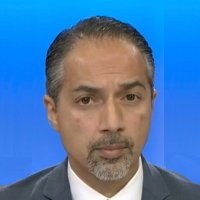
advocates responsible statecraft and diplomacy on Iran and geopolitics
Preview how this speaker shows up across market transcripts. Unlock the full archive, AI chat, and the version personalized to your watchlist, followed channels, and favorite speakers.
Trita Parsi is a foreign-policy analyst focused on U.S.–Iran relations, Israel, Lebanon, and regional security architecture in the Middle East. In the supplied transcripts, he repeatedly frames events through a strategic, systems-level lens: state behavior, deterrence, alliance shifts, and the limits of external military umbrellas. He often draws on historical comparisons (e.g., the Shah, the Cold War, Iran-Contra, Israel’s periphery doctrine) and presents himself as a careful interpreter of shifting regional alignments rather than a day-to-day commentator.
Parsi’s recurring worldview is not mainly about domestic economic policy; it is a geopolitical-economic vision centered on reducing dependency on U.S. military power and replacing it with more regionally autonomous security arrangements. He argues that Gulf Arab states and other regional actors are moving away from reliance on the U.S. security umbrella, which in turn changes leverage over issues like Palestine and Lebanon. Across the excerpts, he repeatedly suggests that outside military presence is costly, brittle, and politically unsustainable, and that regional powers will increasingly seek independent security frameworks. His emphasis is on strategic autonomy, deterrence balance, and the long-term erosion of American hegemony in the region.
Every analyzed appearance we have for this speaker, newest first. Open any transcript preview to read the underlying transcript.
Preview:Trita Parsi argues the US-Iran war's real significance is that Arab Gulf states concluded they cannot rely on the American security umbrella, accelerating a regional security architecture independent of Washington. As Arab states diversify away from US dependency, they may gain leverage to advance the Palestinian issue — something impossible under total US reliance. Parsi notes the US bases in the Gulf are likely to be phased out within 5–7 years, and frames Iran's push for extra-regional withdrawal as a long-standing Persian policy predating the Islamic Republic. The key change: Arab states now share that conclusion after seeing the umbrella fail when tested.
Preview:Mario Nawfal asks Trita Parsi about Israel's credibility regarding claims that journalists killed in Gaza were Hamas operatives. Parsi argues that Israel has repeatedly made false accusations, fabricated evidence (as documented by the BBC), and uses an overly broad definition of "fighter" that is incompatible with international law. The conversation then pivots to whether Israel intentionally made Gaza uninhabitable — Parsi concludes the evidence strongly suggests this was deliberate, citing Israeli officials' own statements about reconquest and beach resorts. They briefly touch on Iran's post-war influence, with Qatar, Egypt, and Pakistan conditioning regional peace on resolving the Palestinian issue.
Preview:Trita Parsi argues that Israel is manufacturing a new enemy narrative against Turkey — and to a lesser degree Egypt — mirroring the pattern Israel used against Iran in the early 1990s after Saddam's Iraq and the Soviet Union collapsed. He contends Israel needs a non-Arab "periphery threat" to justify its drive for regional military hegemony. The conversation also covers the Iran MOU/deal, Israel's growing isolation, US distancing under Trump/Vance, and Oman potentially charging fees at the Strait of Hormuz — all pointing to a shifting regional order where Israel may become the "odd man out."
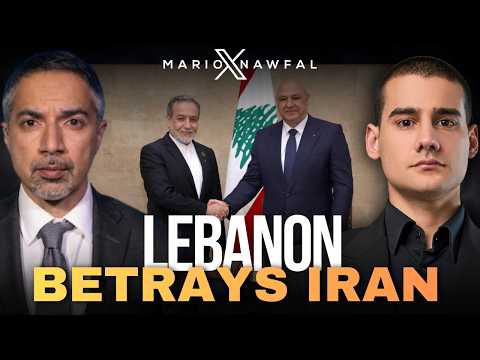
Preview:Trita Parsi analyzes the Iran-Israel-Lebanon MOU dynamic, arguing that Netanyahu is undermining the deal by imposing conditions (disarming Hezbollah) not in the text. He flags a bifurcated US foreign policy, Lebanese government incentives to weaken Hezbollah even at the cost of Israeli occupation, and rumors of Al-Shabaab involvement. The discussion shifts to a broader regional security architecture being shaped by Saudi Arabia, GCC states, and Turkey, and ends with a historical analogy: Israel's pivot from alliance with Iran to rivalry in the early 1990s mirrors its current pivot toward viewing Turkey as the next existential threat.
Preview:Breaking coverage of Israel-Lebanon signing a declaration of principles, with Trita Parsi analyzing it as likely contradictory to the Iran MOU. Netanyahu claims Israel stays in southern Lebanon until Hezbollah is disarmed — a criterion absent from the MOU. Parsi argues Israel is losing ground geopolitically, facing potential "recontainment," and that its sudden hostility toward Turkey mirrors the 1990s pivot against Iran: a search for the next enemy as regional power competition intensifies. The conversation also covers Oman tiptoeing toward Strait of Hormuz transit fees, the possibility of Israel assassinating Iran's supreme leader, and an emerging regional security architecture meeting in Saudi Arabia.
Preview:Trita Parsi argues that the latest Iran-US dynamics amount to a de facto acceptance of Iranian influence in southern Lebanon, which he says is a major reversal from Israel’s prior goal of eliminating that influence. He also says Israel’s reaction reflects real panic, and he links the broader regional conflict to the unresolved Palestine issue, arguing there can be no durable peace while Palestinians remain sidelined.
Preview:The video is a geopolitical interview about reported U.S. pressure on Israel after the Iran war and the new limits on Israeli military freedom in Lebanon and, possibly, Gaza. The guest argues that Washington is signaling real constraints on Israel, that this is already provoking panic in Israeli politics, and that the postwar ceasefire framework implies a phased Israeli withdrawal while still leaving room for skirmishes and ambiguity.
Preview:Trita Parsi argues that Israel is being forced into tighter limits in Lebanon and Gaza by the United States, even if Israeli leaders resist loudly. He says the practical outcome is likely a phased Israeli withdrawal from Lebanon, a more constrained Israeli operating environment, and continued friction as both sides test the new rules. He also argues the Iran war has accelerated a broader regional shift: Arab states are moving toward a new security architecture less dependent on the U.S., which could eventually improve the odds of progress on the Palestinian issue.
Preview:This is a geopolitical interview about the US-Iran talks and whether the emerging memorandum of understanding can survive domestic U.S. and Israeli resistance. Tom Switzer hosts John Mearsheimer and Trita Parsi, who argue that Trump is being forced to reverse his traditional pro-Israel posture because he sees the conflict as economically dangerous and strategically unwinnable, while Israel is trying to block any settlement.
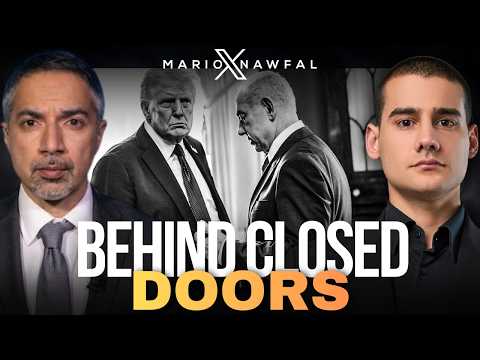
Preview:This is a geopolitical interview about Trump, Iran, and Israel rather than a market tape video. Trita Parsi argues the Trump administration is trying to force a new U.S.-Israel relationship, with Washington willing to pressure Netanyahu more directly — even by signaling support for Israeli opposition figures — if Trump wants a deal with Iran to define his legacy. He also says Iran came out stronger from the war in a military/political sense, but he thinks claims that Iran is now a regional superpower are overstated because it still faces major internal, economic, and diplomatic constraints.
Preview:Trita Parsi argues a U.S.-Iran deal could be much bigger than a narrow nuclear or Strait of Hormuz arrangement: in his view, it could open a new chapter in U.S.-Iran relations and reshape the Middle East. He says both sides have practical reasons to keep Hormuz open, but the deal’s durability hinges on the U.S. consistently restraining Israel and on preventing Hezbollah or Israeli actions in Lebanon/Gaza from derailing diplomacy.
Preview:This is a focused interview about Trump’s newly announced Iran deal. Trita Parsi argues the deal is broadly positive because it ends a war he says should never have started, likely includes nuclear terms beyond just Hormuz access, and represents a diplomatic win over escalation. He also says Israel and U.S. pro-war hawks will try to undermine the agreement, but believes the larger risk now is sabotage of implementation rather than immediate collapse from Iran.
Preview:Trita Parsi argues that Israeli opposition to any U.S.-Iran détente drove sabotage efforts, including leaking negotiation details and intensifying intelligence collection on the American team. He thinks the current talks may produce a mostly face-saving MOU with few concrete deliverables, especially on the Strait of Hormuz, and that the real negotiations and sabotage risks only begin after that.
Preview:Trita Parsi argues that any Iran-related deal is fragile unless Trump can continuously restrain Israeli efforts to undermine it. He says Israel’s record of sabotaging prior agreements, especially the JCPOA, makes him skeptical that an MOU or broader accord can hold without a major shift in U.S. Middle East policy.
Preview:The discussion centers on a possible U.S.-Iran deal or ceasefire framework, with both speakers arguing that the two sides are unusually close but that the agreement is still fragile. Trita Parsi’s core point is that both sides appear to have used limited, more performative military actions to create leverage for a deal, while the biggest near-term risk is spoiler behavior from media leaks and from Israeli attempts to sabotage implementation.
Preview:This is an interview centered on a rumored Iran–US deal/MOU after a recent conflict cycle. Trita Parsi argues the sides are unusually close, but any agreement is fragile because hardliners, media leaks, and especially Israeli sabotage could still derail it. He thinks the immediate terms likely include a regional ceasefire, some asset unfreezing/workaround payments, and a constrained arrangement around the Strait of Hormuz, but the real difficulty is implementation and follow-through after the deal.
Preview:Trita Parsi argues that the latest Israel-Iran exchange may mark an important shift in regional deterrence, but it is too early to know if a durable “new equation” has formed. His key focus is whether Iranian retaliation now forces Israel to think twice before striking Beirut or Lebanon, and whether the United States has materially reduced its defensive support for Israel.
Preview:Trita Parsi argues the U.S.–Israel relationship over Iran is under visible strain, and that recent signals suggest Washington may be reducing active support unless a deal is signed soon. He sees the current moment as one where diplomacy and military escalation are happening at the same time, with the 72-hour window around a possible MOU/ceasefire shaping whether pressure on Israel persists or snaps back.
Preview:Trita Parsi argues that an Iran–US deal is close because both sides are working through the last technical sticking points, especially the release of frozen Iranian assets via a Qatari-backed structure. He says Iran is under real economic and military pressure, but Washington still wants a way to avoid looking like it is “giving” Iran money, so the optics are being managed carefully.
Preview:This is an interview centered on the Iran-Israel-Lebanon escalation and how it intersects with US-Iran negotiations. Trita Parsi argues that the reported Beirut ceasefire confusion reflects a broader regional bargaining fight: Lebanon matters because Iran wants any deal to include a regionwide halt to Israeli attacks, while Israel may have incentives to keep pressing in Lebanon to sabotage diplomacy. He also stresses that much of the public signaling is unstable, contradictory, and vulnerable to misinformation.
Preview:Trita Parsi argues the Iran-U.S. talks are in a narrow, time-sensitive window and that delay could make any deal politically harder or even irrelevant. He says the Iranian side is close to a deal but still wrestling with core questions, while the U.S. may be probing Iran’s deterrence and testing whether a wider regional ceasefire can be enforced.
Preview:Trita Parsi argues the Iran-U.S. ceasefire talks are now being shaped by regional spillover, especially Lebanon and Gulf security, not just a bilateral Iran-U.S. deal. He says Iran may be using limited, calibrated strikes—like the reported Kuwait incident—to signal resolve without triggering full escalation, while also trying to force a regionwide ceasefire that restrains Israel’s operations in Lebanon.
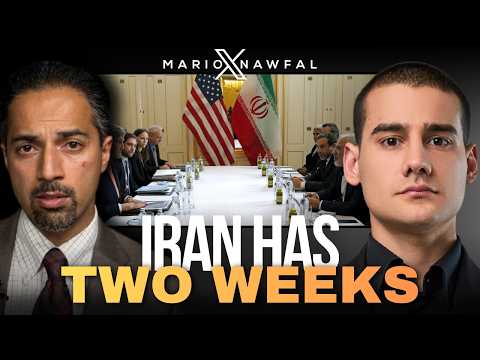
Preview:A Mario Nawfal interview with political analyst Trita Parsi argues that the US-Iran deal is probably close but still unfinished, with the biggest risks coming from public negotiation, unclear sanctions relief, and regional spillover—especially Lebanon and the UAE. The discussion turns on whether Trump can actually restrain Israel, whether Iran can trust US delivery, and whether tactical Gulf pressure is just probing or the start of a broader escalation.
Preview:John Mearsheimer and Trita Parsi argue that Trump’s Iran blockade is backfiring: it has not forced Iranian capitulation, is raising costs for the US and allies, and may leave Trump with only a choice between conceding defeat or escalating further. Both guests think a negotiated deal is still possible, but they differ on where the leverage sits and what happens if the nuclear file is deferred until later phases.
Preview:A geopolitical interview argues that a U.S.-Israel escalation against Iran would backfire by widening retaliation across the Gulf, threatening energy infrastructure, and handing Tehran long-term leverage over the Strait of Hormuz. The guests see Iran’s control of transit as a form of coercive bargaining power that could raise oil, insurance, and regional security costs while accelerating a shift away from the U.S.-led order.
Preview:This interview argues the U.S. is increasingly exposed to being pulled into another Iran-Israel war, mainly because Israeli strikes depend on U.S. defensive and enabling support. Trita Parsi says Israel wants to keep pounding Iran before it can rebuild defenses, but the political blowback from the Qatar strike may have narrowed the window and made Washington more cautious.
Preview:Trita Parsi of the Quincy Institute argues that the Iran-Israel conflict is far from over, predicting Israel will restart hostilities before the US midterm election season (~December). He explains Iran's missile effectiveness overwhelmed Israel's defenses, that Netanyahu's political survival depends on continued war, and that Iran's nuclear calculus fundamentally differs from Pakistan's — Iran actually benefits strategically from NOT having a bomb. He also reveals that Israeli/US claims about Iran being "weeks away" from a nuclear weapon were deliberate misinformation; internal cabinet notes show Netanyahu discussed "years," not weeks.
Preview:Trita Parsi argues the Middle East is in a highly escalatory phase, with the biggest near-term risk being another Israel-Iran war before December rather than the Yemen/Houthi front alone. He says Israel is trying to weaken or decapitate regional adversaries, pull the U.S. into direct involvement, and ultimately force Iran into a position where it can be bombed repeatedly without meaningful deterrence.
Others tracked across the same asset focus or market thesis.
Unlock every transcript this speaker appears in, compare them with your other followed voices, and ask the agent for the bull, bear, and consensus read in one workspace.
Type a question. Create a free agent to send it and keep the answer linked to this speaker.
Your question is preserved across sign-in.
Free. No card. Takes about a minute.