gold, silver, and macro-risk commentary for wealth preservation
Preview how this speaker shows up across market transcripts. Unlock the full archive, AI chat, and the version personalized to your watchlist, followed channels, and favorite speakers.
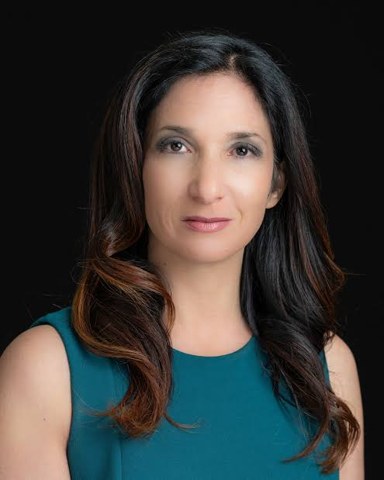
Daniela Cambone is a market-commentary host and financial media figure who frames conversations around macro risk, precious metals, geopolitics, and protecting wealth in uncertain times. The supplied evidence shows her repeatedly interviewing gold and hard-asset advocates and promoting audience-facing resources tied to wealth protection. Resolved identity links point to her own X account and ITM Trading, which aligns with a media role embedded in the metals/investing ecosystem. Evidence here is thin on her personal background beyond that professional positioning.
Cambone’s recurring worldview appears strongly skeptical of fiat currencies, financial complacency, and institutional assurances. She consistently spotlights debt, inflation, war, currency diversification, and gold as a reserve and protection asset. The framing suggests a preference for real assets, especially gold and silver, as long-term stores of value when geopolitics or policy undermine trust in paper assets. Her style emphasizes preparedness, capital preservation, and the idea that crises can accelerate a broader shift away from dollars and into hard assets. Based on the supplied material, this seems to be her dominant economic lens rather than a one-off interview posture.
Every analyzed appearance we have for this speaker, newest first. Open any transcript preview to read the underlying transcript.

Preview:Chris Whalen argues private credit is a "slow motion train wreck" because redemption gates, fund leverage, and conflicted bank/insurance support are delaying losses rather than resolving them. He also sees U.S. housing, precious metals, and parts of the AI trade as key market fault lines, with gold/silver still a buy on dips and AI showing late-cycle rotation and profit-taking.
Preview:Peter Boockvar argues the AI tech trade is at a major inflection point as Chinese competitors (CXMT, Yangtze Memory) commoditize models and memory chips at a fraction of US costs. He sees this as potentially bullish for gold via a repatriation trade: if global investors flee US tech, the dollar weakens and gold benefits. He also identifies stabilizing real rates and a dollar top as necessary for a gold bottom, noting $4,000 as a technical support level. On the Fed, he's skeptical that hawkish rhetoric translates to actual hikes given fiscal realities and housing market weakness.
Preview:Interview with Ian Harris, CEO of Copper Giant (CGNT.V), filmed at the Rick Rule Symposium. Harris outlines the converging catalysts for his Colombian copper project: a new pro-mining president taking office in August, surpassing one billion tonnes of resource, and a PEA due by year-end. He argues copper is in the early innings of a structural supply-demand gap — not a production problem but a deposit problem — and frames Colombia's political shift as a potential "Milei moment" that removes a major valuation overhang on the stock.
Preview:ITM Trading's Daniela Cambon interviews Banyan Gold CEO Tara Christie at the Rule Symposium in Boca Raton. Christie lays out the bull case for Banyan Gold (BYN.V): ~8.6M oz Au resource, $70M treasury fully funding a PEA and 70,000m drill program (largest in the Yukon this year), trading at just ~$50/oz enterprise value versus peers at 0.4-0.6x NAV. Key catalysts: upcoming PEA, new high-grade drill results outside the resource, institutional interest crossing the $500M market cap threshold, and a gold macro environment Christie sees heading to $6,000/oz. The conversation blends project fundamentals with Christie's personal story growing up in Yukon mining.
Preview:Tavi Costa of Azura Capital argues that the US must weaken the dollar to survive its debt burden, with ~4-5% of GDP going to debt service. He sees gold reaching $8,000 driven by Treasury/fiscal dynamics, expects the Fed to eventually change its inflation calculation rather than hike rates, and views the current pullback in gold/silver miners and royalty companies as a rare buying window comparable to 2008.
Preview:Collin Kettell, founder & CEO of Palisades Gold, explains how his firm accumulated 1.7 billion long-dated warrants across ~330 junior mining companies during 2024-2025, calling it the "trade of a lifetime." He argues the junior mining bull market hasn't truly started yet — gold's rally has been driven by central bank buying, not retail/institutional equity flows — and that his warrant-heavy portfolio is positioned for explosive upside when investors finally rotate into junior miners. He notes financing quality has deteriorated since Q1 2026 (fewer warrants offered), signaling the cycle is maturing, and Palisades has shifted from aggressive accumulation to letting the portfolio "blossom."
Preview:Keith Neumeyer, CEO of First Majestic Silver, argues that silver has entered a permanently higher price regime and will never trade below $50 again in our lifetime. He attributes the run to $120 earlier in 2026 to physical buying followed by massive bank short-covering, and sees the current ~$61 level as a healthy basing pattern. He draws a parallel to copper's 2000s breakout, which never fully retraced. Neumeyer also calls the paper silver market (~2B oz daily vs ~850M oz mined annually) a "scam" controlled by banks, and advocates for miners creating their own pricing mechanism.
Preview:Nomi Prins, interviewed by Daniela Cambone at the Rick Rule Symposium, reaffirms her $6,000/oz gold target by year-end, arguing that paper-market-driven selling in Q2 has exhausted itself and short-covering will propel gold from ~$4,100-4,200 back toward and above the January high of ~$5,500. She sees inflation trending down from ~4% toward ~2.9%, no Fed rate hikes (possibly a 25bp cut before midterms), and central bank buying continuing as the highest-conviction anchor. Silver (SLV) suffered severe paper distortion — daily ETF volume equivalent to 50M oz vs only 820M oz annual mine supply — but she maintains the $120 year-end target. On gold-linked Treasurys, she says conversations are happening in DC but no near-term action.
Preview:Clem Chambers argues the Fed under Trump will be forced into loose money and a "printathon" to fund industrial reshoring, AI buildout, and runaway deficits — regardless of who chairs the Fed. He sees structurally higher inflation (5-9%) for a decade, a strong-but-debasing dollar, and gold near a DCA entry zone (~$3,500/oz bottom). He also flags imminent Iran strike risk as a near-term geopolitical catalyst for gold and oil.
Preview:Bubba Horwitz, a veteran floor trader, joins Daniela Cambone on the Daniela Cambon Show to dissect the panic in gold after a ~20% correction from ~$5,500 to ~$4,000. He argues the massive put buying in GLD is NOT a bearish signal but rather panicked hedging by holders who refuse to sell their core positions — a contrarian bottoming signal. He believes the Fed will hike rates (not cut) barring a major catastrophe, dismisses the July 4th gold-reset theory as nonsense, and flags July 24–26 as genuinely important: the CME launches 24/7 micro contracts for gold and crude oil. Horwitz stands by his $6,000 gold call for this year and views the current washout as a buying opportunity.
Preview:Gerald Celente delivers a deeply pessimistic macro and geopolitical monologue: he argues the US-Iran peace deal is a sham, a false-flag event will reignite the war, and Trump will manipulate interest rates lower before the midterms to prop up equity markets. He is long-term bullish on gold, dismisses the SpaceX IPO as emblematic of a rigged market, and predicts China will lead the AI race while AI stocks face a bust. The conversation is light on specific trading levels and heavy on sweeping systemic critique.
Preview:Interview-style market discussion focused on the recent pullback in gold, silver, and Bitcoin. Gareth Soloway argues the metals selloff is a technical/emotional unwind after a momentum run, says the rumored July 4 gold reset is unlikely to happen then, and keeps a medium-to-long-term bullish view on precious metals despite near-term downside risk. He also sees Bitcoin weakening toward 50,000, is skeptical the Fed will hike rates, and frames the stronger dollar and AI-capex/tech risk-off move as part of the broader pressure on markets.
Preview:The video argues that a renewed push to audit Fort Knox is politically significant and could expose unresolved questions about whether U.S. gold is fully there, fully owned, or even usable in a crisis. It also makes a strong case for the Silver Act, which would loosen the New York-centric depository structure and expand where precious metals can be stored and delivered in the U.S. The guest frames recent state tax battles—especially New York’s proposed tax on gold and silver purchases, plus reversals in Maryland and Alaska—as proof that sound-money activists are making progress while governments still make poor policy choices.
Preview:This interview presents Heliostar Metals as a gold producer trying to compound from small-scale production into a mid-tier platform by 2030. CEO Charles Funk argues the company’s near-term cash flow from La Colorada and San Augustine can fund development of Ana Paula, while exploration and a later M&A step could get Heliostar toward 500,000 ounces of annual output.
Preview:An interview with Peter Grandich centered on the Fed, inflation, gold, and political risk. Grandich argued the Fed was unlikely to surprise markets immediately, inflation was not about to disappear, and the recent gold pullback was a healthy correction within a still-intact bull market. He also said he had rotated out of physical gold and miners earlier in the year, re-entered on weakness, and now preferred mining shares and earlier-stage developers over bullion for upside.
Preview:Mark Skousen argues the U.S. is in a slow-growth, inflationary regime that favors owning hard assets like gold, while AI and SpaceX are driving pockets of enthusiasm but not broad economic health. He is bullish on select AI-related investments and thinks SpaceX’s public market debut and NASDAQ-100 inclusion could lift tech sentiment, but he warns that small business, B2B spending, and job prospects for graduates remain weak beneath the surface.
Preview:Jim Rickards argues the recent gold pullback is a normal commodity-style shakeout, not the end of the bull market. He ties the decline to leveraged traders, stop-loss cascades, and—more importantly—central banks selling gold to fund higher oil imports amid a strong-dollar, war-driven environment. He remains bullish on gold, silver, and related long-duration themes, and says the current weakness may be a good entry point rather than a signal to exit.
Preview:The speaker argues the recent pullback in gold is temporary and driven by war-related inflation fears, a stronger dollar, and higher Treasury yields, not a broken bull market. He says physical gold holders should not sell, because once the Iran conflict eases and QE returns, gold should resume a much larger upside move.
Preview:This is an interview centered on Oceanic Iron Ore’s Hopes Advance project in northern Quebec, with Frank Giustra and CEO Chris Bethaldon arguing that the asset is unusually undervalued because of its tidewater location, low transportation costs, and long mine life. The discussion also detours into Giustra’s broader gold macro view, where he says recent gold weakness is tied to the Iran conflict, higher oil, a stronger dollar, and elevated Treasury yields that should reverse when the war ends and QE returns.
Preview:This live ITM Trading panel argues that gold and silver are in the early stages of a major monetary revaluation, not a bubble. Clive Thompson focuses on fiat-currency erosion, central-bank gold accumulation, debt and real-rate pressures, while Michael Oliver makes the technical case that silver is entering a breakout phase with much higher upside than gold, potentially toward $300–$500 and beyond. Both dismiss headline-driven reactions to war, oil, or short-term Fed talk as secondary to the larger shift out of paper assets and into monetary metals.
Preview:Ed Dow argues that 2026 is shaping up as a major downside year because housing, China, and AI are all flashing stress at once. He sees Bitcoin weakening as a liquidity warning, while gold remains his strongest long-term bullish call, with a path to $10,000 by 2030.
Preview:An interview between Daniela Cambone and Bob Thompson that starts with a personal segment about raising children with money values, then shifts to his macro view: gold and silver remain in a long-term bull market, but a near-term reset/chop is normal after a parabolic move. He argues the broader market is crowded into tech/AI, so the real catalyst for a major reallocation into precious metals is likely a capital rotation or a bubble break in AI rather than a simple price target call on gold.
Preview:Michael Gayed argues that the biggest near-term risk is not a simple equity pullback but a Japan-led reverse carry trade shock: if the yen is forced higher, leveraged borrowers globally may need to unwind risk assets. He layers on a second concern that AI enthusiasm may be overextended because real-world implementation costs and pushback could disappoint current expectations. He is not calling for an immediate crash date, but he repeatedly warns that markets are complacent and that investors should prepare for a tail event rather than assume the current rally is durable.
Preview:This is an interview with American Pacific Mining CEO Warwick Smith about the company’s two main Western US assets: Madison in Montana and Red Hill in Nevada. The pitch is that the company is unusually well financed for a junior miner, with cash, equity holdings, and milestone payments that materially offset its market cap, while a major 15,000-meter drill campaign is about to begin.
Preview:Bubba Horowitz argues that markets are broadly overvalued, rates are headed higher, and the economy is sliding into stagflation, while gold and silver are consolidating before another leg up. He is bearish on equities long term, cautious on buying SpaceX at an implied high valuation, and very bullish on gold, silver, and the broader inflation impulse tied to oil and geopolitics.
Preview:A gold-bullish interview arguing that oil shocks, inflation, Fed policy, and de-dollarization can drive gold higher, with silver and copper as secondary beneficiaries and gold miners highlighted as the preferred way to play it.
Preview:Gareth Soloway argues that gold, silver, and Bitcoin remain long-term bullish, but all three are vulnerable to near-term technical pullbacks as momentum traders get flushed out. He frames Japan’s rising yields and U.S. debt servicing costs as evidence of a larger sovereign debt problem that ultimately supports precious metals over time.
Preview:A host from ITM Trading interviews Justin Haskins about a thesis that most Americans do not directly own the securities in their brokerage and retirement accounts. Haskins argues the post-1960s custody system concentrated ownership through DTC, weakened property rights, and could be used in a future crisis to access investors’ assets, while the host frames physical gold and silver as the safer alternative.
Preview:David Woo argues markets are underpricing a widening US-Iran conflict that he frames as a US-China proxy war. He says oil is likely to stay high or spike further, which would pressure stocks and bonds, while the AI trade is vulnerable because new frontier models are becoming both powerful and politically harder to release. Gold, in his view, is being held back by high real yields and could only reassert if risk assets roll over, the dollar weakens, or the Fed is forced into cuts.
Preview:Interview with Ted Oakley on family wealth, child-rearing, gold, the dollar, and the risk of a major stock-market bear market.
Preview:An interview with Contango Silver and Gold’s Sean and Rick frames the post-merger company as a self-funding North American precious-metals platform built around Alaska production, British Columbia silver, and a direct-ship-or-tolling model. The speakers argue that high-grade assets, safe jurisdictions, and internal cash flow can support a faster, less dilutive path to mid-tier scale, with $50 silver described as the new floor and multiple production/catalyst milestones ahead.
Preview:Gerald Celente argues Buffett’s dollar warning reflects a deeper collapse in confidence in the U.S. currency, driven by debt, war, inflation, and policy failure. He frames gold and silver as the main hedges, says the Iran conflict worsens the macro backdrop, and warns that the U.S. is entering a dangerous monetary and geopolitical era.
Preview:Gary Wagner argues gold remains in a major bull trend but may still have some downside before completing its correction, with a year-end target of about $6,000 and longer-term potential toward $7,000. He is also bullish on silver, constructive on the S&P 500’s breakout, and cautiously positive on Bitcoin, though he prefers a small set of surviving crypto assets rather than the broader altcoin universe.
Preview:A promotional interview argues that new U.S. crypto/banking rules could accelerate money moving out of banks and into stablecoins, tokenized assets, and gold-backed products, with gold and miners benefiting most.
Preview:Steve Hanke argues the UAE’s reported exit from OPEC is a rational response to rising Gulf insecurity and a desire to pump more oil now, while he expects higher oil prices, persistent inflation, and a continued secular bull market in gold.
Preview:A technical-market interview on gold, silver, miners, Bitcoin, and equities. Chris Vermuan argues precious metals are in a corrective pause after an euphoric run, with short-term downside still possible before a larger multi-year bull phase resumes.
Preview:A heated interview with Mitch Vexler argues that voting software, school bond financing, and property-tax valuations are linked by a fraudulent system that strips wealth from households, and he says the safest response is to own physical precious metals, especially gold and silver.
Preview:The video argues that election software, property tax assessment systems, and school bond financing are linked by fraud and that this is evidence people should move into physical gold and silver. The host and guest frame the issue as systemic, politically nonpartisan, and severe enough to threaten legitimacy, taxes, pensions, and trust in institutions.
Preview:Bert Dohmen argues that private credit has become a large, illiquid bubble that could be the next crisis trigger, and he says the safest response is to avoid broad market risk and favor gold and silver. He is also bearish on crypto, skeptical of Wall Street crowding, and expects more inflation, policy mistakes, and geopolitical stress.
Preview:Robert Kiyosaki argues that wars, debt, and money printing are setting up a major financial reset in which retirees and savers get hurt, while holders of gold, silver, and other real assets benefit. He repeatedly warns that 401(k)s, pensions, and the S&P 500 are vulnerable, and frames the episode as a call to move out of paper assets and into hard money.
Preview:The interview argues that equities are being driven by thin, retail-led participation while gold and silver are in a broader uptrend, with gold still targeting $6,000 this year. The guest sees war-related oil spikes as mostly a fear premium that should fade, while warning that pensions, 401(k)s, Social Security, and overleveraged investors are exposed if a larger market selloff arrives.
Preview:Chris Mancini argues the current gold pullback is temporary and that gold can still move toward $6,000 once Middle East tensions settle. He frames gold as a liquidity source during crises, a hedge against fiat debasement, and a beneficiary of continued reserve diversification away from dollars and other currencies.
Preview:Ian Harris, president and CEO of Copper Giant Resources, argues that copper is in a structural supply crunch driven by electrification, AI/data centers, and long mine-development times, and says Copper Giant’s Makoa project in Colombia is unusually attractive because it is large, near-surface, high-grade, and rich in molybdenum.
Preview:Greg Walden argues the U.S. is already inside a debt 'black hole' where money printing, debt monetization, and slower real growth are forcing a long-term decline in purchasing power. He says the near-term trade is bearish dollars and bullish gold, silver, and some commodity-linked currencies, with stagflation the most likely path.
Preview:An interview on gold, silver, copper, and junior miners: Michael Gentile argues the recent gold selloff was mostly a liquidity-driven flush, not a broken long-term thesis, and says the sector is still early with attractive valuations, ongoing central-bank demand, and likely M&A.
Preview:An interview with Peter Grandich centered on his call to sell gold, silver, and miners near the January peak, then re-enter on March 23 after a sharp correction. He argues gold’s long-term trend remains higher, but future gains may be steadier and increasingly driven by mining shares rather than physical metal, amid a pessimistic macro backdrop that favors capital preservation over aggressive return chasing.
Preview:Gerald Celente argues this is an exceptionally dangerous moment because the U.S. and/or Israel could escalate into a wider war with Iran, which he says could push oil above $100 and damage the global economy and equities. He also says the dollar is dying, gold and silver are still in a secular bull market, and the system is moving toward digital money, debt stress, and a broader financial reset.
Preview:Daniela Cambone interviews Gareth Soloway on gold, silver, platinum, palladium, Bitcoin, oil, and equities. Soloway is near-term bearish on gold despite the recent bounce, expects a potential pullback toward $3,900 and says he would buy physical metals aggressively near $3,500, while staying bullish longer term on the back of U.S. debt and possible Fed easing. He is tactically bullish Bitcoin for a move toward $80k-$85k, cautious on stocks with a possible larger rollover, and selectively interested in beaten-down nuclear and growth names.
Preview:Todd Hoffman argues that the gold bull market is being driven by dollar weaponization, central-bank buying, and a global search for hard assets, and he says gold is the best long-term wealth preservation tool.
Preview:Clem Chambers argues the precious-metals trade has already moved too far in gold and silver, and says he is rotating toward platinum, palladium, copper, and select equities. He expects a slow dollar devaluation, more volatility under Trump, and a broader period of “mass disruption” that will favor hard assets and asset-heavy businesses.
Preview:Frank Holmes argues gold is still underpriced relative to debt and money-supply bases, with upside tied to persistent negative real rates, money printing, and geopolitical weaponization of finance. He also extends the same framework to silver, shipping, and Bitcoin as strategic assets in a world shaped by U.S.-China rivalry.
Preview:Bubba Horwitz argues that silver and gold are being held down by paper-market mechanics, but that both metals likely remain in a powerful uptrend, with silver having more upside leverage than gold. He dismisses the idea that Poland or other central banks will meaningfully sell gold, and says the bigger macro risk is an equity/banking unwind that could drive capital into hard assets.
Preview:A gold-and-silver focused interview arguing that the metals remain in a broader uptrend, but likely need a correction/consolidation first. The guest also frames recent Middle East conflict and oil spikes as inflationary forces that could support hard assets, while seeing uranium, copper, and select oil names as structurally attractive.
Preview:Mark Thornton argues that gold and silver are warning signals for a broader U.S. monetary and fiscal deterioration, with central-bank gold buying, debt growth, and rising long-term rates supporting a hyperinflation-risk thesis. He is notably even more bullish on silver than gold, citing inelastic supply/demand and heightened volatility.
Preview:Interview focused on David Garofalo’s thesis that chronic debt, fiat debasement, and growing monetary stress will push the system toward a gold-backed reset. He argues gold is the true monetary asset, supply growth is constrained, and royalty companies offer cleaner leverage than miners.
Preview:A market interview focused on the Iran-driven oil shock and its spillovers into inflation, gold, silver, credit, and equity leadership. The guest argues the key variable is duration: a quick reopening of the Strait would ease the damage, but a prolonged disruption would reinforce a broader commodity bull market and keep rates/inflation elevated.
Preview:The video is a long-form gold/financial-crisis interview arguing that private credit, private equity, and insurance-linked annuity products are hiding systemic risk that will eventually hit retirees and public equity holders. The guest is broadly bullish gold and silver, skeptical of Bitcoin and private markets, and expects higher stress across Wall Street and possibly higher long-term rates.
Preview:Jeff Clark argues that gold and silver remain in a durable bull market, that the Iran conflict is adding a near-term safe-haven bid, and that the bigger long-term driver is still U.S. debt and currency debasement risk. He says he is not selling gold now, but would consider taking profits in a true mania to rotate into cheaper real assets and participate in a wealth transfer.
Preview:Jim Rickards argues the recent Iran escalation is part of a broader U.S.-Israel power and oil strategy, while gold’s surge reflects dollar debasement and keeps his $10,000 target intact.
Preview:Peter Grandich argues the U.S. is heading toward a debt-driven fiscal crisis, and says tariffs, political dysfunction, and de-dollarization make gold and silver the preferred long-term hedge.
Preview:The video argues that U.S. gold could be revalued sharply higher—potentially to $10,000+ per ounce—to improve the government balance sheet, support debt management, and possibly help finance a Bitcoin reserve. The guest also remains constructive on gold, silver, and miners as part of a new precious-metals regime, while seeing tariffs and geopolitical risks as inflationary and disruptive.
Preview:David Webb argues that the “Great Taking” is a global legal-financial setup in which investors do not truly own securities and central banks/banking institutions can claim pooled assets in a crisis. He urges state-level legal fixes in the U.S., warns the system is already global, and says gold and silver are partial defenses but not a full solution.
Preview:A gold panel at VRIC argued that the current move in gold is a durable bull market, not a bubble, and that it reflects a deeper loss of confidence in fiat money, sovereign debt, and the US dollar. Panelists said central-bank buying, emerging-market demand, and a possible remonetization of gold are the key drivers, with silver, miners, and royalties also benefiting.
Preview:An ITM Trading interview argues that recent gold and silver volatility is temporary noise inside a much larger inflationary and monetary breakdown story. The speaker says gold and silver should be owned as long-term protection, with a hyperinflationary reset, currency debasement, and commercial real estate stress all reinforcing the case.
Preview:David Morgan argues the post-spike silver crash was a violent but expected shakeout inside an intact bull market. He says physical demand, commercial-bar flows, and eventual price discovery by the physical market should reassert control, while gold and silver remain key hedges against dollar debasement and monetary regime change.
Preview:Gareth Soloway argues that the S&P 500 is likely rolling over from major overhead resistance, silver has gone emotional and may still correct further, gold is stronger but also stalling at resistance, and Bitcoin remains vulnerable after a technical breakdown. He frames precious metals as long-term insurance against fiat debasement while keeping a trader’s focus on chart levels and positioning discipline.
Preview:Mitch Vexler argues that a massive, hidden school-district bond fraud—his quantified figure is $5.1T—has been sustained by inflated property appraisals, excessive taxation, and institutional cover-ups, and that it is part of a broader fiat-credit system built on money printing and compounding debt. He ties the issue to inflation, the Federal Reserve, and a coming crisis of confidence, while urging physical precious metals as the safest way to get outside the banking system. He is bullish on gold and silver on a long-run store-of-value basis, bearish on Bitcoin/MSTR as speculative and levered, and frames recent pullbacks in metals as normal chart behavior rather than a thesis break.
Preview:An ITM Trading segment interviews John Ski, CEO/managing director of Mithril Silver and Gold, about a high-grade silver-gold district in Mexico. He argues the project has been de-risked, has strong jurisdictional history, and could see a production path in 2–3 years, while also tying the broader silver setup to persistent supply deficits and structurally higher precious-metal prices.
Preview:Michael Oliver argues silver has entered a new structural bull phase after a sharp but healthy correction, with a possible move to $300–$500 by summer and gold potentially reaching $8,500 this cycle. He frames the setup as driven by momentum breakouts, a secular reset in monetary metals, and broader stress in the dollar, bonds, and commodities.
Preview:This is a short conference interview between ITM Trading host Daniellea Kambon and Brad Work, CEO of Scottie Resources. The discussion centers on Scottie’s transition from exploration to development, a direct-shipping ore model, a Taiwan offtake/blending arrangement, and the broader bullish backdrop for gold and hard assets.
Preview:David Rosenberg argues that gold and silver are still in a powerful secular bull market, but that the current move has become too fast and too vertical to chase tactically. He prefers waiting for a pullback, while staying structurally constructive on gold, silver, select producers, and other non-U.S.-equity hedges.
Preview:Colonel Douglas Macgregor argues that the world is moving away from the dollar-centered order toward a multi-polar system anchored by civilizational states and rising gold reserves. He is bullish on gold and silver, skeptical of U.S. tariffs and military threats, and says the U.S. should focus on domestic cohesion, border control, and rebuilding productive capacity rather than trying to dominate rivals like China, Russia, India, or Iran.
Preview:Robert Kiyosaki argues that silver remains his preferred store of value, that confiscation and wealth taxes are real risks, and that the broader system is moving toward currency debasement, civil conflict, and geopolitical confrontation. The interview also reiterates his long-standing themes: use debt strategically, favor hard assets over fiat, and avoid overconfidence even in silver at elevated prices.
Preview:Ivan Bebek argues copper is entering a structural shortage because electrification, AI, infrastructure renewal, and a cleaner but slower permitting regime are colliding with declining ore grades and long mine lead times. He says Capernico’s Sombrero project in Peru could be a world-class copper discovery, with 17 targets, strong surface sampling, and drilling set to begin in April after permit work. The interview also briefly touches silver and gold. Bebek is constructive on both, but especially says gold is only “just beginning,” while silver has “a lot more legs left,” though copper is the main focus throughout.
Preview:This is a hosted interview with Rick Rule and Frank Giustra arguing that gold is still in the early-to-middle stages of a secular bull market tied to a global monetary reset. Both see near-term spikes from geopolitics as secondary to deeper forces: dollar debasement, debt/deficit pressure, de-dollarization, and a shift toward gold as a monetary anchor.
Preview:Michael Oliver argues silver is entering a rare structural breakout and could move violently higher, potentially to $300–$500 within months, with gold eventually much higher as well. He ties the move to a broader bond-market and fiat-currency stress event, says long-dated Treasury weakness could force central-bank intervention, and frames gold/silver as the clearest protection against a worsening monetary crisis.
Preview:A precious-metals-focused roundtable promo argues that a long-running fiat-currency regime is breaking down and that gold and gold equities are already in a bull market. The speakers frame the move as part of a historical monetary reset, warn that debt monetization and currency debasement are unsustainable, and suggest the next phase could broaden from gold to “the best of the best” and then “the best of the rest” in the sector.
Preview:Tom Bradshaw argues that 2025’s sharp outperformance by gold and silver versus U.S. equities was not a random anomaly but a warning sign of deeper macro stress. He says gold’s behavior resembles prior periods that preceded severe recessions or fiat-system stress, and he expects that warning to matter again in 2026, even if the path is messy and time-dependent.
Preview:Gerald Celente argues the Venezuela operation is part of a broader pattern of U.S. intervention, media distortion, and war-driven distraction amid weakening global and U.S. economic conditions. He says the immediate setup is favorable for gold and silver and warns of mounting financial stress in repo markets, office real estate, banks, and a coming AI/com bust.
Preview:The interview centers on a very bullish precious-metals and hard-asset outlook for 2026. Todd Bubba Horowitz argues gold can reach $6,000-$8,000 this year, silver can move above $100, and both metals benefit from debt, inflation, dollar debasement, and growing industrial/currency demand.
Preview:Interview focused on Jeffrey Tucker’s view that recent GDP strength is inflated by tariffs, healthcare spending, and debt-driven money creation, while the deeper story is loss of faith in fiat money. He argues the Fed and government policy risk a second inflation wave, and he frames gold, silver, and even junk silver as a preparation trade for monetary instability.
Preview:David Morgan argues silver’s sharp 10%+ selloff is a normal, even expected, feature of a volatile bull market rather than proof the move is over. He says silver can “scare you out or wear you out,” thinks the market is probably not at its ultimate peak yet, and urges investors to have a disciplined exit plan and to think in real-asset terms rather than dollar prices.
Preview:Daniela Cambone interviews Jim Rickards on the latest surge in gold and silver, arguing the move is being driven by deeper structural forces rather than the Fed. Rickards says central-bank buying, flat gold supply, rising institutional allocation, and geopolitics tied to reserve-asset distrust are the key drivers, and he sees gold potentially reaching $10,000 by the end of 2026 with silver around $200 if that happens.
Preview:Holiday special in which Peter Grandich and NFL Hall of Famer Joe Klecko host the ITM Trading team at Klecko’s home for Christmas conversation, faith reflections, and light football trivia. The market content is limited but Peter does touch on his decades in financial advising for athletes, the importance of financial education for pro players, and his blunt skepticism toward many financial advisors and journalists.
Preview:Mitch Vexler argues that U.S. property taxation and school-district bond structures are a massive, hidden fraud that is pushing households, counties, banks, and governments toward a larger credit crisis. He says appraisals are arbitrary, property taxes function like a second mortgage, and the bond system is mathematically impossible to repay without a major reset or repeal.
Preview:Danielle from ITM Trading interviews behavioral expert Chase Hughes about monetary collapse psychology, arguing that debt, confusion, and media manipulation keep people compliant while the dollar’s decline may already be underway. Hughes says people should prepare by reducing dependency, increasing tangibility, and strengthening identity, and he pushes a strong anti-distraction, anti-consumerism message more than a concrete market forecast.
Preview:The video argues that Tether’s growing gold reserves are a rational hedge against fiat and U.S. Treasury risk, and that gold’s broader backdrop remains constructive because of debt, deficits, geopolitics, and central-bank buying. It also frames Italy’s attempt to claim central-bank gold as a fiscal maneuver, and treats the recent silver spike and JPMorgan desk-relocation rumor as signs of stress and market microstructure distortion.
Preview:Bert Domen argues silver’s move is a catch-up rally with more room long term, but he thinks the more important story is rising systemic risk: loose money, record margin/loan growth, speculative leverage, and a market structure he sees as increasingly manipulated. He is bullish on silver and platinum as real-money hedges, bearish on crypto and leveraged ETFs, and cautious on equities and AI names because valuation and crowding are getting stretched.
Preview:Danny from ITM Trading interviews Todd "Bubba" Horowitz about silver's 90%+ surge, the unconfirmed rumor that JP Morgan moved its precious metals desk from New York to Singapore over Thanksgiving, and a conveniently-timed CME outage during the rally. Horowitz is unequivocally bullish on physical gold, silver, and platinum for the long haul, framing them as the only honest hedge against Fed-driven inflation, a weakening job market, and an overvalued stock market. He treats the Singapore rumor as plausible given tax incentives and JP Morgan's history of manipulation settlements, but acknowledges no proof. The conversation is a mix of price celebration, anecdotal economic gloom, and steadfast buy-and-hold advocacy.
Preview:Clen Chambers of A New FN discusses Japan's bond yield spike and its implications for global liquidity. He argues the real driver is not Japan but a US liquidity squeeze (depleted reverse repo, banks tapping standing repo facility), and expects the Fed to step in more aggressively. He is structurally bullish on gold (>20% upside, potential $8-10K in worst case) and platinum (supply scarcity at 200 tons/year, AI-driven energy demand), while bearish on Bitcoin (expects crash to $40-60K absent Fed intervention). The interview covers liquidity mechanics, geopolitical risk, Tether's gold strategy, and why precious metals are decoupling from liquidity-driven selloffs.
Preview:Peter Grandich discusses Japan's 10-year JGB yield breaking above 1.7% — the highest since 2008 — and frames it as the end of the 30-year yen carry trade that shipped trillions into US Treasuries and suppressed global rates. He argues this unwind adds another "negative log" to an already strained system: a US drowning in debt, a broken retirement landscape, and an unaffordable housing market. His core investment thesis is bullish gold: he sees $5,000 gold within 12 months, driven by physical-market dominance over paper trading, BRICS/Asian central bank buying, and a potential rotation out of equities and crypto into gold as 2026 unfolds. The conversation also touches on AI-driven unemployment risk, the 50-year mortgage proposal, and the fading American dream.
Preview:Marc Faber and Grant Williams argue that fiat systems, bloated governments, and central-bank money printing have eroded living standards while boosting asset prices. Their core trade is that gold is being remonetized, platinum looks especially mispriced, and paper currencies face long-run purchasing-power loss and possible reserve-currency decline.
Preview:Gareth Soloway argues the recent selloff in Bitcoin, gold, semiconductors, and the S&P is a technical de-risking phase that could extend further before a larger rebound. He is short-term bearish on BTC, SMH, and gold, but remains longer-term bullish on Bitcoin and precious metals, especially gold and platinum, while warning that AI valuations, chip depreciation, data-center constraints, and a broader recession risk are tightening the setup.
Preview:Pierre Lassonde argues gold is in a structural remonetization phase and could rise to $17,250 or beyond if even a small slice of global financial assets rotates into bullion. He ties the thesis to record debt, rising deficits, currency devaluation, and the view that governments will choose inflationary adjustment over fiscal pain, while also saying the mining sector is healthier and more disciplined than in prior cycles.
Preview:Frank Giustra argues that gold is in the final, most explosive phase of a long bull market, driven by dollar weaponization, sanctions, central-bank buying, and a coming shift toward alternative settlement systems led by China. He is bearish on Bitcoin as a substitute for physical gold, skeptical that stablecoins can fully replace dollar demand, and broadly expects more monetary disorder, higher gold prices, and a difficult macro backdrop for the U.S. and its institutions.
Preview:Jay Martin argues the gold bull market is real, still early, and likely part of a multi-year secular trend driven by central-bank buying, dollar devaluation, and rising geopolitical uncertainty. He urges investors to take profits in speculative juniors after the recent surge, while preferring cash-flowing majors and royalty names for longer-duration exposure.
Preview:Chris Vermeulen of TheTechnicalTraders.com presents a strongly bullish gold thesis, calling for $4,700–$5,200/oz by year-end (a ~25–30% rally from current levels). He frames the recent pullback below $4,000 as a healthy three-wave correction within a secular bull market, drawing a structural analogy to the 2007–2008 setup where gold rallied as equities topped. He sees a "financial reset" approaching, with gold and silver as the cleanest plays and Bitcoin as an unappealing, high-risk chart to avoid.
Preview:Keith Neumeyer, CEO of First Majestic Silver, sits down with Daniela Cambone to discuss the ongoing physical silver shortage, LBMA inventory drawdowns, COMEX delivery stress, and China's halt on silver exports. He argues the silver market has been in a 150-250 million ounce annual deficit for five years, that the recent parabolic move to ~$55 was driven by physical demand rather than short covering, and that a 15-20% correction is healthy before the bull market resumes. His long-term thesis: triple-digit silver and $5,000 gold, play the long game, don't trade the noise.
Preview:Professor Steve Hanke of Johns Hopkins discusses his advisory role with the Trump administration on a pro-dollarization strategy to counter de-dollarization by China and BRICS. He outlines three mechanisms: official dollarization (replacing a local currency with USD), currency boards (local currency 100% backed by USD), and dollar-based stablecoins under the GENIUS Act. Argentina is the prime candidate, though IMF opposition and feasibility concerns remain hurdles. Hanke gives a $6,000 gold price target based on 1980-era disposable-income metrics, noting consolidation around $4,000 and a 2:1 call/put ratio betting above that level.
Preview:Garrett Gogan of Golden Portfolio argues the gold bull market is far from over, supported by unprecedented central bank demand post-dollar weaponization. He flags GLD/GDX shares outstanding as nowhere near prior cycle peaks, indicating retail hasn't arrived. The GENIUS Act — legitimizing stablecoins in US banks — is framed as a Pandora's box that could trigger the largest bank run in history, while simultaneously benefiting gold via Tether's massive gold accumulation. Silver is trading at a discount to fair value vs gold, with blow-off potential that hasn't materialized.
Preview:David Morgan discusses the recent COMEX silver drain of 29M ounces in October, framing it as market self-correction rather than collapse. The transatlantic arbitrage has reversed — metal flows from COMEX to London as spot premiums normalized. He estimates 40-60M additional ounces may be needed to stabilize London, but inventory tightness (roughly 3 months of demand) remains a structural vulnerability. Morgan views the episode as physical market asserting itself over the paper paradigm, though the worst of the squeeze appears behind us for now.
Preview:Gareth Soloway maps gold's current correction against the 1979 parabolic analogue: after nine straight up weeks, a sharp pullback is healthy and expected. He sees support at ~$3,948, then ~$3,500 as the max drawdown level where long-term buyers should accumulate aggressively. He targets $5,000 next, with $8,000–$10,000 possible in 3–5 years. Silver could revisit $40 before heading to $60–$62. On equities, the S&P is testing a major parallel channel — the China trade deal outcome Thursday is pivotal. Bitcoin is lagging equities and capped at $126–$127K; its underperformance worries him as a potential leading signal for risk assets.
Preview:ITM Trading host Daniela Cambone (Danny) interviews Todd "Bubba" Horwitz about recent AI-generated fake Warren Buffett videos urging investors to "dump gold," which they frame as a likely coordinated manipulation campaign. Horwitz dismisses the fakes as noise, argues gold's pullback was a natural overbought correction, and remains structurally bullish on precious metals. He is deeply critical of the Fed, rate cuts, fiat currency, and the state of major US cities. The conversation also covers the cooler-than-expected CPI print, central bank gold buying, and the long-term case for physical gold and silver.
Preview:John Dudy, editor of John Dudy's F5 Gold, joins host Danny (the Daniel Cambon Show / ITM Trading) to argue that gold's rally past $4,000 is far from over. His core thesis: Trump's chaotic and disruptive policy style with fewer guardrails than his first term is the primary driver, creating confusion that pushes global investors into gold. Central bank buying provides a structural floor but is partly a price-effect story. Dudy prefers gold mining stocks, noting his five recommended picks are up ~160% YTD — roughly double gold's gain — and sees valuations at ~8x operating cash flow as still having room to run. He is not a silver bull, calling it a derivative of gold. He expects a recession eventually but says that's not central to his gold view; lower rates under a new Fed chair would be an additional tailwind.
Preview:Mitch Vexler returns to ITM Trading to argue that a $5.1 trillion fraud in US school bond financing — built on systematically inflated property appraisals and rubber-stamped by credit rating agencies — dwarfs the 2008 crisis. He claims 42 million households are at risk of bankruptcy, school district bonds are effectively sub-junk, and the rating agencies are culpable in what he calls a criminal conspiracy. The interview covers his legal strategy (Texas Supreme Court amicus brief, potential class actions), the circular funding mechanisms that perpetuate the fraud, and his view that gold, silver, bitcoin, and debt-free cash-flowing assets are the only places to hide.
Preview:Simon Mikovich frames the gold rally not as a speculative bull market but as a "bare market in trust" — an accelerating decline in confidence in Western financial, monetary, and property-rights arrangements. He argues Western investors haven't even arrived yet (ETF tonnage is barely back to 2020 levels), that central bank and non-Western buying has driven the move so far, and that the recent Dutch seizure of Nexperia is a "Russia reserves 2.0" moment that deepens the bifurcation trend. He sees a physical gold squeeze as a "when, not if" scenario driven by strategic demand overwhelming the spot market's limited refining and inventory capacity.
Preview:Frank Giustra, interviewed by Daniela Cambone, argues that gold's surge toward $5,000 is driven not by retail investors but by central bank accumulation tied to a once-in-a-century monetary system reset. He believes gold is being positioned as a neutral settlement currency in a de-dollarizing world, with China building vault infrastructure to back the yuan with gold convertibility. He still buys physical gold, warns the fiat currency system is losing trust, and advises dollar-cost averaging rather than timing. He sees silver as a potential outperformer in a gold bull cycle and warns of a fragile, overvalued US equity market heading toward an eventual unwind.
Preview:Gerald Celente joins Daniela Cambone on ITM Trading to discuss the accelerating global shift toward a surveillance economy, citing biometric banking rollouts in Vietnam and Mexico as precursors to US implementation via the Genius Act. Celente argues this merges with a coming CBDC framework designed to strip financial privacy and impose total government control. He ties this to a record $337 trillion global debt, a collapsing dollar (-10% YTD), and surging gold prices — which he calls the most dramatic spike he has seen since 1978. He predicts an AI-driven dot-com bust 2.0, a broader market crash, and gold skyrocketing in response. The conversation also covers censorship, loss of civil liberties, the erosion of American culture, and Celente's call for a "renaissance" and a We the People's Party.
Preview:Interview with investigative journalist Sam Cooper on Canada-US relations under Mark Carney and Donald Trump. Cooper argues Canada is a major hub for Chinese money laundering and fentanyl precursor trafficking, that weak Canadian laws enable cartel exploitation, and that Carney—while smarter than Trudeau—has yet to deliver real reform. The Canadian economy is described as structurally broken, Alberta separatism remains alive, and Cooper's core demand is deep legal reform to align Canada with US security interests.
Preview:Matthew Pipenberg, former attorney and hedge fund manager, argues the dollar is approaching a "Stalingrad moment" — deliberate policy-driven debasement to monetize unsustainable sovereign debt. He frames gold's run to $4,000 as a historic flight from bad fiat money to real money, driven by central bank stacking, BRICS de-dollarization, and collapsing trust in US treasuries. He sees silver as the undervalued opportunity for smaller investors, remains cautious on Bitcoin as untested, and calls the GENIUS Act a disguised CBDC that enriches insiders. His core thesis: gold is not in a bubble — it's the lifeboat, and $5,000 is coming faster than $4,000 did.
Preview:Joel Litman argues that gold and the S&P 500 can rally simultaneously — a "Goldilocks for gold and stocks" thesis — driven by different forces: global chaos/inflation fears fuel gold, while strong US corporate earnings (9%+ growth) and AI productivity fuel equities. He downplays recession risk by pointing to the absence of a corporate credit crisis and emphasizes stock-picking (400+ US stocks doubled this year) over macroeconomic calls. He is skeptical of BRICS/de-dollarization and sees China's economy as deeply unprofitable on a uniform accounting basis.
Preview:Dr. Nomi Prins discusses China's Shanghai Gold Exchange launching new offshore gold vaults in Hong Kong, Singapore, Zurich, and Dubai — framing it as a deliberate move to shift the center of the global gold trade eastward, accelerate de-dollarization, and establish yuan-driven financial infrastructure. She sees this as part of a 10-year strategic sequence, not an accident. Gold is forecast to reach $4,500/oz around the 2025-2026 turn, and silver to $60. Central bank buying, supply constraints, and jurisdictional neutrality all support higher prices. The West is aware but slow to respond.
Preview:David Morgan, a 30+ year silver analyst and author of The Silver Manifesto, presents an extremely bullish case for gold and silver, framing the current moment as a global currency crisis where the dollar's decline will drive a manic acceleration phase in precious metals. He argues silver faces a structural supply deficit where industrial demand alone consumes annual production, and that even 1% rotation from $7 trillion in money markets could overwhelm the silver market. He cautions that corrections will come and the bull market's job is to shake off weak hands, but believes we are far from the ultimate peak.
Preview:Frank Holmes, CEO of US Global Investors, returns to the show to update his 2020 $4,000 gold call (now nearly hit) with a new $7,000 gold and $100–$125 silver forecast by the end of Trump's second term. He ties the thesis to ballooning G20 sovereign debt, military/cyber defense spending replacing social-welfare spending, de-dollarization efforts by China and BRICS, and central bank gold hoarding. He flags that gold miners are generating strong free cash flow with expanding margins, yet gold equity ETFs saw net redemptions until recently — suggesting early innings for a much bigger move. The host, whose name is never stated on air, steers the conversation, pitches the firm's precious metals services, and describes the interview as "breaking news" for gold.
Preview:Clem Chambers joins Daniela Cambone and argues that gold's primary use case is as a currency in war — and that central banks are buying it precisely because they're bracing for escalating global conflict. He also outlines an AI-driven economic boom scenario as the optimistic fork in the road, warns that political pressure on the Fed is extremely dangerous, and frames Bitcoin as a "flight capital" asset that spikes ahead of crises while gold follows for the war itself. Silver and platinum/palladium get brief mention as lagging beneficiaries.
Preview:Ed Dowd speaks with host Daniela Cambone (ITM Trading / Daniela Cambone Show) about engineered political division in America, arguing the Charlie Kirk assassination was timed to divide the populace ahead of an impending financial reset. He sees housing as the "canary in the coal mine" — overbuilt multifamily, prices too high for buyers, about 8 months from public crisis — and warns of a concurrent AI stock bubble resembling the dot-com / railroad booms. He views these as converging toward a Great Depression-style reset requiring a "new deal." Gold is his beneficiary: central banks and commercial banks are accumulating, partly due to Basel III making it Tier 1 capital.
Preview:An interview with Alistister Crook argues that China is building a parallel trade-and-payments system linked to gold, the yuan, and BRICS partners, which he believes could weaken dollar dominance over time. He also connects that thesis to rising geopolitical fragmentation, sanctions on Iran, Saudi-Pakistan alignment, and what he sees as Europe’s and the UK’s slide toward political and social instability.
Preview:Jim Rickards sits down with host Daniela Cambone to discuss the Genius Act and stablecoins. He rejects the Russian narrative that stablecoins are a US Treasury prop-up, arguing that the real danger is unregulated stablecoin sponsors operating like un-audited money market funds that will inevitably face a run. He also discusses central bank gold buying as a response to dollar weaponization, the Vietnam bank-account freeze as a trial run for CBDC-style control, and ends with reflections on the Charlie Kirk assassination.
Preview:Bert Dohmen, founder of Dohmen Capital Research and editor of the Wellington Letter since 1975, warns that markets are at their most risky point in history. He cites margin debt surpassing $1 trillion for the first time, NASDAQ market cap at a record 145% of US M2 money supply (exceeding the 2000 dot-com peak), and rampant speculation via zero-day options and leveraged ETFs. His core framework is the "Dohmen theory of credit and liquidity": expanding money/credit drives markets up, contraction triggers crashes. He favors gold and silver as purchasing-power preservers, dismisses Bitcoin as having no intrinsic value (though acknowledges the Trump administration's crypto-friendliness extends its life), and warns that margin calls could cost investors their homes — just as they did after the 1987 crash. The interview is hosted by Danny on the ITM Trading channel.
Preview:ITM Trading host presents a Russian claim that the US is scheming to use crypto and gold to reset its $35T debt. Guest E.B. Tucker largely dismisses the conspiracy as geopolitical noise, arguing instead that the system will simply keep expanding — debt will double to $70T, gold and Bitcoin will rise, and ordinary people should stop overthinking and just own some of these assets. Silver gets a mixed review: the commodity-finance suppression is breaking down and a breakout above $50 could send it to $100, but Tucker personally finds it cumbersome to store and not worth obsessing over. Gold remains his preferred anchor, with a near-term pullback possible but the structural trend intact.
Preview:Dave Colum argues that the financial system is still built on extreme valuation excess, hidden leverage, and narrative noise, and he thinks the next crisis will feature private credit/private equity/private debt front and center. He is skeptical of official data, skeptical of much of the macro media cycle, and broadly bullish gold and increasingly platinum as protection against a weakening US-centered regime.
Preview:Graham Summers argues the labor market and inflation data are being distorted by BLS revisions and political pressure, making official numbers unreliable for investors. He says the economy can still melt up in the near term, but the bigger setup is eventual currency devaluation, higher gold, and a later hangover once central banks are forced to intervene.
Preview:Real estate developer Mitch Vexler returns for a second interview with ITM Trading's Daniela Cambone, deepening his claim that Texas school districts operate a property-tax bond Ponzi scheme. He estimates the fraud at $5.1 trillion that could cascade to $17 trillion when off-balance-sheet exposures are included, and warns of 35% unemployment and a depression exceeding the 1930s if no floor is put under it. Vexler has filed a case with the Texas Supreme Court, is coordinating amicus briefs, and provides a spreadsheet for homeowners to calculate how much has been stolen via overvaluation. The conversation also covers the 16th Amendment's prohibition on non-income taxes, third-party bank credit risk, and precious metals as the only safe-haven assets.
Preview:Peter Grandich issues a stark warning: the "everything bubble" (stocks, bonds, real estate, crypto) is in its final stage, marked by four historical crash signals — fantasy pricing, paper riches, overconfidence, and dangerous assumptions. He argues the US can't afford another financial crisis, world dominance is eroding, and tariffs are spooking small businesses. His prescription: stop buying general equities, take profits, and favor physical gold, silver, and junior miners. He sees silver reaching triple digits and gold hitting $5,000+. The interview, hosted by Daniela Cambone, is a concentrated bearish macro call centered on capital preservation.
Preview:Chris Whalen, chairman of Whalen Global Advisors, argues the dollar's special role as global reserve asset is ending, accelerated by Trump-era policies and foreign central bank gold buying. He sees significant banking sector risk from non-bank financial institution exposure, a likely stock market selloff worse than April 2025, and an eventual home price correction to ~2020 levels. He advocates defensive positioning: treasuries, income-producing stocks, gold as a core holding, and opportunistic buying. Views crypto as a short-term trade, not a store of wealth.
Preview:Gordon Chang analyzes the significance of China's September 3 military parade where Xi Jinping will host Putin and Kim Jong-un. He argues the parade matters less for the weapons displayed than for who stands on the reviewing stand — rumors of CCP infighting suggest Xi is losing influence, evidenced by the disappearance of his top military loyalist and PLA Daily articles praising "collective leadership." Chang sees the Russia-China-North Korea axis hardening, dismisses Trump's ability to split them via diplomacy, warns China may seek war to rally around a leader, and argues the US is losing the information warfare battle.
Preview:This interview argues that U.S. property taxes and school-district bond financing are built on massive appraisal fraud, and that the resulting debt stack is so large it could trigger a systemic crisis. Mitch Vexler claims local assessors and school districts have inflated property values far beyond inflation, turning unrealized home gains into tax bills that strip equity from homeowners and support a much larger bond web.
Preview:The guest argues the market is being held up by the Magnificent 7 while broader internals weaken, making a 15%–25% correction or larger reset plausible if a catalyst hits. He is most constructive on gold, then silver and miners, and says investors should have a plan rather than try to predict the exact top.
Preview:Gerald Celente, editor of the Trends Journal, joins Daniela Cambone to warn of a dot-com-style AI bust led by China, a coming market crash that will send gold soaring, and a dying dollar driven by Fed rate cuts. He frames geopolitics as a perpetual war machine, dismisses the Trump-Putin summit talk as empty propaganda, and argues the US is heading toward a central bank digital currency. The conversation closes with his bleak take on New York City's decline and a call for radical political change.
Preview:Marc Faber argues that monetary policy is not actually tight despite rate hikes — evidenced by booming asset prices across stocks, crypto, gold, and real estate. He expects the Fed to cut rates in September but warns the bond market may not react favorably. He sees the US fiscal trajectory as unsustainable, with money printing as the inevitable path, and recommends individuals hold 20-40% of their wealth in physical gold and silver as purchasing-power protection. He also flags platinum as undervalued relative to gold and notes emerging market equities as relatively cheap compared to overvalued US stocks.
Preview:The interview argues that a U.S. gold revaluation is a plausible fiscal/monetary reset lever, with Clive Thompson centering the case on rising debt-service costs, the Treasury’s undervalued gold on the balance sheet, and a possible $15,000/oz revaluation that could generate roughly $3.9 trillion without adding to headline national debt. He also says the setup fits a broader move toward gold accumulation, rising silver demand, and a weaker-but-not-collapsing dollar, while warning that this is only a temporary reprieve rather than a permanent fix.
Preview:Doug Casey delivers a wide-ranging, polemical interview. He argues the Fed's existence is the root of economic harm, that a September rate cut would be "catastrophic" because it requires money creation, and that short rates would fall while long rates rise — a setup he says is worth trading. He sees gold being re-institutionalized as international money as BRICS nations lose trust in the dollar, is cautiously pro-Bitcoin but favors gold, calls Trump an unstable megalomaniac whose trade threats and foreign policy brinkmanship (especially with Iran) could trigger a global crisis, and dismisses Western leadership as uniformly degraded. The interview closes with a pitch for his new book The Preparation, a college-alternative program for young men.
Preview:Garrett Goen (Golden Portfolio) argues the US is entering a full MMT/QE regime under Trump, with debt soaring past $37 trillion, rates being pushed artificially low, and the Fed and Treasury effectively merging — all of which is explosive for gold and silver. He sees gold miners as dramatically undervalued (developers at ~70% discount to NAV), expects hedge funds and possibly Buffett-like 13F buyers to pile in, and frames the current setup as a secular shift from overpriced growth to underpriced cyclicals, with gold still nowhere near a top by historical investor-allocation measures.
Preview:Brian Lundin, editor of the Gold Newsletter and organizer of the New Orleans Investment Conference, makes the case that gold is coiling for a breakout rally based on a historical pattern where gold bottoms between mid-July and mid-August during bull markets. He argues this is an unprecedented bull market driven by massive central bank buying rather than Western investor participation — but that generalist investors are now starting to enter via GDX, GDXJ, and major miners. Silver has also broken above the key $35 level and is targeting $40. He sees rate cuts, federal debt, and broken economic data as structural tailwinds for precious metals. The junior mining sector is positioned for a "perfect storm."
Preview:Jim Rogers, legendary Quantum Fund co-founder, sits with Daniela Cambone on ITM Trading for a wide-ranging macro interview. He is skeptical about gold re-entering the monetary system (he's heard the talk his whole career), warns that any "economic detox" would cause so much pain Americans would abandon it, sees Trump as philosophically unpredictable, opposes tariffs and dollar debasement, and prefers silver over gold right now purely on price (silver is 30-40% off highs while gold makes new highs). His core position: own gold forever, buy more on dips, but silver is the better near-term buy.
Preview:Gareth Soloway argues the S&P 500 is at a high-risk technical inflection point and that the recent reversal after earnings suggests downside is more likely, though he frames everything probabilistically. He sees a broader setup of stagflation risk, overcrowded AI leadership, a weaker dollar over time, consolidation in gold, a bullish longer-term case for silver, near-term weakness in Bitcoin as a risk asset, and relative opportunity in Chinese stocks and select defensive names.
Preview:Carly Garner of DC Carly Trading presents a contrarian macro call: the US dollar has likely bottomed and will rally to 108–110, reversing the "sell America" trade. A stronger dollar, she argues, will pressure commodities — copper's rally is on its last leg, gold faces a 2011-style correction back toward the low $2000s, and the S&P 500 is approaching a multi-year trendline that has historically triggered sharp selloffs. She sees August–September seasonal weakness as a catalyst and warns of hidden leverage in the economy reminiscent of 2006–2007.
Preview:Tavi Costa of Crescat Capital discusses the alarming drop in US gold reserves relative to government debt (now ~2%, down from 40% pre-WWII and 17% in the 1970s). He argues this signals gold is massively undervalued and that the US will eventually be forced to revalue gold or acquire more — either path would drive prices dramatically higher. He sees a multi-year dollar decline ahead, driven by unsustainable interest payments (4–5% of GDP) and the need to suppress rates. He also highlights an AI infrastructure arms race between the US and China that could triple or quadruple construction spending, benefiting raw material producers.
Preview:Peter Grandich joins ITM Trading to argue the Fed won't cut rates in July but will likely signal a September cut. He makes a strongly bullish case for gold, silver, copper, and uranium, driven by a weakening dollar, a dual economy where half of Americans own nothing, and the US's $37 trillion debt that must refinance ~$28 trillion in three years. He warns long-end rates could rise even if the Fed cuts short rates, and predicts Trump may use gold to back Treasuries by mid-2026.
Preview:Peter Boockvar discusses Japan's inflation problem as a potential trigger for a global bond market crisis, arguing that rising JGB yields will directly impact US and European sovereign bonds. He also covers the awkward Trump-Powell dynamic at the Fed, why Fed rate cuts won't rescue mortgage rates or the US budget, and presents a structural bullish case for gold driven by central bank diversification and de-dollarization of trade.
Preview:Daniela Cambone (ITM Trading) interviews Todd "Bubba" Horowitz about the Trump-Powell feud, Fed policy, and precious metals. Horowitz argues the Fed cannot cut rates now without destroying the middle class and market system due to persistent inflation. He is bullish on gold and silver (gold possibly near $4,000 by year-end, silver toward mid-$40s), cautiously constructive on Bitcoin though noting government involvement contradicts crypto's libertarian ethos, and views state-level recognition of gold/silver as legal tender as a bullish long-term signal.
Preview:A brief interview with Henry McY (CEO of StreamX) at the Rick Rule Symposium. StreamX recently raised $1.1B and merged into BioSig (ticker BSGM) with the goal of denominating its balance sheet in gold and tokenizing gold/commodities on-chain — described as "what MicroStrategy did for Bitcoin, but for gold." The young CEO discusses his crypto background (NFTs on Solana, software dev) and his mining engineering degree. The vision is to make gold accessible via a few phone taps, targeting both crypto-native users and traditional markets in the $142T commodities space.
Preview:Clen Chambers, CEO of Online Blockchain and founder of aNewFN.com, joins ITM Trading's Daniela Koni to discuss his thesis that a $2 trillion private credit bubble is forming, zombie companies are at risk of collapse, and the Fed deserves more credit than critics give it. He is bullish gold, commodities (especially copper), and defense stocks; bearish on the dollar long-term but dismissive of doom-mongering; and sees a potential end-of-bull-market bubble in tech/AI stocks like NVIDIA that could rocket higher before crashing.
Preview:Former McKinsey analyst and Redcloud commodity strategy head Ken Hoffman builds a structural case for gold reaching $5,000 mid-term and $10,000+ within 3-4 years, driven by secular dollar decline, weaponization of tariffs, accelerating de-dollarization by central banks, and a shift toward a de facto gold-backed monetary order. He argues the DXY could fall 30-50%, central bank gold buying will accelerate not decelerate, and junior gold miners are the best vehicle. He also covers silver as a gold-coattail play and copper's dislocation under US tariff policy.
Preview:A brief, upbeat on-the-ground segment from the Rick Rule Symposium where host Daniel (ITM Trading) chats with guest Taylor Kenny about gold and silver sentiment. They conduct informal polling of attendees: respondents are overwhelmingly bullish on both metals, with gold price targets clustered around $3,700–$4,500 and silver targets of $45–$63. The conversation touches on distrust of official inflation data, the "Eureka moment" that draws people to gold, and the de-dollarization narrative. Light on analysis; heavy on vibe and community validation.
Preview:Rick Rule, interviewed at his namesake symposium, argues the US has no viable path to honoring $100T+ in entitlement liabilities except dollar devaluation — mirroring the 1970s when purchasing power fell 75%. He sees gold in a structural bull market that has moved from "inevitable" to "eminent," with free cash flow now flowing to producers. He dismisses BRICS as a credible reserve-currency threat, disagrees with Jim Rickards on tariffs being beneficial, and stresses this is not a dollar-versus-other-fiats story but an absolute purchasing-power decline.
Preview:Jim Rickards argues that tariffs are not inflationary for consumers, that they are a proven revenue tool (the US had no income tax until 1913), and that the Trump administration is deliberately engineering a dollar decline — not chaos — to reshore manufacturing. He predicts gold at $4,000 by end-2025 and well over $10,000 longer-term, citing historical parallels to the 1970s and Plaza Accord-era dollar devaluations.
Preview:Frank Giustra argues the dollar’s weakness is being driven less by White House strategy than by unsustainable U.S. debt, deficits, sanctions, and tariff uncertainty. He thinks de-dollarization is accelerating, BRICS is gaining real weight, QE is the eventual Fed response to the debt rollover problem, and gold is the main beneficiary because Basel III/tier-one treatment is pushing finance back toward physical metal.
Preview:Daniela Cambon interviews Adrian Day (Adrian Day Asset Management) at the Rick Rule Symposium. They discuss Trump's new 10% tariff threat on BRICS nations, contradictions in Trump's trade/geopolitical strategy, why tariffs are disinflationary not inflationary per Day, Powell's reluctance to cut rates, the suspect quality of economic data, the approaching US debt crisis, and a very bullish long-term gold thesis despite near-term pullback risks.
Preview:Jeff Clark, interviewed at the Rick Rule Symposium, declares gold is in a confirmed bull market that began on Leap Day 2024. He points to GDX outperforming gold and GDXJ outperforming GDX as structural confirmation, and notes GDX is the top-performing major asset class globally YTD. Clark argues investors must be long, expects at least 1.5 more years based on historical averages, and emphasizes a barbell approach: physical gold (20% portfolio allocation) on the conservative side and speculative mining stocks for offense. He is agnostic on Fed timing and recession/inflation debates, focusing instead on being protected for an inevitable crisis driven by exploding U.S. deficits exceeding $3 trillion. Silver gets a bullish mention based on the historically extreme 90:1 gold-silver ratio.
Preview:Janney Kovasovich (guest) and Daniela Cambone (host) discuss US-China trade dynamics, rare earth competition, Elon Musk vs. Navarro, and the gold thesis. Kovasovich argues China plays a long game that the US cannot match, that tariffs misunderstand comparative advantage, and that gold's move from ~$1,500 to $3,400 is explained by the breakdown of the oil-for-gold pricing relationship. He sees gold as a foundational asset with no alternative, and notes Goldman's $4,000 year-end target is no longer fantastical.
Preview:Bloomberg Intelligence's Mike McGlone joins ITM Trading to discuss gold's historic outperformance versus crude oil (reaching ~56 barrels WTI per ounce, near all-time extremes) and what 1933-style dislocations signal. He argues gold's rally—up ~30% YTD—is front-running a potential US equity downturn, with $3,000–$3,500 as the critical range: staying above $3,500 signals serious economic trouble. Despite bullish consensus and crowded positioning, structural drivers (central bank buying, ETF inflows flipping positive, US fiscal/debt concerns, China-led deflationary forces, and US equities at 2x GDP) support continued gold outperformance into H2 2025. Silver and platinum are merely "catching up" without organic industrial demand. He flags TLT at its cheapest ever vs. GLD as a potential mean-reversion trade but remains biased toward gold.
Preview:Graham Summers argues that gold is signaling a broader regime shift toward ongoing stimulus, money printing, and currency debasement. He says gold breaking out against multiple currencies, central-bank buying, and the absence of a strong dollar haven reaction during the Iran-Israel conflict all point to a system that expects more intervention, not austerity.
Preview:Bert Dohmen argues that the current stock rally is a classic bull trap built on enthusiasm, high-frequency trading, and public complacency, while the real protection is physical gold and silver. He ties that view to his childhood in postwar Germany, where silver coins were usable money when paper currency failed, and says that experience still shapes his macro skepticism today.
Preview:Lobo Tiggre shares his personal story of how physical silver saved his family during a financial crisis, drawing lessons from Mexico's 1977 peso devaluation and a 1999 personal financial collapse. He advocates for physical precious metals as insurance against systemic fragility, offers a measured take on silver's current rally (cautious optimism, not euphoria), and emphasizes that bullion is savings/insurance — not speculation.
Preview:Ronald Stöferle of Incrementum AG argues gold is still historically cheap when measured against monetary aggregates, not nominal price. He compares gold's current price to secular peaks in 1980 and 2011, showing monetary base, M2, federal debt, and housing have all vastly outpaced gold. He sees a continuing bull market driven by central bank buying, emerging market demand, early-stage Western institutional inflows, and an expected secular bear market in the US dollar. He is particularly bullish on silver and mining stocks as "performance gold" in the next leg. He downplays the July 1, 2025 Basel rule changes as a "no event" and sees the bigger story in potential US gold revaluation, Fort Knox audit talk, and the Mar-a-Lago accord.
Preview:Todd "Bubba" Horowitz returns to ITM Trading with host Danny to deliver a stark warning: a major stock market correction or crash is coming, driven by low participation, low volume, and a middle class that's already been hollowed out. He argues a Fed rate cut would be a "horrific mistake" that benefits only banks — not Main Street — since real-world borrowing rates are already high. On precious metals, he's bullish long-term on gold (eventually $5,000), sees silver reaching the low-to-mid $40s by end of Q3, and thinks platinum offers good value at current levels. The conversation is a mix of macro pessimism and a physical-metals pitch, consistent with the channel's marketing focus.
Preview:Gerald Celente, founder of the Trends Journal, argues that escalating geopolitical conflicts — particularly in the Middle East and Europe — will continue driving gold prices higher. He sees no political will for peace, predicts the Fed will cut rates and possibly resume QE, and expects a weaker dollar to further support gold. He also warns that Brent crude could spike above $100-$120/barrel, crashing the global economy and equity markets. His long-term thesis centers on "when all else fails, they take you to war" and the debasement of fiat currency.
Preview:Taylor Kenney of ITM Trading breaks down a Daniela Cambone interview with Frank Giustra, arguing that Basel 3's July 1st implementation will reclassify gold as a Tier 1 asset in US banks, effectively remonetizing gold and threatening dollar supremacy. The video claims central banks and institutions are front-running this shift by accumulating physical gold, while a "war on cash" accelerates toward digital currency control. The core thesis: physical gold is the only protection against an engineered monetary reset, with price predictions ranging from $20,000 to $50,000/oz. The analysis is promotional for ITM's gold-selling services.
Preview:The video argues that Asia’s push to use local currencies is part of a broader, gradual de-dollarization trend, but the bigger driver for dollar weakness is weaker U.S. relative growth and U.S. policy mix, not reserve share alone. The guest expects the dollar to fall materially over the next five years, favors diversifying into non-U.S. assets and gold, and says geopolitics may become more stable if the U.S. accepts spheres of influence.
Preview:Tom Bilyeu (Impact Theory) discusses his view that the US is late in Ray Dalio's six-part debt cycle, heading toward an inevitable debt collapse/revolution. He argues the Fed cannot print its way out this time due to the "physics of money," that a debt jubilee means bloodshed not relief, and that something dramatic will likely happen within Trump's 4-year term. The only escape is re-hardening money (gold, partial gold standard, inflation-resistant assets) and individual fiscal discipline, but he sees no political will for the necessary austerity.
Preview:An interview with JP Cortez of the Sound Money Defense League covering two main developments: Congressman Thomas Massie's reintroduced Gold Reserve Transparency Act (a bill to comprehensively audit, assay, and account for America's gold holdings — including whether the gold is encumbered, leased, or pledged) and Florida's new law removing sales tax on gold/silver while advancing legal-tender status. Cortez argues the gold is probably physically present but not liquid (melted-down "coin bars" that don't meet global market standards). He frames the audit push as bipartisan, notes Trump and Elon Musk have drawn attention to Fort Knox transparency, and ties the broader movement to waning global confidence in the US dollar, BRICS de-dollarization, and gold repatriation efforts by countries like Germany.
Preview:Former Fed insider Danielle DiMartino Booth joins ITM Trading to argue that Jerome Powell should cut rates now because inflation is not the real problem — job losses are. She cites four consecutive months of 100K+ private-sector layoffs, falling home prices, and weak consumer purchasing power. She also addresses Ray Dalio's warnings on artificially low rates and the debt spiral, Elon Musk's criticism of the Trump tax-cut bill, and the case for gold and silver in a prolonged uncertainty environment.
Preview:The video argues that China is not literally “resetting” gold’s price, but it is building a longer-term monetary and payments architecture that could make gold more central to trade, reserves, and settlement. Nomi Prins says the real story is China accumulating gold, reducing U.S. Treasury exposure, and pushing eastward financial channels through Hong Kong, Shanghai, BRICS, and digital payment systems. She also pushes back on the viral claim that July 1, 2025 will magically reprice gold under Basel 3, saying that date is overstated and that U.S. regulators have not adopted gold as a liquidity asset in that way.
Preview:The video is a gold-and-silver macro interview centered on silver’s recent breakout, with David Morgan arguing that the move is real only if it holds for three consecutive days on above-average volume. He links the rally to dollar weakness, geopolitical risk, bond-market stress, and a broader loss of trust in U.S. credit, while also discussing China’s futures market reforms and the possibility of gold remonetization.
Preview:Frank Giustra recounts how his family's wealth was wiped out by hyperinflation in Argentina when he was a child — his father's money, tied up in a lawsuit, was rendered worthless by the time it arrived. That experience shaped his conviction that gold is essential insurance against currency debasement. He draws a parallel to 2008: gold initially sold off during the panic ($1,000→$750) but then more than doubled to $1,900 within two years once QE began. His thesis: in a crisis, everything gets sold initially, but the policy response (money printing) is what drives gold higher.
Preview:Investigative journalist Garrett Baldwin presents a geothermal energy investment thesis centered on Fervo Energy's enhanced geothermal systems (EGS) in Utah and Nevada. He argues that EGS is on the cusp of a fracking-like revolution, already powering Google data centers and California's grid. The segment is structured around promoting Baldwin's special report at limitlessenergy2025.com, with broad claims about 5,000 GW potential, carbon-free 24/7 power, and a transformational investment opportunity — but very few concrete, verifiable details about companies, costs, or timelines beyond the sales pitch.
Preview:Luke Gromen (Forest for the Trees) argues the US-China trade war makes capital controls inevitable — a matter of "when, not if." He contends the dollar's reserve status is already shifting to gold, with central banks net-selling Treasuries since 2014 while buying ~$600B+ in gold. The endgame: gold at least doubles from here, Bitcoin benefits, and the US eventually runs a real (not nominal) recession where nominal GDP grows via inflation while real GDP shrinks — stagflation that inflates away debt without a fatal debt spiral.
Preview:Michael Gentile of Bastion Asset Management discusses Ray Dalio's recent warnings about unsustainable US debt, arguing the US is on an irreversible path toward yield curve control or stealth QE. He points to the unusual cocktail of falling stocks, rising yields, and a falling dollar as a major red flag. Gentile makes a structural multi-decade case for gold, driven by central bank rotation out of US Treasuries into physical gold, and sees gold miners as historically cheap relative to the gold price with sustainable margins attracting generalist investors.
Preview:Technical analyst Chris Vermeulen warns of an impending "stage four financial reset" comparable to 2008, with the S&P 500 potentially falling 47-55%. He sees gold as the key barometer — it's currently in a blowoff phase, will get pulled down 34% during the crash (to ~$2,200), then launch toward $5,000-$12,000+. He advises cash positioning now, waiting for the reset, then loading up on gold/silver and eventually real estate. He argues dividend stocks are actually more volatile than the index and that retail investors are not yet in gold.
Preview:Tom Kaplan argues gold is still early in a major bull market and that Donlin is uniquely positioned to be the flagship vehicle to express that theme. He ties the case to debt, geopolitical stress, resource nationalism, and a coming repricing of gold, while repeatedly framing physical gold and secure jurisdiction as essential.
Preview:An interview with Sam Cooper, founder of theburrow.news, discussing the state of Canada-US relations post-election. Cooper argues that the Trudeau/Carney Liberals ran a "gaslighting election," that Canadian tariffs on US goods have been quietly nullified, and that FBI Director Kash Patel's recent warnings about Chinese Communist Party, Mexican cartel, and Iranian networks operating in Canada confirm Cooper's own investigative reporting. The conversation also covers Alberta separatism, the Carney cabinet shuffle, and Canada's housing crisis.
Preview:The ECB published a warning that gold's surge past $3,500 could threaten financial stability via concentrated trading, leverage, and opaque OTC deals. Host Daniela Cambone interviews Frank Holmes of US Global Investors, who dismisses the ECB's fear as central-bank discomfort with decentralized assets. Holmes ties gold's bull case to China's de-dollarization push, Chindia M2 growth, potential Basel III reclassification of gold as a Tier 1 asset, and undervalued gold stocks. He predicts gold reaches $6,000 by the end of Trump's term.
Preview:Rick Rule joins Daniela Cambone to discuss Fed policy, a potential 1970s-style dollar devaluation, and his outlook for gold. He argues the Fed has lost control of long rates, expects the US dollar to lose 75% of purchasing power over 10 years, and sees gold as the natural hedge. He is building cash positions in anticipation of a possible 2008-style credit event, which he thinks could be triggered by a run on high-yield bond ETFs. The conversation also covers tariffs as "tragic" economic policy and serves as a promo for his upcoming Boca Raton conference.
Preview:Geopolitical forecaster George Friedman argues the US is in a predictable 50-year cycle of upheaval and reinvention, comparing Trump's disruption to FDR's radical first 100 days. He frames tariff chaos and NATO withdrawal threats as deliberate engineering to dismantle an obsolete post-WWII order. His core thesis: America is retreating to a "Fortress America" posture, dollar dominance is a vulnerability not a necessity, Europe is the real crisis point where war could emerge, and China is dangerously dependent on the US as its primary customer. The conversation is framed by ITM Trading's persistent gold-bullion promotion.
Preview:An interview with Whitney Tilson (Stansberry Investment Advisory) promoting his "Amazon Helios" term for nuclear fusion. Tilson argues fusion will deliver near-limitless cheap energy, transforming civilization. He pitches a stock-picking service at amazonhelios.com. The conversation also covers Tilson's NYC mayoral run, a cautious sit-tight view on equities, and brief macro commentary. The content is overwhelmingly promotional, with minimal substantive market analysis beyond the fusion thesis.
Preview:An interview with Professor Daniel Lal about Spain's historic nationwide blackout — which he argues was a predictable and designed consequence of net-zero energy policies that over-weighted intermittent renewables. Lal connects the blackout to broader themes: the war on cash (Spain's new cash-withdrawal controls), the digital euro as a social-control tool, and the need for personal preparedness via gold and self-sufficiency. He frames Spain's crisis as a warning shot for the rest of the developed world.
Preview:This is a long interview arguing that the global monetary system is shifting away from dollar dominance toward a reset in which gold regains a central role. Frank Giustra says Basel 3, de-dollarization, BRICS-style settlement systems, and central-bank gold buying all point to a higher gold price and to physical gold becoming more important than paper claims.
Preview:David Morgan of The Morgan Report joins Danielle Cambone on ITM Trading to argue that gold is in the "brisk walk" phase of a central-bank-driven bull run, that silver remains undervalued because it was demonetized in the 1870s, and that a monetary reset — likely involving CBDCs and a new BIS-engineered system — is approaching. He sees gold as near-term due for a sideways-to-down correction but expects silver to eventually catch up explosively, especially above $50.
Preview:Daniela Cambon interviews JP Cortez, executive director of the Sound Money Defense League, about the accelerating wave of state-level gold and silver tax reforms in 2025. Cortez details recent legislative victories in Wyoming (physical gold reserve), Idaho (capital gains tax elimination + constitutional tender reaffirmation), and Alabama (legal tender reaffirmation), framing these as a "monetary renaissance." The conversation connects these reforms to broader concerns about fiat currency, central bank digital currencies, and financial system fragility, using Spain's recent power outage and cash withdrawal restrictions as a cautionary example of why physical sound money matters.
Preview:Gordon Chang argues that China's economy is in a desperate, likely contracting state, which gives Trump the upper hand in the trade war. He contends Xi Jinping has boxed himself in politically, making concessions nearly impossible. Chang warns that economic distress could push Xi toward military confrontation as a regime-preservation tactic, pointing to recent hostile Chinese military activities. He also discusses China's gold accumulation, concerns about Chinese infiltration of Canadian politics, and why the US holds most of the leverage.
Preview:Kevin O'Leary provides immediate reaction to the Canadian federal election results, where Mark Carney's Liberals won but likely with a minority government. O'Leary credits Trump's 51st-state rhetoric for giving Carney a unique opening, but argues Carney now faces enormous pressure to repeal Bill C-69, pause carbon taxes, and attract capital back to Canada. He predicts another election within 18-24 months, critiques the Liberal cabinet as incompetent managers, and frames Canada as fundamentally uninvestable under current policy — a situation he says Carney has limited time to fix. The host ends with a gold-focused sponsor pitch for ITM Trading.
Preview:Maxime Bernier, leader of Canada's People's Party, joins Daniela Cambone on Canadian election day to argue that countries with zero gold reserves — like Canada — are dangerously vulnerable to an impending monetary reset driven by unsustainable sovereign debt. Bernier frames the fiat system as reaching its 50-year limit, says Canada's political elites refuse to tell the truth about coming pain, and positions gold as the coming standard that will punish non-holders. The interview weaves election politics with a gold-bullish macro thesis, culminating in a sponsor pitch for ITM Trading's gold and silver services.
Preview:E.B. Tucker discusses the IMF's tariff-shock warning, the unraveling of gold price management via futures markets, and why gold will keep rising (with an overshoot then correction). He argues the Bernanke-era "virtuous circle" of levitating asset prices is over, Fedcoin (CBDC) is inevitable, and equities face more pain as speculative retail gets flushed. He advocates owning physical gold as a portfolio percentage, not a trade.
Preview:Lawrence Leopard (EMA managing partner, author of "The Big Print") discusses with host Daniela the thesis that a third massive money-printing event ("the big print") is coming, dwarfing the Bernanke and COVID-era rounds at an estimated $7-10 trillion. He sees gold's relentless rally as an alarm bell for monetary dysfunction, argues the US is exhibiting emerging-market symptoms (stocks, bonds, and dollar falling simultaneously), and advocates owning gold and Bitcoin as "lifeboat" assets. His gold targets: $5,000 in the next few years, then $10,000, with a reset scenario potentially implying $15,000-$25,000.
Preview:The video is an interview-style discussion between Daniela Kambon and Christopher Whalen about Fed policy, the dollar, debt, housing, and gold. Whalen argues the Fed is boxed in by debt, commercial real estate stress, and the need to keep the Treasury market functioning, so rate cuts and eventual monetization are more likely than a clean fiscal fix. He also says Trump wants a weaker dollar and a more protectionist, Bretton Woods-era reset, while gold and gold-related reserve thinking become more important in that regime.
Preview:Peter Grandich argues that Trump’s pressure campaign against the Fed, combined with de-dollarization, BRICS coordination, and rising U.S. deficits, is pushing the world toward a more fragile financial order. He is bullish on gold as the clearest beneficiary and bearish on U.S. equities and the dollar, while warning that the Fed’s power is weaker than many think and that a forced reset outside the U.S. is already underway.
Preview:A sponsored ITM Trading interview argues that gold has entered a major secular bull market while bonds are in a long-term decline and stocks are late in their cycle. Jordan Roy-Byrne says gold’s breakout above prior bases and its performance versus stocks, bonds, and a 60/40 portfolio support the case for higher prices, with a possible 10–12% pullback along the way.
Preview:Byron King, editor at Paradigm Press, joins Danielle (host) at ITM Trading for a wide-ranging interview centered on gold, the collapsing purchasing power of the US dollar, and a historic monetary reset he sees unfolding. King walks through Fort Knox lore (including a personal Pentagon anecdote), the meaning of central bank gold accumulation, and why he believes "something bad is going to happen in your lifetime." He advocates physical gold and silver as generational wealth preservation, touches on US fiscal fragility ($37T debt, $1.8T/year interest), and offers tactical views on miners and hard assets while suggesting Trump's tariffs are disruptive but less world-changing than they appear.
Preview:John Mauldin argues the current tariff shock is creating uncertainty, not clarity, and that this is already feeding volatility, capital flight, and recession risk. He is broadly pro–free trade, skeptical of Peter Navarro’s trade logic, bullish on America’s long-run adaptability, and still prefers a portfolio tilted toward dividend stocks, alternatives, and gold as insurance.
Preview:Kevin O'Leary delivers a scathing critique of the Trudeau government's economic record and warns that Mark Carney represents continuity of the same destructive policies. He argues the Liberal surge in polls is driven by Carney masterfully using Trump as a distraction from the party's decade of economic failure. On markets, O'Leary is cautiously optimistic long-term, seeing the tariff-driven selloff as a buying opportunity with P/E compression from 22x to 17x, while acknowledging further volatility ahead.
Preview:Tim Wood, CPA and publisher of Cycles News and Views, presents his long-term cycle framework arguing the global debt-based financial system faces a third attempted deflationary downturn. He sees parallels to 2008 but believes the current risk is systemic — the entire fiat debt system is at risk. Key warning: a Dow Theory primary bearish trend change triggered March 10, 2025. Gold may outperform equities even in a deflationary collapse, though everything could suffer initially. He speculates the current administration may be positioned as a "facilitator" for whatever reset comes, and questions whether central banks have another "rabbit in the hat." His checklist of cycle markers is not yet fully complete, so timing is uncertain — but risk is elevated.
Preview:Col. Douglas Macgregor delivers a wide-ranging geopolitical critique: Trump's tariff "machine gun" approach will fail to change Chinese behavior, the US has lost its post-WWII dominance as China returns to its historical role as the world's richest nation, the US is seen globally as a destabilizing force, and America's existential threat is not abroad but at home — cartels and illegal immigration will "destroy us" within a decade if not addressed. He warns attacking Iran would be catastrophic, predicts EU collapse within years starting with France, and argues China is not a military threat but a peaceful competitor the US must learn to cooperate with.
Preview:Utah Governor Spencer Cox vetoed HB306, a bill that would have created a system for the state to pay vendors in gold and silver. Representative Ken Ivory, the bill's sponsor, joins to explain the veto was unexpected — the bill passed unanimously in the House and 25-4 in the Senate. He is confident the veto will be overridden with existing veto-proof majorities. The interview covers Utah's multi-year path toward sound money (2011 legal tender recognition, 2024 rainy-day fund gold investment of ~$70-75M), the mechanics of how electronic gold-backed vendor payments would work, and Ivory's broader conviction that the US must return to sound money as global markets lose appetite for US debt.
Preview:Journalist Sam Cooper returns to ITM Trading to argue that US-Canada trade tensions are primarily driven by US national security concerns about Chinese and cartel money laundering through Canadian banks, not just fentanyl and tariffs. He contends Canada is "compromised" by foreign interference, that Mark Carney's financial ties to China (via Brookfield and the Bank of China) raise serious questions, and that a Conservative government under Pierre Poilievre would get a better deal with Trump. The conversation covers the Canadian snap election, foreign interference by China and India, Vancouver real estate money laundering, and the broader US-China strategic collision course.
Preview:A short PDAC 2025 floor interview with Jordy BF of Suma Silver, an early-stage explorer with two high-grade silver-gold projects in Nevada and New Mexico. Jordy outlines the company's focus on forgotten historic districts, its maiden resource and ongoing 7,000m drill program, and a bullish call for silver to reach $40/oz by year-end if it can break through $33–34 resistance. He also addresses the persistent disconnect between metal prices and mining equities, arguing the sector is near a long-awaited inflection point.
Preview:A brief on-location interview at PDAC 2025 with Rory Quinn, CEO of Yukon Metals, a junior explorer spun out from the same family behind Snow Line Gold. Quinn walks through three drill-ready Yukon projects (Star River, AZ, and a third), emphasizing bonanza-grade gold/silver at Star River with a geophysics-confirmed bullseye target, and 3.5% copper at AZ near the Alaska Highway. He names the shareholder base (Keith Neumeyer/First Majestic, Crescat, Haywood brokers) and flags catalysts: 4,000m of drilling starting May, results expected by mid-2025. Gold-silver macro gets only a brief mention — he sees senior miners already pricing in margins and expects that to trickle down to juniors who prove economic deposits.
Preview:David Stockman argues that Trump’s April 2 tariff plan could trigger a major market shock because it is broad, hard to implement, and likely to disrupt trade flows before investors fully understand the details. He says the deeper problem behind U.S. trade deficits is not bad foreign trade deals but years of easy money and Fed-driven inflation that made U.S. production uncompetitive. He also supports cutting USAID and sees gold as a hedge against the coming policy and market chaos, but not as a fix for the underlying monetary problem.
Preview:Rob Spivey (director/co-founder of Altana) argues that Elon Musk's DOGE agenda is really an AI play: Musk is using the first 100 days of Trump's term (ending April 30, 2025) to reshape government operations around AI. Spivey predicts a "collapse" — not of markets per se, but of old government processes — creating massive opportunity for a new set of nine companies that will become the next Magnificent 7. He draws an analogy to the 1997 Clinton State of the Union that preceded a ~13-15% drawdown, implying similar volatility ahead. The argument is light on specifics: the nine companies are unnamed (behind a report paywall at stockmarketpanic.com), the causal chain from DOGE to AI winners is asserted rather than demonstrated, and Musk's five-step "algorithm" is presented as insight rather than tested thesis.
Preview:Matt Smith of Doug Casey's Crisis Investing joins ITM Trading to argue the Trump administration is planning a major monetary and global trading reset anchored by gold. He points to massive unreported gold inflows into the US (2,000+ tons), Stephen Miran's November 2024 paper on restructuring the global trading system, and the administration's need to devalue the dollar to manage insurmountable debt. Smith believes gold must be repriced significantly higher — he floats a figure near $22,000/oz based on M0 money supply — and that the paper gold system is breaking down. He advises holding physical gold, not ETFs like GLD.
Preview:A brief on-the-floor interview at PDAC 2025 with Pan American Silver CEO Michael Steinman, conducted by host Daniela Cambone. Steinman discusses the Yamana acquisition's success at higher gold prices, the disconnect between gold and silver (and mining equities), central bank gold buying driving prices absent rate cuts, potential silver supply deficits, tariff uncertainties, and his forecast for gold north of $3,000. The conversation is upbeat and promotional in tone, with light substantive pushback.
Preview:David Webb, author of *The Great Taking*, returns to the Daniela Cambone show to deliver a sobering update on his legislative fight to amend Article 8 of the UCC. Despite early wins in committee, Webb reports that the banking lobby has systematically flipped floor votes through intimidation and that essentially zero citizens have shown up to support the bills in any state. He walks through the specific false assertions banks make and explains how easily they can be refuted — but only if constituents personally engage. The core message is a grim one: people must save themselves; no one else will do it for them.
Preview:Kevin O'Leary joins the Daniela Cambone show to discuss the Canadian political landscape after Mark Carney replaced Justin Trudeau as Liberal leader and Prime Minister. O'Leary argues Carney is "Trudeau 2.0" with bone-crushing policies, predicts the Conservatives will win a tight election, dismisses Trump's annexation talk as noise, and advocates for a full tariff reset between Canada and the US. He also promotes his long-term investment thesis in WonderFi, tied to impending US stablecoin legislation.
Preview:G. Edward Griffin, author of "The Creature from Jekyll Island," delivers a deeply pessimistic (which he calls "realistic") assessment of America's trajectory. He argues that collectivism — the ideology underlying communism, fascism, Nazism, and socialism — is being built in America under the guise of fighting tyranny. He warns that executive orders are unconstitutional, that a CBDC-like digital currency is inevitable despite Trump's ban, that auditing the Fed is a distraction from abolishing it, and that the banking system already stripped depositors of ownership via the Dodd-Frank Act. He sees the gold rally and central bank buying as confirmation that powerful players are preparing for system collapse, but refuses to predict timing, admitting he has always been too early. The interview ends with a teaser for a roundtable with David Webb, author of "The Great Taking."
Preview:Bert Dohmen of Dohmen Capital Research / The Wellington Letter lays out a starkly bearish macro view: the stock market sell-off is just beginning, driven by record leverage and rampant speculation that must be liquidated. He warns about deflationary pressures, dismisses tariff-inflation fears, and forecasts a sharp (not prolonged) bear market. On gold, he maintains a long-term structural bull thesis (30-year cycle ending ~2030) but sees near-term risk of a pullback, noting retail investors have not yet piled in — a positive contrarian signal. He calls Bitcoin intrinsically worthless and predicts all cryptos eventually go to zero, though he acknowledges a CBDC nationalization scenario as the one potential exception.
Preview:Jim Rickards argues that Trump's new tariffs are legally justified through the International Emergency Economic Powers Act (IEEPA) and primarily target the auto industry, though they expose a broader restructuring of global trade. On gold, he contends central banks — led by Russia, China, and other BRICS nations — are the true price drivers, and that gold leasing/rehypothecation from the U.S. Treasury could create a catastrophic paper-to-physical mismatch if ever tested. He dismisses the Fort Knox audit as a photo op, warns a run on paper gold would send prices to $10,000/oz, and frames gold as the BRICS settlement currency. On geopolitics, he calls Ukraine's Zelensky a "thug" and "dictator," argues Russia has already won, and says Trump is right to cut off aid to avoid World War III.
Preview:Interview with Keith Neumeyer, CEO of First Majestic Silver, at the PDAC gold and silver event in Toronto. Neumeyer discusses tariff impacts on cross-border silver flows, the Gatos acquisition integration (growing production from ~21M to ~32M oz AgEq), the persistent paper-to-physical silver imbalance (~350:1), bank manipulation of silver prices through options expiry, and gives year-end price targets of $40 silver and $3,200 gold. He expresses frustration with silver's underperformance relative to gold and predicts a major industrial consumer will eventually face a supply crisis.
Preview:Porter Stansberry argues U.S. equities are in a late-stage valuation bubble, with the S&P 500 and especially the MAG 7 priced far above historical norms and vulnerable to a major correction. He also says Trump’s tariffs are a bad idea, but notes that if they force austerity and spending cuts, bond yields could fall and long-duration Treasuries could rally sharply. Gold, in his view, is rising because markets are reacting to the U.S. government’s weak fiscal position and the broader strain in the dollar-based financial system.
Preview:An interview with Matt Piche ("The Fruitful Investor"), a Canadian real estate investor/agent who helps Canadians buy and flip properties in the US. He argues that high taxes, stifling regulation, carbon taxes, and a broken housing market are driving record numbers of Canadians to relocate. He frames the US — especially southern red states — as more opportunity-rich for business-minded people, while acknowledging Canada's stability is better for risk-averse middle-class life. The conversation touches on E-2 visas, Mark Carney's Liberal leadership bid, and the possibility of a Canada-US economic union.
Preview:Interview with Alberta Premier Danielle Smith on Trump's threatened tariffs, Canada's border-security and fentanyl response, the US-Canada energy relationship, and Canadian domestic politics. Smith argues Canada has made genuine border/fentanyl concessions, hopes tariffs can still be avoided, and warns Trump's aggressive rhetoric is inadvertently boosting the Canadian Liberal party's electoral prospects. She sees the integrated energy partnership as Canada's strongest leverage.
Preview:Interview with Mario "Maneco64" arguing that a massive physical gold squeeze is underway, driven by unprecedented deliveries from London/Switzerland to the US. He contends this isn't just tariff arbitrage but likely the US Treasury closing out gold leases, which would unravel the paper gold "bucket shop" system. He forecasts a potential monetary reset around 2027 based on 47-year cycles, and advises viewers to own physical gold over paper.
Preview:David Morgan joins Danielle at ITM Trading to discuss the gold revaluation narrative, the Fort Knox audit debate, the London-to-New York gold movement, and why he sees a near-term pullback despite strong institutional demand. He argues gold doesn't need revaluation — it's the constant, and paper currencies are what change. He casts doubt on whether a Fort Knox audit would prove ownership, warns of a potential slow-motion gold run, and explains why retail gold buyers are absent while institutional buying is on fire. Short-term, he expects gold to stall or pull back near $3,000; longer-term, he's bullish gold and silver into year-end.
Preview:A highly opinionated interview where Gerald Celente, founder of the Trends Journal, argues gold is in the early stages of an unprecedented bull run fueled by global uncertainty, AI overvaluation, currency debasement, and potential gold revaluation. He calls for Fort Knox to be audited and expresses deep distrust of government and institutions, predicting a dot-com 2.0 crash that will send gold significantly higher.
Preview:Danielle (ITM Trading) interviews Eric Wade, former Stansberry editor and author of "America vs. Americans," about Texas legislation proposing gold-and-silver-backed transactional currencies. Wade argues this signals deep concern about dollar purchasing power and sees it as part of a broader sound-money wave across multiple states. He forecasts gold at $3,500 (a milestone marking 99% dollar collapse vs. gold since the $35 peg), Bitcoin at $200-250K this cycle and $1M eventually, and frames the setup as one where investors should buy "picks and shovels" companies benefiting from the trend. The interview also covers Trump's CBDC ban, stablecoin risks, the debt-ceiling tension, and the unusual strength of gold amid a strong dollar.
Preview:Chris Versace (CIO of Tematica Research, portfolio manager at TheStreet Pro) joins Daniela Cambone to discuss inflation stickiness, Fed policy, tariffs, and market uncertainty. His core view: inflation is trending the wrong way, the Fed stays on hold until at least H2 2025, and investors must actively manage portfolios rather than "set and forget." He favors AI/tech themes long-term, sees gold as attractive but currently plays uncertainty via inverse ETFs, and expects the S&P 500 to trade sideways near-term amid tariff and geopolitical noise.
Preview:A roundtable with host Daniela Cambone, short-seller Marc Cohodes, and journalist Sam Cooper argues that Canada is deeply compromised by Chinese-organized-crime money laundering and fentanyl production, that Trump's tariff threats are a strategic response to systemic failure, and that a "Category 5 hurricane" of economic and political reckoning is imminent unless Canada admits the problem and seeks U.S. help.
Others tracked across the same asset focus or market thesis.
Unlock every transcript this speaker appears in, compare them with your other followed voices, and ask the agent for the bull, bear, and consensus read in one workspace.
Type a question. Create a free agent to send it and keep the answer linked to this speaker.
Your question is preserved across sign-in.
Free. No card. Takes about a minute.