market interviews translating macro shocks into investor implications
Preview how this speaker shows up across market transcripts. Unlock the full archive, AI chat, and the version personalized to your watchlist, followed channels, and favorite speakers.
Maggie Lake is a market-focused interviewer and host who consistently frames conversations around macro, portfolios, and current market drivers. In the supplied material she appears as an engaged, well-prepared moderator who pushes guests to connect headlines to investor implications, ask what is priced in, and translate volatility into practical questions for viewers. Her recurring role is less that of a market pundit than a facilitative commentator who guides discussions on equities, rates, geopolitics, gold, and portfolio construction.
Her recurring economic worldview is pragmatic and market-oriented: she emphasizes uncertainty, regime change, and the gap between market pricing and real-world risk, while also encouraging disciplined, long-term portfolio thinking. She repeatedly centers questions like whether a move is already priced in, what structural risks remain, and how investors should respond without overreacting to headlines. The overall stance is not overtly ideological; it is inquisitive, risk-aware, and focused on helping audiences understand how macro shocks, policy shifts, and volatility affect asset allocation.
Every analyzed appearance we have for this speaker, newest first. Open any transcript preview to read the underlying transcript.
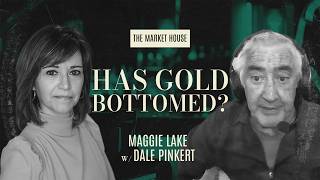
Preview:Maggie Lake and Dale Pinkert discuss oil, gold, nat gas, grains, semis, crypto, and a few earnings-driven names. Dale’s main stance is tactical and chart-based: crude is testing major resistance and should not be chased, gold is improving but not yet fully confirmed, nat gas looks like it may be basing, grains remain the strongest bullish theme, and semis still look like a likely shorting opportunity on rallies.
Preview:Mark Mills argues that AI's real bottleneck is energy — specifically oil and natural gas — not chips or models. He makes a bullish case for sustained commodity demand driven by AI data center buildout, while acknowledging that equity markets haven't yet priced this in. Mills sees consolidation in oil/gas and mining as a precursor to a capex cycle, expects a rotation into commodities in "single-digit years," and is optimistic that AI-driven productivity will solve debt problems. On China, he argues the real risk isn't China winning the frontier AI race but capturing the "good enough" market if the US restricts exports.
Preview:Adrien Day, chairman of Adrien Day Asset Management, argues gold and gold stocks are in a "perfect contrarian setup" — valuations at 50-year lows, sentiment at multi-decade extremes (zero bullish on one day three weeks ago), and prices down ~40% from January peaks. He acknowledges near-term headwinds from dollar safe-haven bid from war and higher oil/CPI, but sees gold already showing resilience relative to those drivers. Central banks and BRICS continue buying. His longer-term thesis: the dollar will weaken once the war ends, the Fed is constrained in how hawkish it can be, and mid-cycle corrections in gold bull markets are typical (1974-75, 2006, 2008). He advises dollar-cost averaging, right-sizing positions, and not panicking.
Preview:Performance coach Evan (M1 Performance Group) discusses the psychological patterns that cause smart investors to repeat costly mistakes. His core thesis: you can't make decisions without emotion, but emotions often hijack decision-making based on past programming. Key concepts include reacting vs. responding, performance = potential minus interferences, self-exloratory questions to create mental space, clearing nervous-system residue between decisions, and recommitting during success — not just after failure. The conversation covers anchoring bias through a gold/silver example, why thorough research isn't enough, and how neuroplasticity makes change possible. This is a pure behavioral psychology episode with no macro calls, no specific trade recommendations, and no market forecasts.
Preview:Katie Stockton said the market is at a technically important but not yet निर्णinate point: the S&P 500 is coiling in a tight range, momentum behind the AI/semiconductor trade is fading, and she currently leans toward a downside break rather than an upside breakout. She sees oil as having likely made a more lasting higher-low shift, while gold looks like it may have lost momentum enough to risk a broader corrective/trading-range phase. She also thinks the dollar has broken out of a long range, yields remain rangebound but biased higher if they confirm, and she sees relative opportunity in healthcare, industrials, Brazil, and some commodity-linked trades if prices keep stabilizing.
Preview:Brett Rentmester (Windrock Wealth Management) discusses the AI spending boom: hyperscaler capex is projected to hit $920B by end of next year, with massive backlogs (Google Cloud $460B, AWS $360B). He argues the demand is real and we're in "early innings," but acknowledges risks of overbuild and a potential dotcom-style dynamic where buildout outruns demand. The Mag 7 have lagged after reaching 35% of the S&P 500, and he advocates tactical rebalancing to manage concentration risk. He sees opportunities across public markets (hyperscalers, chips, energy/metals), private markets (AI-native startups), and passive indexing — while warning against chasing hot ideas or letting winners drift unchecked.
Preview:Mark Thornton, interviewed by Maggie Lake, argues the US stock market is more overvalued than at any point in 150 years except 1927. He sees the recent selloff near a bottom and expects a severe outcome. He frames Trump's nomination of Kevin Warsh as a deliberate "hit job" on precious metals, timed to trigger a correction. Thornton believes gold/silver prices are bottoming, with smart money (China, central banks) accumulating. He expects the dollar's long-term downtrend, a reversal in interest-rate expectations, and ballooning government deficits to drive a flow of funds from overvalued stocks into precious metals. The core thesis: government debt/deficit expansion and central bank money printing structurally support higher gold and silver prices.
Preview:Doomberg argues the oil market has undergone a structural transformation that almost everyone missed. The March 2026 Iran war spike peaked at $125 — far below the $150-$200 consensus — and he contends this revealed a permanently more flexible hydrocarbon market. China's overinvestment in refining, coal-to-chemicals, and petrochemicals has made ~4M bpd of crude demand fungible with NGLs, coal, and natural gas. US NGL production plugged a critical hole. The Strait of Hormuz is now strategically irrelevant; the only remaining oil risk premium is an Iranian attack on Saudi midstream infrastructure. His core thesis: the long-term real price of all hydrocarbons converges to energy content corrected for logistics, and betting against that is a short on human ingenuity.
Preview:Maggie Lake interviews Dale Pinkert about a choppy market day, with the conversation centering on Micron, the chips complex, rates, oil/geopolitics, grains, metals, and a handful of viewer-requested charts. Pinkert is broadly bearish or cautious on semis and some recent rallies, constructive on lower yields and some select non-mega-cap areas, and emphasizes taking partial profits and using stops rather than chasing breakouts.
Preview:Peter Boockvar argues the AI trade’s bubble is not in the technology itself but in the capex spend behind it, with hyperscalers, Oracle, Meta, and semiconductor suppliers increasingly exposed to a cycle that he thinks is getting stretched. He also says rising real rates, deficits, and Japan’s policy shift are important cross-asset forces, while gold looks like a buy on weakness and banks/consumer staples are becoming more attractive as investors diversify away from crowded growth names.
Preview:The speaker argues that a major commodity bull market is starting, led by gold, silver, copper, and miners, because commodities are historically depressed versus financial assets, central banks are buying gold, and supply chains are constrained by underinvestment, regulation, and geopolitics. He thinks the setup could produce very large price appreciation, but liquidity, financing, and ETF flows will shape which parts of the sector rerate first.
Preview:Michael Strain argues the U.S. government should not take equity ownership in private companies, especially Intel and AI firms. He contrasts the Obama auto bailout's reluctance with the Trump administration's enthusiasm for national champions. Strain warns government ownership will distort Intel's decision-making and that "crowning national champions" is dangerous precedent. On markets, he thinks AI stocks are reasonably valued based on current earnings but worries about government intervention creating too-big-to-fail dynamics. He also compares U.S. and Chinese economic models, arguing the U.S. system is superior despite recent industrial-policy enthusiasm.
Preview:Jared Dillian sees markets as an "accident waiting to happen" driven by extreme retail leverage, record-low correlations, and pervasive buy-the-dip sentiment that has suppressed volatility despite real risks. He flags Ukraine escalation as a 10% tail risk that is zero-percent priced in, expects bonds to rally on any CPI miss, thinks gold has a long-term bull case but is vulnerable near-term to higher rates and oil strength, and believes oil is suppressed (possibly by government intervention) but won't revisit $120. He maintains a defensive posture with crash puts and tail hedges while acknowledging the buy-the-dip regime could persist until it doesn't.
Preview:Chris Casey of Windrock Wealth Management argues that new Fed Chair Kevin Warsh is making a policy misstep by over-weighting AI's deflationary potential, and that rates are more likely to rise than fall — putting him on a collision course with the Trump administration. Casey sees a solvency or banking crisis as the likely outcome if rates move higher, at which point Warsh will revert to the same monetary playbook as every Fed chair before him. He views bonds (beyond short-dated) as precarious given tight credit spreads and upward rate pressure.
Preview:Maggie Lake interviews Rick Rule and several natural-resource executives at the 2026 Rick Rule Symposium. The panel argues that resource markets are in a "calm before the storm" — structurally under-supplied, under-owned, and primed for a dramatic repricing. Gold is framed as the "apex predator" returning to the monetary system, with central-bank buying overtaking US Treasuries as the number-one reserve asset. Silver supply is constrained by its byproduct nature and permitting bottlenecks. Uranium's apparent spot-price weakness masks a steadily rising long-term contract price. Rick Rule's core discipline: "buy low or just say no" — and by that yardstick, monetary metals still qualify, while copper and uranium do not. The overarching message is that individual investors can hedge the coming commodity squeeze by owning the very resources they consume.
Preview:Juliette Declercq argues that consensus is wrongly treating the recent inflation burst as a transient oil shock. She sees core/supercore inflation staying sticky above 4%, driven by broader supply chain disruptions (chips, plastics, shipping) and recovering purchasing power that will feed into services demand. The Fed has lost the weak-labor-market anchor that kept doves dovish; she expects a hawkish stance and sees a 50/50 chance of a July hike. She's bearish both the long and short end of Treasuries, thinks the 10-year could hit 5% if the Fed talks hawkish but doesn't deliver. AI is currently inflationary (chips, tokens, agentic costs competing with labor budgets), though she believes it will ultimately become disinflationary.
Preview:David Morgan of the Morgan Report sits down with host Maggie Lake to argue that silver's biggest move is still ahead despite a brutal correction from $121 to below $60. He frames the selloff as a classic bull-market shakeout, cites structural supply deficits and expanding investment demand, and discusses central bank gold buying, the weaponized dollar, options-driven manipulation, and why miners haven't yet delivered the leverage they historically provide. His base case: gold and silver are in a buying zone with downside risk to ~$50 silver / $3,500 gold, and the biggest miner gains come late-cycle.
Preview:Dale Pinkert argues the market is in a rotation/inflection phase, not a clean panic. His most concrete tactical calls are bearish on Micron and semis, cautious-to-bullish on oil near-term but only as a tradable rally unless it closes above 90, constructive on gold on pullbacks, still bearish copper, and expecting the dollar and yields to retain upside room before a larger correction.
Preview:Maggie Lake interviews Trey Reik live from the 2026 Rick Rule Symposium, where attendance has surged 60% YoY to 800. Reik relays Rick Rule's updated message: after a 25% correction in gold/silver from January blow-off highs, the summer weakness (July/August) is a buying opportunity, not a reason to panic. The core thesis: gold miners are "on sale," the Fed is unlikely to tighten despite market fears (structural debt, new Fed governor Borsch's dovish lean), and M&A will cascade down the food chain — seniors buying mid-tiers, mid-tiers buying emerging producers, creating opportunity in exploration/drilling names. Sentiment is washed out (DSI hit 10% bullish), and $4,000 gold is flagged as a logical cycle low.
Preview:Maggie Lake interviews Trey Reik at the 2026 Rick Rule Symposium. Attendance surged 60% YoY to 800, signaling growing investor interest in precious metals. Reik relays Rick Rule's evolved message: after a brutal correction (gold -25%, silver -25%, GDX -35% from January highs), the July-August period may stay bumpy but presents a buying opportunity in gold mining equities across the food chain, particularly exploration/driller names poised for M&A-driven revaluation. Reik argues the Fed is unlikely to tighten despite inflation fears — structural debt loads and new Fed leadership make rate hikes improbable — and that gold has been unduly pressured by flawed "ABC reasoning." He flags the Bernstein BSI sentiment indicator hitting 10% bullish (a rare extreme) and sees gold ~$4,000/oz as a logical cycle floor. The core thesis: a 3-5 year holding horizon is essential; 50% drawdowns are part of the game.
Preview:Maggie Lake interviews Tom Thornton about what retail flow and positioning are telling him. Thornton argues the market is still driven by narrow leadership, extreme leverage, and speculation—especially in semis, Korea, and leveraged ETFs—while he prefers out-of-favor names and has recently turned more constructive on gold and some miners.
Preview:AEI economist Michael Strain argues the US economy has been remarkably resilient through trade wars, Middle East conflict, policy chaos, and stubborn inflation — and that most analysts (himself included) have been too bearish. He identifies three areas where the analytical consensus needs updating: the economy's higher equilibrium interest rate, the broken link between consumer sentiment and spending, and consumers' increased willingness to dip into savings. He sees underlying inflation stuck near 3% with upside risk, would be hiking if he were Fed chair, and gives the Trump administration poor marks on tariffs and cost-of-living issues — but his base case remains above-trend growth with no Fed hikes in 2026.
Preview:David Morgan, founder of The Morgan Report, argues that gold and silver are in a cycle unlike anything he's seen in 40+ years, driven by sovereign balance sheet deterioration and debt unsustainability. He makes the case that every fiat currency in history has failed, and the US dollar is facing the same structural endgame. He is skeptical that a gold revaluation would solve the debt problem, and expects some form of monetary reset — likely a digital, unbacked, MMT-style tokenized system. Silver's dual role as monetary and strategic/industrial asset makes this cycle unique. Short-term dollar volatility creates trading opportunities, but the long-term thesis is about debt-driven currency debasement.
Preview:Francis Hunt argues America is entering a slow, multi-decade decline driven by debt, dollar debasement, and complacency. He frames the US as an aging boxer losing stamina while China & other nations are younger and more capable. He warns that outspending competitors won't guarantee AI dominance, draws parallels to 2008 "too big to fail" thinking, and advocates jurisdictional diversification plus gold/precious metals as protection against fiat debasement.
Preview:Juliette Declercq argues that core inflation in the US and Europe is stickier than consensus believes, driven by more than just oil — import prices, plastics, and chips are all contributing. She thinks the Fed's hawkish pivot is real and that markets are too confident the Fed will stay on hold in July. On Europe, she sees more economic resilience than consensus, with government-driven capex (defense, AI, energy, climate) providing growth even as higher rates bite. On China, she highlights its massive spare capacity in clean energy (solar, wind) as a strategic advantage, especially as the US faces grid constraints for AI energy demand. Her views contrast notably with Doomberg's on oil and energy.
Preview:Claudia Sahm, creator of the Sahm rule recession indicator, is not on recession watch. She sees a stable but bifurcated labor market — low layoffs, low hiring — and flags inflation at 4% as the Fed's real problem. She criticizes Fed Chair Kevin Warsh's plans to reduce communication and data overhaul framing, warning less transparency could fuel insider trading and market volatility. The recent hawkish dot plot reflects economic frustration with sticky inflation, not a new chair imposing his will.
Preview:Francis Hunt argues that the long-term erosion of dollar dominance is already underway and that gold’s recent correction is more likely a medium-term pause than a major top. He says China and other official buyers are rotating surplus into gold, silver, and platinum, while U.S. debt, oil, and the AI/equity bubble all fit into a broader late-cycle macro stress setup.
Preview:Tavi Costa, CEO of Metalla Royalty, makes a deeply contrarian case: mining is a terrible business in execution but an extraordinary business in economics — legacy, irreplaceable, and at current metal prices it generates margins exceeding big tech. He frames this moment as "the rebirth of mining" driven by automation potential over 10-15 years, argues for a first-principles focus on gold/silver/copper over frothy critical-mineral narratives, and warns that capital misallocation into rare earths is a mistake when copper faces a massive supply deficit. Management quality and asset quality are everything; the industry will consolidate around those who get capital allocation timing right.
Preview:Harry Melandri argues the market is showing stealth tightening in credit and liquidity, not a clean broad-based risk-off break. He links AI capex, equity issuance, private credit stress, and selective leverage strain in Asia to a growing capital squeeze, while warning that policy changes may only shift where the pain shows up rather than eliminate it.
Preview:Marc Faber argues China is quietly pulling ahead of the West in technology and manufacturing, capable of displacing Western car companies with lower-cost, advanced vehicles. He acknowledges China's domestic headwinds — a real estate overhang and declining population — but sees Hong Kong shares as an investable "warrant on China." He downplays AI hype, notes innovation is shifting outside the US/Europe, and frames safety/cost-of-living in Asian cities as underappreciated advantages.
Preview:Henrik Zeberg and Marc Faber discuss the final melt-up phase in US equities (Nasdaq target 33-34K), framing it as the late-1990s fractal repeating. Both agree the eventual unwind will be a disaster worse than 2008, driven by a larger stock bubble, a property market/balance-sheet recession, and private credit fragility. Zeberg is tactically bullish but warns it's "pure air"; Faber expects colossal AI-sector losses. Gold and silver are not safe during the credit-crunch phase — cash is king when the unwind begins.
Preview:Michael Nicoletos argues that the combination of AI-driven corporate disruption and the self-reinforcing mechanics of passive index investing is creating a "K-shaped" market — where the S&P 500's surface-level returns mask extreme dispersion between AI winners (potentially +300%) and AI losers (potentially -80%). He contends this creates a rare opportunity for active managers to generate meaningful excess returns by identifying AI adopters early, front-running the mechanical passive flows that will eventually amplify their market-cap weight.
Preview:Tavi Costa argues that precious metals miners are "printing money" at current metal prices, yet their stock prices haven't reflected unprecedented fundamentals. The macro framework hinges on two structural US problems — fiscal deficits compounded by high interest rates, and trade balance deficits — both pointing toward lower rates and a weaker dollar. On supply/demand, structural demand for copper, gold, and silver continues building (AI infrastructure, electrification, central bank buying, onshoring), while supply remains constrained by 15-year mine development timelines. Costa frames high-quality resource deposits as irreplicable "moats" that AI cannot disrupt, and treats sell-offs as moments to refine micro-level company analysis rather than panic.
Preview:Marc Faber argues the US market is nearing a major top and that the eventual unwind could be severe because financial assets, credit, and the broader economy are now deeply intertwined. He sees the rally as narrow, concentrated in AI-related names and a few other leaders, while many stocks, real estate segments, and consumer conditions are already weak or deteriorating.
Preview:Grant Williams argues that luck and risk are often misunderstood: uncertainty is unavoidable, but it is also where opportunity lives. He uses a memorable anecdote about Joe Duran to argue that taking responsibility for both bad breaks and good outcomes is more useful than blaming luck or adopting a victim mindset. The conversation also starts to turn toward risk-taking, with Grant suggesting that risk appetite is often chosen and developed, not something people are simply born with.
Preview:Tavi Costa argues the silver and precious-metals selloff is mostly a short-term, overdone reaction to a hawkish Fed first press conference, not a structural change in the bullish setup. He says the dollar breakout is the main near-term headwind, but miners, copper, yields, inflation expectations, and emerging markets are not confirming a broad risk-off break.
Preview:Jonathan Wellum argues that the current AI/tech boom looks like a classic overinvestment cycle: strong businesses may exist, but prices and expectations are already extremely high, so investors should be cautious, value-focused, and patient. He contrasts today’s IPO and AI enthusiasm with the late-1990s internet bubble, warns that many late-stage IPOs may suffer post-listing pressure and multi-year drawdowns, and says value investing still works when applied to durable businesses with moats, cash flows, and understandable economics.
Preview:Henrik Zeberg argues the market is in a late-cycle “melt-up” phase that could still push the NASDAQ much higher in the near term, but he believes the backdrop is far more dangerous than investors appreciate. He sees a weak real economy beneath strong headline data, a massive speculative bubble in AI/tech and IPOs, and an eventual crash sequence that could start with a correction, then evolve into a broader 2008-style unwind with private credit and liquidity stress.
Preview:Maggie Lake and Dale Pinkert reacted to a hawkish Fed day, with Dale arguing the immediate market response was a higher-dollar / higher-yields shock that hit gold, silver, stocks, and Bitcoin. He framed the move as a dollar breakout from support with room toward 103 on the Dixie, while still treating it as a countertrend rally inside a larger bear-market structure. He also used the session to map key levels in EUR/USD, AUD/USD, crude, nat gas, wheat, corn, housing, and indices, emphasizing that the market is entering a correction rather than a full regime break.
Preview:This is a macro interview segment about the incoming Fed chair, Kevin Warsh, and the constraints he inherits. The speakers argue he is walking into a difficult setup: inflation may be reaccelerating, political pressure to cut rates is high, and the Treasury/debt market is unstable enough that the Fed may not be able to act cleanly. There is also a split between those who see Warsh as more hawkish historically versus those who think his recent rhetoric is more dovish and pragmatic.
Preview:Kevin Muir argues that markets are still being driven less by geopolitics than by liquidity, positioning, and a succession of fast-moving “mini-bubbles.” He is cautiously constructive on oil, structurally bullish on gold, wary of the market underestimating hawkish Fed risk, and especially concerned that current AI/semiconductor strength may be a demand mirage amplified by incentives and supply constraints.
Preview:Anthony Scaramucci argues that AI is not just another software cycle: it has a far larger consumer addressable market, may draw capital away from crypto and other spending categories, and could justify some government involvement as a protective layer. He also says he remains bullish on Bitcoin, Solana, tokenization, and biotech/peptide-adjacent innovation.
Preview:Anthony Scaramucci argues that the market is underestimating the long-term upside of SpaceX, AI, private-market late-stage unicorns, Bitcoin, and selected energy/defense-linked themes, while acknowledging near-term risks from valuation, liquidity, geopolitics, and inflation. He repeatedly frames himself as a technology and innovation optimist, but with some buyer-beware caveats on private markets and the possibility of short-term volatility in oil, bonds, and crypto.
Preview:JJ argues that the market is far less vulnerable to an imminent oil shock than the crowd narrative suggests. He says inventories are ample, much of the feared “supply” exists in reserve or can be deployed quickly, and price action in oil, gold, bonds, and stocks has not validated the panic. He also touches on AI’s impact on equities/capital markets, but the core of this segment is his bearish oil call.
Preview:Michael Green argues that the apparent cheapness of some legacy bonds is mostly a mechanical mark-to-market effect from higher rates, but that the real risk is what those losses do to bank balance sheets, lending, and Treasury-market plumbing. He says banks stuffed underwater securities into hold-to-maturity buckets after the 2020-2022 rate shock, which preserves accounting value but traps liquidity and makes institutions reluctant to lend. His proposed fix is for the government to reissue long bonds and exchange them at market value, which he says would help banks repair capital, improve income, and reduce distortions in the bond market.
Preview:Maggie Lake and Dale Pinkert frame the market as entering a potential correction rather than a confirmed bear market, with the S&P, VIX, oil, the dollar, rates, gold/silver, Bitcoin, uranium, and Tesla all tied to a broader liquidity unwind. Dale argues the key near-term tells are whether the S&P loses its 50-day/200-day structure, whether VIX keeps climbing, and whether oil breaks above $100, which he thinks would reinforce a harder inflation/rates/dollar backdrop.
Preview:Art Berman argues that the Strait of Hormuz is effectively no longer available as a normal oil transit route and that this creates a lasting, structural shock to oil supply, prices, and the broader global economy. He rejects the idea that the U.S. is oil independent, saying the country still imports millions of barrels per day and remains dependent on the right kinds of crude, especially from Canada.
Preview:Jim Rogers argues the U.S. and global financial system are late-cycle and vulnerable: debt is extreme, inflation is re-accelerating, and the longest U.S. market run in history is unlikely to end well. He recommends staying with what you know, holding some cash in U.S. dollars for now because it is still treated as a safe haven, and owning physical gold and silver as long-term insurance against inflation, war, or broader instability.
Preview:Jeremy Schwartz argued that the current market is still being driven more by AI earnings power than by headline geopolitical risk, and he does not view the SpaceX IPO as a clear top signal. He emphasized that valuation depends on growth and profitability, that many large-cap tech names still screen reasonably on his framework, and that the main debate is whether massive AI/data-center capex will translate into earnings over time. He also framed physical AI, drones, humanoids, and healthcare innovation as longer-run beneficiaries of the same compute trend.
Preview:Michael Oliver argues that the real driver of gold and silver is long-run money debasement, not day-to-day moves in the dollar or jobs data. He sees the current selloff as a short-term shakeout inside a larger bull market, with silver especially poised for a major breakout if it holds above the recent sub-70 area. His most aggressive call is that silver could eventually reach $300 to $500, with the near-term risk being a deeper breakdown into the 50s if the current support fails.
Preview:Steven Feldman argues that U.S. markets remain exceptional for profit-making, but that the broader American exceptionalism narrative is becoming a dangerous comfort blanket. His main warning is tactical and behavioral rather than apocalyptic: with debt, policy support, index concentration, private-market spillover into benchmarks, and investor FOMO/YOLO/OO, the more likely outcome is a long stretch of unsatisfying equity returns and higher need for diversification, not necessarily an immediate crash.
Preview:Steven Feldman argues that AI is not just a software story but a massive energy and resource story: whatever powers data centers, grids, and electrification—copper, uranium, renewables, and other real assets—should benefit over time. He also thinks geopolitics and supply-chain fragmentation are moving markets away from globalization toward local resilience, with Europe, China, and energy-importing countries facing more scarcity and strategic vulnerability.
Preview:Dale Pinkert argues the dollar is starting a meaningful upside move that will pressure metals, parts of equities, and some crowded “debasement trade” positions. He sees bond yields drifting higher into payrolls, thinks the yen may force BOJ action, and is broadly bearish gold/silver while still constructive on natural gas and certain food commodities on pullbacks.
Preview:Michael Howell argues that liquidity is rolling over globally, even if it is still rising in absolute terms, and that this shift is pushing markets into a late-cycle speculative phase. He says AI spending is inflationary in the short run, bond yields should trend higher, gold is being driven mainly by China, and markets are underpricing inflation risk.
Preview:Ronnie Stoeferle argues that gold’s rise is less about gold itself and more about a broader erosion of trust in fiat money, institutions, and the dollar system. He says the market may be in a monetary revaluation phase rather than a normal commodity cycle, with gold still reasonable in relative monetary terms despite its strong nominal gains.
Preview:Vincent Deluard argues the U.S. market is still being carried by speculative flows, the wealth effect, and a narrow set of stimulus channels, but he thinks that support is nearing exhaustion. He is most worried that the consumer and market are entering a tipping point where liquidity, inflation, oil, and rates could all turn against equities into the summer/fall.
Preview:Maggie Lake interviews Brett Rentmester about a coming wave of large tech IPOs—especially SpaceX, with Anthropic and OpenAI also discussed—and how their size could affect both IPO buyers and the broader market. Rentmester argues this is unusual because these companies are already huge, highly valued, and likely to become meaningful S&P 500/index constituents, which means the impact will extend far beyond traditional IPO traders.
Preview:Jesper Koll argues Japan has decisively exited its old deflation regime and is now in a demand-led inflation phase powered by wage growth, better household wealth, and stronger bank lending. He thinks the Bank of Japan is still behind the curve and that policy rates should ultimately move much higher than current levels, with Japanese financials benefiting from the normalization.
Preview:Dale Pinkert argues the tape is being driven by geopolitics, rates, and relative strength rotations rather than a clean risk-off move. He stays constructive on natural gas, tactically bullish on a potential oil flush to 70 as a buying opportunity, skeptical of copper and silver near term, and thinks Bitcoin is approaching an important long setup near 72k. He is also cautious on the S&P/Nasdaq despite their strength, calling for a possible near-term pullback before a larger year-end advance.
Preview:Josh Lynville argues the fertilizer market is under real stress but not facing an imminent global famine. The biggest hit is being absorbed by farmers through higher fertilizer costs and reduced application rates, especially in nitrogen, while grain prices have not yet moved enough to offset the squeeze. He thinks the shock is likely to persist for a long time because multiple supply nodes are constrained at once, but he also expects the summer lull and possible future supply from China to provide some relief.
Preview:George Galves argues that oil and rising bond yields are stealth-tightening financial conditions even without a Fed hike, and that the bond market is pricing an inflation/fiscal risk premium rather than a clean recession call. His base case is that higher rates, sticky energy prices, stretched equity valuations, and private-credit fragilities make the economy vulnerable to a late-cycle crack, with the key tactical issue being how long yields stay elevated before growth breaks.
Preview:Maggie Lake and Quinn Thompson argue that the biggest risk to the current rally is crowded positioning in semis and the broader tech complex. Quinn says he sees bubble-like, overbought conditions, but prefers to look for less crowded trades rather than short the index outright.
Preview:Michael Green argues that the bond market’s recent behavior is being driven less by fundamentals than by passive/index mechanics, and that this is distorting prices, liquidity, and retirement asset allocation. He sees current 30-year Treasury yields as an unusually attractive income opportunity and says the Treasury could repair parts of the plumbing by reissuing debt in a way that improves bank balance sheets and reduces distortions.
Preview:Robert Bryce argues that the most underappreciated market impact of the Strait of Hormuz disruption is not just oil, but fertilizers, diesel, and natural gas. He says the U.S. has been partially insulated by abundant domestic gas, while Europe and Asia are seeing much larger price spikes. He also makes a strong case that AI data-center buildouts are running into a broad local backlash, which he views as an unprecedented revolt against Big Tech rather than a narrow zoning or environmental issue.
Preview:Dale Pinkert argued that rates, the dollar, and market leadership are sending mixed but important signals into the weekend. He leaned cautiously bearish on equities near-term because of bond-market reversals, semis/Bitcoin weakness, and divergences in the S&P/Nasdaq, while still allowing for a larger final melt-up after a pullback.
Preview:Jim Bianco argues the market is being propped up by a very narrow AI/chips trade, even as broader stock breadth deteriorates and macro risks stay elevated. He says AI spending may be rational if it can replace expensive software stacks, while diversification should be reset around realistic 5–7% return expectations rather than hoping for another runaway year.
Preview:Daniel Lacalle argues that the era of bonds as a safe hedge is over because persistent inflation, high deficits, and ongoing monetary/fiscal excess are eroding currency purchasing power. He favors real assets and selective equities—especially U.S. stocks and innovative tech—while cautioning that bonds, many value stocks, and heavily regulated sectors face structural headwinds.
Preview:Tony Greer argues this is a highly unstable, cross-current market where oil, rates, the dollar, tech, and commodities are all fighting each other. His tactical preference is to stay with gold and resource trades, but he thinks NVIDIA’s earnings and the next two sessions are pivotal for whether semis keep absorbing capital or finally roll over and let commodities catch a bid.
Preview:Jim Bianco argues the market is moving into an inflation-led regime driven by supply constraints tied to the Strait of Hormuz, pushing oil, sovereign yields, and eventually policy expectations higher. He thinks the bond market is repricing faster than equities, the Fed is under pressure to stay hawkish or at least not ease, and private credit faces a separate technology-driven stress from AI hitting software-heavy borrowers.
Preview:Michael McGlone argues that current macro conditions are a setup for a later deflationary bust: inflation is being lifted by oil and asset prices now, but the bigger risk is that an eventual stock-market reversion will unwind the bubble. He says gold and crude have become too extreme tactically, while equities remain the dominant force determining the direction of most commodities.
Preview:George Noble argues the market is underpricing a regime shift away from the post-GFC world of easy money, with sticky inflation, heavy fiscal deficits, and higher bond yields constraining policy. He is constructive on energy, gold miners, and select resource stocks, and strongly bearish on long-duration bonds, crowded AI/semis, and consumer-facing names he sees as weak on the tape.
Preview:Steve Hanke argues the dollar remains dominant and U.S. capital markets are still overwhelmingly attractive, but he thinks the margin is where the risk lives: small erosions in confidence, policy consistency, and perceived openness can matter for investors even if they do not amount to true de-dollarization.
Preview:Dale Pinkert argues the bond market has entered a dangerous breakdown, with global yields surging, TLT looking vulnerable, and the dollar likely to rally further. He expects near-term pressure on gold, silver, and most risk assets, while seeing natural gas as one of the few relatively attractive long setups.
Preview:Harry Melandri and Corin Codirla argue that the current market looks like a mix of inflation pressure, geopolitical risk, and AI-driven capital spending, with equities still benefiting while bonds are under pressure.
Preview:Maggie Lake interviews Jonathan Wellm of Rocklink about persistent inflation, rising rates, and how investors should hedge with short-duration bonds, gold, and commodity exposure. He argues AI is real but overpriced in parts of the market, while commodities and select industrials/insurers offer better value and a hedge against debt-driven currency debasement.
Preview:Maggie Lake and Jeff Hirsch discuss whether investors should stop fighting the tape amid fresh S&P 500 and Nasdaq highs, strong chip/AI leadership, and rising geopolitical and oil headlines. Hirsch argues the tape still points up because a secular technology boom, seasonal patterns, and relatively supportive rates are outweighing bubble fears, though he expects some late-May chop and advocates partial profit-taking rather than chasing blindly.
Preview:Steve Hanke argues the U.S. is weakening itself through tariffs, sanctions, industrial policy, and militarism while China is gaining leverage through control of rare earths, commodities stockpiles, and cleaner-energy supply chains. He is bullish on gold and commodities, bearish on bonds, and thinks inflation will keep rising as money supply growth accelerates.
Preview:Dale Pinkert argues the market is still in a momentum/parabola phase, but warns that volatility signals, key pivots, and dollar behavior should be watched closely for a reversal. He stays broadly bullish risk assets near term, while leaning cautious-to-bearish on gold, silver, bonds, and some crowded tech names, and sees opportunities in energy, nat gas, agriculture, and fertilizer if the market rotates.
Preview:Chris Vermeulen says gold, silver, and miners are still in a long-term uptrend, but he thinks the short-term setup is messy and may require a shakeout before the next major rally.
Preview:Maggie Lake interviews Chris Tipper and Joe Brombal of Aninsley Capital about why markets are still rallying despite geopolitical risk, and why they think the real driver is global liquidity rather than headlines.
Preview:Jesse Felder argues the 2020s are entering a persistent inflationary era, with the bond market vulnerable to higher long-end yields and the Fed increasingly boxed in. He also says the AI trade is bubble-like because earnings are being boosted by capex timing while free cash flow weakens, data-center buildouts face bottlenecks, and monetization looks far harder than the market assumes.
Preview:Peter Boockvar argued that the oil shock matters most through the back end of the crude curve, gasoline prices, and delayed cost pass-through into the broader economy. He also said commodities, long rates, and the AI capital-spending complex are all being pulled by the same mix of geopolitics, inflation risk, and supply insecurity.
Preview:Jonathan Wellum argues that spending less than you make is a practical source of financial optionality: it lowers stress, avoids debt, and lets compounding work. He frames frugality as disciplined capital allocation rather than deprivation.
Preview:Maggie Lake and Dale Pinkert discuss a near-term market setup centered on yen intervention, dollar strength, and whether the recent equity rally is losing momentum. Pinkert is broadly bullish the dollar and bearish gold, silver, euro, cable, and some cyclical commodities, while warning that a yen unwind could ripple through carry trades and risk assets.
Preview:Chris Vermeulen is broadly bullish on equities and AI-related semiconductors in the near to medium term, while remaining structurally cautious and bearish on bonds, gold/silver in the short run, and oil as a trading vehicle. His core message is to follow price and money flow rather than predict tops, with the dollar, bond market, and risk rotation serving as the key tells.
Preview:Maggie Lake and Brent Donnelly discuss how Fed policy is basically sidelined, while oil, bond volatility, and the earnings reactions from mega-cap tech are the real market drivers. Donnelly is constructive on the broad U.S. economy and AI capex trends, but more cautious on real-economy cyclicals, small caps, and anything exposed to higher oil and tighter financial conditions.
Preview:A Wealthion interview with Windrock Wealth Management founder Brent Rentmester argues that AI is a real, early-stage technological shift rather than a repeat of the 2000 dot-com bubble, but says investors must balance exposure to AI winners with defenses against a broader system unwind. He favors AI-native businesses, venture/pre-IPO access, and a barbell portfolio that also includes precious metals, short-term Treasuries, and hard assets.
Preview:Warren Pies argues the recent stock rally is not just sentiment-driven: he says the market has been helped by a major sentiment reset, lower valuation, easing bond volatility, and a renewed AI-led leadership shift after the Anthropic/‘mythos’ model news. He still wants an oil/commodity hedge because the war and oil disruption could still destabilize bonds and equities together.
Preview:Maggie Lake and Phil Dauber argue that the market is being driven more by passive flows, systematic trading, and confusion than by a clean read on fundamentals. Dauber says commodity shortages and inflation risks are building beneath a still-resilient equity tape, creating a dangerous disconnect between paper markets and physical reality.
Preview:Brett Rentmeester explains a stepwise approach to passing wealth to children: start early with 529s and financial literacy, then use gifts, Roth IRA funding, or loans during early adulthood, and later consider estate-planning tools like trusts, LLCs, and discounted gifts to transfer more wealth while adding protection.
Preview:Dale Pinkert argues the tech/semiconductor rally is near-term toppy on momentum divergences, while still allowing for a pullback that becomes a buying opportunity rather than a major top. He is also constructive on the dollar, yields, and oil, and bearish on gold/silver and near-term metals strength.
Preview:Ed D’Agostino argues the economy is in a “great restructuring”: sentiment is awful while spending and employment remain relatively resilient, creating a disconnect that traditional data and old market signals no longer explain well. He sees AI, tariffs, China, energy, and portfolio construction as intertwined forces reshaping both business operations and investing.
Preview:Maggie Lake interviews Mish Schneider about a broad market rally, with Mish arguing that leadership remains heavily tech-led but that food inflation, supply disruptions, drought risk, and war-related bottlenecks could soon matter more. She is constructive on semis, parts of the Russell 2000, sugar, wheat, DBA, Bitcoin, and oil, while warning that crowded complacency and sector divergence could make the rally fragile.
Preview:Jonathan Wellum argues that index funds and passive ETFs have become too crowded, weakening price discovery and creating opportunities for active stock pickers with high active share. He recommends focused portfolios, selective exposure to resilient businesses, and meaningful allocations to precious metals and certain commodities as hedges against debt, currency debasement, and supply shortages.
Preview:Maggie Lake interviews StoneX global macro director Vincent Deluard about why markets are treating escalating Middle East risk as surprisingly contained, and why he thinks Treasuries are no longer a reliable risk-off hedge. Deluard argues the market is still pricing a relatively benign geopolitical outcome, while he sees meaningful tail risk and a broader regime shift in reserve assets and investor protection tools.
Preview:David Woo argues the market is too complacent about the Iran conflict and is mispricing a near-term escalation risk. He says China is unlikely to pressure Iran into concessions, thinks Trump is under a 60-day clock on war powers, and expects markets to react sharply if diplomacy fails and the Strait of Hormuz remains closed.
Preview:Maggie Lake and Dale Pinkert argued that the recent dollar slide is a key catalyst behind the sharp equity meltup, with stocks, especially S&P 500 and tech, viewed as still having upside despite short-term pullback risk. Dale was more constructive on equities in the near term, while also highlighting a possible countertrend dollar rally, weakness in bonds, mixed signals in gold/silver, and selective opportunities in nat gas, sugar, Bitcoin, and Berkshire.
Preview:Chris Casey says advisor communication should be tailored to the client, complexity of the account, market conditions, and major portfolio actions. He argues many advisers fail by not clearly explaining trades or the thesis behind them, and says clients should set expectations and ask direct questions.
Preview:Mark Mobius says emerging markets are already in a bear market and should be approached with selective nibbling rather than all-in buying, while the biggest risks remain Fed tightening, dollar strength, crypto unwinding, and especially Taiwan/China escalation.
Preview:Mish Schneider argues the market is in a confusing inflection point where the dollar, yields, and commodity ratios matter more than headlines. She sees near-term strength in semiconductors and some tech, but a bigger risk of dollar weakness, inflation, and possibly recession that would favor selected hard assets like DBA, silver, and possibly gold on pullbacks.
Preview:A mostly bullish two-person market discussion arguing that U.S. equities can keep grinding higher despite geopolitics, while warning that energy, fertilizer, AI-driven capex, and flows/late-cycle bank behavior could create near-term turbulence.
Preview:A Wealthion interview on the software selloff argues that the biggest damage has been in SaaS stocks, where AI-agent fears are challenging the seat-based revenue model. Chris Casey says the selloff may be a tradeable dislocation, but not necessarily a durable long-term buy across the whole sector.
Preview:Maggie Lake and Noelle Acheson discuss how markets are shrugging off the Hormuz/Middle East shock, with oil signaling more caution than equities, while crypto remains surprisingly rangebound. The conversation broadens into inflation, rates, private credit, consumer stress, and the possibility that tokenization and SEC reform could reshape public markets over time.
Preview:Michael Howell argues that global liquidity is tightening because debt refinancing needs are outpacing available balance-sheet capacity, and that recent shocks like the Iran conflict, higher oil, Treasury volatility, and a stronger dollar are draining liquidity from financial markets. He says the market is mispricing the current liquidity cycle, with yield curves flattening rather than steepening and gold benefiting from growing monetization.
Preview:Maggie Lake and trader Dale Pinkert frame the recent risk-on rally as potentially fragile, centered on whether the U.S. dollar is about to turn higher again. Dale argues the market is being driven by technical levels and algorithms, and that stocks, gold, oil, bonds, and FX may all reverse if the dollar rebounds; he also thinks the Middle East ceasefire is unstable and that markets are underpricing geopolitical risk.
Preview:Brandy Maben argues that retirement planning should not revolve around a 401(k) alone. She recommends spreading assets across taxable, tax-deferred, and tax-free accounts to manage future tax risk, liquidity needs, inheritance rules, and the tax treatment of different investments and conversions.
Preview:Kevin Muir argues the Iran/Strait shock has already permanently changed how investors must think about trade, supply chains, inflation, commodities, and portfolio construction. He thinks the immediate market reaction is noisy, but the bigger regime shift is toward more fragmentation, more fiscal spending, higher resource demand, and a more challenging setup for overowned tech and long-duration bonds.
Preview:Maggie Lake and Jared Dillian argue the market’s violent post-ceasefire reaction was mostly an overreaction, especially in oil. Jared thinks oil has reset to a higher floor, gold and the dollar likely peaked intraday and faded, and the bigger looming risk after the war headline fades is private credit stress spilling into insurers, high yield, and broader liquidity.
Preview:A Wealthion host and Brandy give three questions investors should ask their advisor during a highly volatile market: whether the plan is built for volatility, how decisions are being made, and whether the strategy has risks or gaps exposed by the current environment. The segment is mostly a reassurance and process-oriented discussion rather than a market forecast.
Preview:Tony Greer argues the market is treating the Iran/Strait of Hormuz escalation as a waiting game rather than a fresh panic event: oil stays bid, gold and the dollar remain constructive, and the bigger trade is still a rotation into hard assets, energy, miners, rare earths, uranium, and other “low obsolescence” sectors. He is skeptical of the S&P/tech-led tape, thinks software/AI remains vulnerable, and prefers natural-resource exposure over broad index risk.
Preview:John Ciampaglia argues that commodities are moving from neglect back into institutional focus, which should increase capital flows and volatility. He also says governments may become a new demand source through strategic stockpiling of critical minerals, adding to the bullish case for metals, mining, and related commodities.
Preview:John Ciampaglia argues the war-driven disruption in commodities is mainly a sentiment and risk-management event in the near term, not a clean fundamentals story. He thinks institutional de-risking is pressuring gold and miners, while longer-term energy security and stockpiling trends should support uranium, gold, and select hard assets.
Preview:A conversational life-history interview with Mark Faber about how luck, risk, and hustle shaped his career, from Switzerland and ski racing to Wall Street and Hong Kong.
Preview:Jonathan Wellum argues that during a 10–20% market drawdown advisors should stay disciplined: control emotions, revisit valuations, keep capital allocation balanced, and avoid unnecessary trading so compounding can work.
Preview:Tommy Thornton argues the market still has not seen true capitulation and that the current tape is being driven more by geopolitical headline risk and social-media-driven sentiment than by fundamentals. He remains cautious, keeps about 20% cash, and says he is waiting for a sharper washout before getting more constructive, while selectively trading around names like Alphabet, Tesla, SpaceX, gold, Bitcoin, and semis.
Preview:Peter Boockvar argues the market is underestimating how much the Middle East conflict, energy shortages, and re-shoring of strategic supply chains keep inflation and rates elevated. He expects a relief rally if the situation de-escalates, but not a durable return to prior equity highs, and remains constructive on commodities—especially natural gas—while cautious on tech and long-duration bonds.
Preview:Jonathan Wellum argues for ignoring headline-driven trading and focusing on 3–5 year fundamentals. His core view is that the Iran war and broader geopolitics reinforce long-duration opportunities in North American energy, uranium, gold, silver, and select commodity-linked Canadian producers, while raising caution about banks and overextended macro assumptions.
Preview:Harry Melandri argues the market is underpricing a severe geopolitical escalation centered on Iran, the Gulf, and energy infrastructure disruption, with spillovers into credit, growth, and inflation. He thinks this looks more like a supply-and-demand shock plus financing stress than a simple inflation trade, and he favors caution across risk assets while seeing relative opportunities in energy, gas, and related commodity exposures.
Preview:Trey Reik argues the gold selloff is being driven less by a broken gold thesis and more by a short-term geopolitical/liquidity reset after a blowoff move in January. He says the long-run bull case for gold remains anchored in dollar distrust, U.S. deficits, and weak Fed credibility, but the market is currently pricing an inflation scare and central-bank tightening that he считает unlikely to persist.
Preview:Brett Rentmeester argues that diversification is useful for managing company- and industry-specific risk, but it does not eliminate systemic risks like rates, recessions, or war. His main warning is that investors can become 'over diversified' into many overlapping products that effectively recreate the market at high cost, turning the portfolio into an expensive index fund.
Preview:Dale Pinkert argues the market is in a fragile, headline-driven tape where technicals are sending mixed signals. He is leaning bearish on equities, metals, and some tech, but sees potential short-covering or bounce risk in bonds and the dollar, while warning that Middle East escalation and geopolitical spillovers could drive the next leg of volatility.
Preview:Ed Yardeni argues that the recent war-driven geopolitical shock has made the U.S. relatively more attractive again in the near term, but he still favors a global allocation over overweighting the U.S. because overseas markets, including Europe, Japan, Korea, and many emerging markets, have cheaper valuations. He sees oil spikes as likely temporary, does not think $100 oil is a killer for the global economy, and remains broadly constructive on stocks.
Preview:Panel discussion on the Iran war focused on whether the U.S. can or should escalate to force a settlement, how Gulf states and China factor into the conflict, and what it means for markets. The speakers split between a more cautious geopolitical assessment and a highly forceful thesis that Trump cannot back down, with gold, oil, inflation, and defense spending all discussed as market implications.
Preview:Maggie Lake interviews David Rosenberg about the market reaction to escalating U.S.-Iran conflict, and Rosenberg argues the day’s rally was mostly a short-covering response to Trump’s sudden softer rhetoric rather than a durable change in fundamentals. He says the real market focus is whether the Strait of Hormuz fully reopens; until then, oil remains the key risk, with few true safe havens besides some energy exposure and front-end bond curves.
Preview:George Noble traces his career from a math-heavy, stock-curious childhood to Fidelity, where Peter Lynch’s fast, company-specific culture helped shape his investing style. He highlights the importance of cycles, luck, and being in the right regime, then pivots to risk-taking, hedge funds, Japan, and emerging markets, using his own career as a case study in how market structure and timing drive outcomes.
Preview:Maggie Lake interviews trading coach Dale Pinkert about a broad risk-off selloff across stocks, metals, and bonds. Pinkert argues the market is still in a deleveraging phase, sees key S&P support near 6,100, thinks bonds/yields and the yen matter to the macro backdrop, and is starting to identify relative-strength areas like crypto-related names, grains, and platinum for possible future buys.
Preview:Jacob Shapiro argues the Iran war is a short-term relief valve for Putin because higher oil prices and waivers ease pressure on Russia, but he thinks it does not alter Russia’s long-run decline and may even leave a more dangerous regime-risk scenario if chaos ever replaces Putin. He also sees Europe as more likely to re-arm and integrate around France and Germany than to split apart, though EU fragmentation remains a possible outlier risk.
Preview:Don Durrett argues the precious-metals bull market is still early despite sharp 2025–26 gains, with gold and silver miners remaining cheap relative to his long-run targets. He says the recent pullback is short-term noise from oil, rates, and Fed expectations, not a thesis break, and that the real driver is a fundamental stress in the monetary system that central banks are already reacting to by buying gold.
Preview:Brent Johnson argues the Iran strike was not improvised, but part of a broader U.S. strategy to reassert power, constrain China, and gain leverage over energy flows and global markets. He says Iran can sustain chaos for a long time even if it cannot “win” militarily, and that investors should view the situation through the lens of U.S. resilience, energy dominance, and the dollar system.
Preview:Ed Yardeni says war-related geopolitics and higher energy costs have raised recession odds from 20% to 35%, but he still sees a base-case ‘Roaring 2020s’ backdrop supported by productivity, earnings resilience, and a strong economy. He’s more cautious on inflation and portfolios now, yet still prefers staying invested with a mix of equities, bonds, and gold.
Preview:Peter Boockvar argues the market has become fragile because the AI/hyperscaler trade is weakening, war-driven oil spikes are raising inflation, and private credit adds another layer of vulnerability. He thinks equities are not priced for sustained commodity inflation, the Fed is unlikely to cut soon, and the White House will face a tougher policy mix where oil, not the Fed chair, effectively sets the monetary backdrop.
Preview:Jacob Shapiro argues the Iran war could create weeks of energy-market disruption and a broader risk reset, but not a permanent rerouting of global supply chains. His bigger point is structural: the world is moving toward fractured, multipolar commodity and alliance blocs, with higher volatility, more export controls, and more political risk for the Gulf, China, and U.S. domestic politics.
Preview:Blake Morrow argues the market is still being driven primarily by the Iran/Strait of Hormuz shock, with crude oil as the key short-term signal. He thinks the $95 Brent/WTI area is the bull-bear line, while high implied volatility, rising global yields, and yen weakness all reflect a market that is still headline-driven and fragile.
Preview:Lobo Tiggre argues the war is inflationary and ultimately bullish for hard assets, but near-term recession fear could pressure copper and copper stocks enough to create a buying dip. He is more constructive on gold and silver, expecting corrections and consolidation rather than a major bear market, and emphasizes patience, selective buying, and rotating profits into lower-priced opportunities.
Preview:A geopolitical interview focused on Iran’s escalation toward a more dangerous second phase, the risk of advanced weapons and asymmetric attacks, and spillovers into oil, water, food, and shipping.
Preview:Raoul Pal recounts four formative trades, emphasizing how top hedge funds saw second- and third-order effects before others, and how his own worst trade came from overriding a macro framework with emotion. The episode is more about process, speed, and simplification than a fresh market call.
Preview:Dale Pinkert frames the market as a broad, headline-driven risk-off shock led by oil, a surging dollar, and stress in bonds and banks. His near-term view is defensive: oil may still have room higher, but he is more focused on downside in equities, pressure on gold/silver, and the possibility that cash and the dollar are the least-bad places to be until the panic subsides.
Preview:Lobo Tiggre argues the Iran-related war shock is clearly inflationary, especially for hard assets like gold, silver, and critical minerals, and says markets are badly underpricing the risk despite the Strait of Hormuz being closed. He frames current volatility as an opportunity for patient investors to buy reversals rather than chase headlines.
Preview:Ian Winer argues the Middle East conflict is exposing a defense-industrial math problem: cheap drones and missiles are overwhelming expensive interceptors, forcing a rapid rethink of munitions, counter-drone defenses, and space-based intelligence. He says this reinforces a long-running bullish case for defense technology, but also notes valuations in private defense tech have become crowded.
Preview:Jeremy Schwartz argues that traditional diversification is breaking down in today’s geopolitical/macro regime, so investors should broaden beyond US equities and bonds into gold, commodities, and real assets like farmland. He presents gold and farmland as long-term diversifiers with inflation protection, low correlation, and structural tailwinds from central-bank buying and new data-center/solar land use.
Preview:Mish Schneider argues commodities remain under-owned and that the current war-driven spike is only part of a broader setup already in motion. She is constructive on natural gas, selectively bullish on agricultural/soft commodity exposure via ETFs like DBA, remains positive on silver and some commodity-linked themes, and thinks traders should prioritize position sizing and confirmation over chasing headlines.
Preview:Brett Rentmeester argues the market is in a volatility spike driven by war headlines, oil moves, and a broader “fourth turning” backdrop of higher conflict and change. His main advice is to avoid chasing obvious winners, keep liquidity and risk tolerance in check, and watch bond markets and credit spreads for signs that the situation is becoming structurally worse.
Preview:Jeremy Schwartz argues the current inflation scare is likely temporary, driven by geopolitics and oil rather than a lasting inflation regime, while maintaining a long-term constructive view on stocks, international equities, commodities, defense spending, AI-driven productivity, and especially gold as a widely underowned diversifier.
Preview:Maggie Lake interviews Aahan Menon of Prometheus Research about the violent market reversal, war-driven energy and volatility dislocations, and whether recession risk is rising. Menon argues that systematic signals show rare positive-carry hedges in oil and VIX, that the U.S. has weak expected returns relative to parts of the rest of the world, and that the economy is in an unusual cycle where labor-market stress is real but growth and profits are still holding up.
Preview:Dan Tapiero describes how he got into macro trading, his formative years at Tiger Management, and his first major lesson: markets can price in a correct fundamental view long before you expect it. The conversation centers on the Irish punt trade and his painful 1994 loss in Japanese bond calls, which taught him that conviction must be matched to market timing and risk management.
Preview:Dale Pinkert argues the oil shock is the dominant market event, likely keeping crude elevated and pressuring inflation, bonds, equities, and risk assets. He sees the Strait of Hormuz disruption as effectively a market closure, thinks crude could quickly extend toward 110-120 or even 150 in a worse escalation, and says the S&P 500 could fall toward 6,500 or 6,100 before finding a better buy point. He also says gold and silver may have already peaked in the recent parabolic move, the dollar looks constructive, software is relatively stronger than semis, and he is generally avoiding new longs until the market settles.
Preview:Jim Bianco argues the bond market’s recent decline in 10-year yields may be reflecting both geopolitical fear and stress in private credit/BDC funds, but he thinks the private-credit worry is more likely a contained fund-level problem than a systemic subprime-style crisis.
Preview:Vincent Deluard argues the market is underpricing a renewed inflation wave driven by three simultaneous shocks: a weaker dollar, tariffs, and higher energy costs. He thinks the immediate setup still favors energy and other tangible assets, but the bigger picture is a late-2025 topping process that could turn into a secular bear market around late 2026/early 2027 if stocks and bonds fall together.
Preview:Jim Bianco argues the market is underpricing persistent inflation and higher rates, with the biggest risk being a stronger economy that keeps PCE elevated and pushes Treasury yields higher. He favors inflation-sensitive assets like gold, silver, oil, and copper as reasonable portfolio diversifiers, while viewing China as structurally weak and Bitcoin/crypto as still in a transition from speculation-by-permission to real-world replacement use cases.
Preview:Craig Hemke argues the recent gold and silver selloff is mostly a short-term, dollar-driven, algo/liquidity event inside an ongoing bull market, not a thesis break. He remains bullish because he sees low COMEX open interest, tightening physical supply, strong central-bank demand, and a policy backdrop that could favor harder assets, with gold still targeting $6,000.
Preview:Maggie Lake interviews Phil Dauber about how the US-Israel strike on Iran is affecting markets and what it reveals about market structure. Dauber says the initial move was a classic liquidity/risk unwind, with oil and bonds reacting normally and gold getting sold to raise cash, while the broader S&P reaction reflected a market dominated by short-term traders, fast news flows, and mechanical strategies rather than patient allocators.
Preview:David Morgan argues gold is in a long-running repricing phase, with a conservative target of at least $10,000 and a possible case for much higher levels depending on monetary-system stress. He says central banks led the move into gold, Wall Street is now catching up, and silver likely outperforms gold later in the cycle, while investors should stay balanced rather than all-in on metals.
Preview:Maggie Lake and trading coach Dale Pinkert frame the week as a broad risk-off, with bonds catching a bid, the dollar near an important inflection, and equities showing stress from private credit worries, AI/tech capex concerns, hotter inflation data, and geopolitics. Dale is tactically bullish bonds and grains, cautious on gold near resistance, short the dollar with a plan to flip if the dollar breaks higher, and bearish semis/Nvidia after earnings failed to sustain momentum.
Preview:David Morgan argues silver is in a supply-driven price-discovery phase, with physical demand increasingly overpowering paper-market control. He says manipulation/spoofing exists, but long-term trend remains intact and the bigger move is still higher if physical tightness persists.
Preview:Francis Hunt argues precious metals are still early in a long-cycle bull market, with gold, silver, and platinum all favored. He says physical ownership is safer than ETFs due to counterparty risk, expects silver to outperform gold with the gold-silver ratio eventually reaching single digits, and thinks miners can outperform but are riskier than holding metal.
Preview:Jim Welsh argues that the recent tech bounce is tactical rather than a durable reset: software and AI-linked names got oversold, Nvidia should likely print strong numbers, but the bigger question is guidance, spending durability, and whether the market eventually starts discounting lower returns on massive AI capex. He is also broadly bullish on the economy in the near term, sees valuation as stretched but not an immediate sell signal, expects a short-term dollar bounce, and thinks gold may enter a multi-month corrective phase as the dollar firms.
Preview:Francis Hunt argues that the global fiat system is in ongoing debasement and that gold is the only reliable unit of account. He says nominal gains in stocks, bonds, and even Bitcoin are misleading when measured in gold, and he is broadly bullish on precious metals while warning of volatility, social disorder, and tighter controls as the system weakens.
Preview:Chris Casey argues the Supreme Court’s tariff ruling was expected, legally justified, and ultimately more favorable for markets and small businesses than harmful. He sees the bigger implication as reduced presidential discretion around tariffs and a likely increase in political and policy volatility through executive action and court fights.
Preview:Rupert Mitchell argues the market has entered a risk-off phase and that investors should raise cash, trim winners, and hedge. He sees overextended software/private-equity narratives, still-expensive software valuations even after selloffs, and greater relative opportunity in gold miners, select commodity producers, and parts of emerging markets and Japan.
Preview:Jonathan Wellum outlines six questions to ask before hiring a financial adviser: investment philosophy, fiduciary status, compensation/expenses, credentials, breadth of services, and communication style/frequency.
Preview:Maggie Lake and Dale Pinkert discussed a market reacting to the Supreme Court striking down Trump tariffs, but Dale argued the immediate reaction mattered less than the broader technical setup. His main focus was on breakout trades in oil, wheat, treasuries, gold/silver, the dollar, Bitcoin-related assets, and a few equities, with Nvidia earnings framed as the key near-term market catalyst.
Preview:Brett Rentmeester argues that retirement planning should diversify account types, not just investments: taxable accounts, traditional IRAs/401(k)s, and Roth accounts. The key benefit is flexibility to manage taxes, income timing, and unexpected needs in retirement or even before retirement.
Preview:Louis Gave argues that China has already won the industrial side of the trade war by rebuilding supply chains, cheapening electricity, and preserving a long-term industrial policy edge. He is bullish on Asia and especially Latin America, bearish on the NASDAQ and US Treasuries, and thinks rising Asian currencies, capital repatriation, and a weaker dollar are the key macro regime shifts.
Preview:Tony Greer and Maggie Lake broadcast live from the TG Macro conference in Nashville and use the conversation to frame the current market as a major rotation: oil, uranium, solar, gold miners, and industrial/resource names are working while software and parts of tech are weakening. Greer argues this is not a one-day fluke but part of a broader regime shift tied to Trump-era policy, geopolitics, and a possible long commodity super-cycle. He is bullish on natural resources, cautious on software and Bitcoin, and relatively constructive on the S&P overall as long as rates remain range-bound.
Preview:Jonathan Wellum says AI is disrupting markets unevenly, creating both real threats and selective value opportunities. He remains constructive on moat-protected businesses, energy/infrastructure, and gold, while warning that expensive markets, tariff noise, and large drawdown risk justify caution, cash, and discipline.
Preview:Tavi Costa argues precious metals, especially silver and gold, are in an elevated-price regime driven by strong demand, weak supply response, and a likely weakening U.S. dollar. He says mining equities are still massively under-owned relative to history and that many miners now generate tech-like margins, making the space attractive despite volatility.
Preview:George Noble argues the market is in the early stages of a major rotation away from US mega-cap tech and toward commodities, energy, metals, emerging markets, and some foreign equities. He thinks AI capex is becoming a crowded, potentially destructive arms race that the market is no longer willing to reward, while gold/silver miners, energy stocks, and selected non-US markets offer better near-term opportunity.
Preview:Maggie Lake interviews trading coach Dale Pinkert about a sharp weekly shift across rates, FX, commodities, and US equities. Pinkert argues the dollar bears may be near an inflection, Treasuries are likely in a meaningful rally rather than a new bond bull market, and US equities are showing a topping pattern with breadth and margin debt still vulnerable.
Preview:Brett Rentmeester argues that the AI race will increasingly be fought in space, where satellite infrastructure, orbital compute, energy generation, and defense systems converge. He says the theme is real but still very high risk, and that diversified exposure is safer than trying to pick early winners.
Preview:Jeremy Schwartz argues that the market is underestimating how AI changes the earnings and margin outlook, especially for software stocks that have been sold off on disruption fears. He also sees gold as a still-underowned hedge against deficits, geopolitics, and potential long-run inflation, while remaining constructive on Japan and cautiously constructive on Bitcoin after recent liquidations.
Preview:Jonathan Wellum argues the commodity space may be in a multi-year supercycle driven by deglobalization, AI/data-center buildout, robotics, energy demand, and long-running underinvestment. He urges investors to avoid leverage and speculation, focus on quality businesses and diversification, and use pullbacks to build positions rather than chase volatility.
Preview:Harry Melandri argues the rally may look stretched, but it is not necessarily over because the administration appears willing to use fiscal, regulatory, and Fed-policy levers into the midterms. Near term, he thinks equities can still levitate on easier policy and fiscal support, while the more interesting trade is in rates: steepening curves, cheaper volatility, and eventual support for banks and housing finance. His broader concern is that this support comes against expensive equities, capital-intensive AI buildout, and a structural reorientation of U.S. capital flows away from portfolio inflows and toward domestic industrial investment.
Preview:Dale Pinkert argues the day’s broad rally looks more like a short squeeze / possible intervention than a clean, durable reversal. He thinks the market is still highly bifurcated, with semis, Bitcoin, silver, bonds, yen, dollar, cannabis, grains, and oil each sending different signals, and he repeatedly emphasizes that the right approach is to react, not predict.
Preview:Jonathan Wellum argues that the right way to handle volatility is not to predict swings but to build a portfolio around competence, quality, margin of safety, diversification, and temperament. He says investors panic when they own things they do not understand, overpay for assets, concentrate too heavily, or expect unrealistic returns. He also says good advisors should continuously rebalance and adapt, because no portfolio is static.
Preview:Luke Gromen argues that the recent metals selloff was a frothy pullback triggered by policy chatter, not a fundamental change, and that gold remains structurally bullish because the U.S. is still short critical minerals, refining capacity, and broader industrial capacity. He says the real issue is not just supply but the China-dominated refining chain, which makes the U.S. dependent and leaves it with only a narrow window to devalue or restructure debt against gold before strategic competition with China worsens.
Preview:Maggie Lake interviews Noelle Acheson about whether the recent crypto and tech selloff is driven by fundamentals or by a broader risk-off/liquidity reset. Acheson argues Bitcoin remains a sentiment- and liquidity-driven asset, that the four-year cycle is less relevant now that institutions dominate, and that the current drawdown is consistent with Bitcoin’s recurring sentiment swings. She also says AI/software stocks may be starting to look overextended as consensus optimism meets capex, concentration, and valuation reality.
Preview:Tommy Thornton argues the market remains trapped in a fragile range, with the NASDAQ 100 already peaking in October and major assets rotating violently rather than confirming a durable breakout. He’s wary of crowded longs in equities, metals, crypto, and some AI names, and thinks rising Treasury yields, a weaker-dollar agenda, and global rate spillovers—especially Japan—are the bigger risks than the Fed’s headline cuts.
Preview:Cullen Roche argues that U.S. equities look expensive relative to foreign markets and that global diversification is increasingly about both valuation and currency protection. He thinks the bigger risk is U.S. concentration—especially mega-cap tech—rather than a classic debt-deflation crisis, and he expects foreign developed/emerging markets could outperform the U.S. over a 5- to 10-year horizon.
Preview:Dale Pinkert framed the week’s violent moves as a classic end-of-parabola flush in silver and related metals, while also arguing that the dollar may be putting in a weekly bottom and that the market is entering a more corrective, cash-preserving phase. He was more constructive on wheat and some ags on a multi-year base breakout, but wary of tech, semis, small caps, and several crypto names until clearer evidence appears.
Preview:Cullen Roche argues the macro environment is unusually bifurcated: housing and consumer sentiment are weak, inflation is uneven and personally felt differently across households, commodities are heating up again, and political/geopolitical risk is rising. His main portfolio message is to avoid overconcentration in U.S. mega-cap tech, think harder about global diversification and currency exposure, and size gold, bonds, and private-market products by time horizon and structure rather than headlines.
Preview:Peter Boockvar argues the Fed is likely to stay on hold unless inflation falls further or unemployment rises more, and he thinks the real policy issue is still inflation and business cost pressure rather than a weak-enough labor market to justify cuts. He also sees a market rotation away from the crowded GenAI trade toward international equities, small/mid caps, commodities, and selected boring defensives, while warning that a weaker dollar, rising foreign yields, and tariff pass-through could become destabilizing if they intensify.
Preview:Jonathan Wellum argues the rally in gold and silver is being driven by a deeper monetary and debt regime problem, not just speculative froth. He says the right response is not to chase the move, but to maintain or build exposure gradually, rebalance if overweight, and avoid low-quality miners.
Preview:Maggie Lake interviews Doomberg about the explosive move in gold, silver, natural gas, Europe, geopolitics, and AI. His core message is that the gold rally reflects deep uncertainty and possible regime stress in currencies/fiscal policy, while silver’s move looks more speculative and meme-like; he also argues that natural gas’s spike is mostly weather-driven and likely to mean-revert, Europe remains structurally weak on energy and industrial power, and AI is both an enormous bubble and an enormous technological shift.
Preview:Maggie Lake interviews D Smith of Strategic Insight Group about what he sees as a breakdown of the postwar rules-based order. Smith argues the world is entering a discontinuous period of conflict, fractured belief systems, and rising unpredictability, with geopolitics, technology, and social fragmentation reinforcing each other.
Preview:Dale Pinkert argues that the dominant setup is a broad, parabolic risk move driven by a weaker dollar and a potential high in USD/JPY, with silver and gold extended and vulnerable to reversals if the dollar stabilizes. He is cautious on chasing recent strength in metals, Aussie, cable, and nat gas, and he sees the Russell, Mag 7, copper, and U.S. equities as increasingly vulnerable in a correction.
Preview:This is a multi-speaker Wealthion market recap centered on gold, silver, AI, geopolitics, Canada/US relations, debt, and Fed policy. Gerald Celente is the most forceful voice, arguing that AI is overhyped, China will dominate it, gold is entering a major secular re-rating, and geopolitical conflict plus debt monetization are pushing investors toward hard assets. Jacob Shapiro provides the more measured counterweight, emphasizing that markets and companies can adapt to tariffs but not to chronic uncertainty, and that Canada’s recent pivot toward China/Qatar is a sign of broader international fragmentation. Robert Quartermain largely reinforces the precious-metals bullish case with central bank buying, treasury skepticism, and mining as a structural beneficiary. Chris Casey is the pragmatic allocator, warning about long bonds, fiscal solvency, and the likelihood that the Fed will eventually return to money printing.
Preview:Chris Casey argues that 2026 is shaping up as a year of geopolitical noise, fiscal stress, and rising financial-market fragility. His core market view is that the U.S. and other Western governments are headed toward a debt and solvency reckoning, which is already showing up in gold, silver, and eventually higher long-term rates, while cash and select defensive or contrarian exposures may be the best place to hide.
Preview:Maggie Lake and Kevin Muir frame the current market as a volatile, headline-driven regime shift rather than a normal cyclical tape. Muir’s core view is that Trump-era trade/fiscal policy is forcing capital to leave the U.S., weakening the dollar and U.S. mega-cap dominance while benefiting non-U.S. markets, resources, and select commodities. He is also notably bearish on the Mag 7 and cautious-to-bearish on silver near term, even while staying constructive on gold and energy.
Preview:Jacob Shapiro argues that the world is moving toward multipolarity, and that the biggest market and geopolitical shifts are Canada’s strategic break with the U.S., the real but gradual "sell America" trade, and rising pressure on NATO if Greenland becomes a military flashpoint.
Preview:Mish Schneider lays out a bullish-but-volatile 2026 macro outlook centered on a ‘fire horse’ regime: strong first-half risk appetite, more turbulence later, and a broad shift toward hard assets, energy, transportation/shipping, and infrastructure tied to AI, automation, and geopolitics. She argues the market should be traded with price and risk controls, not narratives, and highlights a wide basket of names and themes from uranium and copper to robotics, cyber, biotech, crypto, and consumer-facing ‘vanity’ trades.
Preview:Maggie Lake interviews trader Dale Pinkert on a turbulent macro tape. Pinkert is bullish oil and the dollar, cautious-to-bearish silver and copper, skeptical on China and many big-tech leaders, and watching yen/carry-trade risk, rising yields, and geopolitical headline risk as key cross-asset drivers.
Preview:Maggie Lake interviews Tony Greer of GG Macro about a fast-moving 2026 commodity surge. Greer argues the move in silver, gold, miners, oil services, uranium, and even parts of energy is not just short-covering or hype: he sees a broad commodity rotation driven by technical breakouts, margin pressure, geopolitical fear, and policy shifts, while warning that some markets like natural gas remain too unstable to trade confidently.
Preview:Brett Rentmeester argues 2026 is a make-or-break year because debt, inflation, and institutional strain are forcing either slow decay or aggressive system-wide change. He thinks the biggest themes are AI, government intervention, Fed independence, hard assets, and the potential rise of stablecoins and crypto as bridges or alternatives to the current monetary system.
Preview:This was an interview about trading discipline, market structure, and how to think about risk in a world of constant headlines. Corvin Codirla argued that equities, despite frequent drawdowns, remain the default long-term growth asset, while the real edge comes from rules-based trend following, diversification, and avoiding emotional overtrading.
Preview:Henrik Zeberg argues this is the late stage of a major bull market: equities can still rise sharply in the near term, but the underlying consumer, labor market, and credit structure are weakening in a way that can eventually trigger a much larger downturn. He pairs a near-term bullish trading posture with a medium- and long-term bearish macro view, warning that liquidity, Fed policy, and investor psychology can keep the rally going longer than many expect before reality catches up.
Preview:Maggie Lake interviews trading coach Dale Pinkert about whether the recent equity strength is a true bull breakout. Pinkert is skeptical: he sees broad divergences across S&P 500, Nasdaq 100, semiconductors, and leading growth names, and he argues the rally is being driven by rotation rather than clean confirmation. He is more constructive on selective contrarian areas like crude oil and duration, while warning that gold, silver, and parts of the market may be overextended.
Preview:This Wealthion market recap is a broad, multi-guest discussion arguing that the old passive, US-only playbook is breaking down in a more multipolar world. Jacob Shapiro and Marco Papic are the clearest macro voices: both see geopolitics, sovereignty, energy transition, and industrial policy as investable themes, with Latin America, Canada, Mexico, Chile, Brazil, and parts of Europe singled out as beneficiaries. Jonathan Wellum then shifts the conversation toward valuation discipline, saying the big AI/mega-cap names are expensive, but that investors can still participate through infrastructure, energy, royalty companies, insurance, and selected software and industrial names. The second half turns more explicitly bearish on the structure of the US economy and financial system. The speakers argue that fiscal deficits, not the Fed, are driving the economy; that monetary policy has become less effective because of debt; and that inflation may be tolerated because it helps manage the debt burden. Marc Faber adds a strong warning that markets are complacent, asset prices are stretched, and that investors should consider diversification across gold, bonds, cash, and non-dollar assets rather than relying on tech-heavy US portfolios. The tone is opinionated and thematic rather than data-heavy, with a recurring message that geopolitics, valuation, and capital allocation matter more now than they did during the last 30 years of globalization.
Preview:Vincent Deluard argued that 2026 is likely a “debasement trade” year: energy, gold, EM, and select non-U.S. assets should benefit from a mix of pro-growth fiscal policy, Trump-driven policy activism, a still-strong economy, and eventually higher inflation and rates. He thinks the first half of the year can stay risk-on, but by late 2026 the market may need to price a hotter economy, a weaker dollar, and the possibility of Fed hikes after the midterms.
Preview:Marc Faber argues 2026 could be a “doom” year for risk assets because decades of falling rates gave way to rising inflation, money printing, and stretched asset prices. He thinks the key risk is a big breakout in interest rates, which would hurt stocks, real estate, and likely long-duration bonds; he prefers thinking in terms of preserving purchasing power rather than chasing upside. Despite the bearish macro stance, he remains constructive on gold, silver, platinum, some dividend-paying stocks, and selected emerging markets, especially Asia and parts of Latin America.
Preview:Steven Feldman argues 2026 is the year when “math and gravity” overtake the stories that have supported markets: easy Treasury financing, the Fed put, endless debt rollover, and AI-as-panacea. He expects the main stress points to be U.S. debt/Treasuries, war risk, and stretched valuations, while favoring gold, silver, other real assets, select innovation leaders, and cash.
Preview:Marco Papic and Jacob Shapiro argue the Venezuela operation is less about oil than about a broader U.S. shift toward hemispheric retrenchment and resource nationalism. They think the immediate market reaction is not lower oil, but a rising geopolitical premium—especially for industrial metals, commodities, and countries in the Americas that could benefit from nearshoring and U.S. focus closer to home.
Preview:Maggie Lake and Jared Dillian frame the Venezuela developments as a geopolitical shock that is bullish for energy, metals, and parts of Latin America, while leaving him skeptical on tech. Dillian’s immediate tactical focus is oil services, gold, silver, and bonds, with the Venezuela story reinforcing rather than overturning his existing macro views.
Preview:This is a light, promotional preview of the inaugural TG Macro conference in Nashville, not a substantive market debate. The speakers mostly hype the lineup, joke with one another, and toss out playful gold-price guesses for February 18, 2026, against a backdrop of FOMC-day strength in metals and miners.
Preview:Gerald Celente argues that markets are being held up by policy manipulation and speculative excess, especially around AI, while the real economy is weakening under the weight of high housing costs, commercial real estate stress, bank fragility, and global slowdown. He is bullish on gold and silver, constructive on Bitcoin only as a momentum trade within a shifting digital regime, and skeptical that equities can keep levitating without eventually suffering a dot-com-like bust. The interview is followed by a more measured wealth manager who agrees on stretched valuations and money-printing distortions but urges diversification rather than all-in bearishness.
Preview:Chris Casey argues cannabis stocks look like a contrarian call option after collapsing 90%+, because the sector still has growth potential but is distorted by federal illegality, tax code, and banking restrictions. He thinks any meaningful rescheduling or banking reform could re-rate the group sharply, though he warns the opportunity is not risk-free and the winners will still need to adapt to competition, branding, and consolidation.
Preview:The video is a gold-bullish interview built around Rick Rule’s macro case that the U.S. dollar’s purchasing power is in a long decline, which should translate into much higher nominal gold prices over time. A silver-company executive then adds the mining-side case: strong physical demand, tight supply, and a very leveraged setup for silver and silver equities.
Preview:This is a silver/mining bull case interview centered on multiple operators arguing that silver remains in an early innings phase. The speakers emphasize a multi-year supply deficit, strong industrial demand, growing investment demand, and a mining/silver price ratio that they think still leaves substantial upside if the ratio mean-reverts. Several companies are also presented as operational turnaround stories with falling debt, rising free cash flow, and exposure to strategic minerals like antimony.
Preview:Francis Hunt argues that the global financial system is in a debt-driven collapse, led by a long bond-bear-market reversal that he says began to break in 2020. He frames the current environment as a shift from debt being a safe reserve asset to debt being something markets are actively rejecting, with higher long rates, weaker fiat currencies, and rising volatility across equities, housing, and credit.
Preview:Maggie Lake interviews Tommy Thornton about his 2026 market setup. Thornton says he is constructive on volatility as an opportunity, but broadly cautious on expensive U.S. equities, crowded AI leaders, and especially Tesla. He thinks long rates can stay stubbornly high, favors being selective long and short, and highlights names like Alphabet, Adobe, energy, and some consumer staples as more interesting than chasing the top of the market.
Preview:Maggie Lake and trading coach Dale Pinkert focused on whether silver’s record run can continue, but Dale’s main near-term message was caution: he expects a firmer dollar, higher yields, and weaker risk assets to create correction pressure across metals and equities. He still framed silver’s secular upside as huge — even “triple digit” over the long term — yet argued that the current parabolic move looks overextended and vulnerable to a pullback.
Preview:Maggie Lake interviews Harry Melandri about whether the Fed still matters, but the conversation quickly centers on a bigger thesis: the Trump administration may try to generate liquidity not through QE, but through easier bank supervision and private-sector balance sheet expansion. Melandri ties that to AI/data-center financing stress, BDC/private-credit fragility, higher bank ROE, and a likely tailwind for risk assets—while arguing the long end of the curve remains the key constraint.
Preview:Chris Casey argues the Fed’s rate cuts are mostly symbolic and that the real driver of the next inflation shock is U.S. fiscal deterioration, not the policy rate itself. He expects long rates to stay elevated or rise, the Fed’s independence to remain more myth than reality, and investors to favor hard assets, precious metals, and other monetary substitutes over bonds and duration risk.
Preview:Maggie Lake interviews Mish Schneider about a late-2025 market pullback and what it may signal for 2026. Mish is more constructive on the US economy than she was earlier in the year, but her strongest conviction is still in precious metals, select commodities, and a few battered theme trades that may be setting up after a sharp reset.
Preview:Harry Dent argues that the current market and economy are in an unprecedented, government-made bubble, and that there is no soft landing if the bubble is allowed to unwind on its own. He frames the present period as an “everything bubble” powered by deficits and money printing, with the most vulnerable areas being tech, crypto, AI, and eventually broad stocks and real estate.
Preview:Maggie Lake and trader Dale Pinkert discussed a sharp deterioration in tech and semis, with Dale arguing the market is getting a bearish message after weakness in Nvidia, Broadcom, Oracle, Micron, and the broader Nasdaq. He sees scope for further downside in tech and equities in the near term, while bond weakness, a steepening yield curve, and only a limited safe-haven bid mean he is not expecting an immediate flight to quality. A major thread was cross-asset positioning: Dale thinks the dollar remains in a bottoming process and may rally before any larger debasement move resumes, which matters for silver, gold, FX, and long-duration bonds. He also focused on the yen and BOJ risk, warning that a break in USD/JPY could signal carry-trade unwind risk, while noting that oil and cannabis are at very different stages of setup, with oil still weak and cannabis potentially breaking out on reclassification news.
Preview:Maggie Lake interviews Noelle Acheson about the Fed’s December cut, the balance-sheet/T-bill move, inflation, Treasury yields, geopolitics, and crypto. Acheson argues the cut was expected, the bigger signal is that the Fed and other central banks are nearing the end of the easing cycle, while funding-market support is more about market plumbing than true QE. On crypto, she says Bitcoin’s near-term action is choppy, but the longer-term thesis is stronger because geopolitics, treasury demand, and market-structure reforms are expanding its use case.
Preview:Brent Donnelly argues the near-term setup is dominated by a consensus hawkish Fed cut, global rate repositioning, and selective reflation themes rather than a clean one-way dollar or equity trade. He is broadly bearish the dollar over time, constructive on CNH, prefers silver over gold, and thinks the AI/trade- and rate-sensitive parts of the market are more about rotation than a market-wide breakdown.
Preview:Jonathan Wellum argues that rising global debt, deficits, weak growth, and easier monetary policy will keep supporting precious metals. He says he remains constructive on gold and silver despite big gains, preferring to rotate within the sector toward better-valued royalty companies and selected miners rather than exit altogether. He is cautious on Bitcoin, skeptical on expensive mega-cap tech, and favors undervalued, cash-generative businesses—especially in the U.S.—over the crowded AI/mag-7 trade.
Preview:Dale Pinkert’s core view is that several major market lines are breaking in ways that contradict the dominant narrative: bonds/TLT look vulnerable into the Fed, the dollar may be setting up for a rally, yen weakness may be close to a turning point, oil may be near a breakout, and gold/silver/miners may be more stretched than many expect. He keeps stressing that he is willing to be wrong on timing, but price action is telling him to stay defensive on equities and crypto while stalking higher-quality reversal setups in FX and commodities.
Preview:Aahan Menon argues US equities are a bit rich after a strong year, but he does not see a looming crash or financial-system breakdown. His preferred posture is more cautious, with lower equity beta or tactical shorts if you need exposure, while favoring gold, TIPS, and some commodity-relative expressions over nominal bonds.
Preview:Brett Rentmeester argues that the U.S. is entering a regime-change phase driven by debt saturation, eroding trust in institutions, and rising real costs of basic life. He frames 2026 as an important inflection point and says investors should expect more volatility, prefer hard assets over fragile promises, and stay dynamic rather than assuming a return to the old normal.
Preview:Tony Greer joins Maggie Lake to break down a turbulent start to December. He argues November's price action was actually a bullish rotation: the S&P recovered from a 5% drawdown to finish flat, retail poured in $900B, gold miners led, and silver broke out above $55. Bitcoin's 36% correction and the OG whale's $9B sale signal a psychology shift from "diamond hands" to trading. Greer sees commodities breaking out from a multi-year consolidation, metals bull markets intact, and tech quietly down 13% YTD — setting up a potential 2022-style rotation from AI/tech into natural resources. He's neutral-to-cautious on Bitcoin below $100K, long gold miners, and says silver positions should be "long or very long."
Preview:Steve Hanke argues inflation is likely to re-accelerate because money growth is picking up, the Fed is about to stop QT, bank regulation may free up lending, and deficit financing is increasingly being monetized. He sees today’s market as already in a bubble, thinks equities could keep inflating if policy loosens further, and recommends investors focus on rebalancing and inflation hedges like gold rather than trying to time a full exit.
Preview:Maggie Lake interviews Jeremy Schwartz of WisdomTree about the U.S. economy, Fed policy, AI leadership, portfolio diversification, gold, Japan, and China. Schwartz argues the Fed should cut because policy is still too restrictive and many inflation problems are supply-side, while he remains constructive on large-cap AI leaders, especially Alphabet and Meta, and sees broader participation in equities if rates ease and AI-driven margins improve.
Preview:This is a long-form life-story interview with Cem Karsan (introduced here as Jim Carson) that is far more about identity, risk-taking, grief, and reinvention than markets. He traces how being a first-generation Turkish kid in Texas, then being uprooted to Norway and Andover, shaped his skepticism of conventional wisdom, his comfort with change, and his bias toward jumping when opportunities feel right. The interview then follows his path through Rice, South America, Chicago options trading, launching and selling his own trading business, and eventually building Kai Volatility and a public education brand on X. A major second half of the conversation is about loss: a near-fatal fall, the death of his close friend Ada, and the rapid illness and death of his wife in 2023, which he frames as the most defining and humbling experience of his life.
Preview:Maggie Lake and Dale Pinkert frame the week as a broad risk-off reversal, with Dale arguing the market’s rebound was more of a tactical bounce than a real repair. He is bearish on Nvidia and semis, cautious on Google at record highs, negative on Bitcoin and precious metals, and bullish on the dollar near term. He also thinks the VIX has not yet reached a true capitulation level and that this is still early in a larger correction, though he expects a bounce can come once oversold conditions deepen.
Preview:Michael Nicolletos argues that the market’s bullish case is being underestimated by headline-driven narratives. He thinks the US economy is still growing, the Fed is in a cutting cycle, global capital keeps flowing into US equities, and the real engine behind the rally is structural buying via passive/index flows plus government-backed investment in AI and strategic sectors. He is skeptical that the current AI story is a near-term bubble, and he also argues that stablecoins could materially strengthen Treasury demand and US dollar dominance. On China, he takes the darker view: deep real-estate and banking imbalances, capital controls, and deflation make China vulnerable to prolonged weakness rather than a quick crisis resolution.
Preview:George Goncalves argues the Fed should still cut in December because the labor market is weakening, even though the market has moved to roughly a 30% chance of a cut. He frames the current setup as a late-cycle, highly financialized market where equities, credit, and bonds all matter together, and says a lack of cuts plus weaker liquidity could create a year-end air pocket.
Preview:Chris Casey argues the U.S. debt/solvency problem is now a mainstream but still under-acted-on threat that will ultimately be dealt with through money creation and repression, not genuine fiscal reform. He also says inflation hedges, natural gas equities, AI, and crypto remain important exposures, while his biggest misses this year were timing-related—especially China, credit spreads, and the equity drawdown.
Preview:Peter Boockvar argues the market is moving from a clean AI-led risk-on trade into a more fragile, capital-intensive phase where valuations, depreciation assumptions, and financing costs matter more. He is constructive on selective defensives and turnaround names, but wary that tech disappointment, private credit stress, and sticky long rates could spill into broader markets.
Preview:Jesse Felder argues the AI trade is a late-stage bubble built on hype, leverage, and a weak business model, not on durable free cash flow. He says OpenAI and Anthropic losses are effectively subsidizing hyperscaler earnings in the short run, but the eventual unwind could be painful for tech, markets, and the broader economy.
Preview:Maggie Lake and Dale Pinkert frame the week as another volatile “buy the dip” tape, but Dale remains skeptical that the market has fully cleaned itself up. He thinks the S&P can still break down despite a late bounce, sees the next major catalyst in Nvidia earnings, and is more bearish on Nasdaq/semis, Bitcoin, and bonds than on some other assets. He is constructive on gold/silver pullbacks as a consolidation, but expects gold to work lower first and silver to underperform. He also warns that elevated VIX, weak banks, and bond-market strain point to more downside risk and possible liquidation if key levels fail.
Preview:Jay Martin argues that commodities are entering a broad secular bull market, led by gold, industrial metals, and critical minerals, with central-bank gold buying, de-dollarization, and Western re-industrialization all supporting the thesis. He is bullish on gold as the best long-horizon hedge, but he also warns that the more speculative junior miners should be de-risked into strength because volatility and even a recession are plausible near-term setbacks.
Preview:Mish Schneider argues that the market is shifting from a narrow AI-led advance into a broader, more selective setup. She’s still constructive on risk assets overall, but says tech and crypto need better risk management, while commodities, silver, energy, biotech, and parts of consumer/vanity spending may offer the better opportunity set now.
Preview:David Hunter argues the market is in the last, parabolic phase of a 43-year secular bull market, with the S&P potentially reaching 9,500 in the next few months as liquidity, Fed easing, and institutional FOMO broaden the rally beyond tech. But he says this sets up a sharp reversal: a 2026 global bust, much worse than a normal recession, driven by extreme leverage and delayed policy response, followed by deflation first and then a later inflationary/debt-collapse regime.
Preview:Maggie Lake interviews StoneX macro strategist Vincent Deluard about the 2026 market setup. He argues the correction likely already happened, sees US equities grinding higher into year-end, remains unconvinced by recession fears, and is most bullish energy for 2026 because of low inventories, heavy short positioning, AI/data-center power demand, and its hedge value if inflation re-accelerates.
Preview:Adam Johnson argues the market has more to like than fear: strong earnings, near-4% GDP, still-low unemployment, and AI-driven capex plus business-friendly policy support a bullish year-end setup. He says this is not an AI bubble in aggregate, though he thinks some names are wildly overpriced, and he prefers buying dips in quality AI/automation beneficiaries rather than treating all AI stocks alike.
Preview:Chris Casey argues that investors should proactively protect year-to-date gains as volatility returns, using hedges, covered calls, de-risking, diversification, smaller position sizes, disciplined execution, tax-loss harvesting, and periodic rebalancing. The interview is less about making a bold market call than about practical portfolio defenses after a strong run in stocks, especially tech, with an emphasis on not confusing owning many ETFs with true diversification.
Preview:Diego Parrilla argues the global system is structurally being driven toward stagflation by persistent monetary and fiscal expansion, with the real risk showing up less in headline CPI than in purchasing-power erosion. He is skeptical that traditional 60/40 portfolios work in this regime, favors real assets and protected equity structures, and warns that hidden leverage and options-income strategies can blow up in crises.
Preview:Two investors recording from Hong Kong after a company-visit trip to Shenzhen make a bullish case for Chinese equities. They argue the Chinese government is now explicitly promoting equity markets as the primary vehicle for household wealth, creating a "green light" for investors. They describe Shenzhen's tech ecosystem — BYD, Tencent, robotics firms — as a second Silicon Valley, and frame Hong Kong as the trusted financial gateway to capture it. Specific ideas include Swire Pacific (deep discount to NAV, 5%+ dividend), HK Exchange (the whole ecosystem play), and the broader Chinese equity rally, which they compare to US large-cap tech in 2015.
Preview:Tony Greer argues the tape is still constructive and favors staying long U.S. equities, especially tech/AI, while treating gold/silver and miners as likely having put in their highs for the year. He sees the market rotating rather than breaking down: metals are cooling, semis/Nvidia/Amazon are breaking out, yields are easing, and the seasonal November-to-April window is about to support risk assets.
Preview:Maggie Lake interviews Dale Pinkert about whether the tech rally can keep going. Dale argues the move is running on “fumes,” with the market’s upside increasingly driven by a narrow, bifurcated Mag 7/earnings setup rather than broad strength. He thinks the S&P may still have one more push higher—possibly toward 7,000—but he sees a serious risk of an exhaustion top, especially if the recent gap is filled and weekly/daily divergences persist.
Preview:David Rosenberg argues the US economy is already in widespread trouble beneath headline GDP — real personal disposable income is negative, the labor market is contracting (not "gradually cooling"), and consumer spending is dangerously propped up by an equity wealth effect from the AI boom. He sees the S&P 500 at bubble valuations (CAPE ~40), credit spreads as "insanely priced," and believes the Fed will be forced to cut more than markets expect as unemployment rises toward 5%. He advocates hedges, not wholesale selling, and favors bonds, healthcare, utilities, and Asian equities over broad US cyclical exposure.
Preview:Maggie Lake interviews Tommy Thornton, who argues the market is increasingly crowded, levered, and overowned, making it vulnerable to a sharp unwind even though momentum can keep carrying prices higher for a while. He stays constructive on a few areas like natural gas, Golar, and uranium, but says he is mostly short equities, especially names like Tesla and parts of tech, while treating gold as a pullback buy rather than a chase.
Preview:Maggie Lake interviews Dale Pinkert about the post-CPI market setup. Dale argues the strongest message is not in equities making new highs but in breadth/momentum divergences, especially in metals, semis, and the VIX, which he reads as warning signs ahead of the expected Fed cut next week. His main tactical call is to fade strength in gold and silver, stay cautious on high-flying tech and semis, and watch bonds and the VIX for signs that the market is rotating into a more defensive, disinflationary phase.
Preview:Brett Rentmeester argues investors are facing a genuinely conflicted market: gold and silver are surging, AI/technology is powering equities, debt remains a major structural problem, and bonds are no longer the simple safe haven they once were. His core advice is to stay invested but reduce excess risk, rebalance winners, and avoid making big single-bet calls in an environment he sees as highly mixed.
Preview:Maggie Lake interviews Noelle Acheson about gold’s sharp pullback, Bitcoin’s underperformance, China/trade risks, CPI/shutdown uncertainty, and the broader macro regime. Acheson argues the gold correction was overdue after retail FOMO, sees continued structural demand for gold and BTC from debasement fears and reserve diversification, and says Bitcoin is still both a risk asset and a haven. She is cautious on altcoins, more constructive on the majors (BTC/ETH), and broadly worried about complacency in trade, inflation, and policy blind spots.
Preview:Kevin Muir argues the current macro regime is defined by excessive fiscal spending, a more reflationary global backdrop, and unusually manic cross-asset volatility. He is constructive on energy and long-term non-U.S. equities, skeptical of crowded AI/mega-cap optimism, and wary that bond-market stress could emerge once fiscal room is exhausted.
Preview:Dean Christians of Turning Point Market Research discusses his quantitative, evidence-based approach to market analysis. The S&P 500 uptrend is intact and seasonal year-end strength is expected, with technology and communications leading. However, he flags concerning signals under the surface in financials — unusual internal deterioration so close to all-time highs — and monitors a 12-component risk-off composite for early warning signs of credit stress. He dismisses the "rotation to international/value" narrative as historically premature absent a major bear market, and critiques the Russell 2000/IWM as a junk index. The conversation centers on balancing trend-following with risk management, emphasizing that tops are processes, not V-shaped events.
Preview:Dale Pinkert argues the market is in a fragile, headline-driven phase where the biggest near-term opportunities are tactical shorts and hedges, not chasing breakouts. He sees precious metals—especially silver—entering a corrective phase after a parabolic run, thinks equities and junk credit are still vulnerable beneath the surface, and remains cautious on the Mag 7, semis, Palantir, and Bitcoin/crypto until key levels hold or fail.
Preview:Brandy Maben (Windrock Wealth Management) makes the case that fractional sports-team ownership is opening up beyond billionaires, offering accredited investors access via funds with minimums as low as $50,000. She frames it as an uncorrelated alternative investment with emotional stickiness, media-rights upside, and embedded real estate value — but stresses it's a highly illiquid, long-duration play requiring a 10+ year horizon.
Preview:Jared Dillian and Tony Greer frame the market as broadly risk-on, led by an explosive gold/miners breakout, strong banks/financials, and persistent momentum in select “Trump trades” like solar and uranium. They also lean bullish on lower rates and softer data, bearish on oil and private credit, and skeptical that Bitcoin or leveraged tech products can keep up with hard assets.
Preview:Sven Carlin makes the case for disciplined value investing in an overvalued, momentum-driven market. He argues the S&P 500's P/E expansion from below 20 to above 30 accounts for more than half of recent gains, leaving the index vulnerable. Rather than predicting a crash, he focuses on avoiding risk by owning boring, defensive businesses with low P/E ratios (~10), high dividend yields (5-8%), and steady fundamentals. He sees opportunity in neglected sectors like food commodities, volatility-dependent market makers, and select Asian and European names, while warning about AI capex competition and unsustainable government deficits.
Preview:Katie Stockton (Fairlead Strategies) joins Maggie Lake to analyze the recent S&P 500 selloff and bounce. She urges waiting for confirmation before declaring a breakdown, but notes weekly DeMark sell signals and stochastics suggest several weeks of corrective action may be ahead. VIX breaking above cloud resistance adds conviction. Gold's parabolic move shows no momentum loss yet — she advises holding longs but not adding. Bitcoin remains range-bound but bullish long-term. She flags TLT as a contrarian long setup if the 10-year yield breaks below 4%, and notes uranium's commodity trust looks like a long-term turnaround while miners appear overstretched.
Preview:Dale Pinkert argues the market has likely rolled over after a classic topping process: VIX divergence, weak breadth, tighter ranges, and today’s sharp reversal all suggest the S&P may correct toward 5,800, with tech and semis leading lower. He is also cautious on gold and silver near potential highs, while remaining constructive on the dollar and bearish on euro, cable, and the yen over a longer risk-off horizon.
Preview:Chris Casey of Windrock Wealth Management identifies three major portfolio risks heading into year-end 2025: (1) the Supreme Court potentially overturning Trump's tariffs, creating volatility no one is pricing; (2) long-term interest rates reflecting sovereign credit risk rather than growth optimism, signaling a slow-moving debt crisis; (3) equity overconcentration in tech/AI names vulnerable to multiple contraction from higher rates. He advocates portfolio rebalancing, value stocks, and exposure to gold, silver, and Bitcoin as hedges against fiscal deterioration.
Preview:The transcript is a silver bull case wrapped in a tactical caution. The speakers argue that silver’s macro backdrop remains strongly bullish because of debasement fears, structural supply deficits, and growing industrial demand, but they also warn that after the recent breakout and all-time highs, a short-term pullback to better entry levels is plausible before the next leg higher.
Preview:Jeremy Schwartz fills in for Maggie Lake and interviews Jim Bianco about inflation, labor-market break-even rates, AI’s near-term GDP boost versus its longer-run disinflationary impact, Fed neutrality, independence and accountability, yield-curve signals, and fixed-income positioning. Bianco argues inflation is still sticky around 3%, job creation looks weak only if you ignore collapsing immigration, AI is already boosting capex-driven GDP, and markets may be mispricing both Fed cuts and the long-run winners from AI.
Preview:Jim Paulsen argues this is not a classic dot-com-style AI mania, but a bifurcated bull market where a handful of profitable tech/communications names are thriving while much of the old economy has effectively been in recession under tight policy. He thinks the next major phase is likely broader participation: if the Fed keeps easing and rates/dollar/money growth turn more supportive, neglected areas like small caps, value, internationals, and other “old era” assets could start leading, even if tech still participates.
Preview:Maggie Lake interviews trading coach Dale Pinkert about what he sees in the VIX, rates, the dollar, equities, nat gas, precious metals, and oil. Dale’s core view is that several major markets are showing divergence: equities and metals are making highs, but volatility, yields, and some internals are flashing caution, so he is leaning toward tactical trimming, not chasing strength.
Preview:Peter Boockvar argues the market is shrugging off the government shutdown because the real drivers are the AI/data-center buildout, a split consumer, sticky policy uncertainty, and rising long rates. He says the economy is mixed and uneven: AI capex and upper-income spending are strong, while lower/middle-income stress, weak manufacturing, tariff pain, and private-credit deterioration point to broader fragility.
Preview:Maggie Lake interviews Josh Young, CIO of Bison Interest and author of Bison Insights, about his bullish oil thesis. Young argues the market has underinvested in exploration for years, OPEC’s spare capacity is overstated, shale productivity is peaking, and demand is being underestimated by China and AI/data-center growth. He prefers smaller oil and gas names, especially drilling and service-linked stocks, because he thinks the real upside comes when higher prices finally force new exploration.
Preview:Dale Pinkert lays out a near-term bearish tactical view: he expects a 5-7% S&P correction driven by rising yields and dollar strength, with the 10-year potentially heading to 4.60%. He's selling rallies into next week, sees AI/tech stocks as heavy but not done, and thinks gold is due for a multi-month correction toward $3,100-$3,250. His longer-term view remains melt-up into spring 2026 where he sees the cycle top.
Preview:Chris Casey of Windrock Wealth Management makes a bullish long-term case for US natural gas driven by a coming electricity demand surge from AI/data centers, EV adoption, and crypto mining — against a grid with essentially flat capacity for 20 years. He argues natural gas has key advantages: it's cheap, relatively green, and plants can be built in 18–24 months versus a decade for nuclear. He sees this as early innings (bottom of the second) with a 6-month to 2-year holding horizon, favoring equities over futures due to contango issues. Key risks include overproduction, falling prices, and potential political headwinds from a less energy-friendly administration.
Preview:Andy Constan (Damped Spring Advisors) argues that broad long-term assets — stocks, bonds, gold, crypto, credit — are overpriced and offer inadequate forward returns. The Fed was less dovish than markets expected; the SOFR curve has backed up from 130bps to ~96bps. His macro view: growth will disappoint, inflation stays sticky, jobs weaken, and anti-growth policies (immigration restrictions, tariffs) are headwinds. He's positioned heavily in cash (~50% of long-only book), short equities, long short rates (expects more cuts), and recently shorted gold tactically. He flags mortgage convexity as a potential bond-market tailwind if rates fall further, but sees limited juice in assets broadly. The conversation also covers his career lessons from Salomon Brothers, Bridgewater, and Brevan Howard.
Preview:Vincent Deluard argues the market is in a “both boom and bubble” phase: AI capex is boosting growth and stocks, but it also creates valuation and depreciation risks. He still thinks the better opportunities are outside the U.S., especially in China and Brazil, while the dollar likely trends lower and some of the recent U.S. strength reflects crowded positioning rather than a clean macro reset.
Preview:Maggie Lake interviews Dale Pinkert about the post-Fed setup across rates, currencies, equities, metals, and crypto. Pinkert argues the Fed cut did not end the bond selloff: he thinks the 10-year is holding a major 4% floor for now, the dollar has bottomed, and that higher yields plus a firmer dollar could trigger at least a near-term equity correction even if the broader stock trend eventually resumes. He also flags gold and some crypto as crowded or weakening, while favoring the British pound as the main dollar short and USD/JPY as a preferred dollar long.
Preview:Darius Dale argues the Fed is effectively moving away from a hard 2% inflation regime and toward protecting employment and distributional outcomes. He frames that shift as part of a broader world of fiscal dominance, monetary debasement, and financial repression, which in his view supports risk assets, gold, Bitcoin, financials, and housing while keeping the broad equity trend constructive.
Preview:Ran Neuner (CryptoBanter founder) argues the crypto cycle is NOT over despite halving-cycle math suggesting a top in 8-10 weeks. He points to neutral fear/greed readings, absence of retail euphoria, early-stage ETH/BTC rotation, and the fact that rate cuts have only just begun as evidence the cycle could run another 10-12 months. His base case: Bitcoin to $200-250K, ETH to $15K, Solana to $1,000. He remains open to the cycle being short if euphoria signals emerge, but currently sees no topping indicators flashing.
Preview:Jared Dillian joins Maggie Lake to discuss the upcoming Fed meeting (expecting 25bp cut), the "everything rally" with stocks, gold, and Bitcoin at all-time highs despite rate cuts being unusual at these levels. He's bullish on small-cap value (especially international), gold miners, and Latin America. He sees bubble signs in crypto treasury companies and AI data center capex but notes today's market differs from the dot-com era because dominant tech companies are massively profitable. He flags the Supreme Court tariff case as an underappreciated risk to the fiscal picture.
Preview:Maggie Lake interviews Dale Pinkert about a potential Fed pivot, but Dale stays cautious: he thinks the bond rally is still a bear-market rally, sees the 10-year around 4% as important, and warns the market may be too eager on rates. He also likes select unloved areas—grains, natural gas, and possibly crude oil—while arguing gold remains strong but increasingly stretched and due for a correction.
Preview:Tony Greer joins Maggie Lake for a wide-ranging macro and sector discussion. Greer remains firmly bullish on equities, driven by falling rates, tame inflation data, supportive technicals, and neutral sentiment. He highlights gold miners as being in an "offerless" parabolic move, notes a tactical win in cannabis (MSOS), wants to re-enter uranium on a dip, and sees homebuilders as a secular winner. His core framework: don't fight the bull market or Trump's push for lower rates; the only bear case left is "an asteroid."
Preview:Jonathan Wellum argues the U.S. economy is slowing toward stall speed and that recession risk is rising, but he is not calling for an immediate collapse. His base case is that stretched valuations, debt, policy changes, and weaker growth could pressure stocks materially, while gold, silver, and selected hard-asset/industrial names remain his preferred hedges and opportunity set.
Preview:Brett Rentmeester (Windrock Wealth Management) lays out the case for owning physical gold and silver as purchasing-power preservation in an era of relentless money-printing and mounting sovereign debt. He traces the dollar's 99% loss vs gold since Nixon closed the gold window in 1971, frames precious metals as insurance for both moderate inflation and extreme scenarios (hyperinflation or systemic collapse), and recommends a three-bucket approach: physical metal in non-bank vaults, carefully selected ETFs, and mining equities as a leveraged play. Despite the strong year (+38% gold, +98% miners), he counsels methodical accumulation rather than chasing momentum.
Preview:Dale Pinkert argued the post-jobs reaction is mainly a bond-market story: weaker payrolls reinforced the move lower in yields, which he thinks can keep Treasury prices firm for now and eventually support a stock melt-up after an intermediate correction. He was constructive on bonds, cautious on chasing tech and precious metals near highs, and more interested in lagging or out-of-favor areas like grains, natural gas, and possibly cannabis on weakness.
Preview:Chris Casey of Windrock Wealth Management argues the Fed has fundamentally failed its mission since inception, acting as both "arsonist and fireman." He contends the upcoming September FOMC meeting is unusually charged due to Trump's pressure campaign against Powell, but expects the market to largely shrug off the political drama. Casey believes the data supports no rate cut, though he acknowledges reasons the Fed might cut anyway — fear of labor weakness, following the 2-year yield lower, or fiscal accommodation. His longer-term concern is that the US fiscal trajectory ($37.3T debt) will eventually force bond yields higher, regardless of Fed action in September.
Preview:Julian Brigden argues September could be volatile because markets are crowded long US equities and the bigger story is a multi-year capital rotation out of US assets as the dollar weakens, foreign inflows slow, and hard assets gain relative appeal. He is bullish on precious metals, miners, emerging markets, and some foreign debt, and bearish on developed-market long bonds and the idea that US exceptionalism can simply continue unchanged.
Preview:Chris Whalen argues the dollar’s long-run dominance is fading, gold is regaining reserve status, and the U.S. is drifting toward a more volatile, inflationary, debt-driven regime. He is constructive on tactical opportunities in equities and banks on pullbacks, but much more bearish on long-duration Treasury exposure, crypto, and the idea that the Fed is independently steering the economy.
Preview:Alan Hibbard (GoldSilver co-host) makes a fiercely bullish silver case: a five-year structural supply deficit meets surging industrial demand (EVs, solar, electronics), and investor rediscovery of silver-as-money is only just beginning. He draws a direct analogy to the 1979 8x move and sees triple-digit silver within 2–3 years, with $300–$600 possible. Mining stocks are the lagging third phase of the bull market. He also discusses Bitcoin as "digital gold," portfolio allocation by age/risk, and the case for physical vs. ETF/paper exposure.
Preview:Beth Kindig argues Nvidia’s post-earnings setup is stronger than the headline Q2 numbers suggest because the real story is the transition from Hopper to Blackwell/Blackwell Ultra and the expansion of Nvidia into rack-scale AI systems. She downplays China as a near-term issue, says the biggest opportunity is networking and eventually power/energy, and sees Bitcoin as a volatile asset that should be actively risk-managed rather than held blindly.
Preview:Brett Rentmeester argues the market is being pulled between two big forces: the AI boom and the long-running debt/currency-devaluation problem. He thinks valuation risk is the main near-term danger, but he also says earnings have been strong, credit spreads are tight, and the AI/robotics/space theme is still early enough to keep the bull case alive.
Preview:Jim Bianco argues the Fed should not cut rates at the September meeting, and that Jackson Hole is the key near-term catalyst because Powell must reconcile July’s hawkish comments with softer payrolls and sticky inflation. He sees the economy as still okay, inflation as likely to re-accelerate from tariffs, and long rates as likely to stay elevated or even rise if markets judge cuts to be the wrong policy.
Preview:Chris Casey of Windrock Wealth Management makes a contrarian case for cannabis stocks, arguing the sector is a "call option on a high-growth industry for distressed companies." Down 80-90% from highs, the stocks are priced for devastation but face potential catalysts: DEA rescheduling and the SAFER Banking Act. Casey frames the investment as asymmetric — limited downside for market leaders (absent going-concern risk) with 2-6x upside just to reclaim 52-week highs. He acknowledges the three structural headwinds (280E tax burden, no interstate commerce, restricted capital access) but argues the sheer existence of a $30B industry under these constraints demonstrates resilience and latent upside if any one of them is resolved.
Preview:Mish Schneider argues that bonds and gold are signaling lower yields and a weaker dollar, which could eventually pressure stocks and support commodities. She is constructive on gold, cautious-to-bullish on energy, selective on AI/robotics/defense names, and generally prefers to wait for confirmations rather than chase everything in August.
Preview:Maggie Lake interviews Dale Pinkert about the dollar, precious metals, Bitcoin, equities, bonds, Tesla, cannabis, Berkshire, and energy. Dale’s core call is that the recent dollar bounce can extend, and that the move is likely to pressure gold and silver into a sellable rally before setting up better buying lower.
Preview:Brett Rentmeester argues crypto has moved from a Bitcoin-only payment experiment to a broader framework of store-of-value, stablecoin payments, DeFi, consumer tokens, and decentralized AI. His core view is optimistic: crypto and traditional finance are converging, adoption is still early, and investors should focus on use cases, network effects, and security rather than chasing hype.
Preview:Maggie Lake interviews Eric (@YWR) about whether the post-tariff rally is just a speculative melt-up or the start of a broader real-growth bull market. Eric argues the market is underestimating a synchronized liquidity and growth setup: continued fiscal deficits, heavy corporate capex tied to AI, imminent Fed cuts, and improving bank lending capacity in Europe and Japan. He is especially bullish on growth-sensitive and under-owned areas like energy, EM, parts of Asia, and Ethereum as the ‘backdoor’ trade to broader blockchain adoption.
Preview:Rupert Mitchell argues the U.S. consumer is the key swing factor: tariffs are real taxes that will feed through to prices and growth, but the bigger question is whether the hit is a mild sniffle or a true flu. He remains bearish on expensive U.S. equities and the dollar in the medium term, prefers lower-beta value outside the U.S., and sees especially attractive opportunities in China, the Gulf, and selected parts of Southeast Asia, while staying wary of bonds and crowded U.S. momentum trades.
Preview:Noelle Acheson argues that the US-EU tariff "deal" is not truly a deal yet, with critical details unresolved (pharma, cars, wine) and a long ratification process ahead. More importantly, she sees it as potentially the beginning of the breakup of the EU, though she assigns only a 35–40% probability to that outcome. She is bullish on ETH hitting new all-time highs before 2026, driven by momentum, the GENIUS Act, staking ETF approvals, and corporate treasury adoption, but does not think altcoin season has arrived yet. She remains bullish on Bitcoin structurally and does not expect Fed rate cuts in 2024, citing a strong economy, political pressure on Powell, and the Fed's own policy framework review.
Preview:Adam Johnson makes a bullish case for U.S. stocks, arguing that strong earnings, resilient growth, and easing tariff fears support new highs. He is especially constructive on AI as the dominant investment theme, highlighting names like Nvidia, Aurora, Tesla, GE HealthCare, and GE Vernova, while dismissing gold and most oil as low-conviction, price-taking businesses.
Preview:Paulo Macro argues that the market’s recovery has already morphed into a speculative, liquidity-fed “crack up” and that late-summer volatility could expose it. He thinks August/September is the likeliest window for a correction, with the dollar and policy risk around the Fed/Powell the most important near-term variables.
Preview:Maggie Lake interviews Darius Dale of 42 Macro about his “Paradigm C” thesis: the Trump administration is deliberately pushing a growth-and-fiscal-dominance regime that is bullish for stocks, gold, and Bitcoin and bearish for bonds. Dale argues that tariffs are a manageable one-off price effect, that broad deregulation and tax policy will offset them, and that the Fed is being nudged toward looser policy as labor data softens and Treasury-market term premium rises.
Preview:Michael Green argues we are in a passive-investing-driven bubble reminiscent of late 1999, where relentless 401(k) flows into index funds have distorted price discovery and inflated valuations to Ponzi-like extremes. His contrarian call: long-duration US Treasuries, particularly 30-year TIPS yielding 2.6% real, are the most attractive opportunity precisely because passive indices structurally underweight them. He sees the economy already in recession by full-time employment metrics, expects tariffs to raise CPI near-term but ultimately drive disinflation via demand destruction, and warns that the passive bubble's unwind is inevitable though its timing is uncertain.
Preview:Maggie Lake interviews Peter Boockvar about the summer equity rally, arguing that AI/mega-cap tech strength and expanding multiples are driving markets more than a decisive improvement in fundamentals. Boockvar is bullish on select non-U.S. equities but warns that tariff-related costs, rising long rates, and froth in parts of the market could eventually slow the rally.
Preview:Gerald Celente argues that markets are being distorted by heavy money printing, tariff whiplash, and speculative enthusiasm around AI and crypto, and he expects a dot-com-like bust, a weaker dollar, more banking/commercial-real-estate stress, and a global recession. The host and a second Wealthion guest, Brett Rentmester, agree that valuations are stretched and that investors should stay diversified rather than go to zero in equities.
Preview:Peter Brandt argues that the biggest mistake investors make is confusing dollar weakness with a collapsing financial system. He frames the dollar mostly as a relative currency measure, while treating equities, gold, and Bitcoin as store-of-value assets that can preserve purchasing power over long horizons. His near-term market view is not crash-focused: he expects US stocks to go into a broad range, Bitcoin to top in late summer 2025 before a large correction, gold to keep grinding higher, and commodities to reprice higher over the next decade.
Preview:Bob Elliott, CIO of Unlimited Funds, joins Maggie Lake to discuss a short-lived market scare over Trump reportedly planning to fire Fed Chair Powell, which he dismisses as political maneuvering but flags a nonzero risk. His core thesis: the US economy is considerably weaker than markets price in, with near-zero real consumer demand growth. He expects a "season of disappointment" for US equities as growth undershoots lofty expectations. He is structurally bullish gold (as the prime contracurrency hedge), constructive on bonds relative to cash and stocks, and believes we are entering a secular multi-year dollar decline. Bitcoin, he argues, still trades like a leveraged risky asset, not digital gold.
Preview:Maggie Lake interviews Vincent Deluard of StoneX about a potential July correction, tariffs, inflation, rates, the dollar, and his “anti-USD” portfolio thesis. Deluard argues the next CPI print could be hot, which may push yields higher, delay Fed cuts, and trigger a short-term pullback even though he remains constructive on the economy and dismisses recession risk.
Preview:Daniel LaCalle argues the world is moving into a two-sphere order centered on the U.S. and China, but not a more dangerous one. He is bullish on the U.S. economy, skeptical that tariffs are inflationary or that America is losing exceptionalism, and believes Europe’s recent strength is mostly a dead-cat bounce driven by very loose ECB policy. His biggest structural concern is not geopolitics but the erosion of developed-market sovereign debt as a reserve asset, with gold and Bitcoin-like decentralization benefiting from that shift.
Preview:Maggie Lake interviews Jared Dillian, who admits macro markets are "boring" right now but offers several contrarian takes: the Big Beautiful Bill's deficit impact might be overstated if GDP growth exceeds the CBO's conservative 1.8% estimate; the dollar is due for a short-term bounce despite widespread bearishness; and international equities (especially Europe and Latin America) are in the "top of the first inning" of a multi-year outperformance cycle. He's 90% allocated overseas with a long-term bearish dollar stance favoring unhedged local-currency exposure. On gold, he sees the current consolidation resolving to the upside. Dillian also warns private equity implosion could be the catalyst for future credit spread widening.
Preview:Maggie Lake interviews Kevin Muir about the market’s post-holiday selloff, renewed tariff threats, the fiscal backdrop, and whether investors are underpricing regime change. Muir argues tariffs are being dismissed too casually, the recent U.S. fiscal package is stimulative for financial assets, and the bigger risk is that the market is priced for perfection despite rising policy and valuation uncertainty.
Preview:Tony Greer argues the market has transitioned back into a broad bull phase, with U.S. equities, Bitcoin, uranium miners, aerospace/defense, financials, homebuilders, and parts of the metals complex all benefiting from a mix of lower-rate expectations, fiscal spending, and a weak dollar. He is tactically bullish on U.S. stocks and select sectors, but notably cautious on gold near $3,400 and skeptical that energy/oil is offering a compelling trade right now.
Preview:Dale Pinkert argues the dollar is near an inflection point and is likely due for a technical bounce, even though he remains bearish on the longer trend. He thinks the S&P can keep grinding higher in the near term, but he sees a later-2025/2026 setup for a broader market rollover once debt refinancing and credit stress bite. He is cautious on metals, sees crude as already broken, and prefers patience plus dry powder over chasing stretched moves.
Preview:Jesper Koll argues Japan is undergoing a genuine corporate and policy transformation: cash-rich firms, labor scarcity, rising wages, more M&A/MBOs, and a retreating Bank of Japan are turning Japan into a more dynamic, investable market. He sees the main risks as bond-market tension, China spillovers, and a slower normalization path, but thinks Japan’s current-account surplus, domestic funding base, and coordinated policymakers make a debt-market blowup unlikely.
Preview:George Noble argues the market is being driven more by positioning, narrative fatigue, and shifting capital flows than by the day’s headlines. He thinks tariff uncertainty has eased, the Iran shock didn’t trigger the usual safe-haven bid in dollars or Treasuries, and the bigger setup is a gradual move out of expensive U.S. assets toward gold, related metals, and possibly energy.
Preview:John 'Alyosha' Johnston argues oil is over-supplied and likely capped or lower from here, while gold and silver remain structurally supported by persistent central-bank buying, tight supply, and hidden leverage in the financial system. He is cautious on equities because market breadth is extremely narrow and index flows are algorithmic, making the tape tradable but dangerous for investors.
Preview:Katie Stockton says the recent market resilience is masking a weakening technical backdrop. She sees short-term downside risk in the S&P 500, technology, and mega-cap leadership, while staying constructive on defensive sectors, gold, some treasuries, and select commodities like platinum, silver, palladium, energy, and natural gas.
Preview:Doomberg revisits his prior (wrong) call that Israel wouldn't strike Iran, dissecting which of his four axioms broke. He sees a real risk this becomes a war of attrition that Israel may not win conventionally, and warns oil markets at $71-72 are underpricing tail risks. Beyond geopolitics, he delivers his commodity framework: all real prices trend down over time, super-spikes are to be faded not chased, and energy dominance is bearish for producers. The conversation also covers Europe's energy vulnerability, Canada's political theater, and AI's grid problem.
Preview:Maggie Lake interviews macro strategist Juliette Declercq about the Moody’s downgrade, rising term premium, tariffs, fiscal policy, and the market’s inability to absorb both a tax-cut agenda and higher rates without pain. Declercq argues the US is facing a cyclical reset: bond markets are forcing discipline, recession risk remains real, and the short-term fix is likely lower growth, weaker prices, and some form of demand shock before any cleaner rebalancing can happen.
Preview:This interview argues that the Iran shock matters less for oil in isolation than for what it could do to Japan’s bond market, the yen carry trade, and ultimately global long-end yields. Michael Gayed and Weston Nakamura see Japan’s JGB market, not just U.S. Treasuries, as the key hidden transmission channel: higher oil and higher JGB yields could force Japanese policy response, trigger yen strength, and destabilize leveraged global positioning.
Preview:Brent Donnelly argues the Fed is likely behind the curve, but only because it is intentionally waiting for clearer evidence on growth, employment, and inflation. His base case is still constructive for risk assets near term: soft-but-not-bad data, underweight institutions, positive seasonality, and CTA buying near highs make bearish positioning difficult, while a tactical AI trade may be re-emerging.
Preview:Mish Schneider argues that commodities are broadly undervalued, with the strongest near-term opportunities in silver, energy, uranium, copper, and selected agricultural inputs rather than in the usual one-asset focus on gold. She frames the setup as a mix of price action, relative valuation, and supply/demand pressure from AI energy needs, geopolitics, and a weaker dollar.
Preview:Maggie Lake frames the episode around geopolitics and asks whether investors are underpricing a more fractured global system. Jacob Shapiro argues the Ukraine drone strike on Russian air bases showed how cheap drone warfare can upend military assumptions, expose legacy defense procurement, and even alter commerce and supply-chain security. He then ties that same disruption to trade, alliances, debt, the dollar, and investor positioning, while stressing that the U.S. is not collapsing—just making damaging “own goals.”
Preview:Tony Greer argues the recent market tape is still broadly constructive: gold, Bitcoin, select miners, and equities can all work together because the market is absorbing shocks without blowing out volatility. He sees the biggest near-term risk as policy noise from Trump/tariffs and dollar swings, but says price action, low open interest, and mean-reverting volatility favor further upside rather than a fresh washout.
Preview:Dale Pinkert argues the early-June market action is consistent with a broader dollar downtrend, with yields trying to steepen the curve, energy firming, and metals reflecting rising geopolitical and macro stress. He is tactical rather than all-in: he thinks the dollar still has downside, silver is breaking out versus gold, oil and natural gas have upside room, and equities can still make new highs, but only after pullbacks to better levels.
Preview:David Rosenberg, founder of Rosenberg Research, makes a cyclical bullish case for long-end US Treasuries, predicated on his view that a recession is imminent. He argues the recent bond selloff is driven by term premium and fiscal uncertainty — not growth or inflation expectations — and that this exogenous rate shock will further weaken an already-soft economy. He expects recession signs to materialize by Q3, driving yields lower and producing double-digit returns in 10s and 30s over 12 months. He sees the S&P 500 as overvalued with a zero equity risk premium, prefers rest-of-world equities, and calls the dollar's weakness a fundamental bear market. His call hinges critically on recession; without one, he acknowledges the bond thesis fails.
Preview:Rick Rule sees the US entering a 1970s-style stagflationary period where the government will "dishonestly default" by devaluing the dollar — and gold is his chosen hedge. He argues the Fed has lost control of the long end of the yield curve, US fiscal arithmetic is irredeemable ($36T on-balance, $100T NPV of unfunded entitlements vs. $141T private net worth), and the only political way out is dollar depreciation. He expects gold to roughly mirror dollar purchasing-power deterioration, though not 30x as in the 1970s. He is not a Bitcoin maximalist nor dismissive — he finds it interesting but doesn't understand it well enough to save in it, and sees digitized gold on distributed ledgers arriving within ~2 years as a game-changer for gold's transactional utility.
Preview:Warren Pies argues that the post-tariff selloff and policy chaos created a washed-out sentiment / technical setup that supports a rebound in US equities, especially quality large caps. He also thinks fiscal policy, not the Fed, is the dominant force now: deficits will likely keep pressure on long rates, favoring big S&P 500 companies and hurting cyclical, credit-sensitive areas like housing and autos.
Preview:Julian Brigden argues the market is being hit by a structural bond bear market, driven by U.S. fiscal excess, weaker-dollar policy, and damage to foreign confidence in U.S. assets. He thinks the near-term shock is showing up first in bonds, then dollar weakness, and could spill into equities, housing, and consumer spending if yields keep rising.
Preview:Jeremy Schwartz argues the Moody’s downgrade is mostly noise for markets unless it becomes a real rates/deficit shock. His bigger focus is on tariffs, a possible 10%/30% baseline, productivity gains from technology, global asset rotation, defense spending, and gold/Bitcoin as alternative stores of value.
Preview:Nancy Davis of Quadratic Capital argues markets are underpricing interest rate volatility and that most fixed-income portfolios carry hidden short-volatility exposure via mortgage bonds (~27% of the Bloomberg Agg). She explains how her IVOL ETF uses TIPS plus long-dated options on the swaps curve to offset this embedded risk, provides inflation protection beyond CPI, and benefits from curve steepening — which she sees as near-certain given the 2s10s spread at just 13 bps vs. a ~100 bps historical average. She flags dangerously tight credit spreads (2y IG CDX at 25 bps, CLOs ~110 bps), warns about leverage opacity in popular credit products, and notes 30y swap spreads at -85 as a liquidity signal.
Preview:Maggie Lake interviews Pietro Ventani about the China tariff pause, US policy volatility, and his broader global allocation framework. Ventani argues the worst of the tariff shock may be behind because the real constraint was public backlash in the US, not simply leverage between Washington and Beijing, and he thinks the 10-year Treasury, the dollar, and fiscal issuance remain more important market forces than the day-to-day tariff headlines.
Preview:Noelle Acheson argues that the bond market is still flagging inflation, tariff, and fiscal risks, with the falling dollar as the clearest sign that foreign holders may be exiting U.S. assets. She also sees crypto benefiting from liquidity expectations and structural innovation, but warns that Washington’s legislative momentum is fragile and could stall if the stablecoin bill fails.
Preview:Rupert Mitchell argues the U.S.–China tariff pause likely marks a trend shift and that the worst of the trade war is probably over, but he thinks the bigger market risk has shifted back to fiscal policy, bond yields, and refinancing pressure. He remains medium-term bearish on the dollar, positive on the “great asset rotation,” and prefers non-U.S. exposures such as financial exchanges, Canadian energy, Chinese equities, and selected Hong Kong consumer names, while rejecting some of the more exuberant AI and robo-taxi valuation narratives.
Preview:Harry Melandri argues the US/China trade fight is really a power-and-supply-chain struggle, not just a tariff story. He thinks Washington mishandled execution, China came prepared, markets are pricing in a quick “heads of terms” style win, and the bigger immediate market risk is the bond market, not equities.
Preview:Vincent Deluard argues the market is too focused on the Fed and too complacent about a major global rotation: weaker US assets, higher US yields, and stronger international markets over the next several years. He sees the US fiscal impulse as still deeply expansionary despite DOGE and tariff revenue, thinks the deficit and rising yields make equities less attractive, and believes the real story is the world adjusting away from an overvalued dollar and an overowned US market.
Preview:Maggie Lake interviews Peter Boockvar about the post-tariff market setup, Fed policy, bond yields, the dollar, and what sectors still look attractive. Boockvar argues Powell is “flying with a cloudy windshield,” that tariff uncertainty is making businesses pause hiring, and that the market is underpricing how disruptive the China tariff fight could be for supply chains, inflation, and capital flows.
Preview:Maggie Lake interviewed Dale Pinkert about the post-jobs-report market rally. Dale’s core message was that Treasury weakness and higher yields are the real danger, while equities may still need one more shakeout; he was especially bearish on Apple and cautious on several crowded tech names, even as he saw opportunities later in semis, miners, and possibly silver.
Preview:Tommy Thornton argues this is still a volatile, headline-driven market where he wants to stay opportunistic: trim longs into strength, use rallies to add shorts, and avoid getting boxed into being permanently bullish or bearish. He thinks the key risks are slowing growth, rising unemployment, tariff uncertainty, and a potentially sticky inflation/stagflation mix, while the main near-term upside surprise would be a positive tariff headline or a Fed cut that sparks a short-lived bounce rather than a durable trend.
Preview:Mish Schneider argues the market may be forming a tradable bottom in parts of the consumer and in rate-sensitive assets, but not in a straight line. Her core framework is a mix of “modern family” signals: consumer weakness, gold/silver behavior, TLT, the dollar, and sector-level support/resistance. She sees stagflation pressures easing enough to allow chop and selective opportunity, while warning that tariffs, supply issues, or a break of key consumer levels could still flip the setup back into worse damage.
Preview:Rudy Havenstein argues that Trump is mostly a symptom of deeper structural problems: decades of financialization, inequality, inflated asset prices, and policy that has favored capital over ordinary households. He is skeptical of the panic around tariffs and market volatility, says the U.S. remains better positioned than Europe or Japan, and sees gold as the main hedge in a world of persistent monetary distortion.
Preview:Jeff Dorman argues crypto is entering a “dot crypto” phase: the early, messy stage where blockchain-native assets dominate before traditional assets, workflows, and institutions migrate on chain. He says Bitcoin’s recent resilience is less about being a pure risk-off hedge and more about rising distrust in governments and banks, while the bigger opportunity is tokenizing stocks, bonds, real estate, and other real-world assets on blockchain rails.
Preview:Maggie Lake interviews Fundrise CEO Ben Miller about market turmoil post-"Liberation Day" tariffs. Miller argues the Trump administration is executing a published plan (Stephen Miran's Nov 2024 paper) to weaken the dollar, lower rates, and reshore manufacturing — but execution creates short-term pain. He sees a recession coming, expects Fed cuts starting fall 2025 but rates staying high near-term ("higher for shorter"), and is bearish short-term on stocks while bullish on residential real estate (apartments as consumer staples) and AI long-term. He acknowledges tail risk if policy turns ideological but views permanent foreign exodus from US assets as unlikely. Key tension: the administration is getting what it asked for (weaker dollar, manufacturing focus) except lower rates — which he expects will come with recession.
Preview:Michael Howell argues the market is in a liquidity-driven stress episode, not just a garden-variety pullback. He says the US may win the trade war, but the more important fight is the capital war: preserving bond-market stability, refinancing a huge debt load, and forcing the Fed to add liquidity sooner rather than later. He is constructive over an 18-month horizon, but tactically cautious because the timing of Fed support and liquidity conditions through the rest of the year remain uncertain.
Preview:Maggie Lake interviews Eric Renender, who argues the U.S. is entering a painful but not system-breaking adjustment away from an era of cheap money, dollar strength, and heavy capital inflows. He thinks the bigger opportunity is in international equities, especially European banks and select emerging markets, with commodities and energy as potential second-order beneficiaries if capital continues rotating out of the U.S.
Preview:Jesse Felder argues that the old “buy the dip” playbook is breaking down because the market has shifted into a bear phase driven by earnings revisions, recession risk, and weakening confidence in U.S. assets. He is cautious on U.S. stocks and the dollar, while turning constructive on gold, commodities, and selectively on energy; he sees the bond market and currency markets as the key stress points to watch.
Preview:Russell Clark argues the US is undergoing a structural regime shift where Treasury bonds are losing their safe-asset status, behaving more like an emerging market where bonds, equities, and currency move together. His base case is for the 30-year Treasury yield to reach ~10%, driven by a political push to rebalance income inequality through higher wages (~7% annually) and flat-to-falling real asset prices. The tariff policy accelerates this by removing the incentive for trade-surplus nations to recycle dollars into Treasuries. He sees gold as the primary beneficiary and advises paying close attention to bond markets as the key signal. Near-term, he expects continued policy-driven volatility resembling Erdogan's Turkey until at least the midterms.
Preview:Jared Dillian argues the week’s chaos was driven by an extraordinary bond-market shock, not a clean risk-off washout: he favors the China-selling-bonds explanation, thinks the dollar selloff is overextended, and expects a near-term stock retest before a larger relief rally. He is bullish on bonds into the weekend for an asymmetric trade, sees gold as still early in a new bull phase, and thinks the Fed likely waits now but can still cut later this year.
Preview:Paulo Macro argues the recent market shock is not just noise: it reflects a broader confidence break, rising volatility, and a possible regime shift in which a weakening dollar, unstable long bonds, and foreign de-risking pressure US assets. He thinks a sharp relief rally does not invalidate the larger bear-risk setup, and he is especially focused on the long end of the bond market and on leveraged crypto structures like MicroStrategy.
Preview:Tony Greer, editor of the Navigator Newsletter, breaks down the historic April 9 market reversal — the Nasdaq's 12% surge after Trump's 90-day tariff pause — in conversation with Maggie Lake. Greer describes the morning bond-market hysteria that preceded the rally, frames the move as a short-covering explosion out of a "sentiment black hole," and lays out the technical levels he's watching (S&P 5600 resistance, 5200-5300 support). He emphasizes this is a day-to-day, headline-driven market where every conviction must be hedged. He remains structurally cautious: he salivates to sell rallies to 5800 and buy dips near 5000, sees gold as the one chart that hasn't been damaged, and warns against getting "reeled in on a recovery rally."
Preview:Dale Pinkert argues the recent selloff is not a buyable dip yet and that the market has entered a tactical, deleveraging phase. He expects more downside in US stocks, weakness in the dollar, continued strength in the euro and yen, and potentially a further correction in gold before better buying opportunities emerge.
Preview:Andy Constan argues the market selloff is a rational response to a broad policy reset: tighter trade policy, fiscal uncertainty, reduced immigration/labor supply, and a more inflationary, less growth-friendly mix that keeps the Fed cautious. He thinks the tape may be due for a bounce, but not that a durable bottom is in yet; his posture is to hold a lot of cash, sell rallies, and selectively add to beaten-down assets like bonds, gold, and some commodities only on weakness.
Preview:Maggie Lake interviews Katie Stockton about the sharp April 2025 market selloff. Stockton argues the move is not just a one-day panic: her technical indicators show a meaningful long-term momentum break in the S&P 500 and Nasdaq 100, with downside potentially lasting months and perhaps into year-end before a better 2026 setup emerges. She recommends staying invested but trimming risk, keeping cash available, and favoring defensive sectors plus gold and Treasuries over high-beta growth.
Preview:This is a live, headline-driven market discussion built around Trump’s “Liberation Day” tariff announcement. Maggie Lake and two guests frame the event as a major volatility catalyst: Dave Floyd focuses on S&P futures, VIX, and key price levels, while Peter Boockvar argues the tariff plan is a broad tax on imports that could worsen uncertainty and raise recession risks.
Preview:Brent Donnelly argues the market’s weak first quarter is being driven less by day-to-day price action than by policy uncertainty, tariff risk, and a broader confidence shock. He thinks the U.S. is shifting into a more bearish regime for equities and the dollar, with Europe, Japan, and gold benefiting as foreigners reduce U.S. exposure.
Preview:Rick Rule argues gold still has not attracted meaningful retail participation despite the recent price run, and he sees the move as early rather than exhausted. His core case is arithmetic: persistent deficits, inflationary dilution, and a likely “dishonest default” via dollar devaluation make gold a purchasing-power hedge, while most investors remain overexposed to narratives like AI and underexposed to precious metals.
Preview:Tavi Costa argues that junk-bond spreads, weak breadth, and stubborn inflation are warning signs that the market may be underpricing a larger volatility event. He thinks the Fed will stay tight for now, which could force two-year yields lower later as recession odds rise, while also reinforcing a weaker-dollar, pro-gold, and pro-non-US-assets setup.
Preview:George Goncalves argues the Trump administration’s economic plan is trying to force lower rates, but the path is messy and potentially recessionary. He says tariffs, fiscal tightening, weaker consumer/CEO sentiment, and debt rollover needs all interact, making the next several months a fragile balancing act rather than a clean “soft landing.”
Preview:Vincent Deluard argues for a near-term stock rebound, but not a durable bottom yet. He expects equities to bounce into quarter-end and after tax-related selling pressure fades, then weaken again later in 2025 if bond yields keep rising toward roughly 4.5%-4.67% on the 10-year, with another leg down potentially around the fall.
Preview:Alexander Stahel presents a deeply bearish structural thesis on China's economy, arguing it's in a "balance sheet recession the world has never seen before." He details a real estate Ponzi scheme of ~120 million unfinished units, massive off-balance-sheet debt (163%+ debt/GDP), systematic capital misallocation, and Xi Jinping's Leninist-nationalist pivot. Stahel sees this ending China's role as global growth locomotive, with bearish implications for copper and oil demand specifically. He cautions against bottom-fishing Chinese equities given Xi's stated 2035 nationalization timeline, while acknowledging pockets of genuine competitiveness (BYD, batteries, drones).
Preview:Maggie Lake interviews Jacob Shapiro about the market implications of tariffs, Fed uncertainty, Europe’s response, China’s domestic setup, Brazil, Ukraine/Russia, and the Middle East. Shapiro argues the market is being asked to price an unusually uncertain policy mix: tariff rollouts are tactically unclear, the Fed is boxed in by potential stagflation, and the biggest medium-term signal may be whether Europe, especially Germany and France, actually converts crisis into real fiscal and defense integration.
Preview:Rupert Mitchell (The Blind Squirrel Substack) argues the US equity momentum trade has broken, triggering a global capital reallocation toward Europe and China. He sees a multi-year opportunity in Chinese equities — particularly consumer staples, beverages, and infrastructure — driven by a "Xi put," earnings upgrades, and rock-bottom valuations. On Europe, he flags defense stocks (vertigo-level extended) and banks (Nvidia-2023-like runway). He warns US equity weakness could cascade into credit markets and expects the Fed to blink with an emergency cut within 3-4 months.
Preview:Harris Kupperman (“Kuppy”) argues that a major capital reallocation is underway: the U.S. dollar, U.S. mega-cap tech, and passive index leadership are giving way to international markets, especially emerging markets and select developed markets. He thinks Trump/MAGA policies are intentionally or unintentionally weakening the dollar, raising nominal growth, and shifting capital toward labor, domestic investment, and non-U.S. assets.
Preview:Dale Pinkert argues the recent selloff is more than a normal correction: he expects a sharp but tradable countertrend bounce first, followed by another leg down in equities, with banks and Apple looking most vulnerable. He is also turning more constructive on silver and bearish on the dollar as global capital rotates away from U.S. assets, while warning that trade-war disruption and Middle East risk could make inflation and supply shortages worse even if growth slows.
Preview:Mish Schneider argues that the market selloff is being driven by a serious policy gamble from the Trump administration: tariffs, deglobalization, and a push to reprice the economy may worsen growth before any benefits show up. She is especially focused on the dollar, Treasury debt, stagflation risk, and what the Fed does next, while using her technical and sector framework to look for where the damage may stop.
Preview:Noelle Acheson discusses the collision of macro, crypto, and geopolitics in early March 2025: tariffs, a bond market pricing recession over inflation, Germany's historic fiscal shift, China's potential crypto framework, and the controversial US Bitcoin Strategic Reserve announcement. She argues we are in a pause of the crypto bull run — Bitcoin dominance above 60% signals early-cycle, not alt-season — and that the Trump administration's crypto embrace, while fast, brings mixed signals that may delay rather than accelerate the next leg up.
Preview:Maggie Lake interviews Tom Thornton of Telemetry about a sharp selloff, and Thornton argues the market is being driven by tariff shock, sticky inflation, slowing growth, and crowded positioning rather than a clean rotation. He stays defensive, prefers cash and selective quality over chasing momentum, and thinks volatility is creating better opportunities in beaten-down areas like uranium while keeping a cautious eye on Bitcoin, Mag 7, and broad index downside.
Preview:Jim Bianco argues the recent selloff is being over-read as recession panic. He says sentiment surveys are being distorted by partisanship, the hard data has not meaningfully deteriorated, and the real recession risk would require a true behavioral change or “murder weapon” event rather than a normal pullback. He also thinks the market is shifting from broad index beta to a lower-return, more selective environment where active management, sector rotation, bonds, and possibly European stocks matter more than simply owning the Mag 7.
Preview:Tony Greer argues the market has already priced in a lot of the Nvidia negativity, and that the bigger story is broader rotation rather than a collapse in the AI/tech complex. He is still constructive on equities, especially if Nvidia’s report is merely decent and the post-earnings reaction is not a disaster.
Preview:Peter Boockvar argues the market is entering a broader regime change: the era of extreme US mega-cap, especially Mag 7, dominance may be tiring out as money rotates into cheaper global markets, other US segments, and value. He links that to valuation risk, concentration risk, possible AI capex overbuild, and a potential knock-on effect on the dollar, tariffs, and even the consumer.
Preview:Jeff Snider argues the apparent resilience in stocks and headline GDP is misleading: the real story is a long, global stagnation that began with the 2007-08 monetary break and never fully healed. He says low bond yields, angry voters, weak purchasing power, and the rise of stablecoins all fit a broken eurodollar system and a world that is trying to work around it rather than fixing it.
Preview:Marc Chandler, Chief Strategist at Bannockburn Global Forex, argues the US is retreating from its post-WWII free-trade framework toward a "spheres of influence" world. This creates a paradox: near-term dollar strength (Fed holding rates while others cut, geopolitical risk premium) but medium-term dollar weakness (overvaluation, Fed cuts, slowing US economy). He suggests diversifying away from overconcentrated US equities into Europe — particularly Germany and Poland — and select Asian beneficiaries of China offshoring. The transcript is a wide-ranging macro interview covering tariffs, German elections, European integration, China tech, and currency strategy.
Preview:Julian Brigden argues the market is being driven more by positioning and policy uncertainty than by clean fundamentals. He is constructive on gold structurally, cautious on US equities and the dollar, and thinks the bigger story is a possible regime shift in which Europe must spend more, the dollar weakens, and the US pays a higher inflation price for rebalancing.
Preview:Dale Pinkert argues the market is entering a more fragile phase: higher yields, a weaker dollar, a correction in U.S. equities, and renewed downside risk in Nvidia and the Mag 7. He sees TLT/bonds heading to new lows first, but thinks the broader setup points to a spring grow scare, possible equity drawdown, and eventually a policy/political response that could shift the narrative.
Preview:Noelle Acheson discusses the surprising underperformance of Bitcoin relative to gold in early 2025, attributing it to a lack of conviction and slow institutional onboarding rather than fundamental weakness. She explores gold market inefficiencies exposed by the Bank of England delivery backlog, the path for crypto custody reform via SAB 121 repeal, and the uncertain macro backdrop of tariffs, inflation, and Treasury policy under the new administration.
Unlock every transcript this speaker appears in, compare them with your other followed voices, and ask the agent for the bull, bear, and consensus read in one workspace.
Type a question. Create a free agent to send it and keep the answer linked to this speaker.
Your question is preserved across sign-in.
Free. No card. Takes about a minute.