His recurring economic worldview is strongly shipping-centric and systems-oriented: maritime trade is a key driver of the global economy, and disruptions at sea rapidly reprice…
Preview how this speaker shows up across market transcripts. Unlock the full archive, AI chat, and the version personalized to your watchlist, followed channels, and favorite speakers.
Salvatore Mercogliano (Sal Mercogliano) presents as a maritime historian and shipping commentator who hosts "What's Going on With Shipping?" He consistently speaks from a merchant-mariner/history lens, mixing operational shipping analysis with historical context, naval strategy, and accessible explanation for a general audience. Across the supplied material he emphasizes tanker markets, chokepoints, naval conflict, port/logistics disruptions, and the way maritime events shape broader geopolitics and trade.

His recurring economic worldview is strongly shipping-centric and systems-oriented: maritime trade is a key driver of the global economy, and disruptions at sea rapidly reprice risk, reroute flows, and reshape markets. He repeatedly frames shipping as adaptive and profit-sensitive, with markets, insurers, and operators responding quickly to chokepoints, sanctions, conflict, and regulatory pressure. He also stresses supply-side constraints in fleets, aging vessels, small orderbooks, and environmental rules as structural forces that can tighten markets. Overall, he sees maritime transport as both economically resilient and highly exposed to geopolitical shocks.
Every analyzed appearance we have for this speaker, newest first. Open any transcript preview to read the underlying transcript.
Preview:Sal Mercogliano provides a week-20 update on the Strait of Hormuz crisis, reporting that US-Iran hostilities have resumed in full with tanker attacks, the Houthis declaring a Saudi blockade via the Bab el-Mandeb, and Trump briefly proposing — then dropping — a 20% toll on Strait transit. Commercial shipping through the Strait has locked up, tankers are being abandoned, and 15 merchant mariners are dead. The combined choke-point disruption at Hormuz and Bab el-Mandeb threatens to strain global oil logistics and increase ton-mile demand.
Preview:Sal Mercogliano recaps the top five maritime stories for July 20, 2026: renewed attacks in the Strait of Hormuz (tanker traffic and oil flows collapsing), escalating Russian-Ukrainian strikes on commercial shipping in the Black Sea, severe European drought halting river cargo, China's launch of the first weekly container service via the Northern Sea Route ("Polar Silk Road"), and the UK's detention of a Chinese captain on a Russian dark-fleet tanker. He also covers US Merchant Marine developments and the guilty plea of a master for sexual assault of cadets.
Preview:The host analyzes Ukraine's tactical shift from targeting Russian river tankers in the Sea of Azov to striking international dark-fleet vessels in the open Black Sea, starting July 15. He argues the real objective is cutting Russia's fuel export revenues, not just starving Crimea. The Ukrainians are now hitting 11-12 ships daily (159 total), targeting piping, pump rooms, and superstructures to disable cargo transfer without causing oil spills. He contextualizes this within a broader global escalation of attacks on commercial shipping by Russia, Ukraine, Iran, and the US, warning that world leaders may not grasp the risks to global trade.
Preview:Sal Mercogliano interviews Jay Mintzmeyer of Value Investors Edge about the state of tanker shipping stocks amid the Strait of Hormuz crisis. Mintzmeyer walks through how the year started with Sinecore (Aponte family/MSC) cornering the crude tanker market, the February Hormuz closure, and the surprising resilience of tanker rates through June. He lays out his current pair-trade framework: long selective crude tankers + long Brent oil as a hedge, and separately favors product tankers trading at steep NAV discounts. The conversation turns to the July 8 escalation — Iran striking ships, Trump declaring the ceasefire null and void — and what it means for each scenario: full reopening (most bullish for crude tankers), partial disruption (Goldilocks), or full reclosure (bearish for tankers, bullish for oil).
Preview:This episode is a deep-dive interview on global shipping with Sal Mercogliano. The core message is that repeated disruption at maritime chokepoints — especially the Strait of Hormuz, the Red Sea, the Black Sea, and potentially Arctic routes — is raising the cost of trade, exposing the fragility of just-in-time supply chains, and pushing the world toward more fragmented, more expensive, and more security-dependent shipping systems.
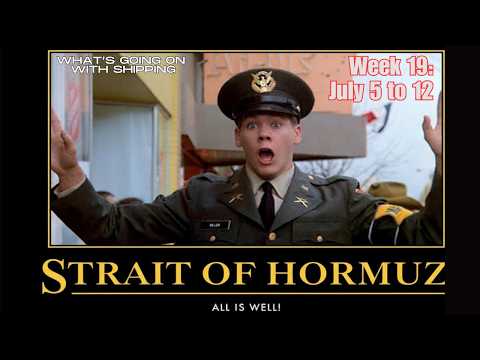
Preview:Week 19 of the Strait of Hormuz crisis: four attacks on commercial shipping since July 6th, including a UAE-owned container ship (GFS Galaxy) hit and on fire with one crew member lost. The US launched a third wave of strikes on Iranian military targets. Iran declared the Strait closed, but the US insists the southern route remains open and ships are transiting at severely reduced levels. Sal Magliano argues the threat should be rated "critical" not "severe," highlights Iran funneling ships into its northern route via mining and GPS spoofing, and notes Japan is cutting side deals with Iran to extract stranded vessels. War risk insurance is 2-6% of hull value, but the real barrier is safety, not cost.
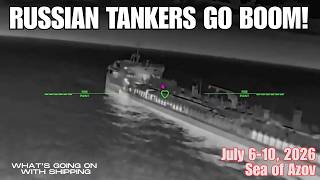
Preview:Sal Mercogliano reports on a massive Ukrainian drone campaign that struck 48 Russian-linked vessels in the Sea of Azov and Black Sea over 120 hours (July 6–10, 2026). The strikes targeted tankers, cargo ships, ferries, and tugs — mostly small Volga-Don river-class vessels belonging to Russia's shadow fleet — aiming for mission kills rather than sinkings by hitting bridges, engine rooms, and accommodation blocks. The strategic objective: cut off fuel and logistics to Russian forces in Crimea. He also notes a concurrent Iranian campaign in the Strait of Hormuz and warns of potential Russian retaliation against Ukrainian grain shipping.
Preview:A standalone episode documenting a real-time tall-ship race: four of the five "Five Sisters" training vessels (Gorch Fock, USCG Eagle, Sagres, Mircea) are sailing from New York to Boston, recreating a 1976 race. The host provides ship-tracking, historical context on their 1930s German/Nazi origins and post-war fates, and notes the Latin American sister-ship quartet. No markets, no financial assets — purely maritime history and live event coverage.
Preview:Sal Mercogliano (What's Going on With Shipping) surveys three concurrent maritime conflict zones — the Caribbean (US Southern Command's Operation Southern Spear targeting narco-terrorist boats), the Black Sea (Ukraine's drone blitz against 21 Russian tankers in the Sea of Azov, with expected Russian retaliation), and the Strait of Hormuz (deteriorating ceasefire, renewed Iranian attacks on tankers, US strikes on 80+ Iranian targets, and the fundamentally broken MOU that gave Iran perceived authority over the strait). His core argument: undeclared naval wars have historically escalated into much larger conflicts, and the current setup — especially the Hormuz mess — carries that same risk if shipping freezes or deterrence fails.
Preview:A maritime YouTuber recounts the bizarre story of a whale sinking a Carteret Fire Department marine unit returning from New York Harbor's Sail 250 event on July 4th, 2026. The crew was rescued without injury. The episode also covers a squall that hit tall ships the day before, and a Clearwater sloop excluded for displaying political banners. The host uses the story to advocate support for volunteer fire departments.
Preview:Week 18 Strait of Hormuz recap: maritime traffic shows tentative recovery with both northern (Iranian-controlled) and southern (US/Omani) channels in use, but a disruption on July 4 signals the fragility of the situation. Sal Mercogliano argues oil loadings are rising (~6M bpd by tanker) yet storage is at record lows, creating acute vulnerability to any new shock. He debunks Iranian propaganda about a supposedly grounded ship, covers the Jones Act waiver fight, Russia-India diesel circular trade, Japanese desperation for oil, and warns that even as the ceasefire framework advances, no durable resolution on Hormuz control has been reached — shipping remains one incident away from freezing up.
Preview:Sal Magliano uses the 250th anniversary of American independence to argue that the United States is fundamentally a maritime nation, not merely a continental power. He traces this thesis through 25 ships spanning from Columbus's Santa Maria to Cold War-era Victory ships, showing how maritime commerce, naval power, and freedom-of-the-seas disputes have shaped every major conflict and economic transformation in US history. The episode is a historical narrative, not a market call.
Preview:Sal Mercogliano, maritime historian, analyzes the bifurcated Strait of Hormuz shipping situation: a US-protected southern (Omani) corridor running convoys vs. an Iranian-controlled northern channel. He argues the dual-corridor arrangement is becoming permanent rather than returning to pre-war norms. Oil is flowing at roughly 5 million barrels/day by ship (plus ~5M via pipelines), but in pulses not steady flow. China is conspicuously holding back from buying Iranian oil. The EU signals acceptance of Iranian transit fees while the US resists. Mercogliano warns storage levels are dangerously low globally, making any disruption — hurricane, renewed attack — disproportionately impactful on oil prices.
Preview:Sal Mercogliano breaks down the World Shipping Council's 2026 report on containers lost at sea. In 2025, 1,478 containers were lost out of 280 million moved — just 0.0005%. The spike from 2024's 576 containers was driven almost entirely by one incident: MSC Elsa 3 losing 640 containers (43% of the total). He argues that individual catastrophic events — MOL Comfort (2013), ONE Apus (2020), Maersk Eindhoven/Essen (2021), MSC Elsa 3 (2025) — create misleading annual spikes, while the baseline loss rate remains a few hundred to under a thousand containers per year. Key risks are weather, fire (especially lithium-ion batteries), and misdeclared cargo weights. Mercogliano notes the irony that mandatory IMO reporting of lost containers only began in 2026, and that faster NTSB investigations are needed.
Preview:Sal Mercogliano analyzes the 2026 container shipping landscape amid new Trump administration tariff proposals. He argues that contrary to widespread predictions of declining imports, 2026 is shaping up as one of the best years for US container imports since 2022, driven by frontloading ahead of tariff hikes. He covers the third-largest rate spike in container shipping history — fueled by Iran conflict-driven fuel costs, Red Sea/Hormuz route disruptions, and Panama Canal slowdowns — and examines the uneven fortunes of carriers like Maersk (upgraded guidance) and Hapag-Lloyd (sharp earnings decline). The episode also explores shifting port dynamics, including the temporary idling of Charleston's Leatherman terminal and the ongoing battle between East/Gulf Coast and West Coast ports for market share.
Preview:Week 17 of the Strait of Hormuz crisis: the speaker (Sal from "What's Going on With Shipping") reviews transit data, shipping attacks, the dysfunctional US-Iran ceasefire, and the "protection racket" Iran is building through the Persian Gulf Strait Authority. Despite the MOU, Iranian crude flows freely while commercial ships still get hit. Transit numbers remain depressed (~22-48 ships/day), insurance costs are spiking, and mines linger. The speaker highlights winners (Panama Canal) and losers (Pakistan, India, Japan, Korea), explores Omani-Iranian fee coordination, and concludes that shipping will remain disrupted with no durable resolution in sight.
Preview:A detailed walkthrough of the 2026 BIMCO/ICS Seafarer Workforce Report. Host "Uncle Salin" breaks down the numbers: 2.57M seafarers serving 85K+ merchant ships, a current shortfall of ~39,100 STCW-certified officers (worsening from 16,500 in 2015), offset by a surplus of ~57K unlicensed ratings. The Philippines remains the dominant labor-supply nation; the officer-cadet pipeline ratio has improved (1:3.8 vs 1:7.6 in 2015) but still won't close the gap if fleet growth continues at ~2% annually. The report projects a need for ~114K additional officers by 2030. Salin adds color on retention problems (marriage, isolation, lack of shore leave, no off-ramp to shore jobs) and notes that Starlink connectivity is a double-edged sword — it keeps crews connected but also isolates them in their cabins.
Preview:A detailed account of the IMO-led evacuation effort to free ~11,000 seafarers and 7,800 ships trapped in the Persian Gulf, which was suspended after Iran attacked the MV Ever Lovely with a one-way attack drone on June 25. The episode features firsthand testimony from Captain Raman Kapoor, an Indian oil tanker captain stuck in the war zone, and analysis from host Sal Magliano on the fragile US-Iran ceasefire, the competing northern (Iran-controlled) and southern (US/Oman/IMO) transit corridors, and the human toll on merchant mariners caught in the crossfire.
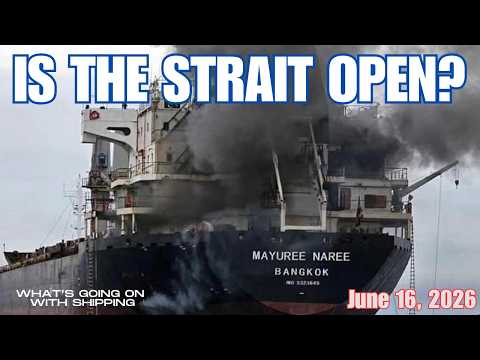
Preview:A maritime historian argues that the Strait of Hormuz is not fully ‘open’ in any normal sense even after a ceasefire-style understanding: shipping is flowing again, but only under elevated risk, higher insurance costs, and unresolved leverage between Iran, Oman, and the U.S. He says the near-term market signal is more oil leaving the Gulf, but the setup remains fragile and could snap back on any incident.
Preview:Sal Mercogliano argues that Iran and Oman do not legally “own” or control the Strait of Hormuz in a way that lets them shut it to commercial shipping. His core point is that UNCLOS transit-passage rules protect continuous passage through straits used for international navigation, even where the bordering states claim territorial waters.
Preview:This episode is a maritime news roundup centered on five stories outside the usual Hormuz focus: the NTSB’s large marine-investigation backlog, Russia-related shipping developments, rising Venezuelan crude exports, Fortescue’s ammonia-capable bulker chartering, and tanker-rate spikes tied to broader Middle East uncertainty. The host argues that marine accident investigations are lagging badly, Russia’s fleet and logistics are under strain, alternative oil flows are reshaping tanker demand, and decarbonization efforts in bulk shipping are beginning to take more concrete form.
Preview:A shipping-focused recap of the Strait of Hormuz situation: the speaker argues the opening/closure status is chaotic, operationally messy, and still highly uncertain despite U.S. announcements of a ceasefire, a memorandum of understanding, and a reopened corridor. He emphasizes that ships are still rerouting, turning AIS off, or using the southern Omani channel under U.S. guidance, while Iran is imposing its own approval/insurance regime over the whole strait.
Preview:The video argues that the Strait of Hormuz is not simply “open” in any normal sense: Iran has effectively shifted control of transits into a permit-and-insurance regime run by the IRGC-linked Persian Gulf Strait Authority, while the U.S. has reduced its blockade posture and signaled a return toward prewar traffic levels.
Preview:An interview with historian Jon Parshall centered on his book *1942: Crux of War* and its core thesis: 1942 was not a single turning point but a year made up of many inflection points across multiple theaters. The conversation emphasizes how China, the Atlantic, the Eastern Front, the Mediterranean, Japan’s empire, and the U.S. war economy all interacted to shape the war’s outcome.
Preview:Sal Mercogliano argues that the Strait of Hormuz crisis has eased materially after a US-Iran memorandum of understanding, but shipping is not back to normal. He says maritime risk levels were downgraded, Iranian vessels are now moving out with up to 5 million barrels of crude, and the key question is whether the deal holds and whether commercial shipping actually returns.
Preview:The host argues that the Strait of Hormuz is not yet fully open in a practical sense, even if political announcements suggest a deal is in place. His main point is that commercial shipping, naval guidance, insurance, and route security still lag the headlines, so vessels and underwriters are behaving cautiously rather than resuming normal transit.
Preview:The host argues that the U.S. blockade of Iran in the Strait of Hormuz is now being enforced through direct strikes on non-compliant tankers, including incidents that killed three Indian mariners. He sees the operation as legally structured but strategically and morally messy, and he also thinks the wider shipping picture is chaotic, with AIS spoofing, secret escort corridors, and mounting pressure on India, tanker owners, and regional logistics.
Preview:The video argues that the U.S. is running a clandestine maritime operation in and around the Strait of Hormuz to move non-Iranian oil and LNG through a contested corridor, using escorts, air cover, and ship-to-ship transfers near Oman. The host says this matches President Trump’s and Secretary Wright’s recent comments and roughly aligns with tanker-tracking data showing about 100 million barrels moved since early May, though he stresses that this is far from restoring pre-war flows and does not amount to true U.S. control of the strait.
Preview:Sal Mercogliano argues that a Middle East peace announcement would not quickly normalize global shipping or energy flows. He says the Strait of Hormuz remains deeply disrupted, with tankers still stuck inside the Gulf, mines and blockades changing traffic, and higher insurance, routing, and distance costs likely to persist even if the shooting stops.
Preview:The host argues that the Houthis’ new announcement is not a full Bab el-Mandeb closure yet, but it is a meaningful escalation risk because it could revive the 2023-24 Red Sea shipping diversion pattern. His core warning is that even a partial threat can push carriers back around Africa, raising transit times, war-risk insurance, and costs across oil and container routes.
Preview:Sal Mercogliano argues that the Persian Gulf/Hormuz blockade is still active and is now the central driver of higher freight rates, tighter oil logistics, and broader supply-chain stress. He frames the situation as a competing blockade: Iran constraining transit through Hormuz while the U.S. blocks Iranian port access and intermittently interdicts sanction-busting tankers.
Preview:This video is a commentary on a House hearing about U.S. maritime policy, featuring opening statements from MARAD administrator Captain Steve Carmel and Federal Maritime Commission chair Laura Deello. The host argues the hearing correctly centers on cargo, mariners, shipbuilding, and supply-chain enforcement, but misses a major issue: the Jones Act waiver process and how it interacts with domestic shipping capacity.
Preview:A history-focused video uses the Battle of Midway to illustrate the logistics behind naval power: replenishment, repair, reinforcement, and replacements. The speaker argues that Midway was not just a carrier battle but a complex sustainment operation involving oilers, tugs, dry dock repairs, aircraft ferries, and the rapid reconstitution of air groups.
Preview:Sal Mercogliano covers the German court ruling that Porsche was not proven responsible for the Felicity Ace fire, then uses the case to explain why shipboard EV/lithium-ion fires are so hard to control. The episode is less about trading or shipping rates and more about maritime fire risk, litigation, and operational changes like earlier detection and stricter battery-handling procedures.
Preview:Sal Mercogliano argues the shipping crisis around the Strait of Hormuz, Bab el-Mandeb, and the broader “shadow fleet” is still worsening despite political spin about progress. His core view is that the U.S. blockade/sanctions architecture is partially working, but traffic is only trickling out, insurance and registry workarounds are proliferating, and the real risk is dwindling global oil availability and a lasting rise in shipping insecurity.
Preview:The video argues that the Strait of Hormuz remains a live maritime crisis in week 13 of the U.S.-Iran confrontation: mines may be present, blockade enforcement is still active, AIS data is unreliable, and shipping through the region remains heavily constrained. The host emphasizes that the apparent de-escalation narrative is fragile because ships are still being disabled, warnings are still being issued, and the practical risks to transit, insurance, and cargo flows remain high.
Preview:The video argues that China now dominates global shipbuilding, with its share of the order book rising to 70.9% in 2025, while South Korea, Japan, and Europe continue to lose share. The speaker frames the industry as entering a new build cycle driven by aging fleets, weak scrapping, higher newbuild costs, and demand for more efficient dual-fuel ships, while cautioning that tankers remain cyclical and not every segment is equally strong.
Preview:Sal Mercogliano argues that Russia is the main beneficiary of the Strait of Hormuz crisis because it can reroute LNG and oil flows, use the Northern Sea Route sooner, and profit from higher freight and energy prices while sanctions enforcement softens. He ties that to broader Russian maritime activity: attacks on Russian shipping, Ukraine’s strikes on Russian ports/refineries, shadow-fleet expansion, and Russian convoy movements to Syria and the Pacific.
Preview:The host argues that China now dominates global shipbuilding and that the U.S. lost its commercial shipbuilding base largely through deliberate postwar policy choices, underinvestment, and loss of industrial ecosystem support. He uses the BRS report and historical charts to show China’s rise, then lays out the conditions needed to rebuild a shipbuilding nation—labor, supply chains, finance, design skill, scale, and tolerance for losses—and concludes the U.S. could still make a comeback, but only with long-term commitment, policy support, and possibly new technology.
Preview:The speaker argues that the Strait of Hormuz crisis has evolved over 12 weeks from a shipping disruption into a broad maritime blockade/contest that has materially reduced traffic, raised security risk, and begun reshaping oil, tanker, and commodity flows. He closes on cautious optimism that a U.S.-Iran deal may be near, but emphasizes that the situation has repeatedly seemed close to resolution before and remains highly fragile.
Preview:A maritime-history episode uses National Maritime Day to argue that the U.S. merchant marine has shrunk from global dominance into a strategically thin, aging support system. The speaker says the U.S. needs reform, shipyard access, and technological renewal to avoid deeper dependence on foreign shipbuilding and logistics.
Preview:The video argues that the Strait of Hormuz disruption is creating a broader shipping and global trade shock, and that drones and unmanned systems are central to reopening and protecting the route. It highlights U.S. mine-clearing and defensive efforts using unmanned vehicles, while warning that shipping companies, fuel markets, and downstream industries remain exposed until access is restored.
Preview:The video argues that the Hormuz disruption has scrambled tanker markets, kept VLCC utilization artificially tight, and driven a temporary rerouting boom that is now starting to normalize. Sal Magaliano says the key question is whether rates stay elevated because ships are still trapped and rerouted, or fall if traffic resumes through the Strait of Hormuz.
Preview:The video argues that the Strait of Hormuz blockage has become a persistent, multi-week shipping crisis rather than a short-lived disruption. The speaker walks through transit data, tanker tracks, port and energy impacts, and a stream of examples showing ships being redirected, delayed, or constrained by the U.S. blockade and Iranian leverage.
Preview:This episode is a five-part shipping and maritime roundup covering the Dali settlement, container rate and supply-chain stress, a major US Navy shipbuilding plan, an extreme Alaska tsunami near-miss, and Europe’s growing LNG dependence amid Middle East disruptions.
Preview:A shipping-focused commentator analyzes a Senate hearing on U.S. policy toward the Strait of Hormuz, arguing that Hegseth overstates U.S. control and underplays the strategic challenge of reopening the strait for commercial traffic while maintaining pressure on Iran.
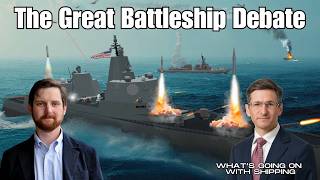
Preview:A debate on the proposed U.S. Navy battleship centered on logistics, sea denial, and whether a large surface combatant can survive modern missiles and drones. John Konrad argues for a bigger, more survivable platform to protect choke-point logistics, while Zach Cooper is skeptical and favors smaller, distributed, more denial-oriented force design unless the ship is built around robust active defenses.
Preview:The video is a week-10 recap of the Strait of Hormuz conflict, centered on merchant mariner risk, ship attacks, and shifting U.S./Iran tactics. The host argues the immediate operational picture remains highly dangerous and that crews on commercial vessels are bearing the brunt of the conflict.
Preview:The host argues that the U.S. temporarily pulled destroyers out of the Strait of Hormuz after a short escort operation, that Iran responded by attacking or seizing multiple vessels, and that the U.S. then escalated by disabling Iranian tankers with F-18 strikes. The core framing is an active maritime blockade/retaliation cycle, not a simple U.S. retreat.
Preview:The host argues that the U.S. attempted a phased shipping escort operation in the Strait of Hormuz, but it collapsed after Iranian pressure, fresh attacks on commercial vessels, and a U.S. strike on an Iranian tanker. He frames the area as a dangerous, highly militarized maritime corridor where commercial shipping is now caught between U.S.-Iran escalation and unclear ceasefire constraints.
Preview:The video is a time-sensitive shipping-news commentary about a hantavirus outbreak aboard the expedition cruise ship MV Hondius, anchored off Cape Verde with passengers and crew reportedly trapped onboard. The host argues the priority should be evacuating the sick, disembarking the vessel, and coordinating an international medical response rather than leaving the ship offshore.
Preview:The host argues that two U.S.-flagged merchant ships have been escorted out of the Strait of Hormuz under a U.S. initiative called Project Freedom, and frames it as the first visible success of a broader effort to reopen commercial transit through a contested maritime chokepoint.
Preview:A shipping-focused geopolitical update arguing that the Strait of Hormuz is effectively under contested closure, with Iran, the U.S., and maritime security groups all enforcing competing controls while piracy near Somalia and the Gaza blockade add to global sea-lane stress.
Preview:The video argues that the Jones Act waiver is being used to move fuel and related cargo during a U.S. shipping/logistics stress period, but the host questions whether the waiver is actually necessary or whether it mostly benefits refiners and specific operators rather than consumers. He is supportive of the Jones Act overall, skeptical that the waiver lowers fuel prices much, and critical of how the administration justifies it.
Preview:A shipping-focused roundup centered on how the Persian Gulf/Hormuz disruption is rippling through maritime law, container trade, tanker flows, LNG, dry bulk, canal congestion, and bunker fuel markets.
Preview:The video is a week-eight recap of the U.S.-Iran shipping conflict centered on the Strait of Hormuz, with a new piracy flare-up off Somalia. The host argues that shipping disruptions remain severe, that the blockade and seizure campaign are reshaping global tanker routes, and that the market has not returned to normal even where attacks have eased.
Preview:The video argues that a U.S. blockade aimed at Iranian shipping is materially disrupting tanker movements, forcing some vessels to turn back, loiter, or seek shelter near anchorages rather than proceed normally. The speaker uses shipping-tracking examples and third-party maritime intelligence sources to claim the pressure is being felt, even if some Iranian oil still moves and storage at Kharg Island remains active.
Preview:The video argues that Operation Epic Fury has forced the U.S. Navy to rework at-sea logistics in the Indian Ocean, with Diego Garcia becoming the key hub and commercial tankers filling oilers at sea to sustain a large carrier-and-amphibious force.
Preview:The video is a shipping-security update focused on escalating US-Iran maritime confrontation around the Strait of Hormuz, the Gulf of Oman, and the Arabian Sea. The speaker says Iranian forces stopped and fired on two MSC container ships while the US seized or diverted several Iranian-linked vessels, framing the situation as a widening blockade-like contest.
Preview:The video argues that the Strait of Hormuz is functionally constrained rather than cleanly open or closed, with competing U.S. and Iranian blockades, reduced traffic, and rising global shipping disruption. The host frames this as a broader breakdown in freedom of navigation with spillovers into oil, LNG, fertilizer, and rerouted trade.
Preview:The video argues that U.S. forces deliberately disabled and boarded an Iranian container ship, Tosca/Toska, after repeated warnings, in response to earlier alleged Iranian attacks on shipping near the Strait of Hormuz. The host frames it as a major escalation tied to blockade enforcement, sanctions, and the risk of broader retaliation.
Preview:A shipping-focused host walks through the Strait of Hormuz traffic picture on April 18, arguing that the market and media overreacted to claims that the strait was open, then closed, while IRGC activity and reported attacks forced many vessels to turn around. The video centers on vessel movements, shipping risk, and the distinction between normal commercial traffic and dark-fleet tankers.
Preview:The video argues that the U.S. has imposed and is actively enforcing a maritime blockade of Iranian ports and coastal waters, turning ships around and warning that vessels may be boarded and seized. The speaker frames this as a major escalation with global interdiction implications for Iranian-linked shipping and shadow fleet activity.
Preview:The video argues that a surge of empty VLCCs heading to the U.S. does not mean America can immediately replace Persian Gulf oil. Sal Mercogliano says U.S. loading capacity, refinery needs, and global logistics constraints limit how quickly those ships can be filled, while disrupted Gulf flows are already tightening world inventories. He also uses the USS George H.W. Bush’s route around Africa to make a broader point about choke-point risk and the U.S. Navy’s need for more logistics ships.
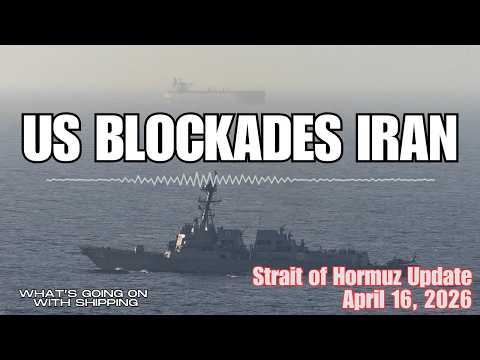
Preview:The video argues that the Strait of Hormuz is now experiencing dueling blockades: Iran’s existing routing restrictions and a newly announced U.S. naval blockade aimed at Iranian ports and exports. The speaker frames this as a de facto war measure designed to force negotiations, but warns that boarding or capturing ships would be much riskier than prior interdiction operations.
Preview:The host argues that the Strait of Hormuz crisis has escalated into a de facto naval war, citing a U.S. announcement of a blockade on Iranian ports and a breakdown in U.S.-Iran talks. He says shipping through the Strait remains far below normal, tanker traffic is still disrupted, and the gap in sailings is now starting to hit global supply chains and oil flows.
Preview:Sal Magliano argues that the U.S. Navy has just begun a deliberate move to reopen and secure the Strait of Hormuz, with two destroyers transiting the channel and signaling a possible mine-clearance operation. He frames this as a major tactical improvement for commercial shipping, but says the disruption is far from over because Iran has tried to redirect traffic into its own waters and vessel backlogs will take months to unwind.
Preview:The speaker argues that Iran has not literally closed the Strait of Hormuz, but has instead created a coercive, Iran-controlled routing regime inside/near its territorial waters after announcing mines in the area. He says traffic is sharply reduced, insurers remain cautious, and the practical effect is a throttled chokepoint rather than free passage.
Preview:A shipping-focused host argues that the Strait of Hormuz is not truly ‘open’ in practice despite official U.S. statements, because Iran is still controlling traffic, imposing de facto tolls, and keeping vessel transits highly restricted. The episode is a tactical read on maritime choke-point risk, shipping delays, and the market implications for oil and global freight.
Preview:A shipping-focused roundup covering Strait of Hormuz risk, Black Sea attacks, container rates, Panama-China tensions, and a record U.S. shipbuilding request. The episode’s core message is that maritime logistics are being shaped by geopolitical shocks, while regulators and governments are trying to impose some order on the chaos.
Preview:The video is a rapid update on an explosion near the Panama Canal and Bridge of the Americas. The host says the canal itself is not closed, argues the blast appears to be a gas explosion involving tanker/fuel infrastructure, and shows that vessel traffic through the canal still looks normal.
Preview:The host argues that the Strait of Hormuz is not truly 'open' despite some resumed traffic, because vessel transits remain far below normal and the disruption has already propagated through global shipping and energy markets. He frames the situation as a major geopolitical and logistics shock, with Iran gaining leverage through a de facto toll-booth model, while the U.S. and allies appear slow and inconsistent in response.
Preview:The speaker argues that shipping through the Strait of Hormuz is already being rerouted in response to conflict, and that the disruption is likely to ripple far beyond oil into fuel prices, trade flows, and inflation. He says the U.S. is downplaying its exposure, but in his view the Strait matters materially to global shipping and the administration has not done enough to secure it.
Preview:Sam Maglano provides a March 31, 2026 update on Strait of Hormuz shipping. He fact-checks claims that traffic is returning to normal — only ~5-6 vessels transited daily, versus the normal 130+. He analyzes a NewsNation video from aboard the M/V Zia, a bulk carrier that exited through the Iranian "toll booth" between Kisham and Larak Islands. He also examines two recent ship attacks (Express Rome and Al Salami) and clarifies that the "ships waiting" seen off Bandar Abbas are local port traffic, not Hormuz-bound vessels. His core message: the Strait remains a critical threat environment, transit levels are still in single digits, and public narratives of normalization are misleading.
Preview:The video argues that the Strait of Hormuz disruption is now feeding directly into Australia’s fuel vulnerability. The host says the immediate issue is not literal nationwide exhaustion but panic buying, distribution stress, and a looming supply-gap risk as imported refined products get delayed or reprioritized. He also questions official claims about tanker traffic leaving Hormuz, saying he cannot verify the president’s stated numbers.
Preview:The host says week four in the Strait of Hormuz remains highly disrupted, with critical regional risk still in place, ship traffic recovering only unevenly, and Iran applying a more selective transit regime. He argues the real issue is not just whether ships can pass, but whether they can pass without violating sanctions, paying tolls, or being blocked based on cargo/ownership links to the U.S. or Israel.
Preview:The speaker argues that the headline claim about Iran releasing 8–10 tankers through Hormuz is not supported by the vessel data he checked. He sees the real issue as continued shipping risk in the Strait of Hormuz, plus broader escalation in the Red Sea, Black Sea, and sanctions enforcement against Russian-linked shipping.
Preview:The host argues that Iran is effectively asserting control over the Strait of Hormuz by restricting passage, charging transit fees, and redirecting ships, which he says is already disrupting global oil and shipping flows. He frames the situation as a major risk to world trade, tanker capacity, and U.S. and allied military options, with the main near-term danger being escalation in a confined waterway where ships and warships can be hit.
Preview:This episode is a maritime-news roundup centered on the escalating Hormuz/Iran shipping crisis, Russia’s shadow fleet, US shipbuilding weakness, and Panama Canal tensions, with a fifth-anniversary reflection on the channel’s origin during the Ever Given/Suez blockage. The host argues the current geopolitical interference with shipping is worsening supply-chain risk, tanker and routing economics, and seafarer safety, while also using the anniversary segment to trace how the channel grew out of one ship crisis into broader maritime coverage.
Preview:The host recaps three weeks of disruption in the Strait of Hormuz, arguing that the conflict has effectively choked shipping even without a formal closure. His core view is that the combination of attacks, insurance shocks, weak escort planning, and delayed allied response has created a de facto blockade that could take months to unwind.
Preview:The video argues that the Strait of Hormuz crisis is creating a severe shipping and logistics bottleneck: many vessels and crews are stranded, attacks continue, and Iran is selectively allowing some traffic through a corridor. The speaker also criticizes the Trump administration for proposing to unsanction stranded Iranian oil and to issue a Jones Act waiver, saying those moves are confused, poorly targeted, and unlikely to solve the underlying supply problem.
Preview:The speaker argues that the Strait of Hormuz crisis has shifted from a simple choke point to a de facto Iranian checkpoint, with some ships reportedly transiting along Iran’s coast under permission-based conditions. He says this effectively hands Iran more control over global shipping and energy flows, while the U.S. has failed to keep the waterway fully open.
Preview:The video argues that the Strait of Hormuz is effectively under Iranian control because ships are being routed through Iranian waters for permission to exit, while traffic is disrupted and some vessels are rerouting or moving cautiously. The host ties this to broader geopolitical friction, higher shipping costs, and knock-on effects for oil, LNG, and cruise operators.
Preview:The video argues that Secretary Hegseth and Gen. Kaine are underestimating the real shipping disruption around the Strait of Hormuz and the wider Persian Gulf. The host says military strikes may have degraded Iran’s conventional naval capability, but commercial traffic is still effectively constrained by asymmetric threats, uncertainty, and a lack of adequate escort/security capacity.
Preview:The host argues that shipping in the Persian Gulf/Strait of Hormuz is effectively disrupted by drone and projectile attacks, and that the U.S. response has been slow, confused, and operationally inadequate. He says insurance, security, convoy planning, and escort policy were not put in place fast enough, and that this has frozen traffic, trapped vessels, and raised broader supply-chain risks. He also criticizes the administration’s consideration of strategic petroleum reserve releases and a Jones Act waiver as partial fixes that do not address the core shipping/security problem.
Preview:A daily shipping-security update on the escalating Strait of Hormuz crisis. Three more commercial vessels were struck in 24 hours — including a Thai bulk carrier hit by a suspected unmanned surface vessel, leaving three crew missing. The US Navy has privately told industry it cannot provide escorts, contradicting Trump's public statements. War-risk insurance is available but physical danger is what's keeping ships locked down. Saudi Arabia is pivoting crude exports to Red Sea ports via pipeline, coal demand is spiking as LNG alternatives, and Maersk announced emergency fuel surcharges that the FMC is already scrutinizing.
Preview:The host argues that the Strait of Hormuz disruption is creating a global trade and commodity shock, with the most important risks being LNG, fertilizer, war-risk insurance, and higher shipping/fuel costs. He is skeptical that the U.S. military currently has a clearly prepared convoy plan, and says markets need a visible escort/open-sea solution before normal trade resumes.
Preview:The speaker argues that shipping will not safely resume through the Strait of Hormuz unless the U.S. Navy and allied escorts visibly re-establish security, because commercial operators are reacting to military risk, insurance, and official U.S. advisories rather than to rhetoric about 'guts.' He frames the current collapse in transits, the wave of attacks on vessels, and the spike in tanker rates and oil prices as proof that the chokepoint has effectively shut down.
Preview:The host argues that the U.S. Navy cannot realistically solve the Strait of Hormuz problem with convoy escort alone, and instead should pressure Iran by seizing Iranian commercial tankers. He says the immediate shipping disruption is being driven by war-risk insurance, not just military threat, and that the U.S. expanded the risk zone by striking an Iranian vessel near Sri Lanka.
Preview:A shipping-focused interview with J. Mintzmyer argues that the strongest opportunities are in tankers and dry bulk, with containers potentially getting a shorter-term rerating if Red Sea disruptions persist. He sees current shipping strength as driven less by headlines and more by multi-year supply-demand imbalances, sanctions enforcement, aging fleets, rerouting, and delayed newbuild deliveries.
Preview:The video argues that traffic through the Strait of Hormuz has nearly halted not because the strait was formally closed, but because shipowners pulled back once war-risk insurance jumped and attack risk rose. The speaker says Iranian-linked drone and projectile incidents, plus uncertainty around escorts and US guarantees, made it uneconomic and unsafe for vessels to keep transiting.
Preview:Sal Mercogliano argues the Gulf shipping crisis is being driven less by an actual hard closure of the Strait of Hormuz than by insurance, security, and escalation risk after attacks on multiple vessels. He says tanker and container flows have sharply slowed, war-risk premiums are rising fast, and US escort capacity is insufficient for the scale of traffic, even as Washington signals it may provide insurance and escorts.
Preview:The video argues that the Strait of Hormuz is under severe but not formally closed disruption, with ship traffic dropping sharply, war-risk insurance jumping, and some tankers still transiting dark. The host frames this as a major shipping bottleneck that is already pushing freight and tanker rates higher while creating operational, insurance, and security risks across the Middle East.
Preview:Sal Mercogliano reports on the March 2, 2026 missile strike on the US-flagged tanker Stena Imperative while berthed at a Bahrain shipyard, killing one worker and injuring two. He details the near-shutdown of the Strait of Hormuz with ~150 ships stranded, the sudden cancellation of war-risk insurance by seven major P&I clubs effective March 5, and a massive spike in VLCC charter rates. Despite the chaos, he predicts ships will resume transiting the strait by week's end once new insurance is priced and convoy coordination emerges.
Preview:The video argues that the Strait of Hormuz is not literally “closed,” but shipping has become highly constrained because of war-risk, missile/drone threats, and insurance costs. The host says vessels are pausing, anchorages are filling up, and freight and crude charter rates are likely to rise sharply if the security situation persists.
Preview:Sal Mercogliano analyzes whether the Strait of Hormuz remains open following US/Israeli strikes on Iran on February 28, 2026. Using live AIS ship-tracking data, he shows a visible gap forming in tanker traffic through the strait but argues no actual legal closure exists — the IRGC's radio warning has no standing under UNCLOS. He notes tanker charter rates have already spiked above $100k/day (VLCCs), driven by pre-existing fleet tightness from sanctions and a Korean firm's aggressive chartering, now compounded by Hormuz disruption. His core thesis: Iran cannot physically close the strait (history shows even the 1980-88 Tanker War never closed it), but insurance costs and caution will create a "pinching" effect on oil flows. He also notes the US Ready Reserve Force remains unmobilized, suggesting this is an air campaign, not a ground invasion.
Preview:Sal Mercogliano breaks down the logistical reality behind President Trump's claim that a hospital ship is being sent to Greenland. Both US Navy hospital ships (USNS Mercy and USNS Comfort) are currently at Alabama Shipyard — Mercy finishing emergency repairs, Comfort mid-way through a yard period. Mercy may be the only viable candidate but faces a narrow window, with a $89M overhaul contract at Vigor in Portland starting March 20. Greenland's PM has already rejected the offer, and the ships face physical obstacles: deep draft (32 ft), lack of ice rating, and shallow Greenlandic ports. Mercogliano uses the news hook to deliver a detailed primer on hospital ship operations, crewing, maintenance cycles, and the broader decay of US maritime infrastructure — calling for replacement vessels built on the NSMV platform.
Preview:This episode is a five-part shipping market roundup centered on tariffs, tanker strength, shipbuilding, false flags, and container rates. The host argues that tariff uncertainty has distorted trade flows and could trigger legal and administrative chaos, while tanker and some shipping equities are benefiting from tight supply, geopolitical risk, and rerouted crude flows.
Preview:The video argues that California’s gasoline market is increasingly dependent on imports because local refineries are shrinking, interstate pipeline access is limited, and Jones Act shipping constraints make domestic coastal transport expensive. The host says the Bahamas route is a practical workaround, but also frames the issue as part of a larger long-running U.S. shipping and energy-security problem.
Preview:Sal Mercogliano debunks a viral claim that Bad Bunny sang about the Jones Act during the Super Bowl halftime show and argues the claim was false. He then uses Puerto Rico vs. Dominican Republic port comparisons to argue that the Jones Act is only one part of Puerto Rico’s higher shipping costs, not the sole cause.
Preview:Sal Maglano runs through five maritime stories: tanker seizures and false flags, pressure on Russian oil flows, Panama Canal water and port politics, the IMO net-zero fight, and a mixed outlook for container shipping and Red Sea routings. His core message is that geopolitics is increasingly shaping shipping operations, but the bulk of global trade still moves normally.
Preview:The video is a maritime incident breakdown, not a market call: the host reviews a fatal container collapse involving KM Pacific 88 in Indonesia and then ties it to a separate court ruling on the master of the Solong after its collision with the Stena Immaculate. The main thrust is that rapid, high-up container loading on a smaller feeder vessel created a top-heavy, unstable condition that led to a catastrophic stack collapse and a dockworker death.
Preview:This episode covers the criminal conviction of the Salong’s master after the 2025 North Sea collision with the anchored Stena Immaculate, then shifts into a detailed reconstruction of how the Stena crew contained the fire and evacuated without injuries or loss of life. The host emphasizes that the tanker crew’s training, union support, and emergency discipline likely prevented a much larger fuel-tanker disaster.
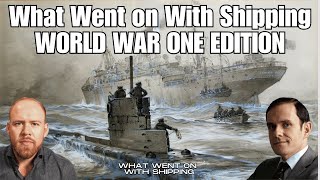
Preview:A historical deep-dive interview on how shipping and maritime power shaped World War I. Host Sal Mercogliano ("What's Going On with Shipping") brings on military historians Dr. Spencer Jones and Dan Hill (hosts of "Not So Quiet on the Western Front") to discuss how Britain's naval blockade strangled Germany economically, how German unrestricted submarine warfare nearly won the war in 1917, and how the convoy system turned the tide. The discussion emphasizes logistics as the war's decisive element and draws parallels to modern great-power competition.
Preview:The video covers the aftermath of the OE Henry Hudson fire in the Port of Los Angeles, with the ship now departed for repairs in Asia and the cargo claims process moving into general average. The host argues the fire was likely caused by spent lithium-ion batteries and criticizes the flood-and-salvage response, while also pressing the NTSB to release a faster preliminary maritime investigation.
Preview:The video argues that the Federal Maritime Commission (FMC) has become a much more active and consequential regulator of U.S. shipping since the 2022 Ocean Shipping Reform Act. Host Sal Magloano frames the FMC as an underappreciated agency now using expanded authority to investigate carriers, port practices, chassis access, foreign port restrictions, ballast-water rules, detention/demurrage billing, and other choke-point issues that affect U.S. trade flows.
Preview:Sal Mercogliano covers the USCGC Polar Star's rescue of the cruise ship Scenic Eclipse 2 trapped in Antarctic pack ice near McMurdo Station. The 50-year-old icebreaker freed the vessel during Operation Deep Freeze 2026. Mercogliano uses the incident to highlight two structural US problems: the aging polar icebreaker fleet (with new builds mired in delays and requiring Finnish partnership) and the Military Sealift Command's repeated use of foreign-flagged ships for resupply missions despite available US-flagged alternatives under the Maritime Security Program.
Preview:The host argues that European and U.S. authorities are escalating pressure on Russia’s ‘shadow fleet’ by seizing, diverting, or refusing tanker access, with France’s boarding of the Grinch presented as the clearest recent example. He frames this as part of a broader enforcement wave that also includes German, Italian, British, and U.S. actions, while noting the market irony that Europe still relies heavily on Russian LNG.
Preview:The host argues against Senator Mike Lee and Rep. Tim Burchett’s proposal to revive letters of marque and reprisal for private Americans to target cartel assets. He says the constitutional and historical precedent exists, but the incentive structure, oversight, and legal risks make privateering a poor fit for today’s cartel fight.
Preview:The speaker argues that the market is not ready for a full Suez/Red Sea normalization yet. He says CMA CGM’s partial rerouting back to the Cape, ongoing congestion, and carrier behavior around capacity and rates suggest a slow, managed return rather than an immediate reopening of normal trade flows.
Preview:The video explains why the St. Lawrence Seaway closed at its latest date ever, how the Great Lakes lock system works, and why the late season matters for shipping costs, icebreaking, and trade. The speaker frames the Seaway as a vital but constrained corridor whose size limits, seasonal freeze, aging fleet, and infrastructure needs shape cargo movement between the Great Lakes and the Atlantic.
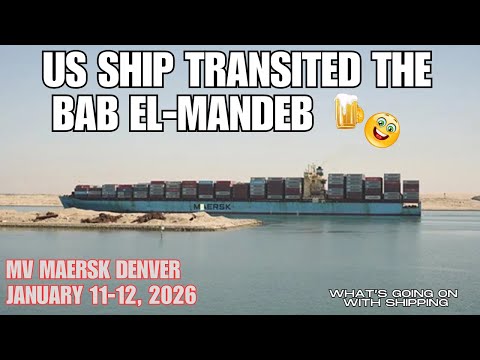
Preview:The host says the first U.S.-flag commercial ship in nearly two years has transited the Bab el-Mandeb/Red Sea corridor, and he treats that as an important but still tentative sign of reopening. He argues the key issue is not just physical passage but whether war-risk insurance, security arrangements, and Houthi behavior have improved enough for larger-scale commercial traffic to return.
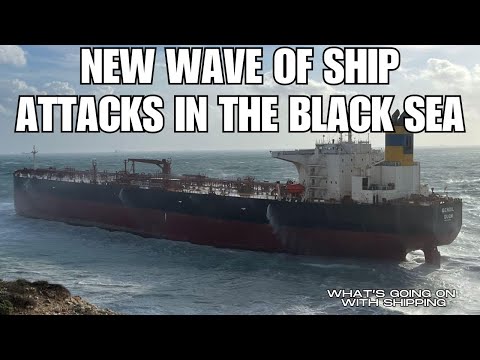
Preview:The video argues that maritime violence in and around the Black Sea has escalated sharply, with commercial shipping now caught in a widening Russia-Ukraine economic war. The host frames the latest drone strikes on tankers and bulkers as a material threat to shipping routes, insurance, and regional exports, especially Kazakhstan crude moving through the CPC system.
Preview:The speaker argues that 2025 container imports into the U.S. were much more resilient than feared, and that 2026 is likely to be shaped by modest demand growth, fleet capacity growth, tariff uncertainty, Lunar New Year timing, and especially the Red Sea/Suez rerouting question. He is generally constructive on volumes and rates holding up better than the bearish forecasts, but he repeatedly emphasizes that shipping remains highly vulnerable to geopolitics and insurance costs.
Preview:This is a Shipping 101 explainer about the “dark fleet” or “shadow fleet” of tankers used to move sanctioned oil, especially from Russia, Venezuela, and Iran. The host argues these vessels are identifiable by age, opaque ownership, AIS manipulation, weak or absent insurance, and use of ship-to-ship transfers, and that the biggest immediate risk is environmental and enforcement failure rather than just sanctions evasion.
Preview:The host argues the U.S. has effectively seized two sanctioned tankers—especially the renamed Bella 1 / Marinara—in a high-stakes maritime enforcement operation tied to Venezuela sanctions and dark-fleet shipping. He frames the action as legally grounded in stateless-vessel rules and as a sign of escalating great-power conflict over commercial shipping.
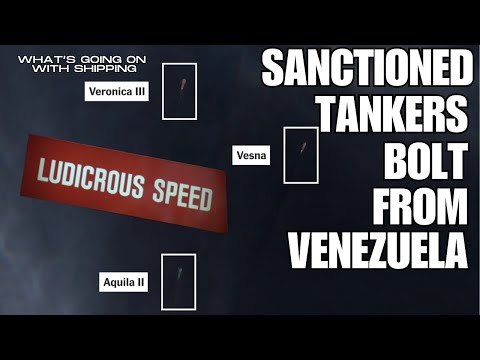
Preview:The speaker argues that a large group of sanctioned oil tankers has broken out of Venezuelan ports under heavy U.S. pressure, and that this creates a live operational test for U.S. naval and special operations forces. He says the ships are using AIS spoofing, false flags, and saturation tactics to evade interception, and he believes the U.S. now has to decide whether to board some, all, or none of the vessels.
Preview:Sal Magliano argues that 2026 could be a volatile but strategically important year for shipping, driven less by pure freight demand and more by geopolitics, sanctions, and insurance. He thinks the biggest themes are U.S. shipbuilding revival attempts, trade-war distortion, Red Sea rerouting risk, Arctic route growth, shadow-fleet expansion, and insurance becoming the key choke point.
Others tracked across the same asset focus or market thesis.
Unlock every transcript this speaker appears in, compare them with your other followed voices, and ask the agent for the bull, bear, and consensus read in one workspace.
Type a question. Create a free agent to send it and keep the answer linked to this speaker.
Your question is preserved across sign-in.
Free. No card. Takes about a minute.