metals-and-macro conference host focused on gold, inflation, and systemic risk
Preview how this speaker shows up across market transcripts. Unlock the full archive, AI chat, and the version personalized to your watchlist, followed channels, and favorite speakers.
Darrell Thomas appears in the transcript as a conference host/interviewer in a metals-and-macro setting, guiding conversations on precious metals, energy, supply chains, and systemic risk. The supplied identity links point to The Money Levels Show / MoneyLevelsShow, suggesting a media or commentary role rather than an operating-investor role. The material here does not provide much standalone biography, so the profile is mainly based on his recurring on-air framing and topic selection.
His recurring worldview is macro-defensive and disruption-oriented. He emphasizes fragility in global systems, especially through debt, supply chains, energy dependence, and market stress. In the precious-metals discussion, the framing is that asset prices can become euphoric and overextended, creating a need for disciplined profit-taking, then re-entry at lower levels. More broadly, he treats gold and similar hard assets as strategic wealth protection in a world vulnerable to inflation, currency weakness, and market unwind. He also seems to favor tactical flexibility over buy-and-hold conviction: protect gains, watch for cycle turns, and respond to changing macro conditions rather than staying exposed through major drawdowns.
Every analyzed appearance we have for this speaker, newest first. Open any transcript preview to read the underlying transcript.
Preview:Todd "Bubba" Horwitz argues the broad market is vulnerable to a major correction, with downside he pegs at 40% to 60%, while still emphasizing hedged trading and disciplined risk control. He is bearish equities and crude oil, constructive on gold/silver and platinum at current levels, selectively positive on grains and some ag-related stocks, and bullish on Bitcoin only over a longer horizon.
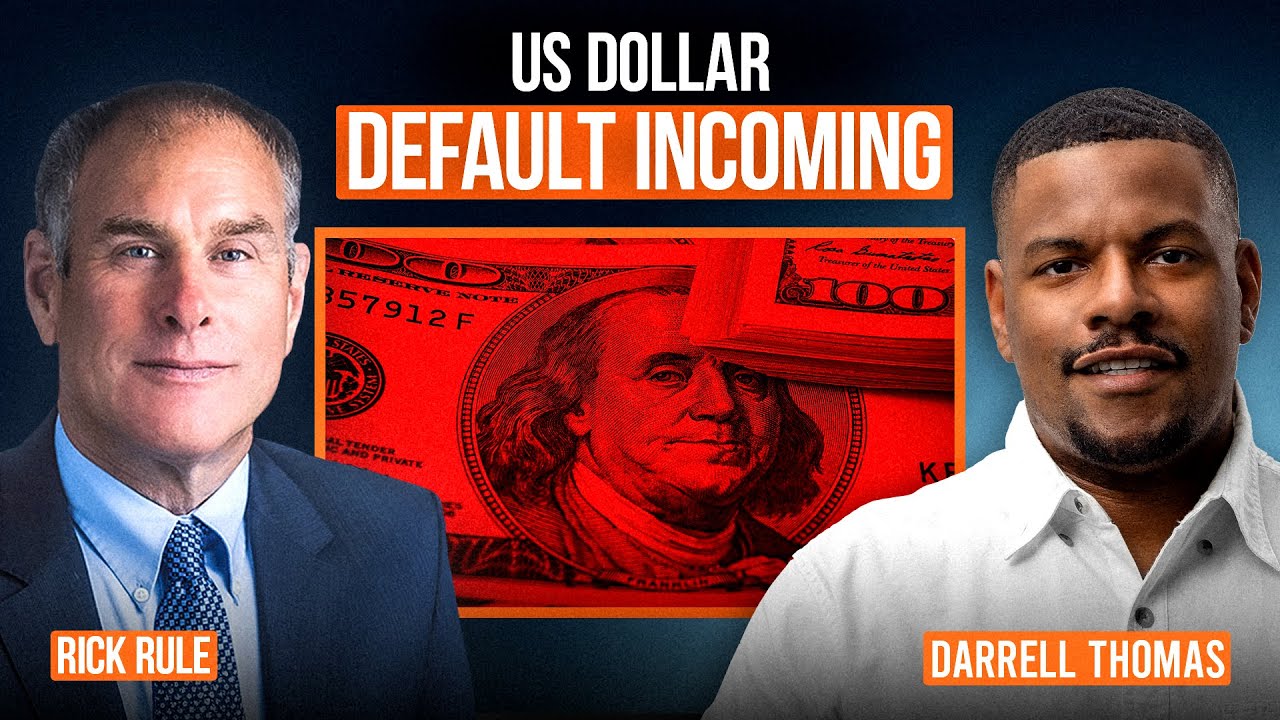
Preview:Rick Rule joins host Darrell Thomas to discuss gold, silver, and Battle Bank. Rule views gold as savings—he buys physical gold with every dollar of conference profit and stores it at Battle Bank because he believes the dollar is losing 8%+ purchasing power annually, not the 2.6% CPI claims. Silver, by contrast, is pure speculation for him: he will only buy when it is widely hated and mocked, which it currently is not. The conversation doubles as a pitch for Battle Bank, now open with $130M in deposits and $80M in gold deposits, offering multi-currency accounts, checkbook IRAs, and credit lines collateralized by precious metals stacks.
Preview:Christopher Aaron sees gold bottoming in the $3,800–$4,000 zone, supported by a multi-year resistance-turned-support level and a falling wedge pattern. He expects a meaningful rally in gold, silver, and miners through H2 2026 into early 2027, followed by a potential significant top. On silver, he targets a bounce from $50 back toward $80–$100, but warns that if the market believes the Fed succeeds on inflation, silver could eventually fall back to the $20s–low $30s where industrial demand actually exists. The Canadian Venture Index's 13-year base signals a breakout in mining stocks within 12–18 months.
Preview:Jeff Clark, at the Vancouver Resource Investment Conference, lays out his four-category junior mining investment framework (pre-discovery, pre-resource, resource builder, pre-producer) and pitches five specific stock picks across those categories: A2 Gold (Nevada gold resource builder), Pacific Silver (Mexico high-grade silver with a potential source anomaly), Stallion Uranium (Athabasca pre-discovery), SunPeak Metals (Saudi Arabia gold pre-discovery), and Getty Copper (BC copper pre-resource). He emphasizes that these have pulled back from January highs, creating attractive entry points, and is personally overweight all five. He also honestly addresses the key risk for each.
Preview:Tavi Costa argues the dollar and interest rate curve are poised for a major reversal after overshooting on geopolitical fears, which will act as a powerful tailwind for precious metals and commodities. He sees gold and silver near a bottoming process, expects silver to reach triple digits within 3 years, and views oil's pullback as a digestion pause within a broader commodity super-cycle. The Fed is "bluffing" on hawkishness — the US fiscal position makes a sustained tightening cycle unsustainable.
Preview:Matthew Piepenburg of Von Greyerz presents a deeply conviction-driven thesis that gold is in an irreversible secular bull market, supported by accelerating sovereign debt, central bank gold accumulation, and the weaponization of the US dollar. He argues that gold's recent pullbacks are classic shakeouts within a much larger structural shift where gold is replacing US Treasuries as the world's trusted collateral. He contends Fed Chair Worsh is dovish in practice despite hawkish talk, inflation is systemically understated (likely 8–12%), and the West is losing control of gold price discovery to the East.
Preview:Rick Rule sits down with Darl (The Money Levels Show) at the Rule Symposium 2026. The conversation covers the growth of the conference, Rule's unwavering gold-saving conviction (buying every dollar of after-tax conference proceeds in physical gold), his speculative-but-patient approach to silver, the thesis behind Nations Royalty and Uranium Royalty, and a detailed pitch for Battle Bank — his new community bank offering multi-currency accounts, gold-backed lending, and self-directed IRAs. Gold at $4,100 is framed as "not down" on a multi-decade view; silver is for buying only when hated, which it isn't yet.
Preview:Danielle DiMartino Booth argues the US is already in a recession, pointing to 30 of 40 months of downward payroll revisions since January 2023 and three consecutive quarters of net job losses in 2025. She sees consumer stress building through rising bankruptcies, delinquencies, and a plunge in labor force participation to 1976 lows. On the Fed, she's cautiously optimistic about Kevin Warsh's data-dependent approach but skeptical that rate cuts arrive soon. Gold, she says, has found a floor after flushing "tourists" and is attractive as credit cracks emerge.
Preview:Jeff Clark argues the sharp pullback in gold and especially silver is a buying opportunity, not the end of the bull market. He prefers silver over gold right now because it is more volatile, has lagged, and could eventually outperform on a percentage basis as the cycle matures.
Preview:Professor Steve Hanke maintains a structurally bullish gold thesis ($6,000 target) despite the recent pullback, which he attributes to dollar strength and rotation into tech. He argues M2 and Divisia M4 money supply are accelerating — Divisia M4 growing at ~6.7% YoY, above his 6% "golden growth rate" — meaning the "inflation genie is out of the bottle." He sees a commodity super cycle beginning, is outright bearish on bonds, and expects longer-end yields to keep rising. On the Fed, he's cautiously optimistic about Chairman Warsh potentially embracing quantity-theory frameworks but is waiting for clearer signals. He also discussed his forthcoming book advocating currency boards as a replacement for discretionary central banking in developing countries.
Preview:Josh Young of Bison Interests argues we are in the early-to-mid stages of a multi-year oil bull market driven by declining US shale well productivity, rising production costs, and disappointing new discoveries. He views the recent Iran/Strait of Hormuz spike to $107 and collapse to $67 WTI as a sideshow to the longer structural thesis. Young is most constructive on misunderstood small-cap onshore producers (especially those with asset retirement obligations) and onshore drilling/services companies trading at fractions of replacement cost. He is skeptical of consensus "super glut" forecasts from the IEA, calling them systematically wrong for four straight years, and is cautious on midstream/downstream where he believes cyclical risks are underpriced. He sees US SPR draws as loans that turn structurally bullish in Q3 2027 when commercial buyers must refill them. For natural gas, he is moderately bullish anticipating $4-5.50/MCF depending on oil price levels.
Preview:Rob Mloud, CEO of Cambria Goldmines, discusses two major catalysts: (1) the spinout of the Mount Margaret copper-gold deposit into a new US-domiciled entity called Freedom Copper, partly driven by White House interest due to BLM co-ownership, and (2) the restart of the Premier Gold Mine complex in Stewart, BC, anchored by the high-grade Red Mountain deposit. Mount Margaret is a historical ~570Mt porphyry with significant expansion potential; Freedom Copper aims to raise ~$100M for a 100,000m drill program and fast-track to feasibility. Cambria shareholders retain 49.9% equity and receive 15% dividend shares in Freedom Copper. On the Premier restart, Red Mountain road construction is underway, and the feasibility study may be delayed to mid-2027 to incorporate a phase-2 expansion capturing lower-grade material at higher gold prices.
Preview:Michael Pento argues the Federal Reserve's massive money printing has created an unsustainable wealth gap and asset bubbles that must inevitably collapse. He believes Kevin Warsh will eventually be forced to print trillions, triggering a depression followed by intractable stagflation. In the near term, he sees disinflation opening the door for rate cuts, which is bullish for gold and miners — he recently doubled his gold exposure and bought miners. Longer term, he expects gold to reach $10,000/oz after the coming liquidity crisis and subsequent money-printing wave.
Preview:Grant Williams argues the recent pullback in gold, silver, and miners is more a reset after an extended run than the start of a broken thesis. He says the key question is not the daily price, but whether you own metals as a trading momentum bet or as long-term protection against inflation, debt, and currency debasement.
Preview:Richard Wolff argues that socialism is rising in the U.S. because capitalism has produced extreme inequality, political capture, and widespread frustration with both major parties. In a long interview with VRIC host Daryl Thomas, Wolff ties the recent appeal of socialist candidates to historical cycles like the New Deal era and says younger Americans are more anti-capitalist than any generation he has taught.
Preview:Jennifer Shyis (Samper Trading Corporation) presents an extended geopolitical thesis centered on the "Middle Corridor" — the transport/energy corridor through Central Asia and the Caucasus. She argues the EU has been quietly constructing a gold-backed currency block, that the Ukraine war and Iran conflict are connected to control of Caspian energy and trade routes, and that July 4th could bring a Trump gold revaluation or gold-backed stable coin announcement. She also warns of CBDC-driven digital confiscation risks and advises physical metals and portfolio diversification across multiple institutions.
Preview:Chris (from VRIC Media) lays out a technical analysis case for gold to correct further to the $3,300–$3,600/oz range — with $3,600 as the primary downside target using Fibonacci extensions. He frames this as bullish: a healthy multi-wave shakeout that would flush late euphoric buyers and build a base for the next leg higher. The long-term upside target is $8,000–$8,600/oz. He recommends long-term investors accumulate in the $3,300–$3,600 zone and cautions against chasing other hot sectors if gold/silver/miners underperform during the base-building phase.
Preview:Chris Vermulan argues the short-term setup is bearish for risk assets and precious metals because the dollar has broken out, market internals are weakening, and gold/silver/platinum all look like they need deeper corrections before the next major advance. He thinks the pullback could be constructive for long-term bulls, but near term he expects more downside and recommends waiting for better technical levels rather than chasing strength.
Preview:An interview at the VRIC featuring an unnamed economic expert who argues that China — not Western monetary policy — is the marginal price-setter for gold. He presents a thesis that PBOC liquidity injections have been the primary driver of the gold rally, and that the recent gold pullback coincides with China hitting the brakes on liquidity in March 2026 (linked to Iran tensions). Near-term, he watches 25,000–30,000 yuan as key support zones. Long-term, he projects gold reaching $15,000/oz by the mid-2030s, driven by relentless global monetary debasement as governments inflate away unaffordable debt and welfare commitments.
Preview:Justin Huhn argues the uranium market is still in the early-to-middle phase of a structural bull case: demand is already largely de-risked, supply is tight, and current spot/term prices are still too low to incentivize enough new greenfield production. He is more constructive on large, liquid names, physical uranium, and the broader sector than on speculative explorers, and he says the best edge is often trading the sector’s volatility rather than trying to pick every small developer.
Preview:Axel Merk argues that the current gold setup is being shaped less by simple inflation fears and more by Fed regime changes, rising real yields, fiscal excess, and geopolitics. He is constructive on gold over time, but he thinks the path can be volatile because rates, policy expectations, and central-bank behavior can shift the metal around in the near term.
Preview:Michael How argues that global liquidity is shifting out of financial markets and into the real economy, which is setting up a period where equities, gold, bonds, the dollar, and commodities all move in different phases. His main tactical call is that gold and bitcoin may have already seen a near-term peak, while bond yields and the U.S. dollar are likely to grind higher as markets do the tightening for the Fed. Long term, he remains structurally bullish on gold because he sees ongoing monetary debasement, especially in China and the West, as the force that will eventually drive much higher nominal prices.
Preview:John Rubino argues the US is heading toward a currency/debt crisis driven by persistent deficits, rising interest costs, and ultimately a loss of confidence in the dollar. His preferred response is to own real assets—especially gold and silver, but also copper, uranium, oil, and selective mining equities—rather than long-duration bonds or cash-like financial claims.
Preview:Doug Casey argues that the Iran conflict, U.S. fiscal stress, and long-running currency debasement are all part of a broader instability regime that favors hard assets. He is bullish on gold, silver, copper, uranium, oil, and especially miners—while warning that mining is a terrible business operationally and that government intervention, debt, and inflation are the real macro drivers.
Preview:The speaker argues that silver’s recent weakness is a consolidation inside a larger long-term uptrend, not a bearish reversal. He says the real driver is monetary debasement and a weakening dollar/money unit, with the recent selloff mostly shaking out short-term and intermediate trend damage before the next leg higher.
Preview:Interview with trader/educator Kenan Grace about his rise from poverty to an eight-figure trading/business life, centered on discipline, risk management, and avoiding emotional market behavior. He argues most people should use ETFs until they have real experience, take profits on big runs, and treat trading like a system rather than a gamble.
Preview:Michael Oliver argues that the recent volatility in gold, silver, oil, and equities is mostly noise around larger trend shifts. He is bullish on monetary metals—especially silver and silver miners—bearish on U.S. stocks, and relatively constructive on commodities and emerging markets versus the U.S. market. He sees the key macro issue as fiat money decay and government-bond stress, not day-to-day headlines or short-lived geopolitical shocks.
Preview:Lynette Zang argues that the real story in gold, silver, Bitcoin, and tokenization is not price action but the ongoing shift from hard money to a fully digital, debt-based system that concentrates power in banks, corporations, and governments. She says recent metals weakness reflects paper-contract manipulation, while the broader trend is that central banks and corporations are building the infrastructure for tokenized assets, negative-rate policy, and greater leverage at the expense of public ownership and purchasing power.
Preview:Melody Wright argues that rising bond yields, weak housing and labor data, and swelling delinquency/CRE stress point to a broader U.S. funding crisis that could ultimately force debt restructuring or some move toward a gold-linked system. Her practical response is defensive: avoid debt, favor rent over buying, and hold gold and real-world resilience rather than chasing financial assets.
Preview:Justin Hune argues the recent selloff in uranium and broader nuclear equities is a near-term correction within a still-intact bull market. He says his team built cash intentionally, expects further volatility from broad market headwinds and a softer seasonal period, but views the pullback as a buying opportunity rather than a thesis break.
Preview:Gary Thompson, CEO of Brixton Metals, argues that the company is positioned around two main exploration engines: the larger-scale Thorn copper project in northwest BC and the high-grade Langis silver project in Ontario. His core view is that rising long-term demand for copper, silver, and gold — driven by electrification, AI infrastructure, and critical-mineral supply constraints — should support continued capital flow into exploration, while Brixton’s current drill campaigns could convert discovery momentum into maiden resources and possibly a tailings-based near-term cash source at Langis.
Preview:The interview argues that the Iran war is not noise but the catalyst for a major global financial reset: higher oil and fertilizer prices will feed into CPI later, force bond yields up, weaken the dollar, and ultimately trigger a broad equity and credit liquidation. The guest is especially bearish on U.S. equities and mining stocks in the near term, but bullish on physical gold and silver as the real monetary refuge and on gold-producing miners once the broader panic stabilizes.
Preview:This is an interview with Mayfair Gold CEO Drew Anwell about the company’s Fen Gibb project in Ontario. He argues the project is well timed for a strong gold market, designed to de-risk construction by staying below key permitting thresholds, and positioned to move toward a 2028 production decision if permitting and execution stay on track.
Preview:This is a focused interview with Standard Uranium CEO John Bay arguing that nuclear power is entering a durable global growth phase and that Standard Uranium is well positioned as an exploration play in the Athabasca Basin. Bay emphasizes Davidson River as the flagship asset, recent technical work (geophysics, gravity, AI-assisted targeting), and an upcoming expanded summer drill program as the near-term catalyst.
Preview:Bill Halter argues that gold and silver are being deliberately suppressed by a fractional-reserve paper market, but says suppression cannot last because physical supply-demand fundamentals, a structural silver deficit, and global confidence loss in fiat currencies will eventually overpower it. He frames the real issue as currency debasement: dollars are falling relative to gold and silver, not vice versa, and he expects this trend to intensify as debt, deficits, and geopolitical shifts undermine the U.S. financial system.
Preview:Peter Grandich argues that gold has likely completed a parabolic run and may still pull back, but the longer-term bull case remains intact because of central-bank buying, potential policy/treasury revaluation issues, and ongoing monetary debasement. He is more constructive on silver and especially copper, with copper described as the safest, most underowned, and most fundamentally supported of the three metals.
Preview:Rick Rule argues gold still looks strong over a 10-year horizon because the real issue is dollar debasement, not day-to-day gold price action. He is constructive on select miners and developers, especially where scale, M&A optionality, and regional infrastructure can unlock value, but he is cautious on names with financing, operating, or geopolitical/security problems. On uranium, he remains bullish structurally, citing energy security and underbuilt supply, though he thinks the market will work more slowly than many expect.
Preview:The speaker argues that silver is structurally weaker than the recent bullish narrative suggests, while gold remains the preferred monetary hedge. His main silver bear case is that silver is now primarily an industrial metal, the key end use is solar, and China’s solar buildout may slow materially in 2026 because its grid is running into dispatchability limits. For gold, he frames price action as heavily linked to Middle East war risk and says he personally holds gold in size. On uranium, he is constructive on the asset’s unique market structure and price insensitivity, but says he does not currently own it.
Preview:Robert Friedland presents Rua Gold as a New Zealand mining story that has become strategically important because of gold, antimony, and supportive government policy. The core pitch is that the company has a near-term path to cash flow at Reefton’s Old Creek project, while also retaining upside from a much larger North Island epithermal exploration target at Glamorgan.
Preview:Peter Grandich argues this is the most dangerous market environment he has ever seen, so he has taken his largest and only material short since 2008. He says the combination of extreme valuations, passive indexing, AI-driven euphoria, debt, political dysfunction, and global de-dollarization makes a major equity drawdown likely, while he still likes selected metals—especially copper and, selectively, gold and silver.
Preview:Doomberg argues the market is not ignoring obvious risk so much as correctly pricing a new equilibrium: oil has stayed lower than many expected because inventories, non-Middle East supply routes, and especially China’s reduced imports have cushioned the shock. He is skeptical of bullish oil, copper, and silver narratives, sees UAE/OPEC developments as part of a broader end-of-OPEC regime, and remains constructive on gold as the main metal he owns in size.
Preview:Harry Dent argues that gold is already in a bubble, treasury bonds are the safer haven in a downturn, and the biggest long-term opportunity will come after a broad asset reset rather than from buying today’s overheated financial assets. He frames China as the clearest example of a failed, leverage-driven boom, while India is his preferred post-crash growth story.
Preview:Harry Dent argues the long-delayed post-2008 reckoning is finally near: years of stimulus, high debt, and inflated financial assets have created a bubble that he expects to burst sharply. He recommends staying out of risk assets, using Treasury bonds or short stocks tactically, and ultimately rotating into India, gold, and long-duration bonds after the crash.
Preview:Patrick Kum argues that the best near-term opportunity is not gold or silver but rising bond yields and related inverse-bond trades, while the US dollar is not in terminal decline. He says gold, silver, and miners are stretched and in correction mode, whereas yields are breaking out and equities are only starting to show weakness on shorter timeframes.
Preview:Don Durret argues that gold and silver are in a longer-term bull market but still have room to correct before the next major leg higher. He frames the setup as a buy-the-dip opportunity, with gold as the primary driver and silver as a leveraged follower, while also laying out a broader thesis that rising debt, inflation risk, and a coming liquidity/credit “doom loop” make miners attractive.
Preview:JP Cortez argues that persistent money-supply growth and government overspending are the core drivers of inflation, making gold, silver, and other hard assets the logical defense against fiat debasement.
Preview:Peter Schiff argues that physical gold and silver are essential savings assets, while mining stocks offer higher-risk, higher-upside exposure that he thinks remains underpriced. He also says the U.S. dollar is losing purchasing power relative to gold and that gold could plausibly reach $20,000 over the next 10 years.
Preview:Peter Schiff argues that inflation is reaccelerating, the Fed is boxed in, bond yields are headed much higher, and the U.S. is drifting toward a debt and currency crisis. He ties that view to higher gold prices, weaker purchasing power, and political fallout for Trump.
Preview:Tavi Costa argues copper is entering a price-discovery phase and remains very cheap versus gold despite all-time highs, while broader hard assets, natural gas, and agricultural commodities should benefit from debt, inflation, and supply constraints.
Preview:The speaker argues gold’s long-term bullish backdrop is intact but says the recent move has likely run too far too fast, so he has taken profits and is holding more cash while waiting for a better entry. He also frames deglobalization, critical-mineral supply security, and policy support as durable themes, but warns that short-term supply shocks and government intervention can create misleading trading setups.
Preview:The speaker argues that cheap energy, easy credit, and fiscal restraint are breaking down, making the U.S. and global system fragile. He is strongly bullish gold and other hard assets, while warning of a potential debt, banking, and stock-market crisis.
Preview:William Middlec argues that a major geopolitical and monetary reset is underway, centered on U.S.-China relations, the fate of the Strait of Hormuz, and a long bull case for commodities, metals, and crypto-linked finance. He thinks the recent correction in metals is likely temporary, while producer margins, rising inflation, and capital rotating out of bonds should support the next leg higher.
Preview:A market commentator argues that gold and silver remain in a strong secular bull market because bullion banks consistently underestimate upside, silver supply is structurally tight, and central banks will ultimately keep printing to manage debt and yields.
Preview:Douglas McGregor argues the Iran war has backfired strategically, economically, and geopolitically, leaving Iran stronger, the U.S. exposed, and global energy/material flows disrupted. The conversation centers on ceasefire uncertainty, Persian Gulf access, China/Russia alignment with Iran, and the downstream inflation, recession, and debt risks for the U.S. and global economy.
Preview:An interview on VRIC Media with Lobo Tra argues that fiscal dominance, war-driven supply shocks, and deglobalization are structurally bullish for real assets and precious metals, but he is tactically cautious after gold’s rapid run and says he has raised cash and is waiting for a better entry. He remains constructive on uranium and skeptical that near-term macro weakness changes the longer-term data-center, electrification, and energy-security demand story.
Preview:Luke Gromen argues the Hormuz closure is the dominant market variable, with second-order inflation, supply-chain, airline, fertilizer, and bond-market effects already beginning to show up. He frames the situation as a clash between letting inflation run versus defending the currency and bond market, while highlighting energy, grid, nuclear, and critical minerals as likely winners if the disruption persists.
Preview:Darrell Thomas of The Money Level Show and VRIC Media shares his journey from social work/education into precious metals investing and YouTube content creation. His core macro thesis centers on US dollar purchasing power erosion, unsustainable government debt ($40T by year-end, $100T+ off-balance-sheet liabilities), and a commodities supercycle. He describes a three-tier investing approach: short-term swing trades on oversold quality companies, mid-term holds in commodity producers, and long-term "deathbed" holdings in royalty/streaming companies like Wheaton Precious Metals. Key influences include Robert Kiyosaki's "Rich Dad Poor Dad" and Rick Rule's mentorship on profit-taking discipline. He views the recent gold/silver pullback as a buying opportunity and believes gold could reach above $10,000 in the next decade.
Preview:Mario argues that gold and silver are in a consolidation phase after a strong run, but the long-term setup remains bullish because of central-bank buying, low futures open interest, ongoing monetary expansion, and rising debt. He is especially constructive on silver, which he sees as more supply-constrained and undervalued than gold.
Preview:A bullish but nuanced gold thesis: the speakers argue gold should at least double over the next decade, possibly 3–4x, because the US dollar is likely to lose purchasing power as money supply expands and global demand for dollars weakens.
Preview:The speaker argues silver’s bull market is not finished and could eventually reach triple digits, but says the real top is still ahead because retail enthusiasm has not yet become euphoric. He links precious metals to sound money, privacy, and resistance to a more digital, surveillance-heavy monetary system.
Preview:Panel interview on gold, inflation, debt, and commodities featuring Rick Rule and Dr. Mark Thornton. Both argue the Strait of Hormuz disruption is an immediate cost shock that can hurt growth and precious metals in the very near term, but it strengthens their longer-run view that fiat currencies will keep losing purchasing power and that gold and commodities remain in a multi-year uptrend.
Preview:An interview on VRIC Media with David Morgan centers on his view that markets are in maximum uncertainty, oil is undervalued, and precious metals are in a post-spike consolidation rather than a finished bull market.
Preview:The speaker argues that gold and silver remain in a powerful bull market despite recent volatility, and that the mainstream explanation for the selloff is misleading. He says physical demand and exchange delivery data show strong underlying buying, while margin hikes and leveraged ETF unwinds created a structural, not fundamental, price decline.
Preview:The speaker argues gold has entered a euphoric blowoff phase and could correct about 25% before offering a better re-entry point, even though his longer-run view remains extremely bullish. He also warns that bonds may be entering a dangerous unwind, with TLT and credit markets vulnerable if inflation, defaults, and a broader market selloff accelerate.
Preview:Lyn Alden argues the gold and silver bull markets remain structurally intact, but after an explosive move they are no longer easy low-risk trades. She is still bullish on Bitcoin and tokenized real-world assets, while more cautious on miners, memecoins, DeFi, and NFTs.
Preview:Andy Schectman argues that the conventional view that rising rates and war should crush gold is obsolete because central banks and sovereign buyers are accumulating physical metal, repatriating reserves, and bypassing treasuries. The interview frames gold and silver as protection against a collapsing trust regime, with current price weakness presented as engineered and driven by leverage rather than fundamentals.
Preview:A market interview centered on Chris Vermulen’s view that the recent equity rebound, precious-metals surge, and bond weakness are all part of a larger setup for a sharp market reset. He stays tactical and trend-following, but the core message is defensive: stay long while trends are up, raise cash into strength, and be ready to rotate after a major washout.
Preview:An interview with Small Cap Steve about how to evaluate junior mining stocks, why historic drilling and access to capital matter, and why he prefers tier-one producers and royalty names in the current market. He argues that small-cap mining opportunities can be huge, but timing, dilution, debt, and management quality are decisive.
Preview:The speaker argues that the Strait of Hormuz appears partially reopened, which is easing oil pressure and supporting risk assets, but he remains cautious because the situation is fragile and any renewed attack could quickly reverse sentiment. He is constructive on gold/silver miners and says he is holding cash until he sees more confirmation, while warning that the economic and market effects of higher fuel prices will lag for weeks to months.
Preview:An interview with Lynn Alden focused on how the Iran conflict, energy shortages, and rising CPI could keep the Fed cautious and reinforce a slow-burn fiscal-dominance / monetary-debasement regime. She argues the immediate shock is energy-driven inflation and geopolitical fragmentation, while the bigger theme is a more multipolar, multi-money world with continued structural support for hard assets, Bitcoin, and select energy-linked equities.
Preview:Brent Johnson argues the Strait of Hormuz disruption is not just a short oil story but a broader supply-chain and inflation shock. He thinks the immediate ceasefire relief may fade, the damage to shipping and planting has already been done, and the bigger risk is higher food and energy prices feeding into political stress, weaker growth, and a more cautious market backdrop.
Preview:Interview where Daryl Thomas of VRIC Media speaks with Jonathan Newman of the Mises Institute about Austrian economics, government spending, the Federal Reserve, money printing, and why he believes deficit financing and intervention create recurring boom-bust cycles.
Preview:An interview between VRIC Media host Daryl Thomas and Kai Hoffman of Soore Financial focused on how Middle East conflict, liquidity stress, tariffs, debt concerns, and possible Fed easing are supporting gold, silver, copper, and related miners. Hoffman remained constructive but cautious, favoring large and mid-tier producers over early-stage explorers until the ceasefire and market reaction prove more durable.
Preview:A gold bull from VRIC argues that recent war-driven selloffs are temporary, caused by forced liquidations and liquidity needs, while the longer-term case for gold as a reserve asset remains intact and even stronger.
Preview:Jeff Phillips says junior mining still offers opportunity, but only for investors who focus on people, share structure, and capital access rather than headlines. He is bullish on gold, copper, and uranium over the medium to long term, but stresses that junior investors must stay diversified, keep cash, and avoid overtrading.
Preview:Rick Rule and Lobo Tiggre argue that the Iran war is supporting higher long-run hard-asset prices, but near-term liquidity and dollar strength can still pressure gold, silver, miners, oil, and other risk assets. Both are cautious on chasing strength now, prefer cash optionality, and see select opportunities in uranium, copper, and some energy names only on better pullbacks.
Preview:Matthew Pipenberg argues that the Iran war, surging debt, and tighter credit are creating a dangerous macro backdrop for markets, the dollar, and Main Street, while reinforcing his long-term bullish thesis on physical gold as real money.
Preview:Dave Cullum argues the market is sitting on top of multiple fragile bubbles, with Iran/Hormuz acting more as a trigger than a root cause. He is broadly bearish on equities, skeptical of miners, constructive on gold and energy, and negative on real estate and rate cuts.
Preview:The speaker argues gold’s recent selloff is mainly a liquidity and positioning event rather than a broken long-term bull market, and expects a pullback toward $3,500-$4,000 before buying back in size. He favors cash/T-bills and the front end of developed-market yield curves while the war, dollar strength, real-rate pressure, and margin calls are still dominating risk assets.
Preview:An interview with Benjamin Demazi argues that the recent gold selloff is a healthy correction and a chance to redeploy profits into more leveraged expressions of a long-term gold thesis, especially royalties and options. The conversation also expands into a broader capital-allocation framework: exchanges, water infrastructure in the Permian Basin, and AI/data-center power and cooling needs as toll-collection businesses with structural fee power.
Preview:Joe Cavatoni of the World Gold Council argues that gold remains the key monetary safe-haven asset, supported by central bank buying, global investor demand, and gold’s diversification role. He says recent volatility is being driven by geopolitics, inflation concerns, rate expectations, and liquidity flows, but that the long-term case for gold remains intact even if short-term price action is noisy.
Preview:David Rosenberg argues the market is in a global bond-yield reset driven by higher inflation expectations, fiscal premia, and war risk—not just U.S. headlines. His near-term focus is the Iran/Strait of Hormuz conflict, which he thinks is more likely to be resolved by reopening the strait than by regime change, with oil, yields, and risk assets remaining volatile until then.
Preview:A panel interview with Darrell Thomas, Rick Rule, and Justin Hume argues that uranium still has substantial upside because demand is growing, above-ground inventories are tighter than they look, and geopolitical disruptions are increasing the appeal of nuclear power and stockpiling.
Preview:Rick Rule argues that market drawdowns are where disciplined investors make money: buy when others are fearful, prefer high-quality precious-metals names, and don’t obsess over short-term price predictions. He says he is deploying liquidity into junior miners and silver stocks after selloffs, while favoring royalty/streaming businesses for their lower operating risk.
Preview:Rick Rule argues the recent selloff in precious-metals and junior-resource stocks is creating buying opportunities, especially in quality names that have been marked down sharply despite intact fundamentals. He is not calling a bottom, but he is using liquidity to add to high-quality gold, silver, royalty/streaming, and selected copper exposure on the view that sentiment has turned too negative.
Preview:Josh Young argues the Iran war has created real but not yet catastrophic disruption in oil and gas, and that the market/media reaction is badly overdone. His core view is that prices should be higher, but not remotely near the panic levels being shouted on TV; the biggest near-term issue is logistics, tanker backlogs, and politically distorted refined-product flows, not a total collapse of global energy supply.
Preview:The speaker argues gold is in a short-term unwind driven by crowded positioning and investor psychology, even though the longer-term macro case for gold remains bullish. His base call is for gold to drop toward 3,500 over the next two to three months before a later re-accumulation phase, while mining stocks like GDX may bounce first but remain vulnerable if gold keeps breaking down.
Preview:Michael Denzo of the Silver Institute argues that silver’s structural deficit is worsening because supply is hard to expand quickly while industrial demand remains resilient and new demand sources like AI data centers, solar, EVs, and electrification are emerging. He says the market has set new price floors, institutional participation is increasing, and higher prices are not solving the shortage fast enough.
Preview:A roundtable on precious metals argues that gold and especially silver have been weak despite the Iran war because paper-market trading, leverage, and bullion-bank dynamics are overpowering safe-haven demand in the near term. The guests remain structurally bullish on gold and silver, tie the move to fiat debasement and the erosion of the dollar/petrodollar system, and recommend holding physical metals outside counterparty risk.
Preview:Rick Rule argues the Iran conflict is a major short-term shock to oil/gas and a broader catalyst for resource scarcity, but he says the biggest longer-run winners may be uranium, LNG outside the Gulf, and high-quality miners bought on weakness. He is bearish on near-term risk assets in the resource complex, but bullish on selective juniors, copper over a multi-year horizon, and royalty/streaming names as lower-risk exposure.
Preview:The interview argues that the Iran war shock has created a new, highly volatile market regime. Gareth Saloway is broadly bearish on equities, the dollar, gold, silver, oil stocks, and several momentum names in the near term, but he expects tactical bounces along the way and sees selective value in beaten-down dividend stocks and some miners on pullbacks.
Preview:Darrell Thomas interviews Steve Farrington (the Unemployed Value Degen) about how the Iran/Qatar conflict is changing the relative setup across oil, natural gas, chemicals, fertilizers, metals, coal, and select equity plays. Steve’s core call is to sell or trim many oil stocks after the recent spike, wait for a better re-entry after the war-driven fear fades, and stay long select beneficiaries where supply disruption is more structural, especially Vermilion Energy, certain chemical names, and some mineral/royalty/data-center-related land plays.
Preview:The speaker argues gold remains in a strong bull market despite the recent pullback, and says the current decline looks like normal correction/profit-taking rather than a structural trend break. He expects gold to touch $6,000 by late 2026, with the main near-term risk being a sustained break below the 50-day moving average.
Preview:A panel on VRIC Media argues the Iran war is less the root cause than a catalyst exposing a pre-existing fiat debasement and bond-market stress problem. Michael Oliver and Alistair Mloud both say gold, silver, oil, copper and other real assets should eventually benefit, while cash and government bonds look increasingly vulnerable.
Preview:Gary Wagner argues gold remains in a secular bull market despite a violent pullback, and he sees the recent dollar strength as mainly a liquidity trade rather than a lasting rejection of metals. He thinks the key near-term test is whether gold can hold above 5,000 on April futures; longer term, he still expects 6,000 gold this year and sees silver eventually sustaining above 100.
Preview:Col. Douglas Macgregor argues the US war with Iran is a strategic disaster with no exit strategy, driven by Israeli demands. He contends most Persian Gulf oil is already offline for 6-12 months, with Iran threatening total infrastructure destruction if the US strikes Kharg Island. He predicts humiliating terms for any US withdrawal, warns of potential Israeli nuclear escalation, and asserts regime change is a fantasy — US attacks have unified Iranians as nationalists. He places ultimate blame on Israeli influence and wealthy Zionist donors controlling US policy.
Preview:Daryl Thomas argues that gold is his top hedge in a shifting global monetary order, driven by de-dollarization, central-bank buying, deficits, and stagflation risk. He prefers physical gold plus gold miners/royalties, while also seeking exposure to oil and asset-light royalty businesses as geopolitical instability rises.
Preview:The speaker argues that silver is still structurally bullish over the long run but is currently extended, vulnerable, and not yet an attractive entry. He thinks the best silver opportunity comes after a deeper reset or consolidation, not while price is still stretched and sitting on support. Gold is also very stretched, but he sees the bigger setup as a future relative breakout versus equities rather than an immediate move.
Preview:Peter Grandich argues that the Iran/oil shock is less important than the market's deeper setup: gold and silver have likely put in a base after their sharp correction, the stock market is vulnerable over a longer stretch, and the real macro danger is U.S. debt, rising interest costs, and policy credibility loss. He is bullish on precious metals and selective mining exposure over the next few years, while warning that AI, deficits, and government taxation/fees are eroding the outlook for households and the broader economy.
Preview:Hugh Agro, CEO of Revival Gold, makes the case that gold developers are the best risk/reward spot in the current gold bull market. He argues seniors have already re-rated (0.8-1x NAV) while developers still trade at 0.3-0.5x NAV — and Revival Gold specifically at ~0.15x NAV. The company holds 6M ounces across two brownfield US projects (Utah and Idaho) on private land, which simplifies permitting. Recent high-grade drill results at South Mercur (4 g/t over 25m) and a target construction start in 2028 provide catalysts. Agro frames the investment as buying gold exposure at $0.15 on the dollar, with ongoing exploration keeping the story alive during the development phase.
Preview:At the Vancouver Resource Investment Conference, a veteran trader makes the case that gold, silver, and platinum are in a consolidation phase preparing for another leg higher. He expects gold up 10-12% in 2026, silver back over $100, and the gold-silver ratio compressing into the 40s-50s. He favors physical metals for investment and paper for trading, dismisses claims of futures-market manipulation, and warns against over-leveraging. Mining stocks get a skeptical pass.
Preview:Douglas Macgregor argues the Iran war has already backfired strategically and economically: Iran is absorbing damage, retaining the ability to strike back, and using missile warfare to threaten U.S. and Israeli positions while the Gulf, oil flows, and global markets are destabilized. He says the U.S. lacks adequate missile stockpiles, air defenses, ground-force capacity, and a coherent strategy, and that Washington is effectively acting as Israel’s enforcer in a conflict that could end in a humiliating U.S. exit or worse if escalation reaches nuclear use.
Preview:Patrick Karim argues the recent volatility in oil, gold, silver, and related mining equities is mostly a chart-structure story, not a headline story. He repeatedly says the key question is whether price is stretched far from moving averages or forming a clean base; when it is stretched, he prefers patience, and when a breakout comes from a tight base, he wants to be aggressively bullish. He is constructive on the longer-term direction for oil, gold, silver, and platinum, but very cautious tactically because many of the charts are overextended and prone to whipsaws or deeper corrections first.
Preview:An interview on VRIC Media with Todd “Bubba” Horwitz argues that the recent oil spike is a fear-driven blowoff that should be sold, while metals, some ags, and crypto remain supported by debt, inflation, and monetary distortion. The host and guest also spend a lot of time on retirement, deficits, Fed policy, and the idea that hard assets and selective crypto are the better places to protect capital.
Preview:At VRIC 2026, a gold analyst and an interviewer discuss gold and silver price action in the wake of the US-Israel attack on Iran. The analyst argues that gold's recent sell-offs are liquidity-driven (margin calls force gold sales when it's "widely owned"), not fundamental. He sees the uptrend intact, expects central banks to flood liquidity in any equity crisis (which ultimately benefits gold), and makes a nuanced bull case for silver, where he now believes industrial demand is a genuine price mover for the first time in his career. Gold miners are printing cash but a supply response is underway via low-grading and resource recalculations.
Preview:Doomberg argues the US strike on Iran has been badly underestimated and could escalate into a broader energy, missile, and political crisis. He frames the immediate market response as a warning sign—higher Brent, a spiking VIX, and falling equities—and repeatedly stresses that the key question is whether Iran can keep firing missiles while the US and allies deplete interceptors and absorb disruption in the Gulf.
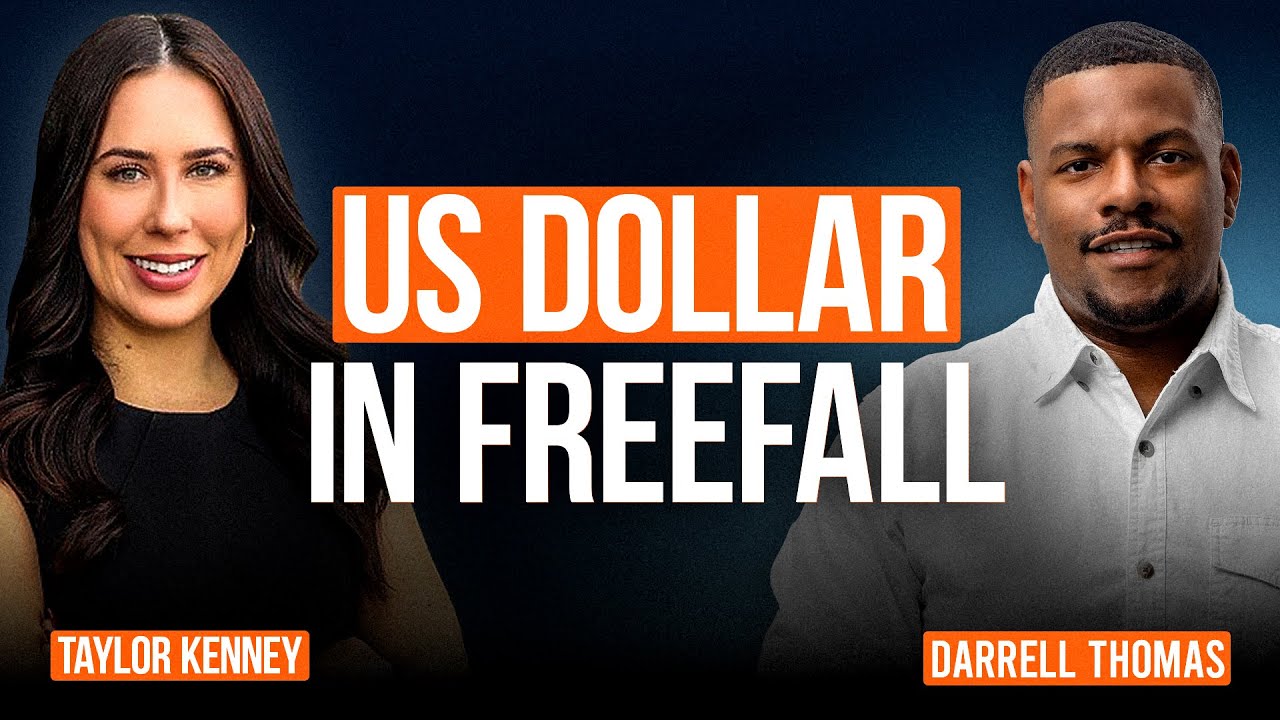
Preview:Taylor Kenney joins Darrell from PDAC in Toronto to discuss gold/silver volatility after the Iran conflict. Both see the gold selloff as a short-term dollar bid and expect higher prices amid chaos, war spending, and debt monetization. Taylor highlights private credit cracks (BlueOwl, Blackstone losses) as an underappreciated systemic risk, warns of Fed bailouts fueling more inflation, and frames the DOGE spending cuts as a "dog and pony show" against $10B/day deficits. The conversation also covers insider bets on Polymarket, Melania Trump presiding over the UN Security Council, and the broader "one big club we ain't in" theme.
Preview:This interview is a bullish-but-nuanced gold, silver, and mining equities discussion. Brian Lundine argues the secular bull market remains intact, but western investor participation will create violent swings, with pullbacks driven by liquidity needs, margin calls, and geopolitical-trade reactions rather than a broken thesis.
Preview:Pascal Lottaz of Neutrality Studies discusses with host Daryl Thomas the breakdown of the post-Cold War order, arguing we entered a new era around 2022. He frames current US foreign policy under Trump as "might makes right" geopolitics — openly coercive rather than cloaked in humanitarian rhetoric. The conversation covers Iran tensions (naval buildup, nuclear deal history, regime-change risk), US-Europe alliance strains, Venezuela's leadership abduction, gold's role as a fear barometer, and Greenland's strategic logic. Lottaz emphasizes relative US decline, rising multipolar infrastructure, and the fracturing of trust that drives central bank gold buying. He presents competing schools of thought on most issues without claiming certainty.
Preview:Peter Krauth, author of The Great Silver Bull and editor of Silver Stock Investor, argues that while silver's run from $50 to $100 in three months is overdue for a 20-30% correction, the medium-to-long-term thesis remains intact. He sees the next big opportunity shifting from the metal itself to silver miners, whose valuations haven't kept pace with the silver price. As miners report profits at $80-$100 silver, he expects a dramatic re-rating over the next 2-3 years. He frames the current silver bull as being in roughly the "third inning" with 5-10 years remaining.
Preview:Christopher Aaron of iGold Advisor presents a generational thesis: the Dow-to-Gold ratio has broken a 45-year trend, signaling the start of a multi-year cycle where gold massively outperforms equities. He argues this "fourth turning" pattern has only appeared three times before (1929, 1966, 1999), each leading to 86-96% declines in the Dow relative to gold. Historical averages imply gold reaching $20,000+/oz by the early 2030s, with silver in the mid-triple-digits. Nearer-term he targets gold $8-10K and silver $200-300 in 12-18 months. He also highlights palladium as the sole precious metal laggard yet to make new highs, and platinum as just breaking an 18-year consolidation.
Preview:Jeff Clark, founder of The Gold Advisor, argues we are in a major gold/silver bull market akin to 1979, not 2011, and it is still early — not even two years old. He expects a pullback/correction in 2026 but says it won't end the bull market. He is still aggressively investing, favoring developers and juniors further down the food chain. His top three personal investments from 2025: A2 Gold, Stallion Uranium, and Pacifica Silver. He is also structurally bullish on copper and uranium due to supply-demand imbalances. For stock picking, he emphasizes the "three Ps" — people (management with skin in the game), project (big and rich), and politics (mining-friendly jurisdiction). His key tactical advice: hold a large cash position to weather any correction without being forced to sell.
Preview:Ross Beaty, Emeritus Chairman of Equinox Gold, gives a conference-floor interview at VRIC. He's broadly bullish on gold, copper, and uranium but warns silver looks parabolic and unsustainable — he'd sell silver now and buy back after a correction. He notes the producer-equity disconnect from last year has closed, many stocks have multiplied, and the mood is euphoric, but cycles always turn. On his own companies: Equinox Gold should be net-debt-free by end of Q1 2026, and a private copper-silver project in Poland (Lumina Group's 10th company) may IPO in Q2.
Preview:A VRIC Media floor interview with "Next Big Rush" host (name not stated in transcript) who argues the gold/silver bull market is in its "wall of worry" phase. He expects a sharp correction soon — potentially immediately — and is trimming positions. Despite near-term caution on precious metals, he believes the bull market is not over; he currently favors uranium and oil stocks. He advises newcomers to resist FOMO, buy less than they want now, and wait for a better entry after the correction.
Preview:Independent speculator Lobo Tiggre ("the Due Diligence Guy") is interviewed at VRIC. He believes gold and silver are not "buy low" opportunities right now — they're fairly valued or overvalued as speculation. Instead, his top pick for 2026 is copper (strong demand from data centers, electrification, supply constraints), followed by uranium. His immediate buy is beaten-down oil stocks offering dividends at cycle lows. He recommends accumulating cash to buy copper/uranium stocks on the next volatility dip. He frames physical gold/silver as insurance/savings, not a speculation — owning some is non-negotiable regardless of price.
Preview:Robert Kiyosaki sits down at a VRIC conference to argue that silver is the metal of the technology age and that gold and silver are rising together — a signal he attributes to Ray Dalio — warning of the dollar's death. He weaves in personal anecdotes about mining in China and lessons on country risk, management due diligence, and Marxist ideology, but the core is an apocalyptic hard-money thesis: fiat currencies are dying, AI will drive silver demand, and the smart money is rotating into gold and silver.
Preview:Retired Army officer Cornell argues that the West's rare earth refining dependency on China is a national security hostage situation, not a supply chain. He proposes building a $1.2B North American refinery (ideally near the US-Canada border on Lake Michigan) and suggests the US cut a deal with Norway to jointly exploit their newly discovered offshore rare earth deposit. He also touches on coal mine rare earth tailings in Kentucky, BRICS expansion, gold backing for future currencies, and the need for price stability in critical minerals policy.
Preview:George Gammon argues the U.S. is already in a labor-market recession, real GDP is slowing to catch down, and inflation should disinflate in 2026 rather than reaccelerate. He spends much of the interview explaining that Fed QE does not mechanically translate into broad money growth the way people assume, and that Treasury yields are driven mainly by growth and inflation expectations, not by deficits or foreign central-bank selling. He also says tariffs create uncertainty and delay capital spending, China’s Treasury sales are offset by bank demand, and gold remains a strategic insurance asset because central banks keep buying amid rising counterparty risk.
Preview:Adrian Pocobelli of the Northern Miner podcast draws a historical parallel between ancient Athens seizing mines from allies and modern US ambitions toward Greenland and Canada. His central thesis: Greenland may be a stepping stone; the real strategic prize is Canada, which would be geographically surrounded if the US controls Alaska, the lower 48, and Greenland. He frames this through a lens of human nature, empire, and the inevitable breakdown of rules-based order, arguing that resource-rich nations are both powerful and vulnerable.
Preview:Andy Schechman argues that the U.S. is deliberately reshoring gold as part of a broader effort to soften a reserve-currency default, weaken the dollar, and rebuild manufacturing. He ties recent gold imports, stablecoins, and a future gold-linked bond market into one strategy, while acknowledging this is his interpretation and not something the administration will openly say.
Preview:Peter Spina argues that gold and silver are in a powerful, global bull market driven by fiscal deterioration, geopolitical fragmentation, and distrust of fiat assets and Treasuries. He thinks the setup is stronger than 2008–2011 because the problems are broader and more entrenched, and he sees gold potentially reaching around $7,000 over the next year or two, with silver likely entering a much more volatile “mania” phase.
Preview:Rick Rule says the junior/resource market had an unusually explosive 2025 and likely needs to cool off in 2026, especially after many investors became euphoric and late. He remains constructive on precious metals and industrial materials over a 10-year view, but says near-term returns may be partially used up, so he is holding lots of cash, having sold most of his physical gold and part of his junior stock book. He is redeploying selectively into hated areas such as oil and gas and into jurisdictions others fear, while stressing management quality, applicable track records, and scale as the keys to surviving high-risk resource investing.
Preview:Mark Moss argues gold and silver are ripping not primarily due to inflation but because of a global breakdown of trust — countries fear asset seizure (as seen with Russia's frozen reserves) and sanctions risk. He frames gold as the current trust solution for central banks, while Bitcoin represents the next-generation trustless alternative with instant settlement and open-source code. Moss positions himself as a "sound money advocate" who was a gold bug before Bitcoin and sees a generational divide: grandparents won't buy Bitcoin, grandkids won't buy gold. His core pitch is that understanding the problem (loss of trust in the system) precedes choosing the right asset, and he recommends The Bitcoin Standard as the essential starting book.
Preview:An interview on VRIC Media with Chris Vermulan argues that equities, the dollar, and precious metals are all at important inflection points, but the speaker sees the near-term setup as mixed-to-bearish for risk assets and metals alike. He thinks recent strength in SPY and gold/silver/platinum is mostly a bounce or overshoot inside broader uncertain, potentially corrective structures, and says he has moved to cash while waiting for clearer confirmation.
Preview:Alex Mloud argues that the U.S. dollar is entering its endgame because politics, debt, and foreign reserve shifts are overwhelming the Fed’s ability to stabilize the system. He frames gold as real money, says China is actively preparing for a dollar collapse, and expects higher commodity prices, rising bond yields, and eventually a major equity-market break or soft default.
Preview:A panel at VRIC argues that the monetary system is in a multi-year reset driven by fiat debasement, reserve-asset politicization, and de-dollarization. The speakers are broadly bullish gold and silver, skeptical of U.S. Treasury dominance, and focused on commodities, rare earths, and the geopolitical consequences of weaponized finance.
Preview:Panel discussion at VRIC argues that the world is undergoing a structural monetary reset, with gold increasingly used as a neutral reserve asset and settlement layer as trust in fiat, sanctions regimes, and the post-1945 order erodes. The speakers disagree on whether this ultimately re-centers gold, a fragmented multi-block system, or even a stablecoin-led re-dollarization, but all broadly expect higher gold prices and a stronger role for hard assets.
Preview:A panel at VRIC 2026 featuring Rick Rule, Lobo Tiggre, and Ivan Cebasek discusses the structural copper supply deficit. The consensus: copper demand is rising inexorably (electrification, population growth, AI), while new supply is chronically bottlenecked by permitting, social license, capital costs, and the absence of major discoveries since 2015. No one gives a precise price target, but all are structurally bullish, with Lobo calling copper his "highest conviction trade" for 2026 while cautioning against chasing all-time highs. The panel identifies streaming companies as an underappreciated capital solution for funding new mines.
Preview:Lobo Tigre argues that gold's current ~$4,900–5,100 range is a healthy correction/consolidation, not a blow-off top — it looks structurally different from the 1980 and 2011 peaks. He separates bullion (always accumulate, it's insurance) from mining stocks (wait for better entry points; most quality names are near all-time highs despite corrections). He is most bullish on copper for 2026 on structural supply deficits, likes uranium's long-term trend but notes its crowded-trade risk, sees silver's industrial demand (data centers, nuclear) as a tailwind, and views PGMs as purely industrial but now investable in the next mania phase. He flags jurisdictional risk in Mexico as a serious new concern and defends taking profits as discipline, not betrayal.
Preview:A Vancouver conference panel argues silver is in a rare revaluation phase: supply deficits, strategic/national-defense demand, and renewed retail/investment buying are pushing the metal into a parabolic move. The speakers agree the move is volatile and likely unsustainable in a straight line, but they think the fundamental backdrop is strong enough that pullbacks should be bought rather than feared.
Preview:Panelists argue the U.S. economy is much weaker than headline GDP suggests, with spending distorted by equity gains, lower imports, and K-shaped consumer behavior. They expect easier Fed policy, a weaker dollar, and a favorable backdrop for gold and other hard assets, while disagreeing on how much of the administration’s fiscal stimulus and tax refunds will actually matter.
Preview:Daryl Thomas interviews Dr. Mark Thornton of the Mises Institute about the US economy, tariffs, Fed policy, and gold/silver as inflation hedges. Thornton argues that government spending, debt, and monetary expansion are distorting the economy, hurting small businesses and households, and that the recent strength in precious metals is a warning sign of deeper macro weakness.
Preview:Amir Adnani, CEO of Uranium Energy Corp (UEC), presents at the Vancouver Resource Investment Conference arguing that uranium is in the early innings of a structural bull market. His thesis rests on unprecedented electricity demand growth (10-15% annually vs. the historical 2%), driven by AI data centers requiring ~157 GW of new capacity over three years. He highlights bipartisan US political support for nuclear, Trump's pro-nuclear pivot at Davos, and a severe US supply deficit (importing >90% of its 50M lbs annual demand). He positions UEC as the only vertically integrated American uranium company — unhedged, debt-free, with $700M in cash — and frames uranium as dramatically undervalued relative to gold (implying a $1,000/lb "normalized" price vs. the current $87/lb).
Preview:Peter Schiff argues that the stock market is being used as a political distraction, not a real measure of economic health, and that inflation, weak growth, tariffs, and dollar weakness are setting up a much bigger crisis. His core bullish call is on gold, silver, miners, and other hard assets, with gold likely heading far higher from current levels and U.S.-focused equities likely lagging on a gold basis.
Preview:A panel at the Vancouver Resource Investment Conference argues the precious-metals rally is still structurally intact but very extended. The speakers broadly agree it is a bubble/frothy late-cycle market, with several of them recommending taking some profits now rather than trying to ride every last dollar higher.
Preview:A small-cap uranium panel argues the uranium bull market is already underway, but still early. Both speakers favor U.S./North American juniors, emphasize supply deficits, and stress that permitting, jurisdiction, share structure, and management quality matter as much as geology.
Preview:A mining engineer turned infrastructure investor presents his thesis on redeploying speculative gold-mining profits into cyclical commodity infrastructure assets — specifically frac-sand terminals. He pitches his private company Cicada Logistics, which acquired a frac-sand terminal at roughly one-third replacement cost, operates at 44% margins, and recently paid a 28.5% dividend. A second acquisition (Cicada 2) is now being marketed to accredited investors.
Preview:A mining conference keynote arguing that investors lose more money in bull markets than bear markets because rising prices camouflage risk. The speaker frames a generational commodities super-cycle driven by government capital (US DoD, DoE), institutional return, and structural supply deficits, but warns that high gold/silver prices will seduce investors into marginal projects that don't deserve capital. Core prescription: discipline, conservative price assumptions, and only backing projects that work at $1,600 gold.
Preview:The speaker argues that markets are entering a topping phase and that a major correction is likely, with precious metals especially silver already signaling the move. His core solution is an “adaptive compounding” or asset-revesting strategy: stay only in the strongest asset class, step aside when trends break, and rotate into bonds, cash, or other instruments rather than buy-and-hold through large drawdowns.
Preview:A veteran resource speculator ("Uranium Girl") delivers a candid conference talk arguing the precious metals bull market is between "wall of worry" and "mania" — not over, but not early. She advises partial profit-taking (thirds), rotating into ignored sectors (oil dividends), and warns that fully exiting risks missing the best returns or getting caught with no bids at the top. The core message: manage greed and fear on a spectrum, understand yourself as a speculator, and don't go all-in or all-out.
Preview:Two market commentators argue that gold and especially silver may be near an overextended near-term peak, even while preserving a longer secular bull case. One speaker thinks gold can still trend higher into a euphoric blow-off, but both emphasize taking some profits, expecting a sizable correction, and preserving capital rather than trying to catch the exact top.
Preview:Silver Tiger Metals CEO presents at VRIC 2026, touting a 500% share price gain since the prior year's conference. The company has received all approvals for its El Tigre project in Sonora, Mexico, and has begun construction of a surface mine (heap leach) with an 18-month build timeline and $86M capex, targeting production as the 39th operating silver mine by 2027. The presentation centers on two sequential mines: a 10-year surface operation generating ~$150M/year after-tax, and a 15-year underground mine. At spot silver prices, the combined NPV approaches ~$2.5B USD with ~$4B in cumulative after-tax free cash flow over the mine lives. The CEO emphasizes execution over promotion and argues the market will re-rate the stock toward NAV as production is delivered.
Preview:A Bitcoin speaker at a gold/silver conference argues that the real issue is not inflation but trust. He says money evolved to solve trust problems, gold became the best neutral reserve asset, and Bitcoin is the first asset/network designed so humans do not have to trust an intermediary. He frames the current rise in gold and weakness in Bitcoin as cyclical, not as a thesis break, and sees a long-run monetary transition toward Bitcoin as neutral settlement money.
Preview:Colonel Douglas McGregor argues gold is already the new reserve currency as global faith in the US dollar erodes. He points to record central bank gold buying (2022-2024, the most since 1967), silver's dual role as monetary and critical industrial metal, China's unassailable lead in rare earth refining, and the self-serving corruption behind Western foreign policy. The West, he contends, is a "microwavable society" incapable of long-term strategic planning, while the dollar funeral procession is underway — gold is not an insurance policy but a lifeboat.
Preview:Francis Hunt argues that gold and silver are in an early-stage reflation/breakout phase after a volatile weekly reversal, while Bitcoin and long-duration debt are structurally weak. He frames the dollar, Treasuries, and much of the financial system as being in a long debasement cycle, with precious metals and select miners as the clearest beneficiaries.
Preview:Brent Johnson of Santiago Capital argues that the US dollar is not dying but being reinforced through stablecoin adoption and a Pentagon-led industrial policy. He revisits his Dollar Milkshake Theory, contends that USD stablecoins will "re-dollarize" the world by stealing sovereignty from other nations, and highlights the "Big Beautiful Bill" — a $200B+ Pentagon program funneling capital into critical minerals and strategic industries. Gold at $5,000 and DXY in the high 90s coexist because this is a fiat-vs-fiat competition, not fiat-vs-gold.
Preview:The speaker argues silver is in the early stages of a historic squeeze and could reach $200–$500, possibly even this year, driven by physical shortages, paper short-covering, and long-running monetary/geopolitical shifts. He frames silver as both an undervalued monetary asset and an industrial critical mineral, and says the setup is supported by COMEX positioning, rising physical demand, and a multi-decade commodities bull market.
Preview:Kai Hoffmann (the "JR Mining Guy") delivers a high-energy VRIC conference talk arguing the junior mining bull market is still in its "fourth inning." Using proprietary Oreninc financing data, he shows 2025 was the second-best year for junior mining financings since 2011, with $6.88B raised across 1,663 deals. Critically, new listings remain flat (~55/year on TSX/TSX-V), broker activity is surging as cannabis/AI competition fades, and money is still selective — flowing to proven projects, not "moose pasture." He flags a cautionary tale about predatory share structures and shares three new stock picks: an unnamed Gold Fields-backed company at 15¢, Troilus at $2, and San Lorenzo Gold, which just drilled a "banger" hole of 224m at 0.19 g/t.
Preview:Steve Hanke, professor of applied economics at Johns Hopkins, reaffirms his gold bull-market peak target of $6,000–$7,000/oz based on a GDP-per-capita ratio model analogous to 1979–80. He views the recent correction as healthy consolidation that washed out weak hands. On the US economy, he dismisses Trump administration hype of 5–6% growth, anchoring instead to ~2.5% potential with Goldman's ~2.8% as a reasonable upper bound. He highlights a K-shaped economy where top-20% earners drive consumption while most Americans suffer from affordability and inflation pressures. He is skeptical of AI/productivity miracle narratives and warns that resurgent M2 growth means inflation will not return to target. On geopolitics, he sees US tariff threats accelerating a pivot by allies toward China and India.
Preview:Taylor Kenny argues that the global monetary system is entering a permanent reset away from the U.S. dollar, and that gold is being accumulated by central banks as the neutral settlement asset for the next system. The talk frames rising U.S. debt, weakening foreign demand for Treasuries, and the growth of physical-gold infrastructure in China and allied hubs as evidence that the dollar’s reserve role is eroding and that investors should prepare accordingly.
Preview:This is a panel interview on geopolitics, capital flows, and the unraveling of the postwar Western order, with Tom Luongo and Martin Armstrong arguing that the real fight is over control of capital, institutions, and narrative power. They frame Epstein, NATO, Ukraine, Europe, and U.S. domestic politics as interconnected pieces of an old system that is under pressure, while also arguing that Trump is actively trying to dismantle that architecture and redirect the world toward a different balance.
Preview:A speaker at VRIC Media delivers a conference talk arguing that gold remains the single best risk-reward asset for the next 2-4 years, with all its bullish drivers intact and new ones emerging (notably Tether's gold-backed stablecoin). Beyond gold, he makes the case that commodities broadly are at historic undervaluation versus equities due to decades of underinvestment, and highlights copper, oil, and lithium as attractive but stresses that international equities — especially the UK, Singapore, Hong Kong, and Brazil — are dramatically undervalued relative to the overvalued US market, with a regime shift toward ex-US outperformance already underway.
Preview:A VRIC mining panel argues the gold and silver bull market is still intact, but the easy phase is over. The speakers say the market is moving from disbelief into broader recognition, with gold in price discovery and silver still underpinned by unresolved supply deficits and growing demand. They also emphasize that company execution, permitting, and management quality matter more now than broad beta.
Preview:This is an interview where Mike McGlone argues that gold, silver, copper, and much of the commodity complex have already put in major peaks for 2026 after a parabolic run. He says the market setup now favors lower precious metals, weaker crypto, and especially long Treasuries, with his core catalyst being a pickup in U.S. equity volatility and a resulting risk-off unwind.
Preview:A highly bullish gold-and-silver macro rant arguing that the U.S. is structurally overlevered, deindustrialized, and heading toward a soft dollar devaluation in which gold becomes the key monetary anchor. The speaker claims recent bullion inflows, stablecoin legislation, and future Treasury issuance could all be part of a coordinated system that routes demand into short-duration Treasuries and ultimately into gold.
Preview:A conference workshop urging caution on precious metals after a vertical price run, while identifying oil & gas as the next big commodity opportunity. The speaker presents ~24 oil/gas company names sourced from Rick Rule, Oxbow Advisors, and Evergreen Gavekal, then pivots to risk management: using prospect theory to argue for taking profits or hedging gold/silver positions, sharing specific technical exit signals (3-day/3-week lows in silver) and Rick Rule's derisking playbook (sell 80% of physical silver, redeploy into miners and other assets). Ends with a macro warning that 2026 could be a disappointing year after three consecutive 20%+ S&P returns, with even Fundstrat predicting a 15-20% correction.
Preview:The speaker argues that silver is entering a major surge because it has been reclassified as a critical metal by the U.S. and China, industrial demand is accelerating, and supply is constrained by China’s dominant role in refining and exports. He also links the setup to solar-panel buying ahead of China’s VAT/refund change, plus broader demand from electrification, AI, robotics, and government stockpiling of critical metals.
Preview:Michael Gentile, a former institutional money manager turned junior mining investor, lays out his venture-capital-style playbook for junior mining stocks. His core thesis: adopt a portfolio approach where 8 of 10 picks can go to zero and one 50x winner still delivers ~500% returns. He walks through his checklist for picking winners — geology you can't change (grade, scale, infrastructure, jurisdiction) and factors you can (management, insider ownership, capital efficiency, cap table hygiene). He argues gold equities remain in the early-to-mid cycle with much more room to run, and shares case studies (K92, Northern Superior, North Ale Copper) that produced 50x+ returns. The presentation is more educational framework than immediate trade call.
Preview:The speaker argues that commodities are in a structural bull market driven by supply deficits, geopolitics, de-dollarization, and governments moving upstream into securing production. Silver is presented as the highest-conviction trade for 2026 because of its industrial demand, persistent supply shortfall, and potential reserve-asset re-rating. Gold, uranium, copper, platinum, rare earths, and a few other metals are framed as beneficiaries of the same regime shift, with jurisdiction, permitting, and processing capacity emphasized as key screening factors.
Preview:Ross Beaty, founder and Chairman of Equinox Gold, sits down with an unnamed VRIC host to recap a transformative 2025 — including the Caliber merger, the sale of Lumina Gold, and a dramatic debt reduction — and outlines the operational roadmap for 2026. With gold at ~$5,000/oz, Beaty sees Equinox approaching debt-free status, advancing the Castle Mountain and Los Filos projects, and potentially declaring its first dividend. The conversation centers on scale, operational discipline, and the payoff from years of building a major Canadian gold producer.
Preview:Christopher Aaron presents a "fourth turning" thesis for gold using the 130-year Dow/Gold ratio chart, arguing that the three prior breakdowns (1929, 1966, 2002) each produced ~90% declines in stocks vs. gold. He projects the ratio will reach 2.2, implying gold at $13,600–$31,000 depending on the scenario, and silver at $350 using a gold/silver ratio of 38. He discloses his two largest personal mining stock positions: Providence Gold (PAU) and Sirios Resources (SOI).
Preview:A bullish, single-speaker pitch on silver argues that silver has already re-rated but is still cheap versus stocks, gold, and global financial assets, and that the next opportunity is now shifting from the metal itself to silver miners. The speaker leans on price performance, ETF flows, exchange inventories, lease rates, and gold/silver ratio mean reversion to argue that the silver market is structurally tight and that mining equities have not yet caught up.
Preview:A Goldseek.com founder presents at a conference arguing gold and silver are in a secular bull market driven by dollar weaponization, deglobalization, unsustainable US debt, and a global physical gold/silver rush. He claims gold could exceed $6,000 in 2026, silver could overshoot to $200-500, and the big theme for the year is gold and silver stocks playing catch-up. He shares several junior mining stock picks.
Preview:Daryl Thomas interviews Clem Chambers about the violent silver selloff and why he views it as a classic blow-off top rather than a clean fundamental reset. Chambers argues the move was driven by retail FOMO, system stress, and end-of-month positioning, then broadens the thesis to gold as a geopolitical war signal, platinum/palladium as scarce industrial metals tied to combustion engines and remediation, copper as a long-duration shortage trade, and Bitcoin as a flight asset during acute geopolitical stress.
Preview:A corporate presentation by Puma Exploration's CEO at VRIC 2026. The company is a gold explorer and project generator in New Brunswick, Canada. Its flagship Williams Brook project is under a $16.75M option agreement with Kinross Gold (year 2), with assay results due within weeks. A newer McKenzie gold project has 40 drill holes pending results (~45 days). The company also spins out non-core assets (copper, critical minerals) to separate vehicles. Market cap ~C$48M, shares at ~24 cents after sliding from 56 cents. The CEO frames near-term catalysts as the upcoming assay news flow.
Preview:Don Hansen presents his checklist-based framework for gaining an edge in gold and silver mining stocks during a bull market. He walks through three separate checklists — 10 items for producers, 6 for developers, and 2 rules for explorers — arguing that strict adherence filters out losers and leaves portfolios that only need higher gold prices to perform. He uses $6,000 gold and $150 silver as his valuation assumptions and highlights specific companies including Free Gold Ventures, Blackrock Silver, Banyan Gold, Snowline Gold, and Aino as examples.
Preview:The speaker argues that gold and silver mining stocks have already had a strong run, so investors should take profits, de-risk, and rotate into earlier-stage juniors with tighter share structures and better management. He spends much of the video teaching how to evaluate mining projects—geology, strip ratio, continuity, coefficient of variation, shareholder quality, and financing structure—and then names a few junior exploration ideas he thinks are attractive.
Preview:Greg McKenzie, president and CEO of Silver Storm Mining, framed the company as a near-term silver producer with La Parrilla nearing restart in Q2 and a larger, underappreciated San Diego silver project as upside. The pitch centers on fully financed plant rehabilitation, existing infrastructure, a Samsung offtake, and a belief that silver's re-rating and the eventual San Diego revaluation can drive further upside.
Preview:The speaker argues that gold's secular bull market is far from over, driven by structural currency debasement, weaponization of the US dollar, and central banks rotating from Treasuries into physical gold. He frames this through the lens of historical wisdom — nothing in excess, knowing thyself — and warns that fiat money has no bull case. Gold is not expensive; paper money is simply getting weaker. He advises physical gold held in private vaults as wealth preservation, noting retracements will come but conviction in the macro thesis should carry holders through.
Preview:The speaker draws parallels between the Athenian Empire's rise and modern geopolitics, arguing that precious metals (specifically silver) were foundational to Athens' naval power and empire. The Laurion silver mines funded the fleet that defeated Persia; control of northern mining districts (Pangaeum) and trade routes became the true objectives of the Peloponnesian War. Key lessons: natural resources = geopolitical power; trade routes are the primary vulnerability; rules-based order is aspirational but fragile; empires become traps their leaders feel they cannot exit. Modern parallels are drawn to US-China dynamics, the US dollar as a tool of empire, Greenland, Venezuela, and DRC.
Preview:Michael Oliver argues the recent violent selloff in gold and silver was a short-term momentum shakeout, not a major top, and that the bigger picture still points sharply higher for precious metals, miners, commodities, and select commodity-linked markets like Brazil. He also thinks the S&P 500 and the dollar are in topping/downtrend regimes, while oil looks cheap and technically early in a new upside leg.
Preview:Mark Moss lays out a long-term macro thesis: the US dollar is in a "rock and a hard place" between sovereign debt crisis and money printing, destroying trust in Treasuries. This is driving a massive, early-stage sector rotation into commodities — especially gold. He argues the real driver of gold is not inflation but trust, which once broken never returns. Central bank buying signals this structural shift. He sees Bitcoin as the next-generation trustless settlement layer that will eventually surpass gold for global trade.
Preview:Nick Hodge pitches private placements in junior mining as the superior way to invest, presenting a track record of deals with multi-hundred-percent returns. He explains what private placements are, who qualifies as an accredited investor, and showcases specific examples (PMT Resources, Kingsman Resources, DAR Gold, Concor Copper, Northshore Uranium). The talk is promotional for his newsletter service, Private Placement Intel, capped at 250 subscribers.
Preview:Ryan Irvine of Keystone Research argues that the best 10x stocks share a few repeatable traits: they start small, are profitable, have little dilution, and are often underfollowed. He uses past winners like Hammond Power, Boyd Group, EXP, and Firan to show how per-share earnings growth and disciplined share counts can drive huge returns, then applies the framework to current ideas such as Donaco, VersaBank, a clean-tech emissions-control name, and Cipher Pharmaceuticals.
Preview:Daryl Thomas uses the biblical Parable of the Talents to argue that owning physical silver alone merely preserves purchasing power, while investing in quality silver mining stocks can multiply silver ounces. He presents historical case studies (2008 crisis to 2011 peak, Liberation Day 2025 lows) showing miners like First Majestic, Hecla, and Wheaton significantly outperformed physical silver, and advocates a strategy of trading mining-stock alpha for physical-metal beta.
Preview:Rick Rule argues that gold is in a durable bull market but may be short-term overbought, with silver likely to lead once the generalist crowd rotates in. Maria Smanova broadly agrees on precious metals but emphasizes corrections as healthy and extends the bullish case to copper, uranium, lithium, and other resources tied to electrification and infrastructure. Both speakers are constructive on the resource complex, but they stress that permitting, declining ore grades, and capital scarcity mean supply responses will be slow.
Preview:A panel on VRIC Media argues the silver selloff was mostly a violent, leverage-driven washout after an extreme run-up, not a change in the underlying bull case. Both guests stay constructive on gold, silver, and mining equities, framing the pullback as a potential buying opportunity while warning that silver may still probe lower first.
Preview:Rick Rule argues that the current euphoric junior-resource market is exactly when investors should be selling some exposure, not chasing more. His core message is cyclical discipline: make and take profits, keep purchase memos, and sell when the original thesis or unanswered question has been resolved or broken.
Preview:The speaker argues for a disciplined “buy low, sell high” approach and says the best current low-buy opportunity is oil stocks, while copper and uranium are next only after volatility creates better entry points. He uses gold and silver as examples of assets that are no longer hated, says he is taking profits and rotating capital, and reiterates that physical gold/silver are primarily insurance rather than speculation.
Preview:This is a bullish precious-metals interview centered on silver’s upside, junior mining stocks, and the idea that the commodity cycle is still early. The speakers argue that silver can reach $500, junior miners remain deeply undervalued despite the move in metals, and the broader backdrop is a long-lived commodity bull market driven by currency debasement, physical shortages, and geopolitical competition for resources.
Preview:Amir Ednani argues uranium is in a structural bull market driven by a global and U.S. nuclear buildout, AI/data-center power demand, and a persistent supply deficit. He presents Uranium Royalty Corp. as a debt-free, royalty-based way to get leveraged exposure without mining risk, and Uranium Energy Corp. as the largest U.S.-based uranium producer positioned to benefit from reshoring, the Russian import ban, and domestic fuel-cycle security.
Preview:A live interview on gold, silver, copper, and uranium framed the recent selloff in precious metals as a volatile but likely temporary correction within a still-intact bull market. The speakers argued the bigger drivers remain fiscal debasement, central-bank gold buying, physical supply deficits, and rising industrial demand from electrification, AI, and defense.
Preview:Daryl Thomas interviews Steve “the unemployed value DJ” about the idea that metals/mining are in a long commodity supercycle. The discussion focuses on copper, nickel, rare earths, and a few mining equities Steve favors as ways to stay exposed to the sector’s buildout phase rather than chasing explorers or mature producers.
Preview:Gerald Celente argues that global political and financial chaos is accelerating, and that this environment is fundamentally bullish for gold and silver. He frames the mainstream media, elites, and governments as complicit in decline, and says the dollar is weakening, debt is unsustainable, and precious metals are being ignored despite the evidence.
Preview:Interview with Josh Young of Bison Interest/Bison Insights arguing oil and oil-related equities are setting up for a major breakout, largely because sentiment is deeply negative while the same cost, demand, and underinvestment dynamics that lifted gold/silver/copper are now showing up in energy. He is bullish on oil, cautious on uranium and SMRs, skeptical of Venezuela policy as an investment driver, and prefers mispriced smaller producers/services names over crowded large caps and expensive royalty stocks.
Preview:Justin Huhn argues the uranium bull market is real, long, and still early enough that the biggest mistake is getting shaken out by volatility. He says investors should focus on conviction, avoid leverage and short-dated options, and use weakness to add rather than panic-sell. The interview also covers dilution in mining financings, the growing AI/data-center nuclear buildout, and why utilities and tech companies are increasingly locking in power and fuel.
Preview:Don Durrett argues the gold/silver bull market is still early, with mining equities still cheap on free cash flow and balance-sheet metrics despite huge upside. He expects strong upcoming earnings for miners, but says investors should think in multi-year terms, not quarters, because these stocks are speculative and highly dependent on higher metal prices.
Preview:Darrell Thomas interviews Tavi Costa of Azuria Capital about his 2026 outlook on gold, silver, copper, energy, the dollar, and portfolio rotation. Costa argues that the bull market in hard assets is still early, driven by central-bank buying, massive global debt burdens, likely dollar weakness, and a multi-year shift away from expensive U.S. financial assets into commodities, mining, and selected energy exposure.
Preview:Nomi Prins lays out a bullish thesis for gold ($6,000 by end-2026) and commodities broadly, driven by central bank de-dollarization, supply-chain concentration in critical minerals (cobalt, copper, silver), and an upcoming Fed leadership change in May that she expects will bring lower rates and possibly QE — weakening the dollar. She argues oil is uninteresting due to abundance, views current 2.7% inflation as normal and not primarily rate-driven, and sees commodities outperforming equities again this year with gold potentially beating the S&P 500 by more than 5x.
Preview:Peter Bkwar argues the market is entering a more selective phase: AI capex and the mega-cap tech trade are no longer a one-way bet, while international equities, emerging markets, oil/energy, and precious metals look comparatively better. He is broadly bullish gold, silver, and select miners, but says some of the move has already become vertical, so he has trimmed a bit into strength.
Preview:Tom Luongo argues Trump is not preparing a real war on Iran and instead is trying to dismantle what he sees as a Davos/European colonial network by forcing regional settlements, reducing chaos, and reordering trade and security around U.S. interests. He extends that frame to Greenland, Canada, Europe, tariffs, and bond markets, claiming the immediate market catalyst is legal certainty around tariffs and the broader pressure on Europe’s currency and debt system.
Preview:Taylor Kenney argues the Fed and Trump conflict is really about rates, inflation, and accelerating de-dollarization, not renovations. She says the result is likely more inflation pressure, stronger institutional demand for gold, and a continued shift toward physical gold and silver as monetary insurance.
Preview:Darrell Thomas interviews Andy Schectman about the surge in gold and silver prices, arguing that the real story is massive physical delivery demand on COMEX and a broader loss of trust in fiat money, institutions, and paper promises. Schectman says the market is moving from paper pricing toward physical scarcity, with governments, central banks, industrial users, and large investors all competing for metal.
Preview:This is an interview/panel on precious metals and commodities, centered on silver’s explosive move, gold’s longer bull case, and whether the stock market is entering a secular rollover. The guests argue that the price action itself is the best evidence: silver has broken into a new bull era, gold is confirming a capital-rotation regime, and uranium/copper are still earlier in their relative-breakout phases.
Preview:Doomberg argues the Venezuela operation is primarily about oil, with secondary motives around drugs, ego, and rare earths, and he frames it as a major escalation that weakens international law, raises the risk of broader great-power confrontation, and could destabilize the peace process in Ukraine. He is skeptical of the humanitarian rationale, thinks the tactical market reaction in gold has been surprisingly muted, and sees the move as strategically bearish for long-run oil prices if the US can actually control and develop Venezuelan resources.
Preview:Daryl Thomas interviews Matthew Pipenberg about gold and silver surging, arguing the move reflects deeper cracks in the fiat system, rising debt, and geopolitical stress rather than a simple commodity rally. Pipenberg is bullish on precious metals structurally, especially gold as a long-term preservation asset and silver as a more volatile but still powerful catch-up trade driven by both monetary and industrial demand.
Preview:Peter Grandich argues that gold, silver, and related miners are being boosted by de-dollarization, geopolitical distrust of the U.S., reserve diversification, and supply constraints in metals. He is most bullish on gold and copper, sees silver as strong but with less upside than last year, and prefers mining shares over the physical metals for leverage.
Preview:Patrick Kum argues the precious-metals complex is in a powerful uptrend, but the easy entries are largely behind traders. He is very bullish on gold, silver, platinum, and mining-related assets over a longer horizon, while warning that current price extensions make near-term pullbacks or consolidation more likely than a straight-line move to extreme targets like $500 silver.
Preview:A VRIC Media panel argues that silver’s breakout to new all-time nominal highs is being driven by a real supply shortage, rising industrial demand, and growing official recognition of silver as a strategic metal. Both guests think the move is far from over, with Steve Penny leaning on chart targets around 88–96 next, and both speakers warning that gold and silver still fit a broader debasement / monetary distrust theme.
Preview:Jay Martin argues the standout commodity theme for 2026 is primary silver producers, especially unfunded developers with a clear path to funding in the U.S., Canada, Mexico, or other friendly jurisdictions. He links the call to a broader political shift: Western governments are trying to secure critical-metal supply after years of neglect, and he thinks that same re-pricing of strategic minerals also supports copper over a multi-year horizon.
Preview:Darrell Thomas explains that while gold and silver are in a structural bull market driven by currency debasement, the paper futures market on COMEX creates artificial volatility through leveraged positioning, spoofing, and institutional manipulation — citing JP Morgan convictions and historical examples (Hunt brothers, Wall Street Silver). He argues the paper market can delay and distort price discovery but cannot reverse the physical demand trend from central bank gold buying and industrial silver consumption. The system breaks when delivery demand, price-insensitive industrial need, and currency confidence loss overwhelm the paper market's capacity to suppress.
Preview:Bill Halter argues that silver is entering a physical shortage that will force a repricing as paper claims fail to match deliverable metal. He extends that thesis into a broader warning: gold, silver, miners, currencies, and credit markets are all tied to a breaking fiat system, with the East and central banks already moving away from dollar dependence.
Preview:Two precious-metals commentators argue silver is in the early stages of a structural breakout, with gold and platinum also confirming a broader hard-asset repricing. They attribute the move to supply deficits, industrial demand, paper-market suppression, and a wider loss of trust in fiat currency and Western financial plumbing.
Preview:Lyn Alden joins Daryl Thomas on VRIC Media to discuss the Fed's end of quantitative tightening as functionally equivalent to QE, her debasement trade thesis, and the structural case for gold, silver, and Bitcoin as hard-money hedges. She sees fiscal dominance driving persistent balance-sheet expansion, a moderately weaker dollar over time, and precious metals continuing to outperform equities on a multi-year basis — though she cautions that silver's recent run makes it less asymmetric than it was at $20/oz and expects a correction at some point.
Preview:Rick Rule argues that the dollar’s purchasing power will keep eroding because politics rewards deficit spending, and he says the practical defense is to own gold, ideally in low-friction, well-custodied forms. He is also constructive on royalty and streaming equities, especially larger names like Franco-Nevada, Wheaton, and Royal Gold, while seeing growth ahead in the sector from copper project financing, M&A, and resource nationalism.
Preview:Chris Vermulan argues the year-end setup still favors a rally in equities and especially precious metals, with gold, silver, and platinum showing stronger leadership than the Magnificent 7. He is bullish tactically into the end of December, but frames the current metals strength as late-stage momentum that may be near a blowoff and eventual correction rather than a clean long-term entry.
Preview:Steve Barton argues that silver has already broken out into a parabolic phase and may have much more upside, with chart targets around $69 near term, $83 on Fibonacci extension, and even $100+ if the move extends. He is similarly constructive on gold, platinum, copper, uranium, and selected miners, while staying tactically cautious on oil and warning that the precious-metals move could eventually reverse sharply.
Preview:Jesse Day hosts a panel with Todd Horwitz and Michael Pento arguing that the Fed’s new “reserve management purchases” are effectively another round of QE that will debase the dollar and worsen inequality. They are strongly bullish on precious metals, especially silver, and see the housing market, Japanese bond yields, and AI-led equity concentration as warning signs of a larger bubble and possible 2026 downturn.
Preview:Darrell Thomas interviews William Middelkoop about a monetary reset in which gold regains importance as fiat systems strain. Middelkoop argues that central banks are already signaling distrust in paper money through heavy gold buying, that a future gold revaluation is a likely policy tool, and that silver, commodity equities, and Bitcoin can benefit from the same broad hard-asset rotation.
Preview:This is an interview/panel on metals and miners with Jesse Day hosting Rick Rule and Lobo Tiggre. The core message is that silver, gold, platinum/palladium, and uranium are all still constructive over the medium/long run, but near-term prices are no longer the easy “hate trades” they were; the speakers warn against chasing strength and emphasize volatility, patience, and selective exposure. Rick Rule is especially focused on valuation, margin leverage, contract structure in uranium, and the risks of speculation itself, while Lobo Tiggre is more explicitly looking for pullbacks and favoring high-quality names rather than buying strength.
Preview:Daryl Thomas interviews Nick Hajj about why he remains constructive on gold, silver, and related miners into 2026. Hajj argues the bull market is being driven by persistent central-bank buying, continued fiscal deficits and debt growth, a softer dollar, and likely Fed easing, while also noting that resource investors should focus on sectors with strong fundamentals and government-backed strategic importance such as copper, uranium, and lithium.
Preview:An interview with Brawl (Brawl Street Journal) exploring gold's growing role as a reserve asset in a fragmenting global order, BRICS dynamics, EU structural fractures highlighted by Italy's attempt to repatriate its gold from the central bank, Russia's resilience under sanctions, the Ukraine peace negotiations, and how Trump may seek to weaken BRICS by pulling Russia back toward the West.
Preview:A bullish silver/gold panel on VRIC Media argues that silver has broken out of decades of suppression and may be entering a “new reality,” with triple digits and even $200/oz floated as possible over the next 6 months. Both guests tie the move to a broader breakdown in fiat currencies, rising bond yields, central-bank and Asian demand, and a coming asset-class shift away from equities and toward precious metals.
Preview:Ken McElroy argues that current rates are not unusually high in historical context, that inflation remains the bigger problem than a small rate cut cycle, and that hard assets—especially real estate, gold, silver, land, and certain operating assets—are the better way to position for the next phase. He is constructive on buying real estate now if deals cash flow at today’s rates, and skeptical that big Fed cuts are imminent or uniformly positive because lower rates can also fuel bubbles and higher asset prices.
Preview:Rich Checkan argues silver’s rally is being driven by real supply-demand tightness, not just hype, and says the move could ultimately carry silver to roughly $90-$100 in this bull market. He also frames gold and silver as beneficiaries of fiat money expansion, weaker real purchasing power, and any future Fed easing or market stress.
Preview:Charlotte McLeod, editorial director at Investing News Network, shares her synthesized view of the US economy based on conversations with guests across the mining and macro space. She describes an economy where warning signs are flashing — sticky inflation amid Fed rate cuts, downward jobs revisions, tech layoffs, and unsustainable debt — yet timing a recession remains elusive. She emphasizes the bifurcated economy where asset owners benefit while paycheck-to-paycheck households suffer. On gold and silver, she sees the bull market as intact and personally accumulates physical metal on autopilot while favoring large-cap royalty/streaming companies for equity exposure. She flags copper and uranium as the top non-precious metals to watch for 2026, though recession risk clouds copper's near-term outlook.
Preview:This is an interview arguing that gold royalties and streaming companies are a structurally better way to express a bullish precious-metals view than owning physical gold or miners outright. The guest, Benjamin Demazi (“the royalty king”), says the world is in a long-running fiat debasement trade, gold is the hurdle rate for most investors, and royalty businesses outperform because they capture upside in price and volume without capex, opex, or dilution.
Preview:This is an interview with Heliostar Metals CEO Charles Funk about building a mid-tier gold producer without heavy dilution. The core pitch is that Heliostar wants to reach 500,000 ounces a year by 2030, funded mainly by cash flow from current mines and project financing rather than repeated equity raises. Funk argues the company’s recent asset buying, restart work, and expansion studies have turned Heliostar from an unloved, high-risk story into a cash-generating growth platform.
Preview:The speaker argues the Fed's quiet pivot from QT to QE — expanding its balance sheet while the economy is still hot — marks the final stage of the debt cycle. Drawing heavily on Ray Dalio's framework, the thesis is that the Fed is now trapped by fiscal dominance: forced to fund government deficits because the bond market won't absorb long-term debt. The predicted sequence: a liquidity-driven "melt-up" in risk assets (tech, AI, crypto), followed by reignited inflation that forces the Fed to tighten into a bubble, triggering a crash. The speaker recommends participating in the upside but rotating into real assets (gold, silver, commodities, miners, energy) before the turn.
Preview:Jeff Clark, founder of The Gold Advisor, sees gold and silver in a consolidation phase after the October correction, building energy for the next leg higher. He targets $5,000 gold (latter half 2026) and $75 silver by end-2026, citing five consecutive years of silver deficits, central bank buying, geopolitical tensions, and the absence of visible headwinds. He emphasizes discovery-stage and resource-builder mining stocks for multibagger potential, recommends buying on pullbacks during this consolidation window, and notes retail/institutional demand has barely begun to enter the sector.
Preview:David Rosenberg argues the market is entering a post-bubble phase: tech and AI valuations are stretched, volatility is signaling a top, and capital should rotate toward gold, silver, miners, bonds, and relative-value trades rather than passive index exposure. He is also bullish on lower rates and a weaker dollar, but warns that politically driven Fed cuts, tariffs, and a steepening yield curve could keep inflation and long-end yields elevated.
Preview:Interview with David Lin about the U.S. economy, AI/tech valuations, liquidity stress, gold, silver, and his own investing posture. Lin argues the economy is weakening mainly through labor softness, weak consumer sentiment, and policy uncertainty, while saying the banking system is not the current crisis point. He sees gold as consolidating near $4,000 after a huge run and thinks silver can stay around $50 longer than past cycles, but he does not think $100 silver is imminent.
Preview:Clem Chambers argues that liquidity is the main driver of markets and that the recent choppiness reflects a temporary cash squeeze from Fed tightening, Treasury cash drains during the shutdown, and stress in bank funding. He expects liquidity to normalize and thinks that supports a continued broader market uptrend. He is bullish on commodities structurally, especially rare earths, copper, gold, and silver, because he believes deglobalization, reshoring, AI/robotics, and geopolitical stress will make them scarcer and more expensive. He is bearish on old-style Bitcoin enthusiasm, saying Bitcoin is now just another asset and likely in a bear market or crypto winter, while the real upside in crypto will come from blockchain-based use cases rather than speculative coins.
Preview:Peter Schiff argues the Fed is heading back toward quantitative easing after ending QT, which he sees as confirmation that policymakers are trapped supporting an overvalued US system. He says that mix, plus rising long-term yields, bigger deficits, tariff uncertainty, and continued debt monetization, is bullish for gold and especially silver, and increasingly bearish for the dollar, Treasuries, US stocks, and Bitcoin.
Preview:Jennifer Shaigec (Sandpiper Trading / @JenSteelMiniDots on X) lays out a macro thesis centered on de-dollarization, a potential US-China conflict over Taiwan, and a transition toward a bi-metallic-backed IMF Special Drawing Rights system. She argues gold could reach $10k–$20k and silver $300–$700 in that reset. She favors defense metals—especially tungsten and copper—and names specific junior miners (Fireweed Zinc, Faraday Copper, Hayasa Metals, Camino Minerals) while expressing skepticism toward Bitcoin and rare earths.
Preview:A uranium-focused panel argues the sector has entered a more constructive phase: spot and term prices have started to move higher, utilities are still under-covered, and production misses across the supply chain are reinforcing a structural deficit. The speakers say Trump administration support for nuclear adds demand optionality, but the main thesis is still supply scarcity and delayed contracting, not AI or SMR hype.
Preview:Darrell Thomas argues that a mix of debt, deficits, currency debasement, and geopolitical fragmentation is creating a strong backdrop for gold and related precious-metals trades. He is broadly bullish on gold, even more constructive on silver over the next year, cautious on rare earths and near-term oil, and says he is taking profits and parking cash because many names have run too far, too fast.
Preview:Andy Schectman argues the current gold-and-silver surge is not a normal pullback but part of a larger monetary reset: gold is being reabsorbed into the system, the dollar is being deliberately debased, and silver is flashing a physical-market squeeze. He frames recent price volatility as a pause within a powerful trend, and repeatedly recommends owning hard assets rather than sitting in cash or short-term treasuries.
Preview:This panel argues that the new Genius Act and the rise of stablecoins are mainly a financing mechanism for the US Treasury, while the bigger story is a physical squeeze in gold, silver, and platinum. Andy Shechman says gold revaluation is a realistic policy tool to devalue the dollar, support manufacturing, and manage the debt load; Alistair Mloud is much more skeptical, calling revaluation premature and unlikely without a crisis.
Preview:Andy Schechtman argues that gold is being pulled into the U.S. in unprecedented size because a new monetary order is forming around BRICS-aligned payment rails, gold settlement, and a weakening dollar. He frames recent COMEX delivery spikes, central-bank gold demand, stablecoins backed by Treasuries, and possible gold revaluation as parts of one plan to support U.S. debt markets while enabling a heavily devalued dollar and a manufacturing reshoring push.
Preview:A panel discussion on gold, silver, and the accelerating de-dollarization trend. Andy Schectman and Craig Hemke argue the US dollar's reserve status is eroding via BRICS expansion, central bank gold buying, and a new payment system outside SWIFT. On silver, they see massive upside due to suppressed price discovery, physical drain from Western exchanges to the East, and structural supply deficits — though Hemke cautions that derivatives-driven pricing means gains will come in "two steps forward, one step back" rather than moonshots. Schectman calls silver the "opportunity of a generation" and the "most undervalued asset on the planet."
Preview:A panel interview hosted by Jesse Day with Craig Hemke (TF Metals Report) and Andy Schectman (Miles Franklin) on the macro backdrop for gold and silver. Hemke argues the inevitable recession and eventual Fed pivot will drive metals higher, while Schectman focuses on de-dollarization, BRICS central bank gold accumulation, and a coming "all at once" reset. Both see the COMEX/LBMA derivative pricing scheme as manipulated by bullion banks but ultimately unsustainable as physical metal drains from the system. Silver at $23 is framed as a generational bargain — a depleting asset with surging industrial/military/monetary demand being systematically drained from exchanges, setting up an eventual supply crisis.
Preview:Andy Schectman presents a thesis of imminent dollar collapse driven by de-dollarization, BRICS coalition-building, and the end of the petrodollar system. He argues that a commodity/gold-backed BRICS currency combined with Saudi Arabia's pivot to accepting non-dollar oil payments will trigger a tsunami of inflation in the West, crashing stocks, bonds, and real estate. His core recommendation: own gold as the rest of the world's central banks are accumulating it at record levels.
Preview:Andy Schectman argues that the US dollar's hegemony is nearing its end, with BRICS nations preparing a commodity-backed currency that will challenge dollar reserve status. He sees massive, below-the-radar physical gold and silver drain from COMEX and LBMA by sophisticated, sovereign buyers as the most important signal — price suppression is "the greatest tool of misdirection." The BRICS currency, likely running on digital-yuan-style rails, will be pegged to commodities (especially gold), and Saudi Arabia/OPEC pivoting oil settlement away from dollars is the key catalyst. Schectman believes gold will be revalued dramatically higher as part of this new system and that CBDCs are coming everywhere, including the US, largely to enable direct monetary policy and surveillance.
Others tracked across the same asset focus or market thesis.
Unlock every transcript this speaker appears in, compare them with your other followed voices, and ask the agent for the bull, bear, and consensus read in one workspace.
Type a question. Create a free agent to send it and keep the answer linked to this speaker.
Your question is preserved across sign-in.
Free. No card. Takes about a minute.